‘The Forbidden Experiment’ (Traverse: 1 – 3 May ’14)

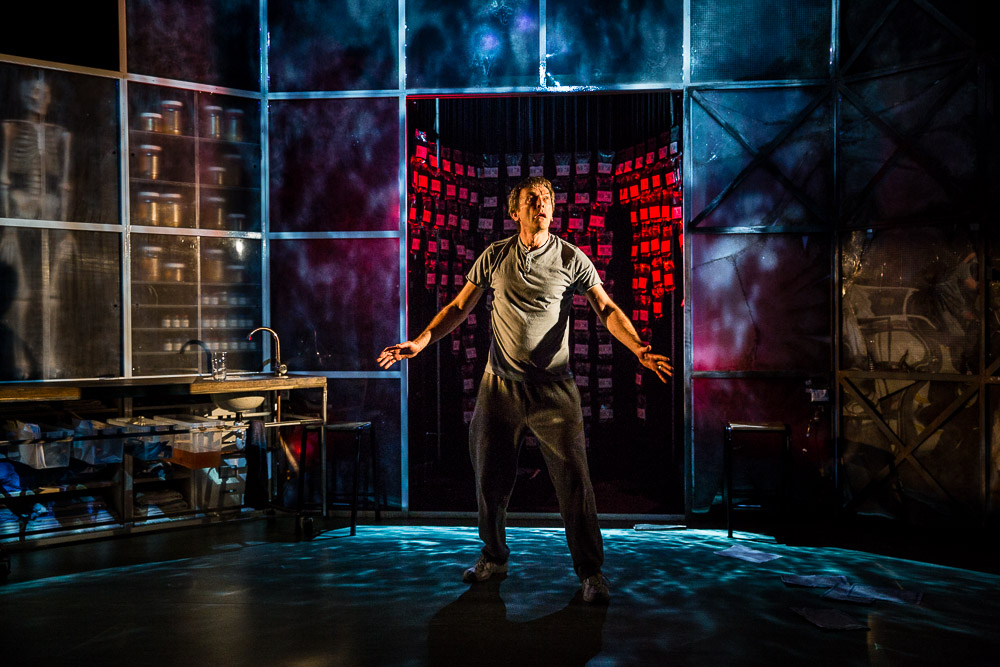
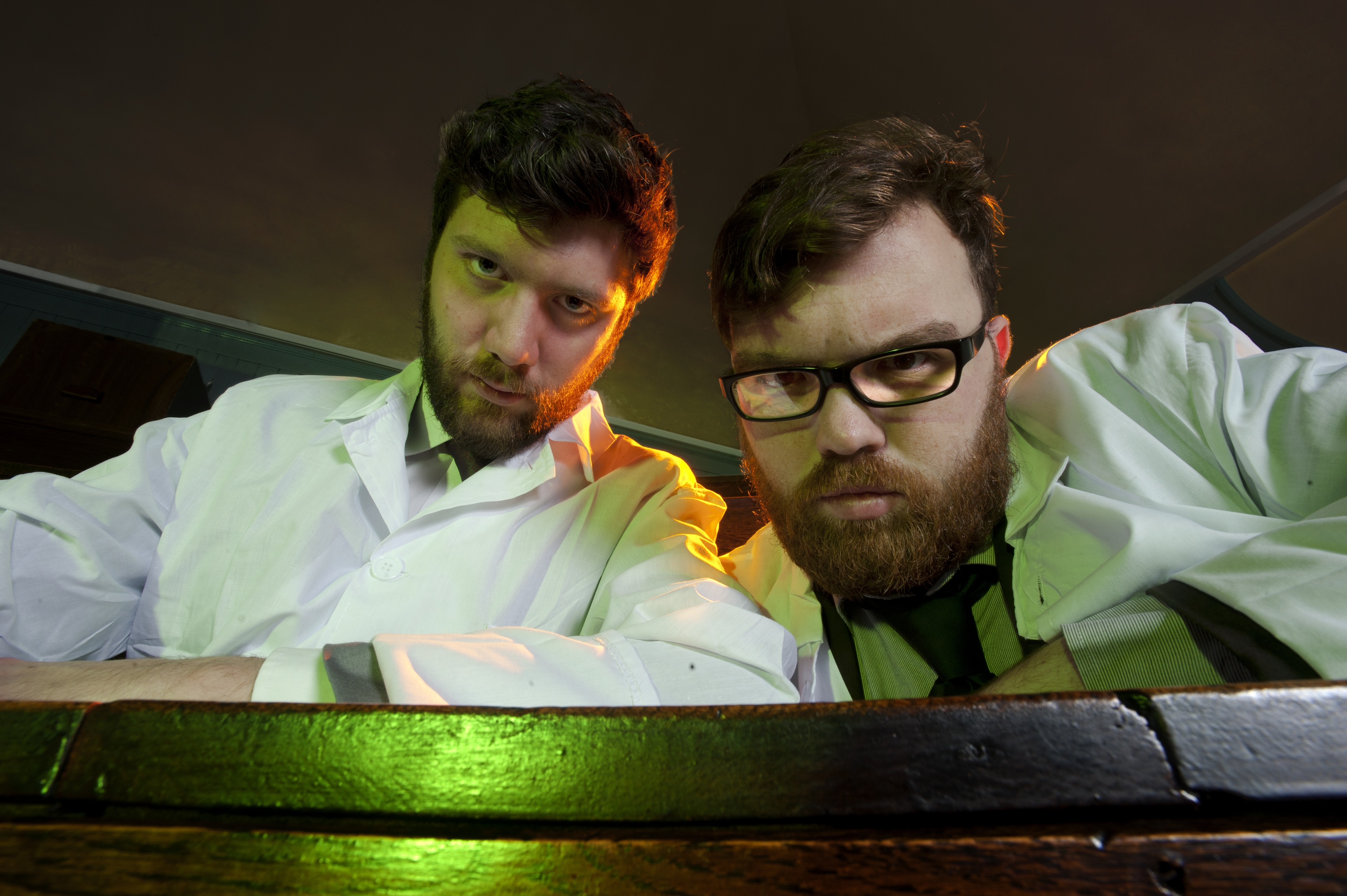
Michael John O'Neill and Rob Jones Photo: Chris McNulty

Michael John O’Neill and Rob Jones
Photo: Chris McNulty

‘Halting thesis: that we exist to be dumbfounded’

Editorial Rating: Unrated

Produced by ‘Enormous Yes’, The Arches Platform 18 Award Winners.

Ever wanted to get inside a clever comic strip? Here’s your chance. For me The Forbidden Experiment is highbrow, secret, Numskulls from The Beano. D.C.Thomson can be proud of this Glasgow borne variation on its team of little technicians who live inside your head, trying ever so hard to do it right but suffering mischievous upset and body blows time and again. The play is self-conscious, ingenious and cerebrally in-your-face; but its audience, to experiment with the passive voice, is likely to end up scatterbrained.

Not that there isn’t strategic purpose. It’s there in box loads over the impressive laboratory of a set: microscope, desk microphone, molecule model, lots of important looking files marked ‘Inchkeith’ with – a bit of a date fixer, these two – a carousel slide projector and a rolling blackboard (never used; shame!). All to investigate what may have happened on Inchkeith island out there in the Firth in – specifically – 1493 and 1944/45. Subjects of study are (i) Language before we fouled it up at Babel and (ii) Language when we messed with it again but this time with practised deceit, as in the British Fourth Army on Inchkeith and with radioactive fallout from the Manhattan Project . You may think that there’s not too much to go on to join (i) and (ii) but that’s where you’re wrong and the two guys in lab coats are right, kind of.

Halting thesis: that we exist to be dumbfounded, for our understanding is forever partial.

So, there’s writer/actor Michael John [Brainy] O’Neill as Himself in a white coat, when he’s not cut up in love or sailing out to Inchkeith with those boxes. He is also penitent, freighted, James IV, who would learn to speak with God, and Mr Alvarez whose small ranch in Socorro County, New Mexico, turns out to be way too close to the nuclear test site. And there’s director Rob [Blinky] Jones, with suitable beard and always in a white coat, a natural at the lab bench you might think, but no. Laconic and spare assistance – not least on keyboards, guitar and harmonica – is provided by Matt [Radar]Regan, whose Abbot Counsellor to James IV is Gollum at his most precious. The Company is completed by Zosia Jo (too expressive for a Numskull), whose dancing in the two roles of ‘Creature’ and Michael John’s ‘Ex’ is especially demanding and pairs well with the cryptic kaleidoscope of the slide show.

Were there an ‘Only Connect’ wall on that blank blackboard then The Forbidden Experiment would have been easier. As it is its different narratives describe fraught or frenetic situations that defy sorted outcomes, let alone a conclusion. Radiation sickness breaks down Alvarez’s speech; redacted documents frustrate History, capital ‘H’. Love overturns a dingy crossing to Inchkeith. We are left with revolving images and impressions of marvellous and necessarily strained acting – O’Neill’s in particular – and the light relief of actors, as well as boffins, getting peeved with each other and with the script.

As a body of work The Forbidden Experiment is terrific and will stay in your head. Mine is not big enough to see it all at once.


Reviewer: Alan Brown (Seen 1 May)

Visit The Forbidden Experiment homepage here.
‘The Queen of Lucky People’ (Traverse: 29 April – 3 May ’14)

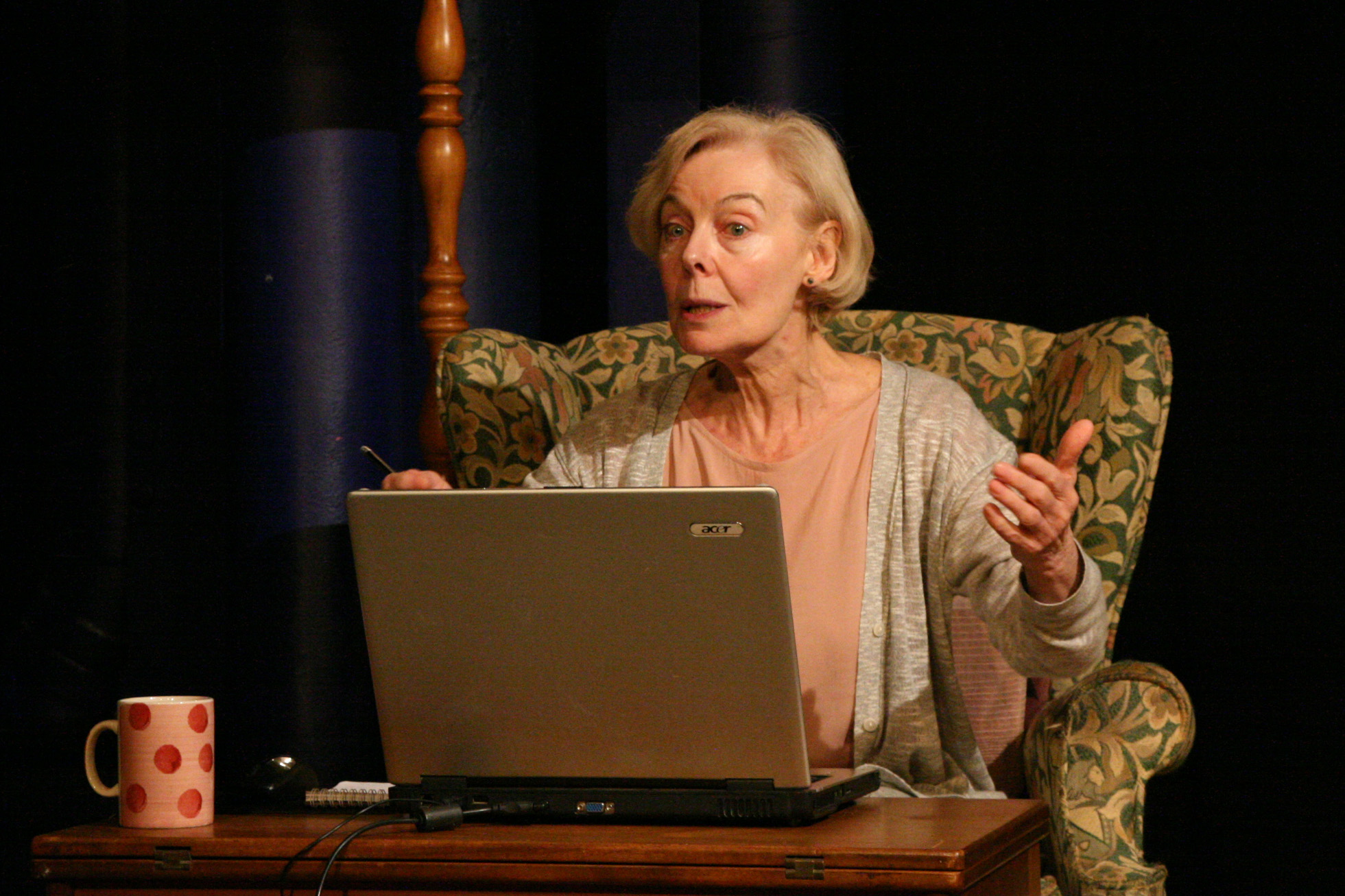
Eileen Nicholas as Patrice French Photo: Lesley Black

Eileen Nicholas as Patrice French
Photo: Lesley Black

‘Patrice’s impish tittle-tattle lands her in some embarrassing shite.’

Editorial Rating: Nae Bad

The last in the Traverse’s very welcome A Play, a Pie and a Pint season.

A venetian blind is prone to twitch not tweet. Anyhow, it provides the tell-tale keeking backdrop to The Queen of Lucky People, without doubt set in a tenement flat near you.

Patrice French, clerical officer, retired, lives there, which might just be the cheap end of Kelvin Drive, G20, or off the Warriston Road, EH7; either way, close enough to really notice the neighbours and to go out once in a while for a walk by the river. Not that Patrice gets out much as she prefers to be in the immediate vicinity of her laptop, spending cushioned hours within her social network of choice, ‘Lucky People’.

She has the site’s language at her fingertips. She tallies ‘Awesomes’, ‘LOLs’, and ‘Friends’ –  they’re ‘Buddies’ on ‘Lucky People’ –  with mounting glee and notes her “Record!” stats with pride. A euphoric Third-Age experience or late onset OCD? Regardless, out of sight and careless, Patrice pushes out her gossipy posts. She does not answer the phone and the blind is kept down.

Writer Iain Heggie gives Eileen Nicholas as Patrice many a winning line of solo banter. Laughs are frequent (and a little easy?) when you give an elderly character the energy and the assurance of the hip and snappy catchphrase. The script is at its best when, through the piece, Patrice’s impish tittle-tattle lands her in some embarrassing shite. You will be pleased to see how Marigold Extra-Life kitchen gloves and doggie bags, off, do the business.

It is a redemptive tale. You might argue that Patrice is a better person for having discovered – and thrown out – the troll within. Certainly Nicholas’ sure and appealing performance is of a lonely woman who is happier and kinder at the end. Sympathetic direction by Emma Callander and focused design by Patrick McGurn combine to lift a bright but brittle character into a companionable place. And so the blind goes up.

My only problem, and quite possibly mine alone, was that I could not get Alan Bennett’s A Woman of No Importance and the other Talking Heads out of my head. It is actually to compliment Iain Heggie that the thought of Bennett’s Miss Schofield (Patricia Routledge) with a lap-top is so alarming. Patrice, though, is the more forgiving creation. More of a quiche person, than a pie eater.


nae bad_blue

Reviewer: Alan Brown (Seen 1 May)

Visit The Queen of Lucky People homepage here.

‘Factor 9’ (Traverse: 24 – 26 April’14)

Matthew Zajac as Bruce (Norval)

Matthew Zajac as Bruce (Norval)

‘Blood bags swing in the central section … Death certificates litter the stage floor throughout.’

Editorial Rating: Outstanding

There is an eye-catching stainless steel angel outside the Scottish National Blood Transfusion Service centre in Ellen’s Glen Road, Liberton, barely four miles south of the Traverse. There is also, facing Reception, a rust streaked 40 cubic yard capacity waste skip. Factor 9 shows us what happened when, in 1984, contaminated blood product did not end up in the bin.

Injury, pain, hurt and a raging sense of injustice is how writer Hamish MacDonald sees it. His script could have taken on some late gothic horror, as in Stevenson’s Olalla, but that is torpid and exotic compared to the energy and ghastly proximity of Factor 9.

Dramatic, genuine, testimony is given by two haemophilia sufferers, Rab (Stewart Porter) and Bruce (Matthew Zajac). Together, but occasionally taking different parts along the way, they tell the story of their lives. In medical reports and studies they are classified as ‘Unfortunate individuals’ who were exposed to that single batch of HIV contaminated factor VIII concentrate from Scottish donors. Rab would have been a ghillie but now only drives into the hills to scream insults at the view. Bruce tried to be a nurse but is thrown off his course – and onto the streets – as an unacceptable infectious risk. He has a recurring hopeless dream of taking a hammer to water and trying to smash his way out of all-enveloping misery. Bruce has, in his words, become shockproof: “Fucking unfortunate?” No, try “Fucking incredible”.

“How could this happen?” is the furious and tendentious question that fronts Factor 9. Director Ben Harrison and Designer Emily Jones get the answers out in impressive and surprising order. Visual, contextual information is screened on the grid squares of a threefold set. Important dates and locations clearly register, not least the security fencing around the Arkansas state prison(s) where donor prisoners are paid for their blood, some of it infected with viral hepatitis and HIV. White symbols turn red when, of those 32 patients in that 1984 cohort, another one is ‘away’. A lab bench wheels into use as a bed. Utility chairs are in the Waiting area where Rab and Bruce and their families spend a horrible amount of time. Blood bags swing in the central section and the names of drug companies – notoriously IG Farben and latterly Hoechst, Armour, Baxter and Bayer – are indexed above. Death certificates litter the stage floor throughout.

L. Stewart Porter as Rab (Mackie)

L. Stewart Porter as Rab (Mackie)

Actors Porter and Zajac are utterly convincing. You see Rab and Bruce briefly, innocently, having fun in the Children’s Hospital when their parents have gone home for the night but otherwise, as stigmatised plague-carriers and guinea-pigs, it is their outright, unequivocal anger that registers. Rab knows magic tricks and the vehemence of his ironic “Abracadabra” when significant medical records just disappear is punishing. Zajac also plays the haematology consultant and actually wins sympathy for a professional who, grappling with the uncertain and the unknown, finally does not know what to say. The scene when an anatomical skeleton is substituted for the doctor and ‘examined’ by his patients is ingenious and macabre.

Factor 9 is properly more than a tongue-lashing for pharma. Neither is it a pitiless exposee of medical practice in the face of an emerging pandemic within the haemophila community. It is much better than viral polemic because of terrific performance and inventive direction. In the House of Commons the Contaminated Blood (Support for Infected and Bereaved Persons) Bill waits for its 2nd Reading. This Dogstar Theatre production should introduce it.

outstanding

Reviewer: Alan Brown (Seen 24 April)

Visit Factor 9‘s homepage here and preview the show’s Fringe ’14 run here.

‘This May Hurt A Bit’ (Traverse: 8 – 12 April’14)

ThisMayHurtABit_0743

‘The Grim Reaper cannot wait for the good times to roll.’

Editorial Rating:Nae Bad

NHS England and not NHS Scotland is examined in Stella Feehily’s agile new work, which is mildly or wildly reassuring depending on the state of your health and where you live. This May Hurt a Bit is still a jag of a play, needle sharp where it matters and good for you. It will also, with luck, get stuck into government.

There is no squirming away from the political point of Feehily’s writing or from Max Stafford-Clark’s expert direction. The National Health Service is sixty-six years old, is in a High Dependency Unit, and needs your support before it is wheeled off as a terminal case. Here is an acute and tender understatement of a critical condition.

The play begins deep in the vein, if you will, of Ken Loach’s new film, the documentary The Spirit of ’45 when in his words ‘generosity, mutual support and co-operation were the watch words of the age.’ Aneurin Bevan, Minister of Health in the post-war Labour government, is on stage and brings the attention of the House to the extraordinary fact that ‘we are still able to do the most civilised thing in the world – put the welfare of the sick in front of every other consideration.’

That was in 1948, as indicated by the LED display. Move straight on to 2011 and then to the here and now but not before I, poor sap, thought that the medical staff were ‘serving’ customer/patient No.1948. Rather like those long waits in the East Coast advance booking hall at Edinburgh Waverley or, come to think of it, my time in A&E at the new ERI when a low-flying discus cracked my head.

The set of This May Hurt a Bit actually looks like an interior of the Old Royal before the PFI op. You cannot see it but there’s blood on the ceiling. Long and narrow gothic windows and grubby whitewashed brickwork and a screened treatment area centre stage with a disconcertingly large EXIT sign suspended above it. By scene 17, of 18, The Grim Reaper cannot wait for the good times to roll.

Nicholas James (66) is being treated for a prostate the size of a space hopper but has the good manners not to worry anyone but himself. His mother, Iris (91), suffers a fall and is admitted to the local District General for investigation. Fond but limited daughter Mariel is visiting from New York where all-American husband, Hank, is an orthopaedic surgeon. In Hank’s professional opinion – because you die in city hospitals – Iris should be treated privately where she’ll enjoy a lovely view of the Thames. Iris, bless her, swears (profanely) by NHS care, and refuses to move. Nicholas is with his mother all the way.

On the wards, or more accurately on the corridors, there is near bedlam. As well as Iris, Nurse Gina has to look after incontinent stroke patient Rev. John and dementing, bonkers, Dinah. Paramedics, porters, and police dispense black humour. There is a corpse in the screened cubicle, left.

Deadpan funny is rarely in remission but neither is the rolling political script. There is no positive narrative behind NHS reform, Prime Minister, so you just go out there and spiel away; and Feehily provides a wacky retinue – from within the cast of eight – of singing nurses, advisors, strategists, a board of directors, Churchill, a weather girl, and Maggie Thatcher on her perch. I have mentioned Death.

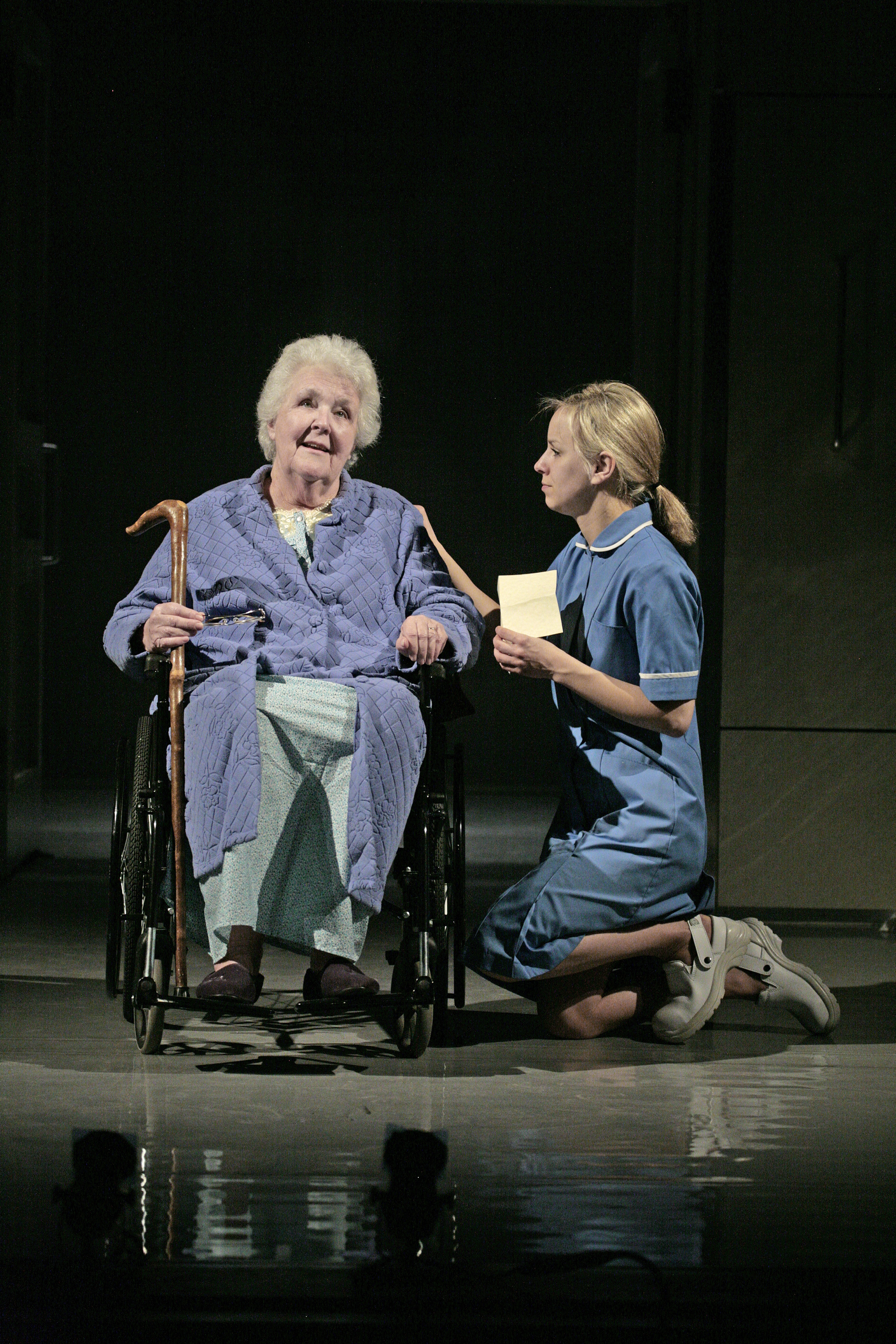
Stephanie Cole and Natalie Klamar

Stephanie Cole and Natalie Klamar

Iris is at the play’s selfless heart. Her absolute, principled, and dear refusal to leave NHS care means she is immune to what afflicts it. Peerless Stephanie Cole cannot be touched in the role. Similarly, Natalie Klamar as Nurse Gina from God knows where – possibly Poland, maybe Serbia – has an angelic part, made all the sweeter when she explodes in effing fury at the specious ‘Culture’ of shitty spending cuts.

It is a bit too easy, I think, to import Hank as the big bad US example – not one reference to French or German systems of social health insurance for instance – but that goes with the staked out territory of this continuing debate, which as Freehily palpably demonstrates gets far too close for comfort to the cynical truths of ‘Yes, Minister’.

This May Hurt a Bit has deft feel and touch all over it but it is also an invigorating shot in the arm for the campaign to keep the NHS safe and in public hands. Scotland, I propose, is reminded to keep its resistance up.

nae bad_blue

Reviewer: Alan Brown (Seen 9 April)

Visit Traverse, This May Hurt  A Bit  homepage here.

‘7 Billion Others and Me’ (Lyceum Youth Theatre: 28 March & 4 April’14)

7 Billion Others and Me

“It is Andy Murray’s Will He – Won’t He? victory at the All England Club last year that ends the roll-call “

Editorial Rating: Unrated

Directed by Christie O’Carroll and devised by the Company.

It is a fun, effective, image. The kilt, Royal Stewart tartan no less, the plain sock, the half-tied All Star Converse resting on a slightly squashed globe. Some photoshopping might just have had the heel depressing England but, no, that would not have been right.

7 Billion Others and Me had two performances, both prior to evening performances of Union. That too made sense, as did the three Perspex voting boxes at the Exit doors: ‘Yes’, ‘No’, ‘Don’t Knows’. When I saw them the piles of votes were evenly distributed. This LYT show might influence your views on the independence referendum but that is not its intention. This engaging piece of youth theatre is much more to do with proposing community and friendship as the proper platform for whatever we stand for – or on.

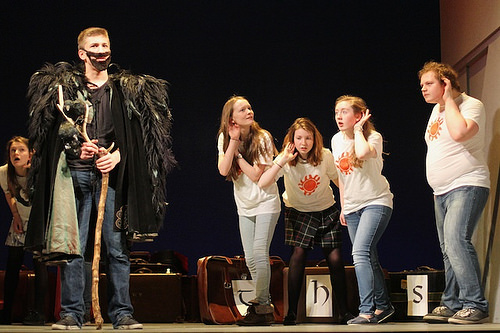
The islands of St Kilda are used to tell a shared story. To begin with there is island history: a nasty but comic severed hand, puffin catching, puffed-up ‘Morning Manly Meetings’, and mention of May 1918 when a German submarine blew apart the island’s signal station. In August 1930 the remaining thirty-six inhabitants leave for the mainland at their own request. There follow scenes of modern and popular Scottish history – highly selective but of near legendary proportions, if you are 15 – the amalgamation of proud regiments; The Bay City Rollers; Lockerbie; Dunblane (sensitively not named); wicked Mrs Thatcher and her poll tax; and almost to top them all, CBBC’s Raven, 2002 – 10; but it is Andy Murray’s Will He – Won’t He? victory at the All England Club last year that ends the roll-call and brings us to the ‘Yes’ / ‘No’ seesaw of the referendum debate.

7 Billion Raven

The confident young cast (? S3-S4) embodied a sense of their history being made. The repacking of the belongings of the Lockerbie victims is especially sad and evocative. Courtney and Keir carry their romancing and their love through from the earliest times to the present day. Ironic and familiar ‘sides’ of latte, jaffa cakes and sushi accompany the main narrative that employs voice, song and movement to keep it fresh and memorable.

Raven (and improbably, magnificiently, Mrs T) appear in fine costume but otherwise all is kept plain and unaffected. The message is plainly voiced that even if you are one in seven billion you still count and that, again on the plus side, there are lots of people around to join hands with.

“Are you ready? Then let the challenge… begin.”


Reviewer: Alan Brown (Seen 4 April)

Visit LYT homepage here.

‘Under the Mulberry Tree’ (Studio at the Festival Theatre: 3 – 12 April’14)

Vincent van Gogh, Mulberry Tree. 1889. Post-Impressionism. Oil on canvas. Norton Simon Museum, Pasadena, CA, USA.

‘There are wrap-around melodies for solo voice and piano. Cicadas are heard’

Editorial Rating: Unrated

Writer Timothy Jones’s first stage play bears the bruised fruit of sadness. Vincent van Gogh’s painting of ‘The Mulberry Tree’ is the cause; its vigorous combination of colours prompting a testing story of entangled character and circumstance.

This mulberry is in the garden of a small hotel – a guest house really – just outside Eze, on the Mediterranean coast, between Nice and Monaco. The Daily Telegraph describes Eze as the ‘perfect Springtime break’.

Only, Not.

Certainly not after you have seen Under the Mulberry Tree. Yes, we’re in the 1950s, when 95,000 old francs could buy you a villa a few minutes’ drive from the beach; but this is not Private Lives modestly revisited and downsized. No, this play broods with concern.


Clockwise: Joanna Bending, Jeremy Todd, Adam Slynn, Roger Ringrose.

Clockwise: Joanna Bending, Jeremy Todd, Adam Slynn, Roger Ringrose.


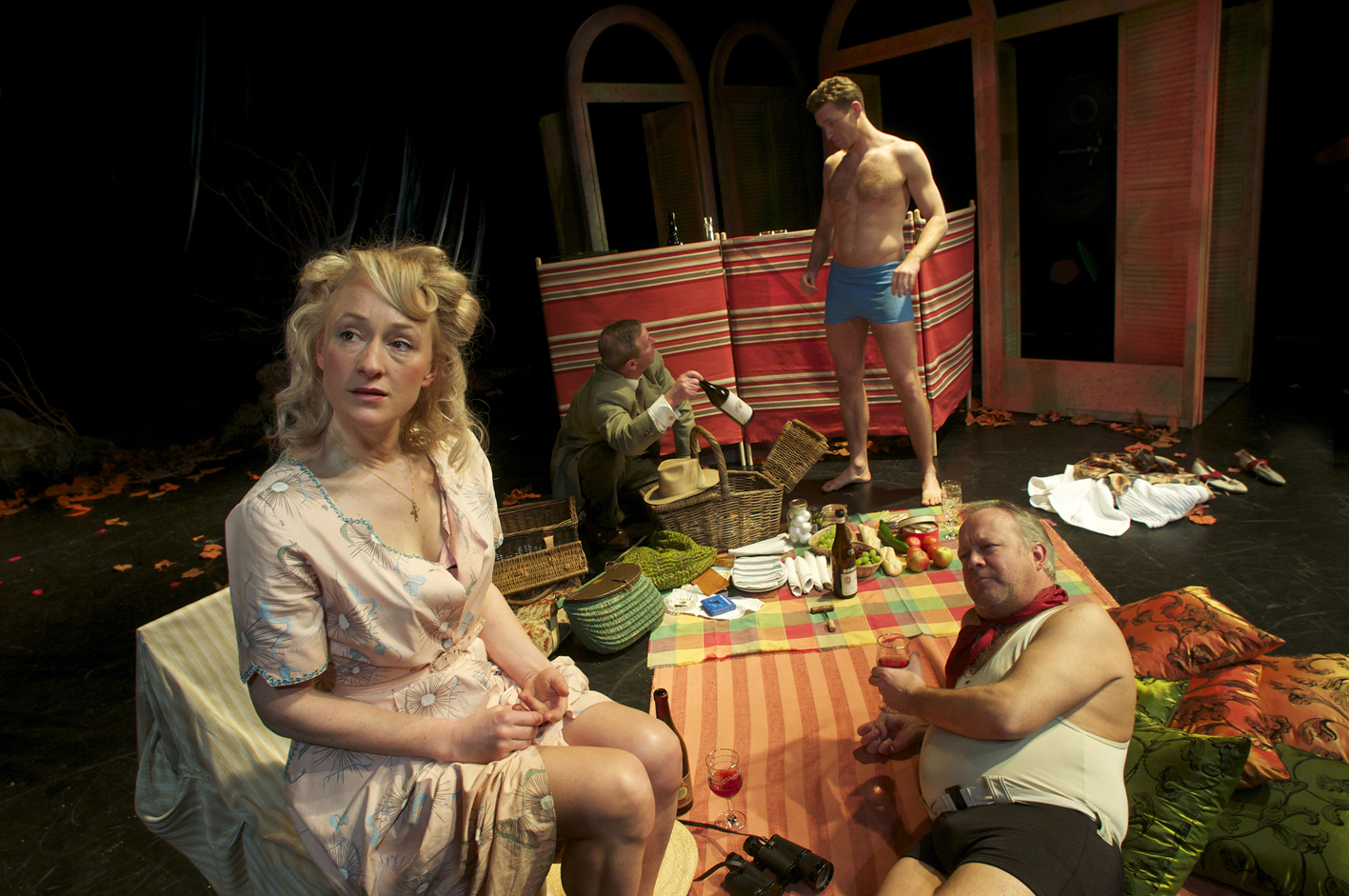
Jack and Connie Boothroyd, married 20 years, hot and bothered, happen upon Monsieur Guillaume’s hotel. Connie is vulnerable, sensitive, and has a lot of pills in her bag to help her cope. Joanna Bending is in this demanding part and – to her considerable credit – has to act her stockings off. She, at least, is looking for a good holiday. Husband, Jack, did not enjoy the long drive down to the Côte d’Azur. He did not speak for the four hours between Paris and Lyons. More of a Scarborough man is Jack. Solid Jeremy Todd does North Yorkshire in no-nonsense, ill-tempered spades, but you nevertheless feel his discomfort – and pain at the end.

Jack complains of endless warning signs of ‘Chaussée déformée’ and to speak plainly, as he does, Under the Mulberry Tree feels like that. The script is pot holed (made for Edinburgh!). It is uneven, fraught with jarring and uncomfortable issues, but at the same time you just wonder why the characters are not on a different and easier road.

Pretty scenery though. A broad terrace with a couple of café tables and chairs, a comfortable chaise longue, an upright piano with gramophone on top, and drinks to hand. Light wood blinds in (shaky) arched doorways. The bare mulberry tree, of course. The stage suffused, it seemed, with shuttered evening light. There are wrap-around mélodies for solo voice and piano from Poulenc. Cicadas are heard but not for long. The tree is in bud at the end of the play but that’s Miracle-Gro playing false.

Jack is hard on Connie and rude to just about everyone else. Connie, bravely, wants more than a husband. She particularly wants to be a mother. Enter obliging virile Julian, 21-ish, in bathing shorts, who has a thing for the older woman because his mother corrupted him. He is also Guillaume’s lover. Adam Slynn, as Julian, has to be both parasite and lost boy, which is not easy. There’s Guillaume’s rich sister, elegant and rather silly Gilberte (Annabel Capper) to stroke his vanity as well.

Roger Ringrose plays Guillaume. It is a sympathetic, mellow, part and Ringrose does perceptive insouciance very well. He has, as he puts it (with a nod to the writer’s fondness for Apollinaire) ‘found his lost time’ and will not give it up lightly, especially to the neurotic English. He could be funny but is careful to stick to kind and amusing.

Director Hannah Eidinow may have been drawn to Under the Mulberry Tree because it is – at a stretch – not too dissimilar from the four-hander Playing with Grown Ups by Hannah Patterson that she directed with Theatre 503 last year. Unfortunately Timothy Jones’ play is more of a strain.

Reviewer: Alan Brown (Seen 3 April)

Visit Festival Theatres Trust, Under the Mulberry Tree homepage here.

‘Love With a Capital ‘L” (Traverse: 1 – 5 April’14)

Benny Young and Lesley Hart. Photo by Lesley BlackPhoto: Lesley Black

‘How, in the name of all that is haughty and holy ….. ?’

Editorial Rating: Nae Bad

The first of the five short plays within the annual ‘A Play, A Pie and A Pint’ series that runs through April. Edinburgh49 is reviewing all five.

Loved it. And I’m not just talking about the Scotch pie and the pint before or afterwards. [Hot tip: the venison pies go quickly.]

Writer Tony Cox’s first stage play, directed by Hamish Pirie, is top-drawer work. A cross-examination of (i) rectitude on air and of (ii) the sneaky premise that all marriages are like potted plants – terminally pot bound – Love With a Capital ‘L’ is Radio4’s Thought for the Day with attitude.

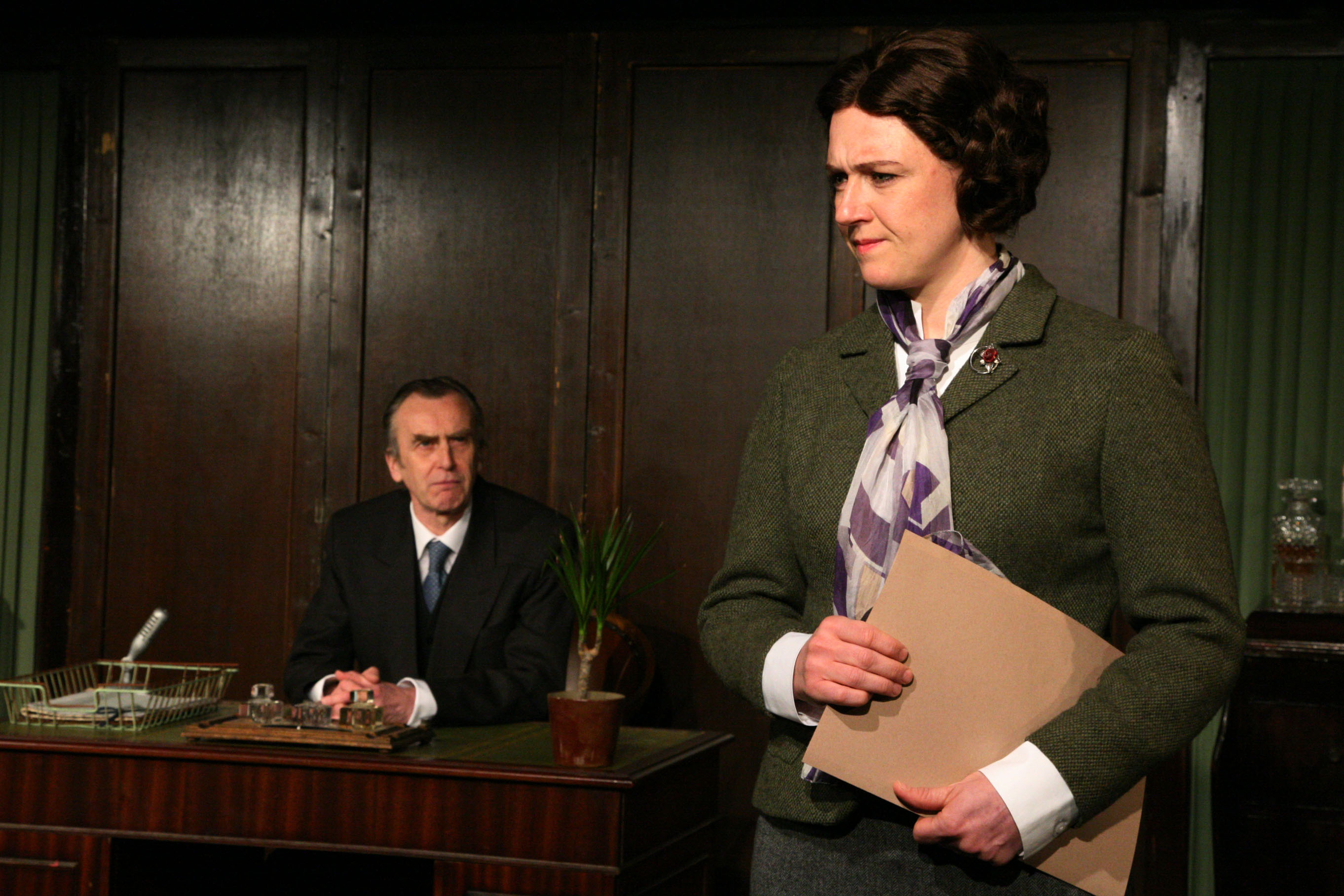
It is ethically spiky. John Reith, the BBC’s first Director General, challenges Hilda Matheson, the Corporation’s ‘Head of Talks’. She, in straight-backed, imperturbable, manner, challenges him back and … a nice yucca plant is smashed to the floor.

This well-researched script is right in there at the beginning of public service broadcasting. We are in Reith’s office in Savoy Hill in June 1929. The BBC employs around 400 people at that time. Matheson has invited H G Wells to go on the radio to talk about world peace. George Bernard Shaw is due ‘on’ the election. Reith, son o’ the Free manse, regards both as ‘Reds’ and Bolshevik apologists but what really riles him is the air time being given to the Bloomsbury set and in particular to Vita Sackville-West and to her husband Harold Nicholson. Their views on marriage, open affairs, ‘free’ love, and the rest of it – most of it gay – appal him. How, in the name of all that is haughty and holy can ‘the keeper of the nation’s conscience’, allow it? Answer, if you would, Miss Matheson, please.

Easy: in brief, “Will that be all, Director General? I have work to do.”

Actually, that is far from all, as Reith has Matheson read his diary. Personal history will out and both characters are drawn sympathetically, if briefly, together.

Benny Young plays John Reith. It is the driven self-control, self-censorship, and the tight smile that gets you and the force of the interrogatory “Why?” Reith, momentarily wobbling, quotes Puck who will ‘put a girdle round about the earth / In forty minutes’ and you acknowledge that what Reith created at the BBC was unique and valuable. What Young gives us, also in forty minutes or so, is a more compassionate man than the unsparing biographies would suggest.

Lesley Hart is Hilda Matheson, who would have been forty-one in 1929; one year older than John Reith. Hart does not flinch once and plays Matheson as the extraordinary and successful woman she must have been. The script provides wit and intelligence enough but the confident bearing and sense of self-worth is Hart’s doing.

It is not on the wireless but you will want to listen in to Love With a Capital ‘L’. Its subject and its acting reward that kind of close attention.


nae bad_blue

Reviewer: Alan Brown  (Seen 1 April)

Visit PPP Love With a Capital L homepage here.

‘Double Bill’ (Traverse: 27 – 29 March’14)

Double Bill

“Open-sourced quality”

Editorial Rating: Nae Bad

This is the Traverse Theatre Company’s starred pairing of Clean by Sabrina Mahfouz and of A Respectable Widow Takes to Vulgarity by Douglas Maxwell; both plays directed by Orla O’Loughlin. Indisputable showcase productions, they’re looking sharp for the Brits Off-Broadway season on the 59E59 ‘A’ stage from 2nd to 27th April.

Clean is as in, “We searched her and her luggage and she was clean”. Only unapologetic protagonists Zainab, Chlöe and Katya, are not. It is just that they specialise in criminal work that scrubs up well: credit card fraud, emerald smuggling, and share price ‘protection’. They work and talk alone until one lucrative job and an evil Mr Big brings them together.

They make a game trio on the same spare platform, which is Mahfouz’s point. Clean is Bold Girls (at Level 1) on an Android OS: mobile, smart and sassy. Its story might as well be released for a PS4 console in search of female characters. Mahfouz’s on-off poetry is attractive with quick dialogue pressing hard on ‘Refresh’, providing feminist content and voice(s) within an all-user setting.

The performances display just as distinctly. Emma Dennis Edwards is Zainab. Hackney street-wise and ‘sick’, man; save that this is one sorted 23 year old who does not need a man in her life. She moves, sometimes raps, in-between poised, posh Chlöe (Jade Anouka) and Russki, Katya (Chloe Massey), whose accent is as hard, probably, as her steel toe-caps. OK it’s off-script, but you don’t ask Lara Croft if she has a younger sister, obvs.

Clean deserves to clean up in New York, which is more than Candy Crush’s listing managed.

A Respectable Widow Takes to Vulgarity has the same open-sourced quality as Clean. It looks explicitly to class and culture but plays nicely alongside the character graphics of Mahfouz’s piece. Director Orla O’Loughlin puts this on second, probably because it is funnier, less edgy and virtual, I suppose. Regardless, the direction is just as tight.

Writer Douglas Maxwell describes it as “My Fair Lady in reverse”. Sounds good. Well-spoken Annabel from purlieus douce meets young employee Jim Dick at her husband’s funeral. He’s emphatically not James Dick of Dick Place, EH9, the most expensive street in Scotland. Annabel would converse, he cannot without tripping into his f’ing vernacular that embarrasses him and fascinates her. There you have it. Flippin’ Pygmalion flipped.

Joanna Tope is Annabel and has just to adjust her scarf for you to realise that she does not shop at Accessorize, as the spelling would appal her. Her speech is pitched so well that ‘cadence’ probably registered on her P1 report. Gavin Jon Wright as James plays very reluctant, wired, ‘teacher’ with the merriment of an actor who knows he has a gift of a part. See him on the terraces when Annabel goes one word too far!

A crude joke of a name ends the piece and has them both choking on their Big Macs. An appetite for language is always healthy.


nae bad_blue

Reviewer: Alan Brown (Seen 27 March)

Visit Double Bill’s homepage here.

‘Union’ (Lyceum: 20 March – 12 April’14)

Josh Whitelaw as Allan Ramsay in Tim Barrow's Union. Photo by Tim Morozzo

Josh Whitelaw as Allan Ramsay.   Photo by Tim Morozzo

“A valiant shagging of historical event and character”

Editorial Rating: Unrated

England and Scotland have been at it for a good while.

Once upon a time there was some rough wooing. Then, once upon a time – again – there was the Union of the Crowns, which sounds more consensual, and then, once upon a … etc., there was the Act of Union, which obviously came straight out of the The Joy of Sex and now – just reported today – we have a time of conscious uncoupling.

Fancy a flutter on the outcome? Tim Barrow wagers you will. His new play, Union, is a valiant shagging of historical event and character that is really, really, not into contraception. Probity is not on top either. See, on the common stage in gilded London, the seventeen pregnancies of Queen Anne. That’s Anne the last of the slimy Stuarts, as we’re in the realm of Horrible Histories; and meanwhile in the vennels of Edinburgh there is the whoring of Grace and Favour.

Scotland is up for sale: 20 old K should do it, not least because in 1707 one English pound was equal to twelve Scottish. ‘What cares our land for coin?’ is the noble poet’s cry. Actually, pal (only John Dalrymple, Earl of Stair, is no friend to Allan Ramsay, makar) there are those who care a lot. And so on 16 January 1707 the treaty of Union is passed by Scotland’s Parliament by forty- one votes, 110 to 69.

The headcount in the script is 10. Ten actors do it all: only Josh Whitelaw (Allan Ramsay), Sally Reid (Grace) and Irene Allan (Queen Anne) do not have other parts. That works well and the scenes play out within eye-catching projected sets that turn and turnabout: Edinburgh is Celtic chords, rain, tankards, cards, and clustered wigs; the Queen’s showy rooms in Kensington Palace are just the place to take exotic teas and to play catch-the-crown.

I thought the safety curtain was the huge Union flag, which has a certain metaphorical fit to it. No fire risk, we’re ‘Better Together’ and all that; but this is one production, I put it out again, that does not want to stay protected. Think of the Darien scheme and go for broke.

And, despite much concerted entertainment, Union does break in two. Allan’s love for Grace and for Scotland is too soft to hold when all about them is political and [sorry] priapic disorder. Liam Brennan is a riot as The Duke of Queensberry and as a mincing teasalesman at court. At times Queen Anne’s part turns Irene Allan into Queenie from Blackadder. Andrew Vincent as Marlborough has a comic swagger that batters belief. By contrast Tony Cownie’s performance as Stair and Walpole is too good, too convincing, not to place him in Congreve’s The Way of the World. The line-up of Scottish nobles, pro-union ‘Yes’ on the left, outraged ‘No’ on the right, has to happen but it looks awkward and is – literally – staged. When Allan sets his verses free on the water you stay as unconvinced as Grace is of the power of scribbling.

To return. Now, are you sitting comfortably? Once upon a time the Duke of Marlborough drew his pistols at table and blew his daughter’s hamster apart. In a way that is how I feel about Union. Its remains are in your lap rather than in your head. More gross than shocking. As ballsy as Scotland’s Future? Has to be.

Reviewer: Alan Brown (Seen 25 March)

Visit Union homepage here.

‘Harvey’ (Bedlam, 12 – 15 March ’14)

Harvey

Harvey does not do selfies”

Editorial Rating: Nae Bad

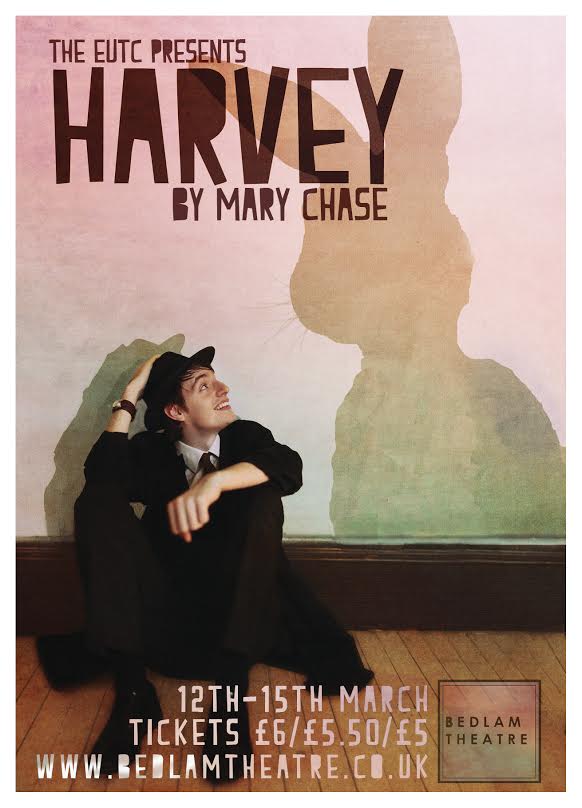
Our rabbit, Toffee, died of a heart attack when the builders came in. Harvey, however, lives; for Harvey is immortal, a stage and movie legend, and stands 6ft 3½ins high. It would be nice to see him leaning against the gates of Pollock Halls, in the Bristo Bar. You can see him, sort of, in Bedlam until Saturday. When he’s not on stage he’ll probably be out back in the Whisky Snug of the Hotel du Vin.

Harvey does not do selfies, as (i) they’re dime-store cheap and (ii) he’s invisible anyway, give or take his hat and coat. This pooka, avatar, rabbit has ineffable presence just as his companion, Elwood P. Dowd (47) has matchless, gentle, manners.

Craig Methven plays Elwood and is great at it. It is not just the faultless accent – Elwood and Harvey are from Denver, Colorado – but intonation, timing, gesture; all convincing. And the look! A beanpole with trousers just too short, jacket sleeves just too short, a trilby perched on top. A complete oddball with a smiling front of teeth that Oral-B would pay top dollar for. When Elwood says “Doctor I’ve wrestled with reality for 40 years and I’m happy to say that I’ve finally won out over it”, you cheer. You love him when, to save his sister from a life of nerve-shredding collapse (hilarious, by the way), he is prepared to take a mind-bending drug and forsake Harvey: “Say goodbye to the old fellow, would you?” Weep at it.

Psychology and psychiatry butt against comic form. It’s not One Flew Over the Cuckoo’s Nest meets Peter Rabbit but it’s there in the wacky sanatorium where Doctors Sanderson, handsome, (Stephen Macleod), and Chumley, crumpled, (Callum O’Dwyer) mess up. Pretty Nurse Kelly (Elsa van der Wal) is stuck in-between them with only the near lunatic, knuckle-dragging Charge Nurse Wilson (Martin Maclennan) for support. Chumley takes to his own couch and fantasises about Akron, a silent young woman – not Mrs Chumley (Rachel Bussum) – beneath maple trees and cold beer. Elwood, bless him, counsels whisky and – progressive fella – that the lady be allowed to talk.

It is, with Harvey about, still a richly comic and US neighbourhood. A cab driver (Ian Culleton) dispenses philosophy and Judge Omar Gaffney (Eric Geistfeld) drawls his speech back to Louisiana. You might find Harvey at Charley’s Place on 12th and Main, or at the 4th Ave. Fire House, or at Blondie’s Chicken Inn or even in the grain elevator but it is at the Dowd residence at 343 Temple Drive that the comedy is really at home. Veta and Myrtle Mae are Elwood’s older sister and niece respectively. Their situation is becoming impossible and Veta (Caroline Elms) is beside herself, which in psychiatric terms is problematic. Elms goes for it in a Mid-West/ Mitteleuropäische speak which is as funny as it is fluent. Her outrage after an unfortunate and naked session in the sanatorium’s Hydrotub is an object lesson in how to put the flounce into speech. Meanwhile, Myrtle Mae (Emily Deans), lipstick forward, responds ardently to any suggestion of ‘sexual urges’.

For some private, delightful, reason, Elwood likes the phrase ‘the evening wore on’ – preferably in bars, I guess. Directors Henry Conklin and Lauren Moreau prove that Mary Chase’s play can still put time aside and put charm in its place. Okay, the lighting cues are ragged and the nurse for doctor crush is dodgy, but there’s Glen Miller and Sinatra on the soundtrack and a fine oil painting of Harvey and Elwood above the fireplace.

nae bad_blue

Reviewer: Alan Brown (Seen 12 March)

Visit Bedlam, ‘Harvey’ homepage here.