‘The Confessions of Gordon Brown’ (Traverse, 11-15 March ’14)

The Confessions of Gordon Brown by Many Rivers Productions

Neither Etonian, nor Fettesian, he”

Editorial Rating: Nae Bad

Written & directed by Kevin Toolis.

Mary Rivers Productions inadvertently demonstrates canny timing in bringing The Confessions of Gordon Brown back to Edinburgh after its month long Fringe run at the Pleasance last year. On Monday Mr Brown was speaking in Tollcross, Glasgow, and even The Guardian reported that ‘the TV pictures looked terrible. Brown was pacing up and down within a small space, like a bear trapped in a cage. And his arms were flapping all over the place’. Apparently focus groups always see Mr Brown as a bear in a Volvo.

That’s seriously unfair, isn’t it? The former prime minister spoke well in St Joseph’s Hall, very well in fact; he had substance and that gravitas thing; and yet, and yet, image can still be all. At least, that is the common view mercilessly examined in Kevin Toolis’ play. Mr Brown may not be bald, he stands foursquare and tall enough, but smooth he ain’t. Neither Etonian, nor Fettesian, he; thank the (Presbyterian) Lord, you might add.

Billy Hartman is Gordon Brown and does not really need the brief warm-up that precedes his entry as ‘the Leader’. It is perturbing to be urged to clap with enthusiasm, comrades, for a trashed political act that is synonymous with tragicomedy.

Hartman’s First Lord of the Treasury – end June 2007 to end May 2010 – is doleful. He is beyond welfare. The man stands there ill at ease, with just his mirrored image for company, heartsore. He would be composed, steadfast, but if you can have sober and lucid intemperance, here it is. His time in No.10, after Tony’s tenure, is a fagend and the clock on the wall stays at 5.40pm.

The political intelligence is unremitting. More diatribe than expiation, the Confessions put hope and promise(s) up against Realpolitik and you learn what happens to grounded principle when – nice image – Northern Rock turns to northern diarrhoea.

It is long at 90 plus minutes but the insistent recall of contemporary history is compelling. Mention of Mr Blair, usurper and ‘snivelling runt’, seems satisfying these days. Robin Cook, John Smith, Alex Salmond, pass momentarily but what stays is the pitiless account of unfeeling, falsifying, democratic process. Spotlit occasions of electoral victory and the promise of change snap out and the scene returns to Downing Street, where power is wretched. It gets more personal and darker at the close.

Scenes from a thrawn and cyncial biopic or a more sympathetic creation? You might wonder at the comparison with Napoleon on St. Helena but otherwise Hartman’s absorbing performance is easily good enough, for me at least, to think that this Right Honourable Gordon Brown MP is a better man for having confessed.

nae bad_blue

Reviewer: Alan Brown (Seen 11 March)

Visit Traverse, Confessions, homepage here.
‘The Tempest’ (Pleasance, 4 – 8 March ’14)

The Tempest

A turbulent Tempest: noisy and exciting, amusing and drunken.”

Editorial Rating: Nae Bad

…  and why not set The Tempest atop a deep water oil platform? If Shakespeare didn’t have a geo-political imagination by 1610, which is doubtful given Othello on Cyprus and the exotic confusions of Pericles, he would have by now. Natural gas from the Tamar field off southern Israel has been on the market since March last year. Gonzalo’s resourceful prayer for ‘an acre of barren ground’ rather than ‘a thousand furlongs of [raging] sea’ is set spinning.

Then, unsurprisingly, there’s the issue of sovereignty. Whose ‘island’ is it? Prospero’s or Caliban’s? Israel’s or Palestine’s? It will be contentious and tricky for sure, which is where this EUSC production would set us down, somewhere off Tunis reckons Shakespeare, but the Magnus field, north-east of Shetland, would do just as well. Trinculo, a cod Italian, can wish to be in England but BP says it will continue to invest in Scotland.

There are two small red navigation lights on the installation. Why set low-down, I wondered? Anyhow, they pulse quietly away and are quietly reassuring as action succeeds action, bizarre encounter by bizarre encounter.

The stormy opening is terrific: a pounding beat drowns out air traffic comms. as the crew bring down the sails. Speech is lost to the wind but that’s a director’s license for you.  So too, I guess, the decision to equip Prospero with an aluminium pole for a staff. I guess at its metal but it looked pretty unbreakable to me, even with his potent art. You should believe that magic cloak, book, and staff, are given up or else the grave Prospero’s quiet retirement to Milan will be the stuff of The Dark Knight Returns.

First off, this is a turbulent Tempest: noisy and exciting, amusing and drunken. There is live music, there are jigs and drinking songs, almost a choreographed masque, a carry-out pizza menu and fun use of the smartphone – No signal, haha! – but there is some contemporary fallout that you might question. Adrian (Laurie Motherwell) – is it Adrian or the Boatswain or both? – takes point with aviators, head-torch and war paint. Shades of Lord of the Flies meets Rambo. Antonio (Alex Poole) and Sebastian (Will Hearle) do a distinct lean and mean and sinful but a pen-knife is not a sword.  Scale that up and you realise that one shiny scaffolding tower and discarded blue barrels (plastic) do not a derrick and oil platform make, abandoned or not. Pipe sections on the thrust deck, a hard hat or two, a cable spool, wiring, ExxonMobil advertising; anything for the illusion of fabric from the stalls, however insubstantial or baseless.

Shakespeare’s company really just dressed up, or down, or across. Alonso is become Alonsa (Lucile Taylor), which is simple and effective.

Costume then; and with not a stained Shell logo in sight. Miranda and Caliban’s torn and distressed look is innocent cool and dirty cool respectively; Gonzalo’s jacket, tie and waistcoat tie are on the button, right out of a wardrobe in Toad Hall; butler outfit for Stefano and ridiculous shirt for jester Trinculo, all quite fitting. Life-jacket and white pressed jeans for Ferdinand. Fly. But Prospero and Ariel, who should be up there in colour and magic garments, appear grounded by heavy overcoat and figure-hugging black. Too dull for words.

The rest, the real business of making good – invest in people now, oil futures later – is all about speech and performance. Virtuous parts first.

Ariel (Ellie Deans) loves her commanding master and possibly more than the promise of her liberty, which is original and affecting. This rushing spirit is more eager than delicate, is loyal and kind, and deserves her freedom. Prospero (Sacha Timaeus) presides with a style and sardonic nobility, but he would be in Davos and not the library. Miranda (Poppy Weir) is wonderful and young and not at all bound by her ‘virgin-knot’. Ferdinand (Will Fairhead) cannot help but love her in bashful fashion and their courtship is indeed goodly, beauteous and admirable.

Jon Oldfield as Gonzalo is a venerable act. He bumbles, he stumbles, but he is not the buffoon and sententious bore of shallow productions. Oldfield waves a carrot with more skill and pronounces to better effect than any Renaissance prince around.

To the things and creatures of darkness, who always threaten to steal the show. Joe Shaw is Caliban, who will grovel for a Pot Noodle and eat his own bogies. Shaw plays brutish, ignorant and fearful with real appetite but mouths his words with care and feeling (Miranda taught him after all) so the nature / nurture debate is properly kept wide open. Trinculo (Dean Joffe) and Stephano (Connor Jones) play Caliban like a fish on the line. They are funny and cruel and craven and – of course – the audience laughs with them, a lot, until reminded to laugh at them.

The Tempest is a marvellous play so you can take it to any stage or platform that you please. Jack Kinross, cast and crew, inhabit it with due respect and great spirit, even though some of its magic is still onshore.

‘Farewell, dear island of our wreck:
All have been restored to health,
All have seen the Commonwealth.
There is nothing to forgive.’

From W.H Auden’s The Sea and the Mirror (1940), a commentary on The Tempest

nae bad_blue

Reviewer: Alan Brown (Seen 6 March)

Visit The Tempest homepage here.

‘Gym Party’ (Traverse: 4 – 5 March’14)

Gym Party - production shot 3

Try saving face with your head in a bucket of water”

Editorial Rating: Nae Bad

Created by Made in China for a mental and physical work out.

I see that Made in China has the same optimistic regard for web addressing as Edinburgh49.  Search for this review site and you used to get lots of EH postcodes and street numbers. Search for Made in China and – well, it’s predictable – you get, ‘Your source for Quality Products.com’. Tag ‘Made in China’ with ‘theatre’ and you hit quality stage work.

The company’s Gym Party was at Summerhall during the Fringe and is back for two nights at the Traverse before moving on. In my onetime professional opinion it should play at high schools and colleges up and down the land because this is a show that would fit any ‘Curriculum for Excellence’ and put PSHE (Personal, Social & Health Education) up there in LED and neon.

For S5 and S6 only, perhaps, for ‘Take a bow and get off the fucking podium’ is not, on the face of it, the best lesson for the younger years; although actually it makes perfect (and entertaining) sense and in that all-important cross-curricular sense too. How should we measure achievement? Is it ‘above’ understanding? Are grades better than marks? What counts? How do we grow up: ‘Evolve? Fight or flight?’ Importantly, who cares for the losers? At one time or another we are all on the C/D, Pass/Fail border.

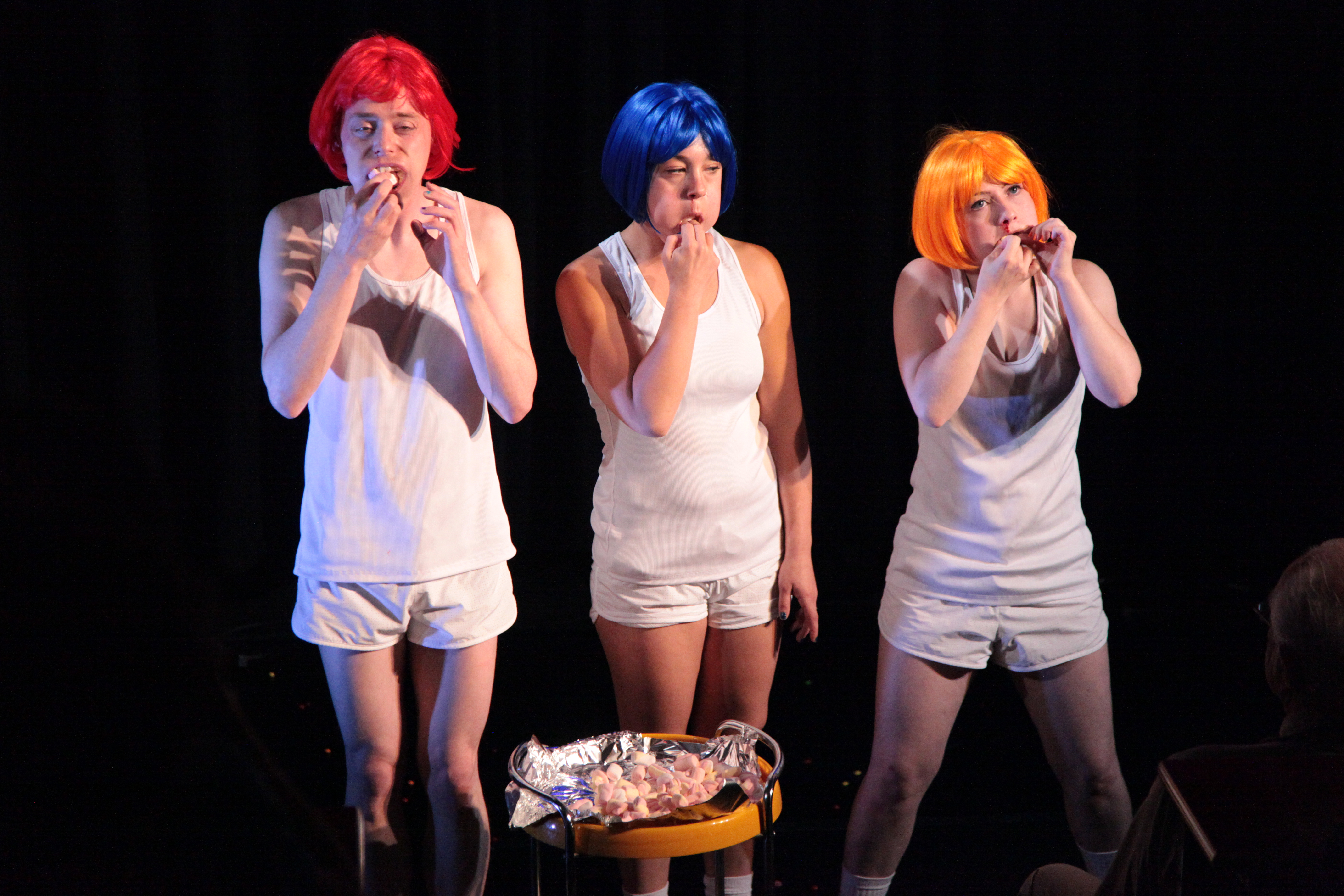
Gym Party is moral exercise. Literally. Three contestants – Ira, Chris’ and Jess (tellingly their real names) – compete for points and for applause.  In regulation 1960s issue PE kit, white singlet & shorts, but with red Converses and vividly mop-headed, they do Games and suffer the results. Ask yourself, age 12, what it took to win and then, in turn, try wacky, awkward, aerobics, and then stuff your mouth with Skittles, marshmallows, and little oranges. It looks daft, is hilarious, but how did you feel with only 17 marshmallows next to the winner, your ‘friend’ maybe, with 22?

Edifying? Up to a point, for sure. Try out for the next round: who, of the three, is the most attractive, the richest, the best kisser, the most trustworthy? Who, the class question, had the best upbringing? Suddenly, you’re not twelve anymore and the playground is not so much fun, especially when failure is penalised. Try saving face with your head in a bucket of water, held under by a fellow contestant.

Adult stretch and pull is all the while provided by extended use of the audience, ‘the group, the pack, the whole’. ‘We’re here for you’ is just one of those exhausted mantras that puts us in the spotlight or under the glitterball of frustration and loss . Actors/contestants look for support, ie. your votes, as they go through their desperate routines. In the confessional rest breaks you just about share their (chewing) gum with the same appalled mix of relief and nerves.

I particularly liked the use of accent: Canadian/New York state (Chris’), NYC American (Jess’), boarding school Home Counties English (Ira) and quizmaster sonorous (anon.).  The natural combination worked a sweet treat in terms of providing the mawkish cheer of game show tv.

Gym Party is fun, energetic and loaded.

nae bad_blue

Reviewer: Alan Brown (Seen 4 March)

Visit Made in China homepage here.

Hotel de Rive (Traverse: 6 Feb.14)

Hotel de Rive

an existential struggle for meaning that made Giacometti’s eyeballs dance in front of his head”

Editorial Rating: Unrated

You can tell that Hôtel de Rive is not UKIP territory. A German, French, Swiss co-production based upon surrealist writing accompanied by alpine horns, l’Hôtel is foreign. The show has Vorsprung durch Technik design credentials. It looks expensive, it runs well, has done 60+ outings since 2011, and – critically speaking – has definite and appealing hybrid form. But what, exactly, is it doing on stage? There’s your existential question, especially if you’re not in the Euro zone.

A search engine helps, which is a bit of shame, but Hôtel de Rive needs its back story. Its subject, Swiss artist sculptor Alberto Giacometti (1901-1966), had to stay in Geneva during the German occupation of Paris between 1942 and 1945. Biographies now headline this period as coinciding with his ‘critical transition period [beginning in 1935] … when he questions his work and tries to find a new way of looking and translating what he sees.’ He took a room at the Hôtel de Rive and his sculptured figures grew smaller and smaller, some barely a few centimetres high. They were imagined on a wide and shifting flat surface and not in anything as reassuring as three dimensional space. Insomnia took hold and Geneva nights (as back home in Paris) were spent in bars and clubs. Shabby, grubby, a chain-smoker, ‘on’ six to ten cups of coffee a day, and not exhibiting his work for twelve years, the artist then was a long, long, way off 60 million pound auction prices and being the face of Switzerland’s 100 franc note.

But you can see where the hallucinogenic Hôtel de Rive is coming from: an existential struggle for meaning that made Giacometti’s eyeballs dance in front of his head, which – projected – is like a bio-exorcism out of Beetlejuice. There was appreciative if nervous laughter from the audience.

Of that anxious, frustrating and near impossible time Giacometti said, “A large figure appeared wrong to me, while a small one was intolerable, and then they became so minuscule that with a final cut of the knife they often disappeared into the dust … and tirelessly I began again, only to end up, a few months later, at the same point”; which might have been the crumbling, enervating effect of Hôtel de Rive. Fortunately its creator, Frank Soehnle, responsible for ‘Set and Play’, has given its animation more visual and literary coherence than you might think.

A more than nodding acquaintance with Giacometti’s The Dream, the Sphinx and the Death of T (tellingly published in Labryinthe magazine) would have helped a lot. I didn’t have a clue but now know, for instance, that the Sphinx – outlawed and closed down in 1946 – is/was the celebrated, bizarre, brothel in Montparnasse. Its pleasures are, surely, represented in l’Hôtel by hot trombone and a shimmying, bejewelled, and wasted puppet with a purple flower for a head whose petals fold delicately when she settles into an outsize wine glass. See it, and more, on YouTube: http://www.youtube.com/watch?v=TguqiDIXGfM .

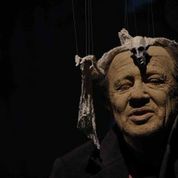
Single actor, Patrick Michaelis (who has to be Giacometti), suffers sand pouring over his head, then a wee demon of a puppet- familiar on his skull, then a yellow spider, then outstretched, skeletal arms protruding as if from the back of his coat. Did I appreciate the following elucidatory text on a screen somewhere: “A blind man extends his hand in the void (in the dark? In the night?/The days pass and I dream of catching, stopping that which flees”? No, I did not; Giacometti’s 1952 haiku-like poem probably was evident somewhere but there were too many available options: actor’s voice, electronic voice, chalkboard, tablet screen, revolving PC monitor, big screen. And the music plays all the while: on conch, muted trombone, synthesiser, and those impressive alpenhorns.

This breadth of choice, I suppose, derives from the show’s extended title, Hôtel de Rive – Giacometti’s horizontal time (lost to UK marketing), where linear narrative style is discounted in favour of a segmented disc on a single plane. A different event is contained in each segment that narrows to a single, all-inclusive point. Got it? Anyhow, the show does actually close with an up-tempo approach to the artist’s last work, Paris sans fin, a series of 150 lithographs of that city.

I’m pleased that I know more of Alberto Giacometti’s life and art. I liked watching Hôtel de Rive work its inventions out but it was a slow, creepy, ride. Accomplished, skilful, polished; but really just an assembly of clever components, I felt.

Reviewer: Alan Brown (Seen 6 February)

Visit Figuren Theater Tubingen homepage here.

Arcadia (Bedlam: 5-8 Feb.’14)

Arcadia apple   Arcadia2

the counterpoint of rhetoric as chat-show”

Editorial Rating: Nae Bad

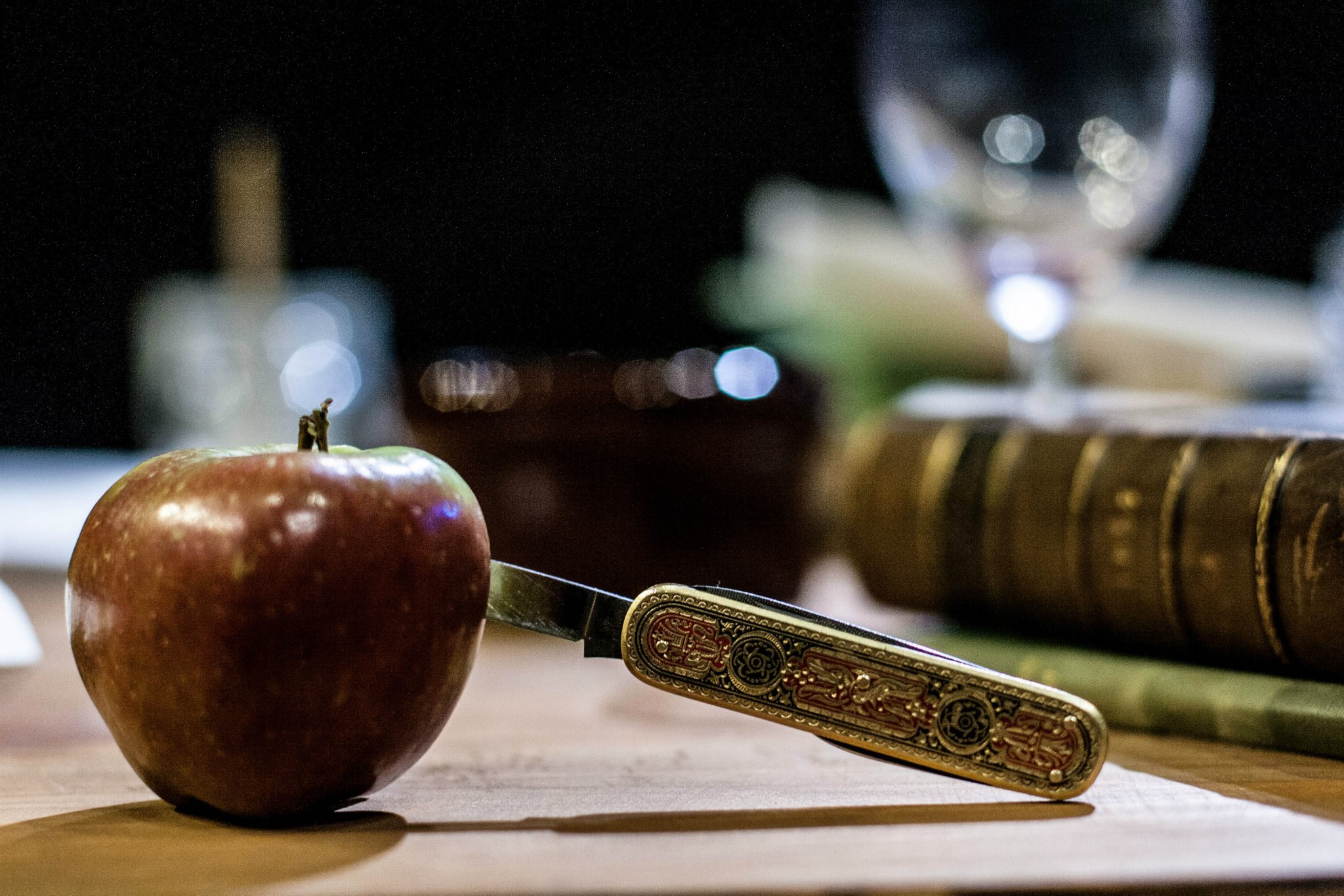
Tom Stoppard’s Arcadia (1993) still has time on its side. There are two apples on the table, the original that Gus offers Hannah at the end of scene two and now there’s Valentine’s MacBook.  Whether ‘Pro’ or ‘Air’ I don’t know but – for a while – let’s stay with ‘Pro’ because this is a student production with professional heft.

The principal roles carry with admirable ease; big ideas don’t sound too heavy; and the impression grows of well-rehearsed supportive work, for even the closing waltzers look to be in step.

Anyway, you don’t ‘do’ Arcadia lightly. This is a recognised heavyweight of modern British drama. Go to The New Yorker online for ‘Tom Stoppard’s Arcadia, at Twenty’ and see what I mean. The plot need not be reviewed – ‘I can’t do plots and have no interest in plots’, said Stoppard when interviewed for the Paris Review in 1988. OK, a soundbite and before Arcadia, but he makes it clear that he does not like ‘narrative mechanics’. What matters is structure (most difficult) and dialogue (easiest). He looks forward to writing ‘a literature play rather than an event play…. in one setting …. where all the time and the energy can be devoted to language, thought process, and emotion’. Eh voilà, a few years later, Arcadia, where Thomasina (13 and brilliant) picks up the leaf of the apple and says “We will start with something simple. I will plot this leaf and deduce its equation”. Note restricted use of ‘plot’. That, as it happens, leads to iterated algorithms of grouse numbers on the MacBook in Act 2 but Arcadia, for all its astonishing architecture, breadth and ingenuity, is a stage play and not a spreadsheet.

A pertinent example:
Bernard:     Because time is reversed. Tock, Tick goes the universe and then recovers itself, but it was enough, you were in there and you bloody know!
Valentine:   Are you talking about Lord Byron the poet?
Bernard:     No, you fucking idiot, we’re talking about Lord Byron the chartered accountant.
Valentine:   (Unoffended) Oh well, he was here all right, the poet.

Not that directors Eric Geistfeld & Charlotte Hodge have much room to enjoy this. The Bedlam stage has to be extended to accommodate the large table at its centre. Additional seating is provided onstage, left and right, but is unhelpful. Stoppard’s own description is of a bare room, uncarpeted, where ‘nothing is impressive but the scale’. Shooting parties are heard as noises-off and the schoolroom table accumulates the right props: folders, books, paper, pen, ink, an aged tortoise called ‘Lightening’ doubling as a paperweight. In the last scene, importantly, there is a pot of dwarf dahlias but otherwise the very large country house in Derbyshire in 1809, a stately home in 2014, is a distant setting in Bristo Place.

Upfront, down stage and around the table, however, there is solid, focused performance. Lauren Moreau is Thomasina Coverly and is entirely convincing as genius pupil and smart child (think Outnumbered Karen), who is as fascinated by jam in her rice pudding as she is by kissing. Pedro Leandro is her tutor, Septimus Hodge, who does languid and attractive intelligence to the nth degree of Fermat’s last theorem. Stoppard’s George in Jumpers (1972) belongs ‘to a school which regards all sudden movements as ill-bred’. Septimus went to Harrow, maybe played in the eleven with Byron, and learnt the same lesson. Leandro voices the elegant wit of the gentleman scholar as if to the manner born. Peter Stanley as Valentine Coverly, post-grad mathematician and modern day heir to Sidley Park, has the other sort of manor but the same gift of lazy concentration. As with Septimus, Valentine’s words provide rhythmic measure and reflection and Stanley makes you listen. Rik Hart as Bernard Nightingale provides the counterpoint of rhetoric as chat-show. Almost insufferable, ‘bouncy on his feet’, an academic bloodhound, the part drives the actor and Hart controls it very well.  Sita Sharma, as Hannah, has to manage this clever, unrelenting, assault and still stand her own ground. A threatened kick in the balls and calling him an “absolute shit” gives her an encouraging, winning, start that a poised Sharma does not relinquish.

Supporting roles are better than also-rans but it is uneven going. Arcadia is an unforgiving estate in 1809. The costumes looked really good but this is not period drama and the physical comedy cramped up. Braying outrage from Henry Conklin as Chater and a glowering Capt.Brice RN. (Sebastian King) were fun but … too much. Rosie Pierce as Lady Croom went all out for pure-bred aplomb and witty hauteur, leaving Derbyshire far behind. Poor Mr Noakes (Lewis Robertson), jobbing landscape gardener, had no defence but a soft Scottish accent, which was nice. The remaining household: butler Jellaby (Will Naameh) and Lord Augustus (James Beagon) – stay impassive, dumb in my lordship’s case, and that served well.

In contemporary Sidley Park, Catherine Livesey is Chloe Coverly, 18 – giddy, kind and susceptible; whilst James Beagon is back and now speaks as ‘Gus, at Eton and pretty cool.

As students might plough a tough exam it is entirely possible to plough  Arcadia and bury it. But not this time. Directors Eric Geistfeld & Charlotte Hodge and cast should reap a reward.

nae bad_blue

Reviewer: Alan Brown (Seen 5 February)

Visit Arcadia homepage here.

The Seas of Organillo (Traverse: 4 Feb.’14)

Organillo

The Seas of Organillo is a birthing pool for puppets.”

Editorial Rating: Nae Bad

From above – and occasionally in – The Seas of Organillo master puppeteer Stephen Mottram manipulates a biosphere of his own making. In a general Wiki sense a biosphere is a closed, self-regulating system containing ecosystem(s) – ‘including artificial ones’. There you have it: a puppet show that is deeply immersed in itself as a creative process. Highfaluting? Not at all, once you’ve seen it, heard it, and come up for air.

The electro acoustic score is vital and accompanies the whole work rather like an evolutionary agent. Mottram explains its genesis after the show (and on YouTube). He brings on the organillo, a small hand-turned barrel organ, that he built himself over four months out of his old wardrobe, drain pipe, lining paper, and B & Q. Each cylinder roll provides eight minutes of music but multiple recordings of the whole clicking, bubbling, breathing, box provide the soundtrack. There is no speech. Call it organic, obviously.

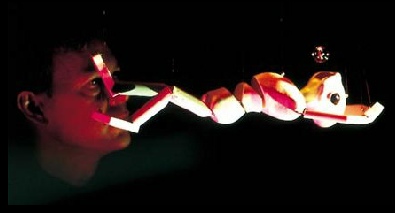
There are seashore calls and off-shore waves but nothing on-shore. On the surface the seas support a couple out rowing but it is only a couple of turns around the bay before they’re gone and a swimmer comes into view. More homunculus than human, a tiny ET in a cycle helmet, really; for, says Mottram, “I liked the poetic idea of swimming creatures somewhere between fish and people”. Whatever they are, they love the sea – and each other, which is kind of the point.

The Seas of Organillo is a birthing pool for puppets. It is sex under water for little, primitive, humankind and as such it is both innocent and fascinating. You see a bubble of life-giving air rise to the (invisible) surface; hands move and stroke each other in deep space; an egg floats free. Sperm penetrates the egg and – as with a multiplying shoal, more or less – cell division begins, a womb is formed and new angelic life begins. Up top, Mum and Dad now row into sight with an infant in tow.

So much, so familiar in biological terms but the puppetry is something else. There are a lot of puppets in The Seas of Organillo and they are often moving alongside automata – “sexy machines”, Mottram calls them – to help create the liquid, holistic illusion. Occasionally I couldn’t figure it out: the triffid-octopus like ‘thing’ of a fallopian tube; the egg eating clam; the stripping-off of colourful layers from around the fertilised egg – but then, after the show, I read the helpful hand-out that I should have read before I went under.

I’m a pretty poor hand at keeping fish. They survive but without much support. In The Seas of Organillo, first conceived  around 1998-2000,  Stephen Mottram has made puppets akin to biotechnology. Probably a first.


nae bad_blue

Reviewer: Alan Brown (Seen 4 February)

Visit Stephen Mottram’s  homepage here.

Bestiaires (Traverse: 3 Feb.’14)

1. bestiaires_ester_photo_Jaka_Ivanc

Zeus is packed off, squashed into a crate marked ‘Fragile’, for sale to China – again.”

Editorial Rating:  Outstanding

Bestiaires is part of the Visual theatre Festival, 31 January to 8 February, at the Traverse Theatre. Edinburgh49 is reviewing four productions. Bestiaires was the opening show.

Mythology is flexible and so is foam rubber. This provides Duda Paiva and his company with all it needs to create Bestiaires or – for its Norwegian audience last September– Manbeast. The work is not a monster manual, although there’s a golden, hungry, Cerberus; nor is it really an outing for the properties of polyurethane/latex, although they’re wonderful; no, this is about the enduring life of the gods in our more secular time. The exclamation “For Gods’ sake!” is used often enough to make you think, sadly, of how they’re getting on.

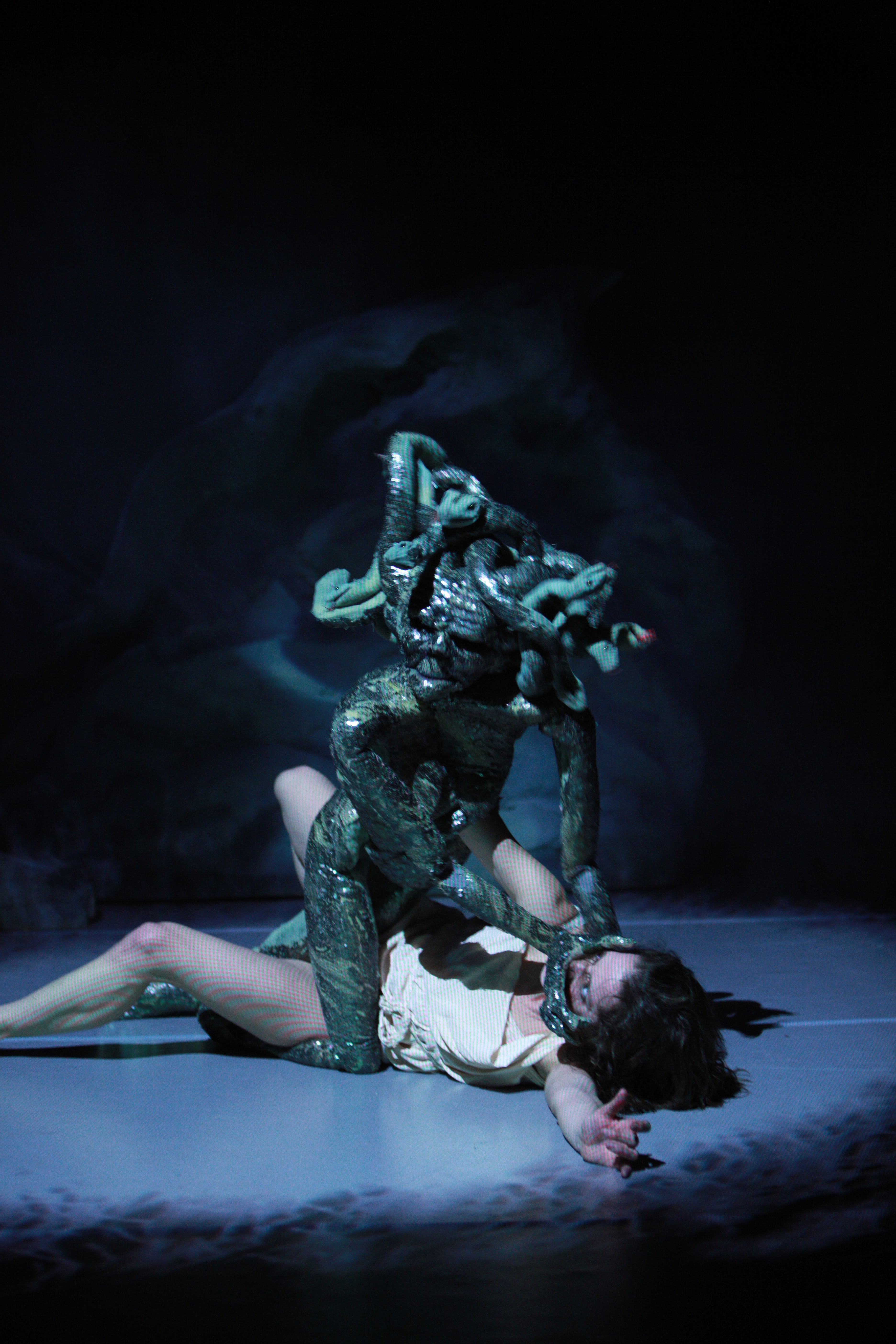
Not too many gods – Cupid, Persephone, Hades, Zeus and Athene principally – and the Medusa, transformed from fit dancer, Ilija Surla, (that’s elasticity for you – check out your Pindar) to writhing Gorgon puppet. Nowadays all is far from well on Olympus. Death-dealing Hades has become western ‘civilisation’s’ best-selling export and Zeus is packed off, squashed into a crate marked ‘Fragile’, for sale to China – again. For the time being: a relative concept in this show of seventy memorable minutes – Cupid (Mart Müürisepp) holds the stage as rueful narrator and demi-Chorus: his bow, a long microphone lead; with a hip flask of whisky to lend him a dram of Dutch courage.

Nevertheless and in generous spirit (to restore Greek finances) Cupid would reunite a wilting Persephone and a Hades, who’s looking the other way at Medusa’s pects. Cue Hades’s immortal line: “You’re hot. You want to party?” There’s some easy morphing of Demeter and Persephone but no matter; what has real, unequivocal presence is the dancing of puppeteer and foam rubber puppet. By now, since 2004, this is the company trademark and it is exceptional. Video animation of spring flowers and unerring sound, musical and vocal, complete the impression that everything on stage is alive, not least those gods.

Ester Natzijl is literally inside the square head of Zeus who does not stand tall. Instead he’s reduced to amused contemplation of the F word, as applicable to his small condition, as in “Get me the F out of here!” or “What the F!”. Classically moulded Hades gets grossly fat and cannot regain his place. Three mouthed Cerberus may play ‘Fetch’ with Cupid’s wig but it can still get very dark out there. Put the mirror of eternal beauty in the hands of these gods and you invite trouble. Medusa and Athene dance in jealous, nightmarish combination.

There is a compilation of acts on dudapaiva.com called Break the Legend. Bestiaires is original work of high quality that would do just that. Zeus, unfazed by market conditions in China, gives a homily on love – of all his attributes, the least familiar – that has probably held him together since those titan wars. It must be the magic quality of that rubber for, as Duda Paiva puts it, “I’m just fascinated by foam, because it is generous, it is about generosity.  It’s such a giver.”

In a respectful word: awesome!

outstanding

Reviewer: Alan Brown (Seen 3 February)

Visit Duda Paiva Company homepage here.

Bedlam Festival 2014: 3 ‘shorts’ – ‘Seawall’; ‘On One Knee’; ‘Rob and Roberta’

Bedlam Festival 2014

“and – magic – you have theatrical Snapchat”

Editorial Rating: Unrated 

LOWDOWN: The ‘Bedam Festival’ is a six day festival … operated by the longest running student theatre in Britain … completely administered, staffed and performed by students and young people primarily studying at Edinburgh University.’ 

In case you wondered (because you’re not a student), the Bedlam Theatre is the ninety seat theatre housed in the old New North Free Church on Bristo Pl, looking down towards George IV Bridge. It is Fringe venue No49 in August when use of the pa. system seems important. Last week, on the one occasion that I heard a solemn “The House is now open”, it was laughingly decried as ‘train station posh’.I saw three productions on consecutive evenings at 6.00pm. Audience numbers looked good at around 50+. Rob and Roberta had two performances; Seawall and On One Knee were one-offs.

Seawall by Simon Stephens.  This is a surprising and effective piece. It is a grief-stricken story of sudden loss and immanent mourning. Jonathan Oldfield as Alex is quietly alone on stage and is looking back at what happened and would bring his audience with him to the edge of his personal darkness. The submerged seawall of the title is where you back away from the depths of misery on its other side. This tale is thirty minutes in the telling but you wouldn’t know it. Alex moves you through in tones half conversational, half confessional, and the emotional tug is unremitting. There are sorrow smudged sketches of his partner, Helen; of her father, Arthur; and of their child Lucy; but it is Alex alone who gains real definition.  Oldfield’s monologue would be heart-breaking in its gathering intensity but writer Simon Stephens waives the sentimental, preferring a body blow to the stomach. Alex used to cry at anything – that moment in Groundforce, for instance, when the made-over garden is revealed to its surprised owner – but not anymore. Oldfield’s performance has real gut-churning weight behind it.

On One Knee by Delia Bloom is thirty minutes of original writing for EUTC and opens up with Bruno Mars’ ‘Marry You’, whose dance track is just right for this light and irrationally accurate show. ‘Looking for something dumb to do’? Easy, put one lovelorn loon, Jamie, on the left of the stage to propose marriage to Christine and put his two pals Tom and Erica on sofas to the right with lots of vodka shots.   John Forster is sweet Jamie and a very credible sucker for Imy Wyatt Corner as Christine who – of course – fancies another, fitter, laddie. So much, so deliberately cringeworthy; but meanwhile there’s comic action across at the flat where friends Tom (Jonathan Barnett) and Erica (Isabella De Vere Rogers) are texting to save Jamie from himself.  Writer Delia Bloom gets it right here: life for this merry band is ‘one story after another’, just link arms and skip from one side of the stage to the other and – magic – you have theatrical Snapchat. De Vere Rogers, sassy, and Barnett, smart, work well together and try out stylish Anna (Blanca Siljedahl) as a better girlfriend for Jamie. How ‘better’? Who cares baby, let’s just play ‘The Settlers of Catan’. Congradulations (sic) to director Sally Pendelton.

Rob and Roberta by Rory Keller is more loaded. You are still in flat share land but there’s talk of careers underway – the law, medicine – and relationships are heavier to shift. Rob (Laurie Motherwell) is weary before his time and relieves the weight by being snide to his best friend, Roberta (Emma Nevell), and it is a wonder she puts up with him as cheerfully as she does. If he had lots of words Rob would be messing with the heads of his friends, as it is he contents himself by pulling them away from each other. Rida (Daniel Orejon) loves Cheeto (Adam Butler) in less time than it takes to crunch a cornmeal snack but that kind of wholesome enjoyment is not for the jaded Rob. He is therefore the challenge that pert and determined Rachel (Izzy Hourihane) is looking for. She will ‘fix’ her man within a year, she declares, and the play’s action describes that attempt. Hourihane’s energy is vital and holds your attention through multiple scenes past and present but at times I, for one, was wondering ‘What for? Is Rob worth it?’ He does resolve this for himself at the play’s shocking end but I got the distinct impression that Rob and Roberta is a psychological drama that had lost its plot.

I really would have liked to have seen more shows; I should have done.

Reviewer: Alan Brown (Seen 22, 23, 24 January)

Visit Bedlam Festival 2014 homepage here.

Long Day’s Journey into Night (Lyceum : 17 Jan. – 8 Feb.’14)

Production photos for "Long Days Journey Into Night"

‘‘Health and happiness ’ and then, perfectly, ‘that’s a joke’.’

Editorial Rating: Nae Bad

By now Long Day’s Journey into Night has a lot of followers. Written in 1941 this is Eugene O’Neill’s Facebook page from hell – and back – and without any privacy settings. Received by the New York Times in 1956 as a ‘saga of the damned …. like a Dostoevsky novel in which Strindberg had written the narrative’ it is a remarkable and important play. Watch it (occasionally not easy), follow its story (not difficult) and you’ll realise, in epic Facebook terms, its ‘social utility’ for our time.

You will like the kind and sympathetic realization of character in this Lyceum production. Diana Kent, who plays Mary Tyrone, says “There’s no baddie in the play. Everybody is flawed, everybody damages everybody else, but there’s a reason for it, and everybody can be forgiven. It’s a hugely compassionate play” (HeraldScotland, 5 January). For director Tony Cownie it’s ‘a very personal family situation [turned] into a very meaningful intense drama’ (Lyceum programme). Guilt and retribution – the acid feed of some productions – come a discordant second to underscored themes of conflicted love and understanding. A word here for the dialect coaching of Lynn Bains, for the accents are never strained, however keenly pitched. Cue also sorrowful cello, piano, and a quiet sea  – off-stage right  – rather than screaming strings and raucous gulls.

Paul Shelley is James Tyrone, handsomely retired actor, who at sixty-five would still command the stage or living room with debonair gesture and manner. Seduced by $35000 a year net profit at the box office he gave up on Othello and Shakespeare for the lead in melodramas. He shows off his cigars but does not smoke them and the theatrical metaphor is never far away. ‘The final curtain will be in the poor house’ he declaims but whilst he can guard his whiskey (he’s an Irish American remember) and wryly attack the fecklessness of his sons he is again losing his wife to her morphine habit. Shelley shows the pronounced make-up of a man whose dignity and loyalties are keeping him together but are wearing him out at the same time.

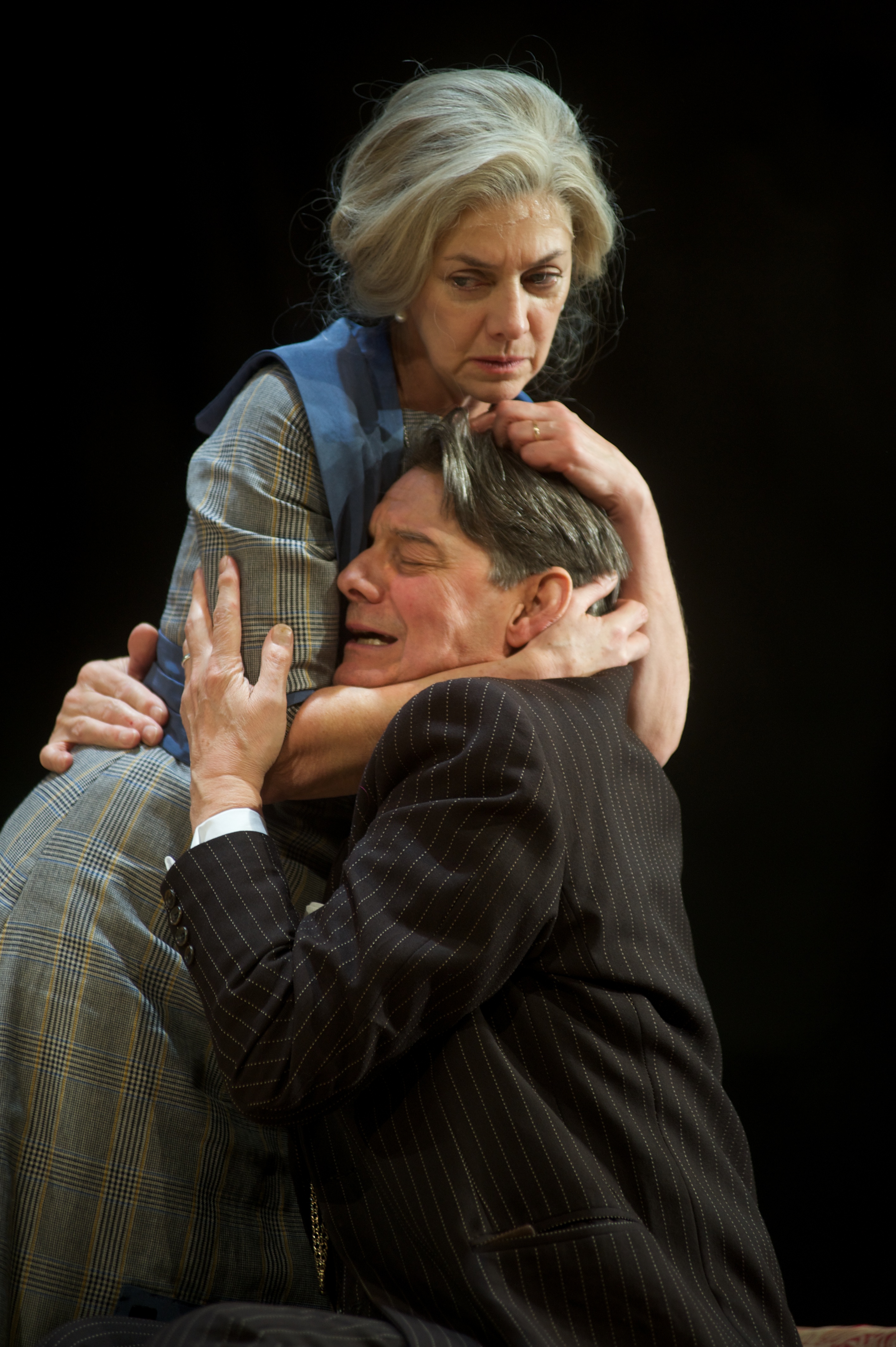
Tyrone often holds his wife of thirty-six years but Mary is not really there. He might as well embrace the air for Diana Kent plays Mary as a woman in love with a happy, momentary, past. Her speech is limpid clear and sounds as lonely as she feels. Even when animated and with their vivacious young housekeeper, Cathleen (Nicola Roy), Mary is receding. Her addiction will reclaim her, is reaching her all the while, as inescapable and as all-enveloping as the sea fog that O’Neill would fold her in.  A muted foghorn signals the same. Kent’s performance is one to admire and to think about.

The two Tyrone ‘boys’, James Jnr (33) and Edmund (23), do love their parents and it is naturally selfless, unlike what came next in O’Neill’s A Moon for the Misbegotten (1947). Adam Best as James Jnr. and Timothy Evers as Edmund are very well matched. Their open exchanges provide a sure solidity and warmth that shore up the fragile state of their parents’ relationship. Granted they do drink a lot of whiskey but that allows Edmund, of all people, to propose ‘Health and happiness’ and then, perfectly, ‘that’s a joke’.

However, as is the case here, cut over an hour from O’Neill’s script and put too much distance between the Tyrones and the play’s autobiographical anguish, then you might, cheekily, unfairly, plot this Journey to a few miles out of Elie or maybe Troon. The Tyrone’s car might be a Lexus (actually it’s a Packard) but it looks cheap compared to their neighbour’s S class Mercedes. James Tyrone routinely buys to let and is cash poor; he worries about his electricity bill. He expects his sons to make money. He’s meanly content with the state hospital rather than pay out for private healthcare. Mary wants a proper upholstered home, preferably in the city. The men change into dapper suits to go to town. The full-on wooden wall of the ‘cottage’ interior looks like the neat cladding of apartments in Edinburgh’s Quartermile. There is, I think, a bourgeois milieu here that is pretty comfortable and spacious, some way off O’Neill’s cabined and pathological closeness, and that has to limit the tragedy of a family on the rocks.

Is it helpful to salvage significant pity and modest understanding from the fuller, near mythical qualities of this great American drama? Yes. This is a good, clear-sighted, production of Long Day’s Journey into Night that stops well short of the gloaming.

nae bad_blue

Reviewer: Alan Brown (Seen 21 January)

Visit Long Day’s Journey Into Night homepage here.

‘Peter Pan’ (King’s Theatre: 30 Nov ’13 – 19 Jan ’14)

PP_masthead

“On deck aboard the Jolly Roger, pint-sized John Darling, with obligatory top hat and brolly, upstages the big, very tall, Captain Hook (Grant Stott) with talk of human rights and the Geneva Convention”

Editorial Rating: Nae Bad 

Hook up with Peter Pan and you’re way beyond parental guidance. There is, of course, no ‘PG’ certificate attached to this ‘swashbuckling pantomime adventure’ that splashes music, dance, colour and broad comedy over young and old alike. J.M Barrie is in small print but never mind for within moments of Mrs Smee’s (Dame Allan Stewart) balloon landing she is squirting water from her eye-catching boobs and foolish, lovable, Mr Smee (Andy Gray) is off on a plump pantaloon’s dream ticket, riffing on ‘balloooon’ until his lugubrious jowls fold in helpless laughter.

The show fits its Christmas billing. The outsize programme features ‘Panto Puzzlers’ – try Michael’s Star Maze for example – and happy seasonal advertising for the young at heart. ‘If you can dream it, you can do it’ is a good enough way to Never Never Land (not Musselburgh) …  via the second star to the right. There is lots of fairy dust and spectacular lighting to fly us out of Edinburgh and to transform the ‘wee green bogey man’ into the fearless, battling, Peter who will not grow up.

On deck aboard the Jolly Roger, pint-sized John Darling, with obligatory top hat and brolly, upstages the big, very tall, Captain Hook (Grant Stott) with talk of human rights and the Geneva Convention. Poor preening, impotent Hook! There is snide mention of his little blue pills – Tiger Lily gets leered at – and his quarter-deck shakes a bit as he clashes swords with the agile Peter. His (over-used) command of ‘Pirates Attack’ brings on a nice dance trio who would not attack a sand-castle. Regardless, Stott preps for his dastardly role by a brief appearance as Mr Darling, twirling his moustache and singing a wicked little ‘It’s a banker’s life for me’. The later mention of Fred Goodwin is happily inevitable.

The really funny routines are firmly with the Smees. Allan Stewart and Andy Gray perform with gleeful, twittish and tickling spirit as sparring couple, squashed couple and as a pair of beached mermaids. One scene, involving mops on parade and the baldy joke, is too long but the two become real pantomime villains when with the lights up they turn a tv.camera on the audience. Grown-ups beware!

“But where”, the cry should go up, “is Peter?” Well, he is not quite as lost as his Lost Boys, but he is nowhere near Wendy either, which makes Maggie Lynne’s part sweet but distant. Daniel Healy flies in well – one leg perfectly bent at the knee – but it is not easy to land lines like ‘To die would be an adventure’ amidst the fire balls and dance numbers, not to mention an interloping 007 and Adele. Peter’s rousing ‘Cock a doodle doo’ greetings cannot stand against the fun to be had with sing-along ‘Rum tum tickle your bum, Everyone one shout hurrah!’ or a barfing, “HiYa”, Tinkerbell.

And give the animals their place in this entertaining show: one large Nana dog, all big eyes and paws; Hook’s smart-alec parrot; and the mother of all crocs. You do want to see that croc!

nae bad_blue

Reviewer: Alan Brown (Seen 17 December)

Visit Peter Pan homepage here.