‘The Merchant of Venice’ (Assembly Roxy: 10 – 14 March’15)

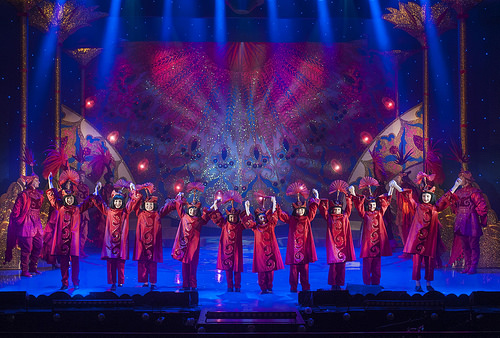
Isobel Moulder as Portia and Will Fairhead as Bassanio.

Isobel Moulder as Portia and Will Fairhead as Bassanio.

“From the Rialto to Little Venice, W9,  is neat”

Editorial Rating:  3 Stars

Were Antonio at work today, this stacked play would be even trickier than it already is. He’d be talking about moving cargo rather than sailing ships. His wealth would be in metal boxes to Singapore or Mumbai rather than argosies from Venice. Nevertheless, reassuringly, his sound advice to Bassanio would be the same: “Go, presently inquire where money is”. That would send the enterprising lover to Shylock, who would have friends and funds in Frankfurt and away we go.
However, in this production when Shylock asks “What news from Germany?” (that’s Genoa back then), the context shifts mightily. For now we’re back to September 1939 and the news ain’t good. In fact if you’re Jewish it has been desperate. Director Rae Glasman finds a choice text in Prime Minister Chamberlain’s declaration of war:

   “Now may God bless you all. May He defend the right. It is the evil things that we shall be fighting against – brute force, bad faith, injustice, oppression and persecution – and against them I am certain that the right will prevail.”

That’s not Shakespeare but it works. For a start, which God: Christian or Jewish? Who is the more righteous: backscratching Bassanio, Jew-baiting Gratiano, or is it Antonio, who spits at Shylock in the street? Is it merciful or just to condemn Shylock to near ruin and to force him to convert? Portia, if always an unlikely victim, will find happiness in marriage. There is a happy and flimsy ending, which is why – I suppose – Glasman has that radio broadcast at the end of the play, to make her audience ask what exactly has prevailed here? Actually, I would have welcomed that mooring at the start. There’s the trouble with The Merchant of Venice; it goes all over the place: scenically, tonally, action-wise. Underwhelming and overwhelming.

From the Rialto to the City of London and to Little Venice, W9, is still neat. Portia’s Belmont is relocated to a country house, somewhere in the Chilterns, I guess. That is not a displacement too far but it looked hard to accommodate on the Roxy’s stage. I found the opening and drawing of the full length curtains in-between scenes more distracting than helpful and it’s a No-thank you to the squealing Downton maids at open-the-box time. The Glen Miller sound was melodious though and the cocktail cabinet and fetching evening wear did their elegant, idle, thing well enough.

As do Bassanio’s set of chaps. Portia (Isobel Moulder) sees them – and quite possibly all men – as “bragging Jacks” to be practised upon, which this marble-mouthed lot certainly deserve. She is also properly merciless in the court, where otherwise the languor of the club rooms seemed to have carried over. To supply Bassanio (Will Fairhead) with an Eton education and braces was presumably to allow him to stand nonchalantly, hands in pockets, between the caskets and to give him the manners, surely the compassion, to pick up Shylock’s yarmulke from the floor and to give it back.

Joe Shaw as Shylock with Kirsty Findlay as Jessica. Photos: Aliza Razel

Joe Shaw as Shylock with Kathryn Salmond as Tubal.
Photos: Aliza Razel

I could believe in Shylock (Joe Shaw) as a broken father. “My daughter is my flesh”, he says, and then Jessica abandons him – or is stolen from him. His hair should have been greyer but it is no surprise when – to take like for like – he would cut into a spent Antonio (Pedro Leandro) above his heart. There is real pain in that vengeful effort.

Kirsty Findlay as Jessica and Chaz Watson as Lucy Gobbo.

Kirsty Findlay as Jessica and Chaz Watson as Lucy Gobbo.

There are laughs in the features and antics of preposterous suitors, Arragon and Morocco, and in the crazy work of Lucy Gobbo (Chaz Watson) who sounds like the ‘wauling bagpipe’ of Shylock’s protest and who looks way too bad for Emil and the Detectives.

Rory McIvor as Lorenzo spoke the (blank) verse best and did Moonlight Serenade introduce his scene with Jessica near the close? I can’t recall. I do remember approving Bassanio’s choice of the lead casket, for ‘Thy plainness moves me more than eloquence’, which is where I stand on this production. It looks pretty and sounds attractive but its necessary centre of gravity is away, awry.


Star (blue)Star (blue)Star (blue)

Reviewer: Alan Brown  (Seen 10 March)

Visit the Assembly Roxy archive.

‘Equus’ (Bedlam: 3 – 7 March ’15)

Douglas Clark as Alan Strang Samuel Burkett as Nugget, the God Equus Photo: Mihaela Bodlovic.

Douglas Clark as Alan Strang
Samuel Burkett as Nugget, the God Equus
Photo: Mihaela Bodlovic.

“You’re out there with the cowboys”

Editorial Rating:  4 Stars Outstanding

Track suits and gloves of chestnut velour, anyone? Well, maybe in 1973 when Equus first cantered and careered into stage history. Now, we’ve lost the strutted hooves and it’s black Sculpt Tight leggings and sports bras. No matter, for this is a super fit production and the horses look the part. Do not, under any circumstances, think germinal, theatrical, War Horse, for director Emily Aboud achieves blinding drama.

Literally. Alan Strang (17) took a hoof pick to four horses and put out their eyes. (It was six in the original production but play fair with Bedlam’s space). Martin Dysart is the psychiatrist who gets inside Alan’s head to see what went ‘wrong’ and – maybe – to make him ‘well’. These are troubled and relative terms, as becomes extremely clear. Dysart reports Alan’s story as Alan tells it and is assisted by the testimony of parents, girlfriend and employer, and in so doing lays bare his own obsessions and vulnerability. This is one treatment plan where the word sacrificial does not beggar belief.

The two principals are admirable. Douglas Clark as Alan is lean, hurting, and his voice breaks from soft assent to pain and furious anger with remarkable force. His few scenes with Jill (Chloe Allen), his unexpected girl, are both tender and acutely awkward. He is also, in the extraordinary last scene of Act One, and alone with Equus, in complete control of what could be disastrously affected language. Charley Cotton plays Dysart as the decent doctor who has just about given up on the prescription ‘to heal thyself’. His dreadful marriage – to a Scottish dentist! – is as neatly dissected as his vain hopes to discover real pagan Greece in his Kodachrome snaps of Mount Olympus.

Douglas Clark as Alan Strang Chloe Allan as Jill Mason Photo: Mihaela Bodlovic.

Douglas Clark as Alan Strang
Chloe Allan as Jill Mason
Photo: Mihaela Bodlovic.

Designer Emiline Beroud respects Peter Shaffer’s original setting. The cast is on stage throughout, sitting at the back or to the sides when not performing. The centre stage is railed off on two sides and provides consulting room and stable floor. The horse masks hang left and right. Bedlam cannot accommodate the back-drop of tiers of seats, as if in an old anatomy lecture theatre, so Dysart’s talk becomes more confessional than public spirited and – if anything – more characterised by what Shaffer called its ‘dry agony’.

And the visual action is extraordinarily effective. That’s a lot of rehearsal time, I reckon. Mimetic movement, snap-tight lighting (predominately blue) and an electric beat do deliver Shaffer’s choric element. When these horses move and when one is ridden you’re out there with the cowboys of Alan’s wishes. When it all goes dark, in between the strobe flashes, it’s a stampede of the mind.

Equus has an awesome reputation and that’s in the classical, God fearing sense of the word but its notoriety has probably gone and it might seize up and appear contrived. There was some first night stiffness to the supporting roles but for the most part this exacting production gives its language and ideas free rein and exciting liberty.

outstanding

StarStarStarStar

Reviewer: Alan Brown  (Seen 3 March)

Visit Equus at Bedlam here

Visit the Bedlam archive.

THIS REVIEW HAS NOT BEEN SUBEDITED

‘The Caucasian Chalk Circle’ (Lyceum: 18 Feb. – 14 March ’15)

Grusha :Amy Manson Photo: Alan McCredie

Grusha :Amy Manson
Photo: Alan McCredie

“Compelling”

4 Stars: Outstanding

‘Standing between doorway and gateway, she heard
Or thought she heard …’

Listen up, “I’ve looked into the pockets of the rich and that is [considered] bad language.” Here is a contemporary, full-on production of Bertolt Brecht’s great and humane play; its profane political resonances not so much hanging in the air as gusting out of the wind machine. As it goes, these days and then, HSBC (Swiss arm) could be up there on the gallows with the town judge, the Chief Tax Collector and the rest. At a grim stretch, you’ve seen what’s happening in the eastern Ukraine, well, here we go again.

We’re talking piastres of indeterminate (Ottoman?) origin rather than of pound, franc or euro but who cares provided you’ve got a shedload? And that’s the economics of the piece: “Those who had no share in the fortunes of the mighty / Often have a share in their misfortunes.” Out of confusion, collapse, coup and revolution come the have-nots-have-all stories of brave Grusha and of His Worship the excellent, the most scurrilous Azdak. Theirs, in amongst the rifles, rape and the noose, is the unlikely, virtuous, lyrically unco traffic of our stage.

The Caucasian Chalk Circle is a play with songs and director Mark Thomson realises how entertaining it should and can be, in or out of the shadow of Soviet tractors. Sarah Swire, as the Singer-Narrator, is not Brecht’s ‘sturdy man of simple manners’ but a punchy and versatile performer whose style and presence guides and informs rather than commands. Cast members double as musicians and Composer/Musical Director Claire McKenzie creates a strong and urgent soundscape: the city falls to a fearsome clockwork beat; Grusha is held in a ghastly tango by her brute of a husband. There is dancing, quite rightly, at the close.

The Singer: Sarah Swire Azdak: Christopher Fairbank Photo: Alan McCredie

The Singer: Sarah Swire
Azdak: Christopher Fairbank
Photo: Alan McCredie

The Singer sings of once upon a time, for the legend of the circle of chalk is based upon an old Chinese play. At its centre Brecht places Grusha, the kitchen maid, who saves the Governor’s child and runs for the mountains. These are not kind times. Papa’s head ends up on a lance and soldiers are hunting them down. Grusha’s flight is perilous, not least when she’s crossing a 2000 foot drop on a half rotten bridge. This is terrifically staged, as befits the moment when ‘Grushna Vachnadze decided to be the child’s mother’. Thomson realizes that this play works when an audience is exposed to why people behave the way they do. Azdak’s decision not to hand over the fugitive Grand Duke makes sense when you are gripped by his arch reasoning. Trial by chalk circle is palpably, deliberately, grotesque but it’s a dramatic triumph.

Christopher Fairbank is a stomping success as Azdak. More the truculent Ariel than any burdened mage, he is the rogue Time Lord with an impish spirit who obliges and provokes in the blink of an eye. Amy Manson gives an unwavering performance as the steadfast Grusha and harvests all the sympathy that the audience as collective can supply. Nasty, uncomfortable menace comes from the Sergeant, frighteningly well played by Deborah Arnott whilst Shirley Darroch as fat Prince Kazbeki is a cigar chomping nightmare, only marginally offset by her blaring trombone.

Kazbeki: Shirley Darroch Photo: Alan McCredie

Kazbeki: Shirley Darroch
Photo: Alan McCredie

Alistair Beaton’s translation matches the lucidity of his programme notes on translating Brecht but is not helped when the accents travel far and wide: from the Thames estuary to the Welsh valleys, to Birmingham, to the North East, and to Scots, high and low. Strained rather than epic, I thought. And light features like smooth, RP-ridden lawyers, Barbour-clad farmers, mobiles, and a Lidl bag signify too much, too unnecessarily. You can speak uber German, I’m told, but all the same posh English for the ‘upper’ class is becoming too easy a target to mean much.

Still, “All pleasures have to be rationed” says the Girl Tractor Driver. Actually, not so in this eager and compelling production.


outstanding

StarStarStarStar

Reviewer: Alan Brown (Seen 21 February)

Visit The Caucasian Chalk Circle at the Lyceum here.

Visit the Assembly Roxy Bedlam Church Hill Theatre Festival Theatre King’s Theatre Other Pleasance, Potterrow & Teviot Summerhall The Lyceum The Stand Traverse archive.

THIS REVIEW HAS NOT BEEN SUBEDITED

‘Faith Healer’ (Lyceum: 14 January to 7 February ’15)

Photo: Eoin Carey

Sean O’Callaghan as Frank. Photo: Eoin Carey

“He walks across a cobbled yard and smack into classical tragedy.”

Editorial Rating: 4 Stars: Outstanding

I don’t suppose Glasgow’s Celtic Connections features a whippet on the bagpipes. Well, Brian Friel’s forlorn yet devout play has one. It also has an Academy Award Best Original Song, from 1936, in The Way you Look Tonight and the Troon to Larne ferry. From Ceann Loch Biorbhaih (aka Kinlochbervie) in Sutherland to Welsh Methodist halls to Donegal to digs in rundown Paddington, Faith Healer – first performed in 1980 – has evocative mileage.

It is all in the voice and the story telling and in the sad and unaccountable distance between them. Three characters explain themselves to their audience. Simples. Each in turn stands alone on stage and talks of how it was when they were together, how it is now, and how it might have been – or might have seemed. Memory is fallible. What you once thought you had learnt by heart or by experience, bitter or sweet, can be a struggle to recall. Their time is provisional. Contingent. (Go to Philip Larkin in Ambulances where ‘what cohered ..across the years .. the unique random blend .. At last begin to loosen’.) You cannot miss the tatty banner, centre, ‘Fantastic Francis Hardy, Faith Healer. One Night Only’.

We have a correlated but discrepant narrative. That’s four monologues in four scenes. Francis, or Frank, appears first and last; first, anxious to justify his billing, dismissive of rhetoric but still fervent of speech and gesture. An act, in effect, that he protests is balanced between ‘the absurd and the momentous’. And last, in an extraordinary extended coda, he is steadier, a little prouder, and with a crumpled press clipping of ‘10 Healed in Glamorgan’ he walks across a cobbled yard and smack into classical tragedy. Grace, mother of his child, loves him selflessly but suffers incomprehension and loss. She has the second scene, casting Frank as immoderately talented but possessed by his own impossible calling. Then, after the interval, there’s Teddy from down the Old Kent Road or Stepney or Bow. Breezy, enduring, big-hearted Teddy: skint impresario, dog lover, pigeon manager, fixer, van driver and bedsit philosopher. Teddy’s responsible for the ‘Fan-tas-tic’ on the banner and his exasperated, “For Gawd’s sake!” is about as Christian as this play gets. Friel, after all, dumped the priesthood.

Nevertheless, I think director John Dove is going for Frank’s miraculous redemption here. Earnest self-doubt proves definitive, more so than the poetic drifts over Loch Clash. The set may be cheerless and angular with a job lot of bistro chairs arranged left stage but then Frank is lucky if more than half a dozen of the lame or the disfigured roll up to receive his ‘gift’.  The keen monologue form is necessarily upfront and in your face, as it were, but even so the acting is unusually expressive and open. Gesture is weighted. The lightest it gets is Teddy (Patrick Driver) wafting another pale ale onto the table. Frank (Sean O’Callaghan) seeks rest and certainty with dire conviction. Grace (Niamh McCann), fighting despair, is bright eyed with hope. Driver’s performance does stand out, “Dear ‘earts”, almost too much maybe, but Teddy’s bow tie and patter can do soul searching as well as the single crucifix high on the side wall and when he chokes up it is all the more compelling.

Anticipating the ignorant and hapless English soldiers of Friel’s next play, Translations, Teddy is not understood in the Irish-speaking community of Baile Beag / Ballybeg. Regardless, this is an eloquent production. Admirable in fact.

(By n’ by, listen up for Translations on BBC Radio 4 Extra on Sunday 25 January at 1330.)


outstanding

StarStarStarStar

Reviewer: Alan Brown  (Seen 17 January)

Visit Faith Healer at the Lyceum here

Visit the Assembly Roxy Bedlam Church Hill Theatre Festival Theatre King’s Theatre Other Pleasance, Potterrow & Teviot Summerhall The Lyceum The Stand Traverse archive.

THIS REVIEW HAS NOT BEEN SUBEDITED

‘The Devil Masters’ (Traverse: 10 – 24 December’14)

Photo: Mihaela Bodlovic

Photo: Mihaela Bodlovic

“Chains, mordant humour and lashings of sharp comment”

Editorial Rating: 3 Stars Nae Bad

Admire the set. Designed by Anthony Lamble and lit by Colin Grenfell. Very tasteful, very Royal Circus; to begin with, at least, and then it looks unhinged.

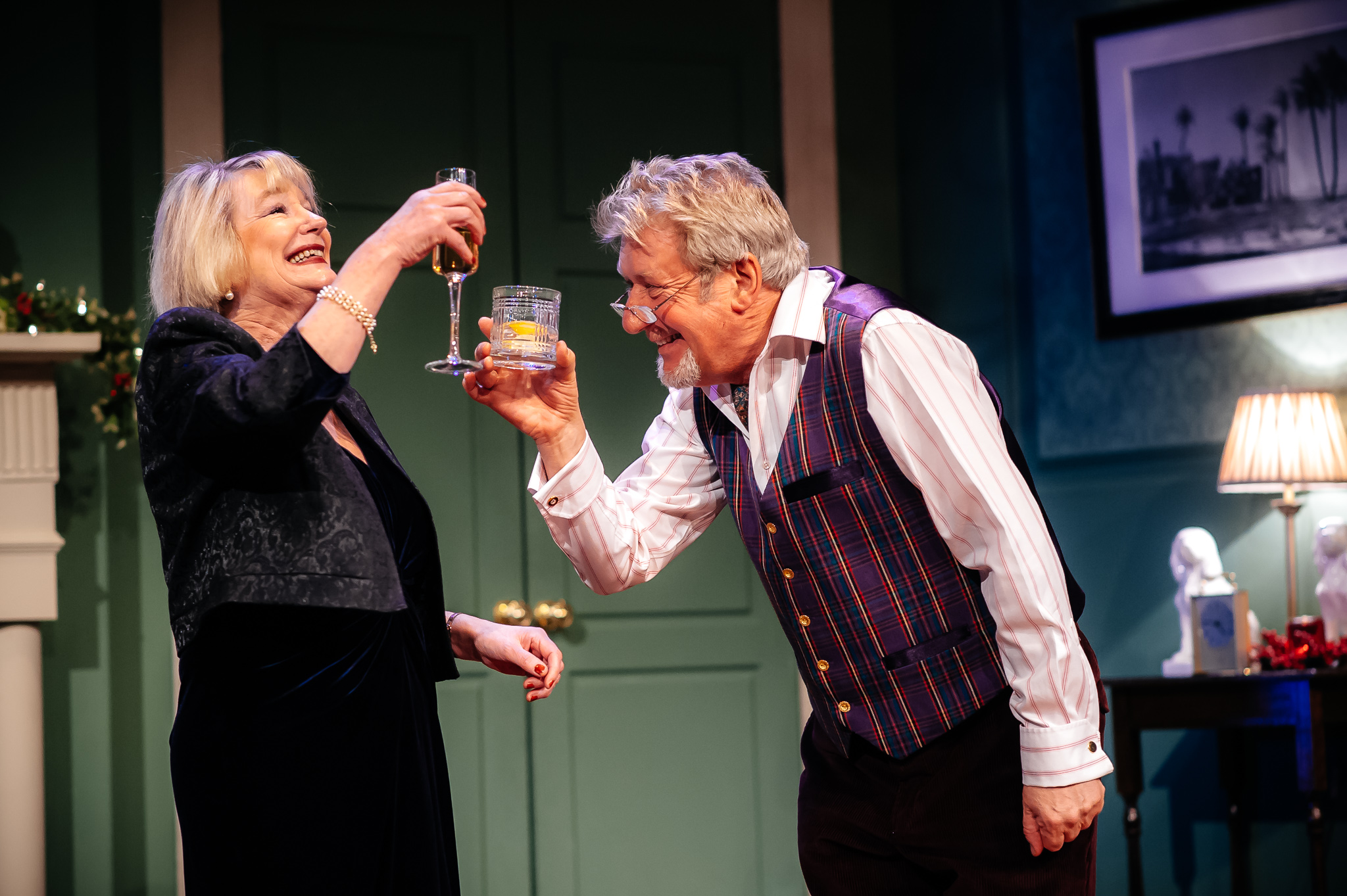
It is Christmas Eve and Cameron and Lara Leishman are ‘At Home’ for drinkies, the remains of a chinese carry-out and lots of presents, just the two of them and their Skye terrier, Maximilian, and that’s how they like it. That these two advocates are self-satisfied is to put it mildly, but then their swish garden flat is in the New Town and no doubt they have worked so very hard to afford it. You might have called round earlier, expressing mild surprise that Cameron isn’t a QC yet and thought it all a touch chichi, maybe, but it is still absolutely fabulous … “and do have a lovely time this evening, just the two of you”.

Except that they don’t, not at all.

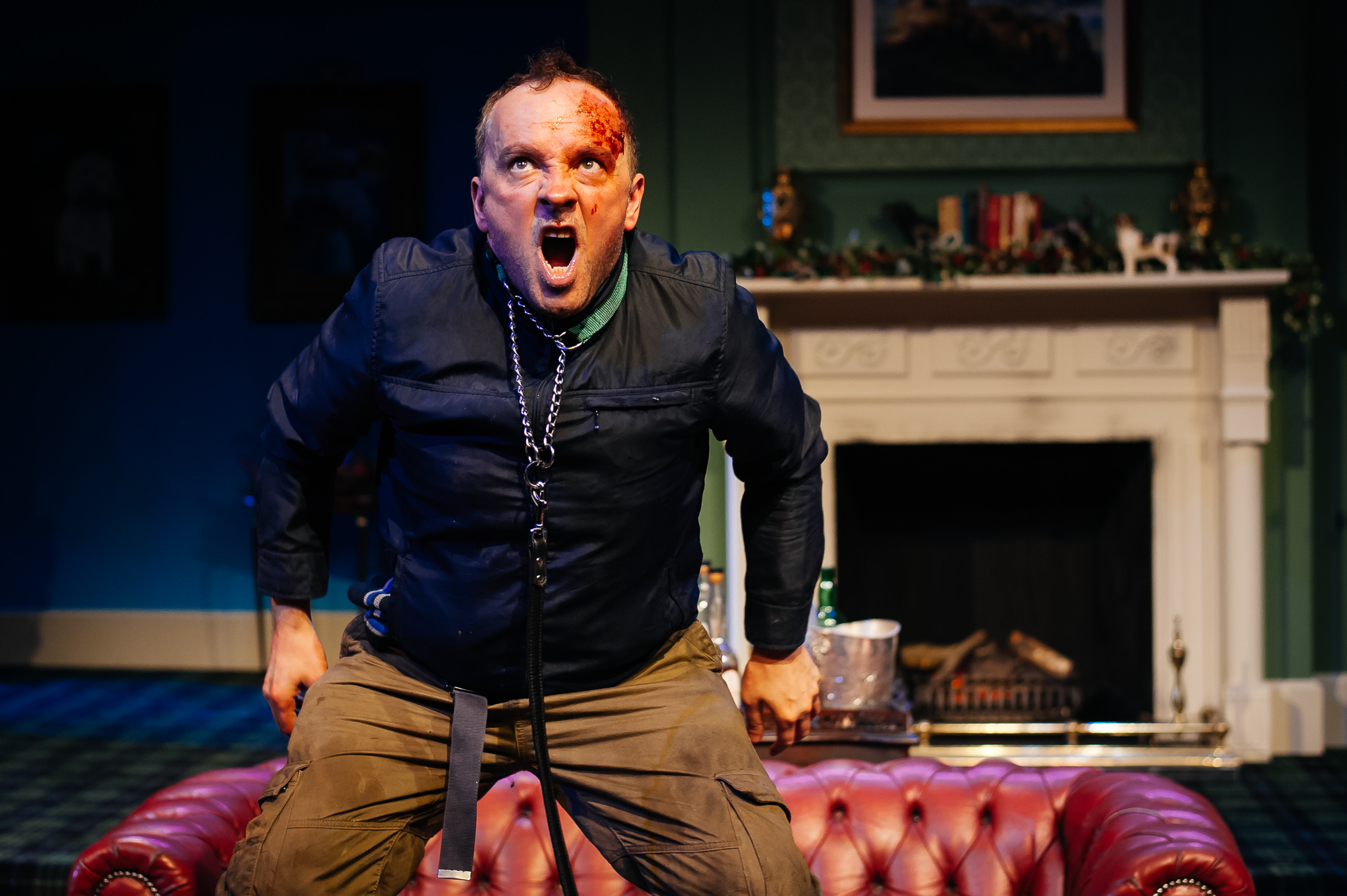
‘Season’s Greetings’ are a joke when it comes to what happens to the Leishman’s. For a start, Max’ gets dognapped and second there’s that pun in their name. Iain Finlay Macleod gives us pedigree ‘Christmas Carol’, the writer’s mega cut. No redemption is offered but this story has chains, mordant humour and lashings of sharp comment .

The first gift is unwrapped and admired and Cameron and Lara receive an unexpected and unwelcome visitor. John watches ‘The Wire’, so he says he’s from ‘the projects’. For Lara he’s a schemie, feral, the low life of the Sheriff’s Courts. He needs house training. Cameron, well bred, is a little more accommodating. He realises that for John to have had to leave Fettes junior school after only a couple of years was not one of life’s lucky breaks (!). John (Keith Fleming) has nerve, wit and honesty but gets it in the neck. He’s walking wounded in a nasty class war that Lara (Barbara Rafferty) prosecutes with all her vicious might. Cameron (Johnny Bett) would intercede but plays junior counsel to his partner’s vengeful brief. Director Orla O’Loughlin brings on action that is outrageous, radge and lurid.

Photo: Mihaela Bodlovic

Photo: Mihaela Bodlovic

It is close to home. Some will wince in recognition at lookalike ANTA interiors. There’s Albinoni on the invisible Sonos wireless system. Cameron knocks plebian Glasgow. Edinburgh lawyers acquire frightfully mannered English accents. There’s the EH3 postcode, Georgian cornicing, John’s pals from Pilton with their howling dogs, fireworks at New Year, and a legal profession prejudicially bent on fee income. But there’s more to it. David Hume’s statue is arraigned, or more accurately his toe is. What would the great philosopher make of the Leishman’s behaviour? For sure, they only actually do anything – as opposed to decorating their tree with photographs of past pooches – when they’re frightened or threatened. At best this is difficult to live with; at worst, it’s deranged.

I’ll stay with Christmas rather than moral philosophy. Go to ‘The Devil Masters’ with this text in mind: ‘He came unto his own, and his own received him not. (John 1:11) ’. Dispute ownership.


nae bad_blue

Star (blue)Star (blue)Star (blue)

Reviewer: Alan Brown  (Seen 10 December)

Visit ‘The Devil Masters’ at the Traverse here.

Visit our Assembly Roxy Bedlam Church Hill Theatre Festival Theatre King’s Theatre Other Pleasance, Potterrow & Teviot Summerhall The Lyceum The Stand Traverse archive.

THIS REVIEW HAS NOT BEEN SUBEDITED

‘Aladdin’ (King’s: 29 Nov’ 14 – 18 Jan.’15)

Aladdin 1

I’m a Believer

Editorial Rating: 4 Stars: Nae Bad

Actually, literally, which is tricky during a panto, I prefer ‘Al – la – din’. That has distance and colourful resonance. Losing that second ‘d’ does away with the Highland laddie and puts our local hero Southside, somewhere between and above the Mosque Kitchen and the Nile Valley Café . Only momentarily though, for the gong gongs and we’re away to Peking of old. ‘Somewhere in Egypt’ is scene 12 of 16.

The King’s 2014  ‘Al – la – din’ is no call to prayer, although it does co-opt I’m a Believer as its signature belter. No, this is a serious magical treat, remarkably served after only ten days of full rehearsal. The reach and back-up power of producers Qdos Entertainment beggars the imagination, which is also what young Aladdin is about. He is poor but bold, his Mum runs the steamie off the street of 1,000 chopsticks, and he’s going to marry the most beautiful and loaded girl in the land, sorry, Empire. Yes he is and you should not doubt it. For a start Greg Barrowman as Aladdin has One Direction quality and the spangled charms of the Slave of the Ring to help him, in an appealing and graceful performance by Lisa Lynch. Kohl eyed Princess Jasmine (Miriam Elwell-Sutton), all brocade and style, just clocks him the once and she immediately wants “to talk to that boy – alone”. Lucky lad.

So dump the suspense and bring on the dancers, young and old, and give in to the moment, to the scene painting, to the costumes and to the out and out marvellous: the Vanishing Princess, Escape from the Table of Death, and an absolutely wicked, jaw dropping, example of Defying Gravity. Then enter, upstage and tall, the Mighty Nasty Cobra and the Giant Genie (a very droll, almost child-friendly Malcom Tucker). Take hold, my son, of the The Lamp of Amazing Power. Capital!Aladdin 2

Actually, again, there are three presiding comic genies of panto at the King’s. Three denizens of this Christmas cave of wonders: Allan Stewart as Widow Twankey, Andy Gray as Wishee Washee, and Grant Stott as Abanazar the bad, bad, Wizard. Rub that lamp for all it’s worth and you could not wish for more fun than these three familiars provide. “Oh, the acting!”, despairs Washee, as in “Our acting’s pants”, but what’s not to enjoy in amongst the topical gags (listen out for the 45/55 result), shuttling tongue-twisters, celebrity laundry, and hilarious routines? Their final skit of ‘If I Were Not Upon the Stage’, when they are joined by James Paterson (prev. the Emperor of China), is pure wallaping music hall.

This ‘Aladdin’ is an extravaganza, up there with flying carpets, and is tip-top admirable. My one queasy, senior, misgiving – because I’m not good off the ground – is that if there is a command message, it’s not ‘Open Sesame’ but ‘Get rich, and the girl’s yours’.

nae bad_blue

Star (blue)Star (blue)Star (blue)Star (blue)

Reviewer: Alan Brown (Seen 4 December)

Visit ‘Aladdin’ at the King’s here

Visit our Assembly Roxy Bedlam Church Hill Theatre Festival Theatre King’s Theatre Other Pleasance, Potterrow & Teviot Summerhall The Lyceum The Stand Traverse archive.

THIS REVIEW HAS NOT BEEN SUBEDITED

‘Home for Christmas’ (The Studio: 3 December 2014)

  carol-ann-duffy

little machine

“some shakin’ metaphysics to die for”

Editorial Rating:  3 Stars

As Homecoming Scotland 2014 approaches its close we enter The Home Straits, a programme of poetry and music on the theme of … home. This show, first of three, finished with the sweet tones and bitter air of Byron’s We’ll Go No More A-Roving that deserved louder applause (& participation) than our few and faint hearts allowed.

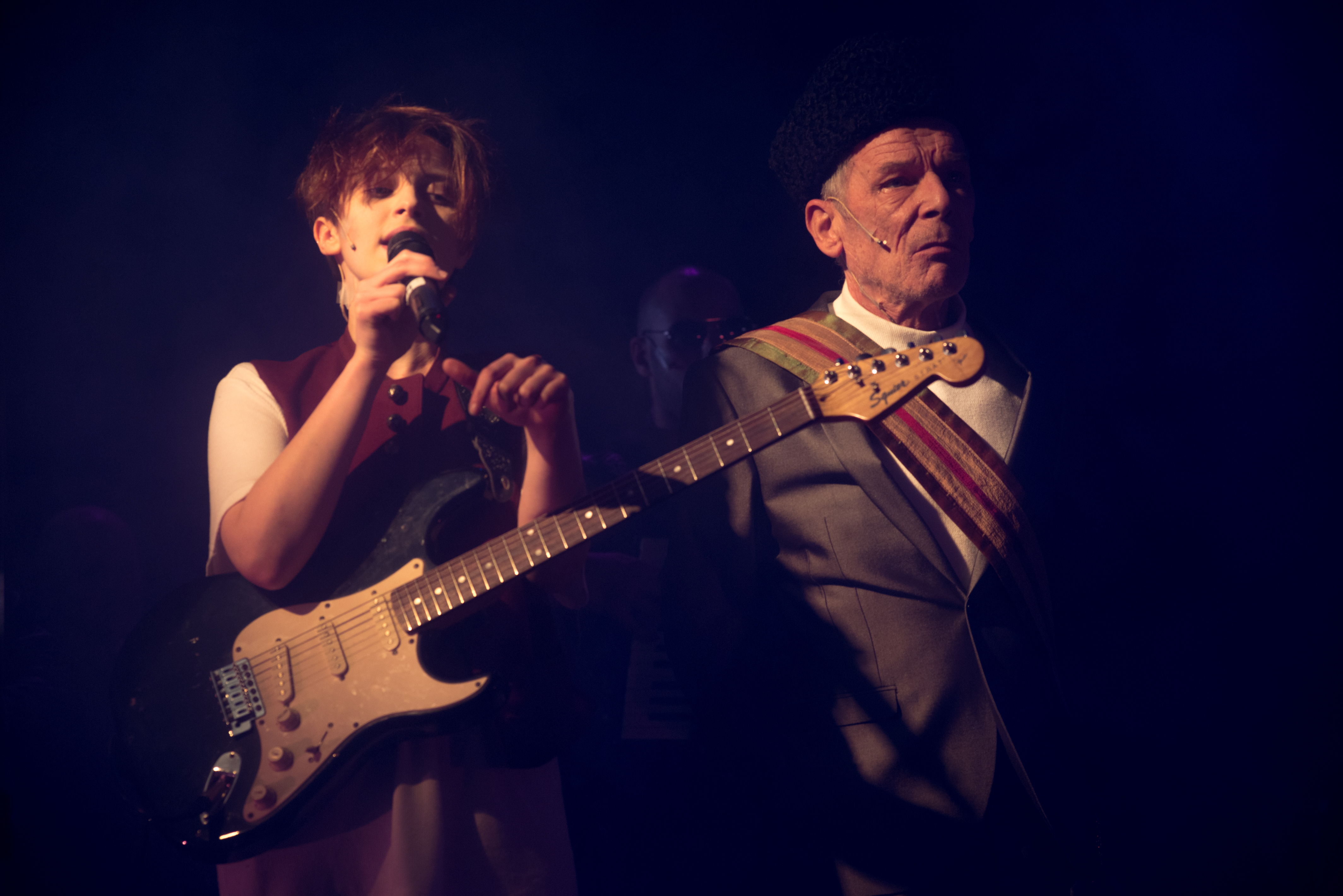
Home for Christmas is Poet Laureate Carol Ann Duffy’s idea. She is up front for the first half, reading her poems, alongside musician and Edinburgh friend John Sampson, but after the interval she sits out and Little Machine, is on stage. The band sing their settings of six of Duffy’s Christmas poems and then eight further poems, from the 16th Century ballad Western Wind to Liz Lochhead’s fervid My Way. Mood and style vary from piece to piece, from loose and cool J.J Cale to a Rocksteady lilt for Advent and there’s some shakin’ metaphysics to die for in Thomas Carew’s Mediocritie. The music making is very good – I like distinct guitar work – and the high regard for the poetry is evident in the diction.

However, it is sombre and plaintive to start with. “It’ll be over soon; home by Christmas” was the fond, forsaken hope. John Sampson’s trumpet opens with the Last Post, and then there’s Duffy’s own poem Last Post, where ‘If poetry could truly tell it backwards, then it would …. And all those thousands dead … Are queuing up for home … Freshly alive.’ Christmas Truce follows, when ‘beneath the yawn of history’ a miraculous peace broke out. The subsequent pairing of Wilfred Owen’s The Send-off with her response, An Unseen, is dreadfully poignant.

Just as sharp is the keen, deadpan, humour of three monologues from the celebrated The World’s Wife: Mrs Midas, Mrs Tiresias, and (Duffy’s favourite) Faust; and then four later poems of percipient, careful intent: Mrs Schofield’s GCSE, The Counties, The Human Bee, and Liverpool. They are all in the public domain – and not just on The Guardian’s pages – so go find them, realise their quality and why Duffy wrote them.

Little Machine had been on Radio Scotland’s ‘Culture Studio’ with Janice Forsyth that same afternoon. The trio anticipated an evening of banter and wit. Well, not really. I enjoyed their music, admired John Sampson’s playing the two halves of the recorder at the same time (do not try this at home, he cautioned) and heard really good poems, tellingly read by the poet herself, but it proved a subdued occasion, with little ‘give’ from our side of the stage. That’s what happens when the Last Post sounds. It all goes still and not in a stille nacht, glad tidings, kind of way.

Star (blue)Star (blue)Star (blue)

Reviewer: Alan Brown (Seen 3 December)

Visit ‘Little Machine’ here

Visit our Assembly Roxy Bedlam Church Hill Theatre Festival Theatre King’s Theatre Other Pleasance, Potterrow & Teviot Summerhall The Lyceum The Stand Traverse archive.

THIS REVIEW HAS NOT BEEN SUBEDITED

‘Flying with Swans’ (Traverse: 4 – 8 November ’14)

Photo: Leslie Black

Photo: Leslie Black

“Well-met, if slightly over the guard rail”

Editorial Rating: 4 Stars

Last in the autumn season of A Play, A Pie and a Pint.

Three elderly women embark upon on a “Great Day Out” to Arran, and indeed it kind of turns out that way. The weather is mild, the ice cream is good, and they stay on deck for the entire crossing. Brodick is dead ahead, but this is forty-five minutes of diverting, mischievous dialogue from Glasgow writer Jack Dickson. Its most acute moments are pin-sharp sad, but the piece is funny and kind-hearted too. Sage, no’ Saga.

As over seventy fives, Dolly, Jean, and Mona go back years, and there is some fond reminiscing, which is where the whooper swans fly in. However, the old girls talk as much of the present as of the past. For a start, there’s Mona’s ‘borrowed’ and bashed car that retired and repressed solicitor-advocate Dolly feels obliged to report to the police. Meanwhile, Jean is escaping an anxious daughter who is taking her duty of care to neurotic heights.

The play is, naturally, a tale of age and loss but not in any mawkish fashion. No one’s sick on this CalMac service. However, the passage of time has probably hurt Dolly (Anne Kidd) the most. Her schnauzers are gone, and she may appear trim and resolute and but her friends know the truth, and offer her the love and support that she needs – and finally accepts. For carefree, absconding Mona (Karen Ramsay), it’s different, which you can see from her nightie and Nessie hoodie! Vague, intuitive Jean (Kay Gallie), with her bag full of blue and red pills, probably has the most telling line. “I miss me,” she says.

The casting is excellent and the three performances are well-met, if slightly over the guard rail, for Dickson is writing incautiously and with affection. His programme credit reads that Flying with Swans is offered as ‘a tribute to the women who feature in all our lives’. I’m on board with him.

Star (blue)Star (blue)Star (blue)Star (blue)

Reviewer: Alan Brown (Seen 4 November)

Visit Traverse Homepage here

Visit our Assembly Roxy Bedlam Church Hill Theatre Festival Theatre King’s Theatre Other Pleasance, Potterrow & Teviot Summerhall The Lyceum The Stand Traverse archive.

THIS REVIEW HAS BEEN SUBEDITED

‘Bondagers’ (Lyceum: 22 October – 15 November ’14)

Bondagers 1

Photos: Drew Farrell

“a fertile, sure-yield production “

Editorial Rating: 4 Stars

First performed by the Traverse Theatre Company at the Tramway, Glasgow, and then the Traverse, Edinburgh, in May 1991. Listed by the National Library of Scotland as one of the 12 key Scottish plays of the past forty years.

There is the straight open road and there is the wide open field. We are likely, through pig-ignorance, to love the first and disregard the second. However, Sue Glover’s Bondagers will change your mind, and if it doesn’t, you’re past saving. For this bonneted, bonny, holy play almost makes the invisible visible. Almost, for there are small molehills of socio-economics and human geography to flatten first.

In his peerless survey of theatrical landscapes, Peter Brook ends chapter 2 of The Empty Space with this question: ‘Where should we look for [holy theatre]? In the clouds or on the ground?’ You can smell the answer in Lu Kemp’s fertile, sure-yield production. An earthy top dressing covers the Lyceum stage, and when it’s hoed, watered or shovelled, you could be in the fields alongside the A697, just past Greenlaw. In Bondagers, which is part keepsake, part platform, this Berwickshire acreage matters hugely.

For most of us, farmland is now remote, somehow indistinguishable territory. Once upon a time, really not so long ago, over the Lammermuir hills a married ploughman (a hind) was bound to provide a woman (a bondager) to also work on the farm. She might be his wife, but not when there were infant children to raise. By the 1890’s, a good master would have paid his bondager ten pence a day. Women’s work for women’s pay was still holding firm.

Bondagers2

You’d have to split the Lyceum to set Bondagers in the round, but the creative team gets close to the vision thing, whose horizon(s) stretch way beyond the box beds in the cottage row, not that you see them anyway. There are no doors, no flats, and no fly-on-the-wall positions, as the scenery is a wide semi-circle of tan planking, thin and loosely joined, with the mist floating beneath it. The sights and sounds of this piece are filmic but solidity is vested in the spirits of six women. When fifteen year old Tottie calls out to her father in Saskatchewan the Canadian prairie seems as close as the Cheviots. Sara, the sturdy elder, leaves no room for doubt or longing, and Ellen, once bound over but now the tenant farmer’s young wife, is still bold and outspoken. Meanwhile, plainly and keenly, there are the folk songs: by turns affecting, burdened or bawdy, they keep time and period in step. Those warm, singing hearts lie under bulky wraps that are a triumph of research and costuming by the Wardrobe department. Additionally, the movement director, Ian Spink, deserves applause in his own right. From hiring to flitting the year round weather seems autumnal and chill. When the light does come, right at the end, the advancing glaring beams are of a different nature altogether.

In this rare atmosphere and with their own language a’ aboot them, the six bondagers share their lives. Sara (a fabulous Wendy Seagar) is the embodiment of moral dignity; good wife Maggie (Pauline Lockhart) scuttles undiminished from bairn to crib to table; Liza (Jayd Johnson) and Jenny (Charlene Boyd) chop neeps by day and gaze for lovers in their broken mirror by night. Innocent, wilder, emblematic Tottie (Cath Whitefield) strays outside the fold and suffers grievous harm. Mistress Ellen (Nora Waddell) brings knowledge of farm economy and crop rotation alongside her desire for a baby.

This is substantial and enthralling theatre by director Kemp and designer Jamie Vartan and yet its make-believe is vulnerable. I’d call Bondagers rhapsodic but there’s dissonance. A working girl can still be seduced into marriage by the promise of a clock, a dresser and a bed. Worse, there are bogeymen around: a sheriff who orders an arrest and a marquess who raises the rent. That brief combination is enough to silence the women well before the badass harvester turns off into the fields.

Still, the road’s clear to Coldstream and you can see for miles. Enjoy the view and love Bondagers.

Star (blue)Star (blue)Star (blue)Star (blue)

Reviewer: Alan Brown  (Seen 28 October)

Visit the Lyceum Homepage here

Visit our Assembly Roxy Bedlam Church Hill Theatre Festival Theatre King’s Theatre Other Pleasance, Potterrow & Teviot Summerhall The Lyceum The Stand Traverse archive.

THIS REVIEW HAS BEEN SUBEDITED

Crash (Traverse: 28 Oct – 1 Nov ’14)

Photo. Leslie Black

Photo. Leslie Black

“More slo-mo skid and shunt than full-on collision, more  crunch than splat”

Editorial Rating:  4 Stars: Nae Bad

In the Autumn line-up of A Play, A Pie and a A Pint.

A whacked City trader speaks. He’s Scottish but it’s a quids in, pound sterling monologue, unassuming and on the level; a penny plain real deal, in fact, provided you accept that asset management is an emotional as well as a financial business. Finally, even naturally, the ‘game’ wastes you. There’s a wreck at the end of the tunnel.

Writer Andy Duffy’s single character has no name. He is a man alone in a sober suit and tie on a shiny office chair in a smooth glossy space. He could be in Aberdeen or across the way in Standard Life House, but still I incline to the Square Mile. His story begins on the night of 23 August 2007. (For the record Lehman Brothers declared bankruptcy on 15 November 2008.) He is precise like that; where he can he will enumerate, when he can’t he’ll simply point out that you don’t make money by being careful. And, instinctively, he has made and is still making lots of it.

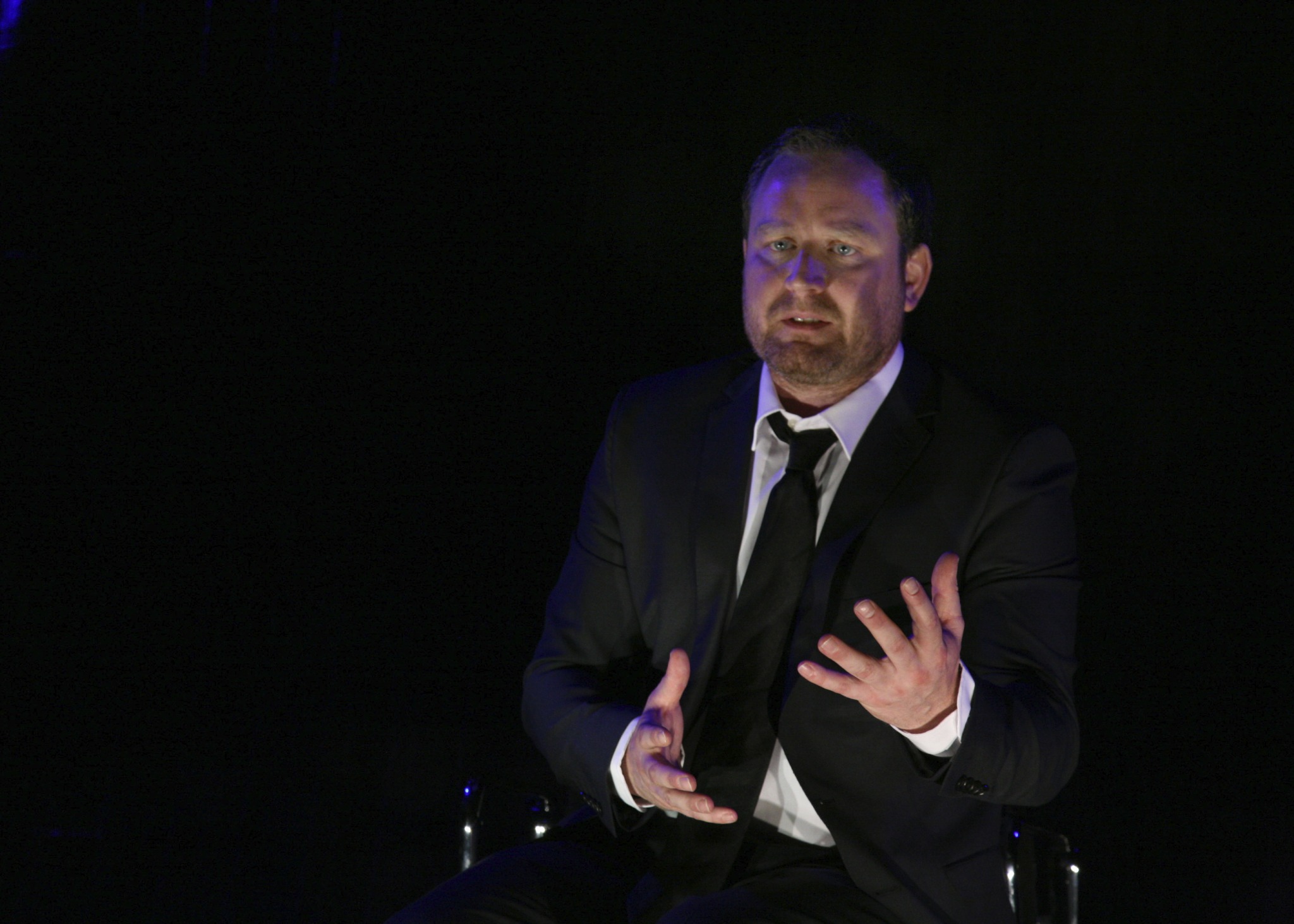
Man (Jamie Michie) reads a piece in the ‘Financial Times’. His new girlfriend, Kate, prefers novels, which he considers to be self-indulgent pap. Man had a wife once but Alison died, which he’s sorry about, but shit happens when you lose control at the wheel, or when your investments go south. That’s ‘unprecedented volatility’ for you, which is where I’d bring in Russell Brand, who had lunch with the FT just last week. Brand finds the pink pages ‘hard to understand’ and opposes his ardent belief in spiritual ideologies to the FT’s economic one(s). So too even our trader, bruised and shaken by his wife’s death, attends meditation classes where in mid-mantra he finds consolation in … Kate’s long blond hair and tight figure. Nothing too revolutionary there to upset the capital markets .

Crash is more slo-mo skid and shunt than full-on collision, more crunch than splat, and so more revealing. There is the head-rest proposition that ‘money equals power and freedom’ but how is that supportable? Every now and again something is going to pile in from behind and the result will be bloody. You can hear it happening. There is a thrum of white noise – not Traverse 2’s air con – and the lighting gets colder. I was reminded of a Tube train coming into Bank. Man rises from his chair and/or collapses on a park bench and you wonder, not for the first time since the last financial horror show, if getting minted is worth it.

A driven, strong play that is expertly directed by Emma Callander and impressively performed by Jamie Michie.

nae bad_blue

Star (blue)Star (blue)Star (blue)Star (blue)

Reviewer: Alan Brown (Seen 28 October)

Visit Traverse Homepage here

Visit our Assembly Roxy Bedlam Church Hill Theatre Festival Theatre King’s Theatre Other Pleasance, Potterrow & Teviot Summerhall The Lyceum The Stand Traverse archive.

THIS REVIEW HAS NOT BEEN SUBEDITED