“Many of the polyglot passages exhibit careful construction with alliteration, rhyme, and even metre. I think I’ve barely scraped the surface of that phenomenon.” – Author Guy de la Bédoyère talks about ‘The Confessions of Samuel Pepys: His Private Revelations’

The Confessions of Samuel Pepys: His Private Revelations

“From the first time that Pepys’s diary was transcribed for publication, the graphic sexual content troubled his editors. They felt it would offend public sensibilities.”

WHAT: The Diary of Samuel Pepys is the most celebrated personal journal in the English language. His candid revelations as he forged his career as a civilian naval official in Restoration London have fascinated readers ever since the first selection was published in 1825.

“The Confessions of Samuel Pepys focuses on Pepys’s controversial private life for a contemporary readership, by charting his varied and complex relationships with women. They included his wife Elizabeth whom he both loved and treated abominably, their domestic servants, the mistresses whom he secretly visited in Westminster and Deptford and other places, a host of other opportunistic encounters, the great ladies of the court whom he ogled, and the actresses and other female friends whose company he delighted in and combined with casual flirting and petting. All these he recounted in shorthand, often disguising the more salacious occasions in his own cryptic Franco-Latino polyglot or with a primitive system of extraneous consonants.

“Most of these controversial entries were excised from 19th century editions, but all are featured here in completely new transcriptions and Pepys’s secret code translated, following fresh forensic examination, from the original shorthand diary. The Confessions of Samuel Pepys also reveals how all previous transcribers of the diary and many of his biographers have deliberately massaged Pepys’s reputation.”

WHO: Guy de la Bédoyère is an historian and author with numerous books to his credit. One of very few authors with the ability to read and use the system of shorthand used by the diarist Samuel Pepys (1633–1703), he edited the letters exchanged by Pepys with the diarist John Evelyn (1620–1706) in Particular Friends: The Correspondence of Samuel Pepys and John Evelyn, covering their 38-year association and friendship. He has also produced the only edition of Pepys’s correspondence to be published in modern times in The Letters of Samuel Pepys. Guy lives in Britain.

MORE? Here! & Here!


Why ‘The Confessions of Samuel Pepys: His Private Revelations’?

It became clear to me as the work progressed that Pepys was using his diary as a private confessional, even though these revelations were interspersed in amongst more routine events and experiences.

Was there a single moment that prompted you to look at these passages again and when did it dawn on you that our existing transcriptions/translations were still pulling their punches and obscuring the full picture?

My focus originally was only to translate the polyglot passages in the published Latham and Matthews edition. I thought this would be simple. However, I soon discovered that more than a few were untranslatable because they contained ‘words’ that aren’t words and weren’t words when Pepys wrote. Some were real words but made no sense. This really foxed me to begin with, and that was when I decided that I must make entirely new transcriptions.

An example is 20 March 1667. Latham and Matthews have ‘so to Mrs Martin’s whom I find in opposante’. The French word opposante means ‘challenger’ or ‘rival’. In the 1600s it was spelled opposant and it is listed in Cotgrave’s French dictionary which Pepys owned. Either way it makes absolutely no sense in this context, and had Latham and Matthews attempted to translate it they would surely have realized that. When I looked at the shorthand, I remembered that the symbol for ‘op’ also means ‘ap’ and that the terminal dot to indicate a closing vowel in this case meant ‘o’. The word correctly reads aposento, which is the Spanish word for ‘lodging’ and which can be found in Richard Percivale’s 1623 Spanish dictionary. Pepys owned a copy and it’s still in the Pepysian Library. Mrs Martin was at her lodgings. Pepys often uses the English word in similar contexts.

I admit I was mildly incredulous at this discovery, given the standing of the Latham and Matthews edition. While they did not make numerous mistakes like this, the discovery called into question their polyglot transcriptions for the first time. I found several other instances. Given that they claimed to have secured the assistance of a Spanish professor, the errors are difficult to explain.

Do you see your work as a contradiction or as a continuation of the Latham edition?

It’s a continuation. Transcribing and understanding Pepys is a cumulative process. Latham and Matthews felt constrained by the standards of their day. It was clear that their reluctance to confront the polyglot had prevented them from applying the same authoritative analysis they had to the rest of the text. In a few cases I felt that the mistakes were so obvious they might have been deliberate, designed to throw readers off the scent.

Pepys never uses Elizabeth’s Christian name in the diary; her portrait was hacked up,
supposedly by a puritanical member of the staff at Hinchingbrooke; Sam destroyed her
letters to him; as we flirt with the idea of cancelling him, is it time to uncancel her?

It would be wonderful if we knew more about Elizabeth, but unfortunately, absolutely nothing of hers survives beyond a letter or two addressed to her from France and now in Oxford. This means it is impossible to know more about her than is already known.

“The evil that men do lives after them; the good is oft interred with their bones.” Could this be said of Pepys in our own moment? Or is it that we have collectively been too shy of the full, frank, and unsettling  Adult content self-portraiture Pepys left behind?

From the first time that Pepys’s diary was transcribed for publication, the graphic sexual content troubled his editors. They felt it would offend public sensibilities. But it is also clear they were uncomfortable about how publishing it would reflect on them. This subsisted right up to and including the Latham and Matthews edition, which was successfully marketed as definitive and unimprovable, carefully occluding the full truth. Pepys had both good and bad sides. He recorded it all, but until now, his own testimony has been modified and falsified in some way.

Was Pepys’ transactional relationship with sex was more or less unusual for the time?Did it become more usual as the morality of the Restoration era set in?

Much of what we know, or think we know, about seventeenth-century manners and standards comes back to Pepys. That means various notions about what constituted ‘normal’ in 1660s London are used to justify Pepys as only being a man of his times. But those notions normally come from Pepys. So, it’s circular. It’s clear that there were other men who behaved like him, but any proper research into the period into books of the period shows that behaviour like his was against the law and condemned. People who believe Pepys was ‘normal’ and his conduct representative of different standards are usually only basing that on Pepys. If you want to read research into late seventeenth-century attitudes towards sexual consent and violence (including the law) as they relate to Pepys’s actions, try Kate Loveman’s free academic article from 2022 in the ‘Historical Journal’ (especially pp. 1226–34).

You argue that Pepys’ behaviour got worse over time. Do you ever think the Diary could have been a contributing factor – the need to provide sensational content even as he aged and as Sam’s probable sterility became more obvious?

Pepys increased his references to his sexual behaviour and found new ways to make them more difficult to read, like the addition of ‘extraneous’ consonants, an idea he evidently derived from a book by his friend John Wilkins, which Pepys owned. I believe the diary provided him with an outlet, a repository for his ‘collection’ of sexual triumphs and misdemeanours. He felt remorse and shame, but appears to have been unable to resist easily the search for more dangerous and risky action.

If you could ask Pepys one question what would it be, and what’s the one thing you would tell Sam just so as to see his reaction?

I think we’d all like to know exactly how ‘Pepys’ was pronounced back then! But seriously, I think I’d like to know if he ever envisaged someone unravelling his polyglot passages and if so, who he imagined that person might be. I have never thought of what I might tell him, since asking him a question would be impossible. What I would like to know is what he looked like in person. The 1666 painting was posed, in costume, and he wears a wig. He did not look like that in everyday life, and he was also very short.

Do you think there is anything else “new” still hiding in plain sight in The Diary?

I think one would have to say that is always a possibility. Something I realized, which appears to have escaped observation and comment until my book, is that many of the polyglot passages exhibit careful construction with alliteration, rhyme, and even metre. I think I’ve barely scraped the surface of that phenomenon. But the truth is that even the polyglot wasn’t really hiding. It’s all there – all it needed was to be read correctly and translated, using Pepys’s English elsewhere and the dictionaries he owned as guides. Correct readings and the translations are usually obvious.

What are you currently working on?

I’m 68 and I’ve produced nine full-length books since 2014 on top of those that went before. Confessions is the result of over two decades of work learning the shorthand on top of all that. It’s now time sit back and I have no plans to produce anything else for a while. We travel a great deal and that’s the priority. Indeed, I’m answering these questions in Augusta, Western Australia, where the idea for Confessions came to me two years ago and where the book was completed in 2025. However, I will be lecturing on Confessions at the Gloucester Spring Festival on 18 April and at Pepys’s church of St Olave’s in London on 28 May 2026.

LIKE WHAT YOU JUST READ? FOLLOW US ON TWITTER! OR SIGN UP TO OUR MAILING LIST!
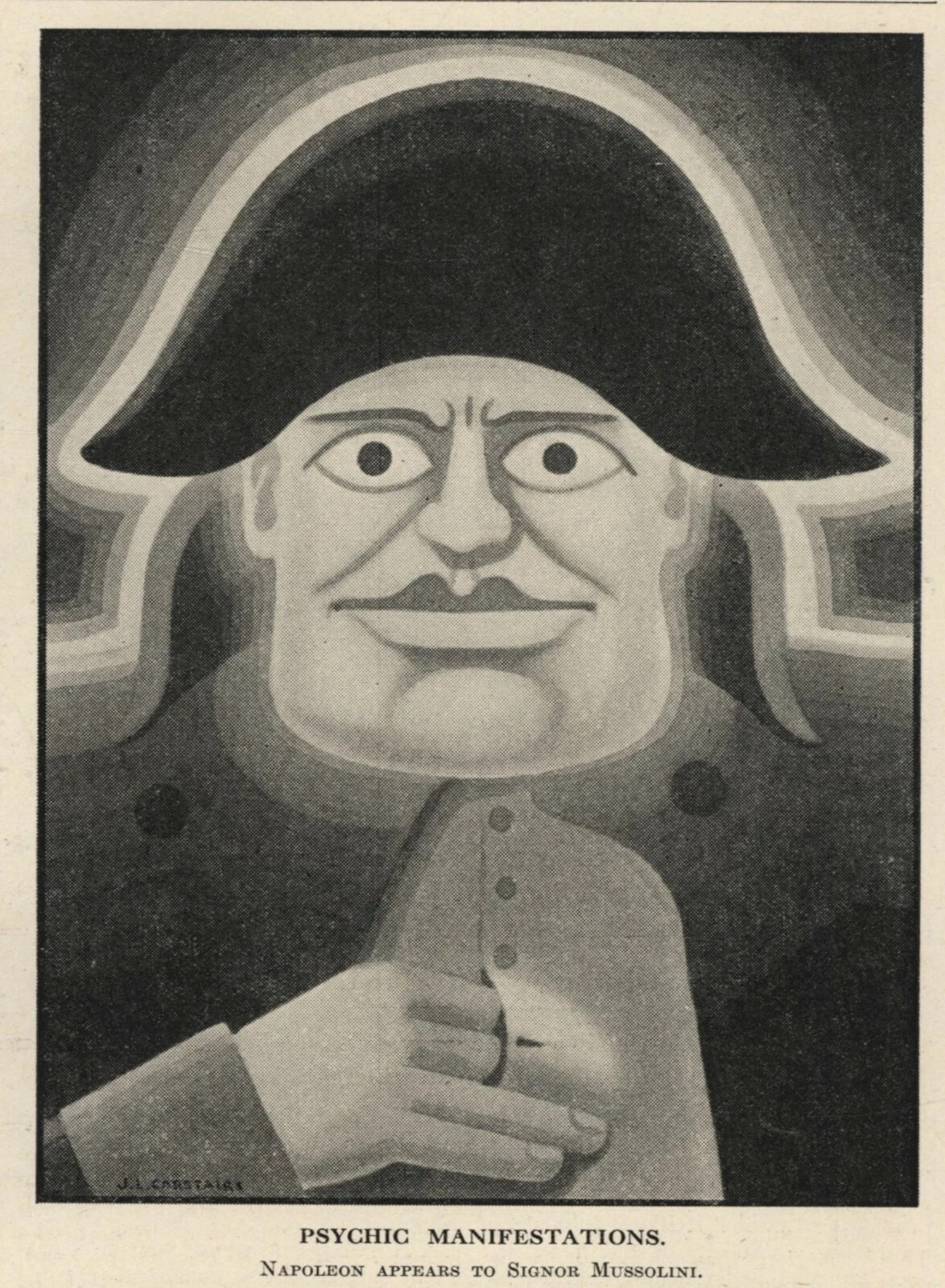
“My book is an attempt to put the record straight and remind people about the reality of an inefficient, brutal, and corrupt regime.” – Author Paul Corner talks about ‘Mussolini in Myth and Memory’

“There were always a lot of fascists left in the woodwork, ready to continue the myth of a “glorious” twenty years of Fascism.”

WHAT: “Mussolini has rarely been taken seriously as a totalitarian dictator; Hitler and Stalin have always cast too long a shadow. But what was a negative judgement on the Duce, considered innocuous and ineffective, has begun to work to his advantage. As has occurred with many other European dictators, present-day popular memory of Mussolini is increasingly indulgent; in Italy and elsewhere he is remembered as a strong, decisive leader and people now speak of the ‘many good things’ done by the regime. After all, it is said, Mussolini was not like ‘the others’. Mussolini in Myth and Memory argues against this rehabilitation, documenting the inefficiencies, corruption, and violence of a highly repressive regime and exploding the myths of Fascist good government. “

WHO: University of Siena Professor Paul Corner is the Director of Italy’s Interuniversity Center for the Study of Twentieth-Century Totalitarian Regimes. He is an alumnus of St. John’s, Cambridge and St. Antony’s, Oxford. As well as his tenure at Siena, Paul has academically moonlighted as a visiting professor at the European University Institute, Fiesole; University of North Carolina; New York University; Columbia; and has been elected a permanent member of the Senior Common Room at St. Antony’s.

MORE? Here!


Why Mussolini in Myth and Memory: The First Totalitarian Dictator?

The book is a response to something that has been going on for decades but has become more accentuated in recent years – that is, the tendency to see Italian Fascism in a more positive light and to consider Mussolini to be a figure worthy of admiration. It is an attitude that can be summed up with the phrase used by the current Italian Foreign Minister, “Mussolini did many good things.” This indulgent attitude has developed around a whole series of myths about Italian Fascism – myths that often simply repeat what were in reality fascist propaganda slogans – and has been reinforced recently, of course, with the election of a post-fascist Prime Minister who consistently refuses to condemn the fascist experience. My book is an attempt to put the record straight and remind people about the reality of an inefficient, brutal, and corrupt regime. It is very often forgotten that Fascism cost Italy more than half a million lives.

Doctor Johnson did not quite say that “Nostalgia is the last refuge of the moron”, so why do intelligent people get themselves attracted to Mussolini’s myth and memory?

A good question, although I’m not sure that we are talking about intelligent people. One of the problems is pure ignorance about what Fascism represented. Many of my students knew a lot about the Risorgimento but nothing about Fascism. The schools simply hadn’t taught it; it was too sensitive a subject. That said, the attraction of the past is undoubtedly a reflection of dissatisfaction with the present. At the moment a lot of people are unhappy with their politicians, who seem unable to do anything about a long period of economic decline. In these circumstances, the idea that Mussolini was authoritative, decisive, and a man of direction is bound to appeal. He is seen as the man who wanted to make Italy great again and we know the attraction of that slogan.

A more in-depth answer to your question would be that, unlike Germany, Italy has never fully come to terms with its fascist past. After 1945, it seemed better to emphasize the heroic antifascist Resistance movement during the war, to look forward to reconstruction, and to brush twenty years of Fascism under the carpet. Very few fascists were put in prison and there was no real process of de-fascistization of the police or the state administration as there was in Germany. There were always a lot of fascists left in the woodwork, ready to continue the myth of a “glorious” twenty years of Fascism.

Mussolini is remembered in the same harsh breath as the totalitarian leaders of Spain and Germany. Could he ever have softened into an Atatürk?

Well, to do this, he would have to have stayed out of the war and for a Darwinian like Mussolini this was unthinkable. Remember that the key fascist slogan (apart from “Mussolini is always right”), was “Believe, obey, fight.” Had Mussolini stayed out of the war, there is a possibility that Fascism might have carried on as a more conventional authoritarian regime on the lines of Franco’ Spain. But you have to bear in mind that Fascism was already very unpopular within Italy in the late 1930’s and the regime had lost most of its totalitarian dynamism. And Mussolini was in rapid physical decline, with no capable successor in sight. Certainly, the regime still possessed the means of control, but it seems more likely that, in the light of an ever-worsening crisis of authority, far from softening, the fascists would have had to increase the levels of repression rather than reduce them.

Did Mussolini make the trains run on time?

Difficult to say because many of the records were destroyed during the war. Interviews with railway workers suggest that the mainline trains were generally on time, in part because timetables were adjusted to give trains adequate leeway, while less important local trains were as unreliable as they tend to be anywhere. However, this is a good example of a persistent myth which speaks of efficiency, “getting things done”, etc – all part of the “many good things” Mussolini is supposed to have done.

Could the Mussolini myth be seen as the inevitable result of the relative infancy of Italian statehood? A nation needs national myths and Mussolini is one of the few things that has happened to all of Italy since Risorgimento.

I wouldn’t quite put it like that but I think the long-term view has to be taken into account. One of the problems Italy has had in the past (and I’m speaking of Italy post-unification) and still has to some extent is the feeling that the country is not being given its due at the international level. It is a country that wants to count. This is very obvious at the moment with Meloni’s continual and rather unconvincing references to Italian “centrality” in many current international decisions. In some ways Fascism was a result of this sentiment.

Mussolini certainly represented international protagonism at a very high level – Munich 1938 is the most obvious example – and, even if his protagonism ended in national disaster, he is remembered for his strutting on the international stage. If you are an Italian what else do you look back to to bolster your sense of national pride? Of course, there are a lot very positive things to look back to but, for many people, this may not be too obvious.

Mussolini’s play ‘Napoleon: The Hundred Days’ ends with a gesture from the defeated Emperor and an attendant snapping their sword in two with a sob. Do you think Mussolini meditated much about defeat before it happened to him? And what does the play’s presentation on the London stage, adapted by the eminent playwright John Drinkwater, say about international perceptions of Mussolini in 1932?

As is well known, up to the early ’30s Mussolini was widely admired at the international level. He was relatively young, very dynamic, and – perhaps most important for many observers – he had defeated the Italian communists. European and American political scientists and economists were very interested in the fascist “corporative model” which promised (but did not deliver) a way out of the international depression. For some observers, he was seen as the remedy for many of the stereotypical Italian weaknesses.

The admiration disappeared, of course, when he began to make friends with Hitler and, above all, when he attacked Ethiopia in late 1935. The Left was not taken in by appearances; it is enough to read the Manchester Guardian of the 1920’s to appreciate this.

Did he meditate about defeat? There is little indication that he did – until it was obvious that he had been defeated. After all, Fascism was supposed to last for a hundred years. But when defeat was evident, all he could do was blame the Italians for not coming up to fascist expectations. “Governing Italians is not so much difficult as pointless”, he is reportedto have said. It was the material the dictator had had to deal with that was at fault, not the dictator.

How do Roman Catholic thought leaders and senior clerics regard the Church’s relationship with Mussolini now, today in hindsight?

There’s no single view, of course. There are those who prefer to downplay the level of collaboration between Church and State and emphasize the role the Church played in providing an alternative to the fascist organizations. It is certainly true that many of the post-1945 leaders of the Christian Democracy were in some way protected by the Vatican during the regime. And there are those who suggest that the Church might have done more to oppose the regime, particularly after the introduction of the anti-Semitic Racial Laws in 1938. The shadow of the Holocaust and of “what the Pope knew” tends to condition much of the argument.

If you could step into a time machine, go back and meet Mussolini, WHEN would you want to encounter him and why? What would you ask him? What would you want to tell him?

I’ve never asked myself this question, possibly because I have never felt any desire to meet Mussolini. The young Mussolini is probably more interesting than the older man, who had come to believe in his own myth (one of his ministers said, in 1939, that talking to Mussolini was like addressing a statue). To talk to him in late 1914 about the war, his socialist values, and his reasons for abandoning socialism, could be interesting. This was a key moment in his life and to understand his reasoning would be important.

What would I tell him? I think I would have advised him to see a good psychiatrist before it was too late. He would not, of course, have listened.

Has Mussolini’s reputation managed to survive precisely because he was killed by partisans, rather than going through a Nuremberg-type process?

Possibly. For some his end resembled a martyrdom. There are historians who argue that the killing of Mussolini was done precisely to avoid letting him make his defence in a show trial. After all, he was a good speaker. This must remain uncertain. What is clear is – as I suggested above – the absence of any kind of Nuremberg trial in Italy allowed people to think that, in the end, Italians had been victims of Fascism rather than, in many cases, perpetrators. There was, therefore, no case of collective guilt to answer. This absence of any clear break with a criminal past has fostered the continuation of many fascist myths.

What are you currently working on?

I’m still working on various aspects of dictatorship, trying to spread the net beyond Italy. My most recent interest is in North Korea even if, as you can imagine, it is difficult to get hold of the documents, let alone read them! But it’s a fascinating story.

LIKE WHAT YOU JUST READ? FOLLOW US ON TWITTER! OR SIGN UP TO OUR MAILING LIST!

‘King Lear’ (Venue 33, until AUG 24th)

“An uncondescending condensing of the immortal classic by the acknowledged king of festive Fringe storytelling.”

Editorial Rating: 5 Stars (Outstanding)

Pip Utton is the Edinburgh Fringe. His productions are insightful, playful, joyful, and memorable. He’s the most respected player among his fellow professionals and the most beloved among his devoted followers from across the footlights (me included). Getting out of a Pip Utton performance takes several ages of man. You go from mewling and puking in the nurse’s arms to second childishness and mere oblivion in the time it takes for everyone ahead of you in the exit line to gush their appreciation to the master. Utton is best known for his candid biopics. Churchill, Hitler, Dickens, Bacon, Thatcher, and Bob Dylan walk into a pub and the barman asks, “What will you have, Mr Utton?  This year we have simply Lear in an uncondescending condensing of the immortal classic by the acknowledged king of festive Fringe storytelling.

We enter to find no king, just Lear. Bereft of the trappings and dignity of power, here is a man who has learned the hard way that it is folly to grow auld without having first grown wise. In the depths of depression, with all his charms o’erthrown, Lear ponders on the cruel reversal of his fortune. Across town, at the National Portrait Gallery, nestled among the artistic jewels of Shakespeare’s great royal patron, James VI and I, are early sketches for the proposed flag of the newly reunited kingdoms of England and Scotland. This was one part of the Jacobean undoing of what, at the time, was seen as the historic Lear’s legacy – the disunion of the island of Britain. Lear is written as a deliberate contrast to James, the author, scholar, and father of sons, although, fun fact alert, it is through James’ only surviving daughter, married to the winter king of Bohemia, that we owe our present royal family.

Lear is Shakespeare’s other Shylock, a publicly bad character to whom bad things publicly happen. Utton’s instinctive feel for the humanity of the great and the good characters he uncannily inhabits downplays the madcap Toby Belchery of the recent retiree. Instead, Utton emphasises the subsequent family drama and ensuing unvirtuous betrayal. Although Catholic missionaries had begun arriving in China from the 1580s, precise knowledge of Confucianism and its emphasis on filial piety, moral governance, family and hierarchy was limited to a few pioneering Jesuits with whom Shakespeare could have had no correspondence. Yet there are uncanny parallels, not undisimilar to the Swan of Avon’s synthesis of the Florentine Machiavelli, who would not be translated into English until the 1640s. Truly, Shakespeare was not of an age, but for all time. Utton’s minimalist edition of Lear reopens the text like a scythe to an overgrown, weedy meadow.

Truth be told, I haven’t liked Lear since I first saw the play. It was that 1997 staging at the Leicester Haymarket, the one in which Kathryn Hunter became the first woman to play the title role professionally (I’m still amazed anyone could get paid for a performance that bad). Ponderous, maudlin, a script written for achktors to perform more than for audiences to be entertained by. Lear can bring out the worst kind of feet-apart shouty overemphasis when done to death. By stark contrast, EdFringe’s quiet legend, Pip Utton, brings the play and the role to life as never before or not in a long time. “Walk softly, and carry a big stick”, advised Theodore Roosevelt. Among his properties Utton has just such a big stick. His performance is as soft and rich as an ostrich egg boiled for an hour and is best enjoyed in the cheerful company of friends who know they are in for a big treat.

Come for the familiar megastar doing something a bit different. Stay for an intelligent, gentle performance. Get your magisterial cloaks on and go see this!


ALL our recent coverage? Click here!

‘Sam Blythe: Method in My Madness (A One-Man Hamlet)’ (Venue 17, until AUG 24th)

“Possessed of both comic grace and dramatic power, Blythe’s affectionate connection with his audience is Mastersonierian in the obvious regard chanelling in both directions across the footlights.”

Editorial Rating: 5 Stars (Outstanding)

Is Hamlet mad? Is the Royally gazumped Prince a mindless brute or meditative Brutus? We enter to find ourselves locked in with someone, someone who just can’t seem to get Hamlet out of his mind. There is a mid-century, Patrick Hamilton quality to the gaslight. Our narrator switches back and forth between his present bare circumstances and the play in which so much of not very much happens, until THAT final scene.

Hamlet is Shakespeare’s magnum opus and one of his most successful literary works, published twice in quarto editions (1603 and 1604) before the First Folio (1623). The play’s early and enduring popularity, on stage and off, makes it accessible for audiences, who will know the key plot points and themes as well as they know their chocolate bars and cartoon cereal characters. For actors, however, the destination is more troublesome. How to be distinctive yet harmonious, respectful yet challenging, insightful yet universal? Above all, how to be memorable?

This EdFringe we’ve seen Sam Blythe directed by Yorick (Guy Masterson’s ‘Animal Farm’) and by Ophelia (Elf Llyons, ‘Method in My Madness’). Unlike the Orwell adaptation, in this one-man Hamlet, Sam plays the drama primarily through the title role, amplified and distorted by the abridgement’s premise – a man locked in a room with his own thoughts. An unseen Richard Burton impersonator loftily entones the first soliloquy, topping and tailing the drama. There is a Welsh theme running throughout the modern frame, as though Captain Fluellen and Dafydd ap Gwilym have captured the drama by sudden storm. All of these subtle hints buttress the purpose of the show, which is a fine and loving tribute to Blythe’s own father – a Welsh actor who never got to play The Dane.

At 2,200 lines, even the “bad” First Quarto would have had a running time of 2 hours. The Second Quarto’s 3,800 lines equate to the 4 hours plus, jeered at by Blackadder – “Who’s Ken Brannah? I’ll tell him you said that, and I think he’ll be very hurt.” The First Folio, from which most modern editions are drawn, sits at around 3,500 lines. Getting that down to 60 minutes of comprehensive, comprehensible stage traffic requires some tough choices to be made. This is especially true for a production attempting to reconcile the alleged artistic differences between Wills Shakespeare and Kemp. 

Having played Peter, Dogberry, Costard, and Bottom, the infamously adlibbing clown Kemp left The Lord Chamberlain’s Men around 1599, making his famous jig from London to Norwich. The professional ghost of Kemp haunts the text of Hamlet, not least in the play’s most iconic moment. The Light directorial touch of Kemp’s own favourite daughter, the ultra-acclaimed EdFringe giant Elf Llyons, melts the play’s too solid flesh into a resolute dew that lightly shimmers and sparkles throughout. Here is a memorable ‘Hamlet’.

‘Method in My Madness’ confirms what many of us have been thinking for a while, that Sam Blythe is the coming man of the EdFringe stage, a moody, broody, transatlantic temporal offshoot of the triggerhappy Booth dynasty perhaps. Possessed of both comic grace and dramatic power, Blythe’s affectionate connection with his audience is Mastersonierian in the obvious regard chanelling in both directions across the footlights. Come for the when Frank got Dean and Jerry back together reconciliation of auld bad performative blood – Kemp and Shakespeare are friends again. Stay for a star who is rising on the EdFringe skyline. Get your doublets on at the double and go see this!


ALL our recent coverage? Click here!

EdFringe Talk: Help! I’m Trapped in a One-Woman Show

“I suppose the lesson I’ve learned is to follow through on your dreams because they actually can come true.”

WHO: Kate Skinner

WHAT: “Alone in the world – as only a widow can be – Broadway actor, Kate Skinner’s moving journey through love, loss and online dating at 70. Navigating a landscape where ‘Man, 67, seeks woman under 30,’ her stories are wickedly funny and deeply poignant. Through it all, her love for Ron McLarty remains ever-present. ‘Kate touches on the deepest themes of our lives with the lightest of touches. If you’ve ever loved, lost or dared to love again, this is theatre not to be missed’ (Terry Johnson).”

WHERE: 10 Dome at Pleasance Dome (Venue 23) 

WHEN: 13:25 (60 min)

MORE: Click Here!


Is this your first time to Edinburgh?

I have heard about the Fringe for decades. Friends have performed here and people I know have attended shows here and they always extolled the virtues of it as completely unique and a once in a lifetime experience, In the back of my mind I thought perhaps a show I was involved with would be asked to the Fringe but that never happened. So I was forced to bring my own show to the Fringe to make my dream come true.

What are the big things you’ve learned since 2024 and have you absorbed any of the lessons yet?

Well, one is that in 2024 at a dinner party I was asked where do you see yourself in 2025. And out of my mouth came the answer–“I am going to take my one person show to Edinburgh” without actually having one to take! So I then had to create a solo show. I called upon a writer friend I’ve known for 45 years and got him to write it with my assisting and then we brought a director on board I’ve also known for 45 years and we managed to fashion a play that we were all proud of. And I suppose the lesson I’ve learned is to follow through on your dreams because they actually can come true.

Tell us about your show.

My friend, the writer Mark Hampton wrote it for the most part taking what I have told him in great detail about my life and recent experiences in the online dating world and fashioned it into something stage worthy, Then we brought the director Michael Edwards on board and he became intimately involved in the process from that point on. Before that I was introduced to Anthony of the Alchemist Arts Collective as a possible producer for the show at the Fringe by Terry Johnson (playwright and director). Anthony has been a godsend and I couldn’t have come other the Fringe without his expertise. He has guided me along with way for over a year in preparation of this moment. He also brought on board Fergus, who is our ace stage manager who does our lights and sound as well. I did a presentation in upstate NY at a small theatre that was doing a SoloFest in mid March and then another one in NYC in June. I have no current plans to bring it anywhere else but one never knows what the future holds!

What should your audience see at the festivals after they’ve seen your show?

Unfortunately I haven’t had a chance to see much as I’ve only been here a few days but I did see OUT OF MY HEAD at the Pleasance starring Jeremy Stockwell who is a superb actor and great storyteller. It is a show about Alan Watts who was a philosopher in the 60-70’s. I wanted to see THE CUT with Ben Pope today but it was sold out. I hope to see more over the next 10 days as there are so many splendid and interesting shows on in every direction!


LIKE WHAT YOU JUST READ? FOLLOW US ON TWITTER! OR SIGN UP TO OUR MAILING LIST!

INTERESTED IN BEING INTERVIEWED TOO? CLICK HERE!

EdFringe Talk: Bad Immigrant

“I’ve learned to embrace the experience more fully. Last time, I was so focused on ticket sales, reviewers, and the nerves of performance that I didn’t give myself enough space to enjoy being part of the wider festival.”

WHO: Jennifer Irons

WHAT: “It’s a roller disco about immigration. Obvs. Jennifer Irons, a UK immigrant from Canada, is told after Brexit to “go home”. But she hasn’t lived there in 25 years, and the kicker: Canada doesn’t want her either. Apparently, she’s too old, too broke and not sporty enough? Channeling her childhood hero, ‘Canada’s sweetheart’ Elizabeth Manley, Jennifer straps on roller skates and dives helmet-first into a glittering world of freewheeling misfits. With German techno, dancing salmon and absurd humour, award-winning choreographer and dancer Jennifer embarks on a chaotic, darkly surreal quest through colonialism, identity and the search for belonging.”

WHERE: Studio Two at Assembly George Square Studios (Venue 17) 

WHEN: 15:35 (60 min)

MORE: Click Here!


Is this your first time to Edinburgh?

No, we love Edinburgh – and Scotland in general. I actually first came here within a couple of weeks of landing in the UK. I remember taking an overnight bus and waking up just as the sun was rising over the castle. It felt cinematic – like I’d stumbled into a movie. That first impression has always stayed with me.

The Fringe itself is indescribable. Everyone tries to pin down what makes it so special, but I think part of the magic is that you can’t. I call it a gameshow where no one knows the rules or what the grand prize is, but we’re all (shows and audiences) playing our hearts out. It’s a kaleidoscope of experiences: I have memories of drinking cocktails out of a skull, accidentally injuring the ref during an arm-wrestling competition, bumping into a Royal as they casually stepped out their helicopter and hearing bagpipes on a mountaintop. Cliché, yes, but unforgettable when it happens in real life. I grew up as a Highland dancer, so hearing bagpipes played just on the street felt like a wild flashback.

Festivals, and the Fringe in particular, are both exhilarating and exhausting. As a punter, it’s endless discovery: one moment you’re watching a singing pirate dinosaur, the next you’re weeping at a heartfelt story about a shark (that turned out to be about a father / son relationship). As a performer, it’s a marathon. You work so hard to make the show you want, but it only truly comes alive when you share it with audiences. Their reactions complete the work, and performing night after night for a month is when the real magic happens.

What are the big things you’ve learned since 2024 and have you absorbed any of the lessons yet?

Haha! Have I?! If I’m honest, I’m a slow learner. It’s taken five years to make this new show, and part of me wonders if I’ve learned anything at all – if I had, maybe I wouldn’t be back! That said, I’ve definitely realised that doing 22 shows in a row is probably not going to happen these days. 7 is a good number.

More importantly, I’ve learned to embrace the experience more fully. Last time, I was so focused on ticket sales, reviewers, and the nerves of performance that I didn’t give myself enough space to enjoy being part of the wider festival. This year, I want to balance being a performer with being a punter, to celebrate the joy of being around other artists. As an independent maker, you often work alone, so to suddenly be surrounded by a community of creatives is energising – it really fills the well.

Tell us about your show.

The show was conceived after my last Fringe, when a reviewer wrote about how my work resonated with their experience as an immigrant. That planted the seed. The piece is mostly written by me, but our director, Tom Roden of New Art Club, insists I acknowledge that the funny bits are his. Working with Tom has been awesome. I actually emailed New Art Club straight out of dance school, asking if I could ever be their support act, so collaborating 20 years later feels pretty cool.

I’ve brought together long-time collaborators like composer Stew Baxter (Life Band), dramaturg Lou Cope, and designer Lucy Hansom, alongside new collaborators like projection designer Harshi Karunaratne, whose approach to starting with the body before layering in tech resonated deeply with me. I stalked them on Instagram. I have been fortunate to collaborate with artists exploring identity; Majid Dhana and Sophie Passmore. The conversations around immigrant/ indigenous/ settler have been incredible. We’ve also had input from cognitive anthropologist/ cultural psychologist Dr. Martha Newson, whose research into group identity and belonging helped ground the show’s themes, while Tom ensured we approached heavy ideas with humour and joy.

The show itself is part-documentary, part-roller disco. It explores the absurd expectations placed on immigrants; often to be “better” than everyone else– through the equally absurd lens of trying to become a championship roller skater. It’s glitter, rhinestones, and a banging soundtrack, but underneath, it’s about community, belonging, and questioning the systems that ‘other’ people. We’ve previewed the piece twice and are touring it to Cities of Sanctuary across the UK. Alongside the show, I run Skates4Mates, a project that provides skates, gear, and lessons for people seeking sanctuary. That community work has given the show even more meaning and taken it beyond being “about me.”

What should your audience see at the festivals after they’ve seen your show?

Definitely check out A&E Comedy’s “Do All The Things” – it’s wild, joyful, and unexpectedly moving. I laughed, disco-danced, hugged a tree, and, yes, got pegged by a stranger (which was more fun than it sounds!).

I also recommend Vic Melody’s “Bubble Double Trouble Bubble and Squeak” – Vic always creates work that’s funny, tender, and surprising.

And I’ll be going to see Ontroerend Goed because they scared the crap out of me last time, and clearly I didn’t learn my lesson about cramming too many shows into the schedule! I’ll be on the hunt for dinosaur pirates too.

Supporting fellow artists is part of the joy of the Fringe.


LIKE WHAT YOU JUST READ? FOLLOW US ON TWITTER! OR SIGN UP TO OUR MAILING LIST!

INTERESTED IN BEING INTERVIEWED TOO? CLICK HERE!

EdFringe Talk: Edie

“If you love lesbians and history, you’ll love this 1 hour play!”

WHO: Jessica Toltzis

WHAT: “Never underestimate the power of a lesbian in love. Edie is based on the fabulous life of Edith Windsor and her sexy and tumultuous relationship with Thea Spyer. Edie sues the United States of America and convinces the Supreme Court to recognise the love that she and Thea share, changing the very definition of marriage. In her ground-breaking, decades-long journey, Edie struggles with the pain and joy of being herself while proving, once and for all, that love is love. This remarkable one-woman show stars award-winning actor, Jessica Toltzis.”

WHERE: The Annexe at Paradise in The Vault (Venue 29) 

WHEN: 21:10 (60 min)

MORE: Click Here!


Is this your first time to Edinburgh?

This is my second time, but the first time on my own, with my show, Edie. The first time I was at the Fringe was in high school as part of the American High School Theater Festival, playing Touchstone in As You Like It! Fringe is so special–it’s filled with incredible performers, artists, and like-minded people who want to come here and change audiences–I had to come back again. Now, as a producer, writer, and actor, it’s a lot more work (and fun)!

What are the big things you’ve learned since 2024 and have you absorbed any of the lessons yet?

ENJOY IT AND TAKE YOUR TIME! There’s a lot to do at Fringe–too much, in fact–and you have to give in to the fact that you can’t do it all! Once I arrived in Edinburgh, it took me a few days to remember and accept this truth, but now that I have, it’s made the festival more fun!

Tell us about your show.

Edie is inspired by the fabulous Edith Windsor, who sued the US government, won, and went on to legalize gay marriage in the US. So if you love lesbians and history, you’ll love this 1 hour play! I wrote, produced, and am starring in it! I have an amazing director and associate director/stage manager who have helped this piece come to life. We sold out off-Broadway at 59E59 Theaters and are now at the Fringe! After Fringe, the hope is to continue performing this show and turn it into a TV show or movie!

What should your audience see at the festivals after they’ve seen your show?

You have to see The Marriage of Alice B Toklas by Gertrude Stein, Jack Offerman’s Big Uncut Flick, and Shell! These shows are funny, moving, and worth the ride!


LIKE WHAT YOU JUST READ? FOLLOW US ON TWITTER! OR SIGN UP TO OUR MAILING LIST!

INTERESTED IN BEING INTERVIEWED TOO? CLICK HERE!

EdFringe Talk: The C Word

“You have to really believe in a story to devote yourself to something like that, and that is what I think connects all Fringe performers in this very tangible way.”

WHO: Claire Houghton Renoe

WHAT: “Back by popular demand! The C Word is a radical awakening to the extreme objectification, competition, and overall nonsense women face today. This play explores the hypothesis: All women Hate themselves with a capital H. Trapped in a museum while waiting to interview for an Associate Curator position, five young women must select a tribute to fight a terrifying C-word monster. In a reality where women are constantly pitted against each other, what must we learn about ourselves to truly know and love one another?”

WHERE: Upper Theatre at theSpace @ Niddry St (Venue 9) 

WHEN: 18:15 (60 min)

MORE: Click Here!


Is this your first time to Edinburgh?

This is my second time at Fringe and my second time directing The C Word, which made its international debut last August. I absolutely jumped at the opportunity to return to the festival. The community of such uniquely passionate, devoted, determined artists and storytellers is unlike any other arts event I’ve experienced. Being in a city teeming with creativity, bursting at the seams with performances in alleyways, classrooms, and storage closets, proves that fantastic theatre can be made by anyone, anywhere, with any budget.

I am incredibly grateful that our company gets to further develop this show, and that I, as an individual artist and lover of theater, have the opportunity to return with some understanding of the scope of opportunity here. I hope to take advantage of every second this year, and to soak in the vibrant, glorious community that surrounds me. Just SEEING the shows here! So many make me think– ‘Yes! This is why I do this!’

There would, of course, be more time to see things if I weren’t working on a show of my own, but that is the other half of the rich experience at Fringe. Coming together with a group of people you respect and admire to ship yourselves and your set overseas, to rehearse in the park, tech in two hours, and open to an international audience. It’s thrilling like nothing else. You have to really believe in a story to devote yourself to something like that, and that is what I think connects all Fringe performers in this very tangible way.

What are the big things you’ve learned since 2024 and have you absorbed any of the lessons yet?

I feel I’m returning to Fringe this year with a greater sense of camaraderie and community. It has been amazing how many people, artistic friends and collaborators, have descended on Edinburgh from a multitude of places and from so many chapters of my life. I trust that the people I meet this summer will become the familiar faces of future years.

I’m learning the importance of this network– of finding the people whose work ethic and collaboration style feeds your own. You never know when the opportunity might arise to work with them, maybe in six months, maybe in five years. Maybe here, or in New York or LA. This feels like the origin point for so many opportunities and relationships, and how exciting that it is the same for thousands of artists all around me.

Tell us about your show.

The C Word asks: “Is it possible to be a ‘girl’s girl’ in a world determined to make us hate ourselves and each other?” A feeling of never enough-ness has been ingrained so deep within us that we don’t notice it anymore. Sarah Lina Sparks began developing this play at UCLA, before it was picked up by Los Angeles Theatre Initiative for its run at Fringe last year. I think Sarah Lina’s writing is brilliant because it uses magic and laughter to uncover tensions, the ones that are supposedly “fixed,” that rest just beneath the surface.

We’ve been lucky enough to perform the show to sold out audiences at Hollywood Fringe since our run last year, and witnessing people connect intimately to these characters has been incredibly rewarding. The show unearths the complexity and ugliness that can exist in female relationships, and in doing so can also discover their beauty. Sarah Lina’s writing investigates what women must overcome to really love one another. To selflessly root for another woman’s success. Is it even possible? The C Word argues that it is.

What should your audience see at the festivals after they’ve seen your show?

One of my favorite shows I’ve seen at Fringe is Xhloe and Natasha’s A Letter to Lyndon B Johnson or God: Whoever Reads This First. The story is nuanced and beautifully written, the choreography and design stunning to witness, and the audience left the theater incredibly connected to the characters while discussing their interpretations of the gripping final moments. I recommend anyone go see this show.

I also highly recommend Liv and Ken Productions’ The Family Copoli: A Post-Apocalyptic Burlesque Musical. Incredibly music, amazing performances, and a blast to watch while leaving the audience real themes and questions to consider. So well produced and performed, an exciting new piece of theatre.

I very much enjoyed Kate Barry’s intimate storytelling performance, Kate, Allie and the ‘86 Mets. I felt invited into the story and was absolutely touched. I was completely absorbed and loved the design and the personal touches from Kate’s childhood.

I also loved the one person comedy show, Why I Stuck A Flare Up My Arse For England. It uses humor to explore toxic masculinity in such an effective way. I’ve heard so many people rave about this show. Highly recommend it!


LIKE WHAT YOU JUST READ? FOLLOW US ON TWITTER! OR SIGN UP TO OUR MAILING LIST!

INTERESTED IN BEING INTERVIEWED TOO? CLICK HERE!

‘Sketch Show Bingo!’ (Venue 53, until AUG 23rd)

“Delivered with confidence by three performers whose grip on their material is tighter than a skinflint clutching a fiver in a tornado.”

Editorial Rating: 4 Stars (Nae Bad)

Quirks & Foibles – Katie Bennett, Amy McCann and Amelia Stephenson – are ones to watch, which is good cos they’re in a show. It’s called ‘Sketch Show Bingo!’ and it does what it says on the tin and does so really rather well. On entering, we are handed a bingo card and a dabber (mine’s run out of ink, which is fine because I get less than half). One of the trio rolls the cage, out comes a sketch and off we go. First to get a horizontal line, first to get a full house. Simples.

It’s 50 minutes worth of short, snappy, smart ideas delivered with confidence by three performers whose grip on their material is tighter than a skinflint clutching a fiver in a tornado. If you saw Quirks & Foibles’ entry for last year’s Eurovision, then you’ll get their style. Big contrasting personalities paired with big shared commitment. That material is always on target, even if there isn’t a slam-dunk goal every time. It’s the Fry and Laurie, Mitchell and Webb sketch snob in me. I like to feel that a good half shelf of background academic research has gone into an idea. There needs to be depth to even the shallowest of silly ideas. Still, there is so much promise here.

The Bingo! concept really works. It gets the audience involved and interested from the start. The trio’s delivery is lithe and lively, spontaneous but pacy. The banter between Bennett, McCann, and Stephenson is what makes this show properly stand out, and I would like to see much, much more such Rat Packery between the numbers. This is a solid group yet to find their Brian Epstein, someone who (or something that) can focus all the energy and all the talent into a more consistent, playful whole. There’s a hesitancy, but I am hesitant to say exactly how it manifests except that it does.

Come to see smart, funny people being smart and funny. Stay for a format that’s unlocking this trio’s obvious talent and potential. Get your green stripy double-breasted blazers on and go see this!


ALL our recent coverage? Click here!

‘Evelyn’ (Venue 39, until AUG 23rd)

“Elena Guitti (as Evelyn) brings an extraordinary depth and clarity to the ordinary humdrum in this satire of daily life and routine.”

Editorial Rating: 5 Stars (Outstanding)

Daily life sucks. So many things to wipe, dust, dry, and so forth. Too little time to do it all in. Plus, there’s the whole… you know… finding meaning in a seemingly vast and incomprehensible universe to be getting on with. Our protagonist, Evelyn, emerges onto the stage from inside of a washing machine. Cramped, hot, bothered, she is relentlessly bombarded by external noise which confuses without comforting.

Elena Guitti (as Evelyn) brings an extraordinary depth and clarity to the ordinary humdrum in this satire of daily life and routine. Guitti is the Artistic Director of Piccolo Teatro Libero, in Brescia, Lombardy. There she is at the centre of a vibrant cultural community space and respected theatre school which give this (undeniably) out there production a rooted and grounded feeling.

The show is written and directed by the storied and storytelling Giacomo Gamba, the versatile Italian actor, director, playwright, and teacher whose work blends movement, storytelling, and visual theatre. Gamba has created several award-winning productions such as ‘Petrol’ (2012) which won First Prize at the Valleyfield International Festival in Montreal, Canada, before landing at EdFringe16. This year’s show showcases movement and physicality that looks and feels like how humans look and feel. There is none of the uniform, artificial camp which dominates the mainstream. By the time Evelyn gets back in her washing machine, we have been on a journey into ourselves and back again.

Here is Fringe theatre doing what it is supposed to do. Challenging yet always engaging. Visual by visibly pushing ordinary boundaries. Here is a confident stride down a highend catwalk to who can tell exactly where. Here is a paced and pacy production that is as tight a use of the time as I am guessing Guitti finds the fit inside her domestic appliance. Come for a piece of physical theatre that is not afraid to be entertaining. Stay for a masterclass from some of the best and the brightest in the sector. Get your tabàros on and go see this!


ALL our recent coverage? Click here!