EIFF: “Solis” (25 June ’18)

“A commendable slice of cosmic panic.”

Editorial Rating: 4 Stars: Outstanding

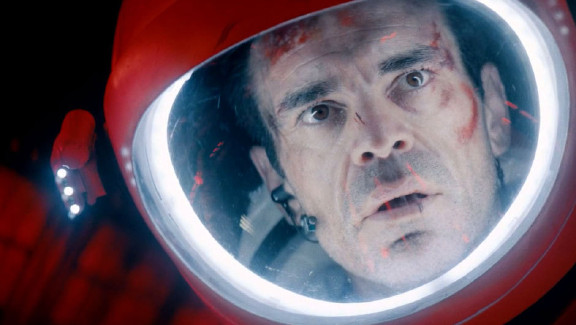
Space survival films are a genre all of their own. From Danny Boyle’s surreal Sunshine, to Daniel Espinosa’s polarizing Life, to the best of the bunch, Alfonso Cuarón’s immaculate Gravity, the film world seems fascinated with throwing interstellar obstacles at terrified protagonists in the deep reaches of space. Carl Strathie’s Solis pays varying levels of homage to not only these films, with its white-knuckle situations and harrowing depictions of the vastness of the cosmos, but also to their headier predecessors, particularly the monumental daring of 2001: A Space Odyssey, through its notable use of imagery and colour. Ultimately, the artistry of Solis, though understandably subtle enough for some to  overlook, elevates the film from what could have been a somewhat staid space flick to a commendable slice of cosmic panic. Plus, a great deal of credit belongs to the captivating lead performance from cult-favorite Steven Ogg, finally given the chance to take the spotlight. 

Ogg, most well-known for his gloriously twisted embodiment of Grand Theft Auto V psycho Trevor Philips, is the sole visible performer in Solis, playing Troy Holloway, an employee of interstellar mining company Orbis. The action begins after a devastating accident onboard the main mining craft, as Holloway awakes in an escape pod hurtling through space, on a crash course towards the sun. While it may seem a tad overdramatic that he is literally going to smash into the sun, Solis keeps its visuals polished and oddly elegant.

The film’s first 2001 reference, of many, arrives as the sun itself is introduced in a manner very reminiscent of the opening chords of Kubrick’s masterpiece. From there, Strathie incorporates a method borrowed from that other space-epic, Star Wars, as Holloway’s minuscule vessel shoots into frame like the Rebel ship, subsequently pursued by a behemoth – in this case a massive cloud of space debris also on a course for the eponymous star. Solis continues its choice aesthetics through its use of colour to augment Holloway’s various attempts to better his situation — blue and orange populate most of the frame during the calmer, more dialogue-heavy interactions, while red creeps in from time to time to signal danger and mortality, to great effect.

As he makes contact with Commander Roberts aboard the main vessel, played by another talented cult favorite, Alice Lowe, Holloway’s fate is considered and reconsidered many times over, as both he and Roberts seem unsure whether his is a lost cause just yet or not. The building sense of doom is well established, again not only in its high order performances but its visual craft. I must specifically mention two particularly unnerving uses of imagery that elevated the experience: the first, a crack in the pod’s window, which progressively grows bigger and bigger, coming to ominously resemble a spider’s web by the climax, effectively reasserting the futility of Holloway’s attempts to escape fate. The second, the more subtle, is the continued return to images of eyes and of spheres resembling eyes, which both recall blips of humanity in the inhumane void, and the stark absence of an over-watching presence in such a vast emptiness. 

In fact, the aesthetics and plotting of Solis seem altogether consumed by the mercilessness of space, which, notably, means the film does not spend much time considering its intriguing potential for beauty, or mystery. This dourness becomes  overbearing at times, as the film seems only to take the most decidedly tragic turns at every corner. The filmmakers do not take their foot off the pedal for long enough to truly empathize with much, and even though Lowe delivers some compelling monologues, and Ogg legitimately carries a great deal of the film with his strenuous energy, its character beats come off as somewhat rushed – as a fan of Ogg’s, I found myself wishing he was given perhaps a few more chances to spread out as a performer.

Overall, however, Solis is a great way to spend 90 minutes, especially for fans of the space-is-scary approach, and/or fans of Mr. Ogg or Ms. Lowe. What’s more, Strathie must be commended for not only delivering a tale worth telling, with a stellar lead performance, but also for making his yarn as aesthetically captivating as this.


outstanding

StarStarStarStar

Reviewer: Nathaniel Brimmer-Beller (Seen 25 June)

Go to Solis at EIFF


EIFF: “The Eyes of Orson Welles” (24 June ’18)

“A gem of cineast cinema.”

Editorial Rating: 5 Stars: Outstanding

If you have ever wondered whether Orson Welles’ larger-than-life persona could get any more layered with creativity, Mark Cousins has delivered the answer: more than most would imagine. With The Eyes of Orson Welles, Cousins has produced a gem of cineast cinema: a story of a filmmaker, told masterfully through the medium Welles dominated so masterfully himself, which illuminates forgotten tales of history with striking relevance and a remarkable amount of fun. It’s great. 

The documentary builds its approach from a literal treasure trove of artworks big and small, all hand-made by Welles himself, who produced over 1,000 drawings, paintings, sketches, and the like — many of which directly influenced his designs for films and documentaries of his own. It is structured in numerous parts, with the overarching hook that they are meant as a letter directly to Welles, delivered by Cousins in a second-person voiceover. The narration produces a fascinating narrative; the drawings function as pictorial evidence of Welles’ immense creativity and eye for visual complexity, while the shots by Cousins and his team breathe life into the diverse settings and characters within the brushstrokes. From Ireland to Morocco, from New York City to his western later-life abode, Cousins follows Welles’ travels and matches them flawlessly with the art he created in those spaces, partially with the help of his third daughter, Beatrice Welles, who offers priceless information and first-hand takes on how his personality influenced his artwork, and vice versa. 

The chapter-based structure works excellently, as Welles was such a complicated figure, both as a creative and simply as a man, that every side of him could warrant its own documentary. Most captivating is the chapter that Cousins wisely positions first in the progression, regarding Welles’  unfailing pursuit of social justice. There are some truly moving examples of his feelings towards the powerful, the powerless, and the power-hungry, especially along racial lines. For the detailed and remarkable story of Welles’ ‘Officer X’ broadcasts alone, this film ought to be seen the world over, especially anyone debating the relationship between art and social justice. When done well, this film suggests, one complements the other. Later chapters on his romantic entanglements and approach to film as art are just as immaculately well-measured, yet perhaps strain the runtime a tad. That is, until a delightfully surreal turn late in the film, which offers yet another reason why Cousins has made a fabulous choice of subject, and approach. 

Intriguingly, Cousins’ film offers a pleasant, optimistic take on the relationship between past and present, history and future, of talent then and of talent now. Welles’ astonishing creativity, and perhaps even genius, are not presented nostalgically, as if we will never see another like him and we should all give up now (a conclusion to which numerous reverent biographies unfortunately default), but rather as a beacon of inspiration for all who share his outlook on justice and the power of art as a healer and an educator. We should not give up, it seems to say, but rather take a cue from creators as wonderful as this. 

Helped along by a buoyant score by Matt Regan and splendid animation by Danny Carr, The Eyes of Orson Welles is a stupendously well-conceived and well-made presentation, and worthy of its multifaceted subject’s legacy. 


outstanding

StarStarStarStarStar

Reviewer: Nathaniel Brimmer-Beller (Seen 24 June)

See The Eyes of Orson Welles at the EIFF


EIFF: “Whitney” (22 June ’18)

“A warts-and-all telling of a seriously complicated story, with awe-inspiring moments to spare.”

Editorial Rating: 3 Stars

A true pop culture behemoth deserves a proper beginning-to-end document of their journey. Academy Award-winning Scottish filmmaker Kevin Macdonald has attempted as much for megastar Whitney Houston with his new, sprawling, film Whitney, an uneven but deeply moving document of Houston’s life. The film he has made is a curious case; while it performs dutifully as a warts-and-all telling of a seriously complicated story, with awe-inspiring moments to spare, its treatment of its immensely talented subject is not that sympathetic. 

The film ought to be commended for its deeply detailed depictions of Houston’s upbringing and rise to stardom. The access to such personal details is completely owed to the openness of the family, who began the process of getting the film made, not Macdonald. Thankfully, their hand in the process has not exempted them from any hard truths coming to light, and in fact some of the most devastating descriptions of mistreatment or disrespect surrounding Houston and her journey come directly from the family members who were responsible or complicit in the actions. The film almost feels like a scripted slow build; at times, as Macdonald admitted in a post-screening Q&A, even the documentarians are shocked by what their subjects reveal about Ms. Houston and her family. Like many rise-to-stardom stories, there are heartbreakingly tragic double-crosses, miscalculations, and traumas to be found just under the surface, and the film shies away from none of them. 

It must be noted, artistically, there is little directorial signature or flair on the finished product — it mostly runs as a series of clips and related interviews, assembled in chronological order. The lion’s share of the memorable moments are down to Ms. Houston herself; clip after clip of archival footage proves again and again that she was truly one of the most talented pop singers of all time. By the time the film reaches the date of her death in 2012, the viewer will most likely empathize with the tragically doomed Houston more than ever. This is the true triumph of Whitney, for the film makes a compelling argument for her complete exoneration from the gruesome tabloid rumors that sank not only her career but her self-confidence. The film does well to simply play a performance of hers in full from time to time, just to recall what a breathtakingly beautiful voice she possessed. (You just try and maintain a dry eye when they revisit her performance of the ‘Star Spangled Banner’ at the 1991 Super Bowl – you just try!)

That being said, Macdonald’s framing of the story does such a good job pointing out the mercilessness of tabloid interference in famous lives like Houston’s, that the nature of his own film gets consequently called into question. Horrid headlines concerning Houston’s dirty laundry and possible vices are sprawled across the screen as the film reaches the 2000s, Houston’s worst period of self-destruction; while this effect is well-measured, as the film itself began revealing similarly lurid details, I found myself beginning to question what the difference really is between the two outlets. Though Macdonald defended his film as ‘the truth,’ so therefore ‘better’ than tabloid journalism, the film does take a few steps too far into broadcasting the darkest sides of Houston’s past as if their tragic implications have entertainment value. 

The film’s clinical approach to telling the story seems to treat its sensitive material at an arm’s length, which somewhat irresponsibly allows for sarcasm and humor where there really should be compassion and understanding. From the racial implications of its subjects’ statements, to certain allegations of terrible abuse, to the private inconsistencies of some contacts of hers, (her complicated ex-husband Bobby Brown asserting that Houston did not have a drug problem at all, for instance), the film simply has too many moments where the heartbreaking material seems meant to elicit a laugh, rather than a tear or a moment of reflection, and though there are more high points than low, Macdonald’s film never quite feels entirely respectful as a result.

Overall, however, Whitney is a fascinating two hours, and a must for any fans of The Prom Queen of Soul, or fans of the music biz in general. 

nae bad_blue

Star (blue)Star (blue)Star (blue)

Reviewer: Nathaniel Brimmer-Beller (Seen 22 June)

Go to Whitney at the EIFF


EIFF: “The Most Assassinated Woman in the World” (25 June ’18)

“Captivating aesthetics and a genuinely meaty setting.”

Editorial Rating: 2 Stars

Behind the most elaborate facades, there must lie an even more fascinating true story — or so director Franck Ribière must believe. In this case, the first-time French writer/director takes on the larger-than-life tale of the Grand Guignol, and specifically its captivating real-life star, Paula Maxa, who is estimated to have been ‘murdered’ onstage more than 10,000 times in her two-decade career. Fortunately, Ribière seems to understand the sinister yet irresistible allure of the horrific goings-on within the infamous Parisian theatre, which specialized in naturalistic body-horror pieces which shocked and revolted adoring audiences. His film is chock full of gory, tasteless grisliness worthy of the Guignol stage through and through. Unfortunately, where the onstage gore ends and the ‘real-life’ fictionalized plot of The Most Assassinated Woman in the World begins, it all just becomes a big mess. 

The film is set in 1932 Paris, at the height of the Grand Guignol’s notoriety. While protestors scream until they are blue in the face with evangelical rage at the sinful delights going on inside, the detractors are overshadowed by the almost sycophantic devotees of the theatre, particularly the men so enraptured by Paula Maxa (Anna Mouglalis) that they wait outside the theatre just to hear her scream. While the film certainly talks a big game at how many mortals long to fall at Maxa’s feet every night, there is more telling than showing in this regard, and Maxa is, more often than not, seen gliding about alone. That is, until plucky reporter Jean (Niels Schneider) decides to get involved with ‘helping’ her, initially for a story but eventually as a partner. As a real-life murderer begins savaging women across the city — all of whom look suspiciously reminiscent of Maxa’s general aesthetic — Maxa and Jean engage in varying methods of self-preservation and digging down to the truth. 

This film has a lot going for it. Underneath all the eyesore viscera, the oddly 80s-like pulsing score (which is a great score, don’t get me wrong), and the somewhat staid cinematography, there is a bona fide neo-noir begging to be let out. Mouglalis is quite good as the mysterious, capable, yet troubled Paula, and supporting cast members such as Eric Godon, Michel Fau, and Constance Dollé imbue their moments onscreen with palpable emotion, while the story itself could approach some genre classics with its haunting twists and turns. But Ribière seems to have skipped a lot of steps when plotting, and for the last hour the story is one long meander, needlessly twisty — not helped by the fact that a good number of the actors look exactly the same under all those shadows. 

Not to mention – and gosh I had not realized how much this device irritates me until I saw this film! — it can be hard at times, when watching The Most Assassinated Woman in the World, to properly deduce who is an apparition, and who is not. There are so many hallucinated people in rooms, meant to denote a haunting memory, or even a spectral suggestion, that the effect just gets maddening with its repetitiveness. Suddenly all sorts of deceased loved ones are appearing in bathtubs and behind closet doors to remind the audience that the hallucinator is ‘troubled,’ but they add nothing after the first couple of times. Overall, Ribière’s film has some captivating aesthetics and a genuinely meaty setting, yet one wishes the content was leaner, clearer, and simply more fun by the final curtain.

Star (blue)Star (blue)

Reviewer: Nathaniel Brimmer-Beller (Seen 25 June)

Go to The Most Assassinated Woman in the World at the EIFF


EIFF: “White Chamber” (22 June ’18)

“A mind-bending, satisfyingly twisty yarn. “

Editorial Rating: 4 Stars

Just when it was beginning to look like science fiction had passed the 72nd EIFF by, writer/director Paul Raschid’s White Chamber steps in to save the day for futureheads. Opening with the simple title card: “The United Kingdom… Soon,” the film continues down the near-future-commentary path from then on and delivers a mind-bending, satisfyingly twisty yarn. 

Shauna Macdonald turns in a layered performance as the film’s lead, a woman who wakes up in the eponymous, blindingly fluorescent white chamber, itself a barbaric torture device that can perform essentially any sadistic physical torment imaginable. Her captor, unidentifiable due to the muffled microphone, alternates between forcing her to endure extreme heat, unbearable cold, an electrified floor, and other revolting cruelties. Honestly, if the film had continued a second longer in this vein, this would be an abject failure of a story. The tortures are tasteless, the female victim a tired trope, and the faceless evil outside more irritatingly anonymous than intriguingly so.

But Raschid, as the film’s next few moments make clear, knows all this. I was lucky enough to catch a Q&A with him after the film, and he elaborated that the crude, done-to-death beats of the beginning scenes are intentionally unoriginal, because he wanted to twist the genre on its head in a fresh, new way. Without revealing his methods, suffice it to say that’s exactly what he accomplishes, with a great deal of wit and some deeply satisfying plotting. This is a film that is particularly hard to review in much detail, as most of the meat of the plot is one huge spoiler. So, without giving it all away, let me just recommend you give Raschid’s film a try for yourself.

In some regards, the film is relatively entry-level in its ultimate messaging and character work. Certain individuals experience arcs that are somewhat predictable, and certain scenes end exactly how you expected them to end ten minutes ago when they began. Numerous shots, as well, are bland and flat, an approach which, of course, reflects the feeling of the sterile chamber, and what lies beyond, but starts to feel too uninteresting a background. Thankfully, many of the assembled performers, especially the impressively talented Oded Fehr, make up for the film’s few shortcomings, and make White Chamber, though hard to watch at times, and possibly too clever for its own good in one or two moments, a compact sci-fi thriller worth exploring. For fans of tight, witty sci-fi escapades, this is not one to miss. 


StarStarStarStar

Reviewer: Nathaniel Brimmer-Beller (Seen 22 June)

Go to White Chamber at the EIFF


EIFF: “Papillon” (22 June ’18)

“Quite compelling.”

Editorial Rating: 3 Stars: Nae Bad

This film is, conspicuously, a remake. Not in the sense that it broadcasts its similarities and differences to the original, (in this case the 1973 version of Henri Charrière’s seminal autobiography), like some decades-later remakes do, but in the sense that it simply re-makes the first. This begs a question which Michael Noer’s new Papillon never quite answers: why was this film made?

The action follows a dashing Paris criminal known as ‘Papillon’ (Charlie Hunnam), cracking safes in style in 1931, as he gets some brutal comeuppance for swindling his boss, and is framed for murder. His sentence is life in prison, specifically an overwhelmingly horrible penal colony in French Guiana. There, and over the next few decades, he attempts various escapes through a partnership with wealthy but weak Louis Dega (Rami Malek), and experiences disturbing and inhumane treatment from the prison’s guards and higher-ups. The kicker is that it’s all based on a true story, by the real Henri ‘Papillon’ Charrière, whose book of the events, published in 1969, has sold over 13 million copies worldwide.  Charrière was pardoned of murder in 1970.

There is a confusion to Noer’s film, however, for on its surface, it is quite compelling, but underneath, it is really just a re-done version of a film that has already been made. Steve McQueen and Dustin Hoffman embodied the roles of Papillon and Dega, respectively, in Franklin J. Schaffner’s original, which, though not considered a great film, is still a notable work in American depictions of agony in incarceration. Noer’s film has cinematic agony to spare, and at times verges into outright body horror as Papillon and others are starved, savagely beaten and whipped, and in some cases dismembered and murdered. It’s not a very fun time for anyone.

Yet, despite the aspects that befuddle and disgust, Papillon delivers some affecting cinema here and there. The casting should be commended above all else; Hunnam and Malek are without a doubt two of the most capable yet underused leading men onscreen today, and it is very satisfying to watch them play off each other. Hunnam continues to impress with his ability to flaunt his physicality and his grim charm, and for fans of his star turn in James Gray’s underrated The Lost City of Z, this film will not disappoint. Yet it is Malek who stands out the most remarkably here, and his Dega, weak-chinned but crafty, might be one of the more memorable characters of this entire festival so far.

In terms of craft, Danish director Noer makes some odd choices, but none really take away too deleteriously. One qualm I had is the complete lack of establishing shots in the first half of the visuals — in a film so focused on a hellish jungle landscape, it is strange that the camera focuses more on medium shots in quite random succession. Until we get one breathtaking shot of the South American sunset on a river, followed by another strange bout of shots where a small boat at sea takes up three quarters of the frame, and an ensuing storm is relegated to a distant speck. Perhaps these are all intentional distortions of what we expect to see, but it struck me more as unsuccessful attempts to shoot around a small effects budget, which detracts from the epic nature of this decades-long story. Nevertheless, the film may be slow, but it is not boring; it is odd but not off-putting — unnecessary, but not unwelcome.

nae bad_blue

Star (blue)Star (blue)Star (blue)


Reviewer: Nathaniel Brimmer-Beller (Seen 22 June)

Go to Papillon at the EIFF here


EIFF: “Incredibles 2” (22 June’18)

Walt Disney Studios Motion Pictures / Everett

“A true standout in action-excitement filmmaking.”

Editorial Rating: 4 Stars

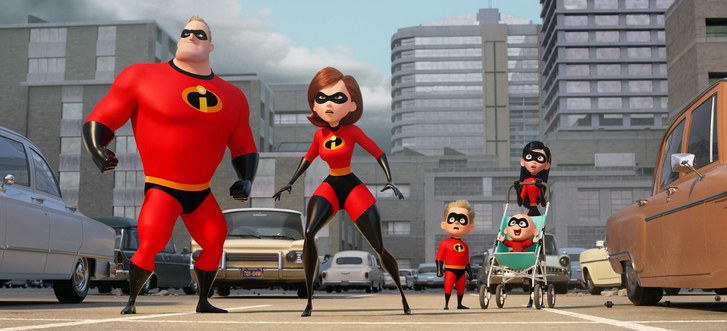
There are a lot of superhero movies out there. I don’t need to explain the various cinematic universes that have quite efficiently conquered pop culture the world over in the past fifteen years or so. They are high-budget, immaculately shiny, and absolutely stuffed with characters  – and bombast. Yet despite the immense success of these high-concept sequels, in many ways Pixar’s own superhero sequel, Incredibles 2, leapfrogs way over their heads and delivers one of the most genuinely exciting, eye-popping cape-and-cowl films of them all. (Even though, of course,  there are no capes.)

Brad Bird returns to the director’s chair, fifteen years after creating the widely beloved original, which dropped viewers into a retrofuturistic world where ‘Supers’ are made illegal after a one too many superpowered scuffle totals a great deal of infrastructure. Incredibles 2 picks up seconds after the first one ended, finally letting all of us who wondered just how the titular family would deal with The Underminer, all those years ago, see the fight in full. Of course, even more infrastructure is totaled, so the Supers are run underground yet again. Not long after, a shiny-toothed businessman (Bob Odenkirk) and his mysterious sister (Catherine Keener) join the story and offer to help the family, and all Supers, become legal again and protect the city unrestricted. 

What separates the Incredibles films from others of their genre, in both cases, is the heavy focus on the actual people under the suits. Bob Parr, a.k.a. Mr. Incredible (Craig T. Nelson), is back and funnier than ever, as this time he is overshadowed by his much more marketable wife, Helen Parr, a.k.a. Elastigirl (Holly Hunter). In a quite timely and interesting turn of approach, the business siblings, (and, notably, the film itself) specifically decide to push the female-leadership angle as more compelling to “today’s” audience, and put Elastigirl front and center in most of the film’s breathtaking action set pieces. 

Consequently, the greatest takeaways Incredibles 2 has to offer are indeed these stupendous sequences. One helicopter chase in particular struck me instantly as the most exciting superhero set piece I’ve seen in a while, (and I, unsheepishly, am a die-hard MCU fan). Though Disney had some apologizing to do for not warning patrons of a particularly strobe-lit scene, the scene in question is action film lighting at its absolute best, with the eerie villain textured with an utmost nightmarish quality, producing quite unnerving visuals. The groundbreaking studio’s penchant for industry-best animation is on display yet again; just try not to swoon when a glass of water is placed down, even in the corner of the frame, and the bubbles and minuscule waves in the surface are given every pixel of detail you would see in real life. These details, and the heights the animation can reach, make Incredibles 2 a true standout in action-excitement filmmaking.

On a slightly different note, the other side of the animation and craft being so exemplary is that one notices when the story stalls here and there, which happens more often than not. The plot ‘twists’ are  … predictable! The jokes are mostly recycled from the first film, and though that is for the most part very welcome — for The Incredibles is one of the most daring animated ‘children’s’ films of all time, I’d say — some do make one wonder if Bird and company just forgot to write more material. The ending, in particular, feels like they ran out of time, especially when compared to the layered, satisfying final beats of the first. Plus, I hesitate to mention it, but the ‘Frozone’s hilariously sassy offscreen Black wife’ joke is not only tired, but getting kind of distasteful, and it is no surprise that in this film she is relegated to a quick line, as a callback. (Notably, somehow, though Incredibles 2 introduces a wide array of new Supers big and small, with the exception of the offscreen spouse, there are no Black women in the whole thing. Odd.)

Altogether, however, Incredibles 2 is good fun, and a pleasant continuation of the jauntiness and aesthetics of the brilliant first go round. Michael Giacchino’s score is still excellent, opting for a more noir sheen alongside his memorable and delightful main theme for the fantastic family. Bird has done well, albeit by doing what he already knew. 

outstanding

StarStarStarStar

Reviewer: Nathaniel Brimmer-Beller (Seen 22 June)

Go to Incredibles 2 at the EIFF


EIFF: “Cold War”, UK Premiere, 21 June ’18.

“One of the best films of the year. “

Editorial Rating: 5 Stars: Outstanding

Pawel Pawlikowski has crafted a film that breathes life into multiple mid-century time periods and settings with the ease and authority of a master instrumentalist at play. Cold War, though not his first feature, is the Polish director’s second in a row shot in meticulously framed, gorgeously composed Academy-ratio monochrome. This approach began with the immensely celebrated Ida, which won the Academy Award for Best Foreign Language Film in 2015; yet while Ida’s plotting and method achieve their affecting levels of character development and artistic storytelling through a more bleak, distanced tone, Pawlikowski has imbued his latest with a pleasant amount of levity, joy, cinematic tricks, and transcendent musical sequences. It is no understatement to say Cold War ought to be regarded as one of the best films of the year. 

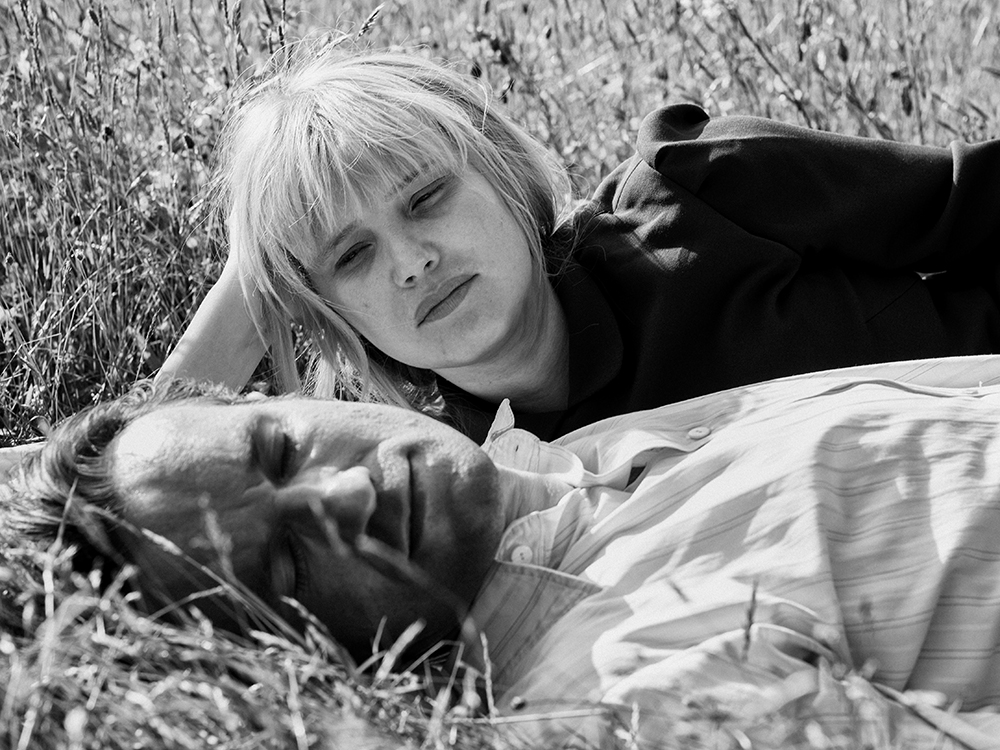
The story follows fifteen years of two parallel paths: that of complicated, tragically-fated lovers Wiktor and Zula, and that of complicated, tragically-fated Poland itself. The first scenes follow Wiktor (Tomasz Kot) and his team as they traverse the Polish mountain area in 1949, as part of a post-war effort to reinvigorate national pride through revitalizing traditional music. Through their search for singers and dancers for a government-sponsored traveling troupe, Wiktor meets Zula (Joanna Kulig), a captivating and immensely talented young woman, whose beauty is complemented well by her snarky wit. (During her singing audition for the troupe, she is told by Wiktor’s colleague that they have heard enough, to which she responds “Just the chorus,” and plows ahead, singing over the ‘Halt’ order — an example of the film’s wry and welcome sense of humour.) Their romance develops as the troupe’s tour radius grows larger and larger, encompassing more and more of the Soviet Union, until they are so well-known that the government decides to use them as a mouthpiece for its propagandic interests. More humour, albeit a darker tone of it, is on display as a government official suggests that they edit the carefree and poetic lyrics of the age-old folk songs the troupe normally sings, to better acquaint the citizenry with the government’s achievements, such as agricultural reform. 

Pawlikowski explores these dichotomous paths — a growing, twisting romance and a gradually  darkening society — in masterful contrast. Stalinism creeps in the edges of the love story with a breathtaking and unnerving progression, at one point literally coming out of nowhere as a massive depiction of Stalin rises above the dancers with nightmarish grandeur in one of their later performances. Most remarkably, the story of Wiktor and Zula becomes intractably interwoven with the imbalanced levels of freedom and artistry inside and out of the Soviet Union, for as Wiktor longs to leave and stay out, so does Zula question where her home truly is, and should be, leading her to some ill-advised returns to hostile territory. The perverted display of the traditional dancers performing Stalinist messages is contrasted with the liberally expressive Parisian musical scene as the action shifts to the mid-fifties, with some pitch-perfect jazz sequences offering some of the most pleasant monochrome pieces of filmmaking in my memory. Whatever possessed Pawlikowski to include so many musical scenes, from the introduction of Paris through a jazz solo to Wiktor’s alarmingly cacophonic piano playing as he experiences great loss, to the magnificent sequence where Zula throws herself around a bar to the tune of “Rock Around the Clock” by Bill Haley & His Comets, and most briefly but beautifully in a romantic moment between the two as they share a dance to “Is You Is Or Is You Ain’t My Baby,” this film treats its soundtrack incredibly well.

Credit must also go to the leading couple of Kot and Kulig, who ground the artistry in their compelling faces and physicalities; there are times where entire monologues of meaning are delivered in a silent glance or movement of the face. Also remarkable are the supporting performers, who represent the world outside Wiktor and Zula’s bumpy romance, from the stocky government stooge with a surprising amount of heart, Kaczmarek (Borys Szyc), to the stern but defiant musical director Irena (Agata Kulesza) to the amusingly pretentious French poetess Juliette (Jeanne Balibar). 

It came as delightful news when Pawlikowski was awarded Best Director at this year’s Cannes Film Festival, where Cold War premiered, and where I first saw the film. At the time, I would have said it was pretty good, maybe a niche art film crowd will like it. But on second viewing, I must say Cold War is much more: just as riveting as it is beautiful, just as musical as it is dramatic, just as prestigious as it is fun. Highly recommended viewing — and an excellent example of last minute scheduling .

outstanding

StarStarStarStarStar

Reviewer: Nathaniel Brimmer-Beller (Seen 21 June)

Go to Cold War at the EIFF here


EIFF: “Ideal Home” (Odeon 2: 21 June ’18)

“Fresh and clever”

Editorial Rating: 4 Stars

Andrew Fleming (Hamlet 2) delivers a through-and-through feel-good movie, with the crucial help of a particularly bombastic Steve Coogan and chameleonic talent Paul Rudd. Though some of the dialogue could use some editing, the film nevertheless achieves that rare balance between genuinely delightful comedy and grounded social relevance.

The action begins as it means to go on. A scrappy man and his elementary-age son scramble to escape a motel room as the cops wait outside. With them is a woman complaining that the scumbag inside stole her Chanel purse, her Chanel purse. The burly officer, between bangs on the door, turns to comfort her, saying “Hey, hey, I get it, I have some Chanel loafers that I love, so I understand.” Ideal Home continues in this vein of fabulously sardonic charm, as the story pivots to flamboyant couple Erasmus Brumble (Coogan) and Paul (Paul Rudd), who are suddenly saddled with the son from the opening. His father, now in custody, is Erasmus’ son, meaning Erasmus and Paul are all of a sudden in charge of a grandson they didn’t know existed. While this setup — the sudden introduction of a child that must be raised — has been done before, Fleming, Coogan, Rudd, and Jack Gore, as the kid himself, manage to make Ideal Home feel fresh and clever, and a welcome new chapter in the “family comes in all shapes and sizes” genre.

The film is fairly straightforward in its approach; in fact its main downside is the formulaic feeling of some of the dialogue and supporting characters. There is a conspicuous debt owed to The Birdcage for its presentation of bombastic men in love who offer quotable quips back and forth and prove over and over that the line between love and hate can at times seem very, very thin. But unlike previous iterations of these types of stories, Fleming’s film seems purposefully dotted with genuinely dark interactions here and there, from sudden fights to tragic revelations to near breakdowns; serious implications between the ditzy laughs. This changeable emotional landscape not only keeps the audience on their toes, but successfully recalls the knife edge on which many a family interactions walks, when an argument is only a few careless words away from exploding.

In moments like those, especially, but truly in the entire film, Mr. Rudd must be given credit for his all-in performance as put-upon partner Paul. While Coogan performs with candour aplenty, he nevertheless puts forward yet another version of his ubiquitous narcissistic jerk character, with some added heart, but not much. Rudd, on the other hand, explores entirely riveting sides of his extensively likeable persona, and it is nice to see such a versatile actor given a chance to go beyond his normal smiley self and try lashing out and being scornful for a change. Ideal Home is not all scorn and argument, of course, and thankfully Fleming and his cast have found room for loads of side-splitting lines and situations that I highly recommend you see for yourself.


StarStarStarStar


Reviewer: Nathaniel Brimmer-Beller (Seen 21 June)

Go to Edinburgh International Film Festival here

(Ideal Home is showing today Saturday 23 June & Monday 25th. See EIFF programme for details)


EIFF: “Calibre” (Cineworld, 22 June ’18)

Image: British Council.

“Notable style.”

Editorial Rating: 2 Stars

Writer-director Matt Palmer’s depiction of a rural Highland town and its inhabitants is not doing the Scottish tourism board any favours. His new film, Calibre, out on Netflix in a week, walks the line between outright horror and pulse-pounding masculine drama with notable style, and gives rising star Jack Lowden some seriously grisly meat to chew on. Overall, however, this tidy, affecting morality play with an impressive cast and excellent sound work cannot escape some garishly ill-devised plotting, a tiresome amount of doom and gloom, and a seriously terrible haircut. 

The fun begins in Edinburgh, as Vaughn (Lowden), kisses his pregnant wife goodbye for a weekend hunting in the Highlands with his lifelong friend Marcus (Martin McCann). Upon their arrival in the rural town, they cross paths with aggressive locals, dangerous women, and some surprisingly friendly contacts. Palmer builds a commendably unnerving sense of dread as every craggy corner in this middle-of-nowhere locale seems to possess some unseen malice, and the director’s horror influences are well-established early on. At times one expects some glowing eyes or demonic cackle to make an appearance but Palmer’s film avoids the supernatural in favor of the more horrifying type of evil: the one within man himself.

If that last line struck you as a bit much, take it as a test. If that sort of melodramatic meditation on evil! and honor! and truth! and shame! strikes you as a fun time, maybe you’d love Calibre. If the line “This can only be paid for in blood” doesn’t strike you as laughable, by all means get on Netflix on June 29th and stream this thing. 

Otherwise, take my word for it, this film is poorly measured. Lowden turns in another commendable performance as Vaughn, who commits a horrendous act completely by accident, which is so genuinely shocking that I won’t dare ruin the surprise when it comes. McCann is impressive as the cunning and duplicitous Marcus, who is unnervingly good at covering their tracks after the act, which implicates both of them in heinous wrongdoing and will completely destroy both their lives if discovered. Also delivering the goods is Tony Curran, a reliable presence on screen, who gives great depth to local leader Logan, who keeps the most brick-headed townsfolk from tearing the city boys to shreds just for being outsiders. 

Indeed, though most of the narrative follows the young men as they try to evade discovery, Calibre also has a lot to say about the relationship between rural and urban, rich and poor, privileged and underprivileged, strong and weak. Yet as the tension rises and the plot twists and yanks itself around, most of these ‘insights’ are either screamed at a frenzy worthy of Nicolas Cage’s choicest meltdowns, or growled with such Straw Dogs-esque menace, turned up to 11, that it comes off as silly rather than terrifying. This all culminates in a climactic setup so dour, so tastelessly brutal, that one cannot help but feel like they are watching Saw: Highlands Edition rather than the Hitchcockian crime thriller it packages itself as. Calibre does not ultimately earn its dourness, but rather just piles it on, in the hopes that grisliness will make up for lack of direction. (Not to mention, it is hard to have much sympathy for Vaughn when all his weeping and moaning is done while sporting such a revolting hairdo. But that might just be me.)

Palmer clearly has a nice grasp on how to build tension, and he is particularly impressive in his use of sound to set a scene. But Calibre would be vastly better if it knew how to release that tension in its final act without lazing into tasteless impulses. Skip it, I reckon.

Star (blue)Star (blue)

Reviewer: Nathaniel Brimmer-Beller (Seen 21 June)

Go to Edinburgh International Film Festival here

(Calibre is showing today, Saturday 23 June & on Saturday 30 June. See EIFF programme for venues.)