From time-to-time we bring you insights and overviews into Edinburgh’s year-round arts scene. We are especially keen to support talent hoping to bring new work to the city using crowd-funding sites such as Kickstarter.
EdFringe LEGEND and Radio 4 Royalty, Mitch Benn talks TOM LEHRER with Thomas ‘No More F*cks To Give’ Benjamin Wilde esq. at Bedfringe on 26 July 2025.
WHO: Mitch Benn
WHAT:“When, years ago, a teenage Mitch discovered American comic songwriting legend Tom Lehrer, the course of his life was changed forever. Mitch looks at the legacy of the elusive Lehrer, the creative debt owed to him by all those who mix humour and melody, and performs some of the more Lehreresque of his own songs. Since Mr Lehrer (at time of writing, still slogging obstinately along at the age of 97) recently placed his entire catalogue in public domain, expect a few Mitch Benn-ified covers of some of Tom’s most famous creations as well.”
WHERE: Jersey at Underbelly, Bristo Square (Venue 302)
On the very night that the legendary satirist Tom Lehrer passed away, two of the UK’s finest musical comedians — Mitch Benn (BBC Radio 4’s The Now Show) and Thomas Benjamin Wild Esq. (of I’ve No More F**s to Give fame) — talked backstage at Bedfringe. What followed was an impromptu, heartfelt, and hilariously under-edited discussion of Lehrer’s influence, legacy, and unmatched brilliance.
Between witty anecdotes and musical reflections, the two performers honour the man who changed the landscape of comedy songwriting forever. A fitting tribute. A moment of spontaneous comic history. A must-watch for fans of clever wordplay, satire, and musical mischief.
LIKE WHAT YOU JUST READ? FOLLOW US ON TWITTER! OR SIGN UP TO OUR MAILING LIST!
For the first time in the contest’s history, land war in Europe between two of the participants is forcing EUROVISION to relocate its grand final. Our Features Editor, Dan Lentell, talks about the choices facing all those hoping to influence one of the most consequential decisions organisers have ever had to make.
Ukraine won Eurovision. We know that. We also know that, due to the conflict in that country, the 67th Edition of the Eurovision Song Contest (2023) will be held in the UK. We know that the BBC will act as host broadcaster. What we don’t know (yet) is in which UK city the show will be staged. There is no shortage of viable contenders. The politics – big and small ‘p’ – will be fierce and largely unseen, perhaps only to emerge in a little-read Political Masters dissertation in the latter part of the present decade.
The first thing to think about, as ever, is money. With a global cost of living crisis compelling every local authority to tighten belts and squeeze essential services, arts funding is a hot potato many may eye but few councils would actually wish to grab. After all, how does one justify Azerbaiji levels of expenditure in more modest times?
For the twitchy, nervous, councillor types who pay lip service to the vitality of the arts in public, but who secretly dread a discontented taxpayers’ revolt at the polls, the need to demonstrate value for money is an all-consuming concern. In addition to the fact that much of the essential funding for Eurovison comes from other key players, there are two obvious responses to the maybe/naybe sayers.
First, there is no doubting that Eurovison is a very big deal, a very big draw, and a very big legacy for any self-respecting European centre of culture. Tourism and its related economic sectors will feel an immediate benefit which, with a little skill, could be extended into the medium and longer term. Few in-house tourist information campaigns could match Eurovision for glitz and glamour.
Second, there is the more nebulous national levelling up agenda. London’s gravity bends the UK’s economic and social fabric south-eastwards. Successive governments have attempted to counter this with targeted support and investment north of Watford Gap. The opportunity for a repeat of London’s spectacular 2012 Olympics – not to mention its ‘60, ‘63, ‘68, and ‘77 Eurovision stagings – seems unlikely. So it will be interesting to see if, how, and where the new Prime Minister in Downing Street sows this unexpected windfall of Eurovision potential.
A further consideration are the wider political conversations being held about the UK itself. The Nationalist administration in Scotland is determined to hold a second independence referendum in the very near future. Edinburgh’s council leader has said that, as Kyiv’s sister city, Scotland’s Capital would be a “fitting host.” Decision influencers at Westminster might be more inclined to approve of a Labour-led administration dusting off the auld bunting from ‘72 and stepping into the European spotlight – with or without Will Ferrell and Dan Stevens – than to hand the mic to the SNP-led City of Glasgow, “safest of safe pairs of hands” or no.
Whichever city is chosen, the contest organisers have said that the host venue should accommodate c.10,000 spectators, be within easy reach of an international airport, and have enough hotel accommodation for at least 2,000 delegates, journalists, and spectators. Birmingham, the last UK city to have hosted (‘98), will be match fit following the Commonwealth Games. But for Brexit, Leeds might have been European Capital of Culture in 2023, and the city will be determinedly staging its own year of culture in 2023 which feels like a kind of fit. Liverpool has no small connection with popular music in the public mind.
But this will not be an entirely UK event and nor should it be. This will be Ukraine’s moment to speak to the world. To remind all the peoples of Earth of why Eurovision matters, of our shared values and of the value of sharing. For that reason, I suggest that of all the UK mainland cities few can match Manchester as the 2023 Eurovision host. Manchester’s own history of courage in the face of successive terrorist outrages includes the demonic murder of 23, and injuries to a further 1,017 more, concertgoers just five short years ago. To misquote the late Queen Mother’s epic response to the wartime air raid on Buckingham Palace; it is only from Manchester that we can look the people of Europe’s east end in the eye.
This is a think piece by our Features Editor, Dan Lentell.
“Cephalopods are not aliens from outer space, but they are the closest we’ve got. They’ve been on an independent evolutionary path from ours for over five hundred million years.”
Before there were mammals on land, there were dinosaurs. And before there were fish in the sea, there were cephalopods―the ancestors of modern squid and Earth’s first truly substantial animals. Cephalopods became the first creatures to rise from the seafloor, essentially inventing the act of swimming. With dozens of tentacles and formidable shells, they presided over an undersea empire for millions of years. But when fish evolved jaws, the ocean’s former top predator became its most delicious snack. Cephalopods had to step up their game.
Many species streamlined their shells and added defensive spines, but these enhancements only provided a brief advantage. Some cephalopods then abandoned the shell entirely, which opened the gates to a flood of evolutionary innovations: masterful camouflage, fin-supplemented jet propulsion, perhaps even dolphin-like intelligence.
Squid Empire is an epic adventure spanning hundreds of millions of years, from the marine life of the primordial ocean to the calamari on tonight’s menu. Anyone who enjoys the undersea world―along with all those obsessed with things prehistoric―will be interested in the sometimes enormous, often bizarre creatures that ruled the seas long before the first dinosaurs.
Danna Staaf is a freelance writer and science communicator with special expertise in cephalopods. Her writing has appeared in Science, KQED, Earther, and io9, and her first book, Squid Empire: The Rise and Fall of the Cephalopods, was named one of the best science books of 2017 by NPR. She holds a PhD in biology from Stanford University and has spoken at dozens of venues, including the Denver Museum of Nature and Science, the main Google campus in Mountain View, public libraries, universities and schools at every grade level. She lives in San Jose with her husband and an unruly collection of kids, cats, and plants.
Squid Empire: The Rise and Fall of the Cephalopods was published in November 2017 by University Press of New England.To find out more click here.
Why cephalopods?
Seriously, you have to ask? All right, fine: Cephalopods are not aliens from outer space, but they are the closest we’ve got. They’ve been on an independent evolutionary path from ours for over five hundred million years. They’ve arrived in the modern world with features that seem incredibly weird to us–elastic tentacles, color-changing skin, suction cups and ink sacs–as well as features that are astonishingly convergent. An octopus eye, for example, has an iris, a lens, and a retina just like yours. Unlike yours, it has no blind spot, no color vision, and it can detect the polarization of light.
Without cephalopods, we would have just one kind of nervous system to study. A mouse, a frog, and even a fish are all so closely related to humans that you could say we all have the same kind of brain. Comparing our brain to an octopus’ brain, however, illuminates a great deal more about how nervous systems work, helping us ask new questions and look for new answers. If you’re at all interested in weird stuff, nothing beats cephalopods for raw coolness. If you’re just interested in humans and how we got to be the way we are–still, nothing beats cephalopods for a truly comparative system.
Cephalopods are remarkably intelligent. Should we feel bad about eating them?
My first impulse is to say “yes.” But that’s too glib, and I’m not into making people feel bad. I am a vegetarian, and I don’t eat cephalopods for the same reason I don’t eat cows or chickens or tuna. I don’t think they need to be considered separately from other animals in that regard. For a lucid and compassionate take on this topic, check out Barbara J. King’s “Calling Team Cephalopod: Why Octopuses Could Never Disappoint.” (link: https://www.npr.org/sections/13.7/2018/03/08/591530441/calling-team-cephalopod-why-octopuses-could-never-disappoint)
What advice would you give to a James Bond supervillain wanting to know which deadly cephalopod species they should restock their lair’s plunge pool trap with?
Blue-ringed octopuses. Despite their small size, these are the only cephalopods that have caused documented human deaths. Their venom contains a potent neurotoxin that can kill a grown human. But then I’d also say to this hypothetical supervillain: don’t bother. Don’t bother yourself, and don’t bother the poor blue-ringed octopuses. They only bite people when they feel really threatened–they’d much rather camouflage themselves and hide–and it’s shoddy supervillainy to make a bunch of innocent octopuses feel threatened all the time. Anyway, you know what’s more deadly than even a blue-ringed octopus? Water. Yeah, all the water that’s already in your plunge pool, because people can’t breathe it. Way more people die by drowning every year than by bites from any kind of wild animal. And with all the time you save by not trying to maintain a finicky venomous animal in a salt-water aquarium, you can get on with some really super supervillainy.
Why is it a big deal that nautiluses are being added to the endangered list?
Nautiluses are the only living cephalopods that still have external shells, and people have been collecting these shells and turning them into jewelry or simply displaying them for hundreds of years (at least). But eventually demand outstripped supply and now many populations of nautiluses are nearly gone. At one location in the Philippines, fishers have to set out a hundred traps to catch a single nautilus, in the same place where their grandparents would catch several nautiluses in each trap. The 2017 inclusion of nautiluses in CITES, the treaty that protects high-profile animals like elephants, is the first legal protection these strange, beautiful cephalopods have ever had. Keeping nautiluses around gives us a living window into 500 million years of evolutionary history–and also preserves the most laughably awkward yet astonishingly efficient swimmers on the planet.
If you could vacation in and around a prehistoric sea, when and where would you go?
I’d have to go to the Ordovician, about 470 million years ago, to see giant straight-shelled cephalopods–the planet’s very first monsters, who ruled the seas long before dinosaurs evolved! The arrangement of the continents was so dramatically different back then that it’s hard to describe exactly “where” I would go. This was pre-Pangaea; most land was glommed together in the southern hemisphere so I guess I’d plop myself somewhere in the watery northern hemisphere and hope for the best.
To be clear, “best” means that I would get to see Cameroceras, a horizonal ice-cream cone over twenty feet long, close enough to count its tentacles, look it in the eye, and find out whether or not it had a beak. Does that mean my vacation would be cut short by entering the digestive system of the earliest giant cephalopod? Maybe, but time machines are notoriously unreliable, and death by Cameroceras could be a better end than trying to make it back home.
If you could Jurrasic Park an extinct species of cephalopod which would you bring back to life?
Nice verbing! I’d bring back one of the heteromorph ammonites for sure. The heteromorphs were a bizarre and diverse group of cephalopods with external shells that lived in the Cretaceous. Most ammonites had spiral shells that looked superficially similar to modern nautilus shells, but heteromorphs broke all the rules. There were heteromorphs with corkscrew shells and totally straight shells, with shells bent like paper clips and shells twisted into knots. No one really knows how or why their shells grew in such strange shapes. I’d probably pick Nipponites, because seriously, friend, what are you doing with a shell like that? (link: https://en.wikipedia.org/wiki/Nipponites)
You’re an expert writing for a lay audience. What’s the biggest tip you have for someone attempting to persuade others of the value of their particular field of specialist study?
Let your enthusiasm show.
You write about the individual scientists who inspired you in your early career. Who are you most excited by today? What are they working on?
Last summer I visited Robyn Crook’s lab at San Francisco State University and was completely captivated. (link: http://crooklab.org/) She and her students study pain in cephalopods, which might sound awful, like poking squid with sticks. But in fact, they were able to use noninvasive techniques to find the first evidence that cephalopod anesthesia actually cuts off sensation, instead of simply immobilizing the animals–a pretty important thing to know for ethical research! Crook is the one who turned me on to the idea of cephalopods as the only truly comparative systems for vertebrates. Since the perception of pain evolved separately in cephalopods, they provide an opportunity to study the evolutionary roots of this sensation, the ways in which it’s useful and the ways in which it can be problematic.
I’m also fascinated by the work of Bret Grasse and his team at the Marine Biological Laboratory in Woods Hole. (link: http://www.mbl.edu/cephalopod-program/) Grasse pioneered the aquaculture of pajama squid and flamboyant cuttlefish at the Monterey Bay Aquarium, and now he’s working with a tremendous array of cephalopod species at Woods Hole to make them available for all kinds of research. I admire his team’s focus on the welfare of the animals, and I can’t wait to see what unexpected discoveries will come from scientists being able to work with so many cephalopods that were considered too finicky to handle before. It may seem weird to make such a big deal out of these “niche” animals, but we should remember that modern neuroscience grew almost entirely from breakthrough research on the giant axon of squid. Cephalopods really do offer unique research opportunities, not just in neuroscience but in robotics (all those flexible arms!), medicine (all those arms can regenerate!) and more.
Where is the best place to go diving with cephalopods?
One of my fellow squid scientists once saw six different cephalopod species while snorkeling off Okinawa–so that’s now on my dream dive list! I’ve always wanted to see the giant cuttlefish matting off Southern Australia, too, and then there are the sites off Seattle where you can see giant Pacific octopus (just don’t try to hunt them, link: https://www.nytimes.com/2013/10/20/magazine/the-octopus-that-almost-ate-seattle.html). One of my favorite cephalopods to watch underwater is the Caribbean reef squid, which can be seen in many places throughout the Caribbean, even just snorkeling. They’re relatively easy to find and follow around, so scientists use them for a lot of the most interesting research on cephalopod communication and social behavior.
Whats next for you?
I wrote a couple of essays for an anthology coming out in October called Putting the Science in Fiction: Expert Advice for Writing with Authenticity in Science Fiction, Fantasy, & Other Genres (link: https://pages.e2ma.net/pages/1887808/9576). It’ll have lots more useful information for that Bond supervillain! I’m also finishing up a novel set in a post-sea level rise future where squid racing has replaced horse racing as a high-stakes, high-adrenaline jockey sport. And of course, I’m always writing short science stories here, there, and everywhere.
LIKE WHAT YOU JUST READ? FOLLOW US ON TWITTER! FIND US ON FACEBOOK! OR SIGN UP TO OUR MAILING LIST!
In any national arts publication worth its salt you’ll see a list of recommended shows from all around the world that are coming to the Edinburgh Festival Fringe. But as local experts, we’d like to shine a light on some of Edinburgh’s finest home-grown artistes (that we get to enjoy all year-round) who are stepping up to present their work to global audiences this summer. Perhaps you’ll join them?
Musical madness
Musicals and musical revues are always popular in Edinburgh, and we start this section with Edinburgh Music Theatre’s double-bill of Mouse Music and Anthems – From West End to Broadway, which will no doubt be of equal (if not better!) quality than their 5* production of Guys and Dolls earlier this year. And speaking of 5* hits, Edinburgh University Savoy Opera Group have thoroughly impressed us with their previous two Fringe shows, will their production of The Drowsy Chaperone make it a hat-trick this year? We have high hopes.
You’re a Good Man, Charlie Brown is the debut show from Bare Productions, featuring the talents of several established names on the Edinburgh musical theatre scene, while those who fancy some G&S will enjoy the consistently excellent Cat-Like Tread’s offering, Patience.
Amateur companies up and down the country rejoiced some months ago when the rights to Andrew Lloyd-Webber’s masterpiece Jesus Christ Superstar finally became available. One of the first to jump on the bandwagon were prolific local company Captivate, who as well this, are also producing rock musical RENT with a stellar young cast.
We’re also excited to see new and emerging works from new and emerging companies in our city, including Dogfight by Room 29; Bare by Edinburgh Little Theatre, and the musical we didn’t realise we needed from Malachi Reid & Jonnie Grant: Tenacious D: The Musical of Destiny.
If music be the food of love…
When it comes to music, we’ve been long-time fans of Edinburgh Quartet, and their latest offering The World’s Greatest Chamber Music will undoubtedly be very well received. A must-see for classical music aficionados.
If swing’s more your thing, may we recommend Hollywood Swings, which takes well-known songs from stage and screen and infuses them with big band razzle dazzle. The show will also feature some of our city’s very fine vocalists.
More jazz and blues, you say? You can have your fill at any number of the shows presented by local band Blueswater, who’ll be showcasing some of the hottest talent on the Edinburgh scene.
A Toast to the Lassies
It’s encouraging to see an abundance of fab work from all-female or female-led companies in Edinburgh this year. For starters, there’s Sob Story by Pretty Knickers Productions – an all-female company who aim to empower their audiences through unapologetic new writing – which follows the story of six friends attempting to win Yorkshire’s Got Talent.
Another all-female local company to watch out for are Scene Change Productions, who are sharing their exciting new show A Good Enough Girl? throughout the month. Bonus – it’s a family friendly show for ages 8+.
And last, but not least, we’re looking forward to Morna Burdon’s follow-up to last year’s triumphant Bonnie Fechters. New work Gie’s Peace is a collection of inspiring stories about women of courage.
On Bard
One of Shakespeare’s finest comedies, Twelfth Night, is being presented by the rascals at Some Kind Of Theatre, who also provide a mobile theatre service – so if you ever want the show brought directly to the comfort of your home or office, you can keep the spirit of the Fringe going all year round!
The Edinburgh Graduate Theatre Group – one of the most prolific on the Edinburgh scene – are producing a post-war inspired Much Ado About Nothing, which will also be heading to Stratford later in the month. It’s got a cracking comedic cast, so pop along for a giggle, bardic style.
Are you ‘avin a laugh?
Speaking of laughs – we don’t tend to dabble in comedy at Edinburgh49, but we wanted to give a shout-out to a couple of local funsters sharing their work this summer. First up is Matt Duwell who is returning with new show Snowflake it ‘til you make it, a politically tinged look at life as a millennial.
Also playing for laughs are Headwound Theatre company, presenting their satirical view on break-ups Plenty of Linguine at Home. Interestingly, this show is the result of advice from a relationship counsellor – make of that what you will…
Everything else
For us, the joy of the Fringe can often be found in the unexpected and hard to classify. For example, for those inclined to find out more about our fair city, you could try Reading the Streets: an Old Town Poetry Tour, with local expert Ken Cockburn; alternatively Love Song to Lavender Menace is an ode to one of Edinburgh’s best loved LGBT bookshops in the 1980s.
Paper Doll Militia are Edinburgh’s foremost circus and acrobatics company, and bring new work Egg to Summerhall, while the consistently impressive young company Blazing Hyena will be sharing their latest show Death is the New Porn. As you might guess from the title, this one’s an 18+ show.
And if you’re into things a little more risqué, though, then perhaps you’ll be piqued by our final recommendation: Edinburgh Little Theatre/LR Stageworks’ production of A Virgin’s Guide to Rocky Horror, which is back once again to charm and disarm those brave enough to enter the time warp…
“There was a rich haul in last summer’s excavations, and no doubt there will be plenty of surprises once they are deciphered.”
“(1st hand) Claudia Severa to her Lepidina greetings. On 11 September, sister, for the day of the celebration of my birthday, I give you a warm invitation to make sure that you come to us, to make the day more enjoyable for me by your arrival, if you are present (?). Give my greetings to your Cerialis. My Aelius and my little son send him (?) their greetings. (2nd hand) I shall expect you sister. Farewell, sister my dearest soul, as I hope to prosper, and hail.”
Sometime between the years 97 and 103 AD, the wife of one senior Roman officer dictated an invitation to a birthday party in the far north of the Roman province of Britannia. Under her secretary’s formal message she added her own, heartfelt postscript.
19 centuries later, this everyday example of life on the Roman frontier inspired British historian and novelist, Adrian Goldsworthy, to spin a yarn. To the slender threads provided by such miraculously preserved writing tablets as Claudia Severa’s invitation, he has added the steadily accumulating wealth of archaeological evidence documenting the Romans in Britain. Goldsworthy brings his readers to the borderlands, two decades before the first builder sucked his teeth, shook his head, and told the Emperor Hadrian that his proposed wall “was gonna cost ya.”
Goldsworthy, a celebrated academic with several shelf-benders to his credit, is also the author of two previous novels – both set during the Napoleonic Wars. His latest novel, Vindolanda, takes its title from the Roman Fort to where Claudia Severa’s invitation was sent. Vindolanda is the first adventure for Titus Flavius Ferox, centurion of Legio II Augusta and a man torn between two worlds. His grandfather was one of the great chiefs and war leaders of the Silures, the tribe living in what is now Goldsworthy’s native South Wales. The young Ferox was sent away as a hostage, to be educated and raised as a Roman, and was made a citizen and later commissioned into the Roman army. Years later he returns to the province of Britannia, oathsworn to the emperor of Rome, but still in his heart a warrior of his own people.
First and foremost because of the writing tablets discovered there. When you read something like the invitation to her birthday party sent by Claudia Severa to Sulpicia Lepidina it lets you glimpse something of ordinary life nineteen centuries ago. These two women were married to Roman army officers, and if it was not for this and a few other tablets we would never have known they existed. Instead, we can read as they ask about each other’s health and families, and plan visits.
It is all very human, very normal, reminding us that these were people just like us – even if they came from a very different society with very different attitudes. When I first read the tablets many years ago, I could not help wondering about these people and wanting to know more about them and their world. So the novel is an imagined version of this. It’s an adventure story, not meant to be a searing examination of the human experience, but a good story in a world that seems real. I think of it as a Western, but set in Britain at the end of the first century AD. It’s about a frontier, and all the people brought together in a place like that.
If you could plug one gap in our knowledge of Roman Britain what would it be?
The first instinct of a historian is to wish for more written sources. So little of the literature from the ancient world has survived that one of the commonest phrases writing about it is always ‘well, we don’t really know.’ Roman Britain is worse than many other areas, with just a handful of accounts. It would be nice to have the missing pieces of Tacitus’ Annals and Histories even more to have detailed narratives of more of Roman Britain’s history. Vindolanda is set at a time when we know next to nothing. We probably never going to find anything like this, but you can wish.
Still, that’s a modest ambition compared to the big missing piece in almost all of the Roman Empire’s history, because we only really get the Romans’ side of the story. The peoples who lived in Britain in the Iron Age did not write anything down. To have stories from their point of view, of what it was like when the Romans turned up on your doorstep and did not go away, would be truly wonderful. Short of a time machine, that’s never going to happen, so as a novelist you do your best to guess.
What’s the most unexpected item ever found from Roman Britain?
I’ll have to say the writing tablets themselves. We were used to inscriptions on stone, but no one thought we would be lucky enough to find something like this. Since then, some have turned up at other sites, notably in London and Carlisle, and more keep being found at Vindolanda. There was a rich haul in last summer’s excavations, and no doubt there will be plenty of surprises once they are deciphered.
The unusual conditions at these sites allow preservation of things you simply don’t get elsewhere – the wood, leather etc. There are more Roman shoes from Vindolanda than any other single site in the rest of the empire, but one thing that stands out is how fashions were the same throughout the empire. All these everyday objects do suggest that people from opposite ends of the empire dressed in a similar way, ate and drank similar things, and maybe laughed at the same jokes or hummed the same tunes.
Double entry bookkeeping or the steam engine – which might have done more to transform the fortunes of the Roman Empire?
Well, of course, in Alexandria they made a working steam engine, but never seem to have thought of it as anything other than an interesting experiment. The Romans were of their time, used to doing things in set ways, relying on human or animal power. On the other hand, there was progress in technology and some very sophisticated uses of water power. For a while, there was a tendency to underestimate the accomplishments of craftsmen in the Roman period, so that it has taken archaeological finds to demonstrate for instance that carriage was pretty much as sophisticated as anything in the eighteenth century.
Rome was huge and lived in a world without serious economic or military competitors on the same scale, which did not encourage rapid innovation. Even so, its problems had more to do with political instability than economic failure. From the third century AD onwards the Romans just keep on fighting civil wars until the empire rots away and vanishes in Britain and the West. That this process went on for centuries shows how strong and complacent the Romans had become.
What did silphium taste like?
No idea. We don’t really know what it was. A problem generally about food from the ancient world is that even if we have an idea of ingredients, we never get the sort of really detailed recipes a cook would want.
What’s the biggest adjustment required transitioning from writing fiction set in the Napoleonic period to Roman times?
Flippant answer is no guns. For an adventure story, this really makes a difference. You can plausibly have a character point a pistol or musket and tell two or three others to drop their weapons and do what they are told. That’s less convincing if all he has is a sword. However, the really big difference is the wealth of information. For Wellington’s army, you have a host of personal accounts, letters, diaries, etc, and they are written by junior officers and sometimes ordinary soldiers. These tell you about the little details of life on campaign, as well as the battles and skirmishes. You can describe a uniform with confidence, even include jokes and slang that were doing the rounds at the time of the story.
None is this is available for the Roman world, so you have to guess and invent or lift from other periods. Time and again someone would ask me how I came up with the idea for an incident in one of the Napoleonic stories and how on earth did I think of it. Usually, the answer was that it was true. I may have made it happen to one of my characters, but that was what they really did. You cannot do that to anything like the same degree with a story set in AD 98 in Roman Britain. So writing the two sets of stories has been very different, which has been nice. Hopefully someday before too long I’ll complete the Napoleonic series as well as keeping Ferox busy.
The snow that falls on a battlefield settles on the fallen rather than the damp ground – where do details like that appear from?
That sort of thing comes from accounts from other eras, and looking at film and pictures and what you see around you. I have always had a interest in most of history, with a particular fondness for military history. My mind seems good at remembering the obscure – and less good at something like remembering a phone number. For Vindolanda I have lifted bits and pieces from other periods and cultures to fill in all the gaps in our knowledge. I’ve seen horses close up to the one in front so that its tail helps waft the flies away, so there doesn’t seem any reason why the Batavian’s mounts in the story would not do the same thing.
One thing that is important to me in both Vindolanda and the Napoleonic series is that there is a sense of humour running through it. Partly this is because I find a thriller or adventure story without humour rather dull, but mainly it’s because all the soldiers I have known and read about have laughed a lot. The humour is often quite black, but it helps them to cope. So to me, to make the story and characters plausible the characters need to joke and laugh.
You’ve got a one-way ticket to the Roman Empire for you and your family. When and where are you taking them?
So many choices. It would be something to see Rome at its height – both the grandeur and the squalor. Some the slums probably resembled the poorest areas of Calcutta than our imagined city of gleaming marble. I suspect the smells would be pretty overpowering. Be nice to see an army base and see how close we have got to the reality from the archaeological remains – or Hadrian’s Wall. Still, if you wanted a holiday, perhaps just a comfortable villa somewhere.
You’ve got a solo return ticket for either a year on campaign with Julius Caesar; a fortnight with Hadrian and his entourage at Tivoli; or a day in the Library of Alexandria. Which do you choose?
As a historian hard to resist a library, although an archive somewhere less famous or at an army base might provide fascinating if less dramatic information. Hadrian was probably tough to be around, and I suspect you would spend most of your time listening and saying how right he was. Caesar had charm, and giving my interests seeing the real Roman army in action would answer a lot of questions. It would be a grim business though.
What’s next for Flavius Ferox?
A new novel, The Encircling Sea comes out on 1st June. Without giving too much away, this takes Ferox to the far north and across the sea, and features some old and some new enemies. I’m finishing off the third novel at the moment and that will be out in 2019.
LIKE WHAT YOU JUST READ? FOLLOW US ON TWITTER! FIND US ON FACEBOOK! OR SIGN UP TO OUR MAILING LIST!
“A true believer and an honest man, he also knew how to maneuver and play the game of bureaucratic politics.”
“At 33rd Street you pass the Empire State Building, which for many years was the tallest building in the world and is still a VERY tall building indeed. But when you pass it in a car there’s this phenomenon – a kind of parallax phenomenon – that any building that’s nearer it, or even a person, will seem taller because you can’t gauge it’s full height until you get a bit of distance. And if you get a good run of green lights on 5th avenue and you look out of the back of the taxi as you go down and down and down the Empire state building rises and rises and rises – like a rocket. It actually goes up and up and up as all the buildings close to it are revealed to be so much smaller.”
Stephen Fry’s comparison of the emergence of Oscar Wilde from his 19th century milieu as being like the emergence of the Empire State Building on the New York Skyline might also stand for Mikhail Sergeyevich Gorbachev. Gorbachev was born in the Stalin years. He lived through the Soviet Union’s decades of turmoil and decay. He rose from the humblest of origins to become one of the most revered and yet reviled statesmen of the 20th Century. Fry’s summary of Wilde’s reputation – “The best of his age and getting taller and taller with every decade which comes” – might also stand for the man who led the Soviet Empire to its peaceful dissolution.
William Taubman is the Bertrand Snell Professor of Political Science Emeritus at Amherst College. His biography, Khrushchev: The Man and His Era, won the Pulitzer Prize and the National Book Critics Circle Award for biography. Taubman is also the author of Stalin’s American Policy: From Entente to Détente to Cold War, and co-author with his wife, retired Amherst College professor of Russian Jane Taubman, of Moscow Spring. He has received the Karel Kramar Medal of the Czech Republic and the Order of Friendship of the Russian Federation. He lives in Amherst, Massachusetts.
Gorbachev changed his country and the world, although, it must be added, he changed neither as much as he wished. All political leaders have power—by definition. But some, like Soviet leaders, unencumbered by the rule of law, constitutional constraints, or a free press, have more than others. Moreover, Gorbachev used that power in a way that was unique; No other Soviet leader would have done what he did. And that uniqueness cries out for biography–to try to explain how his character helps to account for what he did.
If Plutarch were to parallel the life of Gorbachev, whom among his contemporaries outside the Soviet Union might he select?
The two American leaders to whom I most often compare Gorbachev are Ronald Reagan and Barack Obama. Since the two of them were so different (an arch-conservative Republican and a liberal Democrat), how can Gorbachev resemble both? Reagan and Gorbachev shared a commitment to the abolition of nuclear weapons. But in addition, personal similarities (including some striking parallels in their marriages to Nancy Reagan and Raisa Gorbachev) created personal chemistry that, in turn, led them toward major agreements that ended the cold war.
I explore such similarities in my book, but recently Jack F. Matlock, Jr., American ambassador to Moscow during the Gorbachev years, confirmed them. I was describing my impression of Gorbachev during the eight interviews my wife, Professor Jane Taubman, and I had with him over the course of ten years: he was warm, natural, informal and with a sense of humor. Lacking similar exposure to other world leaders, I told Matlock, I couldn’t compare Gorbachev with them, but I doubted many of them came across the same way. “There’s at least one such leader who did,” Matlock replied. “Ronald Reagan.”
As for Gorbachev -Obama parallels, I’d list the following: Both were highly educated and thought of themselves as intellectuals; both were deeply devoted to their wives; both tried to reserve supper time for dining with their families rather than politicking; both wanted to carry out radical reforms in their countries; both failed in the end to achieve their grandest goals owing to the fierce political opposition they faced.
Nixon and Reagan occasionally met off camera during the latter’s presidency – is there any evidence Gorbachev once had / or is having a similar direct input into the thinking of his successors?
On the contrary. Gorbachev initially praised Putin when the latter assumed the Russian presidency in 1999-2000 and supported him for reelection in 2004. But they have since become estranged and have rarely, if ever, met since Putin was elected again in 2012, Gorbachev seemed closer to Dmitri Medvedev, who served as president between Putin’s second and third terms, but he evidently had no direct input into Medvedev’s thinking either.
Has Gorbachev found a meaningful role beyond the Kremlin?
After being forced out of power in December 1991, Gorbachev established a foundation, the International Foundation for Socio-Economic and Political Studies (also known as the Gorbachev Foundation) which, in addition to charitable endeavors, has sponsored conferences and publications on issues domestic and international. He has also chaired Green Cross International (an ecological organization), and the World Political Forum. He has commented regularly on political issues, and in 1996 he ran for the Russian presidency, but received less than one percent of the vote.
The portrait you paint is of a true believer coming up through an undergrowth of hacks, cynics, and hypocrites. Might Gorbachev have found more success if he had been more cynical?
Gorbachev was brilliantly successful at rising through Communist party ranks to become Soviet leader–successful because although he was a true believer and an honest man, he also knew how to maneuver and play the game of bureaucratic politics. He was equally adept at using his power as party general secretary to browbeat his more hardline colleagues into supporting radical reforms that transformed the Communist system. But Gorbachev wasn’t nearly as skillful at playing the new game of electoral politics (Boris Yeltsin turned out to be more adroit), and he shrank from using force to hold the USSR together when that might have discouraged restive ethnic minorities from breaking away.
Wasn’t the ultimate problem, for anyone trying to maintain the USSR, the inescapable reality that, despite everything, so many Soviet citizens simply didn’t want any part of it?
It is true that by 1991 many Soviet citizens did not want any part of the USSR. Not only non-Russian republics, but many Russians, too, preferred national sovereignty and independence. Since then, however, many Russians have missed their inner empire (the USSR) and their outer empire in Eastern Europe, and hence have strongly supported Putin’s efforts to resurrect Russia as a great power.
The role of China is relatively peripheral in the story you tell. Is that something later authors are likely to revise as new sources and perspectives become available?
Many observers have wondered whether Gorbachev could have been more successful if he had adopted the Chinese model of reform: if had prioritized radical economic reform while maintaining authoritarian political rule (as the Chinese did when they crushed the massive demonstrations in Tiananmen Square). But if Gorbachev had done so, he would not have been Gorbachev, the man determined to democratize the USSR.
At least one recent book, Chris Miller’s The Struggle to Save the Soviet Economy: Mikhail Gorbachev and the Collapse of the USSR, argues that quite a few Soviet experts tried to direct Gorbachev’s attention to Chinese economic reforms, but that powerful interest groups (central ministries in Moscow, the collective farm lobby, and the military-industrial complex) were strong enough to resist such reforms, whereas in China, weakened by the effects of the Cultural Revolution, they were not.
In his biography of Scott of the Antartic, Ranulph Fiennes urges armchair historians not to take the catty carping in primary sources – such as expedition diaries – too seriously, lest what is safely and quietly vented into private journals be mistaken for a precise record of the moral and material situation. Is there a similar danger with the testimony of close aides to public figures – after all no man is a hero to his valet?
During pre-Gorbachev Soviet times, it would have been impossible to interview Soviet leaders or their close aides. Post-Soviet Russians who write memoirs or give nterviews became much freer to tell the truth, but only as they remember (or choose to remember) it. Many of them have long-standing scores to settle, which they do with more relish than regard for the facts. In that sense, documents now available in archives provide an important corrective to memoirs, which in turn check them. In the case of certain former Gorbachev aides who had become his mortal enemies (such as Valery Boldin, Gorbachev’s chief-of-staff who joined conspirators in the anti-Gorbachev coup-attempt of August 1991), I was careful to use only selected bits of his testimony which had the ring of truth.
Does Gorbachev consider himself to have been a success?
One of Gorbachev’s greatest admirers, the late Soviet historian Dmitry Furman, wrote that for Gorbachev to have resorted to force and violence to hold on to power would have been “a defeat” since it that would have gone against his principles. In the light of those principles, Furman continued, Gorbachev’s ”final defeat was a victory.” Well, it certainly didn’t feel that way to him at the time. Later, when he seemed depressed, friends assured him that he had given his people freedom, and that if they had made a mess of it that was their own fault.
Gorbachev’s latest book, published in 2017, is titled, I Am Still an Optimist. He still insists he is happy. If so, that is because he rightly believes that he laid the foundations for eventual democracy in Russia—by sponsoring the first free elections since 1917, by establishing a genuine working parliament to replace the rubber-stamp Supreme Soviet, and by turning glasnost into virtually free speech. How long it will take for Russia to be more fully democratized is another matter. Gorbachev himself has said that it may take “decades,” even “the whole twenty-first century.” But in 2011-2012, when demonstrators swarmed the streets of Moscow protesting against what they called rigged elections, Gorbachev couldn’t contain his basic optimism, his hope that the march toward a freer country had begun again.
What (or perhaps who) will your next big project focus on?
I’m not entirely sure what my next project will be. I’m thinking at this point that I may leave Russia behind for a while and that, together with my brother, Philip Taubman, former New York Times correspondent and editor, I may write a book about the late American Secretary of Defense Robert S. McNamara.
LIKE WHAT YOU JUST READ? FOLLOW US ON TWITTER! FIND US ON FACEBOOK! OR SIGN UP TO OUR MAILING LIST!
With just three weeks to go until this year’s Edinburgh Festival Fringe officially kicks off, we thought it high time that the +3 team share their 49+3 top picks for shows to see in 2016.
As the official Fringe programme once again contains over 3,000 listings, it’s been a challenge for us to compile our (fairly) short list, but the team of myself, Alan Brown and Jacob Close have used all our experience and guile to highlight those which we think really are worth a watch.
And just like last year, we haven’t been bribed, cajoled, threatened or in any other way influenced in making our selection, we’ve each made up our minds independently on what we’re looking forward to. Here they are, alphabetised by genre.
+3 extra special shows: Ronnie & Jonny: Friends Disunited – Griffin and Muddiman’s debut show, published by our friends at 49 Knights, and featuring a very familiar face…
Don’t Panic! It’s Challenge Anneka – a frank and funny exploration of the taboo topic of anxiety, supporting the fantastic #itaffectsme campaign.
One Day Moko – a moving portrait of homelessness in New Zealand, which I think will have particular resonance in Edinburgh.
And that’s it. If there are any other shows you think should be brought to our attention please get in touch with us at plus3@edinburgh49.com.
“How do you express his executive leadership? It’s much easier to talk about the night he spent with Churchill or the meeting he had with Stalin.”
Harry Hopkins (1890–1946) trained as a social worker. He rose to prominence administering the work relief program in New York, where his tenacious efficiency brought him to the attention of Governor Franklin Delano Roosevelt. When FDR won the White House, Hopkins was presented with opportunities to put his knowledge and experience to use on an even larger scale. An one of the architects and implementers of the New Deal, Hopkins grew the Works Progress Administration into the largest, most ambitious, and arguably most successful program to put Americans back to work, thus countering the effects of the Great Depression.
As the President’s chief diplomatic adviser and wartime troubleshooter, Hopkins oversaw billions of dollars of Lend-Lease aid to America’s Allies. His intimate partnership with Roosevelt – Hopkins actually lived at the White House for three and a half years from 1942-1944 – enabled him to build close working relationships with Winston Churchill, Joseph Stalin, and General George Marshall. Churchill was to write of Hopkins, “His was a soul that flamed out of a frail and failing body. He was a crumbling lighthouse from which there shone beams that led great fleets to harbour.”
Author David L. Roll was educated at Amherst College and The University of Michigan Law School. After more than 35 years as a partner at international law firm Steptoe & Johnson LLP, he founded the Lex Mundi Pro Bono Foundation serving as its Managing Director from 2006 to 2008. Roll is presently under contract to write a new appraisal of General George C. Marshall.
The Hopkins Touch: Harry Hopkins and the Forging of the Alliance to Defeat Hitler (published by OUP USA, April 2013).To find out more click here.
Why Harry Hopkins?
I ran into him when I was writing an earlier book, and I saw, I got a glimpse, of how he operated. It was a night (in about May of 1942) that he was with Winston Churchill at Chequers. It was the middle of the night. They were (as usual) having a beverage or two and a cable came in to Churchill from India. It announced that Louis Johnson and Churchill’s envoy (Sir Stafford Cripps) to India had reached an agreement with Jawaharlal Nehru and the other Indian leaders. The agreement was that the Indians would resist an imminent Japanese invasion in exchange for a measure of independence after the war was over.
Churchill, as you know, was quite keen on his India colony and wasn’t about to make major concessions. What happened when the cable reached Churchill for his approval was that he threatened to resign in Hopkins’ presence and Hopkins basically just off the top of his head said, “Mr. Prime Minister, Louis Johnson does not speak for the President. I can assure you.” Hopkins obviously knew Johnson DID speak for the President and he basically calmed Churchill down, they had that kind of relationship. Johnson had been undercut.
It’s sort of a fascinating incident. I got interested in pursuing it after the Johnson book came out.
Woven into your narrative are threads drawn from previously private sources. What were they, where and how did you find them?
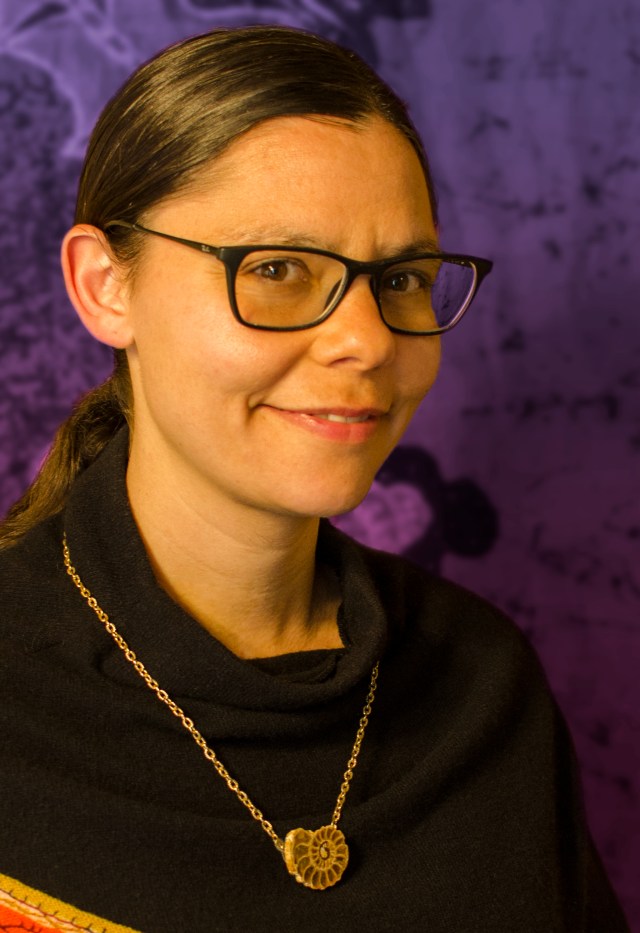
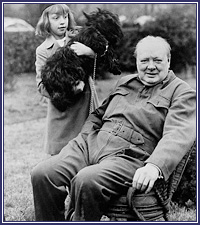
The entrée was Diana Hopkins (Harry’s daughter by his second wife, Barbara). She lives in the DC area still. She’s in her 80s. Barbara died of cancer in 1937. When war in Europe broke out, Roosevelt asked Harry to live in the White House, in the Lincoln Room right down the hall from the President. Diana (then about 6 or 7) went too. She lived on the third floor and Mrs Roosevelt was her surrogate mother for about 3 years. Diana now lives out in Virginia and was a wonderful source that had not been interviewed for many years. She had observations about the workings of the White House when she was a child.
Her father remarried in 1942. So Diana had a stepmother and she was able to tell me a lot of things about the stepmother who in her own right was a fascinating character and no one had really written much about her either.
The way in which I got to Diana was through her daughter, Audrey, who is a lawyer (and I’m a Washington lawyer also) with another firm down the street from where I am. That was my entrée. Diana was not interested, it was difficult to get the first interview with her. I invited her and her daughter over to our house for a few drinks and she loosened up and we got along.
I did not find a cache of letters in the attic like the kind writers love to come upon, but I had some still living sources including Hopkins’ granddaughter who is a professor of history in Georgia, June Hopkins. She’s written a book focusing on Hopkins’ years as a social worker and is a descendent of Hopkins and his first wife – another fascinating character who was a social worker and a Jewish woman who Hopkins met when he was working in a settlement house in New York City.
Hopkins once quipped that he had “a leave of absence from death.” How true a word was spoken in that jest?
That was his quip when he was over in Russia with Stalin after Roosevelt died. He really did. He had a cancer operation after his second wife died of cancer in late 1937. Hopkins had an operation at the Mayo Clinic and they discovered cancer of the stomach. They removed, some say half, some say more than that, of his stomach and they reattached the plumbing. He didn’t ever function properly after that. Although, amazingly, the cancer did not recur and usually with stomach cancer it does.
So he survived but he was always having difficulty after that absorbing nutrients. Exactly what the medical problem was is still not precisely known. Several people have written about it – coeliac disease, allergic to some of the things people are allergic to today that they didn’t know about then. He didn’t take care of himself, he drank all the time. But he had injections, took liver extract and so on. One of the reasons Roosevelt invited him to live in the White House was that he was sickly and didn’t look so good. Of course Roosevelt wanted someone to be right there anyway.
After he got back from Tehran at the end of 1943, on New Year’s Day of 1944, he basically collapsed and had to go to the Mayo Clinic to recover. They said that he did not have a recurrence of cancer, but they did experiment with various ways to increase his intake of nutrients. He was in Mayo for 6 months before he came back and then he was way behind in terms of his relationship with Roosevelt. So it wasn’t until late 1944 that he restored his place at Roosevelt’s elbow. He missed out on a lot, but he actually saved Roosevelt from making some mistakes in late 1944. He recovered enough to go to Yalta (early 1945) but he spent the entire time in bed. He did get out of bed for the plenary sessions, but spent the rest of the time in bed.
Hopkins was witness to some of the biggest geopolitical decisions of his era – including the decision that keeping in with Churchill was more important than supporting the aspirations of Indian national leaders like Nehru; and the decision that keeping in with Stalin was more important than the independence of Eastern European or the Baltic States. These big decisions had big impacts on the lives and freedoms of millions of people. How conscious was Hopkins of the effect of those decisions?
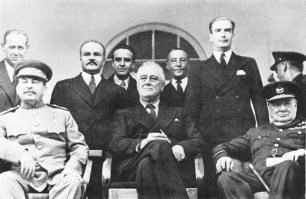
It was all about winning the war. Even Churchill said he would court the devil – meaning Stalin – to win the war. The survival of civilization was at stake. Living with Roosevelt, he knew Roosevelt’s mind, if anyone knew Roosevelt’s mind. Hopkins was not immune from being seduced by Stalin, but I think he was more careful with Stalin than he was with Churchill. He had relationships with the Soviet Ambassadors Maisky (London) and Litvinov (Washington) as well as Molotov.
There was a guy named Joseph E. Davies who was a former Ambassador to the Soviet, very wealthy, living in Washington. Davies kept copious notes of dinners and meetings where he would call Hopkins over to his house and talk about how the Russians should be handled. Hopkins was in a position where he was speaking for the President on some pretty major issues, but i think he knew where the President stood on issues like the Baltics or Eastern Europe
During his lifetime (and afterwards) Hopkins was accused of profiting from public office. Why was he targeted for such character assassination and how did he afford to live in the manner to which he became accustomed?
Well first of all he was a proxy for Roosevelt and the right wing would use him as a way to criticise or challenge FDR.
Hopkins died with almost no money. When he resigned from the Truman administration in the summer of 1945 he went to New York. He had no money, neither did his 3rd wife Louise – she was working as a nurse in the war – but they were New Yorkers and they went house hunting. He was out of the administration and he was going to write a book. You would think they would get a two bedroom or one bedroom apartment but they ended up in a three or four storey town house on 5th Avenue overlooking Central Park. He hired a writer to help him write his books and he got all his papers assembled in that place.
I asked Diana, “How could they possibly afford that?” Diana said, “Well that was Averell Harriman [son of a railroad baron, Secretary of Commerce under Truman and later Governor of New York] who basically paid for that place.” Hopkins lived there and in late 1945 he really went downhill and had finally to go into a hospital. Louise was really connected in New York. She was friends with Jock Whitney who was a very eligible, very wealthy guy who started the Museum of Modern Art.
He leant her some of his paintings – very, very famous paintings. Hopkins got interested in art as he was in the hospital surrounded by some of these paintings that were leant to him, and which were around him when he died in 1946. Diana has one of those paintings out at her house in Virginia.
Insinuations were made about Hopkins’ ties to the Soviets. Did he, as is claimed, pass nuclear secrets and arrange for shipments of uranium to the USSR?
There were allegations that came from a guy called Major Jordan who claimed to have personally observed or overheard conversations between Hopkins and Air Force officers in which Hopkins authorised nuclear secrets to be put into boxes or briefcases and boarded onto planes in Montana bound for the Soviets. Major Jordan claims Hopkins authorised the disclosure of designs for building an atomic bomb to be shipped to the Soviets. It was very specific kinds of testimony in a congressional hearing. Of course the Republicans and the right wing gave those allegations creedence.
The cross-examination and report written after, in my judgement, completely vindicated Hopkins. By the time those hearings were held, Hopkins was dead. I have a book on my bookshelf that was written by Major Jordan after that and he makes the same allegations, but there’s no proof that designs were sent to the Soviet Union through authorisation from Hopkins.
The intercepts that the Russians got in Moscow through their spies were collected, translated and published after the collapse of the Soviet Union. When that book came out there was a flurry of newspaper articles and reports saying Hopkins was one of the sources of Soviet intelligence. It later turned out that the agent concerned was Laurence Duggan. The decrypts reveal that Duggan had worked for the Soviets before he fell to his death from his office in 1948. In my view, and most rational observers conclude too, Hopkins was not a Soviet spy.
Hopkins was brilliant one on one. He was the personal bridgehead between FDR, Churchill and Stalin. Yet what makes him fascinating in terms of his own legacy was his capacity to manipulate the bureaucratic machine. How do you write an engaging portrait of someone who’s very good in meetings and very good at paperwork?
You just put your finger on it. I think a lot of writers, including me, will just try and brush that off because it’s too difficult to write.
It’s very difficult to put meat on all those meetings. How did he really drive the New Deal programs that he did before the war started? The WPA, all of the jobs programs, the Federal Writers’ Project. His battles with Harold Ickes over who’s gonna get to build all the dams and the roads. He was on top and he remained on top. It was terribly difficult with infighting and backbiting.
The same thing happened with Lend-Lease which was his major bureaucratic responsibility, he got it up and going. How do you write about that without becoming dreadfully boring? Where were the key levers that he had to pull to make Lend-Lease work? Lend-Lease was not that effective but at least it gave everybody hope. You can write about that, about how much did it actually help Russia.
And how do you express his executive leadership? It’s much easier to talk about the night he spent with Churchill or the meeting he had with Stalin. Stalin is a character that has tremendous power so you can write about the tension between the two or with Churchill, but there are hundreds of bureaucrats, faceless bureaucrats who were going out and doing wonderful things.
Ultimate armchair general question – and without preempting your work on Marshall – if you had been in Roosevelt’s chair when he had to decide who was to lead the Normandy landings, which commander would you have picked – Marshall or Eisenhower?
If Marshall had expressed his preference to Roosevelt, Roosevelt would have given it to him. But he didn’t. He said, “It’s your decision and I’ll happily go along with whatever you want to do” – although he desperately wanted to do it. At that time Roosevelt was being heavily lobbied by the other Joint Chiefs and also by a bunch of congressmen. So if I were Roosevelt then I would have given it to Eisenhower, but if Marshall had said “I want it” and I were Roosevelt I’d have done it because he needed Marshall more than anything. It turned out to be the right decision but there was a huge lobbying campaign going on in Washington at that time behind Marshall’s back.
The key thing in the Hopkins book took place in July 1942 and that’s when Marshall was desperately trying to leverage the British into letting him invade Western Europe in 1943, or if they had to do an emergency thing he’d have put something together for ‘42. But he didn’t want them to go to North Africa. Hopkins was playing both sides of that thing and I think the significant moment in those meetings in London was when the British were saying, “We’re not going to do this. We want to go to North Africa.” Hopkins wrote on a note, “I’m terribly depressed.” Hopkins wanted to go the way the British were headed and so it was a moment when Hopkins was doing something to placate Marshall, and make him think he (Hopkins) was on the General’s side, but he really wasn’t. My editor at OUP emailed me when he got to that point in the book and he said, “That’s the essence of Hopkins.”
During the 6th Democratic debate for the 2016 Presidential nomination, Senator Bernie Sanders named Roosevelt and Churchill as leaders who would influence his decisions on foreign policy. In this important election cycle how important is that question and how impressed are you by Senator Sanders’ answer?
They always say it’s the most important election of our time. I think Roosevelt was one of our most admirable presidents. What’s really hard to understand is how difficult it must have been to work with Churchill. As the balance between the US armed forces and the British shifted, Churchill would just not let go of this peripheral strategy for defeating the Germans. How maddening it must have been for Hopkins, Marshall and everyone who had to deal with him. But certainly Churchill will always be so much of a profound figure from when he basically stood alone. That was his moment.
What should be playing on the stereo when we’re reading The Hopkins Touch: Harry Hopkins and the Forging of the Alliance to Defeat Hitler?
A Nightingale Sang in Berkeley Square and As Time Goes By from Casablanca. It’s so interesting that on New Year’s Eve of 1942 they played the Casablanca movie at the White House and a week later they’re in Casablanca. If anyone ever writes a screenplay of Hopkins at that time, that would be something good to put in.
LIKE WHAT YOU JUST READ? FOLLOW US ON TWITTER! FIND US ON FACEBOOK! OR SIGN UP TO OUR MAILING LIST!
John Lennon’s short stories adapted for the stage for the first time since 1968
When actor Jonathan Glew was a humble and hungry student at the Liverpool Institute for Performing Arts, he stumbled across a bizarre book of short stories in a second hand bookshop. That book was the start of a wild love affair that would see him perform the work in its entirety at the Edinburgh Festival Fringe 18 years later.
The collection of stories in question is the little known In His Own Write, by none other than John Lennon. And the show of the same name made its world premiere at the Fringe this summer, presented by Baldynoggin Productions, directed by Jonathan Glew.
While 2015 marks no special anniversary of the work, Glew decided to make it this year for purely personal reasons. He says: “I found the book when I was 20 and knew it would be great for a stage adaptation, but I was in no position then to do anything about it. It was only towards the end of last year that I decided it was make or break: I either did the show or I threw the book away”.
The journey begins
It all started with a letter to the lawyers representing John Lennon’s estate – a worthy work of literature in its own right by the time Glew had finished tinkering it. He admits that it took him three weeks to craft, as he was keen to convey how he didn’t want to impersonate, make any statements, or use Lennon’s name for his personal gain, but simply to present the work faithfully and in full. Easier said than done. “I knew that they must receive countless requests everyday, so it was really important for me to let them know I was in it for the right reasons and to do the book justice”.
After a couple of weeks he got his first response from Attorney Jonas Herbsman, and the dialogue began. Glew continues: “I reiterated my position, and how my approach to present the work as part of the Free Fringe was testament to my not wanting to make a profit from it. I answered their questions, and tried to focus on the artistic aspect – how I just wanted to represent the work in full to see if it would resonate with an audience”.
After that, more waiting, until just after Christmas he got the news he had been hoping for: “I was completely elated – but then when I looked at the book again and it was like I had never read it, as I was looking at it in a completely new light. There are references to old news headlines and outdated language, and I started to worry about how I could make the book ‘live’ for a 21st century audience”.
Creative Development
Glew got straight to work, enlisting actor friends to assist him with reading and staging the piece. He even tried to get in touch with various people that had influenced or shaped the book: its original illustrator, Robert Freeman, and publisher Tom Maschler from Jonathan Cape. And despite what could be seen as huge pressure to present the work by someone so famous, last seen at the National Theatre in 1968, Glew took it all in his stride: “I got my team together and we worked through it slowly, making sure to be as faithful to the book as possible. The amount of serendipity within the creative process was just beautiful”.
Glew admits that yes, he did watch a first edition recording of the original National Theatre production, but in no way did he try to copy it: “Theirs was hugely different to what I wanted to do with it. They presented two pieces (In His Own Write and its sequel A Spaniard in the Works) as a bit of a mash up, and used the performance to make a broader comment about childhood and growing up at the time. But I didn’t want to say anything, rather let the work speak for itself”.
Making the dream a reality
However, aside from developing a theatrical adaptation that Yoko Ono would be proud of (an idea that terrified Glew 18 years earlier), his biggest challenges lay in the production side – just how do you get a show to the Fringe?
He started by launching a Kickstarter campaign to fund the basics like travel and accommodation for the company. He revealed, though, that crowdfunding was “one of the most stressful things in my life” as he felt like he asked everyone he had ever known to contribute. He was perhaps helped in his mission by a tweet about his project from Yoko Ono herself to her 4.7 million followers – certainly not something that happens every day! Thankfully, he raised enough money to develop the show and bring it to Edinburgh without any more worries. Or so he thought.
If all the world’s a stage…
Finding a venue proved to be the biggest challenge of them all. After an application to one of the free venue groups with what he thought would be a sure-fire hit, and a tantalising six week wait for a response, Glew was told in no uncertain terms that he couldn’t be guaranteed a slot, and he started to panic. With time ticking away, he then used his personal network of contacts to come up with a Plan B and get in touch directly with Peter Buckley Hill, who manages the PBH Free Fringe. After pitching his show and his predicament, Buckley Hill responded in less than 20 minutes with an offer of one of the largest performance spaces on the free circuit. He even signed off his email as “Arnold” as a tip of the hat to John Lennon and his work. “I owe PBH a lot, they really saved me”, says Glew.
Now Glew and his production are here, performing to very healthy crowds, and garnering a fair amount of press attention, is it mission accomplished? “It’s been a fantastic experience and I’d love to take this even further. As soon as we finish the run in Edinburgh, I’ll be putting a report together for the John Lennon estate, including some ideas of where I’d like to see the piece go next. I can’t make any detailed plans though, as they may say the project has come to the end of the road, but fingers crossed.” Luckily Glew already has his next acting project lined up though, at the National Theatre no less, but he’ll be back at the Fringe before long, in one guise or another.
In His Own Write is showing at The Voodoo Rooms daily (17.10, 1hr) until 30th August.
“I don’t know how to put this…but I’m kind of a big deal.” – Ron Burgundy
In each episode of Kind of a Big Deal you can listen to an exclusive and intimate conversation between our Features Editor and the kind of big deal folk our world-class arts scene attracts – writers, performers, movers and shakers.
Listen again to Kind of a BIG Deal S02E03 ft. Neil Mackinnon, Head of External Affairs at the Edinburgh Festival Fringe SocietyHERE.
This week’s conversation is between Dan Lentell and the authors of Wordsmiths and Warriors
DAVID & HILARY CRYSTAL
“The irony is only four percent of the English speakers of the world ever spoke that so-called correct kind of English.”
David Crystal is perhaps best known for his two encyclopedias for Cambridge University Press, The Cambridge Encyclopedia of Language and The Cambridge Encyclopedia of the English Language. His recent books include Words in Time and Place: Exploring Language through the Historical Thesaurus of the Oxford English Dictionary (2014), You Say Potato: a book about accents (2014, with actor son Ben Crystal), and The Oxford Illustrated Shakespeare Dictionary (April 2015, also with Ben).
Hilary Crystal is a former speech therapist and one time quality-control editor for the Cambridge and Penguin families of encyclopedias. In 2013 husband and wife published Wordsmiths and Warriors: the English-Language Tourist’s Guide to Britain.
In this conversation David & Hilary talk about their shared passion for language, accents and Shakespeare in original pronunciation (OP).
This season of Kind of BIG Deal interviews is supported by the good people at the superb Cult Espresso – the coffee lover’s Southside choice.
PLEASE NOTE! If you are subscribed to Edinburgh49‘s emailing list, you may not see embedded audio links in your email alert, but they are on the website. (Promise!)




 Woven into your narrative are threads drawn from previously private sources. What were they, where and how did you find them?
 Hopkins was witness to some of the biggest geopolitical decisions of his era – including the decision that keeping in with Churchill was more important than supporting the aspirations of Indian national leaders like Nehru; and the decision that keeping in with Stalin was more important than the independence of Eastern European or the Baltic States. These big decisions had big impacts on the lives and freedoms of millions of people. How conscious was Hopkins of the effect of those decisions?
 Hopkins was brilliant one on one. He was the personal bridgehead between FDR, Churchill and Stalin. Yet what makes him fascinating in terms of his own legacy was his capacity to manipulate the bureaucratic machine. How do you write an engaging portrait of someone who’s very good in meetings and very good at paperwork?


 Get Your Coats On
You must be logged in to post a comment.