From time to time we encounter an artist or producer toiling away at something pretty special. Here’s what they have to say, in their own words, about their work.
“When we’re not on stage, you are almost sure to run into one of us on Arthur’s Seat, or in one of Edinburgh’s fabulous pubs!”
WHO: Aaron Jensen
WHAT:“Award-winning a cappella that will bring you to your feet! Countermeasure has won worldwide acclaim and sold-out houses in the UK, Canada and US with their upbeat blend, sophisticated harmonies and infectious energy onstage. ***** (East Coast FM, Edinburgh). Featuring 14 of Canada’s top young vocalists, their genre-defying contemporary sound takes a cappella to the next level with inventive covers of jazz and pop tunes, powerful original music and dramatic staging. Come for an afternoon of good fun, great harmony and amazing music.”
This will be Countermeasure’s second time to Edinburgh. We played The Boards at The Edinburgh Playhouse as part of our last UK tour in January 2015. Ben Dyson, of East Coast FM 107.6 (Edinburgh) had this to say about the performance: “FIVE STARS! Such a fantastic show from a group of super talented individuals from Toronto, Canada…This show was packed with fabulous and beautifully songs. So watch out world because here they come!”
Countermeasure instantly fell in love with Edinburgh, and we can’t wait to be back! When we’re not on stage, you are almost sure to run into one of us on Arthur’s Seat, or in one of Edinburgh’s fabulous pubs!
Tell us about your show.
Countermeasure has been performing, touring and recording together for the past five years. This particular production has been a work in progress for the past year and a half. Over that period of time, we’ve been arranging, recording, and mixing our new album Made to Measure. Most of the selections in our Edinburgh set are featured on this new record.
We’ve enlisted the help of a stage director, lighting, and sound designer to turn this songbook into a cohesive, engaging and interactive theatrical experience. Audiences who come out to see our show will be treated to a smorgasbord of inventive musical covers of jazz and pop tunes, powerful original numbers, and dramatic staging.
Florian Stadtler of Vocal Blog described Countermeasure’s performance at the London A Cappella Festival as “Pure joy, [an] incredibly entertaining show”. What becomes abundantly clear through our performance is how much we enjoy each other, our music, and this discreet moment that we have to share our music with our audiences. It’s hard not to get caught up in the infectious energy, good feelings, and love of music that drives Countermeasure.
Prior to our run at the Edinburgh Fringe Festival we have a series of concerts in London and area. After Edinburgh, we head to Italy to take part in Vocalmente A Cappella Festival, then it’s back home to Canada, for more touring recording and merrymaking.
What should your audience see at the festivals after they’ve seen your show?
This past May, Countermeasure shared the stage at SING! The Toronto Vocal Arts Festival with another Toronto group called Pressgang Mutiny. Members of this ensemble have created a 15-piece guerrilla-folk punk band, who will be performing an exciting revolutionary musical/folk/opera called Counting Sheep, which follows the course of Ukraine’s history. Based on what we’ve seen of these singers, I have every confidence that that will be an exciting production!
LIKE WHAT YOU JUST READ? FOLLOW US ON TWITTER! FIND US ON FACEBOOK! OR SIGN UP TO OUR MAILING LIST!
“We love the Edinburgh experience and enjoy being both part of the Fringe and the city, which we love and admire.”
WHO: Elton Townend Jones – writer & director
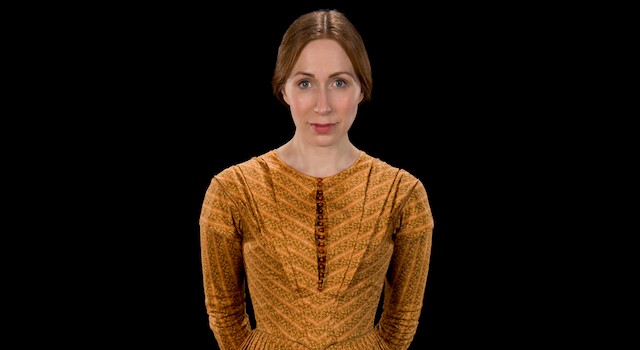
WHAT:“Struggling to think, live and love beyond the stifling expectations of duty, class and convention, governess Jane Eyre and Master Edward Rochester take a dark journey towards sensual and intellectual liberation. Told through Jane’s eyes, this autobiographical novel shocked the Victorians, and Charlotte Brontë’s gothic subversion of fairy tale romance is now distilled for the stage (under its full title) by writer/director Elton Townend-Jones. Fringe favourite Rebecca Vaughan embodies Everywoman Jane and several other characters in this exploration of love’s realities.”
This is our eighth consecutive year at Edinburgh and with Assembly. Since 2009, Rebecca Vaughan and I have created seven shows that have premiered at the Fringe (and one that hasn’t!) and brought two of them back for second runs.
We’ve collaborated with other directors, performers and designers, but the germination of each project has been down to the two of us. We are perhaps best known for our productions of Austen’s Women, I, Elizabeth, Female Gothic, Dalloway and The Unremarkable Death of Marilyn Monroe which was published by Samuel French earlier this year.
We love the Edinburgh experience and enjoy being both part of the Fringe and the city, which we love and admire.
Tell us about your show.
Dyad Productions is, effectively, the duo of myself and Rebecca Vaughan, and the buck stops with us! The new show is an adaptation of Jane Eyre by Charlotte Bronte, but presented under the book’s original full title.
It is a one-person show, which, as with all previous shows (bar the Marilyn play) is performed by Fringe favourite Rebecca. It is adapted and directed by me (having written three of the previous Dyad shows and directed four). We formed the company in 2009 after spending years as actors and/or writers/directors and finally decided that we just wanted to get out and create our own work.
Since then, we’ve toured non-stop, nationally and internationally and seen our work published and interpreted by others in Europe and the US. After Edinburgh, Jane Eyre: An Autobiography is touring the UK and appearing in Australia in 2017. By which time we will already have started producing our next work…
What should your audience see at the festivals after they’ve seen your show?
I’d recommend they go and see anything created by Gavin Robertson and, for Dyad, no trip to the Fringe is complete without a night having your mind not so much blown as gently inflated then casually popped by the brilliant Australian comedian Sam Simmons.
LIKE WHAT YOU JUST READ? FOLLOW US ON TWITTER! FIND US ON FACEBOOK! OR SIGN UP TO OUR MAILING LIST!
“I wrote and perform the show, we took it to the Brighton Fringe where we were lucky enough to be awarded an Argus Angel award for outstanding theatre.”
WHO:Caroline Burns Cooke – writer & performer
WHAT:“And the Rope Still Tugging Her Feet was inspired by 1984’s Kerry Babies scandal. A dark, comic take on a time in Ireland when ‘the most dangerous place to be was in a woman’s womb’ (Bishop Joseph Cassidy).
Written and performed by award-winning writer and actress Caroline Burns Cooke (Best Actress ECU European Independent Film Festival for MYRA; Best Feature screenplay for She Moved Through the Fair from Scottish Screenwriters), and directed by Colin Watkeys of Face to Face Festival, director/dramaturg of legendary performers Ken Campbell, Claire Dowie and Jack Klaff.”
I’m a fringe veteran! As an actress I’ve been in a dozen plays including The Lad Himself at the Gilded Balloon, The Trial of Jane Fonda at the Assembly Rooms and tons more. This is my second self-written piece but the first solo one.
Tell us about your show.
My director, Colin Watkeys, has been directing solo shows and producing the Face to face Festival for years, working most notably with Claire Dowie, Ken Campbell and Jack Klaff. I wrote and perform the show, we took it to the Brighton Fringe where we were lucky enough to be awarded an Argus Angel award for outstanding theatre and three 5 star reviews. We hope to build on this at Edinburgh and tour it, hopefully doing a London run as well.
What should your audience see at the festivals after they’ve seen your show?
I’m a big fan of the International Festival for unique experiences. I love the programming at Summerhall and there’s often great stuff at the Traverse, but don’t miss Charmian Hughes in Soixante Mirth at Cowgatehead, Nick Revell in Gluten free Jesus, and Shoot the Women First at The Stand.
LIKE WHAT YOU JUST READ? FOLLOW US ON TWITTER! FIND US ON FACEBOOK! OR SIGN UP TO OUR MAILING LIST!
“I’m delighted to be doing another show here again after 10 years, in what is now my home town, and can’t wait to get back out on stage again.”
WHO: Steve Griffin – writer, producers & star
WHAT:“Comedy duo Ronnie and Jonny split up five years ago and haven’t spoken since. Jonny went on to become a stand-in for Mystic Meg and reserve contestant for Celebrity Big Brother. Ronnie became an alcoholic and ghost writer for real comics. Luckily, they’ve recently been invited to reunite for a high-profile comeback gig, but can they put the past behind them? A show for anyone who’s ever fallen out with a friend or knows what it’s like to be ceremoniously dumped. Written and performed by one well spoken English guy and a foul-mouthed Scot.”
I first brought a show to Edinburgh in 2006, and in all the years in between I’ve worked at the Fringe, performed at the Camden Fringe, been a reviewer and very enthusiastic audience member many times. I’m delighted to be doing another show here again after 10 years, in what is now my home town, and can’t wait to get back out on stage again.
Tell us about your show.
Ronnie & Jonny: Friends Disunited is written, produced, directed and performed by myself and partner-in-crime Keith Muddiman. We met at drama school a couple of years ago and knew we wanted to work together afterwards, and this show came about through various conversations, discussions and a lot of scribbles and redrafts in various coffee shops in Edinburgh. We wanted to put on a show that demonstrated the full scale of our ability as actors, so we developed comedic characters, gave them a serious situation and just went from there.
Edinburgh is our world premiere, and while we haven’t made any plans for afterwards (all our focus has gone into just getting this far), we’re very open to suggestions and taking Ronnie and Jonny further afield if we can.
What should your audience see at the festivals after they’ve seen your show?
With over 3,000 shows in the Fringe alone this year, before you even think about the other festivals, there is absolutely something for everyone. So the first thing I would say is just to embrace as much as possible, as there aren’t many opportunities to get such a diverse range of work in one place.
This year there are several companies and performers that I’ve worked with before (and really admire) performing new work, including On the Button (Don’t Panic! It’s Challenge Anneka), Mixed Doubles (Fundraiser) and Samantha Baines; while other companies I really respect for their previous work are back again, including 201 Dance Company (Smother) and Interrupt the Routine (The Gin Chronicles). Come back to me midway through the Fringe though and I’ll happily give some more recommendations!
LIKE WHAT YOU JUST READ? FOLLOW US ON TWITTER! FIND US ON FACEBOOK! OR SIGN UP TO OUR MAILING LIST!
“I hope Patrick is not revived. I much prefer him to be a cult that only a small number of us know about. In this sense he is the literary equivalent of “Withnail and I”. Pass the secret on – but not too loudly.”
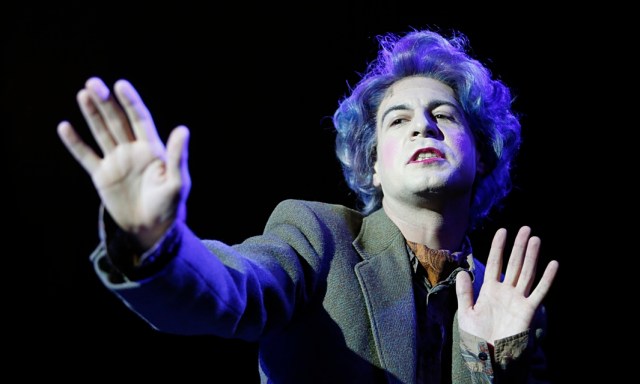
Soho Lives is a collection of two hit solo plays exploring the extraordinary lives and losses of two great Soho writers, Patrick Hamilton and Quentin Crisp. Greeted with huge acclaim since their debut productions, Mark Farrelly’s plays offer actors and audiences laughter, heartbreak, and an urgent, passionate reminder that the only thing that ever matters is being true to yourself.
Patrick Hamilton (1904 – 1962) was a shooting star playwright and novelist. His stage thriller Rope made him a hit on both sides of the Atlantic by the age of 25, and the play was later filmed by Hitchcock. Patrick repeated his success with the Victorian chiller Gaslight, while his highly regarded novels include Twenty Thousand Streets Under the Sky, Hangover Square and The Slaves of Solitude. His output – witty, cynical and beguilingly empathetic of all those “battered silly by life” – was cut brutally short by the loss of his battle with chronic alcoholism.
Quentin Crisp (1908 – 1999) was variously a rent boy, artist’s model and full time layabout. Shunned and beaten by London society for his flamboyant effeminacy, he concentrated simply on Being, and spawned a philosophy which enlightens to this day. After being portrayed by John Hurt in the classic TV film The Naked Civil Servant in 1975, he became an unlikely international treasure. Moving to New York in his seventies, he spent the rest of his life telling anyone who would listen ‘How to have a lifestyle’. Asked to give a young fan some life advice, he replied: “Remember – you don’t have to win”.
Mark Farrelly is an actor/writer. He was born in Sheffield and graduated with a double first in English from Jesus College, Cambridge. His West End credits include Who’s Afraid of Virginia Woolf? opposite Matthew Kelly at Trafalgar Studios. Mark is a veteran of numerous arts festivals and a regular favourite at the Edinburgh Fringe. He has performed his two hit solo plays, The Silence of Snow: The Life of Patrick Hamilton, and Quentin Crisp: Naked Hope over one hundred times. Mark’s latest project is as writer and co-star of Howerd’s End, celebrating the centenary of comedy legend Frankie Howerd.
Though I didn’t consciously know it at the time, they deeply mirrored aspects of my own life journey. Patrick’s personal life was a perpetual, drink-sodden mess (just read the highly autobiographical Hangover Square for a sense of this febrile fragility). I wasn’t in that league, but my personal life was certainly dysfunctional a few years ago. Around this time, me and my girlfriend of fifteen years split up, and I was truly on my own for the first time in life.
Horrifyingly, I found that adulthood could be postponed no longer (it seems that human adolescence now stretches to the age of 40). That’s where Quentin came in – the great guru of loneliness and laughing in the face of adversity. I was understandably drawn to Quentin’s story because it’s the tale of a man sitting in a flat on his own thinking life is over, which was very much me in 2012 /13, but then eventually things change and he ends up being the toast of New York.
I sensed that if I could draw solace from these two stories, then so might an audience… because we’re all suffering aren’t we? It’s a big part of what life is. The trick, as Quentin knew, is never to try to deal with it like Patrick – by running away.
Joining the two Lives is Soho. What was Soho like in their day and did Hamilton and Crisp ever meet there?
Soho (at least until recently) has always been what you want it to be. It’s a cipher for everyone’s inner ideal of a sanctuary from the harshness of life, but also a metaphor for the danger we like to flirt with in our younger days. So, for Patrick, it’s initially a boozy bolthole, a safe haven, idealised as a realm of “bottley glitter”. Later, as Patrick’s worldview darkened in the shadow of Hitler, Soho becomes a feeding ground for human sharks… conmen, narcissists, and also suicidal depressives.
Quentin likewise saw Soho initially as a refuge, hiding in what he called “layabout cafes”… until a “rough” or the police hassled him, angered by his brazen selfhood. Later he withdrew from it, and it existed only as a memory: “Soho used to be a more exciting place. You used to be able to get your throat cut on a really big scale”.
Did Patrick and Quentin ever meet? Unlikely. But I like to think they once unwittingly brushed past each other. Like so much of human interaction – almost connecting… but somehow never quite managing it.
Why have the novels of Patrick Hamilton dropped off the radar, and is he due a revival?
I suspect they dropped off the radar because there aren’t that many of them. He only wrote twelve books. The early ones are apprentice works, the later ones are blighted by the alcoholism that killed him at 58 (“I’ve been battered silly by life”), so for me that leaves only five flat-out great novels. They also have a narrowness of focus, compared to say E.M. Forster (another man who ‘only’ produced five great books). I hope Patrick is not revived. I much prefer him to be a cult that only a small number of us know about. In this sense he is the literary equivalent of Withnail and I. Pass the secret on – but not too loudly.
Do John Hurt’s much celebrated portrayals of Quentin Crisp make it easier or harder for another actor to play him?
It didn’t really affect me. There have been thousands of Hamlets so I knew the world could cope with two Quentin Crisps. John Hurt (a great portrayer of victims, of whom it was rightly said “he suffers so well”) played to the hilt the bizarre upward inflections that Quentin sometimes spoke in. I deliberately toned this down for a solo play, as it would have become a bit annoying. So, at the wise encouragement of my superb director Linda Marlowe, I allowed some of my own voice to come into it. After all, the whole point of Quentin Crisp: Naked Hope is to encourage people to have the blind courage to be themselves at all times, however tough it is. Quentin said: “I simply refuse to bevel down my individuality to please other people”. Please dwell on what a great statement that is.
How do you go about researching your biographies, what sort of people do you meet, and what’s the single best insight you’ve gained?
The best research for writing a biographical piece is to have lots of psychotherapy. Find out who and what you are, what’s really going on beneath your behaviour patterns and your unexpressed wishes. Deeply explore why you are drawn to your subject, and what that says about you and the wider human “condition”. You’ll likely discover that your subject is what Jung called your shadow… some split-off, disowned part of yourself that you abandoned as a child in the face of criticism and aggression.
And now the soul burns to reconnect with all its parts. You’ve grown exhausted of listening to those dismal voices in your head, that embalmed Normal Bates gag reel of guff that keeps telling you that life is hopeless, you’re a failure and so on. It’s just a ghostly echo of everyone whose negativity you co-opted as a child, and you’ve spent years vainly trying to find the dimmer switch.
If (and it’s quite a big if) you are able to do this, then everything else will flow. Your reading, meeting surviving relatives, creating something of value… it will happen, though not necessarily in the manner you expected. The best insight (beautiful word) I had was when meeting Frances Ramsay, Quentin’s octogenarian niece. She said that whenever she was with Quentin, he would introduce her to his friends as “My niece Frances. She comes from real life”. And there it is. Quentin was an alien. Gloriously ironic that knowing yourself very deeply makes you an alien. And it does. Ninety percent of people I’ve met are phonies, imposters. I should know – I used to be one too.
If you had the chance to take Patrick Hamilton and Quentin Crisp to dinner where would you go and who would you also invite along?
Even after all my experience (I’ve played both men on stage over 100 times) I don’t know whether they would “click”. It would certainly be an interesting speed-date. I think we should go to the Garrick Club. Patrick (rare for him) felt at home there, and Quentin would, even today, raise eyebrows with his appearance. I would like no other diners present, I would want them all to myself. However, if I could freely subvert the known laws of space and time then I would like to be joined by Tim Welling, my dear friend who committed suicide in 2012. He helped me in the early days of these projects, and was one of the few people I’ve met who, like Quentin, was entirely himself regardless of who he was with or where he was. I miss him deeply.
You’re next project is a play about Frankie Howerd. If you’ll let us peek over your shoulder at the portrait while it’s still in progress, what’s emerging on the canvas?
I’ve realised that Frankie is the archetype of the human condition – nervous, haunted, hunted, desperately trying to keep the plates spinning before the whole lot disastrously crashes down. Of course, as Frankie’s partner of 40 years, Dennis Heymer, knew, letting the plates crash down might be a very good thing, but Frankie could never take that Rubiconic risk. This meant that he created a brilliant, brave, timeless form of stand-up comedy, but had the classic unhappy inner life. His act was a band-aid solution to the problem of being Frankie Howerd.
Next year is Frankie’s centenary, and we’ve never had a big comedic anniversary like this that I’m aware of. I think it’s extremely healthy for people to have proper goodbyes in life. I realised this when I went to see Monty Python at the O2 in 2014: we, and they, were getting a chance to say goodbye formally, and that’s very healing, allows you to move on in life. Two big romantic relationships of mine ended without a proper goodbye (“closure”) which did me a lot of damage.
So the play (Howerd’s End) is partly about how to let go properly. Dennis lived on for seventeen years after Frankie died in 1992, was often found clinging to the grave weeping, never came to terms with the loss. So what he and the audience have to learn during the course of the play is how to let go of Frankie. After all, one day we’ll have to let go of ourselves.
Above all: I want the play to be bloody funny. We’re apt to make our clowns very dark for the sake of drama. Every stranger I’ve spoken to about Frankie grins and says “Oh I loved him”, and so although I certainly want to provoke a few tears, I also want the audience to ride big waves of happiness. I asked Barry Cryer about this. He wrote for Frankie, and said that he’d seen a TV biopic about Frankie that “was so bleak you’d never have guessed Frank was a funny man”. Well, exactly. The world in 2016 is a pretty dark and frightening place, bombs seemingly going off by the hour… and I think we could all do with a damn good laugh. I know I could.
How important has your time at Edinburgh been for the development of both scripts?
Invaluable. Edinburgh is a brutal forcing house for new projects, and if you can survive it, possibly even get good reviews and interest from producers, then you’ve done very well indeed. There are three thousand shows in Edinburgh every year. When I first appeared there in 2002 it was one thousand. Gives you some idea of what you’re up against. Edinburgh to me is like the painting of the raft of the Medusa… thousands of egos fighting over a small bit of attention. It’s actually quite unpleasant, and when I performed there in 2014 I stayed away from much of the craziness by retreating, Quentin-style, to my room and listening to meditation tapes to remember how beautiful and special it is to be alive, because you can easily forget that in Edinburgh in August.
What’s the one thing anyone contemplating bringing a solo show to Edinburgh needs to consider?
Money.
What should be playing on the stereo when we’re reading Soho Lives: Two Solo Plays?
For Patrick, a selection of his beloved Ella Fitzgerald (he adored These Foolish Things).
For Quentin, complete silence, which was the soundtrack to many years of his life in Chelsea (“If I want anything, it’s peace. Quiet. The opportunity to stay in my room and just stagger on”). Then after you’ve read it, listen to Open All Night, Marc Almond’s beautifully dark album from 1999. It’s truly atmospheric, evocative of a lost Soho that probably never existed, and I think Patrick and Quentin would especially appreciate track 3: Tragedy.
LIKE WHAT YOU JUST READ? FOLLOW US ON TWITTER! FIND US ON FACEBOOK! OR SIGN UP TO OUR MAILING LIST!
“How do you express his executive leadership? It’s much easier to talk about the night he spent with Churchill or the meeting he had with Stalin.”
Harry Hopkins (1890–1946) trained as a social worker. He rose to prominence administering the work relief program in New York, where his tenacious efficiency brought him to the attention of Governor Franklin Delano Roosevelt. When FDR won the White House, Hopkins was presented with opportunities to put his knowledge and experience to use on an even larger scale. An one of the architects and implementers of the New Deal, Hopkins grew the Works Progress Administration into the largest, most ambitious, and arguably most successful program to put Americans back to work, thus countering the effects of the Great Depression.
As the President’s chief diplomatic adviser and wartime troubleshooter, Hopkins oversaw billions of dollars of Lend-Lease aid to America’s Allies. His intimate partnership with Roosevelt – Hopkins actually lived at the White House for three and a half years from 1942-1944 – enabled him to build close working relationships with Winston Churchill, Joseph Stalin, and General George Marshall. Churchill was to write of Hopkins, “His was a soul that flamed out of a frail and failing body. He was a crumbling lighthouse from which there shone beams that led great fleets to harbour.”
Author David L. Roll was educated at Amherst College and The University of Michigan Law School. After more than 35 years as a partner at international law firm Steptoe & Johnson LLP, he founded the Lex Mundi Pro Bono Foundation serving as its Managing Director from 2006 to 2008. Roll is presently under contract to write a new appraisal of General George C. Marshall.
The Hopkins Touch: Harry Hopkins and the Forging of the Alliance to Defeat Hitler (published by OUP USA, April 2013).To find out more click here.
Why Harry Hopkins?
I ran into him when I was writing an earlier book, and I saw, I got a glimpse, of how he operated. It was a night (in about May of 1942) that he was with Winston Churchill at Chequers. It was the middle of the night. They were (as usual) having a beverage or two and a cable came in to Churchill from India. It announced that Louis Johnson and Churchill’s envoy (Sir Stafford Cripps) to India had reached an agreement with Jawaharlal Nehru and the other Indian leaders. The agreement was that the Indians would resist an imminent Japanese invasion in exchange for a measure of independence after the war was over.
Churchill, as you know, was quite keen on his India colony and wasn’t about to make major concessions. What happened when the cable reached Churchill for his approval was that he threatened to resign in Hopkins’ presence and Hopkins basically just off the top of his head said, “Mr. Prime Minister, Louis Johnson does not speak for the President. I can assure you.” Hopkins obviously knew Johnson DID speak for the President and he basically calmed Churchill down, they had that kind of relationship. Johnson had been undercut.
It’s sort of a fascinating incident. I got interested in pursuing it after the Johnson book came out.
Woven into your narrative are threads drawn from previously private sources. What were they, where and how did you find them?
The entrée was Diana Hopkins (Harry’s daughter by his second wife, Barbara). She lives in the DC area still. She’s in her 80s. Barbara died of cancer in 1937. When war in Europe broke out, Roosevelt asked Harry to live in the White House, in the Lincoln Room right down the hall from the President. Diana (then about 6 or 7) went too. She lived on the third floor and Mrs Roosevelt was her surrogate mother for about 3 years. Diana now lives out in Virginia and was a wonderful source that had not been interviewed for many years. She had observations about the workings of the White House when she was a child.
Her father remarried in 1942. So Diana had a stepmother and she was able to tell me a lot of things about the stepmother who in her own right was a fascinating character and no one had really written much about her either.
The way in which I got to Diana was through her daughter, Audrey, who is a lawyer (and I’m a Washington lawyer also) with another firm down the street from where I am. That was my entrée. Diana was not interested, it was difficult to get the first interview with her. I invited her and her daughter over to our house for a few drinks and she loosened up and we got along.
I did not find a cache of letters in the attic like the kind writers love to come upon, but I had some still living sources including Hopkins’ granddaughter who is a professor of history in Georgia, June Hopkins. She’s written a book focusing on Hopkins’ years as a social worker and is a descendent of Hopkins and his first wife – another fascinating character who was a social worker and a Jewish woman who Hopkins met when he was working in a settlement house in New York City.
Hopkins once quipped that he had “a leave of absence from death.” How true a word was spoken in that jest?
That was his quip when he was over in Russia with Stalin after Roosevelt died. He really did. He had a cancer operation after his second wife died of cancer in late 1937. Hopkins had an operation at the Mayo Clinic and they discovered cancer of the stomach. They removed, some say half, some say more than that, of his stomach and they reattached the plumbing. He didn’t ever function properly after that. Although, amazingly, the cancer did not recur and usually with stomach cancer it does.
So he survived but he was always having difficulty after that absorbing nutrients. Exactly what the medical problem was is still not precisely known. Several people have written about it – coeliac disease, allergic to some of the things people are allergic to today that they didn’t know about then. He didn’t take care of himself, he drank all the time. But he had injections, took liver extract and so on. One of the reasons Roosevelt invited him to live in the White House was that he was sickly and didn’t look so good. Of course Roosevelt wanted someone to be right there anyway.
After he got back from Tehran at the end of 1943, on New Year’s Day of 1944, he basically collapsed and had to go to the Mayo Clinic to recover. They said that he did not have a recurrence of cancer, but they did experiment with various ways to increase his intake of nutrients. He was in Mayo for 6 months before he came back and then he was way behind in terms of his relationship with Roosevelt. So it wasn’t until late 1944 that he restored his place at Roosevelt’s elbow. He missed out on a lot, but he actually saved Roosevelt from making some mistakes in late 1944. He recovered enough to go to Yalta (early 1945) but he spent the entire time in bed. He did get out of bed for the plenary sessions, but spent the rest of the time in bed.
Hopkins was witness to some of the biggest geopolitical decisions of his era – including the decision that keeping in with Churchill was more important than supporting the aspirations of Indian national leaders like Nehru; and the decision that keeping in with Stalin was more important than the independence of Eastern European or the Baltic States. These big decisions had big impacts on the lives and freedoms of millions of people. How conscious was Hopkins of the effect of those decisions?
It was all about winning the war. Even Churchill said he would court the devil – meaning Stalin – to win the war. The survival of civilization was at stake. Living with Roosevelt, he knew Roosevelt’s mind, if anyone knew Roosevelt’s mind. Hopkins was not immune from being seduced by Stalin, but I think he was more careful with Stalin than he was with Churchill. He had relationships with the Soviet Ambassadors Maisky (London) and Litvinov (Washington) as well as Molotov.
There was a guy named Joseph E. Davies who was a former Ambassador to the Soviet, very wealthy, living in Washington. Davies kept copious notes of dinners and meetings where he would call Hopkins over to his house and talk about how the Russians should be handled. Hopkins was in a position where he was speaking for the President on some pretty major issues, but i think he knew where the President stood on issues like the Baltics or Eastern Europe
During his lifetime (and afterwards) Hopkins was accused of profiting from public office. Why was he targeted for such character assassination and how did he afford to live in the manner to which he became accustomed?
Well first of all he was a proxy for Roosevelt and the right wing would use him as a way to criticise or challenge FDR.
Hopkins died with almost no money. When he resigned from the Truman administration in the summer of 1945 he went to New York. He had no money, neither did his 3rd wife Louise – she was working as a nurse in the war – but they were New Yorkers and they went house hunting. He was out of the administration and he was going to write a book. You would think they would get a two bedroom or one bedroom apartment but they ended up in a three or four storey town house on 5th Avenue overlooking Central Park. He hired a writer to help him write his books and he got all his papers assembled in that place.
I asked Diana, “How could they possibly afford that?” Diana said, “Well that was Averell Harriman [son of a railroad baron, Secretary of Commerce under Truman and later Governor of New York] who basically paid for that place.” Hopkins lived there and in late 1945 he really went downhill and had finally to go into a hospital. Louise was really connected in New York. She was friends with Jock Whitney who was a very eligible, very wealthy guy who started the Museum of Modern Art.
He leant her some of his paintings – very, very famous paintings. Hopkins got interested in art as he was in the hospital surrounded by some of these paintings that were leant to him, and which were around him when he died in 1946. Diana has one of those paintings out at her house in Virginia.
Insinuations were made about Hopkins’ ties to the Soviets. Did he, as is claimed, pass nuclear secrets and arrange for shipments of uranium to the USSR?
There were allegations that came from a guy called Major Jordan who claimed to have personally observed or overheard conversations between Hopkins and Air Force officers in which Hopkins authorised nuclear secrets to be put into boxes or briefcases and boarded onto planes in Montana bound for the Soviets. Major Jordan claims Hopkins authorised the disclosure of designs for building an atomic bomb to be shipped to the Soviets. It was very specific kinds of testimony in a congressional hearing. Of course the Republicans and the right wing gave those allegations creedence.
The cross-examination and report written after, in my judgement, completely vindicated Hopkins. By the time those hearings were held, Hopkins was dead. I have a book on my bookshelf that was written by Major Jordan after that and he makes the same allegations, but there’s no proof that designs were sent to the Soviet Union through authorisation from Hopkins.
The intercepts that the Russians got in Moscow through their spies were collected, translated and published after the collapse of the Soviet Union. When that book came out there was a flurry of newspaper articles and reports saying Hopkins was one of the sources of Soviet intelligence. It later turned out that the agent concerned was Laurence Duggan. The decrypts reveal that Duggan had worked for the Soviets before he fell to his death from his office in 1948. In my view, and most rational observers conclude too, Hopkins was not a Soviet spy.
Hopkins was brilliant one on one. He was the personal bridgehead between FDR, Churchill and Stalin. Yet what makes him fascinating in terms of his own legacy was his capacity to manipulate the bureaucratic machine. How do you write an engaging portrait of someone who’s very good in meetings and very good at paperwork?
You just put your finger on it. I think a lot of writers, including me, will just try and brush that off because it’s too difficult to write.
It’s very difficult to put meat on all those meetings. How did he really drive the New Deal programs that he did before the war started? The WPA, all of the jobs programs, the Federal Writers’ Project. His battles with Harold Ickes over who’s gonna get to build all the dams and the roads. He was on top and he remained on top. It was terribly difficult with infighting and backbiting.
The same thing happened with Lend-Lease which was his major bureaucratic responsibility, he got it up and going. How do you write about that without becoming dreadfully boring? Where were the key levers that he had to pull to make Lend-Lease work? Lend-Lease was not that effective but at least it gave everybody hope. You can write about that, about how much did it actually help Russia.
And how do you express his executive leadership? It’s much easier to talk about the night he spent with Churchill or the meeting he had with Stalin. Stalin is a character that has tremendous power so you can write about the tension between the two or with Churchill, but there are hundreds of bureaucrats, faceless bureaucrats who were going out and doing wonderful things.
Ultimate armchair general question – and without preempting your work on Marshall – if you had been in Roosevelt’s chair when he had to decide who was to lead the Normandy landings, which commander would you have picked – Marshall or Eisenhower?
If Marshall had expressed his preference to Roosevelt, Roosevelt would have given it to him. But he didn’t. He said, “It’s your decision and I’ll happily go along with whatever you want to do” – although he desperately wanted to do it. At that time Roosevelt was being heavily lobbied by the other Joint Chiefs and also by a bunch of congressmen. So if I were Roosevelt then I would have given it to Eisenhower, but if Marshall had said “I want it” and I were Roosevelt I’d have done it because he needed Marshall more than anything. It turned out to be the right decision but there was a huge lobbying campaign going on in Washington at that time behind Marshall’s back.
The key thing in the Hopkins book took place in July 1942 and that’s when Marshall was desperately trying to leverage the British into letting him invade Western Europe in 1943, or if they had to do an emergency thing he’d have put something together for ‘42. But he didn’t want them to go to North Africa. Hopkins was playing both sides of that thing and I think the significant moment in those meetings in London was when the British were saying, “We’re not going to do this. We want to go to North Africa.” Hopkins wrote on a note, “I’m terribly depressed.” Hopkins wanted to go the way the British were headed and so it was a moment when Hopkins was doing something to placate Marshall, and make him think he (Hopkins) was on the General’s side, but he really wasn’t. My editor at OUP emailed me when he got to that point in the book and he said, “That’s the essence of Hopkins.”
During the 6th Democratic debate for the 2016 Presidential nomination, Senator Bernie Sanders named Roosevelt and Churchill as leaders who would influence his decisions on foreign policy. In this important election cycle how important is that question and how impressed are you by Senator Sanders’ answer?
They always say it’s the most important election of our time. I think Roosevelt was one of our most admirable presidents. What’s really hard to understand is how difficult it must have been to work with Churchill. As the balance between the US armed forces and the British shifted, Churchill would just not let go of this peripheral strategy for defeating the Germans. How maddening it must have been for Hopkins, Marshall and everyone who had to deal with him. But certainly Churchill will always be so much of a profound figure from when he basically stood alone. That was his moment.
What should be playing on the stereo when we’re reading The Hopkins Touch: Harry Hopkins and the Forging of the Alliance to Defeat Hitler?
A Nightingale Sang in Berkeley Square and As Time Goes By from Casablanca. It’s so interesting that on New Year’s Eve of 1942 they played the Casablanca movie at the White House and a week later they’re in Casablanca. If anyone ever writes a screenplay of Hopkins at that time, that would be something good to put in.
LIKE WHAT YOU JUST READ? FOLLOW US ON TWITTER! FIND US ON FACEBOOK! OR SIGN UP TO OUR MAILING LIST!
“People admire superheroes, the larger-than-life figures who fight for justice. They also enjoy hearing about eccentrics, and Holmes certainly is an eccentric.”
Like insects trapped in amber, preserved in situ for all time, the cast of characters who populate the environs of 221B Baker Street offer a glimpse into a vanished milieu. Sir Arthur Conan Doyle wrote what he saw. The canonical Sherlock Holmes stories are filled to bursting with charmers and charlatans, machiavellians and muddleheads inspired by, or taken directly from, the Victorian and Edwardian eras. In March 2016 MX Publishing will be setting 800 Sherlockian period portraits in a single gallery, a biographical dictionary to accompany fans as they journey in company with Holmes and Watson.
Canadian author Christopher Redmond is a Sherlock Holmes expert of exceptional standing. His Welcome to America, Mr. Sherlock Holmes (1987) chronicled Conan Doyle’s 1894 tour of America, while his In Bed With Sherlock Holmes (1984) examines the sexual elements in stories of the great detective. Arguably Christopher’s most important contribution thus far is his A Sherlock Holmes Handbook (1993) which went into a second edition in 2009.
The editor, past and present, of leading scholarly journals focused on all things Holmes, Christopher is also a founder and guiding genius behind Sherlockian.Net – the web portal about Conan Doyle’s most famous creation.
Lives Beyond Baker Street: A Biographical Dictionary of Sherlock Holmes’s Contemporaries (published by MX Publishing, March 2016).To find out more click here.
Why the lives of Sherlock Holmes’s contemporaries?
Most people who are interested in the original Sherlock Holmes are interested in the world in which he moved, and the people around him. Most of the characters in the Holmes stories may be fictitious, but they are convincing portrayals of how people lived and behaved in that era. Standing just behind them (and, surprisingly often, making brief appearances in the stories) are the real people of the 1880s and 1890s. I wanted to introduce them to readers, in more depth than the footnotes in an annotated edition can do.
Each biography is a paragraph long. How on Earth do you go about scaling down the great and the good to fit that frame?
Of course it means leaving out lots of details and many accomplishments, but it’s always possible to summarize who an individual was and what he or she did. I was constantly asking myself: what would an encyclopaedia say about Willam J. Burns? How would I tell my grandchild the story of Nelly Bly? What’s the elevator pitch for Sir Thomas Lipton?
Lives Beyond Baker Street is going to contain the lives of names who remain household even today, but who’s the who in there who’s been most unfairly overlooked?
That would be Bertha (Ringer) Benz, the wife of automotive engineer Karl Benz, who drove his prototype car 120 miles cross-country in 1886 to demonstrate that it worked, and invented brake linings during her trip. Without her efforts at marketing and technical improvement, the “100-horse-power Benz car” mentioned in one of the Sherlock Holmes stories would never have existed.
What kind of sources have you been using?
My introduction to the book lists a number of Sherlockian sources that have helped me identify people I should include. General information about them came from reference books and, primarily, online reference sources. I have to acknowledge constant use of Wikipedia, which contains a mountain of information about both well-known and obscure historical figures; the hard part is knowing which details to pull out and how to combine them into a narrative that’s interesting and doesn’t waste words.
Why only 800 biographical sketches? Or why so many?
I set that as the target early in the project, when I thought that each biography could be limited to 100 words. Eight hundred paragraphs each 100 words long would make 80,000 words, which I thought was a reasonable size for a substantial book. Unfortunately I rarely was able to stick to the 100-word target. I did manage to write exactly 800 biographies, if my count is correct, although one reviewer has already said that he thinks there are 806.
Why does Sherlock Holmes continue to fascinate, especially North Americans?
People admire superheroes, the larger-than-life figures who fight for justice. They also enjoy hearing about eccentrics, and Holmes certainly is an eccentric. Discriminating readers admire his dedication to sheer logic, pure reason, at the expense of emotion and human frailty. And, to justify my book a little further, the Victorian age in which his life is set has a great appeal because we see it as stable and reasonable, a time when inventors and reformers were making life a little better every year.
How did your own love and fascination for Holmes begin? Does it extend to Conan Doyle’s other work?
I read Sherlock Holmes as a young teenager — most people did in those days — and never really grew out of my enthusiasm. I have read most of Arthur Conan Doyle’s other books but don’t often return to them.
Conan Doyle wrote the original Sherlock Holmes stories, inspiring others to take up his characters and carry on writing where he left off. Sir Arthur was the first Holmes writer, but is he still the definitive and best?
Yes indeed. Of course he is the definitive author because he is the one who created the character and his immediate setting, his Watson and Mrs. Hudson, his Baker Street sitting-room and magnifying glass and all the rest. Any subsequent Sherlock Holmes is based on the original, either trying to match it or deliberately varying from it. And ACD is the best author of Sherlock Holmes because of his brilliantly clear, simple, straightforward and yet imaginative style, which has not been equalled and is infuriatingly hard to imitate.
If you were having a dinner party, and could only invite two of the figures profiled, who would you invite?
I can eliminate many of the 800 immediately: no murderers at dinner, please, no politicians, and I think no soldiers if their talk would all be of blood and battles. I would love to dine with Caroline Otero, but perhaps that meal should be tête-à-tête rather than with a party! So perhaps I’ll choose Anthony Hope Hawkins, who wrote some of the Victorian era’s other popular adventure fiction including The Prisoner of Zenda, and music-hall star Bessie Bellwood, who was known for her uninhibited repartee. That should keep the conversation lively.
What should be playing on the stereo when we’re reading Lives Beyond Baker Street: A Biographical Dictionary of Sherlock Holmes’s Contemporaries?
I don’t have a close relationship with music, and I don’t play anything when I’m reading or writing, but perhaps it would be pleasant to hear something by one of the composers or performers mentioned in the book. I wonder if there are any recordings of Sir Charles Hallé’s orchestra, which Sherlock Holmes himself supposedly heard in concert.
LIKE WHAT YOU JUST READ? FOLLOW US ON TWITTER! FIND US ON FACEBOOK! OR SIGN UP TO OUR MAILING LIST!
“Dr. Bell kept the name of his confederate anonymous, but I have deduced that he was Arthur Conan Doyle. Who better to work with on the Ripper case than the world-famous mystery author?”
Could Sir Arthur Conan Doyle have deduced the identity of Jack the Ripper? That’s the premise of novelist Diane Gilbert Madsen’s third book featuring ace investigator Daphne December McGil.
Author Diane was born in Chicago and has an M.A in English literature (specializing in the 17th century) from Roosevelt University. Cited in both the World Who’s Who of Women and the Who’s Who in Finance and Industry, Diane worked a range of government jobs from Deputy Village Clerk, to Director of Economic Development for the State of Illinois. She oversaw the Illinois Film Office during the filming of Blues Brothers.
Diane became a writer after moving to Florida with her husband, Tom. Her acclaimed DD McGil Literati Series of murder mystery novels also includes Hunting for Hemingway & A Cadger’s Curse.
The Conan Doyle Notes: The Secret of Jack the Ripper (published by MX Publishing, August 2014).To find out more click here.
Why Conan Doyle and Jack the Ripper?
First of all, thanks so much Dan for interviewing me about The Conan Doyle Notes. I must tell you that I love your questions. I’ve always been a fan of Doyle, and I’ve always been interested in the Ripper murders. These two passions fortuitously came together resulting in my third book.
It all began because I was fortunate to know Ely Liebow when I lived in Chicago, and we talked about his book, Dr. Joe Bell, model for Sherlock Holmes, which mentions that Joe Bell was given access to the Ripper files and that he solved the case with “another friend who liked solving deep problems.” Bell himself wrote in an article in Tit-Bits in October of 1911 that “there were two of us in the hunt, and when two men set out to find a golf ball in the rough, they expect to come across it where the straight line marked in their mind’s eye to it, from their original positions, crossed.
In the same way, when two men set out to investigate a crime mystery, it is where their researches intersect that we have a result.” Dr. Bell kept the name of his confederate anonymous, but I have deduced that he was Arthur Conan Doyle. Who better to work with on the Ripper case than the world-famous mystery author? Doyle and Bell were friends and colleagues, and it stimulated my imagination. Dr. Bell and his anonymous friend, according to Ely Liebow, deduced the murderer and each wrote a name on a piece of paper, put the paper in an envelope and then exchanged enveloped.
Both men had the same name, and Dr. Bell sent a report to Scotland Yard. A week later, the Ripper murders ceased, but no report has ever been found. This incident forms the basis of the plot in The Conan Doyle Notes, and I have endeavored to include only factual information about the Ripper case. Although I name the suspect whom I believe was deduced by Doyle and Dr. Bell, I include the clues I used to arrive at my conclusion. I had lots of challenges writing this book, but I loved doing it and hope my readers enjoy it as much as I do.
The Conan Doyle Notes: The Secret of Jack the Ripper is inspired by Sir Arthur’s historical trip to Chicago. When and why did that happen?
Conan Doyle arrived in Chicago on October 12, 1894 when he was 35 yrs old, in the prime of his life and famous world-wide for his Sherlock Holmes stories. He was booked in 15 northeast cities for a series of 67 “set” lectures including Readings & Reminiscences and Facts and Fiction. He wanted to see the states – his favorite childhood books were American wild west adventure stories, especially those of Bret Harte.
The US population at this time was double that of Great Britain and a big market for selling his stories. He stayed at the Grand Pacific Hotel, a 6 story luxury hotel where Oscar Wilde had stayed in 1882 on his 1st tour. He was shown the Water Tower, the elevated and Marshall Field’s, and he took a lot of snapshots whenever he could with his Kodak camera. It is highly likely that he met the Chicago lumber baron, David Gage Joyce, on this trip. Joyce is another character I used in The Conan Doyle Notes because David Gage Joyce did in fact own the manuscript of Doyle’s The White Company, which is now at the Newberry Library.
Doyle arrived a year after he’d written The Final Problem, killing off Sherlock Holmes. In Britain, Doyle had been shocked when over 20,000 people cancelled their Strand Magazine subscriptions in protest. The magazine nearly went under, and the staff referred to Holmes’s death as “the dreadful event.” Although the Chicago press greeted him warmly, they too all wanted to know WHY he’d killed off Sherlock Holmes. Doyle was dismayed. He didn’t want to talk about his detective, and he revealed his true feelings when he said: “I have been much blamed for doing Holmes to death, but I hold that it was not murder, but justifiable homicide in self-defense, since, if I had not killed him, he would certainly have killed me.”
Interestingly, Doyle was asked about the Ripper murders on his tour of America in 1894. He must have given some thought to the Ripper case, as he outlined to an American journalist just how Sherlock Holmes would have set about tracing the culprit:
“I am not in the least degree either a sharp or an observant man myself. I try to get inside the skin of a sharp man and see how things strike him. I remember going to Scotland Yard Museum and looking at the letter which was received from the Ripper. Of course it may have been a hoax, but there were reasons to think it genuine, and in any case, it was well to find out who wrote it.
“It was written in red ink in a clerky hand. I tried to think of how Holmes might have deduced the writer of that letter. The most obvious point was that it had been written by someone who had been in America. It began ‘Dear Boss’ and contained the phrase ‘fix it up’ and several others which are not usual with Britishers. Then we have the quality of the paper, and a round, easy, clerky hand. He was, therefore, a man accustomed to the use of a pen.
“Having determined that much, we cannot avoid the inference that there must be somewhere letters that this man has written over his own name, or documents or accounts that could readily be traced to him. Oddly enough, the police did not, as far as I know, think of that, and so they failed to accomplish anything. Holmes’ plan would have been to reproduce the letters in facsimile and on each plate indicate briefly the peculiarities of the handwriting. Then publish these facsimiles in the leading newspapers of Great Britain and America and in connection with them offer a reward to anyone who could show them a letter or any other specimen of the same handwriting. Such a course would have enlisted millions of people as detectives on the case.”
What do we know for certain about Conan Doyle’s own reaction to the Ripper murders?
Here’s information I’ve collected on Doyle and the Ripper murders:
Doyle visited Scotland Yard’s Black Museum on December 2, 1892, four years after the Ripper murders. He was shown one of the Ripper letters. He said that the murderer might have dressed as a woman.
On April 19, 1905, nearly 7 years after the murders, a number of police gave Doyle a guided tour of all the Ripper murder sites in Whitechapel. Doyle said the police knew who the Ripper was.
Nigel Morland, who died in 1986, possessed an enormous library of books on criminology and his wide circle of friends shared his considerable knowledge of the subject, especially the mystery of Jack the Ripper. Morland said Edgar Wallace had told him he knew the Royal identity of Jack the Ripper and Sir Arthur Conan Doyle told him the same thing.
Doyle and Dr. Joseph Bell, one of the world’s first forensic pathologists, were friends and colleagues. Few people know that Bell was part of the police net that was thrown around the Ripper, in spite of the fact that Dr. Bell lived hundreds of miles from the Ripper murders in London. Dr. Bell was set up in Edinburgh while the Ripper murders took place in London. However, the London force was under so much pressure, they were ready to try just about anything. Dr. Bell was given all the facts of the case by the Metropolitan Force. Based on this, he wrote a report which named the suspect he believed was the Ripper. However, Dr. Bell’s report disappeared and has never been found.
Doyle’s son, Adrian Doyle, told Tom Cullen in 1962 what he remembered of his father’s views on the Ripper case: “More than 30 years having passed, it is difficult to recall his views in detail on the Ripper Case. However, I do remember that he considered it likely that the man had a rough knowledge of surgery and probably clothed himself as a woman to approach his victims without arousing suspicion on their part.” (From: Conan Doyle, Detective, By Peter Costello)
The setting for the novel is the Kenwood / Hyde Park districts on the Southside of Chicago, home to the Obama family. Dust of your Director of Economic Development hat for a second, tell us about the area and its advantages as a literary setting.
I love Chicago. It’s where I grew up, and I try to use it as a “character” in the DD McGil Literati Mystery Series. I recently wrote an article entitled “Chicago Rules,” in which I explain my fascination.
Chicago – my city of birth Chicago – my city of choice. My curse and my muse That’s why I refuse To write about anywhere else.
There is a distinct feel about the place and its people. We Chicagoans tend to be down to earth and hard working and perhaps a little sentimental. We love our heroes and hate our villains. We support our city, our teams, our schools and our friends; and above all we display an enduring hope for the future. These characteristics come from our connective, collective experiences living in the city.
First of all, we must contend with our name which, taken from the Ojibwa Indians, means ‘skunk.’ Then too, we used to be known as the Second City before LA went on steroids. We knew we were number two, not number one, and we were never allowed to forget it. That mind set fostered a certain perverse twist to our egos and our ids. Then there’s our weather. Let’s face it, when it’s nice, it’s really nice, but when it’s not, it’s horrible. And it’s horrible usually 6 months out of the year. That’s why we don’t act like carefree Californians. No – we need our coats, our scarves and our gloves. We don’t go naked into that good sunlight in January, and it marks us for life.
On top of that, as fans of the Chicago Cubs, we are doomed to never win a pennant. In setting my books, I’ve used many well known Chicago landmarks such as Soldier Field, Wrigley Field, and Graue Mill, the oldest working mill in the area and where I served as a Board Member. I’ve also used all four of Chicago’s seasons to give readers a feel of the hardiness it takes to be a Chicagoan. And, as with every writer, my characters are connected to my own life and experiences in the city.
My main character, DD McGil, lives in Wrigleyville, as I did, and she’s a Cubs fan, as am I. Her university connections come from my own associations with the University of Chicago which I attended as an undergraduate. Like Chicago, DD is stubborn, sassy, determined, and loyal to her friends. Another character in the series, Tom Joyce, is a real Chicagoan who owns and operates the famous Joyce and Company Rare Books on Racine Street. He’s been great fun to include and has also been invaluable as a resource on texts and book prices and rare manuscripts and ephemera.
When did you and DD McGil first “meet”?
When I sat down to write a mystery story, I knew I wanted it to be a “Literati” mystery, and I knew I wanted to write first person. So I decided to use a female investigator. Many people have asked if I am DD McGil, but as Hemingway pointed out, a writer’s characters are a combination of many people and many observations. There is a core of DD that’s very like me, but I’ve tried to make her fit the mold of an academic turned insurance investigator who’s had some difficult times in life. And she, like the other characters in my Literati Mystery Series, always surprises me with dialogue and actions that I haven’t planned out. That’s the fun of writing.
What are the qualities that make McGill an engaging personality?
DD is a fun character to write. She’s always surprising me. She lives in Chicago and is very quick on her feet. She’s loyal and has a soft spot for her friends and her neighbors, but she has a lot of quirks, too. She’s lippy and sassy and superstitious, but not nearly as much as her Scottish Auntie Elizabeth. She loves puzzles, like any good detective, and as an insurance investigator, she’s always throwing around statistics.
She’s fond of her cat, Cavalier, and she definitely likes men – a lot. She also has a sense of humor and is able to laugh at herself when she gets into a scrape, which she regularly does. Here’s what Kirkus Reviews said: “Crime follows DD McGil almost as closely as eligible bachelors do. DD’s dry wit and internal monologue go far… Another fast read with quirky characters and due reverence for the Second City.”
Do you ever look back and wish you’d given her a sidekick?
In my first DD McGil Literati Mystery, A Cadger’s Curse, my agent loved the bookseller character, Tom Joyce, and she urged me to write more about him in the stories. He turned out to become DD’s sidekick. Tom is a real person, a Chicago icon who runs Joyce and Co. Rare Books and Appraisals. Whenever we’re at a book signing, he signs as many books as I do. As a writer, especially since I write in the first person, using the device of a sidekick allows me to add a great deal to the story through the eyes and actions of someone other than DD herself.
If you were on a gameshow and your grand prize could either be a secret trove of Conan Doyle papers or a lost manuscript of Robert Burns (the premise of A Cadger’s Curse) which would you pick (assuming you didn’t go for the holiday of a lifetime)?
Could any true Sherlockian turn down the grandest gameshow prize of all time – a secret trove of Conan Doyle papers? Some have (literally) died for this – I reference the strange death of Lancelyn Green, who was obsessed with Doyle and Sherlock Holmes. By the way, Lancelyn Green was the model for the character of Philip Green in The Conan Doyle Notes. Philip Green is a character in The Disappearance of Lady Frances Carfax. He is one of a number of character names from the Canon I’ve used in
Together you and McGil have investigated Hemingway (Hunting for Hemingway), Burns (A Cadger’s Curse), and Conan Doyle. Who’s next?
I am working on the next three in the DD McGil Literati Mystery series: The 4th book in the DD McGil series is The Cardboard Palace, featuring a true incident in the life of Bram Stoker. DD investigates the oldest women’s club in Chicago and finds that – The candle burns, And lights the way. For trouble past, Someone must pay.
The 5th is Dark As Shadows, featuring a true incident in the life of Robert Louis Stevenson. DD’s Auntie Elizabeth – known as the Scottish Dragon – asks DD to drop everything and “hie to Scotland for it’s dark as shadows here.”
The 6th is Restless Bones which features an incident in The Gold Bug by Edgar Allen Poe. DD’s idyllic vacation is interrupted when her lover Scotty is determined to go hunting after Captain Kidd’s buried treasure.
Right now I’m editing my first non-fiction book for MX Publishing entitled, Cracking The Code of the Canon: How Sherlock Holmes Made His Decisions. It takes a look at how Holmes views crimes, criminals and victims and what he considers justice in the Canon. It will be out shortly.
I’ve also written a play entitled, Sherlock Holmes and the Queen of Hearts. My agent has submitted it to several theaters in hopes of getting it produced soon.
What should be playing on the stereo when we’re reading The Conan Doyle Notes: The Secret of Jack the Ripper?
Read the book under a soft light so there are shadows and dark corners about you while you listen to the soundtrack from Link Wray’s 1959 instrumental Jack the Ripper which as I understand begins with an evil laugh and a woman’s scream.
LIKE WHAT YOU JUST READ? FOLLOW US ON TWITTER! FIND US ON FACEBOOK! OR SIGN UP TO OUR MAILING LIST!
“We have a wonderful group of people including the editor, authors and fans creating awareness.”
He’s one of the most iconic literary characters of all time. When, in the 1890s, his creator tried to kill him off the public outcry was such that Sir Arthur Conan Doyle was forced to resurrect him. Plausible in his own time and realistic in ours, Sherlock Holmes has been portrayed by some of the greatest actors of the stage and screen. The resonant canon of Conan Doyle’s original stories, featuring the world’s only consulting detective, remains a call to arms for other writers seeking to test their ingenious mettle in one of the best loved literary genres.
Steve Emecz’s passion is publishing. As Managing Director of MX, one of the UK’s leading independent publishers, Steve oversees hundreds of authors and titles. MX is now the world’s largest Sherlock Holmes publisher, including the international bestseller Benedict Cumberbatch In Transition which is also being launched in Japanese, Chinese and several other languages.
Steve’s latest project, being funded through Kickstarter, is Volume IV of the largest collection of new Sherlock Holmes stories ever attempted. Bringing together over sixty of the world’s leading Sherlock Holmes authors, this anthology includes only traditional stories set in the original Sherlock Holmes period.
Royalties are going towards the restoration of Conan Doyle’s home Undershaw, saved from destruction by the Undershaw Preservation Trust and now owned by Stepping Stones (a school for children with learning difficulties). Royalties will support specific projects such as the restoration of Sir Arthur’s study which will be open for visitors outside term time.
The MX Book of New Sherlock Holmes Stories Volume IV (published by MX Publishing, 22nd May 2016 – Conan Doyle’s Birthday). To find out more click here.
Why Sherlock Holmes?
Conan Doyle was the father of all modern crime fiction and Sherlock Holmes holds the Guinness World’s Record for the most portrayed character ever on screen.
Conan Doyle is the definitive Sherlock Holmes writer, but is he still the best?
Conan Doyle was the first, but I am a big fan of several modern crime fiction writers as well.
Why is the collection only featuring stories from the traditional Holmes period?
Holmes fans prefer traditional stories. There are thousands of pastiches out there and we wanted to bring together a very traditional collection.
What’s the biggest licence (with Conan Doyle’s original formula) taken by any of the new writers?
In our collection, very little. Across the world there are vampires, time travel. In fact, one of our writers, Tracy Revels has a brilliant series (Shadowfall etc) where Holmes is a warlock.
What’s the standard, the feature, or other aspect that all the writers involved with the project have had to achieve in order to gain inclusion?
They had to get past the editor, David Marcum’s keen eye on traditional Holmes and Watson. David is our most experienced writer with dozens of stories and novels under his belt.
John or James?
Watson. In the Victorian period nobody used first names so it was Watson and Holmes.
Undershaw was briefly a hotel after Conan Doyle stopped living there, but has been vacant for most of the time since. Similarly (prior to its being listed by Historic Scotland) Liberton Bank House in Edinburgh – where the young Conan Doyle lived in the 1860s – faced demolition to make way for a fast food restaurant. Why have we been so neglectful of the bricks and mortar footprints of this most celebrated writer?
Sadly it happens a lot in the UK. The US seems to be more respectful of the heritage of writers. It often comes down to, as it did in this case, loyal groups of fans [in this case the Undershaw Preservation Trust] to do what the authorities don’t.
How do Kickstarter, advance sales, and subscriptions feature in today’s publishing landscape?
Kickstarter is vital for us. For some projects it is the difference between being able to do the project or not. For others, it is a brilliant awareness tool.
The Kickstarter campaign set out to raise £500, the total is already at over £1400 (and rising). What’s the secret of a successful crowdfunding project?
This one is all about teamwork. We have a wonderful group of people including the editor, authors and fans creating awareness. It’s important to set good rewards and be very active on social media – but ultimately it comes down to the quality of what’s on offer. The collection is the best project we’ve ever delivered and we hope to keep it going as long as possible.
What should be playing on the stereo when we’re reading The MX Book of New Sherlock Holmes Stories Volume IV?
For me, nothing. I like to read out in the fresh air. If you like music while you read then I’d recommend something classical, pre 1900. Music for the era.
LIKE WHAT YOU JUST READ? FOLLOW US ON TWITTER! FIND US ON FACEBOOK! OR SIGN UP TO OUR MAILING LIST!
“Over time he has learned to exploit his environment and shape it more than it shapes him. Unfettered by modesty or empathy, he crashes about in the pursuit of ego gratification. This is what many of us who were born in the two decades after World War II seem to have done on a smaller scale.”
“Simpsons did it! Simpsons did it! SIMPSONS DID IT!” It’s taken over a decade but reality itself is now confronted with a problem once only a headache for the writers of other cartoon shows. When a Native American Casino Manager predicts Lisa Simpson will one day become President of the United States, the man she replaces is none other than Donald Trump. Trump’s self-funded real life run for the White House is proving no less entertaining, and there is a growing possibility that he might become the first registered New Yorker to win the Presidency since 1968.*
In his campaign book, Crippled America, Trump sums up the state of things by quoting Mark Twain, “Suppose you were an idiot. And suppose you were a member of Congress. But I repeat myself.” Nowhere (that I know of) does Trump repeat what the comic sage had to say on the subject of golf.
One day the campaign trail of 2016 will be done and dusted. When only historians are left to weigh its import against Adams v. Jefferson or Lincoln v. Vampires there will still be many in Scotland ready, and willing, to point to scars (physical as well as emotional) and say, “I telt ye so. That man didnae ken one end of a spurtle frae t’other.”
Pulitzer Prize winning writer Michael D’Antonio has published more than a dozen books on subjects ranging from the space race (A Ball, a Dog, and a Monkey) to the Vatican’s role in sheltering predator priests (Mortal Sins). His matter of fact style brings clarity to some of the messiest, most emotive issues of recent history. Born and raised in New Hampshire, Michael now lives on Long Island with his wife, the psychotherapist, professor, and author, Toni Raiten-D’Antonio.
Never Enough: Donald Trump and the Pursuit of Success (published by St. Martin’s Press, October 2015) To find out more click here. To find out more click here.
Why Donald Trump?
In retrospect the answer seems obvious. Back then, in 2013, I had just finished Mortal Sins and the subject came up at lunch with my publisher Thomas Dunne. I hadn’t ever taken-up a book on an editor’s suggestion and at first I thought there wasn’t much to say about Trump. But during subsequent conversations we settled on the idea of a biography that was more contextual than most. I generally disagree with the “great man” theory of history and see things working out more as a matter of forces beyond an individual’s control.
Is Mr. Trump more a product or more a shaper of the times in which we live?
Trump is both a shaper and a product of the culture of narcissism identified by Christopher Lasch. However over time he has learned to exploit his environment and shape it more than it shapes him. Unfettered by modesty or empathy, he crashes about in the pursuit of ego gratification. This is what many of us who were born in the two decades after World War II seem to have done on a smaller scale.
In this time self promotion (and indulgence) have become the norm and perhaps the worst fate of all is to be always in the audience and never on stage. The support Trump receives now in the political realm is an expression of this desire. people are living through him, enjoying the vicarious thrill of being center stage.
You chronicle the ways in which groups and individuals were “suckered” by promises made but not fully delivered by the Trump machine. Was former First Minister Jack McConnell one of them?
Plainly, yes. McConnell acted in the spirit of Sinclair Lewis’ character George Babbitt, who practiced boosterism as a religion. Both Babbitt and McConnell acted sincerely, believing that by chasing new business and, in McConnell’s case development, they were working for the common good.
Of course “good” is a complex and difficult thing to determine and like many politicians. McConnell made the mistake of believing he understood what he was getting as he courted Trump’s investment. Trump is a wily creature who never makes a commitment without an “out” in it.
Has Mr. Trump ever watched Local Hero? Did it make, or would it have made, any difference to his relationship with the holdout residents of Balmedie such as Michael Forbes?
I don’t think Trump ever watched the film. If he did, he’s not the sort to be influenced, on a moral level, by anything that challenges his belief system.
What does he believe? He believes in Donald Trump and, beyond that, not much at all. As far as I can tell he wasn’t aware of the life his ancestors lived, nor is he aware of the fact that as he tried to push Michael Forbes off of his land he was victimizing him in the way that his mother’s people were victimized historically.
In Local Hero the omnipotent Felix Happer (Burt Lancaster) is tormented by his overzealous therapist, Moritz (Norman Chancer). Moritz’s self-appointed role is to heap scorn and abuse on his overmighty client. Is that your role in the story of Donald Trump?
I wouldn’t say ‘heaping scorn.” I think my role is always to find and reveal the fullness of a story – in this case a man’s life story – in a way that is more complete and, I hope, compelling.
Trump is the least reliable narrator imaginable, so it falls to someone like me to make the attempt at telling the tale of his life. Yes he is overmighty, but in such cases scorn isn’t as illumination. With a little more light, for example, Scotland might have avoided some of its Trump troubles.
Each year The New York Landmarks Conservancy recognizes New Yorkers who have made outstanding contributions to the City and honors them as Living Landmarks. You wrote that not getting that award genuinely hurts Mr. Trump’s feelings. Will the revocation of his GlobalScot status and honorary degree have a similar impact?
I must say that I think he would be unmoved. His attachment to Scotland is commercial, and not so heartfelt, I think. New York is his true home and he would find much more validation in honors bestowed there. I also think that, like it or not, the degree and the Global Scot honor were conferred by those who wanted Trump’s favor in some way. As such, it’s less distinct an honor than the Living landmark designation.
If any one decision lost John McCain the presidency it was arguably his choice of running mate. Have you any predictions about who Mr. Trump will ask to join his ticket and why? How does someone who projects a sense that he is irreplaceable and cannot be improved or balanced, begin to tackle that question?
After seizing the hard Right ground, Trump is already moderating his campaign approach, drifting toward the middle. I expect him to become more and more like a regular candidate as time passes. If I had to guess about his VP choice I would say that he’ll look for someone who could reassure those who find him repugnant. Some of the men competing with him today seem to be angling for a spot on the ticket. Of them I think Chris Chistie might be the smartest choice. Trump knows him well and has insulted him the least.
Candidate Trump declared that all illegal immigrants would be required to leave the US, but that they could return legally. His rival Ted Cruz went one further and said he would never allow former undocumented migrants back. Mr. Trump is campaigning for the Republican nomination which in living memory has been sought by homophobes, misogynists, segregationists and holocaust deniers. How is it that he is singled out for travel restrictions, stripped of honorary degrees, etc? What does that say about how Mr. Trump is (and chooses to be) covered by the media?
The American media is completely flummoxed by Trump. In part this is because it has, itself, become part of the entertainment economy. Journalistic values have been smothered by commercial interest and most reporters are not accustomed to playing the role of watchdog or guardian. As the greater entertainer in every encounter, Trump dominates his relations with the press.
It’s important to keep in mind, however, that we’ve been measuring his success with a small fraction of the electorate. His support has never ranged higher than about 15 percent of the voting public. These backers are very firm in their choice, but opposition to Trump is just as firm, and the numbers on that side are much greater.
Will Donald Trump be an effective President?
By history’s measure, no. By his own lights? of course.
What should be playing on the stereo when we’re reading Never Enough: Donald Trump and the Pursuit of Success?
The list would have to include, perhaps in this order, Coming to America, by Neil Diamond, to honor his immigrant roots. No Son of Mine by Genesis, to highlight Trump’s exile to military school. Sinatra’s New York New York. (Unavoidably.) More, More, More by Andrea True and his favorite tune, Peggy Lee’s, Is That All There Is?
*Richard Nixon moved to New York following his defeat in the 1962 California gubernatorial election. During his first term as president, Nixon re-established his residency in California which was his home state in the 1972 (as it had been in the 1960) election.
LIKE WHAT YOU JUST READ? FOLLOW US ON TWITTER! FIND US ON FACEBOOK! OR SIGN UP TO OUR MAILING LIST!



 Do John Hurt’s much celebrated portrayals of Quentin Crisp make it easier or harder for another actor to play him?
 If you had the chance to take Patrick Hamilton and Quentin Crisp to dinner where would you go and who would you also invite along?
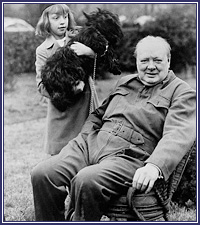 Woven into your narrative are threads drawn from previously private sources. What were they, where and how did you find them?
 Hopkins was witness to some of the biggest geopolitical decisions of his era – including the decision that keeping in with Churchill was more important than supporting the aspirations of Indian national leaders like Nehru; and the decision that keeping in with Stalin was more important than the independence of Eastern European or the Baltic States. These big decisions had big impacts on the lives and freedoms of millions of people. How conscious was Hopkins of the effect of those decisions?
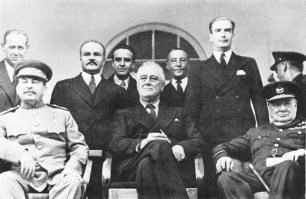 Hopkins was brilliant one on one. He was the personal bridgehead between FDR, Churchill and Stalin. Yet what makes him fascinating in terms of his own legacy was his capacity to manipulate the bureaucratic machine. How do you write an engaging portrait of someone who’s very good in meetings and very good at paperwork?


 First of all, we must contend with our name which, taken from the Ojibwa Indians, means ‘skunk.’ Then too, we used to be known as the Second City before LA went on steroids. We knew we were number two, not number one, and we were never allowed to forget it. That mind set fostered a certain perverse twist to our egos and our ids. Then there’s our weather. Let’s face it, when it’s nice, it’s really nice, but when it’s not, it’s horrible. And it’s horrible usually 6 months out of the year. That’s why we don’t act like carefree Californians. No – we need our coats, our scarves and our gloves. We don’t go naked into that good sunlight in January, and it marks us for life.
 What’s the biggest licence (with Conan Doyle’s original formula) taken by any of the new writers?
 Undershaw was briefly a hotel after Conan Doyle stopped living there, but has been vacant for most of the time since. Similarly (prior to its being listed by Historic Scotland) Liberton Bank House in Edinburgh – where the young Conan Doyle lived in the 1860s – faced demolition to make way for a fast food restaurant. Why have we been so neglectful of the bricks and mortar footprints of this most celebrated writer?
 Has Mr. Trump ever watched Local Hero? Did it make, or would it have made, any difference to his relationship with the holdout residents of Balmedie such as Michael Forbes?
 If any one decision lost John McCain the presidency it was arguably his choice of running mate. Have you any predictions about who Mr. Trump will ask to join his ticket and why? How does someone who projects a sense that he is irreplaceable and cannot be improved or balanced, begin to tackle that question?
 Get Your Coats On
You must be logged in to post a comment.