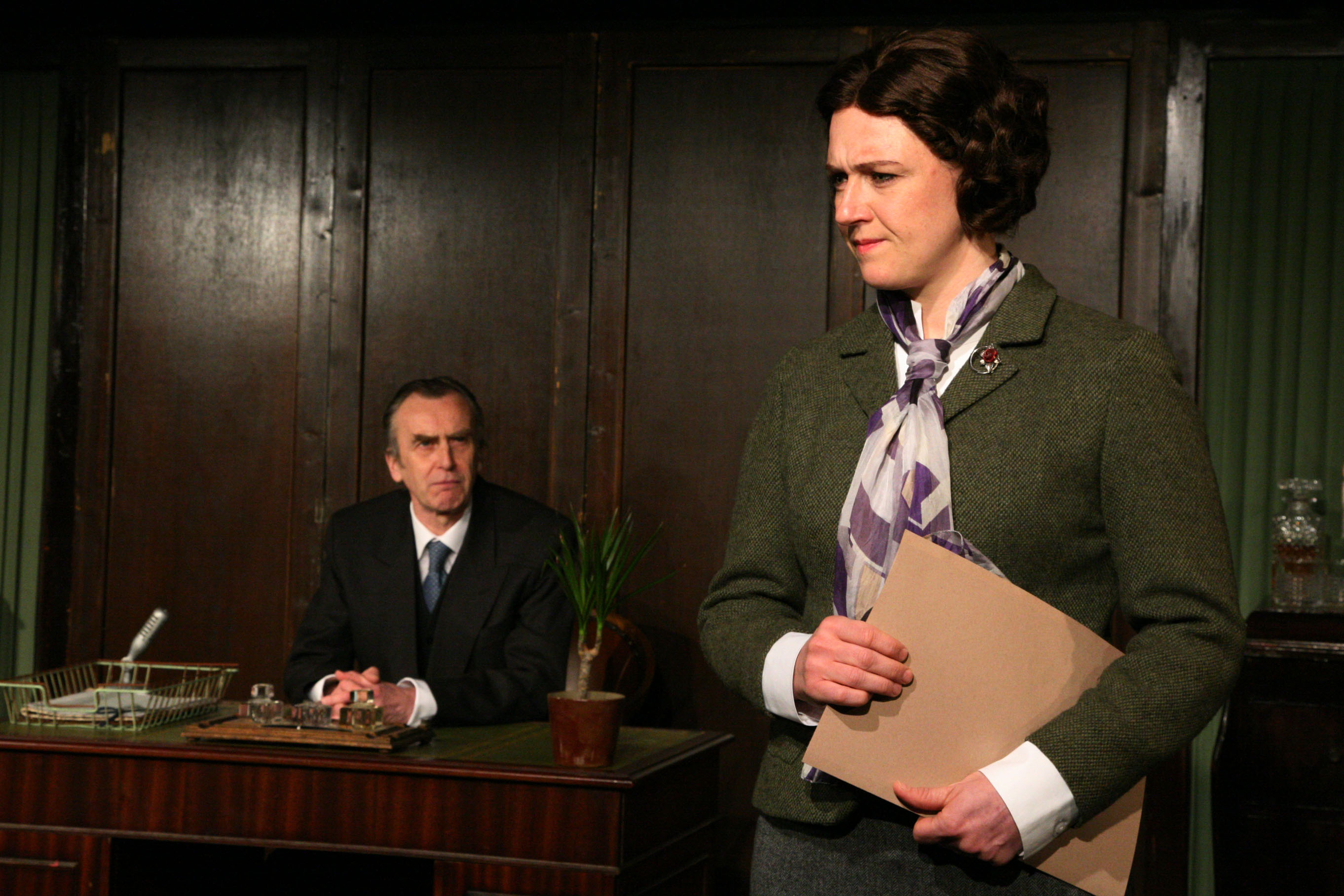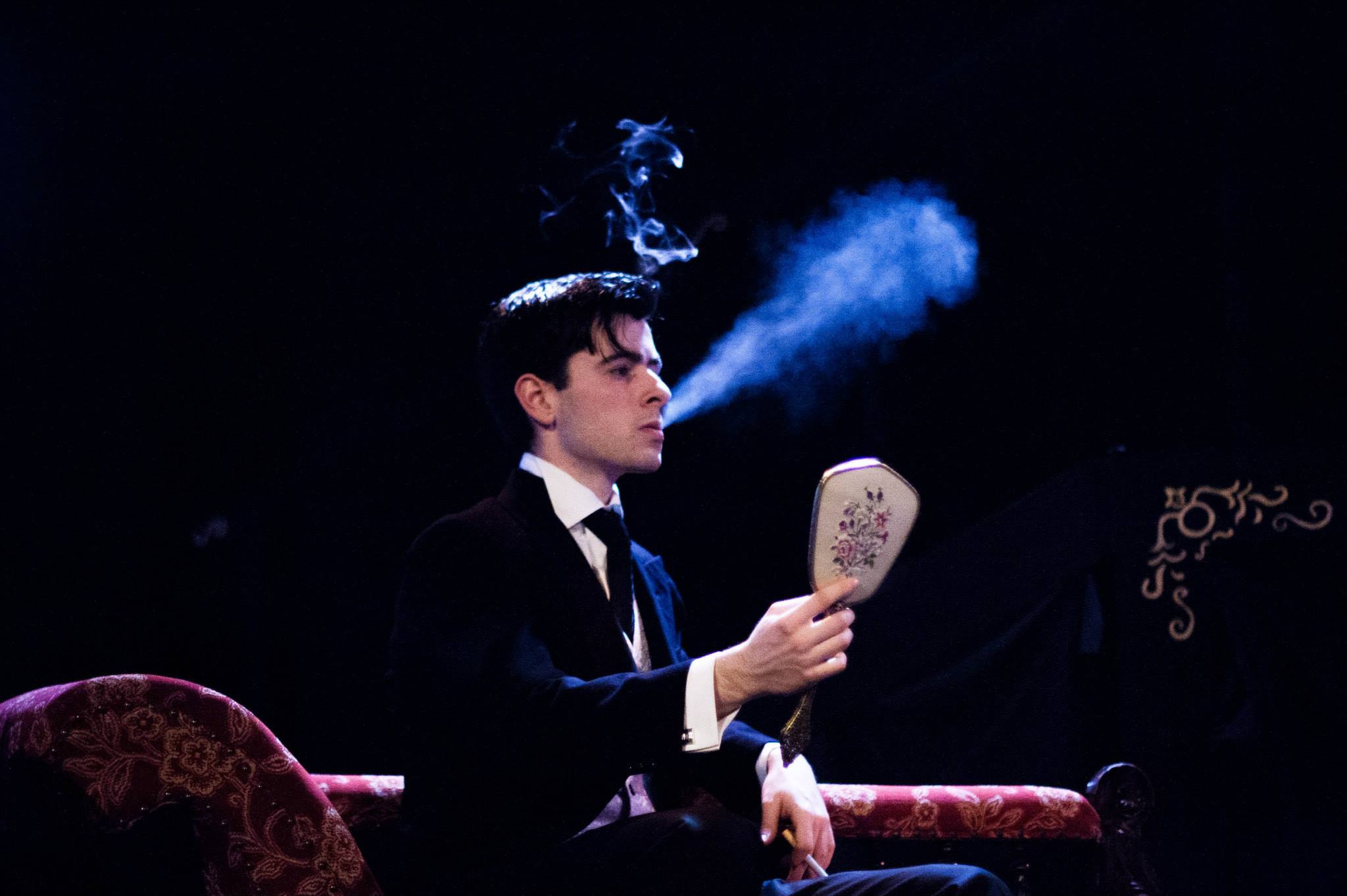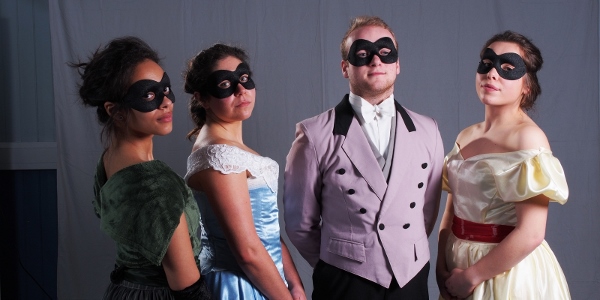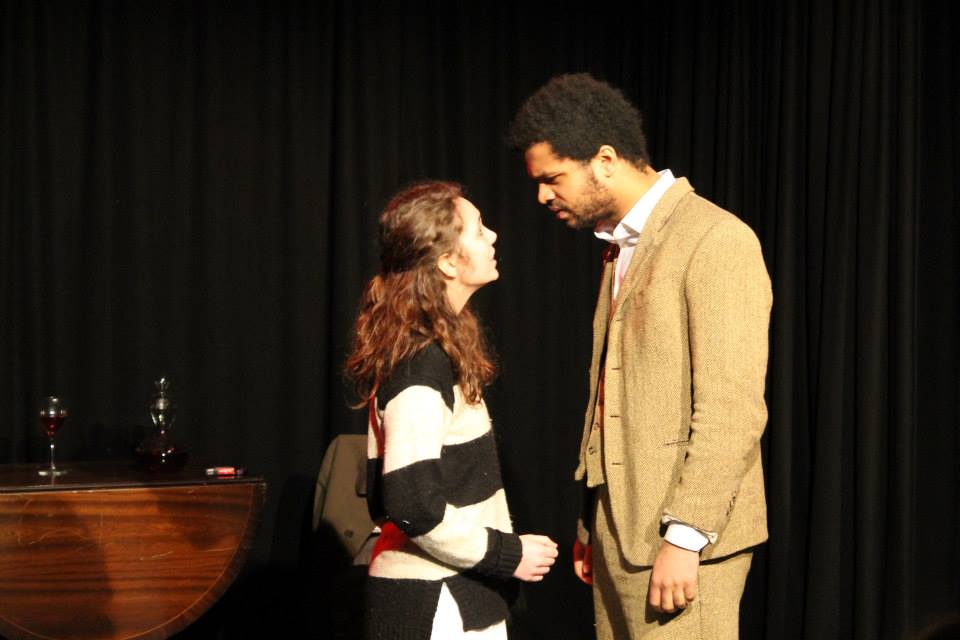
‘The Dionysia’ (Bedlam: 20 February ’14)

1964877_10153821418800346_1434992075_n (1)

“The most important decision taken was that a portion of points would be awarded for how each show represented the style of the producing society.”

Editorial Rating: Nae Bad

They never had anything like this in my day. As EUSA’s last non-sabbatical Societies Convenor I would loudly lament the lack of inter-Society activities. I didn’t do anything about it, that’s not the point of student politics, but I did passionately (and lengthily) express my views at SRC meetings.

“Don’t worry about it Dan,” replied my colleagues. “Next year some guys at Harvard are going to invent a thing called ‘social media’ and when that comes online it’ll be easy for students from across the university to come together and make magic happen.”

The first Dionysia Festival held, as part of Innovative Learning Week (they didn’t have that in my day either), at Bedlam brought together four student societies in a friendly competition. Inspired by the Athenian original, Bedlam’s Dionysia focused a wealth of creative effort on new writing, innovative staging and classical and contemporary interpretations of ancient dramas.

At 1pm archons and epimeletai from each of the competing societies, as well as two outside judges (yours truly among them), gathered in the cafe at Bedlam to set the ground rules. The most important decision taken was that a portion of points would be awarded for how each show represented the style of the producing society.

When the uninitiated attend Freshers’ Fairs they are presented with a flow chart to identify the raison d’etre of the various dramatic groups at Edinburgh. If you want to put on a puppet show – and have some experience – go to the University Theatre Society (Bedlam). If you want to put on a puppet show about Oedipus – go to Classics. If you’ve never put on a puppet show before but want to try – go to Relief. If you want to put on a puppet show as you throw ducks off a rooftop, whilst covered in white paint, rolling around on the floor and crying – go to Paradok.

Hats off to the day’s agonothetai, the game organizers. James Beagon, Rachel Bussom and Sophie Harris delivered a brilliant lineup showcasing the University’s established and emerging thespian, technical, artistic and musical talent.


Bedlam kicked off proceedings with a new script inspired by the part of King Creon in Sophocles’s Antigone. An isolated, hesitant ruler presides over an apocalyptic landscape devastated by a civil war in which the fallout from WMD has literally and figuratively disfigured the country.

Creon’s niece, Antigone, the daughter of Oedipus by his own mother Jocasta, is betrothed to Creon’s son Haemon. In order to ensure her warring brothers a proper burial, Antigone defies the prohibition against entering the fallout zone. Creon is faced with a dilemma that will test his leadership to breaking point.

First time writer Thomas Ware’s bold script demonstrates a wealth of subtle insight and profound musing on the original. The architecture is monumental but the necessary engineering is absent. In parts the weight presses down on the actors and it isn’t long before cracks begin emerging. There is little let up for Matthias Vollhardt as Creon as he shifts back and forth between intimate family moments and the hard-headed affairs of state. He seems to have fun shouting “Hail Thebes!” though.

Greek tragedy is underpinned by the notion that from small things come great and tragic things. Ware takes the opposite approach and, like a pyramid build upside down, it is only a matter of time before the tipping point.

There are minor issues: why is there an Archbishop in a polytheistic society? Is a city-state big enough to have a nuclear civil war? Why does Vollhardt wear his totalitarian armband on the right arm when others wear it on the left? Why is the recorded voice of one character performed by a different actor from the one on stage? Why hasn’t the chorus been given a device to cover her verbatim reading of her lines? Why does Chancellor Creon use his mobile phone to make an ever-so secret plan?

But there is a deeper question, and it isn’t that perennial A-Level exam essay: ‘Should Antigone be titled Creon?’ The script sails into murky waters in its treatment of Antigone. Ware presents her as deserving to be punished, wanting to be punished, it’s all her fault. Beagon and I both found something fascinating about our shoelaces as our fellow judges vented their annoyance. But then fleets of more experienced writers have also broken on the rocks of Athenian misogyny.


The Eumenides, performed by The Classical Society, followed the pursuit of Orestes by the vengeful Furies, avengers of matricides and patricides. Orestes killed his mother Clytemnestra for having murdered his father Agamemnon. Although he did so with the blessing of Apollo, the Furies hunt him down to a shrine of Athena. The great goddess presides over a trial at which the argument is put forward that in marriage men are more important that women. Having been immaculately conceived without a mother, exploding from the head of Zeus, Athena is open to this line of argument.

This is a big performance with the tone being set early on by a delphic Christina M. Intrator as Apollo’s oracle. The contrast with what preceded is rather like stepping back from an Adam Elsheimer canvas to discover it’s been hung on Mount Rushmore. The dust is shaken up by a trio troupe of drummers who drive pace into the heart of everything happening on stage.

The Furies (Tamsyn Lonsdale-Smith, Susan Kidd and Tara McKeaney) are fearsome, I’m shaking, my teeth are chattering and not just because of Bedlam’s supernatural ability to be colder inside than it is on the street. They weren’t totally in sync but this adds to the terrifying sense that three individuals are totally combined to one end. What they were was what William-Adolphe Bouguereau was driving at.

Frances Heatherington made up for a slightly grating lack of other props and theatrical formatting with a set of artistic, artful masks. I distrust masks. In the wrong hands they become a substitute for acting rather than a flavour enhancer. Not so here. They are simply wonderful and wonderfully deployed: enigmatic while engaging so as to highlight a script rainbowed with shades of grey.

Mia Allen and Tab Machin presented a swirling medley of script and sound, painted with an infinite lightness of touch. Strong performances by Ella Atterton and Eleanor Affleck completed a hard working, effective ensemble.


Paradok’s take on Medea, the story of a jilted wife’s refusal to play the victim, was most ambitious. There was much more acting, accents, set, costumes and even puppetry. There was also more formatting and features, some more necessary and accomplished than others.

The most successful of all was the chorus, three tightly choreographed figures shimmering in and out of the action. In white face paint (the Paradok signature) and white suits they were everything a dyed-in-the-wool Classicist could desire. Incidentally, Paradok founder Anya Bowman went on to found that insightful compendium of ancient wisdom for modern minds ClassicalWisdom.com.

From the start it was a Goldilocks ensemble, cast across a spectrum of dramatic impact. Joanna Pidcock as the nurse skirts the outer edges of Father Ted’s Mrs. Doyle. In a less straight-laced production something could have been made of that.

Similarly, Isabel Palmstierna as Medea, sounds out the pitch black comic possibilities – for the first time watching this play I am made to fully understand why men are fascinated by Medea’s mind as well as her ferocious, biting wit. Regrettably, this potential went untapped. The line between tragedy and comedy was fussily preserved.

After a strong start Olivier Huband’s momentum as Jason was soon spent. No less so than Medea, Jason is a part offering limitless avenues of interpretation. Huband played it safe. He portrayed neither a sensualist, opportunist, honest fool, malign social climber, nor a moral coward. If stage presence was all that was needed he’d have delivered the goods. He wasn’t bowled out by Palmstierna but neither did he find his sweet spot as she sent challenging pitch after challenging pitch hurtling towards the crease.

This was a production plagued with technical difficulties. The projector didn’t work (and when it finally did I wished it hadn’t). There were lighting failures, missed lines and what is worse an over-enthusiastic prompt.

But the positives outweighed the negatives. With more rehearsals and closer attention to the possibilities of the script, this production would have swung through the nervous nineties and scored a century.


Keep It Up Sisyphus! was a much needed break in the tension. This comic concoction chronicled the misadventures of a London wide-boy, who might have been the love child of Del Trotter and Harry Lime. It was set in an Allo! Allo! period French bar owned by Sisyphus’ long-suffering fiancee.

If not exactly a Classical script as such, James W. Woë and Andrew Blair’s play was a vehicle for creative minds doing what they do best. David Bard in the title role romped about the place, not letting the war get under his skin and keeping his masses of hair on. Carrying no small amount of sparkle himself, he also Seinfelded the situation so as to allow his fellow players to shine out too.

Rebecca Speedie as his laconic better half, with Nuri Corser and Imy Wyatt Corner as the resistance fighters, managed to set the scene and hold it under an onslaught of pacy absurdity. The set was perfect and perfectly used. A bar, a table, some chairs and a curtain – simple but effective.

Someone once described Rory Kelly as the Robbie Coltrane of our time, and they were right. As Greek Chorus he delivered an Izzard-esque stream of absurdity in a flat, deadpan that had the audience howling with laughter. Like one of those new compact deodorant bottles, Eric Geistfeld, as the villainous General Nichteinnettermann, squeezed every cubic centimetre of funny from The Producers into his short, snappy scenes.

It takes discipline to be this off beat, rehearsal to be this spontaneous and trust to be this individual.

I had a few minor gripes: would it have killed them to put some cold tea in the Jack Daniels bottle and couldn’t Sisyphus have tied his boot laces for a trek across Europe rather than a night on the tiles? But this was a show that knew what it was about, even if it wasn’t exactly about classical Greek theatre.


This was the first Dionysia Festival, organised as a platform to showcase the multifaceted talents of the student body. Funding was provided by Innovative Learning Week, but the true value was seeing just how bright are the bright young things from whom we can expect more fine work in the not-too-distant future.


THE AWARDS

Best Techie – Marina Johnson (Kreon)
Best Actor – Eric Geistfeld (Sisyphus)
Best Actress – Isabel Palmstierna (Medea)
Best Chorus Leader – Tamsyn Lonsdale-Smith (The Eumenides)

Best Chorus – Medea (Paradok)
Best Other Chorus – Sisyphus (Relief)
Best Design – Eumenides (Classics)
Best Tech – Kreon (Bedlam/EUTC)

Runners Up – Medea (Paradok)
Winners – The Eumenides (Classics)


nae bad_blue

Reviewer: Dan Lentell (Seen 20 February)

Visit The Dionysia homepage here.

Dial M For Murder (King’s Theatre: 18 – 22 Feb ’14)

Dial M For Murder

Photo: Manuel Harlan

“Everything about the production is carefully crafted to cast you back to a bygone age.”

Editorial Rating: Nae Bad

Here’s a piece of trivia you might not know: before it got the Hitchcock treatment, Dial M For Murder was already a popular West End play.  This elegant revival is keenly aware of that heritage, displaying an impressive attention to detail as it recreates the story’s post-war milieu.  Everything about the production – furniture, costumes, sounds – is carefully crafted to cast you back to a bygone age: a time when phones made funny clicking noises, men sank brandies before hopping in their cars, and everybody wore their waistbands astonishingly high.

The script’s distinctly old-fashioned too, especially in the opening scene, where the characters plonk themselves down on sofas to reminisce about the back-story.  But Mike Britton’s striking set design lends the production some stripped-down modern flair: an iconic bright-red telephone is matched by a looming bright-red curtain, behind which the titular murderer duly hides.  Hanging from a circular rail, the curtain creepily rotates all round the set – a constant reminder of the blood that’s been shed, and of one particular character’s all-too-obvious guilt.

The stage rotates as well – a creative approach to what could have been a very static play, though the overall effect is sometimes more disorientating than it is disturbing.  A few shifts in tone are confusing too: the protracted murder scene feels wilfully overblown, in curious contrast to the generally slow-burning mood.  But there can be no reservations about Mic Pool’s eerie soundscape, whose portentous jazz riffs have the power to make even an empty room utterly enthralling.

Christopher Timothy – well-known for his TV roles – offers a reassuring presence in the form of Inspector Hubbard, melding the homely normality you might find in Midsomer Murders with an unexpected hard-nosed urgency in the later scenes.  The role doesn’t offer him many opportunities to stand out, but it’s a finely-nuanced performance which does much to anchor the rest of the play.  The acting honours, however, truly belong to Daniel Betts, whose villainous Tony Wendice is a masterpiece of smooth malevolence.  Betts’ performance is as sleek and oily as his swept-back, Brylcreemed hair.

If the truth be told, Frederick Knott’s 60-year-old script isn’t quite as masterful as you might have been expecting, and a few of its crucial plot points defy rational analysis.  But as long as you don’t think too hard about it, you’ll find this a comfortingly faithful production – which is slow out of the starting blocks, but accelerates smoothly towards an exciting, brain-teasing conclusion.  It may not be Hitchcock, but it’s a good solid play.  Dial K for King’s and book your ticket now.

nae bad_blue

Reviewer: Richard Stamp (Seen 18 February)

Find information and book tickets here.

‘Private Lives’ (Lyceum: 14 Feb – 8 March ’14)

John Hopkins as Elyot Chase and Kirsty Besterman as Amanda Prynne by Tommy Ga -Ken Wan

John Hopkins as Elyot Chase and Kirsty Besterman as Amanda Prynne by Tommy Ga -Ken Wan

“This production is highly quaffable, bubbly and intoxicating. It’s not vintage stuff but it’s as near as makes no odds.”

Editorial Rating: Nae Bad

It’s the age old story told time and again down the ages. First boy meets first girl, falls in love and, three years laters, falls back out of love. Five years later first boy and first girl have remarried to second girl and second boy respectively. But, horror of horrors, all four find themselves sharing neighbouring honeymoon suites in a French hotel. And so first boy and first girl are forced to realize that only in the most awkward of situations can their tempestuous love be sustained.

First produced in 1930, Noël Coward’s Private Lives is a situation comedy of manners providing four (and a half) sparkling character sketches crafted by the only man in the entire history of English slang to whom the term ‘wicked’ can be applied in every sense of the word. Mark Duncan, director of the 2014 Royal Lyceum Theatre Company’s production, is tasked with balancing the script’s period topicality as well as its universality. His twin supports are a hugely ambitious set and a focused team of character actors.

We enter to find that a hybrid of Benidorm and Burgh Island has landed in Edinburgh’s West End. A hotel tower block rises from the stage at an angle to make us in the cheap seats feel slightly queazy. The focus is on a balcony divided between two apartments. The success of this design is that it concentrates the tragi-comedy into a relatively small space. It’s a tight canvas on to which John Hopkins as Elyot Chase, and Emily Woodward as his new wife Sybil are the first to step.

Hopkins perfectly captures the essence of Elyot’s laconic detachment from life, triple refining his portrayal through layers of insecurity, malice and childish bewilderment. He mixes a jerky suavity with an uncontrolled natural passion. The result is a volatile cocktail which, as will become clear, no woman can fully fathom.

Woodward places Sybil between a rock and a nutcase. On the one hand her character is inexorably drawn to Elyot’s strength of character, on the other her subtle charms can hardly penetrate his granite outer surface. The script affords Woodward little space to leave her mark in the first act. What there is she artfully fills out with breadcrumbs pointing the way to later developments.

From the few biographies of Coward I have read, Sheridan Morley’s being the most unequalled, it’s pretty clear that if the great man took a dislike to you, you’d know about it pretty quickly. I don’t think Coward liked Victor Prynne. In fact I think he loathed every aspect that went into the first girl’s, Amanda’s, second husband.

Victor is priggish, stuffy, over-confident and underwhelming – the worst example of what an antipodean social commentator might aptly term ‘a whinging pommy bastard.’ Ben Deery steers this straw man expertly, so as to catch every lash from Amanda’s tongue, everyone of Elyot’s barbs and the full force of Sybil’s irre. Still, we are left feeling more sorry for the inanimate wreckage of Amanda and Elyot’s quarreling than for Victor – just as it should be.

Kirsty Besterman completes the foursome with an uncompromising vision of Amanda. Amanda likes to get sunburnt, knowing that after the pain and discomfort will come the perfect tan. She likes to play with fire in other ways and expects to get burnt. Besterman doesn’t have the spring of one-liners Coward bestowed on Elyot from which to draw strength. Instead she discovers the inner-source of Amanda’s power to fascinate and infuriate, measuring it out with a spontaneous grace both beguiling and bewitching.

All four actors do an excellent job of amplifying their characters’ traits. As with the rest of the Coward cannon, the writing is subtle but not deep. We don’t know why these people behave as they do. They are not run through a gauntlet of reprisals for their actions and behaviour. We must take them as we see them. As with the other great comic writer of his age, Wodehouse, Coward is not presenting critical social analysis. This is entertainment not moral philosophy.

To judge a classical rendition of Private Lives is to determine whether Duncan has achieved the balance between topicality and universality.

The topicality is emphasised through period pieces in the lighting, sound, set and properties. In the main these are all highly accomplished. However, unlike the set for Act 1, the hotel balconies, that for Acts 2 and 3, Amanda’s Parisian bolthole, failures to condense the drama. Somewhat artificially, the two couples are compelled to share an under-sized chaise lounge in the massive living area of her pied-à-terre. I can’t see the entrances to stage right, and much of the decor is lost upstage. The set is certainly impressive and impressively dressed but does it do the business? Not really.

None-the-less the universality of couples falling in and out of love is there. So too is the pretence and passion of romance. This production is highly quaffable, bubbly and intoxicating. It’s not vintage stuff but it’s as near as makes no odds.

nae bad_blue

Reviewer: Dan Lentell (Seen 18 February)

Visit Private Lives’ homepage here.

‘In The Heights’ (Churchill Theatre: 11-15 Feb ’14)

In the Heights 2

bursting with life, energy and creative passion.”

Editorial Rating: Outstanding

Usnavi runs a small bodega in Washington Heights, the (very) upper-West Side district in New York City. His store is a focus point for his community, drawn to Manhattan from across Latin America. Usnavi has two ambitions, to return to his native Dominican Republic and to marry his beloved Vanessa. He lives a bohemian life shared with a cast of vibrant characters, his family, his friends, his customers, his neighbours – but change is in the air.

We enter to find that Sergeant Pepper has moved to Sesame Street. The brownstone shopfronts and stoops are characterful and real. They are offset with an interplay of glorious technicolour rainbows and abstracted geometrical shapes which conjure up images of NYC’s metro map. Not since the art deco glory of a parallel biopic of Coward and Novello at the 2012 Fringe have I so achingly wanted to inhabit a set.

As is known to anyone who has felt the wind rushing up his kilt at a rooftop Brooklyn wedding; as anyone will attest who has watched the the sun set over Astoria with a tumbler of Caol Ila in hand; the most important feature of the Manhattan skyline is the sky. It is a vast and magnificent canopy. How incredible it is then that this unequalled canvas, spread across the greatest metropolis there ever is or was, has been recreated in the dignified intimacy of Morningside’s Churchill Theatre.

On the set, between the sky and the street corner where Usnavi lives, towers a silhouette of the George Washington Bridge – a physical siren song, calling the dreamers to stray from their cosy familiarity. This landmark links sky and street in a set so artful that I am compelled to refer the reader to the 1755 poaching of the renowned Dr. Cullen from the Faculty of Physicians and Surgeons of Glasgow. Further, I must state that the Footlights, in obtaining the services of Andrew McDivitt (a final year arts student at Weegie University) as Set Designer, have rendered a service to their fellow Edinbuggers of no less importance than Cullen’s installation in the medical faculty at Edinburgh – if they have paid for McDivitt’s return rail ticket, they should insist on tearing it up.

Many of Usnavi’s customers are cabbies working for Kevin and Camila Rosario’s taxi company, located across the street. Kevin in particular carries a weight of aspiration. Through sheer hard work he has raised his family’s fortunes to the point where his beloved daughter, Nina, can attend Stamford and climb the Ivy League into realms he can only imagine.

The Heights are abuzz when Nina’s returns. In her are stored many of the other locals’ hopes and dreams but she brings with her unsettling news which might unravel the industrious fabric of the community.

Benjamin Aluwihare as Usnavi heads an exceptional cast. Lin-Manuel Miranda, the American composer, rapper, lyricist, and actor who wrote In The Heights would be thrilled to see his characters brought to life so vividly. This is a big company but space is found for every member to shine. The ensemble are magnificent – lively, well-drilled, fluid – they would have to be in order to frame the superb character work going on around them.

It’s not just that Alex Poole captures Kevin’s arrogance without ever losing his pathos, or that Jordan Roberts-Lavery as Sonny is light without ever being thickly fluffy (think Fred Ewanuick in Corner Gas); Becki Clark brilliantly combines Vanessa’s carefreeness as well as her deeper longings and Aisling Brady uncannily inhabits the aged, matriarchal frame of Usnavi’s Abuela – what matters is that these talented team players can put two and two together and get five.

The relationship between Kirsty Findlay’s Nina and Nitai Levi’s Benny is heartfelt and deeply moving. With so much work to do they still make the time to give and take, allowing each other room to manoeuvre and time to shine. If Elayne Gray brings the same patient goodwill to her role as Footlight’s Señorita Presidente as she does to that of Carla, then it’s not hard to imagine how this mind-blowing production came about. Aluwihare tells us he aspires to continue acting to a professional level. You need a new ambition mate. That one’s done and dusted.

“Just ask yourself, does it do what it says on the tin?” It’s the best piece of advice a reviewer can have. In The Heights is billed as a toe tappin’, all singing, all dancing extravaganza and by Jove it is that all right! The acoustics aren’t perfect, the sound levels aren’t totally adjusted – but I don’t care. No-less-so than the build, the soundscape is evocative of the pop-up Havana Club Bar under the David Hume Tower two Fringes back – bursting with life, energy and creative passion.

I would like to own the CD of this production but that might not be practical for copyright reasons. What can be done, what needs to be done, what must be done, is to lock Dan Glover and his band permanently in George Square Gardens (there’s already a fence) so that everyone can feel like we felt hearing them play. The highest compliment about the music I can think up, is that it totally did justice to the set and performances.

I am frequently told to go sit in the corner by colleagues affronted at my suggestion that the problem with musical theatre is that constantly touring productions get coated in layers of lacquer until they are rigid and brittle. I don’t know whether Footlight’s four night run of In The Heights proves or disproves my point.

All I can say for certain is that Ronan Radin as Piragua Guy rests the case that we gents of a chunkier build can out awesome your backflipping, pirouetting, skinny-malinky long legs and steal even the biggest, brightest, brilliantest show you’re likely to see in Edinburgh before August.

outstanding

Reviewer: Dan Lentell (Seen 11 February)

Visit In The Heights homepage here.

Grit (Traverse: 6 Feb.’14)

Grit

an admirable sincerity”

Editorial Rating: Unrated

Presented as part of Manipulate, a week-long festival of visual theatre, Grit is an earnest analysis of how children around the world are affected by war.  Well-regarded by critics during 2012’s Edinburgh Fringe, it views this biggest of topics through a close-up lens – using a war photographer’s diary to frame the story, and drawing occasional parallels with his own life at home.

The tale’s told through a mix of puppetry, projection, and shadow-play – a combination of techniques which occasionally feels overwhelming, but in the end comes together remarkably well.  It’s not the most original of styles, but there are some creative details to enjoy: an especially powerful projected sequence cleverly brings just parts of an image into focus, picking out first a ruined building, then a man cradling a child.

But if the presentation’s deft, the storytelling’s clumsy.  Exposition comes courtesy of a pre-recorded voiceover, which very definitely tells-not-shows the photographer’s reactions to the horrors that he’s seen.  It’s desperately unsubtle, and oddly uncompelling; a war correspondent ought to be a fascinating, contradictory, damaged character, but here he seems cast as Everyman.

And sadly, it feels as though they don’t quite trust their puppets to hold our attention or to tell their story.  One otherwise-effective scene, consisting of a striking series of shadow vignettes, is accompanied by a narration so literal and descriptive it begins to feel like a sequence from a children’s TV show.  As we see a young foot thrust into an army boot, the voice tells us that a boy has become a soldier – a plot point which, quite honestly, they could have trusted us to work out for ourselves.

It would be crass to overlook the importance of Grit’s theme, and there’s an admirable sincerity to the way Tortoise in a Nutshell confront it.  But this is recognisably an early work, from a company which have (by all accounts) since gone on to great things.  It flits too quickly between too many different stories, and in the end – unlike that clever projection – never quite throws the focus on any of them.

Reviewer: Richard Stamp (Seen 6 February)

Visit Tortoise in a Nutshell homepage here.

Hotel de Rive (Traverse: 6 Feb.14)

Hotel de Rive

an existential struggle for meaning that made Giacometti’s eyeballs dance in front of his head”

Editorial Rating: Unrated

You can tell that Hôtel de Rive is not UKIP territory. A German, French, Swiss co-production based upon surrealist writing accompanied by alpine horns, l’Hôtel is foreign. The show has Vorsprung durch Technik design credentials. It looks expensive, it runs well, has done 60+ outings since 2011, and – critically speaking – has definite and appealing hybrid form. But what, exactly, is it doing on stage? There’s your existential question, especially if you’re not in the Euro zone.

A search engine helps, which is a bit of shame, but Hôtel de Rive needs its back story. Its subject, Swiss artist sculptor Alberto Giacometti (1901-1966), had to stay in Geneva during the German occupation of Paris between 1942 and 1945. Biographies now headline this period as coinciding with his ‘critical transition period [beginning in 1935] … when he questions his work and tries to find a new way of looking and translating what he sees.’ He took a room at the Hôtel de Rive and his sculptured figures grew smaller and smaller, some barely a few centimetres high. They were imagined on a wide and shifting flat surface and not in anything as reassuring as three dimensional space. Insomnia took hold and Geneva nights (as back home in Paris) were spent in bars and clubs. Shabby, grubby, a chain-smoker, ‘on’ six to ten cups of coffee a day, and not exhibiting his work for twelve years, the artist then was a long, long, way off 60 million pound auction prices and being the face of Switzerland’s 100 franc note.

But you can see where the hallucinogenic Hôtel de Rive is coming from: an existential struggle for meaning that made Giacometti’s eyeballs dance in front of his head, which – projected – is like a bio-exorcism out of Beetlejuice. There was appreciative if nervous laughter from the audience.

Of that anxious, frustrating and near impossible time Giacometti said, “A large figure appeared wrong to me, while a small one was intolerable, and then they became so minuscule that with a final cut of the knife they often disappeared into the dust … and tirelessly I began again, only to end up, a few months later, at the same point”; which might have been the crumbling, enervating effect of Hôtel de Rive. Fortunately its creator, Frank Soehnle, responsible for ‘Set and Play’, has given its animation more visual and literary coherence than you might think.

A more than nodding acquaintance with Giacometti’s The Dream, the Sphinx and the Death of T (tellingly published in Labryinthe magazine) would have helped a lot. I didn’t have a clue but now know, for instance, that the Sphinx – outlawed and closed down in 1946 – is/was the celebrated, bizarre, brothel in Montparnasse. Its pleasures are, surely, represented in l’Hôtel by hot trombone and a shimmying, bejewelled, and wasted puppet with a purple flower for a head whose petals fold delicately when she settles into an outsize wine glass. See it, and more, on YouTube: http://www.youtube.com/watch?v=TguqiDIXGfM .

Single actor, Patrick Michaelis (who has to be Giacometti), suffers sand pouring over his head, then a wee demon of a puppet- familiar on his skull, then a yellow spider, then outstretched, skeletal arms protruding as if from the back of his coat. Did I appreciate the following elucidatory text on a screen somewhere: “A blind man extends his hand in the void (in the dark? In the night?/The days pass and I dream of catching, stopping that which flees”? No, I did not; Giacometti’s 1952 haiku-like poem probably was evident somewhere but there were too many available options: actor’s voice, electronic voice, chalkboard, tablet screen, revolving PC monitor, big screen. And the music plays all the while: on conch, muted trombone, synthesiser, and those impressive alpenhorns.

This breadth of choice, I suppose, derives from the show’s extended title, Hôtel de Rive – Giacometti’s horizontal time (lost to UK marketing), where linear narrative style is discounted in favour of a segmented disc on a single plane. A different event is contained in each segment that narrows to a single, all-inclusive point. Got it? Anyhow, the show does actually close with an up-tempo approach to the artist’s last work, Paris sans fin, a series of 150 lithographs of that city.

I’m pleased that I know more of Alberto Giacometti’s life and art. I liked watching Hôtel de Rive work its inventions out but it was a slow, creepy, ride. Accomplished, skilful, polished; but really just an assembly of clever components, I felt.

Reviewer: Alan Brown (Seen 6 February)

Visit Figuren Theater Tubingen homepage here.

Arcadia (Bedlam: 5-8 Feb.’14)

Arcadia apple   Arcadia2

the counterpoint of rhetoric as chat-show”

Editorial Rating: Nae Bad

Tom Stoppard’s Arcadia (1993) still has time on its side. There are two apples on the table, the original that Gus offers Hannah at the end of scene two and now there’s Valentine’s MacBook.  Whether ‘Pro’ or ‘Air’ I don’t know but – for a while – let’s stay with ‘Pro’ because this is a student production with professional heft.

The principal roles carry with admirable ease; big ideas don’t sound too heavy; and the impression grows of well-rehearsed supportive work, for even the closing waltzers look to be in step.

Anyway, you don’t ‘do’ Arcadia lightly. This is a recognised heavyweight of modern British drama. Go to The New Yorker online for ‘Tom Stoppard’s Arcadia, at Twenty’ and see what I mean. The plot need not be reviewed – ‘I can’t do plots and have no interest in plots’, said Stoppard when interviewed for the Paris Review in 1988. OK, a soundbite and before Arcadia, but he makes it clear that he does not like ‘narrative mechanics’. What matters is structure (most difficult) and dialogue (easiest). He looks forward to writing ‘a literature play rather than an event play…. in one setting …. where all the time and the energy can be devoted to language, thought process, and emotion’. Eh voilà, a few years later, Arcadia, where Thomasina (13 and brilliant) picks up the leaf of the apple and says “We will start with something simple. I will plot this leaf and deduce its equation”. Note restricted use of ‘plot’. That, as it happens, leads to iterated algorithms of grouse numbers on the MacBook in Act 2 but Arcadia, for all its astonishing architecture, breadth and ingenuity, is a stage play and not a spreadsheet.

A pertinent example:
Bernard:     Because time is reversed. Tock, Tick goes the universe and then recovers itself, but it was enough, you were in there and you bloody know!
Valentine:   Are you talking about Lord Byron the poet?
Bernard:     No, you fucking idiot, we’re talking about Lord Byron the chartered accountant.
Valentine:   (Unoffended) Oh well, he was here all right, the poet.

Not that directors Eric Geistfeld & Charlotte Hodge have much room to enjoy this. The Bedlam stage has to be extended to accommodate the large table at its centre. Additional seating is provided onstage, left and right, but is unhelpful. Stoppard’s own description is of a bare room, uncarpeted, where ‘nothing is impressive but the scale’. Shooting parties are heard as noises-off and the schoolroom table accumulates the right props: folders, books, paper, pen, ink, an aged tortoise called ‘Lightening’ doubling as a paperweight. In the last scene, importantly, there is a pot of dwarf dahlias but otherwise the very large country house in Derbyshire in 1809, a stately home in 2014, is a distant setting in Bristo Place.

Upfront, down stage and around the table, however, there is solid, focused performance. Lauren Moreau is Thomasina Coverly and is entirely convincing as genius pupil and smart child (think Outnumbered Karen), who is as fascinated by jam in her rice pudding as she is by kissing. Pedro Leandro is her tutor, Septimus Hodge, who does languid and attractive intelligence to the nth degree of Fermat’s last theorem. Stoppard’s George in Jumpers (1972) belongs ‘to a school which regards all sudden movements as ill-bred’. Septimus went to Harrow, maybe played in the eleven with Byron, and learnt the same lesson. Leandro voices the elegant wit of the gentleman scholar as if to the manner born. Peter Stanley as Valentine Coverly, post-grad mathematician and modern day heir to Sidley Park, has the other sort of manor but the same gift of lazy concentration. As with Septimus, Valentine’s words provide rhythmic measure and reflection and Stanley makes you listen. Rik Hart as Bernard Nightingale provides the counterpoint of rhetoric as chat-show. Almost insufferable, ‘bouncy on his feet’, an academic bloodhound, the part drives the actor and Hart controls it very well.  Sita Sharma, as Hannah, has to manage this clever, unrelenting, assault and still stand her own ground. A threatened kick in the balls and calling him an “absolute shit” gives her an encouraging, winning, start that a poised Sharma does not relinquish.

Supporting roles are better than also-rans but it is uneven going. Arcadia is an unforgiving estate in 1809. The costumes looked really good but this is not period drama and the physical comedy cramped up. Braying outrage from Henry Conklin as Chater and a glowering Capt.Brice RN. (Sebastian King) were fun but … too much. Rosie Pierce as Lady Croom went all out for pure-bred aplomb and witty hauteur, leaving Derbyshire far behind. Poor Mr Noakes (Lewis Robertson), jobbing landscape gardener, had no defence but a soft Scottish accent, which was nice. The remaining household: butler Jellaby (Will Naameh) and Lord Augustus (James Beagon) – stay impassive, dumb in my lordship’s case, and that served well.

In contemporary Sidley Park, Catherine Livesey is Chloe Coverly, 18 – giddy, kind and susceptible; whilst James Beagon is back and now speaks as ‘Gus, at Eton and pretty cool.

As students might plough a tough exam it is entirely possible to plough  Arcadia and bury it. But not this time. Directors Eric Geistfeld & Charlotte Hodge and cast should reap a reward.

nae bad_blue

Reviewer: Alan Brown (Seen 5 February)

Visit Arcadia homepage here.

The Seas of Organillo (Traverse: 4 Feb.’14)

Organillo

The Seas of Organillo is a birthing pool for puppets.”

Editorial Rating: Nae Bad

From above – and occasionally in – The Seas of Organillo master puppeteer Stephen Mottram manipulates a biosphere of his own making. In a general Wiki sense a biosphere is a closed, self-regulating system containing ecosystem(s) – ‘including artificial ones’. There you have it: a puppet show that is deeply immersed in itself as a creative process. Highfaluting? Not at all, once you’ve seen it, heard it, and come up for air.

The electro acoustic score is vital and accompanies the whole work rather like an evolutionary agent. Mottram explains its genesis after the show (and on YouTube). He brings on the organillo, a small hand-turned barrel organ, that he built himself over four months out of his old wardrobe, drain pipe, lining paper, and B & Q. Each cylinder roll provides eight minutes of music but multiple recordings of the whole clicking, bubbling, breathing, box provide the soundtrack. There is no speech. Call it organic, obviously.

There are seashore calls and off-shore waves but nothing on-shore. On the surface the seas support a couple out rowing but it is only a couple of turns around the bay before they’re gone and a swimmer comes into view. More homunculus than human, a tiny ET in a cycle helmet, really; for, says Mottram, “I liked the poetic idea of swimming creatures somewhere between fish and people”. Whatever they are, they love the sea – and each other, which is kind of the point.

The Seas of Organillo is a birthing pool for puppets. It is sex under water for little, primitive, humankind and as such it is both innocent and fascinating. You see a bubble of life-giving air rise to the (invisible) surface; hands move and stroke each other in deep space; an egg floats free. Sperm penetrates the egg and – as with a multiplying shoal, more or less – cell division begins, a womb is formed and new angelic life begins. Up top, Mum and Dad now row into sight with an infant in tow.

So much, so familiar in biological terms but the puppetry is something else. There are a lot of puppets in The Seas of Organillo and they are often moving alongside automata – “sexy machines”, Mottram calls them – to help create the liquid, holistic illusion. Occasionally I couldn’t figure it out: the triffid-octopus like ‘thing’ of a fallopian tube; the egg eating clam; the stripping-off of colourful layers from around the fertilised egg – but then, after the show, I read the helpful hand-out that I should have read before I went under.

I’m a pretty poor hand at keeping fish. They survive but without much support. In The Seas of Organillo, first conceived  around 1998-2000,  Stephen Mottram has made puppets akin to biotechnology. Probably a first.


nae bad_blue

Reviewer: Alan Brown (Seen 4 February)

Visit Stephen Mottram’s  homepage here.

Bestiaires (Traverse: 3 Feb.’14)

1. bestiaires_ester_photo_Jaka_Ivanc

Zeus is packed off, squashed into a crate marked ‘Fragile’, for sale to China – again.”

Editorial Rating:  Outstanding

Bestiaires is part of the Visual theatre Festival, 31 January to 8 February, at the Traverse Theatre. Edinburgh49 is reviewing four productions. Bestiaires was the opening show.

Mythology is flexible and so is foam rubber. This provides Duda Paiva and his company with all it needs to create Bestiaires or – for its Norwegian audience last September– Manbeast. The work is not a monster manual, although there’s a golden, hungry, Cerberus; nor is it really an outing for the properties of polyurethane/latex, although they’re wonderful; no, this is about the enduring life of the gods in our more secular time. The exclamation “For Gods’ sake!” is used often enough to make you think, sadly, of how they’re getting on.

Not too many gods – Cupid, Persephone, Hades, Zeus and Athene principally – and the Medusa, transformed from fit dancer, Ilija Surla, (that’s elasticity for you – check out your Pindar) to writhing Gorgon puppet. Nowadays all is far from well on Olympus. Death-dealing Hades has become western ‘civilisation’s’ best-selling export and Zeus is packed off, squashed into a crate marked ‘Fragile’, for sale to China – again. For the time being: a relative concept in this show of seventy memorable minutes – Cupid (Mart Müürisepp) holds the stage as rueful narrator and demi-Chorus: his bow, a long microphone lead; with a hip flask of whisky to lend him a dram of Dutch courage.

Nevertheless and in generous spirit (to restore Greek finances) Cupid would reunite a wilting Persephone and a Hades, who’s looking the other way at Medusa’s pects. Cue Hades’s immortal line: “You’re hot. You want to party?” There’s some easy morphing of Demeter and Persephone but no matter; what has real, unequivocal presence is the dancing of puppeteer and foam rubber puppet. By now, since 2004, this is the company trademark and it is exceptional. Video animation of spring flowers and unerring sound, musical and vocal, complete the impression that everything on stage is alive, not least those gods.

Ester Natzijl is literally inside the square head of Zeus who does not stand tall. Instead he’s reduced to amused contemplation of the F word, as applicable to his small condition, as in “Get me the F out of here!” or “What the F!”. Classically moulded Hades gets grossly fat and cannot regain his place. Three mouthed Cerberus may play ‘Fetch’ with Cupid’s wig but it can still get very dark out there. Put the mirror of eternal beauty in the hands of these gods and you invite trouble. Medusa and Athene dance in jealous, nightmarish combination.

There is a compilation of acts on dudapaiva.com called Break the Legend. Bestiaires is original work of high quality that would do just that. Zeus, unfazed by market conditions in China, gives a homily on love – of all his attributes, the least familiar – that has probably held him together since those titan wars. It must be the magic quality of that rubber for, as Duda Paiva puts it, “I’m just fascinated by foam, because it is generous, it is about generosity.  It’s such a giver.”

In a respectful word: awesome!

outstanding

Reviewer: Alan Brown (Seen 3 February)

Visit Duda Paiva Company homepage here.

Bedlam Festival 2014: 3 ‘shorts’ – ‘Seawall’; ‘On One Knee’; ‘Rob and Roberta’

Bedlam Festival 2014

“and – magic – you have theatrical Snapchat”

Editorial Rating: Unrated 

LOWDOWN: The ‘Bedam Festival’ is a six day festival … operated by the longest running student theatre in Britain … completely administered, staffed and performed by students and young people primarily studying at Edinburgh University.’ 

In case you wondered (because you’re not a student), the Bedlam Theatre is the ninety seat theatre housed in the old New North Free Church on Bristo Pl, looking down towards George IV Bridge. It is Fringe venue No49 in August when use of the pa. system seems important. Last week, on the one occasion that I heard a solemn “The House is now open”, it was laughingly decried as ‘train station posh’.I saw three productions on consecutive evenings at 6.00pm. Audience numbers looked good at around 50+. Rob and Roberta had two performances; Seawall and On One Knee were one-offs.

Seawall by Simon Stephens.  This is a surprising and effective piece. It is a grief-stricken story of sudden loss and immanent mourning. Jonathan Oldfield as Alex is quietly alone on stage and is looking back at what happened and would bring his audience with him to the edge of his personal darkness. The submerged seawall of the title is where you back away from the depths of misery on its other side. This tale is thirty minutes in the telling but you wouldn’t know it. Alex moves you through in tones half conversational, half confessional, and the emotional tug is unremitting. There are sorrow smudged sketches of his partner, Helen; of her father, Arthur; and of their child Lucy; but it is Alex alone who gains real definition.  Oldfield’s monologue would be heart-breaking in its gathering intensity but writer Simon Stephens waives the sentimental, preferring a body blow to the stomach. Alex used to cry at anything – that moment in Groundforce, for instance, when the made-over garden is revealed to its surprised owner – but not anymore. Oldfield’s performance has real gut-churning weight behind it.

On One Knee by Delia Bloom is thirty minutes of original writing for EUTC and opens up with Bruno Mars’ ‘Marry You’, whose dance track is just right for this light and irrationally accurate show. ‘Looking for something dumb to do’? Easy, put one lovelorn loon, Jamie, on the left of the stage to propose marriage to Christine and put his two pals Tom and Erica on sofas to the right with lots of vodka shots.   John Forster is sweet Jamie and a very credible sucker for Imy Wyatt Corner as Christine who – of course – fancies another, fitter, laddie. So much, so deliberately cringeworthy; but meanwhile there’s comic action across at the flat where friends Tom (Jonathan Barnett) and Erica (Isabella De Vere Rogers) are texting to save Jamie from himself.  Writer Delia Bloom gets it right here: life for this merry band is ‘one story after another’, just link arms and skip from one side of the stage to the other and – magic – you have theatrical Snapchat. De Vere Rogers, sassy, and Barnett, smart, work well together and try out stylish Anna (Blanca Siljedahl) as a better girlfriend for Jamie. How ‘better’? Who cares baby, let’s just play ‘The Settlers of Catan’. Congradulations (sic) to director Sally Pendelton.

Rob and Roberta by Rory Keller is more loaded. You are still in flat share land but there’s talk of careers underway – the law, medicine – and relationships are heavier to shift. Rob (Laurie Motherwell) is weary before his time and relieves the weight by being snide to his best friend, Roberta (Emma Nevell), and it is a wonder she puts up with him as cheerfully as she does. If he had lots of words Rob would be messing with the heads of his friends, as it is he contents himself by pulling them away from each other. Rida (Daniel Orejon) loves Cheeto (Adam Butler) in less time than it takes to crunch a cornmeal snack but that kind of wholesome enjoyment is not for the jaded Rob. He is therefore the challenge that pert and determined Rachel (Izzy Hourihane) is looking for. She will ‘fix’ her man within a year, she declares, and the play’s action describes that attempt. Hourihane’s energy is vital and holds your attention through multiple scenes past and present but at times I, for one, was wondering ‘What for? Is Rob worth it?’ He does resolve this for himself at the play’s shocking end but I got the distinct impression that Rob and Roberta is a psychological drama that had lost its plot.

I really would have liked to have seen more shows; I should have done.

Reviewer: Alan Brown (Seen 22, 23, 24 January)

Visit Bedlam Festival 2014 homepage here.