+3 Review: Dreaming under the Southern Bough (theSpace @Niddry St, Aug 05 – 13 : 10.55 : 50 mins)

 “Consistently charming and fun to watch”

Editorial Rating: 3 Stars Nae Bad

If asked for which playwright 2016 marks four hundred years in the grave, you could be forgiven for answering “William Shakespeare”, rather than Ming dynasty writer Tang Xianzu. And with Fringe Shakespeare productions soliloquizing on every street corner, it’s almost refreshing to celebrate another famous, dead bard.

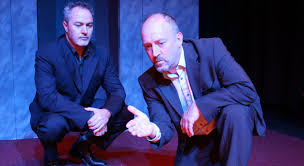
Telling an Alice-in-Wonderland-esque tale of transformation, reflection and po-faced absurdity, Dreaming under the Southern Bough follows the story of a veteran soldier gone to the dogs. However, a chance encounter with retainers from the Kingdom of Ants thrusts him into a world of royal intrigue, prophecy and war.

This is a performance which hits its stride when the surreality really hits the fan. As the plot goes into full swing, it’s hard not to be charmed by the performances at play: drunken retainers, pantomimic warlords and purer-than-thou royalty make for an experience which, whilst somewhat eclectic in terms of energy, is consistently charming and fun to watch.

Even with minimalistic lighting, stage and props, the atmosphere of classical mysticism is heavy even with the seemingly lightest of touches. Incorporation of the original Chinese in particular lends this production an often enthralling sense of place and context, adding significant substance to what in other hands may have been flimsy and unconvincing. Although the scenes taking place in the “real world” seem strangely jarring and stiff, the prose and flow of the writing feels right at home as soon as things hit microscopic.

The strongest aspect of this adaptation is the original writing, and it is a significant shame that the edition presented to Edinburgh is abridged – it would have been far more gratifying to spend more time amongst the follies and twists of the Ant Kingdom, rather than the emotionally unsatisfying ersatz-grit of the modern day bookends.
Despite its flaws, Dreaming under the Southern Bough is a pleasant and entertaining way to spend a lazy mid-morning. Whilst its denizens may be ants, it’s clear they’re standing on the shoulders of giants.


nae bad_blue

Star (blue)Star (blue)Star (blue)

Reviewer: Jacob Close (Seen 12 August)

Visit the  Other archive.

THIS REVIEW HAS NOT BEEN SUBEDITED

+3 Review: Elf Lyons: Pelican (Voodoo Rooms, Aug 5-28 : 19.50 : 1hr)

https://i0.wp.com/static.wixstatic.com/media/d6333a_4e35550fa3104999ad420a1236578246.jpg

“A smörgåsbord of comic delights “

Editorial Rating: 4 Stars Nae Bad

Generally, I tend not to trust people whose names are actual words. So, phonetically speaking, Elf Lyons wasn’t starting from a point of strength. However, after a fantastically absurd hour of screaming, tortured analogies and jokes about the French, I realised that perhaps it’s worth a change in policy.

Returning to the Edinburgh Festival, “Pelican” is a show (as Lyons puts it) about wishing her mother was dead. As far as thematic linkages go, it’s a doozy, and links in neatly with a smörgåsbord of comic delights pulled from Lyons’ bohemian life.

Elf Lyons’ greatest strength is immediately visible from the moment she steps on stage. The Philip Gaulier school is lucky to have such a talented clown among them  – “cartoonish” does not do her justice: she has an almost fey energy to her, leaping and waving around on stage with strength unsuggested by her slim frame. Even when the occasional joke falls just short of the chortle line, her ostensibly boundless enthusiasm manages to nudge it across.

But, luckily, these scattershots are few. Far from allowing what is obviously a precocious wit to wither beneath her energy’s long shadow, it positively blooms. Much like her namesake, Lyons is far more of an opportunist than it may first appear, and an wonderfully unexpected sting after a few lighthearted puns definitely goes a long way. It’s not often that I’m surprised by a joke’s direction, but I’ll be damned if I wasn’t more than once during her short hour of comedy.

However, like many comedians, Lyons appears not to trust the quality of her own wit. Some jokes far outstay their welcome, when perhaps the beginning third would have been enough to coax a belly laugh from the audience. Her punchlines, though wonderfully clever, are delivered with more clarity than it appears she realises.

My usual recommendation for free Fringe shows is that you can’t go wrong: win or lose, nothing lost. But this is a show which deserves every penny it earns. The only reason against ticketing it is the possibility that someone will lose out on witnessing such a talented performer. Elf Lyons is certainly one to watch – though, don’t make the same mistake I did, and sit almost directly behind the pillar.


nae bad_blue

Star (blue)Star (blue)Star (blue)Star (blue)

Reviewer: Jacob Close (Seen 11 August)

Visit the Other archive.

THIS REVIEW HAS NOT BEEN SUBEDITED

+3 Review: 2044 (Greenside @ Infirmary Street, 5-20 Aug: 11.30: 50min)

“Twists, turns and tensions aplenty to keep the audience on their toes”

Editorial Rating: 3 Stars: Nae Bad

I’m normally wary of anything that describes itself as dystopian, as I have found that many such works (across all art forms) often struggle to create a world believable or compelling enough to hold my attention. 2044, however, is an intriguing and thoughtful piece, and while a little far-fetched, makes some very interesting conjectures on the future – made all the more timely given the current political landscape.

An independent Scotland, spurred on by a new right-leaning political wave, has developed extremely hostile relations with England, and when floods batter the English coastline, many “southerners” seek refuge north of the border. But, given the political situation, only one member of each family is allowed in – provided they meet the required standards of health, age and skills required for work.

It may seem reminiscent of various events in history, but the situation is presented with a very current and engaging interpretation. The script centres on two such refugees, and their struggle to follow the rules, lest they be seen as a burden on the country’s resources and be punished accordingly. The plot is structured in such a way as to slowly unfurl the background, giving hints at what’s to come, in quite a gripping story. Indeed, the craft and writing of this piece in terms of narrative development are spot-on, there are twists, turns and tensions aplenty to keep the audience on their toes.

Unfortunately though, at times it’s all a little bit melodramatic, and would benefit from a bit more development and depth to allow for greater variation in tone. Every scene feels like yet another “woe is me” announcement, and while intriguing plot developments, it is quite an intense 45 minutes and should really be a longer piece to give itself time to develop and unravel.

Because of the intensity of action, the acting also suffers somewhat. The constant chopping makes it quite frantic and one dimensional, and while some great subtlety is shown by Megan Matheson-Adams as Maria, the cast never feel like they fully hit their stride so the performance falls a little flat. I don’t think it helps that a couple of the monologues are quite forced and obvious, when a more creative way of communicating that information could be found.

Overall, a really commendable effort, particularly with the writing, but not quite the finished article yet.

nae bad_blue

Star (blue)Star (blue)Star (blue)

Reviewer: Steve Griffin (Seen 12 August)

THIS REVIEW HAS NOT BEEN SUBEDITED

+3 Review: Being Norwegian (Gilded Balloon, Aug 3-10 : 23.45 : 40 mins)

“A production wrought from the heart”

Editorial Rating: 3 Stars: Nae Bad

When I was first asked to review David Greig’s Being Norwegian, I expected something to do with hellish darkness and Kjøttboller. And whilst the former was surprisingly on the money, I certainly did not expect a neat, funny little vignette. Especially buried deep underneath the sports bar.

The setup is deceptively simple. Boy meets girl, boy is awkward, girl is Norwegian. Cue characteristic witticisms from Grieg, and a surprisingly dense plot for a play which takes about as much time as roasting a chicken. It’s the stage equivalent of tangled christmas lights.

Tom Hurley is a gem as the awkward and terribly British Sean, hopping between mental distress and crises of politeness with surprising ease. A high point of this production is the clear chemistry between Hurley and co-star Lisa Bennington, who brings a wonderfully sort of flighty etherealness to her part. As the show’s key components they work well together in a sort of chalk-and-cheese way, and it makes for a very easy watch. In terms of staging, it’s abashedly minimalist, but this in no way works against it. As a highly focused, emotional vignette, the staging and lights are just enough to accentuate the overall tone of the piece without feeling bare.

Despite its victories, however, there are a few defeats. At points the show seems to go beyond the pale of theatrical awkwardness, and simply lands in “static”. For some (admittedly smaller portions) it seems as if everyone in the room is waiting for something to happen. And, likewise, some of the more conversational segments seem a little on the stiff side.  However, who could blame them – it is positively criminal to place this show in the venue it has been given. The artful musings of European cultural philosophy are somewhat muddled when the upstairs room has been booked for what sounds like a bath salts eating competition followed by celebratory karaoke.

Despite its flaws, this is a production wrought from the heart. A two-person show, however short, is difficult to pull off – almost as hard as thinking up jokes about Norway.


nae bad_blue

Star (blue)Star (blue)Star (blue)

Reviewer: Jacob Close (Seen 10 August)

Visit the Pleasance, Potterrow & Teviot archive.

THIS REVIEW HAS NOT BEEN SUBEDITED

+3 Review: The Six-Sided Man (Assembly Roxy: 3 – 29 Aug. 1150. 1hr10m)

Gavin Robertson (l) & Nicholas Collett (r). Image: Assembly Roxy & Company Gavin Robertson

Gavin Robertson (l) & Nicholas Collett (r).
Image: Assembly Roxy & Company Gavin Robertson

“love its deadpan humour … the whole 4* performance of edge and ease”

Editorial Rating: 4 Stars:Nae Bad

You just know that you’re in expert hands when, to the exact beat of ABBA’s The Name of the Game, the dice are twice shaken and then thrown. Except they’re not, you just believe that you heard the rattle and saw the throw  …. and reckoned the fateful consequence. This is artful, practised, theatre.

The Dice Man appeared in 1971 and became a cult classic. The Six-Sided Man is its stage face, written and adapted by Gavin Robertson and first performed at the Edinburgh Festival in 1987. It’s back (by popular demand?) with Robertson himself playing The Patient and Nicholas Collett as The Psychiatrist. If they could, they’d be spokes on a roulette wheel; as it is they circle around each other, betting each other’s life on the throw of the dice, or die, which is an unfortunate pun.

The reason being, you see, is that the dice are liberating, freeing you of restraint and conformity by determining a single course of action that is irreversible. ‘Should I go out of the window four storeys up?’ becomes, on the throw of a 3, ‘I must go out of the window’. And where there is mortal risk there has to be sweet reward: roll a 6 and it’s the other guy who goes head first. The Winner Takes It All.

But that’s to jump the gun (with just the single bullet in the chamber, of course). The Patient comes to the Psychiatrist with his problems. The doctor is brisk. “Show me”, he says and the rest might be such weird stuff as dreams are made on but you’re not too sure. In fact – if that’s not too loaded an entity – there’s nothing quite so substantially awful as dog poo on your shoe on a first date.

The cure is that the predictable need not be endured or suffered  Yet the dialogue, alongside the high quality of the mime, voice and movement sequences, is unemotional and wary. No great shakes, you might say, but then you realise that there’s a face off here, with neither character prepared to raise the stakes until he’s as certain as he can be that he has the stronger hand. Knowing Me, Knowing You plays on.

The Dice Man was published under the name of Luke Rhinehart. In August 2012 ‘he’ announced his own death. Some believed it, some didn’t. It was a spoof but it allowed Luke to write his own valediction: ‘If you’re comfortable in the selves you’re rolling along with’, he wrote, ‘then roll on. Most people aren’t.’

You’ll roll with The Six-Sided Man and love its deadpan humour and admire the whole 4* performance of edge and ease but you’ll wonder where it’s going; at which point you’ll feel distinctly uncomfortable. Take A Chance on Me? You bet.

nae bad_blue

Star (blue)Star (blue)Star (blue)Star (blue)

Reviewer: Alan Brown  (Seen 8 August)

Go to The Six-Sided Man at Assembly Roxy.

Visit Edinburgh49’s  Assembly Roxy archive.

+3 Review: Tiff Stevenson: Seven (Assembly Roxy, Aug 8-14, 16-28 : 19.10: 1hr)

https://www.cityvarieties.co.uk/ArticleMedia/Images/CVTiffStevensonbig.jpg

“Stevenson has a presence you could smash a wine bottle on”

Editorial Rating:  4 Stars Nae Bad

When you see a comedian on TV, it’s almost a coin flip as to whether they’ll stand up to their digital performance when you’re maybe ten feet away. For some, it’s clear that they’re funnier as a bundle of pixels – but, as in the case of Tiff Stevenson, proximity makes joke grow funnier.

Even when loping around the stage, Stevenson has a presence you could smash a wine bottle on. Despite being wrapped up in a thick web of humour, it’s clear from the outset that there’s an iron core to every joke: it’s as if scientists managed to fuse Belva Lockwood and someone’s drunk aunt. Pushing their own distinct beliefs is something, consciously or otherwise, all comics do; and Stevenson is a masterclass in delivering it without sounding evangelical. Even if you don’t agree with what she’s saying (however you’ve managed to come to that outcome), you’ll be hard pressed not to laugh along with her.

From the get-go, it’s an unmistakably zeitgeist-y set. In a surprisingly speedy hour, Stevenson runs the full gamut from bus bombings to baby showers, joyously flicking up v’s behind her as she runs from topic to topic. We might be awash in a sea of Macintyres, but Stevenson is one of many happy islands where comedy’s rebellious, fringe roots are still dug deep. No subject is too taboo, as she very happily reminds the audience throughout – however, often the transitional link between these subjects can wave from tenuous to unneeded, but as it takes up perhaps a minute of time in total, it hardly spoils the bunch.

If there ever was a complaint, it was that sometimes Stevenson doesn’t seem to trust her own considerable wit enough. Several times throughout the show, a fantastic joke was extended far beyond its peak, simply for the sake of explaining it. Whilst none of these jokes fell into “unfunny”, it certainly blunted the otherwise fantastically sharp tongue which dominate the rest of the show.

To talk too much about Tiff Stevenson’s set at the Roxy is to do her a disservice: half of the enjoyment comes from the unexpected directions she swerves with every punchline. But if you’re looking to start your evening on a high note, you’ll have no tiff with her.


nae bad_blue

Star (blue)Star (blue)Star (blue)Star (blue)

Reviewer: Jacob Close (Seen 6 August)

Visit the Assembly Roxy  archive.

THIS REVIEW HAS NOT BEEN SUBEDITED

+3 Review: Molly Whuppie (Assembly Roxy: 4-28 Aug. 1030. 1hr 15)

Image. Assembly & LicketySpit Theatre

Image. Assembly & LicketySpit Theatre

“Smiling, tuneful, and big-hearted”

Editorial Rating: 4 Stars: Nae Bad

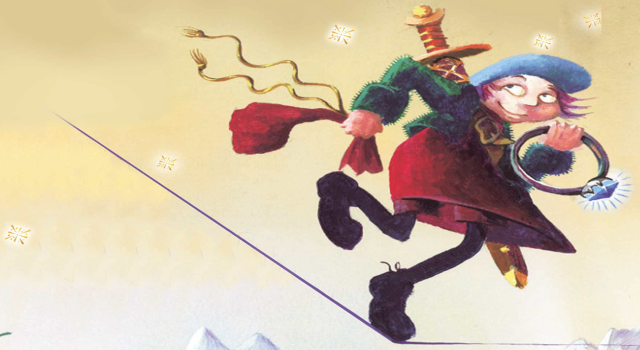
Molly Whuppie is a pickle of a lassie. She’s bright, bonny and brave and saves her mother and sister from dying of hunger on a northern shore. She’s a fairy tale character from the Western Highlands , whom English cousin Jack – of beanstalk fame – would love to meet, for their stories are pretty close; although Molly (aka. Maol a Chliobain) steals it, as her baddie is no the giant, but one King Boris (!), who loves his meringues too, too much.

Smiling, tuneful, and big-hearted, Molly Whuppie has toured all over Scotland and has already, since 2001, delighted upwards of 30,000 people. Licketyspit Theatre Company is Edinburgh based but has decided, as the International Festival posters have it, to ‘Welcome [the]World’ so this is the company’s Fringe premier and it’s a treat.

If you’re still fortunate to be in your early years – and therefore very unlikely to be reading this! – Licketyspit is for you. If you’re alongside a young child, then you’ll appreciate the modesty of the fact that all actors do is ‘show the story’ in exciting and imaginative ways. First then, there’s fearless Molly (Amy McGregor) who keeps her pretty red beret on even when balancing for her life on the Bridge of the One Hair, and we sing “I’m Molly and you can’t scare me / I’m Molly, Hee Hee Hee!” Second, there’s Virginia Radcliffe as Ninian the Giant in tremendous sandals and as horrid King Boris with a wonderful polka dot jester’s cap. No crown of majesty for him, just fanfare by kazoo.

Radcliffe is also Artistic Director of LicketySpit and it is easy in Molly Whuppie to see hers years of experience in building drama-led work for children and their families. There’s a good strong narrative where the good and the kind – above all – prevail, constantly reinforced by repetitive elements of colour, music and song. Invention is everywhere, from the reveal of successive kind grannies to land clearance by tree hurling.

Yes, it was probably devised as a December, Christmassy show when Molly, her mum, and her sister are perishing of cold and, yes, there’s the question of how come only giants have a Never Empty Purse; but no matter really, this is a warm and generous show with stick puppets to colour in and cut out afterwards.


nae bad_blue

Star (blue)Star (blue)Star (blue)Star (blue)

Reviewer: Alan Brown (Seen 6 August)

Go to Assembly Children’s Shows

Visit Edinburgh49’s Assembly Roxy archive.

+3 Review: A Streetcar Named Desire (Assembly Roxy, 5 Aug – 29 Aug : 13.55 : 1hr 30mins)

https://files.list.co.uk/images/festivals/2016/fringe/2016STREETC-9D-300.jpg

“Consistently raw, emotional and human”

Editorial Rating: 2 Stars Nae Bad

For many years, Tennessee Williams’ immortal “A Streetcar Named Desire” conjured up two shared memories: the off-yellow, stained tooth colour of chipboard desks; and the strange, (and in hindsight, quite sad) familiarity with which my divorced, middle-aged English teacher spoke about the dangers of hiding in fantasies.Now, thanks to the Tumanishvilli Film Actor’s Company and director Keti Dolidze, it’s far easier to think of quiet intricacy, and the heartfelt ebb of Georgian on a smoke-filled stage.

From the get-go, it clear this is a production which has been undertaken with care. The monotone stamp of poverty is imprinted surprisingly well on the set. Had it not been lit up on the Assembly Roxy stage, I would have had no trouble believing it had all just been sitting in the French Quarter. But what was most admirable about the set was its clever use of shadow. Translucent material and a little light transformed what in any other production would have simply been a rearward wall into a very entertaining transition tool: whilst set is moved around, the audience is treated to dancing shadows, or the silhouette of a saxophonist. And whilst occasionally these transitory segments went on a little too long, they were nevertheless welcome. Combined with excellent, well-timed soundscaping, it was clear the overall audiovisual design had received the care it deserved.

However, the background paled in comparison to the string of strong performances. It would be difficult to place the strongest actor in what is obviously a very seasoned cast. Even sans translation, this was a show which was consistently raw, emotional and human. Nineli Chankvetadze’s Blanche in particular showed almost uncanny emotional range, bringing depth to every smile and frightened sob even when the emotions in between were few. Kudos also to Imeda Arabuli as Stanley Kowalski, who lent an almost frightening hypermasculine, bestial quality to a character who is so easily made trite by a lesser actor.

With the aforementioned strengths, then, you could be forgiven for wondering why I’ve given this show a surprisingly low rating. And whilst, clearly, many of its component parts merit celebration, it is unfortunate then that this production was completely and utterly failed by its translation. Whilst subtitling a foreign language work is a fine idea, its execution onstage was risible.

From half a line being completely cut off (which happened often), to the subtitles stalling or – even more frustratingly, skipping back and forth in an obvious effort to re-find the dialogue – and the surprisingly low quality of what should have been a simple transcription of Williams’ original transcript (Prize contenders include the immortal phrase: “I’ll never forget the colour of his yes!”), the translation of this show was consistently frustrating. Even worse, the form and punctuation of character dialogue was not so much confused as nonexistent, leaving much of the second half reading as if Blanche was having the most spectacular breakdown ever seen on stage.

But even worse was the fact that, as an audience member, I often found myself between Scylla and Charybdis: either losing myself in the wonderful performances on show and having no idea what was being said, or half-understanding the dialogue whilst being unable to see the show itself as I craned my vision to the extreme top left of the stage. Had the subtitling quality been better this may have been less of a problem, but given the internal problem-solving required to make the subtitles coherent, it was like I had simply stepped outside for half the play. I shudder at the prospect of having seen this work without first being familiar with the plot beyond cultural osmosis, as a surprising number of people are. Given that the importance that the language plays in Streetcar, I was legitimately shocked at the poor quality of its execution.

In terms of its actual materiality, Keti Dolidze has crafted a fine show indeed. And, if you’re fluent enough to understand Georgian on the stage, I’m sure it would make for an afternoon to remember. Had it been simply billed as a foreign language play, even an English speaker would be able to understand, at least, the raw emotional content from performance alone. But, as it stands, the almost fantastically poor quality of translation packaged with this show made engaging with it a chore by the final half hour. With some simple tweaks, A Streetcar Named Desire could have quite handily added two more stars. But, as it stands, perhaps the kindness of strangers is less important than the kindness of transcribers.

 

nae bad_blue

Star (blue)Star (blue)

Reviewer: Jacob Close (Seen 5 August)

Visit the Assembly Roxy  archive.

THIS REVIEW HAS NOT BEEN SUBEDITED

+3 Review Moondogs (Edinburgh International Film Festival: 17 June ’16)

“Heartwarming and well written”

Editorial Rating: 3 Stars: Nae Bad

This year the 70th edition of the Edinburgh International Film Festival brought a wide range of films and documentaries home to Scotland. We took a look at the world premiere of Philip John’s Moon Dogs – a Scottish coming-of-age film – released on the 17th of June 2016.

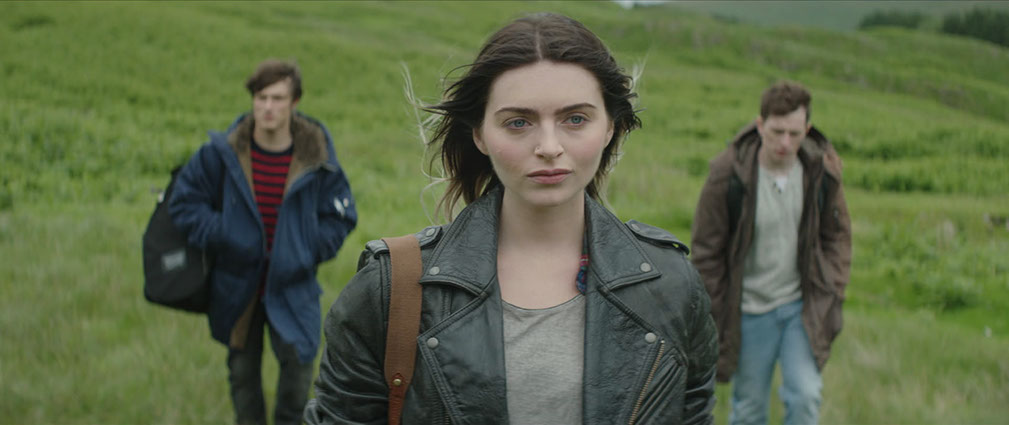
Two step-brothers Michael (Jack Parry-Jones) and Thor (Christy O’Donnell) are thrown together through their parents’ marriage and the relationship between the two is far from perfect. Michael is a temperamental, slightly gullible young lad who having just finished high school is trying to figure out his future. Thor is the more quiet, reserved, artistic type who prefers to lock himself in his room to focus on his music and block out the rest of the world.

For their own individual reasons they decide to embark on a trip from their home on Shetland to Glasgow. With no money or any idea how they will get to there, they are lucky – or perhaps unlucky – to meet the wild, free-spirited yet slightly troubled young woman Caitlin (Tara Lee) who decides to accompany them on their journey.

The story focuses on the trio’s travels rather than their final destination. Throughout the film there are some beautiful shots of Scottish scenery and at times it almost feels like you are on a tour through Scotland’s landscapes and its society. With brutal honesty the film shows the best and the worst sides of Scotland. The three meet a variety of characters, from kind hearted locals to cruel criminals, whom anybody in their right mind would avoid.

The script, written by Derek Boyle and Raymond Friel, brings out a range of emotions with some charming and funny exchanges but also some darker, serious moments. Although this independent drama does at times appear a little awkward and staged this could be a reflection of how the characters themselves are feeling. At the beginning the boys, despite needing one another to make their journey to Glasgow possible, are both displeased at the idea of travelling together. As they begin to warm to each other the scenes and the interaction between the three appears to become more natural, resulting in some endearing moments for the audience and some sympathetic giggling.

The casting works. Michael and Thor are naive through their sheltered upbringing and young age and actors Parry-Jones and O’Donnell are very authentic in their roles. Tara Lee gives a captivating performance as Caitlin, although her questionable decision making and flirtatious nature make her a somewhat difficult character to comprehend. Personally I found this made her quite difficult to warm to, although perhaps the point of her role is more to provoke the boys and test their boundaries rather than to be a likeable character.

I would say Moon Dogs is a heartwarming, well written film that causes much amusement as the trio battle with the hardships of their journey and with growing up – as you do!


nae bad_blue

Star (blue)Star (blue)Star (blue)

Moondogs at the EIFF 2016 & at the British Films Directory

Reviewer: Iona Young (Seen 17 June)

Edinburgh Quartet: Mozart, MacMillan, Dvorak. (Queen’s Hall 25 May ’16)

Image result for edinburgh quartet pictures

“They played with zest, enthusiasm and perfect tonality”

Editorial Rating:  4 Stars:  Nae Bad

I think the overriding reason I enjoy the concerts of the Edinburgh Quartet over many others is their understanding of how to put together a performance, rather than just playing. A lot of thought clearly goes into this, from the overall theme, whether it be Storm and Stress or New Horizons to the programme mix on the night: this evening it was Mozart and MacMillan, followed by Dvorak, leaping boldly from the eighteenth to the twenty-first and then back to the nineteenth centuries – and then there’s considerate way they always do their final tuning before coming on stage so that they just smile at us and get on with it – it’s not about them, it’s about the music.

And smiling was very much in evidence on Wednesday; they were clearly enjoying themselves, and so were we. They put us at our ease.

We started with Mozart’s String Quartet No 19 in C, K465, the “Dissonance”. The first twenty bars or so really were the most incredible piece of creative genius of its time; we could easily have been listening to Schoenberg, but after that the piece reverts to classical, Haydnesque form, and a charming work it is, too. Assured, beautiful playing with the violins parrying the melody with the cello in contrapuntal support. An honourable mention must go to cellist Mark Bailey whose warm tone really brought it all out in the last movement.

Next up was James MacMIllan’s String Quartet No 3. The full gamut of techniques was used here, long silences, not so much sul ponticelli but playing on the other side of the bridge, tapping and knocking the bodies of the instruments, crazy pizzicatos, and the first violin playing right at the very top of the register on the E string. The work started eerily with unison octaves before breaking out into a thrilling full tilt series of prestissimo arpeggios thrown from instrument to instrument.  The players gave total commitment throughout to a highly unusual but engrossing work. I cannot pretend all the audience found it to their taste, but they were all remarking on it at the interval, and I for one was bowled over. It is clearly a demanding work extremely well played.

We were given an easier ride in part two, and gently led to the conclusion of the evening with Dvorak’s String Quartet No 12 in F Op 96, “The American”. From the confident and assured opening of Catherine Marwood’s viola to the many familiar melodies picked up individually and collectively by the band, they played with zest, enthusiasm and perfect tonality and were clearly enjoying themselves and we found their enthusiasm infective. Pure joy –  and a real treat to bring a thoroughly enjoyable evening to a close.

nae bad_blue

Star (blue)Star (blue)Star (blue)Star (blue)

Reviewer: Charles Stokes (Seen 25 May)

Go to the Edinburgh Quartet

Visit Edinburgh49‘s Queen’s Hall archive.