Scottish Ensemble (St. Cecilia’s Hall 9 Oct.’18)

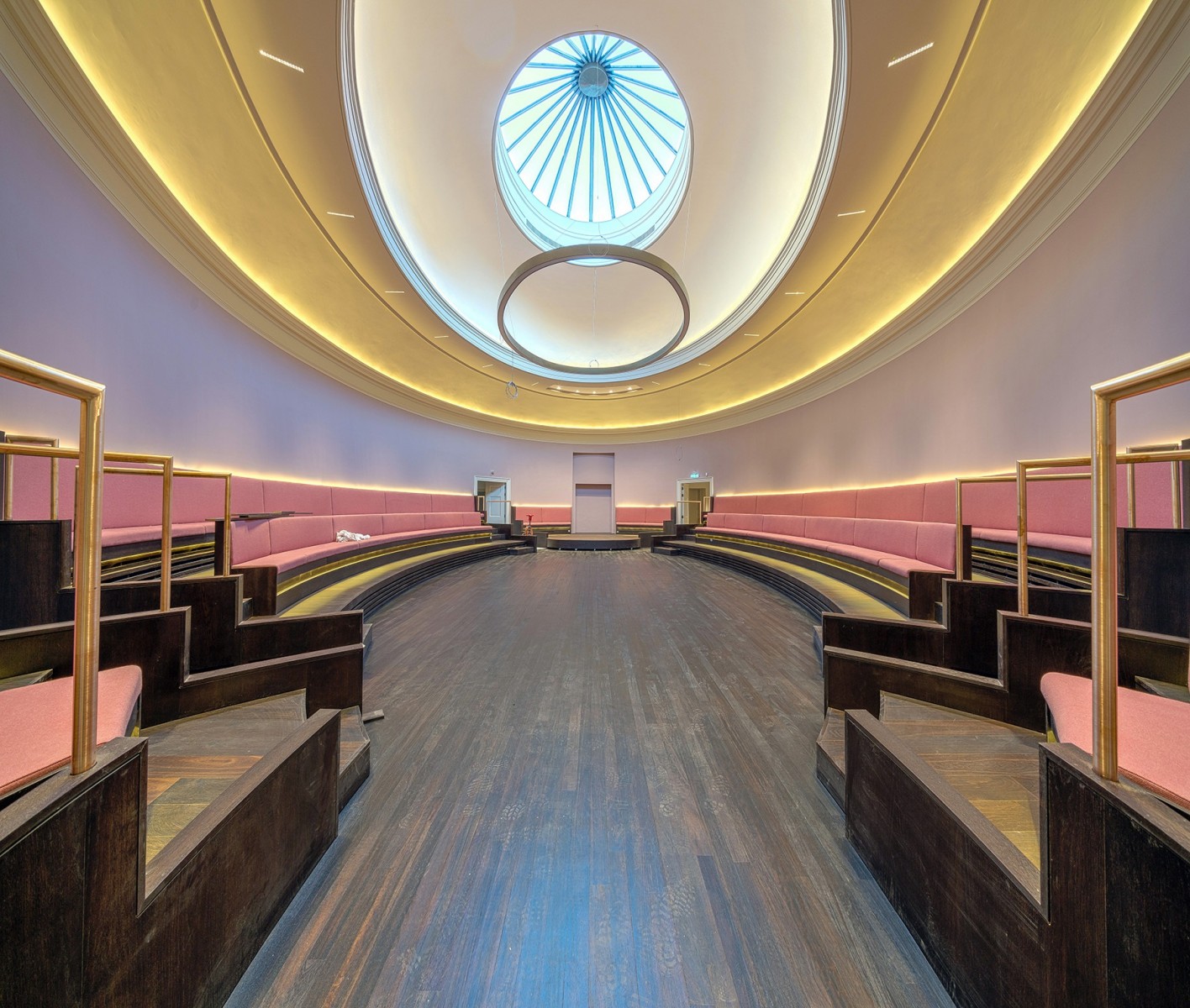
St Cecilia’s Hall, University of Edinburgh.

“I kept returning to my notes and underlining the words “Rich tone.” It was an aural joy”

Editorial Rating: 4 Stars: Nae Bad


What do Edinburgh’s New Club, Cameo Cinema, and Usher, Queen’s and St. Cecilia’s Halls all have in common? They are all hosts to the most glorious live music, and this most fortunate of music writers has had the privilege of attending five concerts within just six days in these various venues. My conclusion after living here for approaching four years? Edinburgh is a world class music city, with some world-class music being performed here. We are very lucky.


There aren’t many new concert halls being built these days, although there are plans for one in Edinburgh, so the inspirational redevelopment of St Cecilia’s as a museum of musical instruments (you simply must see their fantastic harpsichord collection, many still playing) and enchanting, bijou oval 200 seater auditorium with central chair and perimeter soft bench seating is a delight. Only problem with the venue? No bar. However, the instrument showcases make for an adequate non-alcoholic distraction.


Notwithstanding the building’s eighteenth century origins (built for the Edinburgh Music Society in 1762) the concert style was modern. Ipads instead of music, standing instead of sitting in the custom of Chris Warren-Green and the LCO (all bar the cello!) and sleek modern tieless black rather than evening dress.


Four members of the Ensemble were playing on the evening, Music Director and first violin Jonathan Morton, Cheryl Crockett on second, the fabulously lively Jane Atkins, principal violist of the Scottish Chamber Orchestra and Alison Lawrence on cello. Star soloist on clarinet was Matthew Hunt guesting from the Deutsche Kammerphilharmonie. The standard was remarkably high, and while it is a well-known adage that a string quartet can sound as loud as an orchestra, what struck me about tonight’s combo was not so much their volume but more their rich tone. Time again during the evening I kept returning to my notes and underlining the words “rich tone”. It was an aural joy.


We started with the Brahms Clarinet in B minor Op.115 (1891). Less easily accessible than the Mozart (being held back, one suspects, for a lollipop finish), the players brought a generosity of spirit and a refreshing lushness of tone, particularly in the second movement Adagio, to what is quite a dry, late Brahms work, making it one of the most enjoyable renditions that I have heard. The intensity of sound from the strings, with the clarinet (Clara Schumann described it as “wailing”) soaring above them in full, unforced tone. It never wavered.


After the interval we were treated to an extraordinary amuse-bouche, Mclaren Summit by contemporary composer John Luther Adams, written in Alaska some five years ago and played by the quartet alone. Entirely on open strings and harmonics it was a strangely melodious work that reminded me of near namesake John Adams.


The uber popular Mozart Clarinet Quintet in A Major, K.581 (1789), which one might have expected, because of its chronology, to be the concert opener, was held back until last, a bit like a rock star ending with their biggest hit. One felt almost a sense of reassurance by the familiar opening and the playing of first violin Jonathan Morton really came into its own. The second movement Larghetto, matched only perhaps by the Adagio from the Gran Partita as one of the most beautiful pieces of woodwind and string music ever written, more than met our expectations with a degree of perfection often found only on recordings, clarinet and first violin calling and answering each other with a breathtaking poignancy. The third and fourth movements took us on a joyous romp home. In the final movement I was surprised to be reminded of the final movement of Schubert’s Trout Quintet, the players almost teasing us with their phrasing, deliberate pauses, and changes of tempo.

All in all a delightful evening’s music. I have to confess it was the first time I have heard the Scottish Ensemble. I want to hear more.

nae bad_blue

Star (blue)Star (blue)Star (blue)Star (blue)

Reviewer: Charles Stokes (Seen 9 October)

Go to the Scottish Ensemble
SCO. Mazzola, Frang. (Usher Hall: 27 Sept’18)

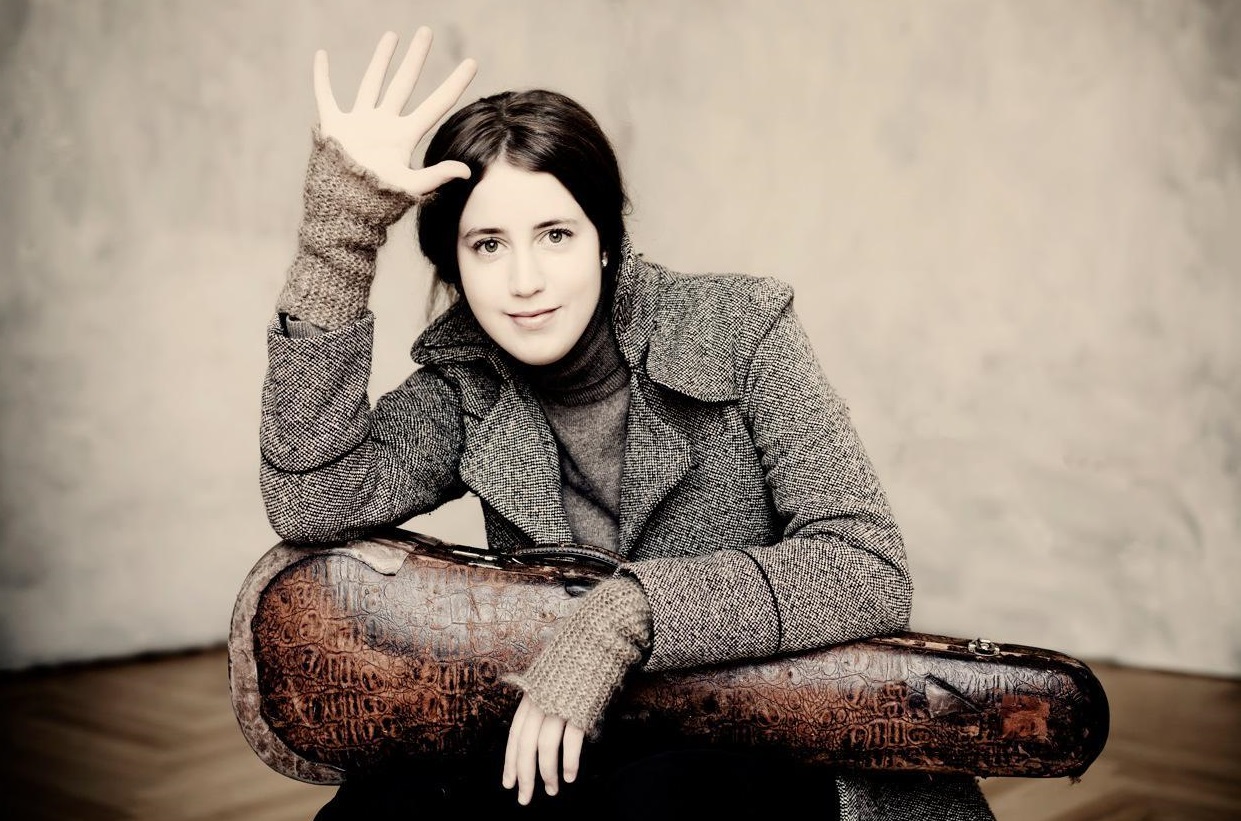
Vilde Frang
Photo: Marco Borggreve/Warner Classics


“It was a joyful, uplifting evening’s music.”

Editorial Rating: 4 Stars Nae Bad


A braw Autumnal evening met me as I walked across the Meadows to the Usher Hall for the Scottish Chamber Orchestra’s 2018/19 Season Opening Concert. The programme contained Nielsen and Sibelius and I braced myself for an evening of bleak Scandinavian forests, folklore and darkness.

I could not have been more wrong. It was a joyful, uplifting evening’s music.

Of course, Robin Ticciati was not on the podium. His replacement, Maxim Emilyanychev, was not either (he comes back next week), but instead Enrique Mazzola, Artistic and Music Director of the Orchestre National d’Isle de France and Principal Guest Conductor of Deutsche Oper in Berlin returned to take up the baton. Essentially a bel canto and opera conductor, how would he cope with this Romantic and late Romantic fare? He did fine.

The more I thought about the evening’s programming the cleverer I thought it was. How many of you have heard Sibelius’s third symphony? Two and Five, of course, but this was an interesting choice. Moreover, Nielsen is known principally for his symphonies and concerti, but an overture? Cleverer still was the positioning of the star attraction, Beethoven’s Violin Concerto, along with the soloist of the evening, Vilde Frang, in the second half. So often it’s a bit of a downer when the soloist goes home before the interval and the rest of the evening feels rather flat.

First off was Nielsen’s Helios Overture. Nielsen himself said that the work needed no introduction and indeed it was a predictable (none the worse for that) evocation of sunrise somewhat in the classical genre. After the pianissimo double basses, four horns braved the introduction and were just a tiny bit shaky on their damnably difficult to play instruments, so exposed. The orchestra very quickly found its feet with all sections playing confidently with some magnificent strings, wind and brass before it drew to a close as it had started, with pianissimo basses again. It was a pleasant relief to experience the audience sitting on their hands as Mazzola held up his hand to restrain applause rather longer than one might have expected. When it came, it was enthusiastic.

On to Sibelius’s 3rd Symphony in C. Who would dream of calling a Sibelius symphony “jolly”? But it was, and none the worse for that. In the first movement there was calling woodwind, responding strings, melodious horns, all at each other’s beck and call, ending with shades of the horn call of the 5th symphony. In the second we heard melodious flutes and unalloyed joy yet in the Sibelian mode. Come the third and a darker, sombre theme with nuances of Finlandia. A useful, unusual addition to one’s knowledge of this fabulous composer.

After the interval Beethoven’s Violin Concerto in D, written a hundred years earlier than the previous two works. Nielsen was of course a Dane, Sibelius a Finn and while Beethoven undoubtedly German his interpreter tonight was another Scandinavian, the Norwegian violinist Vilde Frang. Yet this was proving to be no Scandi Noir, Frang perhaps making the point by wearing a light coloured floaty dress rather than more conventional evening colours. The work has a long orchestral introduction and to be honest Frang looked a little spare as she awaited her entry, which she then executed extremely competently and was very much in charge for the rest of the performance as she drew a great deal of tone and volume out of her modern-ish 1864 Jean-Baptiste Vuillaume. The work is so well known there is little new for the music writer to contribute, save to say the performance was fresh, committed, with gusto, a thoroughly enjoyable 45 minute’s worth from start to finish.

Throughout the performance conductor Enrique Mazzola showed quiet authority and got everything he could and should have out of the works and the players, who responded only too happily. All done with the minimum of podium histrionics.


nae bad_blue

Star (blue)Star (blue)Star (blue)Star (blue)

Reviewer: Charles Stokes (Seen 27 September)

Go the SCO, the Scottish Chamber Orchestra

Visit Edinburgh49 at the Usher Hall archive.

Athena Kugblenu: Follow the Leader (Underbelly Bristo Square: 1-26 Aug: 17:30: 60 mins)

“A standout voice in the Edinburgh comedy lineup.”

Editorial Rating: 4 Stars: Nae Bad

In Athena Kugblenu’s new hour, entitled Follow the Leader, the term ‘pregnant pause’ gains new meaning. To explain, not only is the witty and clever comedian currently with child, but her slick and punchy new hour of standup is frequently based on letting extended, exasperated silences serve as the punchlines themselves. This approach loses no hilarity, mind you, and in fact proves quite a clever move for Kugblenu, a standup presence so engaging and poised onstage that you know whatever she says next will either be witty or a genuinely good point, and frequently both. 

Kugblenu loosely bases this show on the notion of trusting and following leaders, and how that does and does not help our ultimate goals. She incorporates funny and knowledgeable examples of leaders we probably should not admire so fervently, and contrasts them well with societal tendencies and cultural expectations that should similarly be reevaluated. Not every punchline is quite risible enough to create a consistently side-splitting hour, but ultimately, Follow the Leader is a good deal of fun and a thoroughly enjoyable walk through Kugblenu’s outlook on life and people. 

Her material ranges from political loyalties and questionable leanings to amusing anecdotes about herself and how she gets by. She touches on some hilarious ideas, such as more evidence-based alternatives to unfair government policies, and the relative pressures of ‘positive racism’ and similarly strange treatment from white to Black people. Her musings on international food and her unborn child also hit high notes, and though perhaps her material on being drunk and having sex could use a bit more workshopping, overall, this is a charming and well-spent hour of standup, and a standout voice in the Edinburgh comedy lineup.


nae bad_blue

Star (blue)Star (blue)Star (blue)Star (blue)

Reviewer: Nathaniel Brimmer-Beller (Seen 22 August)


RENT (Gilded Balloon @ Rose Theatre: 16-26th Aug: 17:15: 2 hrs)

“A production bursting with raw talent, featuring some of the finest vocals on Edinburgh’s amateur stage”

Editorial Rating: 4 Stars: Nae Bad

RENT is a searing rock musical from the 1990s that was only recently knocked out of Broadway’s top 10 longest running musicals of all time by Wicked. It follows the story of a group of friends dealing with love and loss against a gritty New York backdrop, and is loosely based on Giacomo Puccini’s opera La Bohème.

Local company Captivate Theatre’s version is a slick and minimalist endeavour, editing out many of the smaller roles and songs to focus more on the main characters themselves, rather than the community of artists they move within. Yet what’s lost in pulsing power in some of the bigger moments is made up for in subtle sensitivity and slickness elsewhere, making this a clean and refreshing take on a musical that’s been doing the rounds for decades. This stripped back approach also spawns some interesting interpretations in the musical numbers, such as Today 4 U, which is almost unrecognisable as a nigh-on a capella song, though somehow works within Director Tom Mullins’ overall vision.

Yet while the minimalist ideology of this production creates many unexpected delights, the main downfall of this show is the staging and use of space, which is far too small to effectively mount a musical of RENT’s epic stature – even with the cuts and styling carried out. Unfortunately, this results in too much awkwardness on stage too often, given how important movement and isolation are to several scenes. At times Mullins makes the action work well within the constraints – in Santa Fe and La Vie Boheme in particular, the scale of the choreography matches the music, space and overall mood, but more often than not, the overwhelming feeling is one of potential – how great this show could be in a venue where it could breathe and run free.

Despite this, this is a production bursting with raw talent, featuring some of the finest vocals on Edinburgh’s amateur stage. Megan Grace in particular delivers a real powerhouse performance in every scene and song as Joanne – not to mention nailing that riff in Seasons of Love. Alex Peters as Roger and Anna Macleod as Mimi combine to create some spine-tingling harmonies in their duet moments, and it’s a shame Grace Cowley doesn’t get more time to sparkle as Maureen after her raw and gutsy Over the Moon.

RENT will always be a fantastic show, and this slick and super-streamlined version is packed with highlights and the heart needed to make it soar. But I’d love to see it return with more depth and detail in a bigger venue to really be blown away.


nae bad_blue

Star (blue)Star (blue)Star (blue)Star (blue)

Reviewer: Steve Griffin (Seen 19 August)

THIS REVIEW HAS NOT BEEN SUBEDITED

Signals (Pleasance Courtyard: 1-27 Aug: 13:10: 50 mins)

“A mature hour of philosophy and high-grade workplace dramedy.”

Editorial Rating: 3 Stars: Nae Bad

Until we know for sure, which might never be the case, the extraterrestrial is endlessly fascinating. One some level, the entirety of human existence is hinged on this question: is there anyone, anything else out there? Footprint Theatre’s engaging two-woman show Signals asks this question with an intelligent script, grounded performances, and an excellent climax, and while it is not exactly pulse-pounding, this production is a mature hour of philosophy and high-grade workplace dramedy.

Eve Cowley and Immie Davies play two data analysts on the night shift at a facility dedicated to scanning the cosmos for alien contact. For the majority of the play, they simply sit and swap comments about their co-workers, life in general, and whether their job is completely meaningless. The set is commendably simple yet effective; with only two desks and a rat king of wires and plugs, the feeling of a dingy office is created very well. Cowley and Davies’ performances are also well-suited to the piece; all their interactions, from casual chats to fiery arguments, are enjoyable to listen to and cleverly written. 

Overall, however, the show itself cannot quite muster any significant feeling other than ‘enjoyable’ for the first two thirds. While the stillness of the show is nicely reminiscent of naturalistic theatre trends, its interludes where nothing happens are overlong considering the theme of the show. Thankfully, the portion of the events when alien contact is actually realised is fabulously crafted, and genuinely thrilling — especially the two workers’ disparate reactions to the possibility that we might actually answer the ultimate existential question. This is, without a doubt, the best part of the show, and I can confidently say the final third is an excellent piece of theatre.

The rest, however, does not do the ending justice, and while the technical and performative aspects are solid, the runtime is not as well-measured as it could be. If the establishing segments of Signals took a few more notes from its ending, this still, gradual approach could have come across with a bit more verve than it currently does. This is a well-made production, but it could be much sharper, and with an injection of just a bit more energy it could be a seriously impressive two-hander. 


nae bad_blue

Star (blue)Star (blue)Star (blue)

Reviewer: Nathaniel Brimmer-Beller


skirt (Royal Scots Club: 6-11 Aug: 18:30: 90 mins)

“Current and compelling”

Editorial Rating: 3 Stars: Nae Bad

Becs is leader of the opposition party in Scotland, and first choice of its head honchos to take over as party leader at Westminster (with a good chance of becoming Prime Minister at the next general election). But when opportunity knocks, she’s got to act quickly, and what unfolds is the story of how Becs reaches her decision to follow her dream to lead the country – or not. She must consider her mother’s degenerative disease, her children (one of which is fostered), her best friend’s family breakdown, and the fact that she’s single – wouldn’t having a partner make her so much more electable?

The themes and issues presented in skirt are very current, and it’s compelling to see how the various conflicting interests might be resolved in today’s social climate. The overt opinions of her political colleagues elicit their fair share of gasps and giggles, though her personal politics and views are barely mentioned – that’s not what’s important here. Indeed, the wider discussion of the piece is about choice and the power we (especially women) have over our own destiny.

While Becs’s is the primary storyline within the play, the main scene (which makes up the bulk of the 90 minutes running time) is a birthday party for one of her friends, attended by a host of characters who all share their personal woes. Throughout this scene it’s quite challenging to keep on top of who everybody is, how they are related, and how their story connects to the main narrative. Some interesting scenarios and tensions are shared, but as the characters leave one by one, it feels like there are many loose ends still to be tied up.

Indeed, what’s most frustrating about this performance is how many extraneous branches and avenues Claire Wood’s script attempts to sidle along simultaneously – for me there are simply too many characters and threads running through the piece detracting from the most important one, which could be expanded to give more depth and tension to the dilemma faced by the central character. There’s a lot of excess chat, meaning that important decisions and revelations come about far too quickly to be wholly believable.

From a performance perspective, it’s a tough ask for Helen Goldie as the leading lady to cut through the very busy scenes – especially early on – but in the quieter moments and political meetings she comes across as very natural and personable, carefully balancing sensitivity with authority. In addition, Leanne Bell impresses as moody teenager Bea, Gregor Haddow brings a pleasing calmness to proceedings as Toby, while Dan Sutton is wonderfully repugnant as politician TM.

Overall, it’s really encouraging to see a new piece of feminist writing on this topic being developed in Edinburgh, and while this version isn’t perfect, there is so so much potential for it to become a powerful piece worthy of large audiences. I hope this isn’t the last we see of it.

nae bad_blue

Star (blue)Star (blue)Star (blue)

Reviewer: Steve Griffin (Seen 9 August)

THIS REVIEW HAS NOT BEEN SUBEDITED

Finding Peter (Gilded Balloon Teviot – Wine Bar: 12, 14-27 Aug: 10:00: 45 mins)

“The pacing is perfect. Just as one starts to wonder if the energy is ebbing, a fresh riptide of song and participation rolls in.”

Editorial Rating: 4 Stars: Nae Bad

Wendy, John, and Michael are all in pajamas, but the siblings aren’t going to bed. Not just yet. They’re telling stories to one another on familiar themes. Pirates, native folk, the Lost Boys, sword fights, and (of course) Peter Pan. Enter the fairy Tinkerbell, so small we can only detect her presence via the sound effect of a bell ringing. Peter’s in trouble, held prisoner by a mutinous deserter from The Jolly Roger, and her captain, James Hook. Wendy announces that she will go alone to save the day, despite the brothers’ whines and protests.

Upstage centre is a mess of boxes and fabric behind which costume changes and bell ringing occur. The height is perfectly judged, forcing the players to come down to the level of the wide eyes gazing back at them. The costumes are basic, student night attire occasionally highlighted with something from the dressing up box. I wanted more, but the show isn’t for me as Granny / Mother-Out-Law censoriously reminds me afterwards.

While the set, lighting, and sound are minimal (perhaps even too minimal), the performances are turbocharged and ultra engaging. From the moment we enter, the smiles are set to max. If bubbly cheeriness were a communicable ailment, we’d all be in quarantine for a month. Jenny Witford, as Wendy, leads the trio. She’s the voice of reason and authority, the Atlas holding up worlds within worlds. Think Graham Chapman in a Monty Python classic, surrounded by an unending pageant of colourful minor characters. Jessica Arden and James Tobin take turns inhabiting (with varying levels of success) each of the personalities Wendy encounters on her journey to find Peter.

The pacing is perfect. Just as one starts to wonder if the energy is ebbing, a fresh riptide of song and participation rolls in. Frankie Meredith jam packs the hour like one of these Facebook videos explaining how if you roll up all your clothes and put your toothbrush in an old water bottle you’ll only need carry on for your 6-8 month around the world adventure. Pace and performance – they’ve got to be done right and Finding Peter gives a masterclass on how to get them right.

Meredith’s script seems to exist on three dramatic planes. The first is the siblings’ collective imagination, their dressing up and acting out. The second is the actors’ interactions through the fourth wall, audience interaction and knowing winks – “Well of course I want you two to come too” Wendy tells her brothers, “but then who would play all the other characters?” The third dramatic plane is Neverland, where most of the action occurs. Perhaps the lines between the planes could have been sharper, the internal logic more rigorous – but, again, who am I to argue when Daughter 1.0 (3 years old) is having such a blast?

This show is for her and it delivers. JM Barry’s familiar themes are delivered even without the “Art budget? Was there an art budget? I thought we had an unending ocean of cash.” advantage of the 2003 movie. Daughter 1.0 comes out of the show buzzing as though she really has been sprinkled with fairy dust. She could fly off at any moment her thoughts are that happy.

The Teviot Wine Bar is a tough space to convincingly fill, especially as this show isn’t getting the audiences it deserves, half a dozen in when we were there. You can do this very talented company and yourself a favour by getting out, bright-eyed and bushy tailed, to see this rollickingly gentle tribute to a classic family favourite.

nae bad_blue

Star (blue)Star (blue)Star (blue)Star (blue)

Reviewer: Dan Lentell (Seen 9 August 2018)

Visit the Assembly Roxy Bedlam Church Hill Theatre Festival Theatre King’s Theatre Other Pleasance, Potterrow & Teviot Summerhall The Lyceum The Stand Traverse archive.

THIS REVIEW HAS NOT BEEN SUBEDITED

Paddington Bear’s First Concert (Underbelly, Bristo Square – Cowbarn: 12, 14-26 Aug: 11:20: 60 mins)

“There’s balloons, inflatable fruit, Hungarian folk dancing, sing-alongs, and more than a bit of mayhem.”

Editorial Rating: 4 Stars: Nae Bad

Beloved bear. Slick marketing. Fabulous venue. Great timeslot. This was always going to be a formula that would bring in the punters. The queue stretches round the block. My heart sinks a little. Nothing this popular can possibly be any good. That’s the rule. Except of course that our Paddington Bear breaks all the rules.

We’re at the famous London railway terminus. An orchestra rushes through the audience trying (unsuccessfully) to catch their train. Their unscheduled delay provides a window of opportunity to tell the story of a stowaway bear, the family he adopts, the people he meets, and his first ever concert at the Royal Albert Hall.

Along the way we meet the members of the orchestra, learn about how to conduct them, and how to make them go faster, and faster, and faster. There’s balloons, inflatable fruit, Hungarian folk dancing, sing-alongs, and more than a bit of mayhem. If you are planning on seeing a live action show replete with actual bear (or becostumed stand in) you will leave this show disappointed. If, on the other hand, you are even a little bit curious, easily excited, and unashamedly thrilled by people who can do something amazing (like playing musical instruments really, really, really well) then you will leave Paddington Bear’s First Concert more than a little happy.

A quick glance at the critical reactions to Paddington Bear’s First Concert and it’s clear that the underpaid, under-informed, overworked misery-gutses are out in force. This isn’t (shock-horror) a show aimed at a world weary 20 something reviewing 15 shows a day irrespective of genre or personal preference. It is however the real deal. Paddington’s creator Michael Bond and musical godfather Herbert Chappell wrote this adaptation in 1984. Perhaps this joyful and jovial revival ought to make more of its authenticity amid all that slick advertising?

Paddington Bear’s First Concert really is a concert. A group young musicians play a range of strings, woodwind, and brass instruments under the watchful eye of their conductor who is also our storyteller. Her performance is pitch perfect. Beside me Daughter 1.0 (aged 3) is entranced, it’s not hard to see how that stuff with that piper in Hamelin went down so easily.

Bond and Chappell’s genius, or perhaps sleight of hand, was to create a show which quietly makes the introduction – “children meet classical music, classical music meet children” – without fanfare or condescension. There is an unhealthy notion abroad in Britain that high art should be taken and endured like bad tasting medicine. Paddington Bear’s First Concert remains a guaranteed cure against all such silly, self-defeating cynicism.

nae bad_blue

Star (blue)Star (blue)Star (blue)Star (blue)

Reviewer: Dan Lentell (Seen 9 August 2018)

Visit the Assembly Roxy Bedlam Church Hill Theatre Festival Theatre King’s Theatre Other Pleasance, Potterrow & Teviot Summerhall The Lyceum The Stand Traverse archive.

THIS REVIEW HAS NOT BEEN SUBEDITED

Definition of Man (Greenside @ Infirmary Street: 3-25 Aug: 11:25: 60 mins)

“Powerful and emotive”

Editorial Rating: 3 Stars: Nae Bad

Two performers enter the space, wearing rags and looking dishevelled. It appears they have been alone in a post-apocalyptic wasteland for some time – though for how long doesn’t seem important. What follows is a journey of how two people might survive (purely from a psychological perspective) in this situation.

Definition of Man is created by performers Jason Rosario and Nikki Muller, and could crudely be described as part Waiting for Godot, part DV8 physical theatre piece. After the initial wasteland scene, the performance darts back and forth between mini lectures about chemicals within the brain, personalised accounts of growing up as the child of an immigrant or ‘other’ in the USA, and much more besides. The level of detail in each section demonstrates impressive research and creativity, though comprehension is the main sticking point.

To begin with, there’s a bizarre jarring between the words in the script and the action on stage: the upbeat voices and physicality of the performers seem at odds with the sense of desperate survival implied by the words they say. Then the whistle-stop tour through all the other elements makes it hard to decipher just what, when, and who this show is about.

Only in the second half of the piece do the threads start to come together, and the crux of the relationship between the two characters comes to the forefront – just what happens to two lovers when they are left alone in the world for an inordinate amount of time? The final moments between Muller and Rosario are a powerful and emotive interpretation of this, though it’s a shame this depth comes so late on.

The action is punctuated throughout by some genuinely impressive lifts, balances and counter-tensions, which are an effective way to highlight apparent changes in power and focus between each character, and the emotions at play. When combined with colour design and subtle sound-scaping, moments within this performance really do shine.

To me, though, it feels like there are almost too many themes and ideas crammed into this piece, diluting what could be a compelling discussion into and presentation of the relationship between two people in an extreme environment. With so many different strands, it’s really difficult to get into and connect with the performance and work out what it is and where it’s going.

Overall, Definition of Man is an interesting and intense production that certainly gets the cogs whirring, but unfortunately, for me, it’s all a bit too confused and busy to have the impact it has the potential for.


nae bad_blue

Star (blue)Star (blue)Star (blue)

Reviewer: Steve Griffin (Seen 9 August)

THIS REVIEW HAS NOT BEEN SUBEDITED

Formation Festival: Straight Outta Saughton (7-8 July)

“Charming”

Editorial Rating: 3 Stars: Nae Bad

Straight Outta Saughton presents the unlikely but intriguing scenario of two recently released inmates (and cellmates) from HMP Edinburgh banding together to perform as drag queens, having struggled to find other employment. The senior, and more confident of the two, Peter (Callum Thomson) is old hat and knows his way around a wig and a pair of heels, but his younger (and very vocally heterosexual) counterpart Dave (Greg Sives) is most certainly not in his comfort zone, setting up a potentially juicy 45 minutes of real-time action before the two must take to the stage and lip-synch for their living.

Katy Nixon’s script is charming throughout, setting up a very believable situation, peppered with relevant and laugh-out-loud witticisms. It teases out revelations about each character at a good pace, setting up a fair amount of twists and turns to maintain interest.

What’s missing though is a real sense of narrative drive and urgency to keep the action moving and create more dynamics within the piece. While director Deborah Whyte does well to make the most of the small performance space and create different levels throughout, it does sometimes feel a little flat and laboured. The action often comes across as very “blocked” and unnatural, while it’s disappointing not to see more made of the make-up makeover, which feels a bit rushed and underutilised, both artistically and metaphorically.

It’s the actors who really make this piece shine though. Thomson is a natural on the stage, and commanding in his portrayal of the flamboyant Peter. He also shows great emotional range when opening up about his more personal life and demonstrates great dexterity throughout. Sives is more subtle as the reluctant Dave, but every inch believable in his frustrations and discomfort about the situation he finds himself in. The pair have great chemistry together and I could easily watch them for longer.

There’s definitely something here, that with a bit more workshopping could become a really gripping play. Still, it’s a very enjoyable production as it is, and I hope we see more of it in the future.


nae bad_blue

Star (blue)Star (blue)Star (blue)

Reviewer: Steve Griffin (Seen 8 July)

Visit the Assembly Roxy archive.

THIS REVIEW HAS NOT BEEN SUBEDITED