‘The Strange Case of Jekyll and Hyde’ (Traverse: 19 – 21 March ’15)

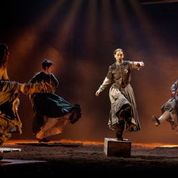
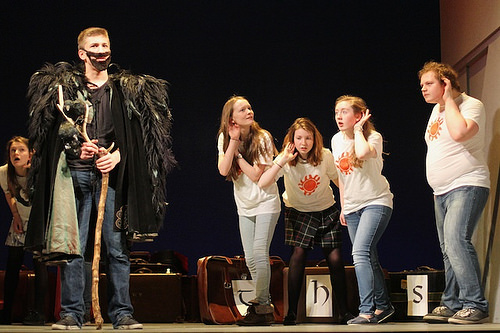
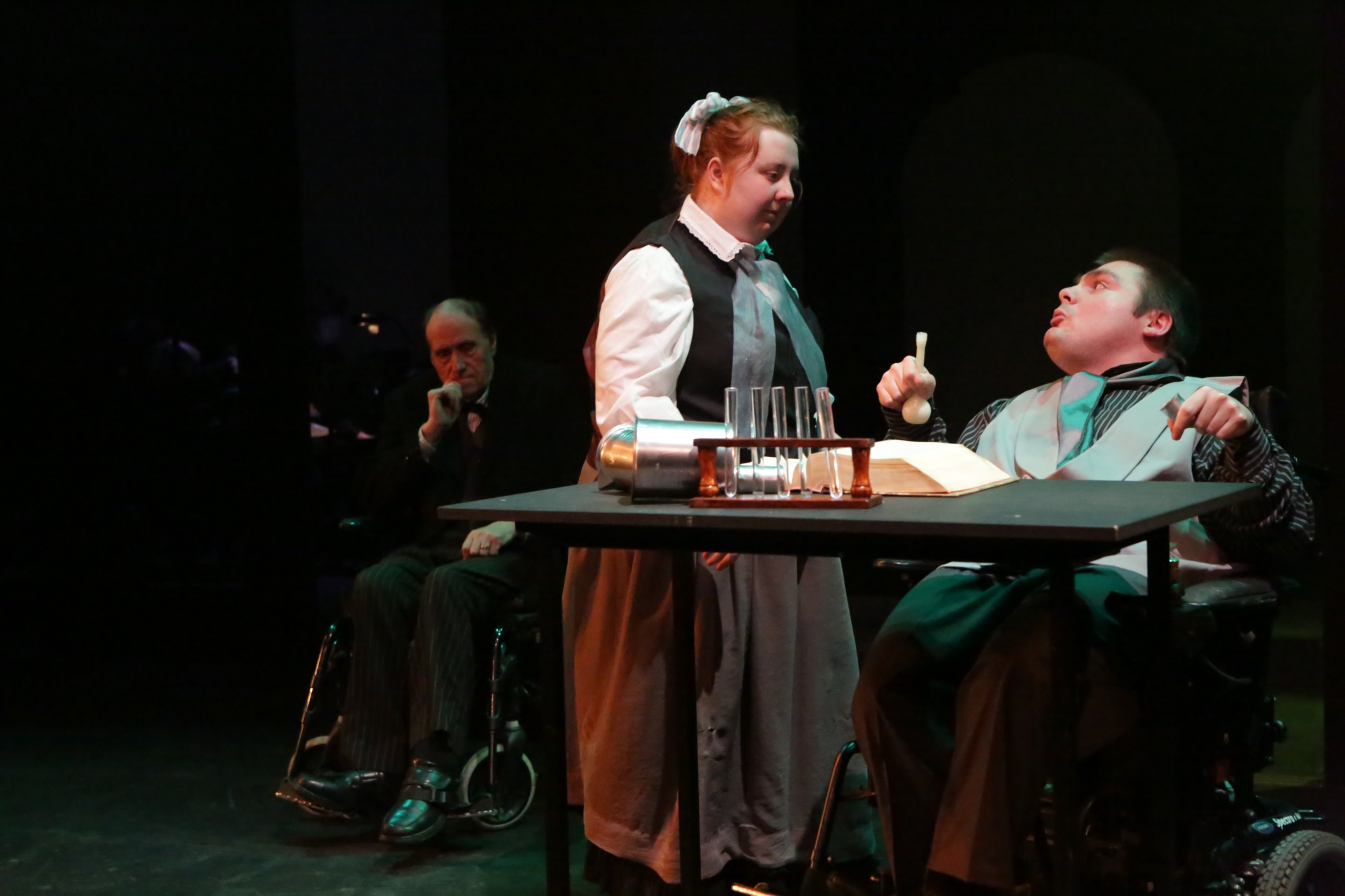
(l - r) John Edgar as Poole, Emma McCaffrey as Miriam Jekyll and Stephen Tait as Dr Jekyll Photos: Douglas Jones

(l – r) John Edgar as Poole, Emma McCaffrey as Miriam Jekyll and Stephen Tait as Dr Jekyll
Photos: Douglas Jones

“A fleet and surprising adaptation of a famous story”

Editorial Rating: 4 Stars

It is strange indeed when Miriam Jekyll puts Hyde onto her shoulders and carries her off stage. You might think that light work is being made of RLS’s ‘classic’ shocker of morbid psychology. You’d be wrong though. Stevenson’s story is here, it’s just been gifted with some nimble ideas and relocated to Edinburgh. Hair restoration and topiary outrages in the New Town are up there together with the double consciousness.

Writer Morna Pearson gives Dr Jekyll a family: Jane, his wife, who finds anaesthesia from marriage in drink; William, his son, a friendly soul who is never going to get to Uni’; and Miriam, his daughter, who should be in the Chemistry labs but who has become Hugo’s darling Intended. It is Miriam who helps herself to her father’s green potion and who finds Hyde (a dead ringer for The Woman in Black) at the bottom of the glass. And it is together, through the toun, that the two young women enact ‘the thorough and primitive duality of man’. It is not the case, in this version, that when Hyde appears Jekyll disappears. No, theirs is a prime alliance.

The pathological strain is replaced by social horrors: Jekyll has money problems and his creditor, Dr Black, sexually assaults Miriam. Hyde fights back. Police enquiries get nowhere as the good folk cannot see that the evil doers are just like them – sometimes. To frame the action Director Caitlin Skinner has the twenty cast members divide into pairs and to eyeball each other accusingly and then “Shush!” us into a conspiracy of silence.

The thematic assists from composer Greg Sinclair and the musicians of Drake Music work extremely well. The opening soundscape of bells and chimes and hooves quickly gives way to single notes and jagged chords. Miriam suffers the effects of the concoction as pins and needles stick in our ears. Solo voices intone in uncanny ways and wind about the silhouetted archways, stairs and closes of the city.
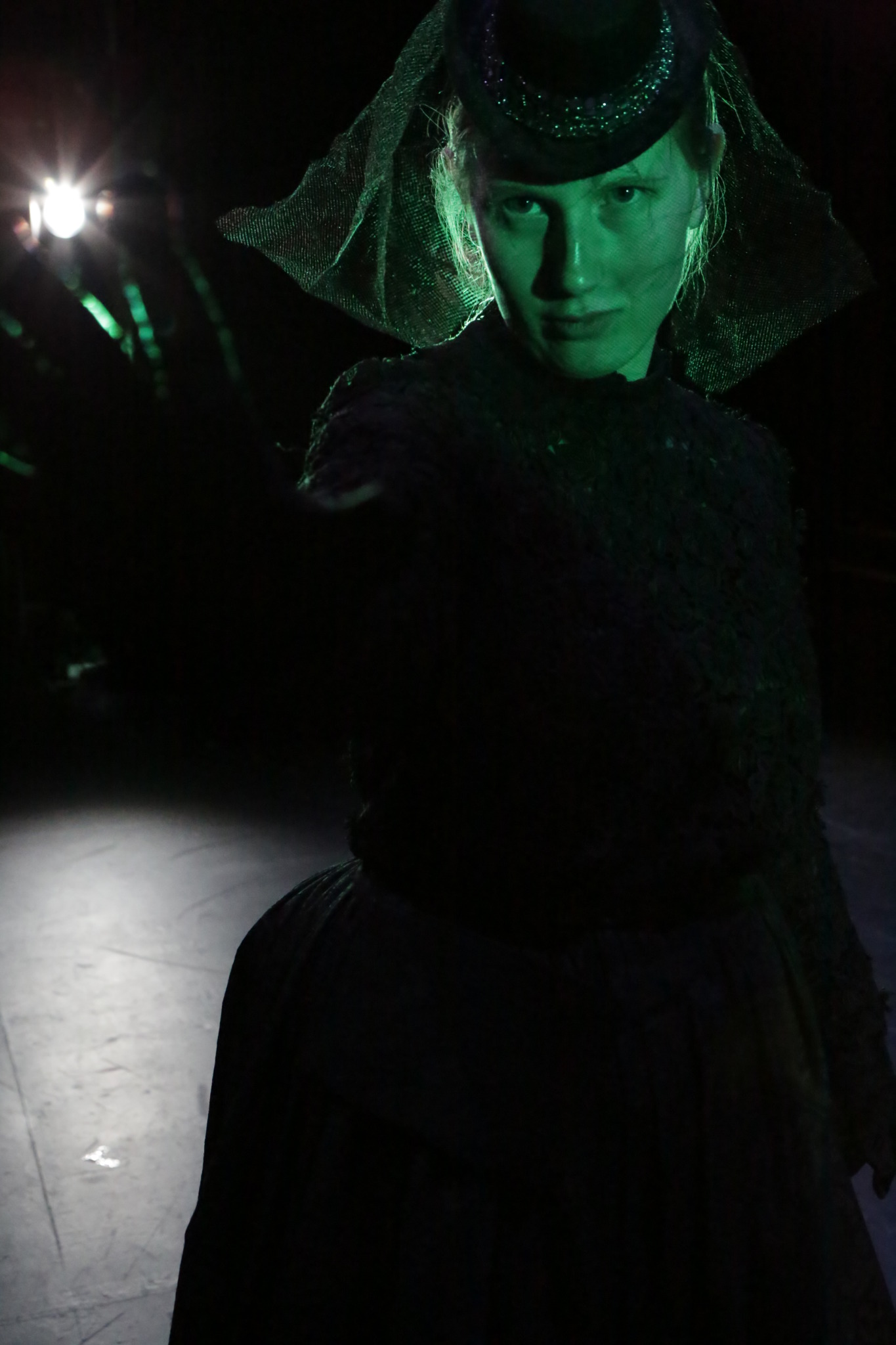
Nicola Tuxworth as Hyde

Nicola Tuxworth as Hyde

The open stage and precise blocking allows the performers to distinguish themselves. Stephen Tait as Dr Jekyll is the focused professional with secrets to concentrate on. He loves his daughter but is the late Victorian father with some lunatic ideas about the brain. Emma McCaffrey’s Miriam responds with due affection but has her own abiding demon to wrestle with, both in the parlour and on the roof. Hyde (Nicola Tuxworth) does not speak but is a veiled and forbidding presence whose outstretched hand you would not want to hold. For me, though, it is the lugubrious Poole (John Edgar), butler to Jekyll’s household, whose words you hang onto. After all, it is Poole who reveals that he has heard Miriam talking to her ‘friend’.

So, a fleet and surprising adaptation of a famous story that really belongs to Edinburgh and which Lung Ha Theatre make their own.

Star (blue)Star (blue)Star (blue)Star (blue)

Reviewer: Alan Brown (Seen 21 March)

Go to Lung Ha Theatre Company and Drake Music Scotland here.

Visit the Traverse archive.

‘The Merchant of Venice’ (Assembly Roxy: 10 – 14 March’15)

Isobel Moulder as Portia and Will Fairhead as Bassanio.

Isobel Moulder as Portia and Will Fairhead as Bassanio.

“From the Rialto to Little Venice, W9,  is neat”

Editorial Rating:  3 Stars

Were Antonio at work today, this stacked play would be even trickier than it already is. He’d be talking about moving cargo rather than sailing ships. His wealth would be in metal boxes to Singapore or Mumbai rather than argosies from Venice. Nevertheless, reassuringly, his sound advice to Bassanio would be the same: “Go, presently inquire where money is”. That would send the enterprising lover to Shylock, who would have friends and funds in Frankfurt and away we go.
However, in this production when Shylock asks “What news from Germany?” (that’s Genoa back then), the context shifts mightily. For now we’re back to September 1939 and the news ain’t good. In fact if you’re Jewish it has been desperate. Director Rae Glasman finds a choice text in Prime Minister Chamberlain’s declaration of war:

   “Now may God bless you all. May He defend the right. It is the evil things that we shall be fighting against – brute force, bad faith, injustice, oppression and persecution – and against them I am certain that the right will prevail.”

That’s not Shakespeare but it works. For a start, which God: Christian or Jewish? Who is the more righteous: backscratching Bassanio, Jew-baiting Gratiano, or is it Antonio, who spits at Shylock in the street? Is it merciful or just to condemn Shylock to near ruin and to force him to convert? Portia, if always an unlikely victim, will find happiness in marriage. There is a happy and flimsy ending, which is why – I suppose – Glasman has that radio broadcast at the end of the play, to make her audience ask what exactly has prevailed here? Actually, I would have welcomed that mooring at the start. There’s the trouble with The Merchant of Venice; it goes all over the place: scenically, tonally, action-wise. Underwhelming and overwhelming.

From the Rialto to the City of London and to Little Venice, W9, is still neat. Portia’s Belmont is relocated to a country house, somewhere in the Chilterns, I guess. That is not a displacement too far but it looked hard to accommodate on the Roxy’s stage. I found the opening and drawing of the full length curtains in-between scenes more distracting than helpful and it’s a No-thank you to the squealing Downton maids at open-the-box time. The Glen Miller sound was melodious though and the cocktail cabinet and fetching evening wear did their elegant, idle, thing well enough.

As do Bassanio’s set of chaps. Portia (Isobel Moulder) sees them – and quite possibly all men – as “bragging Jacks” to be practised upon, which this marble-mouthed lot certainly deserve. She is also properly merciless in the court, where otherwise the languor of the club rooms seemed to have carried over. To supply Bassanio (Will Fairhead) with an Eton education and braces was presumably to allow him to stand nonchalantly, hands in pockets, between the caskets and to give him the manners, surely the compassion, to pick up Shylock’s yarmulke from the floor and to give it back.

Joe Shaw as Shylock with Kirsty Findlay as Jessica. Photos: Aliza Razel

Joe Shaw as Shylock with Kathryn Salmond as Tubal.
Photos: Aliza Razel

I could believe in Shylock (Joe Shaw) as a broken father. “My daughter is my flesh”, he says, and then Jessica abandons him – or is stolen from him. His hair should have been greyer but it is no surprise when – to take like for like – he would cut into a spent Antonio (Pedro Leandro) above his heart. There is real pain in that vengeful effort.

Kirsty Findlay as Jessica and Chaz Watson as Lucy Gobbo.

Kirsty Findlay as Jessica and Chaz Watson as Lucy Gobbo.

There are laughs in the features and antics of preposterous suitors, Arragon and Morocco, and in the crazy work of Lucy Gobbo (Chaz Watson) who sounds like the ‘wauling bagpipe’ of Shylock’s protest and who looks way too bad for Emil and the Detectives.

Rory McIvor as Lorenzo spoke the (blank) verse best and did Moonlight Serenade introduce his scene with Jessica near the close? I can’t recall. I do remember approving Bassanio’s choice of the lead casket, for ‘Thy plainness moves me more than eloquence’, which is where I stand on this production. It looks pretty and sounds attractive but its necessary centre of gravity is away, awry.


Star (blue)Star (blue)Star (blue)

Reviewer: Alan Brown  (Seen 10 March)

Visit the Assembly Roxy archive.

‘Home for Christmas’ (The Studio: 3 December 2014)

  carol-ann-duffy

little machine

“some shakin’ metaphysics to die for”

Editorial Rating:  3 Stars

As Homecoming Scotland 2014 approaches its close we enter The Home Straits, a programme of poetry and music on the theme of … home. This show, first of three, finished with the sweet tones and bitter air of Byron’s We’ll Go No More A-Roving that deserved louder applause (& participation) than our few and faint hearts allowed.

Home for Christmas is Poet Laureate Carol Ann Duffy’s idea. She is up front for the first half, reading her poems, alongside musician and Edinburgh friend John Sampson, but after the interval she sits out and Little Machine, is on stage. The band sing their settings of six of Duffy’s Christmas poems and then eight further poems, from the 16th Century ballad Western Wind to Liz Lochhead’s fervid My Way. Mood and style vary from piece to piece, from loose and cool J.J Cale to a Rocksteady lilt for Advent and there’s some shakin’ metaphysics to die for in Thomas Carew’s Mediocritie. The music making is very good – I like distinct guitar work – and the high regard for the poetry is evident in the diction.

However, it is sombre and plaintive to start with. “It’ll be over soon; home by Christmas” was the fond, forsaken hope. John Sampson’s trumpet opens with the Last Post, and then there’s Duffy’s own poem Last Post, where ‘If poetry could truly tell it backwards, then it would …. And all those thousands dead … Are queuing up for home … Freshly alive.’ Christmas Truce follows, when ‘beneath the yawn of history’ a miraculous peace broke out. The subsequent pairing of Wilfred Owen’s The Send-off with her response, An Unseen, is dreadfully poignant.

Just as sharp is the keen, deadpan, humour of three monologues from the celebrated The World’s Wife: Mrs Midas, Mrs Tiresias, and (Duffy’s favourite) Faust; and then four later poems of percipient, careful intent: Mrs Schofield’s GCSE, The Counties, The Human Bee, and Liverpool. They are all in the public domain – and not just on The Guardian’s pages – so go find them, realise their quality and why Duffy wrote them.

Little Machine had been on Radio Scotland’s ‘Culture Studio’ with Janice Forsyth that same afternoon. The trio anticipated an evening of banter and wit. Well, not really. I enjoyed their music, admired John Sampson’s playing the two halves of the recorder at the same time (do not try this at home, he cautioned) and heard really good poems, tellingly read by the poet herself, but it proved a subdued occasion, with little ‘give’ from our side of the stage. That’s what happens when the Last Post sounds. It all goes still and not in a stille nacht, glad tidings, kind of way.

Star (blue)Star (blue)Star (blue)

Reviewer: Alan Brown (Seen 3 December)

Visit ‘Little Machine’ here

Visit our Assembly Roxy Bedlam Church Hill Theatre Festival Theatre King’s Theatre Other Pleasance, Potterrow & Teviot Summerhall The Lyceum The Stand Traverse archive.

THIS REVIEW HAS NOT BEEN SUBEDITED

‘Bondagers’ (Lyceum: 22 October – 15 November ’14)

Bondagers 1

Photos: Drew Farrell

“a fertile, sure-yield production “

Editorial Rating: 4 Stars

First performed by the Traverse Theatre Company at the Tramway, Glasgow, and then the Traverse, Edinburgh, in May 1991. Listed by the National Library of Scotland as one of the 12 key Scottish plays of the past forty years.

There is the straight open road and there is the wide open field. We are likely, through pig-ignorance, to love the first and disregard the second. However, Sue Glover’s Bondagers will change your mind, and if it doesn’t, you’re past saving. For this bonneted, bonny, holy play almost makes the invisible visible. Almost, for there are small molehills of socio-economics and human geography to flatten first.

In his peerless survey of theatrical landscapes, Peter Brook ends chapter 2 of The Empty Space with this question: ‘Where should we look for [holy theatre]? In the clouds or on the ground?’ You can smell the answer in Lu Kemp’s fertile, sure-yield production. An earthy top dressing covers the Lyceum stage, and when it’s hoed, watered or shovelled, you could be in the fields alongside the A697, just past Greenlaw. In Bondagers, which is part keepsake, part platform, this Berwickshire acreage matters hugely.

For most of us, farmland is now remote, somehow indistinguishable territory. Once upon a time, really not so long ago, over the Lammermuir hills a married ploughman (a hind) was bound to provide a woman (a bondager) to also work on the farm. She might be his wife, but not when there were infant children to raise. By the 1890’s, a good master would have paid his bondager ten pence a day. Women’s work for women’s pay was still holding firm.

Bondagers2

You’d have to split the Lyceum to set Bondagers in the round, but the creative team gets close to the vision thing, whose horizon(s) stretch way beyond the box beds in the cottage row, not that you see them anyway. There are no doors, no flats, and no fly-on-the-wall positions, as the scenery is a wide semi-circle of tan planking, thin and loosely joined, with the mist floating beneath it. The sights and sounds of this piece are filmic but solidity is vested in the spirits of six women. When fifteen year old Tottie calls out to her father in Saskatchewan the Canadian prairie seems as close as the Cheviots. Sara, the sturdy elder, leaves no room for doubt or longing, and Ellen, once bound over but now the tenant farmer’s young wife, is still bold and outspoken. Meanwhile, plainly and keenly, there are the folk songs: by turns affecting, burdened or bawdy, they keep time and period in step. Those warm, singing hearts lie under bulky wraps that are a triumph of research and costuming by the Wardrobe department. Additionally, the movement director, Ian Spink, deserves applause in his own right. From hiring to flitting the year round weather seems autumnal and chill. When the light does come, right at the end, the advancing glaring beams are of a different nature altogether.

In this rare atmosphere and with their own language a’ aboot them, the six bondagers share their lives. Sara (a fabulous Wendy Seagar) is the embodiment of moral dignity; good wife Maggie (Pauline Lockhart) scuttles undiminished from bairn to crib to table; Liza (Jayd Johnson) and Jenny (Charlene Boyd) chop neeps by day and gaze for lovers in their broken mirror by night. Innocent, wilder, emblematic Tottie (Cath Whitefield) strays outside the fold and suffers grievous harm. Mistress Ellen (Nora Waddell) brings knowledge of farm economy and crop rotation alongside her desire for a baby.

This is substantial and enthralling theatre by director Kemp and designer Jamie Vartan and yet its make-believe is vulnerable. I’d call Bondagers rhapsodic but there’s dissonance. A working girl can still be seduced into marriage by the promise of a clock, a dresser and a bed. Worse, there are bogeymen around: a sheriff who orders an arrest and a marquess who raises the rent. That brief combination is enough to silence the women well before the badass harvester turns off into the fields.

Still, the road’s clear to Coldstream and you can see for miles. Enjoy the view and love Bondagers.

Star (blue)Star (blue)Star (blue)Star (blue)

Reviewer: Alan Brown  (Seen 28 October)

Visit the Lyceum Homepage here

Visit our Assembly Roxy Bedlam Church Hill Theatre Festival Theatre King’s Theatre Other Pleasance, Potterrow & Teviot Summerhall The Lyceum The Stand Traverse archive.

THIS REVIEW HAS BEEN SUBEDITED

The Edinburgh49 Prize: for distinctive and memorable theatre (2014). Winners!

outstanding

“CONGRATULATIONS!”

Editorial Rating: Outstanding

The winners of the first ever Edinburgh49 Prize: for distinctive & memorable theatre (sponsored by Alechemy Brewing) were announced on 10 July at our ‘End of Normality’ party held at Assembly Roxy.

The event marked the city’s transition into full-on Festivals mode and was a chance to celebrate all that’s weird and wonderful about the other 49 weeks in the arts calendar.

Not only did our sponsor, Alechemy Brewing of Livingstone, ensure that everyone was well watered throughout the night, they also provided the star prize for our winning pub quiz team, a powerful combination of Royal Lyceum’s marketing team and NTS producers, who received a chance to sample 11 bottles from across Alechemy’s range.

Despite on-going tours and pre-Fringe commitments, we were delighted to welcome so many friends old and new to join us for the official announcement of the 6 winning productions, chosen from the more than 75 shows reviewed by us since last September.

In date order, the winning shows are:

With special mention of The #1 Loch Ness Monster Experience performed by Bruce Morton and Karen Fraser Docherty at Edinburgh College, 24 June, 2014 as part of the National Theatre of Scotland’s The Great, Yes, No, 5 Minute Theatre Show.

Charlotte Productions celebrate the sucess of Goblin's Story in style.

Charlotte Productions celebrate the sucess of Goblin’s Story in style.

Many congratulations again to all the winners and many, many thanks again to all the companies, participants and venues who have made 2013-14 such a wonderful year with which to begin Edinburgh49. Our job for 2013-14 was to establish the title and prove it could endure from one Fringe to another. We’ve done that. Next year we’d like to expand our coverage into new genres – can you help us?

There are some incredibly talented individuals operating across the genres in this city. If you think you can help amplify word-of-mouth with passionate, peer-review style reviews which help producers and punters alike – please get in touch!

No more reviews for now, as we circle around the Fringe and live up to our name, but we will be back in September.

See you on the far side!

Alan, Richard & Dan

‘Uncle Varick’ (King’s: 7 – 10 May ’14)

l.to r. Willie John (Dave Anderson), Michael (George Anton) & Varick (Jimmy Chisholm) Photo: Richard Campbell

Willie John (Dave Anderson), Michael (George Anton) and Varick (Jimmy Chisholm). Photo: Richard Campbell

‘Inappropriate for Invergordon’

Editorial Rating: Unrated

“Don’t catch the sleeper. Stay at my place”, pleads Michael, Highlands GP, ardent ecologist and would-be lover. The married lady takes the train. So much for the ‘Swinging Sixties’.

Writer and artist John Byrne wrote Uncle Varick in 2004 and sets it in 1967 within a 20 room pile on a Highland estate, all dark wood panelling, tick-tock, and parlour room landscapes. This Rapture theatre production invites you to see it as if framed within a distressed gilt surround. Its parent, Chekhov’s Uncle Vania, subtitled Scenes from Country Life in Four Acts, and very much the choice soundboard of Byrne’s work was written in the Crimea, 1500k from Moscow where it was first performed in 1899. No mention of trains in the Chekhov, just horses to carry you between those fiendish, prime, poles of town / fabby and country /boring, ‘parochial’.

London is where Varick’s brother in law, overblown art critic Sandy, lives. First in Swiss Cottage, then in Maida Vale, but now – the impression gathers certainty – it is all proving too expensive and he finds himself cash poor, on painful legs, and has only the estate to sell. Only it’s not quite his to sell. He would have investment income and a small villa in Majorca. Of course he would, just as Chekhov’s retired professor, another Alexander, would have his wee dacha in Finland. Michael, once Mihail Astrov, has a map of the estate as it was fifty years ago – in 1917 or 1849, as you will – that charts a picture of decay as the old ways give out to be replaced by … by what exactly?

And so the doubling continues between the uncles, Vania and Varick. Byrne’s idea is canny and pretty neat but now, only ten years on, it appears a little forced, a little hung up. For all their appeal, the Scottish characters approach caricature: there’s Kirsty Morag, the old housekeeper and sweet guardian of Scots, as in ‘muckle chainsaw, ken?’ and kind Willie John in cap, sporting breeks and Fairisle sweater. He plays sweet guitar though and sings three great and apposite Beatles songs from Rubber Soul (1965). A dun, knee length pleated skirt out of Dingwall Drapers opposes a showy 60s minidress from Lady Jane’s in Carnaby Street; bold is not the word for that hemline. Inappropriate for Invergordon would do.

But there’s wild haired Jimmy Chisholm as Byrne’s Varick and he is well beyond naïve portraiture. Kirsty Morag would call him pawky. It’s a quick, spry, part that is both entertaining and woebegone. Chisholm may be dressed in baggy cords or pyjamas, dressing gown and slippers but that will not divert you from the nippy spirit of his performance. His opposition to vainglorious and impossible brother-in-law Sandy, is at Vania / Varick’s heart and while you just want Sandy to get ‘orf’ and away back to London (so strong is John Stahl in the part) you do enjoy Chisholm’s performance.

Varick is heartbroken as well, which just adds crummy self-esteem to injustice. No requited love for him from Elaine (Selina Boyack), Sandy’s second wife. When Shona (Ashley Smith), Varick’s niece and all-round lovely person, sings Cry Me a River you know the emotional landscape is unrelieved and forlorn. In such a place it is Michael, a poignantly lucid George Anton, whom you notice and listen to.

There are amusing moments: smile at the use of flock wallpaper and laugh at a couple of funny break-out lunacies – but otherwise Uncle Varick is more serious and contemplative than you might think. Can it bring Ross and Cromarty, with its estimated population of 50,000, to Greater London’s 9 million? Perish the thought! All we do have in definite motion in 2014 is the Invitation to Tender for a separate Caledonian Sleeper Service ‘in order … to develop a transformed product offering that will secure its future as a sustainable business.’ Well, all the more reason for Elaine to refuse Michael’s bed.


Reviewer: Alan Brown (Seen 7 May)

Visit Uncle Varick homepage here.

‘The Forbidden Experiment’ (Traverse: 1 – 3 May ’14)

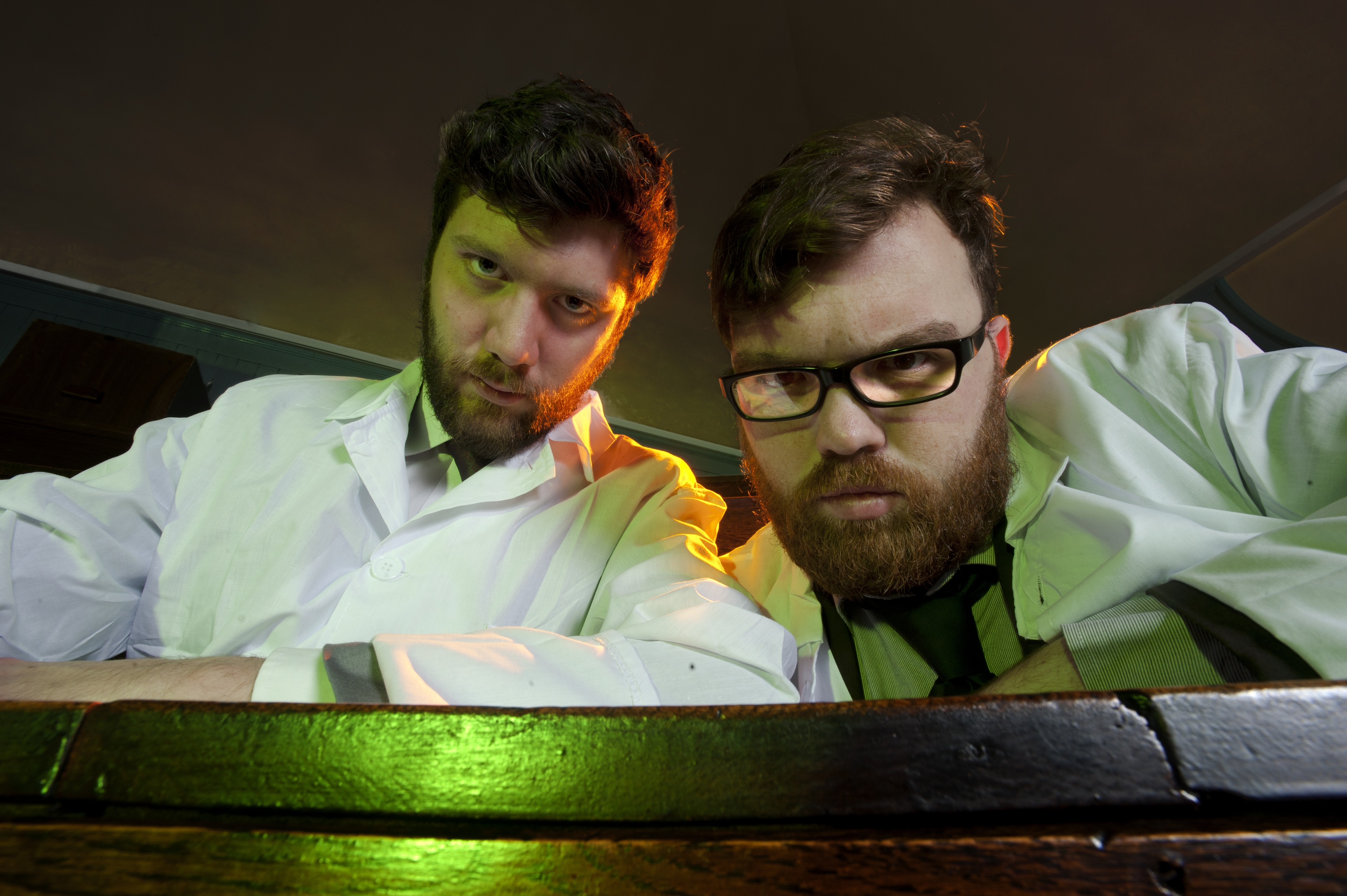
Michael John O'Neill and Rob Jones Photo: Chris McNulty

Michael John O’Neill and Rob Jones
Photo: Chris McNulty

‘Halting thesis: that we exist to be dumbfounded’

Editorial Rating: Unrated

Produced by ‘Enormous Yes’, The Arches Platform 18 Award Winners.

Ever wanted to get inside a clever comic strip? Here’s your chance. For me The Forbidden Experiment is highbrow, secret, Numskulls from The Beano. D.C.Thomson can be proud of this Glasgow borne variation on its team of little technicians who live inside your head, trying ever so hard to do it right but suffering mischievous upset and body blows time and again. The play is self-conscious, ingenious and cerebrally in-your-face; but its audience, to experiment with the passive voice, is likely to end up scatterbrained.

Not that there isn’t strategic purpose. It’s there in box loads over the impressive laboratory of a set: microscope, desk microphone, molecule model, lots of important looking files marked ‘Inchkeith’ with – a bit of a date fixer, these two – a carousel slide projector and a rolling blackboard (never used; shame!). All to investigate what may have happened on Inchkeith island out there in the Firth in – specifically – 1493 and 1944/45. Subjects of study are (i) Language before we fouled it up at Babel and (ii) Language when we messed with it again but this time with practised deceit, as in the British Fourth Army on Inchkeith and with radioactive fallout from the Manhattan Project . You may think that there’s not too much to go on to join (i) and (ii) but that’s where you’re wrong and the two guys in lab coats are right, kind of.

Halting thesis: that we exist to be dumbfounded, for our understanding is forever partial.

So, there’s writer/actor Michael John [Brainy] O’Neill as Himself in a white coat, when he’s not cut up in love or sailing out to Inchkeith with those boxes. He is also penitent, freighted, James IV, who would learn to speak with God, and Mr Alvarez whose small ranch in Socorro County, New Mexico, turns out to be way too close to the nuclear test site. And there’s director Rob [Blinky] Jones, with suitable beard and always in a white coat, a natural at the lab bench you might think, but no. Laconic and spare assistance – not least on keyboards, guitar and harmonica – is provided by Matt [Radar]Regan, whose Abbot Counsellor to James IV is Gollum at his most precious. The Company is completed by Zosia Jo (too expressive for a Numskull), whose dancing in the two roles of ‘Creature’ and Michael John’s ‘Ex’ is especially demanding and pairs well with the cryptic kaleidoscope of the slide show.

Were there an ‘Only Connect’ wall on that blank blackboard then The Forbidden Experiment would have been easier. As it is its different narratives describe fraught or frenetic situations that defy sorted outcomes, let alone a conclusion. Radiation sickness breaks down Alvarez’s speech; redacted documents frustrate History, capital ‘H’. Love overturns a dingy crossing to Inchkeith. We are left with revolving images and impressions of marvellous and necessarily strained acting – O’Neill’s in particular – and the light relief of actors, as well as boffins, getting peeved with each other and with the script.

As a body of work The Forbidden Experiment is terrific and will stay in your head. Mine is not big enough to see it all at once.


Reviewer: Alan Brown (Seen 1 May)

Visit The Forbidden Experiment homepage here.

The Last Bloom (Traverse: 15 – 19 April’14)

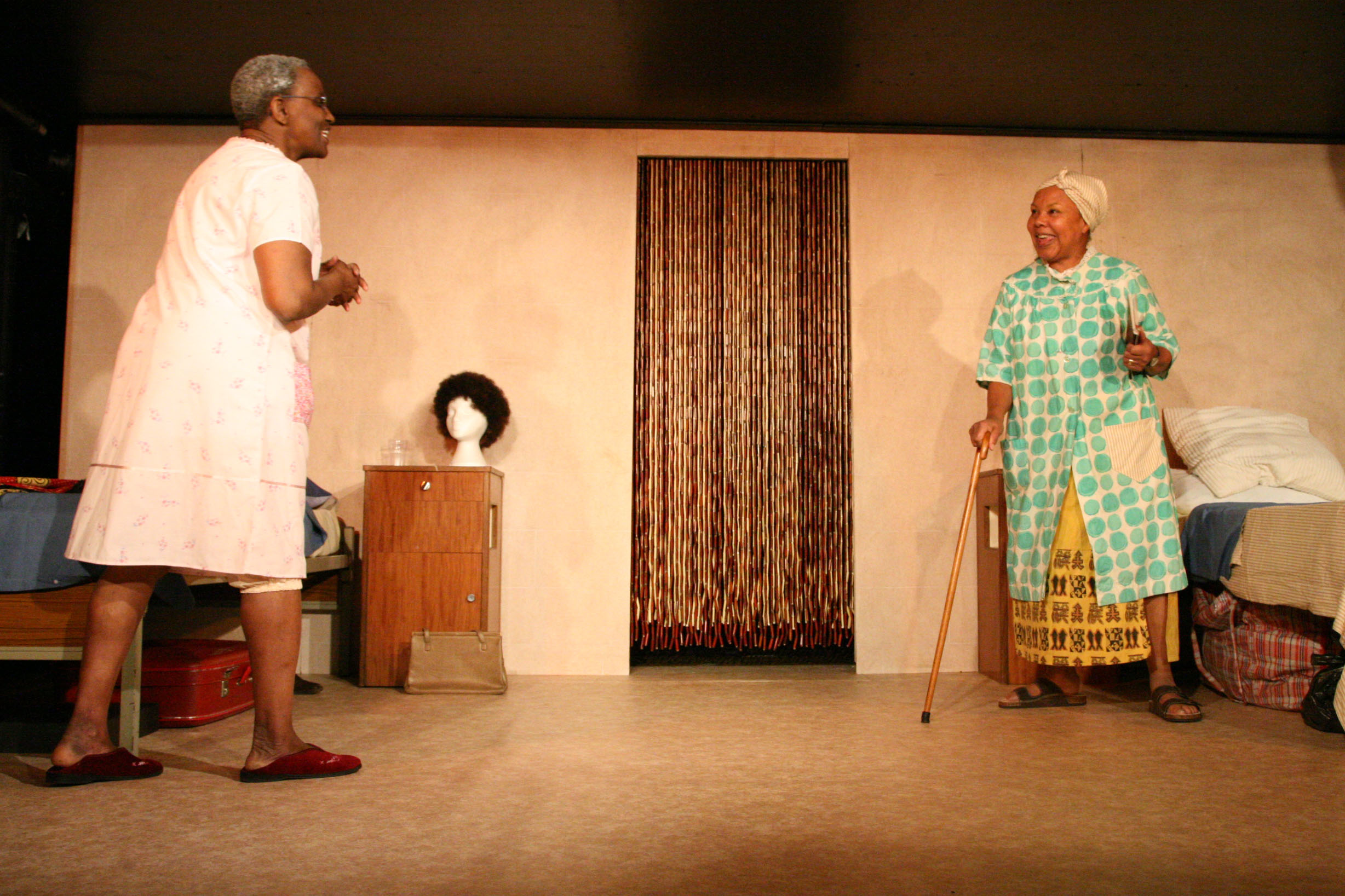
Anni Domingo as Cynthia and Cleo Sylvestre as Myrtle in The Last Bloom. Photo by Lesley Black

Anni Domingo as Cynthia and Cleo Sylvestre as Myrtle Photo by Lesley Black

” … questions about the alternative lives we all could have led, and whether it’s so very wrong to seek solace in them”

Editorial Rating: Unrated

In an old folks’ home somewhere in Jamaica, two elderly women squabble over the room they’re forced to share. Myrtle is fussy, inflexible, used to getting her way; Cynthia likes to please, but quickly turns prickly when she’s pushed too far. Myrtle’s the type who knows everyone else’s business, while Cynthia has a secret or two she’d really rather hide. The two have been sharing the room for three days now … and yet, they’ve only just got round to learning each other’s names.

It sounds like the set-up for a sit-com, and there are indeed some delicate moments of humour in this softly-spoken production. But as soon becomes clear, the bickering’s not quite as inconsequential as it seems: there’s a tragedy, perhaps two tragedies, developing before our eyes. It’s something we can easily imagine happening to people we love. It’s something which, one, day, might happen to ourselves.

Anni Domingo is striking as the newcomer Cynthia, deftly introducing the almost-imperceptible moments of confusion which hint at a weakness in her ageing mind. Later, when she starts to flash a child-like smile, it’s hard to know whether to feel deepest sorrow or purest joy. Cleo Sylvestre, meanwhile, perfectly embodies a character we all think we recognise – cantankerous and obstructive, yet soft and tender inside her shell. But the young-looking actors don’t quite capture the physical decay implied by the script; there are some stiff joints, admittedly, but the true bone-weariness we’re told they feel never quite comes through.

There are some interesting ideas in Amba Chevannes’ script: questions about the alternative lives we all could have led, and whether it’s so very wrong to seek solace in them. There are terrifying insights, too, into the future that might await us, and the possibility that the one thing we hold most precious might be stolen away.

And in a year when Scotland has its eyes turned inward, it’s refreshing to see the Traverse stage a play that’s set in Jamaica. The women’s shared patois is challenging at first, but soon develops into a well-judged point of interest – an insight into life that’s an ocean away, yet very much the same as our own.

Ultimately, though, the script leaves too much unexplained or unexplored. At times it feels like there’s a missing scene; at one point, an inconceivably terrible wrong is forgiven and forgotten in the blink of an eye. And the brief epilogue, though poignant, returns to the generic – doing little to crystallise or resolve the tumult that’s gone before.

It’s a shame, because this is a play which speaks of personal experience, and it feels like Chevannes has an elusive message she’s hoping we might hear. But still, there’s plenty to ponder. And perhaps it’s appropriate – when the play’s so much about lying – that it isn’t too specific about what we’re meant to believe.

Reviewer:Richard Stamp (Seen 15 April)

Visit The Last Bloom homepage here.

‘7 Billion Others and Me’ (Lyceum Youth Theatre: 28 March & 4 April’14)

7 Billion Others and Me

“It is Andy Murray’s Will He – Won’t He? victory at the All England Club last year that ends the roll-call “

Editorial Rating: Unrated

Directed by Christie O’Carroll and devised by the Company.

It is a fun, effective, image. The kilt, Royal Stewart tartan no less, the plain sock, the half-tied All Star Converse resting on a slightly squashed globe. Some photoshopping might just have had the heel depressing England but, no, that would not have been right.

7 Billion Others and Me had two performances, both prior to evening performances of Union. That too made sense, as did the three Perspex voting boxes at the Exit doors: ‘Yes’, ‘No’, ‘Don’t Knows’. When I saw them the piles of votes were evenly distributed. This LYT show might influence your views on the independence referendum but that is not its intention. This engaging piece of youth theatre is much more to do with proposing community and friendship as the proper platform for whatever we stand for – or on.

The islands of St Kilda are used to tell a shared story. To begin with there is island history: a nasty but comic severed hand, puffin catching, puffed-up ‘Morning Manly Meetings’, and mention of May 1918 when a German submarine blew apart the island’s signal station. In August 1930 the remaining thirty-six inhabitants leave for the mainland at their own request. There follow scenes of modern and popular Scottish history – highly selective but of near legendary proportions, if you are 15 – the amalgamation of proud regiments; The Bay City Rollers; Lockerbie; Dunblane (sensitively not named); wicked Mrs Thatcher and her poll tax; and almost to top them all, CBBC’s Raven, 2002 – 10; but it is Andy Murray’s Will He – Won’t He? victory at the All England Club last year that ends the roll-call and brings us to the ‘Yes’ / ‘No’ seesaw of the referendum debate.

7 Billion Raven

The confident young cast (? S3-S4) embodied a sense of their history being made. The repacking of the belongings of the Lockerbie victims is especially sad and evocative. Courtney and Keir carry their romancing and their love through from the earliest times to the present day. Ironic and familiar ‘sides’ of latte, jaffa cakes and sushi accompany the main narrative that employs voice, song and movement to keep it fresh and memorable.

Raven (and improbably, magnificiently, Mrs T) appear in fine costume but otherwise all is kept plain and unaffected. The message is plainly voiced that even if you are one in seven billion you still count and that, again on the plus side, there are lots of people around to join hands with.

“Are you ready? Then let the challenge… begin.”


Reviewer: Alan Brown (Seen 4 April)

Visit LYT homepage here.

‘Under the Mulberry Tree’ (Studio at the Festival Theatre: 3 – 12 April’14)

Vincent van Gogh, Mulberry Tree. 1889. Post-Impressionism. Oil on canvas. Norton Simon Museum, Pasadena, CA, USA.

‘There are wrap-around melodies for solo voice and piano. Cicadas are heard’

Editorial Rating: Unrated

Writer Timothy Jones’s first stage play bears the bruised fruit of sadness. Vincent van Gogh’s painting of ‘The Mulberry Tree’ is the cause; its vigorous combination of colours prompting a testing story of entangled character and circumstance.

This mulberry is in the garden of a small hotel – a guest house really – just outside Eze, on the Mediterranean coast, between Nice and Monaco. The Daily Telegraph describes Eze as the ‘perfect Springtime break’.

Only, Not.

Certainly not after you have seen Under the Mulberry Tree. Yes, we’re in the 1950s, when 95,000 old francs could buy you a villa a few minutes’ drive from the beach; but this is not Private Lives modestly revisited and downsized. No, this play broods with concern.


Clockwise: Joanna Bending, Jeremy Todd, Adam Slynn, Roger Ringrose.

Clockwise: Joanna Bending, Jeremy Todd, Adam Slynn, Roger Ringrose.


Jack and Connie Boothroyd, married 20 years, hot and bothered, happen upon Monsieur Guillaume’s hotel. Connie is vulnerable, sensitive, and has a lot of pills in her bag to help her cope. Joanna Bending is in this demanding part and – to her considerable credit – has to act her stockings off. She, at least, is looking for a good holiday. Husband, Jack, did not enjoy the long drive down to the Côte d’Azur. He did not speak for the four hours between Paris and Lyons. More of a Scarborough man is Jack. Solid Jeremy Todd does North Yorkshire in no-nonsense, ill-tempered spades, but you nevertheless feel his discomfort – and pain at the end.

Jack complains of endless warning signs of ‘Chaussée déformée’ and to speak plainly, as he does, Under the Mulberry Tree feels like that. The script is pot holed (made for Edinburgh!). It is uneven, fraught with jarring and uncomfortable issues, but at the same time you just wonder why the characters are not on a different and easier road.

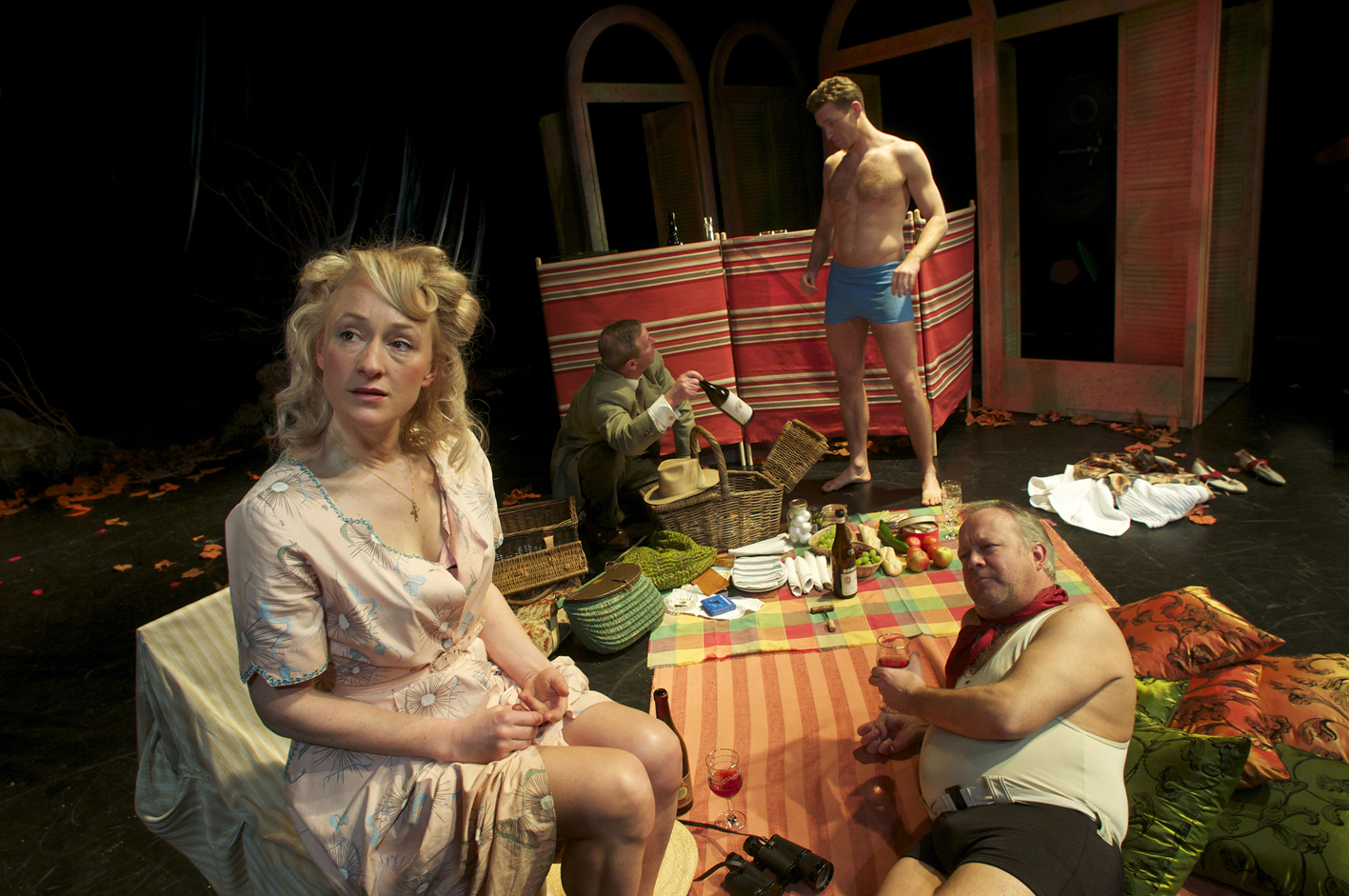
Pretty scenery though. A broad terrace with a couple of café tables and chairs, a comfortable chaise longue, an upright piano with gramophone on top, and drinks to hand. Light wood blinds in (shaky) arched doorways. The bare mulberry tree, of course. The stage suffused, it seemed, with shuttered evening light. There are wrap-around mélodies for solo voice and piano from Poulenc. Cicadas are heard but not for long. The tree is in bud at the end of the play but that’s Miracle-Gro playing false.

Jack is hard on Connie and rude to just about everyone else. Connie, bravely, wants more than a husband. She particularly wants to be a mother. Enter obliging virile Julian, 21-ish, in bathing shorts, who has a thing for the older woman because his mother corrupted him. He is also Guillaume’s lover. Adam Slynn, as Julian, has to be both parasite and lost boy, which is not easy. There’s Guillaume’s rich sister, elegant and rather silly Gilberte (Annabel Capper) to stroke his vanity as well.

Roger Ringrose plays Guillaume. It is a sympathetic, mellow, part and Ringrose does perceptive insouciance very well. He has, as he puts it (with a nod to the writer’s fondness for Apollinaire) ‘found his lost time’ and will not give it up lightly, especially to the neurotic English. He could be funny but is careful to stick to kind and amusing.

Director Hannah Eidinow may have been drawn to Under the Mulberry Tree because it is – at a stretch – not too dissimilar from the four-hander Playing with Grown Ups by Hannah Patterson that she directed with Theatre 503 last year. Unfortunately Timothy Jones’ play is more of a strain.

Reviewer: Alan Brown (Seen 3 April)

Visit Festival Theatres Trust, Under the Mulberry Tree homepage here.