Long Day’s Journey into Night (Lyceum : 17 Jan. – 8 Feb.’14)

Production photos for "Long Days Journey Into Night"

‘‘Health and happiness ’ and then, perfectly, ‘that’s a joke’.’

Editorial Rating: Nae Bad

By now Long Day’s Journey into Night has a lot of followers. Written in 1941 this is Eugene O’Neill’s Facebook page from hell – and back – and without any privacy settings. Received by the New York Times in 1956 as a ‘saga of the damned …. like a Dostoevsky novel in which Strindberg had written the narrative’ it is a remarkable and important play. Watch it (occasionally not easy), follow its story (not difficult) and you’ll realise, in epic Facebook terms, its ‘social utility’ for our time.

You will like the kind and sympathetic realization of character in this Lyceum production. Diana Kent, who plays Mary Tyrone, says “There’s no baddie in the play. Everybody is flawed, everybody damages everybody else, but there’s a reason for it, and everybody can be forgiven. It’s a hugely compassionate play” (HeraldScotland, 5 January). For director Tony Cownie it’s ‘a very personal family situation [turned] into a very meaningful intense drama’ (Lyceum programme). Guilt and retribution – the acid feed of some productions – come a discordant second to underscored themes of conflicted love and understanding. A word here for the dialect coaching of Lynn Bains, for the accents are never strained, however keenly pitched. Cue also sorrowful cello, piano, and a quiet sea  – off-stage right  – rather than screaming strings and raucous gulls.

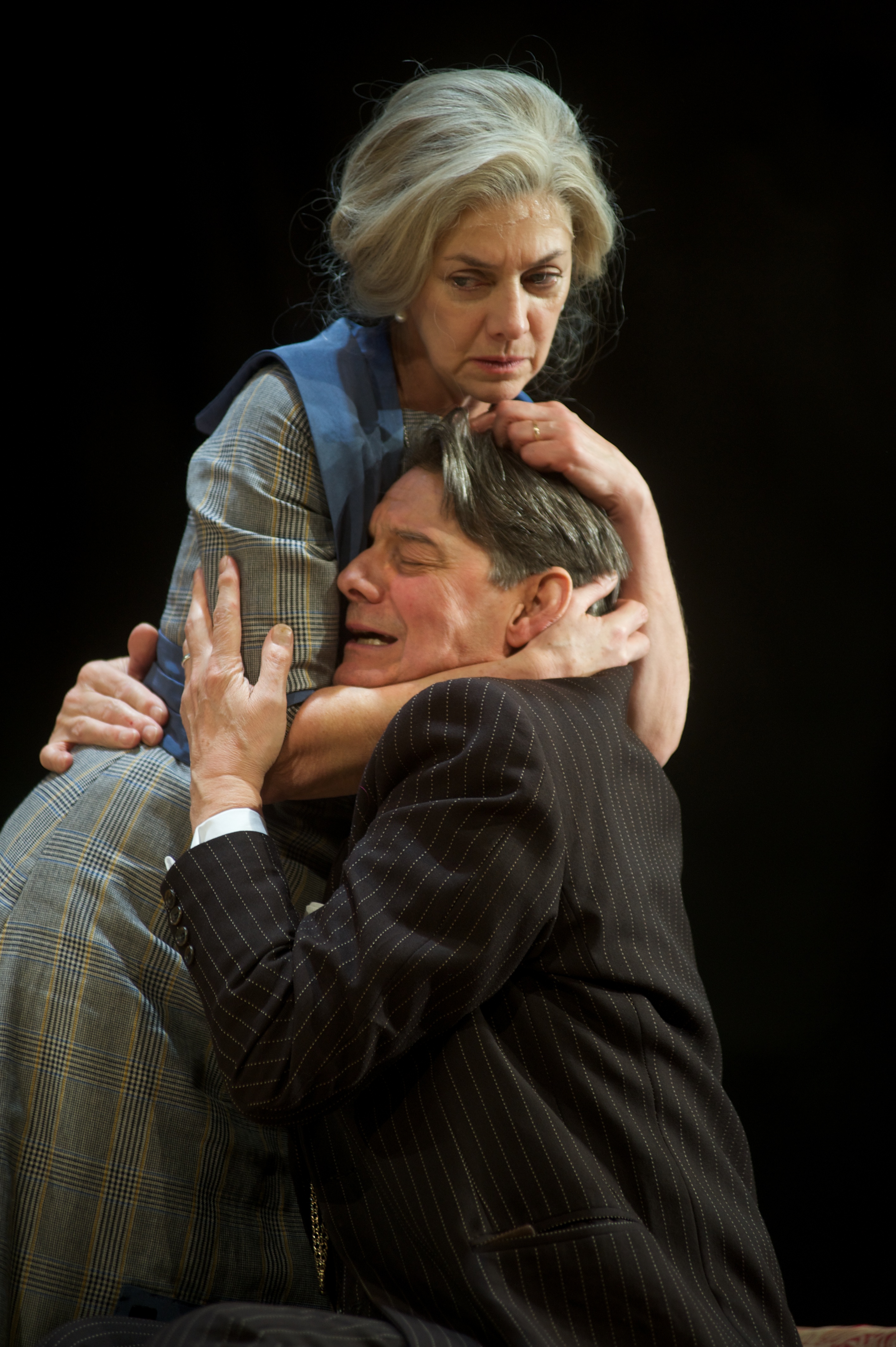
Paul Shelley is James Tyrone, handsomely retired actor, who at sixty-five would still command the stage or living room with debonair gesture and manner. Seduced by $35000 a year net profit at the box office he gave up on Othello and Shakespeare for the lead in melodramas. He shows off his cigars but does not smoke them and the theatrical metaphor is never far away. ‘The final curtain will be in the poor house’ he declaims but whilst he can guard his whiskey (he’s an Irish American remember) and wryly attack the fecklessness of his sons he is again losing his wife to her morphine habit. Shelley shows the pronounced make-up of a man whose dignity and loyalties are keeping him together but are wearing him out at the same time.

Tyrone often holds his wife of thirty-six years but Mary is not really there. He might as well embrace the air for Diana Kent plays Mary as a woman in love with a happy, momentary, past. Her speech is limpid clear and sounds as lonely as she feels. Even when animated and with their vivacious young housekeeper, Cathleen (Nicola Roy), Mary is receding. Her addiction will reclaim her, is reaching her all the while, as inescapable and as all-enveloping as the sea fog that O’Neill would fold her in.  A muted foghorn signals the same. Kent’s performance is one to admire and to think about.

The two Tyrone ‘boys’, James Jnr (33) and Edmund (23), do love their parents and it is naturally selfless, unlike what came next in O’Neill’s A Moon for the Misbegotten (1947). Adam Best as James Jnr. and Timothy Evers as Edmund are very well matched. Their open exchanges provide a sure solidity and warmth that shore up the fragile state of their parents’ relationship. Granted they do drink a lot of whiskey but that allows Edmund, of all people, to propose ‘Health and happiness’ and then, perfectly, ‘that’s a joke’.

However, as is the case here, cut over an hour from O’Neill’s script and put too much distance between the Tyrones and the play’s autobiographical anguish, then you might, cheekily, unfairly, plot this Journey to a few miles out of Elie or maybe Troon. The Tyrone’s car might be a Lexus (actually it’s a Packard) but it looks cheap compared to their neighbour’s S class Mercedes. James Tyrone routinely buys to let and is cash poor; he worries about his electricity bill. He expects his sons to make money. He’s meanly content with the state hospital rather than pay out for private healthcare. Mary wants a proper upholstered home, preferably in the city. The men change into dapper suits to go to town. The full-on wooden wall of the ‘cottage’ interior looks like the neat cladding of apartments in Edinburgh’s Quartermile. There is, I think, a bourgeois milieu here that is pretty comfortable and spacious, some way off O’Neill’s cabined and pathological closeness, and that has to limit the tragedy of a family on the rocks.

Is it helpful to salvage significant pity and modest understanding from the fuller, near mythical qualities of this great American drama? Yes. This is a good, clear-sighted, production of Long Day’s Journey into Night that stops well short of the gloaming.

nae bad_blue

Reviewer: Alan Brown (Seen 21 January)

Visit Long Day’s Journey Into Night homepage here.

‘Peter Pan’ (King’s Theatre: 30 Nov ’13 – 19 Jan ’14)

PP_masthead

“On deck aboard the Jolly Roger, pint-sized John Darling, with obligatory top hat and brolly, upstages the big, very tall, Captain Hook (Grant Stott) with talk of human rights and the Geneva Convention”

Editorial Rating: Nae Bad 

Hook up with Peter Pan and you’re way beyond parental guidance. There is, of course, no ‘PG’ certificate attached to this ‘swashbuckling pantomime adventure’ that splashes music, dance, colour and broad comedy over young and old alike. J.M Barrie is in small print but never mind for within moments of Mrs Smee’s (Dame Allan Stewart) balloon landing she is squirting water from her eye-catching boobs and foolish, lovable, Mr Smee (Andy Gray) is off on a plump pantaloon’s dream ticket, riffing on ‘balloooon’ until his lugubrious jowls fold in helpless laughter.

The show fits its Christmas billing. The outsize programme features ‘Panto Puzzlers’ – try Michael’s Star Maze for example – and happy seasonal advertising for the young at heart. ‘If you can dream it, you can do it’ is a good enough way to Never Never Land (not Musselburgh) …  via the second star to the right. There is lots of fairy dust and spectacular lighting to fly us out of Edinburgh and to transform the ‘wee green bogey man’ into the fearless, battling, Peter who will not grow up.

On deck aboard the Jolly Roger, pint-sized John Darling, with obligatory top hat and brolly, upstages the big, very tall, Captain Hook (Grant Stott) with talk of human rights and the Geneva Convention. Poor preening, impotent Hook! There is snide mention of his little blue pills – Tiger Lily gets leered at – and his quarter-deck shakes a bit as he clashes swords with the agile Peter. His (over-used) command of ‘Pirates Attack’ brings on a nice dance trio who would not attack a sand-castle. Regardless, Stott preps for his dastardly role by a brief appearance as Mr Darling, twirling his moustache and singing a wicked little ‘It’s a banker’s life for me’. The later mention of Fred Goodwin is happily inevitable.

The really funny routines are firmly with the Smees. Allan Stewart and Andy Gray perform with gleeful, twittish and tickling spirit as sparring couple, squashed couple and as a pair of beached mermaids. One scene, involving mops on parade and the baldy joke, is too long but the two become real pantomime villains when with the lights up they turn a tv.camera on the audience. Grown-ups beware!

“But where”, the cry should go up, “is Peter?” Well, he is not quite as lost as his Lost Boys, but he is nowhere near Wendy either, which makes Maggie Lynne’s part sweet but distant. Daniel Healy flies in well – one leg perfectly bent at the knee – but it is not easy to land lines like ‘To die would be an adventure’ amidst the fire balls and dance numbers, not to mention an interloping 007 and Adele. Peter’s rousing ‘Cock a doodle doo’ greetings cannot stand against the fun to be had with sing-along ‘Rum tum tickle your bum, Everyone one shout hurrah!’ or a barfing, “HiYa”, Tinkerbell.

And give the animals their place in this entertaining show: one large Nana dog, all big eyes and paws; Hook’s smart-alec parrot; and the mother of all crocs. You do want to see that croc!

nae bad_blue

Reviewer: Alan Brown (Seen 17 December)

Visit Peter Pan homepage here.

‘Amanda’ (The Kilderkin: 28 Nov ’13)

“Actor Anne Kane Howie makes a nicely detached Amanda, far from emotionless yet tightly controlled, the perfect match for her ambiguous role”

Editorial Rating: Nae Bad 

Part of November’s “Theatre Uncut” season, the one-off short play Amanda lends an important global political issue a distinctively Scottish spin.  From a Holyrood office to a New Town retreat, we follow one woman’s progress through a perfectly ordinary day; a day that involves both struggle and compromise, sometimes with voices from her own past.

Wisely, given its twenty-minute duration, the story’s confined to a single scene and a single character – the titular Amanda.  In the company of two narrators, we visit Amanda in a moment of quiet introspection, alone in the bathroom of her Georgian flat.  Building such a short piece around such a low-key premise is a mature decision from playwright Kieran Hurley, but perhaps it’s a little too luxuriant; when all’s said and done, the piece develops slowly and ends with little territory explored.

Hurley does, however, deliver an elegantly subtle turnaround.  At first, it seems we’re expected to dislike Amanda (rather unfairly, since her only obvious crimes are to sprinkle her bath with rose petals and enjoy the sound of posh voices on Radio 4).  But later, we learn she’s a more complex character than she first appears; and perhaps, the script seems to suggest, our reactions to her need to be complex ones too.

Actor Anne Kane Howie makes a nicely detached Amanda, far from emotionless yet tightly controlled, the perfect match for her ambiguous role.  Nick Cheales and Yvonne Paterson perform well as the dual narrators; they’re unobtrusive without being inconspicuous, and their deft handling of the props required to create Amanda’s bathroom speaks of meticulous rehearsal.

As always, director Andy Corelli works in some charmingly quirky motifs – right up to the curtain-call, where he remembers something I’d completely forgotten, that Amanda needs to step out of the bath.  He also makes good use of the improvised space at the Kilderkin, proving that rooms behind a pub don’t have to be the exclusive preserve of stand-up comedy.  There’s an incongruity to the setting that can’t quite be denied, but some clever scene-setting and an opportunistic use of the Christmas lights successfully evoke the essence of the elegant New Town.

Overall, the odd thing about Amanda is that it’s not an activist piece – or even an especially political one.  You might choose to think that the title character has sold out her principles; but you might think she’s simply grown wiser as she’s grown up.  The script presents some facts about her life yet your interpretation of those truths comes entirely from within.  So is that an abdication of the playwright’s duty, or a valuable spark for debate?  On that question also, you’ll have to make up your own mind.

nae bad_blue

Reviewer: Richard Stamp (Seen 28 November)

‘White Christmas’ (Festival Theatre: 19 Nov ’13 – 4 Jan ’14)

White Chtistmas

“Steven Houghton and Paul Robinson as Bob and Phil capture the essential bromance shared by their characters. Their banter is spontaneous and like any good couple, they are fun to be around.”

Editorial Rating: Nae Bad

My companion finds me in Captain’s on South College Street. The outside world can bustle about all it wants in the brisk mid-winter air, in here is a cocoon of tranquillity. Looking up I see that someone has managed to deposit a Christmas-themed fruit machine on the stool next to mine. It has several strips of flashing LEDs whizzing around a scene depicting reindeer having a snowball fight while a large man, dressed in red, taps an impatient foot beside a huge roasted bird. “They can’t be making fruit machines out of wool,” I think, and they aren’t. It’s my companion fishing for a compliment on her Christmas jumper and red santa hat. I’m starting to understand just how excited she is about seeing Irving Berlin’s White Christmas: The Musical round the corner at the Festival Theatre. Secretly, I am too.

We enter the dress circle to the harmoniously discordant sound of the orchestra warming up. It brings on a tingle of anticipation, like the smell of like gently mulling cider. Their conductor is rising star, Andrew Corcoran. In the decade since he graduated, Corcoran has been involved with many of the best loved shows in the West End and beyond. Corcoran and his big band knock out the auld favourites at just the right tempo to hold things together while things move along swiftly. It’s going to matter that the music is kept pacey in this production.

Since leaving the US Army, Bob Wallace and Phil Davis have made it big. When the song and dance team are not delighting audiences of The Ed Sullivan Show, they are double dating two sisters in the same line. When a planned winter wonderland-style spectacular in Vermont is put on ice for want of snow, the duo determine to save the day for the sake of their former commanding general whose inn is imperilled by the lack of paying punters.

Steven Houghton and Paul Robinson as Bob and Phil capture the essential bromance shared by their characters. Their banter is spontaneous and like any good couple, they are fun to be around. Graham Cole, as General Waverly, is billed as one of the recognisable men in uniform on UK TV from his 25 years as PC Tony Stamp on The Bill. Cole was a particular favourite of my Aunty Elsie and I would have loved to have told her just how great he was.

Cole delivers a brilliantly rounded, emotive performance. He has a balancing act to perform, eliciting sympathy for a chap down on his luck whilst never letting us forget that his character once stood at the head of hundreds of fighting men. For the plot to make sense, the audience must comprehend the depth of Bob and Phil’s hero-worship for their former commander and why they are going at to such lengths to help him out. Cole’s appearance in the prologue, so much like George C. Scott at the start of Paton, made me want to see him slap one of the lads for cowardice in the face of the orchestra or fire a pair of pearl handled pistols into a low flying chorus line – Wendi Peters as the laconic Martha Watson might have been game.

Cole heads a lively company delivering a high standard of character work, Phil Cole as Ezekiel all but stole the show. Producers need to find a vehicle for Cole and Peters, the script gave only a taste of what they can achieve together. They are supported by a clever, downright witty, set design courtesy of the Tony-nominated Anna Louizos. The train scene is compact but expansive. The barn is expansive but intimate. The dressing rooms are just plain compact.

The problem was that the scenery had been fitted badly onto the large Festival Theatre stage. We were looking down into a lot of unused blank space. The stage floor was even more drably coloured than the dull orange pastells of the auditorium. The theatre’s interior, beyond the smashing glass front, has a rather calvinist approach to opulence. The impression is similar to that achieved in the better sort of Tex Mex outlet. When the men appeared in desperately dull suits of forest and olives greens I wondered if they would take an order for seafood enchiladas.

If the Santa on my companion’s jumper was ever minded to rename his team of reindeer after the essential elements of music theatre, he’d call them dance, music, set design, acting and script. The last of these would be the one in front with the red nose guiding the rest.

White Christmas is a fluffy, jolly script – a very funny script – but one which touches on deeper themes and meanings. It’s about America’s greatest generation growing old. Michael Curtiz was no less able to film a script capturing contemporary concerns in the 1954 movie than he had done with Everyone Goes to Rick’s twelve years earlier. In this production of White Christmas, the script’s tradgi-comic insight has been lost along the way.

Strong performances carried this production a long way but it still had far to go in fully releasing the magic from a script set at the most wonderful time of the year.

nae bad_blue

Reviewer: Dan Lentell (Seen 17 December)

Visit White Christmas homepage here.

‘The Improvised Panto!’ (City Nightclub: 9-13 Dec ’13)

“Few styles of performance are so ripe for lampooning; and with a vast canon of familiar characters to draw from, the potential for capering hijinks is huge”

Editorial Rating: Unrated

An improvised panto is an inspired idea. Few styles of performance are so ripe for lampooning; and with a vast canon of familiar characters to draw from, the potential for capering hijinks is huge. Edinburgh-based Impro FX give it a good shot with this gutsy performance, but their hook just isn’t quite strong enough to hang onto.

The trouble with reviewing improv is that it’s different every night, and this particular performance was… well, probably not Impro FX’s strongest. The oddball tale of a visionary Moroccan takeaway driver never fully came together, and the occasional songs (accompanied by pianist Dan McGurty) involved just a bit too much repetition. It must be said the audience’s suggestions didn’t give them a huge amount to work from; it might have helped to throw out examples of the kinds of riffs they were looking for, instead of asking the crowd to come up with creative ideas from a standing start.

And, an improvised panto? Oh no, it isn’t. To be fair, there was a passable horse, and the magisterial Charlie Hindley proved an alarmingly credible dame. But a pair of false breasts does not a panto make; there was no badly-written innuendo, very little call and response, no pastiche of minor celebrities from Forth One. At times, it seemed that Impro FX had dropped back to a more familiar style of improv, and forgotten that they were meant to be staging a pantomime at all.

Cast as the mandatory talking animal, Steve Worsley duly grinned like the Cheshire Cat right through the performance, and his engaging warmth went a long way towards smoothing over the inevitable rough edges of the plot. Harry Gooch doubled up to play both hero and arch-villain, with deliciously farcical results in the last couple of scenes, while a selfless Will Naameh held the whole thing together – just about – as a pleasingly queeny princess.

So the stock characters are all there; but to take their concept further, Impro FX might play a bit more to our childish delight in the genre. The emergence of that pantomime horse, for example, could be built up into a much-anticipated moment of nostalgia, rather than just an ironic nod. And they need to call on their audience more – shamelessly and clearly – demanding our cheers and our comedy hisses! Because, while we know the catchphrases we’re supposed to shout out, amidst the chaos of an improv show we need some help understanding just when we’re meant to say them.

Reviewer: Richard Stamp (Seen 10 December)

‘Stella’ (Traverse: 19-30 Nov ’13)

Stella Image by Richard Gamper

Image courtesy of Richard Gamper

“An elegant design from Gus Munro, and some emotive acting – particularly from an impassioned Kathyrn Pogson – can’t save it from an over-embellished yet under-developed plot”

Even if you’re up to speed on the history of science, you may never have heard of Caroline Herschel.  A woman working in a world dominated by men, she’s eclipsed by her famous brother William; yet even during her own lifetime, she was recognised as a talented astronomer in her own right.  Using that most time-worn of framing devices – a modern-day woman reading a diary – Stella challenges our ignorance, telling the tale of Herschel’s career as she joins her brother in England.  But if you’re expecting a detailed insight into the unique achievements of this female pioneer… you may well be disappointed.

The clue’s in the subtitle, really.  Stella is “a story of women, their men and astronomy”, very definitely in that order.  We hear a lot about Herschel’s relationship with her brother, whose marriage and fatherhood late in life sets the scene for some classic familial discord, but there’s regrettably little assessment of what she truly contributed to her field of study.  The script skips oddly quickly over her independent discoveries, essentially casting her as a diligent but put-upon helper – and while the notes on the back of the programme go some way towards justifying that choice, the play itself could do much more to explain the nuances and contradictions of her role.

On the plus side, both script and actors convey a fine sense of the mysteries of the cosmos, not least the incomprehensible wonderment surrounding the Herschels’ surprise discovery of the planet Uranus.  Some gentle humour works well, and at the heart of the plot there’s an excellent hook – a black hole of torn-out pages from Caroline’s meticulous diary.  But the script never quite sells that mystery, instead choosing to plod chronologically onwards, always displaying perfect confidence that matters will be revealed in time.

Perhaps because the main storyline’s so conspicuously short on drama, the production adds a second string: a neat parallel between the violence of the Arab Spring and the burning of the ancient Great Library of Alexandria.  It’s rounded out by some telling quotations from the martyred fourth-century female philosopher Hypatia, which serve well to keep things thematically complete.  There’s enough in that clever concept to support a whole separate play, but here it feels like an afterthought – especially since its emotionally-wrought conclusion is so strikingly different to the rest of the tone.

Stella is a missed opportunity.  Rather than exploring what’s distinctive in Herschel’s story, it diverts all too frequently onto expository sidelines, or less-than-subtle parallels with the present day.  An elegant design from Gus Munro, and some emotive acting – particularly from an impassioned Kathyrn Pogson – can’t save it from an over-embellished yet under-developed plot.

Reviewer: Richard Stamp (Seen 19 November)


‘The Mystery of Edwin Drood’ (Pleasance Theatre: 19-23 Nov ’13)

DSC_0242 (1)

“The songs are catchy, the dialogue’s sharp, and there’s a delightful knowingness to the banter with the audience”

Editorial Rating: Nae Bad 

Who killed Edwin Drood?  Many have wondered – but nobody quite knows, since Charles Dickens’ untimely death left his novel tantalisingly poised before the story’s dénouement.  This high-energy, high-risk production addresses the problem in twenty-first century style, by asking the audience to cast their votes on just who the miscreant should be.  Oh yes!  And by doing the whole thing as a musical.

It sounds an odd proposition, but by the time the curtain falls, it’s clear why Rupert Holmes’ innovative production was acclaimed on its debut in 1985. The songs are catchy, the dialogue’s sharp, and there’s a delightful knowingness to the banter with the audience.  And this student version from the Edinburgh University Savoy Opera Group retains the sense of daring which must have defined this first-ever interactive musical, with a vibe of joyful chaos and the cast electioneering amidst the crowd.

Before the vote can happen, though, there’s a whole load of Dickens to cavort through.  Actor Campbell Keith bears much of the responsibility for driving the plot, and duly gives it both barrels as the villainous Mr Jasper; if you enjoy his powerful early solo number, just wait till you see him dance. Rosa Bud, the target of Jasper’s lecherous affections, is beautifully portrayed by Alexandra Pittock, whose fine singing voice eloquently captures Rosa’s mix of chaste purity and independent spark.  Other stand-outs among the large cast include Ari L’Hevender as a big-hearted lady of ill repute, and Giselle Yonance, who gives a nuanced performance in the title role.

Holmes’ Tony-award-winning book pictures Edwin Drood performed in a late-Victorian music hall – complete with bickering divas, ill-disciplined clowns and a bombastic MC.  It’s a set-up that licenses some glorious over-acting, and EUSOG embrace that liberty with gusto; Austin Nuckols’ Reverend Crisparkle grows especially hilarious as time wears on.

The humour tends to broad parody – ranging from cor-blimey stereotype accents to a long-running lampoon of the entire musical form – and the treatment of a few key scenes might benefit from more light and shade.  In particular, the choir-master’s advances on his pupil Rosa deserve to be more stomach-churning, given the sad procession of stories of real-life abuse which has emerged over the past few years.  It must also be said that there were quite a few genuine bloopers mixed in among the accidental-on-purpose ones, though all were saved with engaging good humour by a supportive and adaptive cast.

So this isn’t the subtlest or most polished of work, but it’s big, it’s daring and it’s a whole load of fun.  What’s more, at a flab-free two-hours-forty, it’s great value too.  It is, in short, exactly what a student musical ought to be; see it if you can.

nae bad_blue

Reviewer: Richard Stamp (Seen 20 November)

Visit The Mystery of Edwin Drood homepage here.

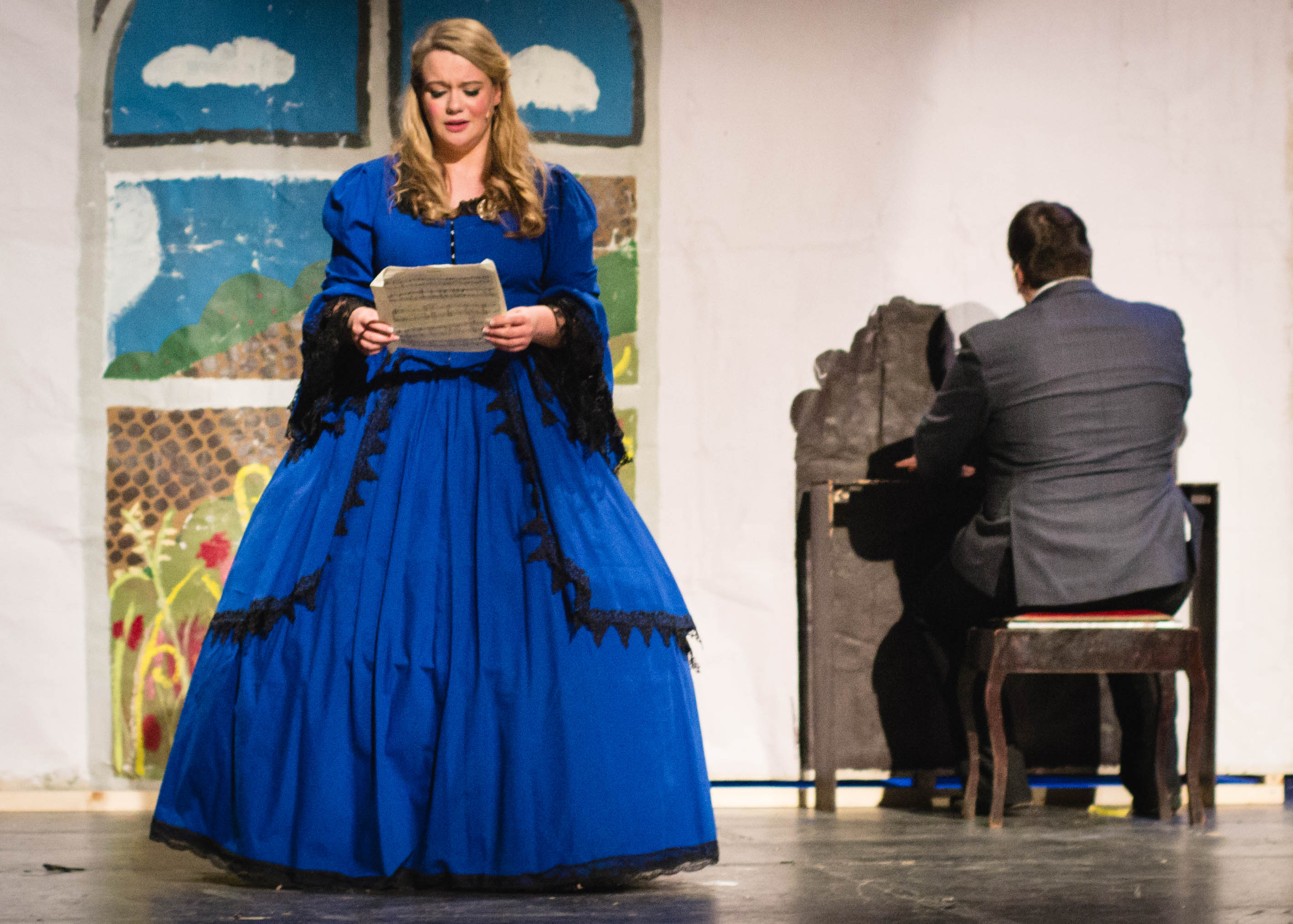
‘Don Giovanni’ (Festival Theatre: 14, 17, 19, 21, 23 Nov ’13)

5. Scottish Opera's Don Giovanni, 2013. Directed by Sir Thomas Allen, Designed by Simon Higlett. Credit James Glossop.

Image courtesy of James Glossop

“Loporello’s rather oaf like simplicity contrasts brilliantly with Jacques Imbrailo’s suave, cool and arrogant Don Giovanni, sweeping about in a rather splendid coat like a cross between Zorro and Prince Charming”

Editorial Rating: Nae Bad

If Don Giovanni lived today, The Priory would have him in a heartbeat. I think it’s safe to say his lascivious antics would more than qualify him as a sex addict. Unfortunately for Don Giovanni  (and rather fortunately for the women of Western Europe it seems) instead of a £600 a night treatment programme, he finds himself dragged into the fiery depths of hell  -free of charge, I presume – to be toasted for all eternity by beings that rather resemble the desert people of Star Wars. Still, it makes a good opera.

In this version, presented by Scottish Opera, the drama has migrated east from its original setting of Spain to a shadowy 18th Century Venice. Perhaps they are hinting at the similarities between Don Giovanni and the legendary seducer Giacomo Casanova –acquaintance of Mozart and his librettist Lorenzo De Ponte.  Apart from this slight geographic adjustment, this production is a fairly traditional one – there’s no La Scala floor to ceiling mirrors to accuse the audience here! In a world abuzz with finding new adaptations, angles and settings, though, Scottish Opera prove that traditional does not have to mean dull.

One of the more challenging aspects of this rather tricky work is its drammo giocoso genre. Playing the comedic moments for optimum laughs whilst building the dramatic undercurrent to a climactic and rather sensational finale is an art, and something this production does well. It is a production of rich characters in which no emotion is half felt and the cast largely embody these.  The Laporello/Don Giovanni relationship eschews the more rigid servant/master dynamic in favour of a more shiny superhero and less successful sidekick feel. Laporello, played gloriously by Peter Kalman, draws hearty laughs from the audience with his reluctant service, sarcastic comments and fantastic acting. His rather oaf like simplicity contrasts brilliantly with Jacques Imbrailo’s suave, cool and arrogant Don Giovanni, sweeping about in a rather splendid coat like a cross between Zorro and Prince Charming. It’s safe to say his dark good looks and robust, velvety baritone proved an irresistible elixir for women both on and off stage.

Sneaking up behind him, though, is Barnaby Rea’s Masetto who oozes masculinity from every pore. It is a delight to watch him being frustrated and manipulated by the bewitching Anna Devin as Zerlina. In a cast of magnificent voices, Devin’s stands out as something particularly special. Apart from her delightful, impish acting, her soprano is as resonant as a bell, sailing effortlessly over the orchestra to caress and entice the audience. On a slightly disappointing note, Ed Lyon’s Don Ottavio stuck out as a little lost. Despite pleasing vocals, he lacked the developed character of the rest – and his Captain Hook costume was a little bizarre.

The passion flowing from the stage was matched by that rising from the pit. The orchestra seemed to delight in Mozart’s complex score, particularly the final, ombra soaked scene filled with drama, tension and trombone blasts. It was generally led well by the baton of Speranza Scapucci, although a slightly livelier tempo would have been no bad thing.

Mark Jonathan and Simon Higlett, too, should be congratulated on their lighting and set design. The dark palette and clever lighting (or rather, shadow) design kept the production cloaked in a veil of mystery and reinforced the dark nature of the plot, in a subtle rather than overpowering way.

Don Giovanni is one of the most performed operas in the world for a reason. It has excellent music, an engaging plot and some wonderful personalities. Scottish Opera have produced a very accessible production with some top notch character development, rich voices and effective staging. Whether you are a seasoned opera goer or a complete beginner, you could do worse than catch this interpretation of the Mozart classic.

nae bad_blue

Reviewer: Madeleine Ash (Seen 19 November)

‘The Lift’ and ‘Elephant in the Room’ (Bedlam: 20 Nov ’13)

“Bedlam is steaming through the waters it knows best – supporting emerging talent on stage and off.”

Editorial Rating: Unrated

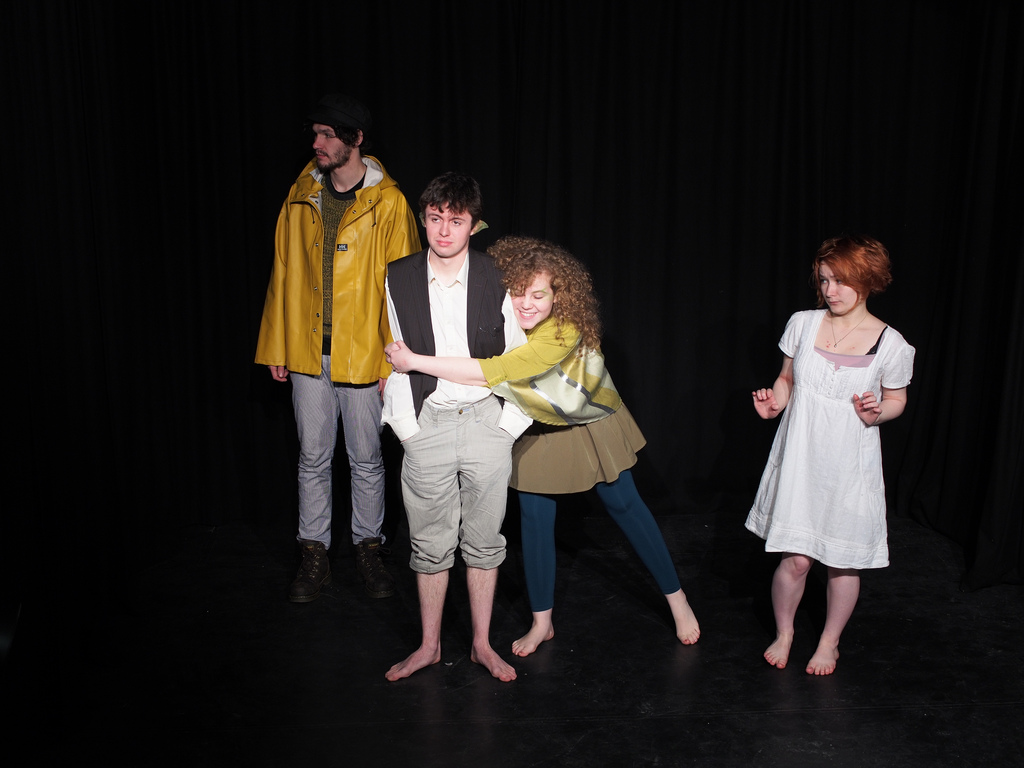
Brass monkeys ain’t in it. It is seriously cold in Bedlam. I should be seeing Dr. Zhivago  or something set in Narnia during the reign of the White Witch. Instead I’m taking my seat for The Lift and The Elephant in the Room, two out of three afternoon entertainments written by Freshers. For such a hit and miss affair there is a great deal on target. The badinage buffet successfully showcased the great things we can expect from Fringe venue 49 in the coming years. Familiar and not so familiar faces breathed life into two daring scripts simply (but effectively) staged.

The Lift (unlike Elevator the forgettable 2011 horror flick in which 9 people are trapped in an elevator) is set in a lift where 9 people have become trapped. Writer Fergus Deery sketches out a series of ludicrous characters – a flatulent vicar and his shrewish wife; a Matt Lacey-esque über-rah; a pompous PhD; two devoted lovebirds; a prickly girl in a wheelchair, accompanied by her patient pushover friend; and a member of the toiling masses. When Über-rah causes the lift’s mechanism to jam, hilarity ensues as the social norms crumple under the weight of frustration and impatience. Don’t expect piercing social insight, the social commentary doesn’t rise much above sprout jokes.

Deery is playing for laughs and he gets them. In the hands of a well-matched, well-balanced ensemble his unaffectionate portraits come to life. The true star of the show is the staging. It’s minimalist, just a wooden border at hip height, but just large enough not to entirely restrict the unfolding drama. Blocking is of course a problem but there are signs of genius lurking in its comic application. The Lift has the feel of a recurring sketch routine (although more Armstrong and Miller than Fry and Laurie). The plot twist can be seen from a mile off which somewhat underwhelms the final third. But it’s a promising first attempt, galloping out of the starting gates, confidently leaping the first hurdles. And although more were clipped than cleared in the home stretch, this is a writer who has established his form and will be one to watch.

The Elephant in the Room is a bold, even reckless narrative by Joe Christie. Charging head on at themes relating to the personal calamity of terminal illness approached from a surrealist angle. Beth, a tour guide at the castle (I’m not sure why except that the outfit must have been to hand) is informed that she’s terminally ill. The sardonic stalwart Henry Conklin (having finally escaped from The Lift) appears to her dressed as an elephant. The effect of the costume on Conklin conjures imaginings of a live action version of the YouTube classic The Wanky Shit Demon. The Elephant offers Beth (nuancedly, understatedly played by Sophie Harris) a choice to either face the realities of her situation or to journey through a shifting dreamscape landscaped by her own mind. A lot is packed into the script including off-the-rails coronations, gay imps, giant crêpes, supervillain queens, and wise mystics.

There are echo’s of the acclaimed Something There That’s Missing, the surprise hit of last Fringe. Elephant in the Room is equally creative, equally absurdist and a vehicle for equally quirky as well as engaging performances. It’s unlucky in the line-up though, following on from the unashamedly boisterous The Lift. I never could like Moulin Rouge after it was shown on a transatlantic flight immediately after my first encounter with Shrek.

Both Elephant in the Room and The Lift made me sorry not to have seen the full cycle – word in the bar was that Amanda Whittington’s Be My Baby was rather good. Both the plays I saw excite a sense that Bedlam is steaming through the waters it knows best – supporting emerging talent on stage and off. The current generations are heirs to a noble tradition. Their commitment to their craft does them credit, honouring that most venerable and lively of Edinburgh theatrical institutions.

Reviewer: Dan Lentell (Seen 20 November)

Visit Bedlam’s homepage here.

‘Goblin’s Story’ (The Vault: 19-24 Nov ’13)

shoot3

“In a play which offers so much juicy character work it is an astonishing feat of theatrical good manners that no one attempts to hog the green tinted limelight.”

Editorial Rating: Outstanding

The programme handed to us as we entered The Vault on Merchant Street is printed on lavender paper. “It’s like the Lavender List.” I’m impressed. I didn’t think the Current Mrs Dan had listened to a word I’d said after I’d finished Sandbrook’s multi-volume history of the 70’s. And yet she could recall all the murky, paranoia of Downing Street as Harold Wilson left it. She had even remembered that the dodgy dossier of resignation honours awarded to Wilson’s cronies had (allegedly) been printed on lavender-coloured stationery. “Of course I remember about the Lavender List” she went on, “You were in [Michael Frayn’s] Democracy with Ted Short’s son.” So I was. Wilson’s mind in the final hours of his political life must have been very like The Vault was as we entered. Spooky. Subterranean. Cavernous. A swaying symphony of forest greens to the fore, a fearsome projected illumination of goblinity at the back. A fantasy landscape where even the trees have agendas of their own. Wilson would have been right at home.

Goblin’s Story is a tapestry of threads drawn from nineteenth century poetry. It is centred on Christina Rossetti’s Goblin Market. The central characters are ‘the baddies’ of familiar, and not so familiar, period pieces. A goblin, named Goblin, possessed of a gentler soul than other goblins, is sat on a tree stump. He’s disengagedly reading a newspaper while his attention is sought by the insistent Jabberwocky. Shrek-like, Goblin just wants to be left alone. When the Ancient Mariner appears spouting his mad rhymes Goblin’s peace is well and truly shattered. All that is left is for Cutty Sark, a witch from Tam o’Shanter, to put in an appearance.

Laura Witz’s direction has turned comic timing into an extreme sport. A fraction of difference either way and oblivion beckons. She builds the tension slowly but steadily, drawing out the first nervous giggles into sustained tittering and then total sympathy. Goblin Story is her script and she knows just what to do with it. Witz is fortunate to have at her disposal a formidable ensemble. In addition to the four main characters there is a goblin posse of five and a pose of as many trees. But the stage never appears crowded. The blocking is interstellar.

The living forest is represented by girls in black holding branches of bay, which charge the atmosphere with perfume and rustle. They are supernumerary superheros. Poised and perfectly mannered, their gestures enhance the play’s depth and subtlety like a bay leaf in a stew.

The goblins, expertly led by Rory Kelly (the Robbie Coltrane of our time), are sinister and sophisticated in their movements. They are living out Rossetti’s narrative poem with savage delight. The noble Jabberwocky (Grace Knight) attempts to organise her companions so as to disrupt the goblins’ dastardly designs.

Knight is bubbly and engaging. An essential contrast to the moody, broody Goblin (James Beagon). Beagon is the pace setter for the piece with a deal of heavy dramatic lifting to do. Although he hardly seems to breaks a sweat, his concentration is total. In a play which offers so much juicy character work it is an astonishing feat of theatrical good manners that no one attempts to hog the green tinted limelight. The cast’s capacity to be off stage while on it, to blend into the background when needed, is best demonstrated by Thomas Edward whose tall frame towers over the rest of the company. Edward could so easily have hammed up his comic non-sequiturs, taken from Coleridge’s The Rime of the Ancient Mariner, playing soft balls to an increasingly generous audience. Instead he is an adornment to the play and it in turn is an adornment to him. Izzy Hourihane, as Cutty Sark, completes the ensemble. It’s a wonder that such a big voice can be housed in so small a figure. Hourihane does smart and sassy rather like a Michelin starred restaurant does fish and chips, a superb interpretation of familiar themes. This company should be held together by royal decree – I genuinely believe that they can achieve anything together, especially when presented with a script as dashingly bold as is Goblin’s Story.

This production achieves so much in so small an amount of time and in such an imposingly characterful venue. The idiosyncratic costumes bring each individual into a collective harmony. The lighting and the makeup add highlights and flare in all the right places. The trees, who might so easily have become the director’s peculiar fetish, add a living lustre offset by the ghastly goblins. Upon such foundations the cast assemble a brilliant entertainment. A literary and literate script given a lively and lucid shine by a company of accomplished artists.

You might think bringing so many branches of bay leaves on stage was a tad presumptuous but this production cannot be garlanded with sufficient laurels.

outstanding

Reviewer: Dan Lentell (Seen 19 November)

Visit Goblin’s Story homepage here.