From time to time we encounter an artist or producer toiling away at something pretty special. Here’s what they have to say, in their own words, about their work.
“Our actors, Jilly Bond and Julian Gartside, starred in Macbeth (another Scottish story of murder and ghosts) for Compass Theatre Co. exactly thirty years ago.”
WHO: Jilly Bond, Producer
WHAT:“Professor Norma Bates, retired detective, lectures on past cases, but hostile technology is out to get her, forcing her to confront the one that remains unsolved. A story of betrayal and lost love – and a murder which refuses to give up its secret. Until tonight. Join her as she relives her encounter with the pivotal witness and the truth erupts. Not your average ghost story by promising new writer, Rose Miller. Starring Jilly Bond (Island, National Theatre) and Julian Gartside (Casualty). Presented by Tangent Theatre Company.”
It is Tangent Theatre’s first visit, but two of our actors, Jilly Bond and Julian Gartside, starred in Macbeth (another Scottish story of murder and ghosts) for Compass Theatre Co. exactly thirty years ago.
Tell us about your show.
It’s written by a 20 year old American student during a play-writing course for international students at Westminster Uni. Jilly was asked to participate in the reading of some extracts, was intrigued by the section she heard and decided to produce the whole play (re-located to Scotland rather than southern states America) in Edinburgh.
Her partner, Julian Gartside was perfect casting for the mysterious Scottish Laird; she’d recently worked with director, Tommo Fowler on an award-winning play at the Finborough and wanted to work with him again, and Antonis Sideras, third member of the cast, has just graduated from Drama Studio London, where Jilly teaches. This will be the premiere, but we are hoping for a London transfer.
What should your audience see at the festivals after they’ve seen your show?
A Tale of Two Cities: Blood for Blood at the Pleasance Courtyard – not only because it contains a quote from Macbeth in the title as our play, purely coincidentally, does in our text, but because the last production from the Chung Ying Theatre Co, directed by Jonathan Holloway of Red Shift, was stunning. Both our lead actors have also worked with Red Shift in the past and been influenced by their style.
LIKE WHAT YOU JUST READ? FOLLOW US ON TWITTER! FIND US ON FACEBOOK! OR SIGN UP TO OUR MAILING LIST!
“At its heart, it is a musical about friendship, risks and the importance of learning to be true to both yourself and your dreams – however scary that may seem.”
WHO: Leah Weerasinghe
WHAT:“Four chairs. Three weeks. Two bickering writers. One award-winning original musical. Follow the challenges and triumphs of four nobodies in New York on their hilarious quest for Broadway, acceptance and a spot on Ellen DeGeneres’ couch! An eccentric, witty and self-aware show (about the creation of a show!) filled with diva riff offs, talking notepads and a jealous onstage pianist… what could possibly go wrong?”
Together as a company, this is our first time in Edinburgh. However, members of both our production team and cast have performed at the Fringe in previous years.
Tell us about your show.
{title of show} follows the challenges and triumphs of four nobodies in New York on their hilarious quest for Broadway, acceptance and a spot on Ellen DeGeneres’ couch! At its heart, it is a musical about friendship, risks and the importance of learning to be true to both yourself and your dreams – however scary that may seem. An eccentric, witty and self-aware show (about the creation of a show) filled with diva riff offs, talking notepads and a jealous onstage pianist… what could possibly go wrong?
On their quest to create an original musical, composer/lyricist Jeff Bowen and book-writer Hunter Bell found that their conversations about what to write were far more interesting than the ideas they were coming up with; [title of show] was born. The show chronicles the true(ly embellished) story of its own creation from page to the Broadway stage, via the New York Theatre Festival and featured its creators playing themselves in the original production, which both won an Obie Award and was nominated for a Tony.
Cobbles & Rhyme Productions was founded in early 2016 by Harry Haden-Brown and Jack Reitman, graduates of the University of Bristol, who have had extensive performing experience both on a regional and national scale. Harry is Bristol-based freelance musical director whilst Jack is an actor-singer turned director, soon to be studying at the renowned Royal Academy of Music; both have worked with the National Youth Musical Theatre. Cobbles & Rhyme Productions is an exciting, emerging new company that strives to showcase quality musical theatre productions, cabarets and performances, and to develop new writing. The company will be making its debut at the 2016 Edinburgh Fringe Festival from August 4th-29th, with the musical-comedy [title of show] and the daily themed-cabaret [title of songs].
What should your audience see at the festivals after they’ve seen your show?
Well, I have no doubt that Alan Cumming Sings Sappy Songs will be amazing and MTW’s Improv Musical has been really entertaining the past few years so I’m sure that will be brilliant. Jack was once a member of Young Pleasance and always sings their praises, so watch out for Alice Unhinged. It may be somewhat cheeky of me but Cobbles & Rhyme are taking up a pay what you think cabaret called [title of songs] so I would recommend that 🙂
LIKE WHAT YOU JUST READ? FOLLOW US ON TWITTER! FIND US ON FACEBOOK! OR SIGN UP TO OUR MAILING LIST!
“Duncan’s the oldest in the group and he’s been bringing work with schools and youth groups since around the Middle Ages.”
WHO: Roland Reynolds
WHAT:“On average, 12 men take their own life every single day. Rooted in true experiences and deep exploration of mental health, 5 Out of 10 Men invites men to be open – to journey unabashedly into themselves. With a fun, interactive style and a penetrating dark humour, a mixed ensemble leads a wounded man as he weaves a confessional hymn to his dead brother, torn between the man he is and a man he strives to be.”
As a band of theatre practitioners it’s our first time to Edinburgh, yes – it’s our first project together!
But among us there’s a fair amount of Fringe experience. Duncan’s the oldest in the group and he’s been bringing work with schools and youth groups since around the Middle Ages. He has a long relationship with theSpaceUK and has worked for and alongside them in a number of capacities over the past 10-15 years.
Roland wrote, produced and directed his first show at the Fringe when he was 16 back in 2008. It was a rain-soaked, empty-bellied, back-breaking experience and he knew he’d be doing this for the rest of his life. A glutton for punishment, he returned to Edinburgh with another show the year after and came on board an opera the year after that.
Tell us about your show.
The show is a new piece about men, masculinity and mental health. It’s been written by me, and is produced and directed by me and Duncan Alldridge.
Our company formed out of a year’s research & development process including some ensemble-based workshop auditions this spring. There are some statistics that were the spark for this work: 76% of suicides in the UK are men; suicide is the major cause of death for men aged under 45. We were inspired to come together to create an honest, intimate playing space where we explore these devastating facts and some of the roots beneath them.
5 Out of 10 Men will premier in Edinburgh; we’re already in discussions to bring the work to London in the months after the Fringe and we’re looking to have more conversations with venues and potential collaborators all over the UK to see where we can take this. It’s fun, visceral, inclusive, important, relevant work representing an often misunderstood voice.
What should your audience see at the festivals after they’ve seen your show?
This year’s programme at the fringe is all about defying convention and we’re hunting out the shows to see that are breaking down boundaries on all levels of engagement.
At theSpaceUK there’s exciting work surrounding women’s issues being produced, with Killer Cells dealing with the agony of miscarriage, Broken Fanny, a comedy on adapting to life with a new baby, and more.
We’ve also been long-term followers of the work produced by Northern Stage, especially since the tenure of Lorne Campbell began; this year they’re based at Summerhall, a venue that immediately caught our interest when it opened a few years ago. This year’s highlight for us is Two Man Show by RashDash, a playful new show about gender and language.
LIKE WHAT YOU JUST READ? FOLLOW US ON TWITTER! FIND US ON FACEBOOK! OR SIGN UP TO OUR MAILING LIST!
“I created this show while studying in New York City and the city is infused into every part of this work. “
WHO: Julia Croft
WHAT:“A rich contemporary performance collage of film scripts, pop songs, advertisements, elaborate costumes and dance all stretched, teased, shattered, and reassembled to challenge the treatment of women’s bodies as spectacle in popular culture. If there’s not dancing… uncovers the collective fantasies underneath these bodies, intervenes and explodes them into feminist confetti.”
Yes. First time. Anticipating a trial by fire. And some great whiskey [sic].
Tell us about your show.
If There’s Not Dancing At The Revolution, I’m Not Coming is a rich, contemporary performance collage of film scripts, pop songs, elaborate costumes, dance and live art, all stretched, teased shattered and reassembled in order to challenge the treatment of women’s bodies in popular culture. It is a wild, anarchic and poetic collision of popular culture texts combined to uncover the collective fantasies underneath female bodies. It unapologetically intervenes and explodes these fantasies into feminist confetti.
I created it because I am angry. It was created as a response to powerful men feel who so much ownership over a woman’s body that pulling a women’s ponytail is “just joking around” and the idea that this does not happen in a vacuum. These actions come out of a cultural context. How we look at women and violence towards women are not unrelated things; they are part of a spectrum. This is about how we look and how our looking is a political act.
I created this show while studying in New York City and the city is infused into every part of this work. I have performed in in 3 seasons in New Zealand, all of which have sold out. Post fringe I am travelling to Mexico to create a new work in collaboration with a Mexican artist. Dancing will tour to Australia early next year and hopefully return to the UK/Europe after that.
What should your audience see at the festivals after they’ve seen your show?
There is a great contingent of shows coming all the way from New Zealand, and my lord I mean ALL the way. Torum Heng’s one woman show, Keep out of my box at the Gilded balloon. She is a brilliant boss lady comedian. Tim Carlson performing his solo One Day Moko about homelessness in New Zealand, also at the Gilded balloon. Arthur Meek performing his solo Hilary Clinton/Young Lover at Summerhall. Come see what theatre looks like at the bottom of the world.
LIKE WHAT YOU JUST READ? FOLLOW US ON TWITTER! FIND US ON FACEBOOK! OR SIGN UP TO OUR MAILING LIST!
“When we’re not on stage, you are almost sure to run into one of us on Arthur’s Seat, or in one of Edinburgh’s fabulous pubs!”
WHO: Aaron Jensen
WHAT:“Award-winning a cappella that will bring you to your feet! Countermeasure has won worldwide acclaim and sold-out houses in the UK, Canada and US with their upbeat blend, sophisticated harmonies and infectious energy onstage. ***** (East Coast FM, Edinburgh). Featuring 14 of Canada’s top young vocalists, their genre-defying contemporary sound takes a cappella to the next level with inventive covers of jazz and pop tunes, powerful original music and dramatic staging. Come for an afternoon of good fun, great harmony and amazing music.”
This will be Countermeasure’s second time to Edinburgh. We played The Boards at The Edinburgh Playhouse as part of our last UK tour in January 2015. Ben Dyson, of East Coast FM 107.6 (Edinburgh) had this to say about the performance: “FIVE STARS! Such a fantastic show from a group of super talented individuals from Toronto, Canada…This show was packed with fabulous and beautifully songs. So watch out world because here they come!”
Countermeasure instantly fell in love with Edinburgh, and we can’t wait to be back! When we’re not on stage, you are almost sure to run into one of us on Arthur’s Seat, or in one of Edinburgh’s fabulous pubs!
Tell us about your show.
Countermeasure has been performing, touring and recording together for the past five years. This particular production has been a work in progress for the past year and a half. Over that period of time, we’ve been arranging, recording, and mixing our new album Made to Measure. Most of the selections in our Edinburgh set are featured on this new record.
We’ve enlisted the help of a stage director, lighting, and sound designer to turn this songbook into a cohesive, engaging and interactive theatrical experience. Audiences who come out to see our show will be treated to a smorgasbord of inventive musical covers of jazz and pop tunes, powerful original numbers, and dramatic staging.
Florian Stadtler of Vocal Blog described Countermeasure’s performance at the London A Cappella Festival as “Pure joy, [an] incredibly entertaining show”. What becomes abundantly clear through our performance is how much we enjoy each other, our music, and this discreet moment that we have to share our music with our audiences. It’s hard not to get caught up in the infectious energy, good feelings, and love of music that drives Countermeasure.
Prior to our run at the Edinburgh Fringe Festival we have a series of concerts in London and area. After Edinburgh, we head to Italy to take part in Vocalmente A Cappella Festival, then it’s back home to Canada, for more touring recording and merrymaking.
What should your audience see at the festivals after they’ve seen your show?
This past May, Countermeasure shared the stage at SING! The Toronto Vocal Arts Festival with another Toronto group called Pressgang Mutiny. Members of this ensemble have created a 15-piece guerrilla-folk punk band, who will be performing an exciting revolutionary musical/folk/opera called Counting Sheep, which follows the course of Ukraine’s history. Based on what we’ve seen of these singers, I have every confidence that that will be an exciting production!
LIKE WHAT YOU JUST READ? FOLLOW US ON TWITTER! FIND US ON FACEBOOK! OR SIGN UP TO OUR MAILING LIST!
“We love the Edinburgh experience and enjoy being both part of the Fringe and the city, which we love and admire.”
WHO: Elton Townend Jones – writer & director
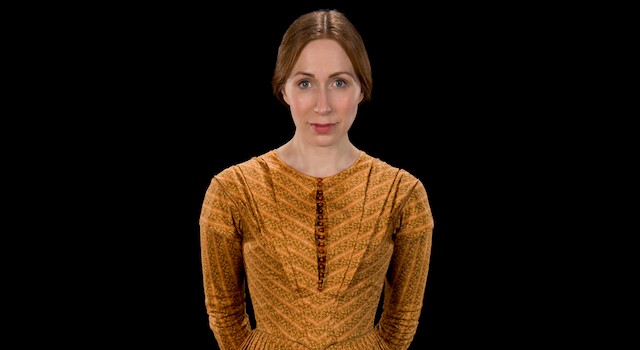
WHAT:“Struggling to think, live and love beyond the stifling expectations of duty, class and convention, governess Jane Eyre and Master Edward Rochester take a dark journey towards sensual and intellectual liberation. Told through Jane’s eyes, this autobiographical novel shocked the Victorians, and Charlotte Brontë’s gothic subversion of fairy tale romance is now distilled for the stage (under its full title) by writer/director Elton Townend-Jones. Fringe favourite Rebecca Vaughan embodies Everywoman Jane and several other characters in this exploration of love’s realities.”
This is our eighth consecutive year at Edinburgh and with Assembly. Since 2009, Rebecca Vaughan and I have created seven shows that have premiered at the Fringe (and one that hasn’t!) and brought two of them back for second runs.
We’ve collaborated with other directors, performers and designers, but the germination of each project has been down to the two of us. We are perhaps best known for our productions of Austen’s Women, I, Elizabeth, Female Gothic, Dalloway and The Unremarkable Death of Marilyn Monroe which was published by Samuel French earlier this year.
We love the Edinburgh experience and enjoy being both part of the Fringe and the city, which we love and admire.
Tell us about your show.
Dyad Productions is, effectively, the duo of myself and Rebecca Vaughan, and the buck stops with us! The new show is an adaptation of Jane Eyre by Charlotte Bronte, but presented under the book’s original full title.
It is a one-person show, which, as with all previous shows (bar the Marilyn play) is performed by Fringe favourite Rebecca. It is adapted and directed by me (having written three of the previous Dyad shows and directed four). We formed the company in 2009 after spending years as actors and/or writers/directors and finally decided that we just wanted to get out and create our own work.
Since then, we’ve toured non-stop, nationally and internationally and seen our work published and interpreted by others in Europe and the US. After Edinburgh, Jane Eyre: An Autobiography is touring the UK and appearing in Australia in 2017. By which time we will already have started producing our next work…
What should your audience see at the festivals after they’ve seen your show?
I’d recommend they go and see anything created by Gavin Robertson and, for Dyad, no trip to the Fringe is complete without a night having your mind not so much blown as gently inflated then casually popped by the brilliant Australian comedian Sam Simmons.
LIKE WHAT YOU JUST READ? FOLLOW US ON TWITTER! FIND US ON FACEBOOK! OR SIGN UP TO OUR MAILING LIST!
“I wrote and perform the show, we took it to the Brighton Fringe where we were lucky enough to be awarded an Argus Angel award for outstanding theatre.”
WHO:Caroline Burns Cooke – writer & performer
WHAT:“And the Rope Still Tugging Her Feet was inspired by 1984’s Kerry Babies scandal. A dark, comic take on a time in Ireland when ‘the most dangerous place to be was in a woman’s womb’ (Bishop Joseph Cassidy).
Written and performed by award-winning writer and actress Caroline Burns Cooke (Best Actress ECU European Independent Film Festival for MYRA; Best Feature screenplay for She Moved Through the Fair from Scottish Screenwriters), and directed by Colin Watkeys of Face to Face Festival, director/dramaturg of legendary performers Ken Campbell, Claire Dowie and Jack Klaff.”
I’m a fringe veteran! As an actress I’ve been in a dozen plays including The Lad Himself at the Gilded Balloon, The Trial of Jane Fonda at the Assembly Rooms and tons more. This is my second self-written piece but the first solo one.
Tell us about your show.
My director, Colin Watkeys, has been directing solo shows and producing the Face to face Festival for years, working most notably with Claire Dowie, Ken Campbell and Jack Klaff. I wrote and perform the show, we took it to the Brighton Fringe where we were lucky enough to be awarded an Argus Angel award for outstanding theatre and three 5 star reviews. We hope to build on this at Edinburgh and tour it, hopefully doing a London run as well.
What should your audience see at the festivals after they’ve seen your show?
I’m a big fan of the International Festival for unique experiences. I love the programming at Summerhall and there’s often great stuff at the Traverse, but don’t miss Charmian Hughes in Soixante Mirth at Cowgatehead, Nick Revell in Gluten free Jesus, and Shoot the Women First at The Stand.
LIKE WHAT YOU JUST READ? FOLLOW US ON TWITTER! FIND US ON FACEBOOK! OR SIGN UP TO OUR MAILING LIST!
“I’m delighted to be doing another show here again after 10 years, in what is now my home town, and can’t wait to get back out on stage again.”
WHO: Steve Griffin – writer, producers & star
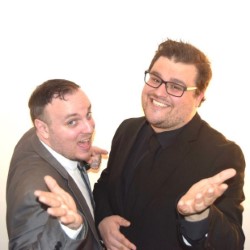
WHAT:“Comedy duo Ronnie and Jonny split up five years ago and haven’t spoken since. Jonny went on to become a stand-in for Mystic Meg and reserve contestant for Celebrity Big Brother. Ronnie became an alcoholic and ghost writer for real comics. Luckily, they’ve recently been invited to reunite for a high-profile comeback gig, but can they put the past behind them? A show for anyone who’s ever fallen out with a friend or knows what it’s like to be ceremoniously dumped. Written and performed by one well spoken English guy and a foul-mouthed Scot.”
I first brought a show to Edinburgh in 2006, and in all the years in between I’ve worked at the Fringe, performed at the Camden Fringe, been a reviewer and very enthusiastic audience member many times. I’m delighted to be doing another show here again after 10 years, in what is now my home town, and can’t wait to get back out on stage again.
Tell us about your show.
Ronnie & Jonny: Friends Disunited is written, produced, directed and performed by myself and partner-in-crime Keith Muddiman. We met at drama school a couple of years ago and knew we wanted to work together afterwards, and this show came about through various conversations, discussions and a lot of scribbles and redrafts in various coffee shops in Edinburgh. We wanted to put on a show that demonstrated the full scale of our ability as actors, so we developed comedic characters, gave them a serious situation and just went from there.
Edinburgh is our world premiere, and while we haven’t made any plans for afterwards (all our focus has gone into just getting this far), we’re very open to suggestions and taking Ronnie and Jonny further afield if we can.
What should your audience see at the festivals after they’ve seen your show?
With over 3,000 shows in the Fringe alone this year, before you even think about the other festivals, there is absolutely something for everyone. So the first thing I would say is just to embrace as much as possible, as there aren’t many opportunities to get such a diverse range of work in one place.
This year there are several companies and performers that I’ve worked with before (and really admire) performing new work, including On the Button (Don’t Panic! It’s Challenge Anneka), Mixed Doubles (Fundraiser) and Samantha Baines; while other companies I really respect for their previous work are back again, including 201 Dance Company (Smother) and Interrupt the Routine (The Gin Chronicles). Come back to me midway through the Fringe though and I’ll happily give some more recommendations!
LIKE WHAT YOU JUST READ? FOLLOW US ON TWITTER! FIND US ON FACEBOOK! OR SIGN UP TO OUR MAILING LIST!
“I hope Patrick is not revived. I much prefer him to be a cult that only a small number of us know about. In this sense he is the literary equivalent of “Withnail and I”. Pass the secret on – but not too loudly.”
Soho Lives is a collection of two hit solo plays exploring the extraordinary lives and losses of two great Soho writers, Patrick Hamilton and Quentin Crisp. Greeted with huge acclaim since their debut productions, Mark Farrelly’s plays offer actors and audiences laughter, heartbreak, and an urgent, passionate reminder that the only thing that ever matters is being true to yourself.
Patrick Hamilton (1904 – 1962) was a shooting star playwright and novelist. His stage thriller Rope made him a hit on both sides of the Atlantic by the age of 25, and the play was later filmed by Hitchcock. Patrick repeated his success with the Victorian chiller Gaslight, while his highly regarded novels include Twenty Thousand Streets Under the Sky, Hangover Square and The Slaves of Solitude. His output – witty, cynical and beguilingly empathetic of all those “battered silly by life” – was cut brutally short by the loss of his battle with chronic alcoholism.
Quentin Crisp (1908 – 1999) was variously a rent boy, artist’s model and full time layabout. Shunned and beaten by London society for his flamboyant effeminacy, he concentrated simply on Being, and spawned a philosophy which enlightens to this day. After being portrayed by John Hurt in the classic TV film The Naked Civil Servant in 1975, he became an unlikely international treasure. Moving to New York in his seventies, he spent the rest of his life telling anyone who would listen ‘How to have a lifestyle’. Asked to give a young fan some life advice, he replied: “Remember – you don’t have to win”.
Mark Farrelly is an actor/writer. He was born in Sheffield and graduated with a double first in English from Jesus College, Cambridge. His West End credits include Who’s Afraid of Virginia Woolf? opposite Matthew Kelly at Trafalgar Studios. Mark is a veteran of numerous arts festivals and a regular favourite at the Edinburgh Fringe. He has performed his two hit solo plays, The Silence of Snow: The Life of Patrick Hamilton, and Quentin Crisp: Naked Hope over one hundred times. Mark’s latest project is as writer and co-star of Howerd’s End, celebrating the centenary of comedy legend Frankie Howerd.
Though I didn’t consciously know it at the time, they deeply mirrored aspects of my own life journey. Patrick’s personal life was a perpetual, drink-sodden mess (just read the highly autobiographical Hangover Square for a sense of this febrile fragility). I wasn’t in that league, but my personal life was certainly dysfunctional a few years ago. Around this time, me and my girlfriend of fifteen years split up, and I was truly on my own for the first time in life.
Horrifyingly, I found that adulthood could be postponed no longer (it seems that human adolescence now stretches to the age of 40). That’s where Quentin came in – the great guru of loneliness and laughing in the face of adversity. I was understandably drawn to Quentin’s story because it’s the tale of a man sitting in a flat on his own thinking life is over, which was very much me in 2012 /13, but then eventually things change and he ends up being the toast of New York.
I sensed that if I could draw solace from these two stories, then so might an audience… because we’re all suffering aren’t we? It’s a big part of what life is. The trick, as Quentin knew, is never to try to deal with it like Patrick – by running away.
Joining the two Lives is Soho. What was Soho like in their day and did Hamilton and Crisp ever meet there?
Soho (at least until recently) has always been what you want it to be. It’s a cipher for everyone’s inner ideal of a sanctuary from the harshness of life, but also a metaphor for the danger we like to flirt with in our younger days. So, for Patrick, it’s initially a boozy bolthole, a safe haven, idealised as a realm of “bottley glitter”. Later, as Patrick’s worldview darkened in the shadow of Hitler, Soho becomes a feeding ground for human sharks… conmen, narcissists, and also suicidal depressives.
Quentin likewise saw Soho initially as a refuge, hiding in what he called “layabout cafes”… until a “rough” or the police hassled him, angered by his brazen selfhood. Later he withdrew from it, and it existed only as a memory: “Soho used to be a more exciting place. You used to be able to get your throat cut on a really big scale”.
Did Patrick and Quentin ever meet? Unlikely. But I like to think they once unwittingly brushed past each other. Like so much of human interaction – almost connecting… but somehow never quite managing it.
Why have the novels of Patrick Hamilton dropped off the radar, and is he due a revival?
I suspect they dropped off the radar because there aren’t that many of them. He only wrote twelve books. The early ones are apprentice works, the later ones are blighted by the alcoholism that killed him at 58 (“I’ve been battered silly by life”), so for me that leaves only five flat-out great novels. They also have a narrowness of focus, compared to say E.M. Forster (another man who ‘only’ produced five great books). I hope Patrick is not revived. I much prefer him to be a cult that only a small number of us know about. In this sense he is the literary equivalent of Withnail and I. Pass the secret on – but not too loudly.
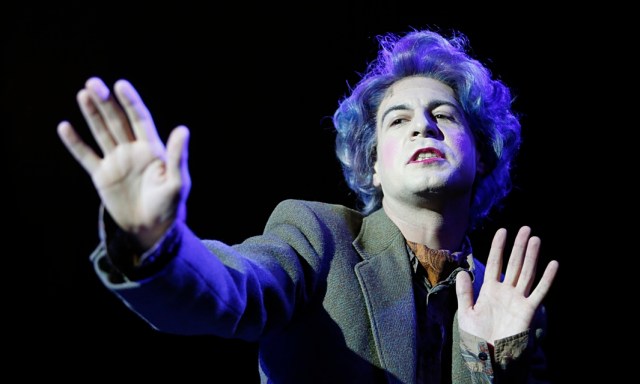
Do John Hurt’s much celebrated portrayals of Quentin Crisp make it easier or harder for another actor to play him?
It didn’t really affect me. There have been thousands of Hamlets so I knew the world could cope with two Quentin Crisps. John Hurt (a great portrayer of victims, of whom it was rightly said “he suffers so well”) played to the hilt the bizarre upward inflections that Quentin sometimes spoke in. I deliberately toned this down for a solo play, as it would have become a bit annoying. So, at the wise encouragement of my superb director Linda Marlowe, I allowed some of my own voice to come into it. After all, the whole point of Quentin Crisp: Naked Hope is to encourage people to have the blind courage to be themselves at all times, however tough it is. Quentin said: “I simply refuse to bevel down my individuality to please other people”. Please dwell on what a great statement that is.
How do you go about researching your biographies, what sort of people do you meet, and what’s the single best insight you’ve gained?
The best research for writing a biographical piece is to have lots of psychotherapy. Find out who and what you are, what’s really going on beneath your behaviour patterns and your unexpressed wishes. Deeply explore why you are drawn to your subject, and what that says about you and the wider human “condition”. You’ll likely discover that your subject is what Jung called your shadow… some split-off, disowned part of yourself that you abandoned as a child in the face of criticism and aggression.
And now the soul burns to reconnect with all its parts. You’ve grown exhausted of listening to those dismal voices in your head, that embalmed Normal Bates gag reel of guff that keeps telling you that life is hopeless, you’re a failure and so on. It’s just a ghostly echo of everyone whose negativity you co-opted as a child, and you’ve spent years vainly trying to find the dimmer switch.
If (and it’s quite a big if) you are able to do this, then everything else will flow. Your reading, meeting surviving relatives, creating something of value… it will happen, though not necessarily in the manner you expected. The best insight (beautiful word) I had was when meeting Frances Ramsay, Quentin’s octogenarian niece. She said that whenever she was with Quentin, he would introduce her to his friends as “My niece Frances. She comes from real life”. And there it is. Quentin was an alien. Gloriously ironic that knowing yourself very deeply makes you an alien. And it does. Ninety percent of people I’ve met are phonies, imposters. I should know – I used to be one too.
If you had the chance to take Patrick Hamilton and Quentin Crisp to dinner where would you go and who would you also invite along?
Even after all my experience (I’ve played both men on stage over 100 times) I don’t know whether they would “click”. It would certainly be an interesting speed-date. I think we should go to the Garrick Club. Patrick (rare for him) felt at home there, and Quentin would, even today, raise eyebrows with his appearance. I would like no other diners present, I would want them all to myself. However, if I could freely subvert the known laws of space and time then I would like to be joined by Tim Welling, my dear friend who committed suicide in 2012. He helped me in the early days of these projects, and was one of the few people I’ve met who, like Quentin, was entirely himself regardless of who he was with or where he was. I miss him deeply.
You’re next project is a play about Frankie Howerd. If you’ll let us peek over your shoulder at the portrait while it’s still in progress, what’s emerging on the canvas?
I’ve realised that Frankie is the archetype of the human condition – nervous, haunted, hunted, desperately trying to keep the plates spinning before the whole lot disastrously crashes down. Of course, as Frankie’s partner of 40 years, Dennis Heymer, knew, letting the plates crash down might be a very good thing, but Frankie could never take that Rubiconic risk. This meant that he created a brilliant, brave, timeless form of stand-up comedy, but had the classic unhappy inner life. His act was a band-aid solution to the problem of being Frankie Howerd.
Next year is Frankie’s centenary, and we’ve never had a big comedic anniversary like this that I’m aware of. I think it’s extremely healthy for people to have proper goodbyes in life. I realised this when I went to see Monty Python at the O2 in 2014: we, and they, were getting a chance to say goodbye formally, and that’s very healing, allows you to move on in life. Two big romantic relationships of mine ended without a proper goodbye (“closure”) which did me a lot of damage.
So the play (Howerd’s End) is partly about how to let go properly. Dennis lived on for seventeen years after Frankie died in 1992, was often found clinging to the grave weeping, never came to terms with the loss. So what he and the audience have to learn during the course of the play is how to let go of Frankie. After all, one day we’ll have to let go of ourselves.
Above all: I want the play to be bloody funny. We’re apt to make our clowns very dark for the sake of drama. Every stranger I’ve spoken to about Frankie grins and says “Oh I loved him”, and so although I certainly want to provoke a few tears, I also want the audience to ride big waves of happiness. I asked Barry Cryer about this. He wrote for Frankie, and said that he’d seen a TV biopic about Frankie that “was so bleak you’d never have guessed Frank was a funny man”. Well, exactly. The world in 2016 is a pretty dark and frightening place, bombs seemingly going off by the hour… and I think we could all do with a damn good laugh. I know I could.
How important has your time at Edinburgh been for the development of both scripts?
Invaluable. Edinburgh is a brutal forcing house for new projects, and if you can survive it, possibly even get good reviews and interest from producers, then you’ve done very well indeed. There are three thousand shows in Edinburgh every year. When I first appeared there in 2002 it was one thousand. Gives you some idea of what you’re up against. Edinburgh to me is like the painting of the raft of the Medusa… thousands of egos fighting over a small bit of attention. It’s actually quite unpleasant, and when I performed there in 2014 I stayed away from much of the craziness by retreating, Quentin-style, to my room and listening to meditation tapes to remember how beautiful and special it is to be alive, because you can easily forget that in Edinburgh in August.
What’s the one thing anyone contemplating bringing a solo show to Edinburgh needs to consider?
Money.
What should be playing on the stereo when we’re reading Soho Lives: Two Solo Plays?
For Patrick, a selection of his beloved Ella Fitzgerald (he adored These Foolish Things).
For Quentin, complete silence, which was the soundtrack to many years of his life in Chelsea (“If I want anything, it’s peace. Quiet. The opportunity to stay in my room and just stagger on”). Then after you’ve read it, listen to Open All Night, Marc Almond’s beautifully dark album from 1999. It’s truly atmospheric, evocative of a lost Soho that probably never existed, and I think Patrick and Quentin would especially appreciate track 3: Tragedy.
LIKE WHAT YOU JUST READ? FOLLOW US ON TWITTER! FIND US ON FACEBOOK! OR SIGN UP TO OUR MAILING LIST!
“How do you express his executive leadership? It’s much easier to talk about the night he spent with Churchill or the meeting he had with Stalin.”
Harry Hopkins (1890–1946) trained as a social worker. He rose to prominence administering the work relief program in New York, where his tenacious efficiency brought him to the attention of Governor Franklin Delano Roosevelt. When FDR won the White House, Hopkins was presented with opportunities to put his knowledge and experience to use on an even larger scale. An one of the architects and implementers of the New Deal, Hopkins grew the Works Progress Administration into the largest, most ambitious, and arguably most successful program to put Americans back to work, thus countering the effects of the Great Depression.
As the President’s chief diplomatic adviser and wartime troubleshooter, Hopkins oversaw billions of dollars of Lend-Lease aid to America’s Allies. His intimate partnership with Roosevelt – Hopkins actually lived at the White House for three and a half years from 1942-1944 – enabled him to build close working relationships with Winston Churchill, Joseph Stalin, and General George Marshall. Churchill was to write of Hopkins, “His was a soul that flamed out of a frail and failing body. He was a crumbling lighthouse from which there shone beams that led great fleets to harbour.”
Author David L. Roll was educated at Amherst College and The University of Michigan Law School. After more than 35 years as a partner at international law firm Steptoe & Johnson LLP, he founded the Lex Mundi Pro Bono Foundation serving as its Managing Director from 2006 to 2008. Roll is presently under contract to write a new appraisal of General George C. Marshall.
The Hopkins Touch: Harry Hopkins and the Forging of the Alliance to Defeat Hitler (published by OUP USA, April 2013).To find out more click here.
Why Harry Hopkins?
I ran into him when I was writing an earlier book, and I saw, I got a glimpse, of how he operated. It was a night (in about May of 1942) that he was with Winston Churchill at Chequers. It was the middle of the night. They were (as usual) having a beverage or two and a cable came in to Churchill from India. It announced that Louis Johnson and Churchill’s envoy (Sir Stafford Cripps) to India had reached an agreement with Jawaharlal Nehru and the other Indian leaders. The agreement was that the Indians would resist an imminent Japanese invasion in exchange for a measure of independence after the war was over.
Churchill, as you know, was quite keen on his India colony and wasn’t about to make major concessions. What happened when the cable reached Churchill for his approval was that he threatened to resign in Hopkins’ presence and Hopkins basically just off the top of his head said, “Mr. Prime Minister, Louis Johnson does not speak for the President. I can assure you.” Hopkins obviously knew Johnson DID speak for the President and he basically calmed Churchill down, they had that kind of relationship. Johnson had been undercut.
It’s sort of a fascinating incident. I got interested in pursuing it after the Johnson book came out.
Woven into your narrative are threads drawn from previously private sources. What were they, where and how did you find them?
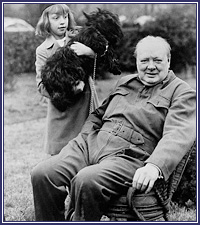
The entrée was Diana Hopkins (Harry’s daughter by his second wife, Barbara). She lives in the DC area still. She’s in her 80s. Barbara died of cancer in 1937. When war in Europe broke out, Roosevelt asked Harry to live in the White House, in the Lincoln Room right down the hall from the President. Diana (then about 6 or 7) went too. She lived on the third floor and Mrs Roosevelt was her surrogate mother for about 3 years. Diana now lives out in Virginia and was a wonderful source that had not been interviewed for many years. She had observations about the workings of the White House when she was a child.
Her father remarried in 1942. So Diana had a stepmother and she was able to tell me a lot of things about the stepmother who in her own right was a fascinating character and no one had really written much about her either.
The way in which I got to Diana was through her daughter, Audrey, who is a lawyer (and I’m a Washington lawyer also) with another firm down the street from where I am. That was my entrée. Diana was not interested, it was difficult to get the first interview with her. I invited her and her daughter over to our house for a few drinks and she loosened up and we got along.
I did not find a cache of letters in the attic like the kind writers love to come upon, but I had some still living sources including Hopkins’ granddaughter who is a professor of history in Georgia, June Hopkins. She’s written a book focusing on Hopkins’ years as a social worker and is a descendent of Hopkins and his first wife – another fascinating character who was a social worker and a Jewish woman who Hopkins met when he was working in a settlement house in New York City.
Hopkins once quipped that he had “a leave of absence from death.” How true a word was spoken in that jest?
That was his quip when he was over in Russia with Stalin after Roosevelt died. He really did. He had a cancer operation after his second wife died of cancer in late 1937. Hopkins had an operation at the Mayo Clinic and they discovered cancer of the stomach. They removed, some say half, some say more than that, of his stomach and they reattached the plumbing. He didn’t ever function properly after that. Although, amazingly, the cancer did not recur and usually with stomach cancer it does.
So he survived but he was always having difficulty after that absorbing nutrients. Exactly what the medical problem was is still not precisely known. Several people have written about it – coeliac disease, allergic to some of the things people are allergic to today that they didn’t know about then. He didn’t take care of himself, he drank all the time. But he had injections, took liver extract and so on. One of the reasons Roosevelt invited him to live in the White House was that he was sickly and didn’t look so good. Of course Roosevelt wanted someone to be right there anyway.
After he got back from Tehran at the end of 1943, on New Year’s Day of 1944, he basically collapsed and had to go to the Mayo Clinic to recover. They said that he did not have a recurrence of cancer, but they did experiment with various ways to increase his intake of nutrients. He was in Mayo for 6 months before he came back and then he was way behind in terms of his relationship with Roosevelt. So it wasn’t until late 1944 that he restored his place at Roosevelt’s elbow. He missed out on a lot, but he actually saved Roosevelt from making some mistakes in late 1944. He recovered enough to go to Yalta (early 1945) but he spent the entire time in bed. He did get out of bed for the plenary sessions, but spent the rest of the time in bed.
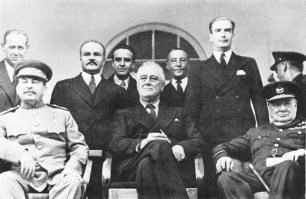
Hopkins was witness to some of the biggest geopolitical decisions of his era – including the decision that keeping in with Churchill was more important than supporting the aspirations of Indian national leaders like Nehru; and the decision that keeping in with Stalin was more important than the independence of Eastern European or the Baltic States. These big decisions had big impacts on the lives and freedoms of millions of people. How conscious was Hopkins of the effect of those decisions?
It was all about winning the war. Even Churchill said he would court the devil – meaning Stalin – to win the war. The survival of civilization was at stake. Living with Roosevelt, he knew Roosevelt’s mind, if anyone knew Roosevelt’s mind. Hopkins was not immune from being seduced by Stalin, but I think he was more careful with Stalin than he was with Churchill. He had relationships with the Soviet Ambassadors Maisky (London) and Litvinov (Washington) as well as Molotov.
There was a guy named Joseph E. Davies who was a former Ambassador to the Soviet, very wealthy, living in Washington. Davies kept copious notes of dinners and meetings where he would call Hopkins over to his house and talk about how the Russians should be handled. Hopkins was in a position where he was speaking for the President on some pretty major issues, but i think he knew where the President stood on issues like the Baltics or Eastern Europe
During his lifetime (and afterwards) Hopkins was accused of profiting from public office. Why was he targeted for such character assassination and how did he afford to live in the manner to which he became accustomed?
Well first of all he was a proxy for Roosevelt and the right wing would use him as a way to criticise or challenge FDR.
Hopkins died with almost no money. When he resigned from the Truman administration in the summer of 1945 he went to New York. He had no money, neither did his 3rd wife Louise – she was working as a nurse in the war – but they were New Yorkers and they went house hunting. He was out of the administration and he was going to write a book. You would think they would get a two bedroom or one bedroom apartment but they ended up in a three or four storey town house on 5th Avenue overlooking Central Park. He hired a writer to help him write his books and he got all his papers assembled in that place.
I asked Diana, “How could they possibly afford that?” Diana said, “Well that was Averell Harriman [son of a railroad baron, Secretary of Commerce under Truman and later Governor of New York] who basically paid for that place.” Hopkins lived there and in late 1945 he really went downhill and had finally to go into a hospital. Louise was really connected in New York. She was friends with Jock Whitney who was a very eligible, very wealthy guy who started the Museum of Modern Art.
He leant her some of his paintings – very, very famous paintings. Hopkins got interested in art as he was in the hospital surrounded by some of these paintings that were leant to him, and which were around him when he died in 1946. Diana has one of those paintings out at her house in Virginia.
Insinuations were made about Hopkins’ ties to the Soviets. Did he, as is claimed, pass nuclear secrets and arrange for shipments of uranium to the USSR?
There were allegations that came from a guy called Major Jordan who claimed to have personally observed or overheard conversations between Hopkins and Air Force officers in which Hopkins authorised nuclear secrets to be put into boxes or briefcases and boarded onto planes in Montana bound for the Soviets. Major Jordan claims Hopkins authorised the disclosure of designs for building an atomic bomb to be shipped to the Soviets. It was very specific kinds of testimony in a congressional hearing. Of course the Republicans and the right wing gave those allegations creedence.
The cross-examination and report written after, in my judgement, completely vindicated Hopkins. By the time those hearings were held, Hopkins was dead. I have a book on my bookshelf that was written by Major Jordan after that and he makes the same allegations, but there’s no proof that designs were sent to the Soviet Union through authorisation from Hopkins.
The intercepts that the Russians got in Moscow through their spies were collected, translated and published after the collapse of the Soviet Union. When that book came out there was a flurry of newspaper articles and reports saying Hopkins was one of the sources of Soviet intelligence. It later turned out that the agent concerned was Laurence Duggan. The decrypts reveal that Duggan had worked for the Soviets before he fell to his death from his office in 1948. In my view, and most rational observers conclude too, Hopkins was not a Soviet spy.
Hopkins was brilliant one on one. He was the personal bridgehead between FDR, Churchill and Stalin. Yet what makes him fascinating in terms of his own legacy was his capacity to manipulate the bureaucratic machine. How do you write an engaging portrait of someone who’s very good in meetings and very good at paperwork?
You just put your finger on it. I think a lot of writers, including me, will just try and brush that off because it’s too difficult to write.
It’s very difficult to put meat on all those meetings. How did he really drive the New Deal programs that he did before the war started? The WPA, all of the jobs programs, the Federal Writers’ Project. His battles with Harold Ickes over who’s gonna get to build all the dams and the roads. He was on top and he remained on top. It was terribly difficult with infighting and backbiting.
The same thing happened with Lend-Lease which was his major bureaucratic responsibility, he got it up and going. How do you write about that without becoming dreadfully boring? Where were the key levers that he had to pull to make Lend-Lease work? Lend-Lease was not that effective but at least it gave everybody hope. You can write about that, about how much did it actually help Russia.
And how do you express his executive leadership? It’s much easier to talk about the night he spent with Churchill or the meeting he had with Stalin. Stalin is a character that has tremendous power so you can write about the tension between the two or with Churchill, but there are hundreds of bureaucrats, faceless bureaucrats who were going out and doing wonderful things.
Ultimate armchair general question – and without preempting your work on Marshall – if you had been in Roosevelt’s chair when he had to decide who was to lead the Normandy landings, which commander would you have picked – Marshall or Eisenhower?
If Marshall had expressed his preference to Roosevelt, Roosevelt would have given it to him. But he didn’t. He said, “It’s your decision and I’ll happily go along with whatever you want to do” – although he desperately wanted to do it. At that time Roosevelt was being heavily lobbied by the other Joint Chiefs and also by a bunch of congressmen. So if I were Roosevelt then I would have given it to Eisenhower, but if Marshall had said “I want it” and I were Roosevelt I’d have done it because he needed Marshall more than anything. It turned out to be the right decision but there was a huge lobbying campaign going on in Washington at that time behind Marshall’s back.
The key thing in the Hopkins book took place in July 1942 and that’s when Marshall was desperately trying to leverage the British into letting him invade Western Europe in 1943, or if they had to do an emergency thing he’d have put something together for ‘42. But he didn’t want them to go to North Africa. Hopkins was playing both sides of that thing and I think the significant moment in those meetings in London was when the British were saying, “We’re not going to do this. We want to go to North Africa.” Hopkins wrote on a note, “I’m terribly depressed.” Hopkins wanted to go the way the British were headed and so it was a moment when Hopkins was doing something to placate Marshall, and make him think he (Hopkins) was on the General’s side, but he really wasn’t. My editor at OUP emailed me when he got to that point in the book and he said, “That’s the essence of Hopkins.”
During the 6th Democratic debate for the 2016 Presidential nomination, Senator Bernie Sanders named Roosevelt and Churchill as leaders who would influence his decisions on foreign policy. In this important election cycle how important is that question and how impressed are you by Senator Sanders’ answer?
They always say it’s the most important election of our time. I think Roosevelt was one of our most admirable presidents. What’s really hard to understand is how difficult it must have been to work with Churchill. As the balance between the US armed forces and the British shifted, Churchill would just not let go of this peripheral strategy for defeating the Germans. How maddening it must have been for Hopkins, Marshall and everyone who had to deal with him. But certainly Churchill will always be so much of a profound figure from when he basically stood alone. That was his moment.
What should be playing on the stereo when we’re reading The Hopkins Touch: Harry Hopkins and the Forging of the Alliance to Defeat Hitler?
A Nightingale Sang in Berkeley Square and As Time Goes By from Casablanca. It’s so interesting that on New Year’s Eve of 1942 they played the Casablanca movie at the White House and a week later they’re in Casablanca. If anyone ever writes a screenplay of Hopkins at that time, that would be something good to put in.
LIKE WHAT YOU JUST READ? FOLLOW US ON TWITTER! FIND US ON FACEBOOK! OR SIGN UP TO OUR MAILING LIST!



 Do John Hurt’s much celebrated portrayals of Quentin Crisp make it easier or harder for another actor to play him?
 If you had the chance to take Patrick Hamilton and Quentin Crisp to dinner where would you go and who would you also invite along?
 Woven into your narrative are threads drawn from previously private sources. What were they, where and how did you find them?
 Hopkins was witness to some of the biggest geopolitical decisions of his era – including the decision that keeping in with Churchill was more important than supporting the aspirations of Indian national leaders like Nehru; and the decision that keeping in with Stalin was more important than the independence of Eastern European or the Baltic States. These big decisions had big impacts on the lives and freedoms of millions of people. How conscious was Hopkins of the effect of those decisions?
 Hopkins was brilliant one on one. He was the personal bridgehead between FDR, Churchill and Stalin. Yet what makes him fascinating in terms of his own legacy was his capacity to manipulate the bureaucratic machine. How do you write an engaging portrait of someone who’s very good in meetings and very good at paperwork?

You must be logged in to post a comment.