EIFF: “Papillon” (22 June ’18)

“Quite compelling.”

Editorial Rating: 3 Stars: Nae Bad

This film is, conspicuously, a remake. Not in the sense that it broadcasts its similarities and differences to the original, (in this case the 1973 version of Henri Charrière’s seminal autobiography), like some decades-later remakes do, but in the sense that it simply re-makes the first. This begs a question which Michael Noer’s new Papillon never quite answers: why was this film made?

The action follows a dashing Paris criminal known as ‘Papillon’ (Charlie Hunnam), cracking safes in style in 1931, as he gets some brutal comeuppance for swindling his boss, and is framed for murder. His sentence is life in prison, specifically an overwhelmingly horrible penal colony in French Guiana. There, and over the next few decades, he attempts various escapes through a partnership with wealthy but weak Louis Dega (Rami Malek), and experiences disturbing and inhumane treatment from the prison’s guards and higher-ups. The kicker is that it’s all based on a true story, by the real Henri ‘Papillon’ Charrière, whose book of the events, published in 1969, has sold over 13 million copies worldwide.  Charrière was pardoned of murder in 1970.

There is a confusion to Noer’s film, however, for on its surface, it is quite compelling, but underneath, it is really just a re-done version of a film that has already been made. Steve McQueen and Dustin Hoffman embodied the roles of Papillon and Dega, respectively, in Franklin J. Schaffner’s original, which, though not considered a great film, is still a notable work in American depictions of agony in incarceration. Noer’s film has cinematic agony to spare, and at times verges into outright body horror as Papillon and others are starved, savagely beaten and whipped, and in some cases dismembered and murdered. It’s not a very fun time for anyone.

Yet, despite the aspects that befuddle and disgust, Papillon delivers some affecting cinema here and there. The casting should be commended above all else; Hunnam and Malek are without a doubt two of the most capable yet underused leading men onscreen today, and it is very satisfying to watch them play off each other. Hunnam continues to impress with his ability to flaunt his physicality and his grim charm, and for fans of his star turn in James Gray’s underrated The Lost City of Z, this film will not disappoint. Yet it is Malek who stands out the most remarkably here, and his Dega, weak-chinned but crafty, might be one of the more memorable characters of this entire festival so far.

In terms of craft, Danish director Noer makes some odd choices, but none really take away too deleteriously. One qualm I had is the complete lack of establishing shots in the first half of the visuals — in a film so focused on a hellish jungle landscape, it is strange that the camera focuses more on medium shots in quite random succession. Until we get one breathtaking shot of the South American sunset on a river, followed by another strange bout of shots where a small boat at sea takes up three quarters of the frame, and an ensuing storm is relegated to a distant speck. Perhaps these are all intentional distortions of what we expect to see, but it struck me more as unsuccessful attempts to shoot around a small effects budget, which detracts from the epic nature of this decades-long story. Nevertheless, the film may be slow, but it is not boring; it is odd but not off-putting — unnecessary, but not unwelcome.
nae bad_blue

Star (blue)Star (blue)Star (blue)


Reviewer: Nathaniel Brimmer-Beller (Seen 22 June)

Go to Papillon at the EIFF here
 

EIFF: “Incredibles 2” (22 June’18)

Walt Disney Studios Motion Pictures / Everett

“A true standout in action-excitement filmmaking.”

Editorial Rating: 4 Stars

There are a lot of superhero movies out there. I don’t need to explain the various cinematic universes that have quite efficiently conquered pop culture the world over in the past fifteen years or so. They are high-budget, immaculately shiny, and absolutely stuffed with characters  – and bombast. Yet despite the immense success of these high-concept sequels, in many ways Pixar’s own superhero sequel, Incredibles 2, leapfrogs way over their heads and delivers one of the most genuinely exciting, eye-popping cape-and-cowl films of them all. (Even though, of course,  there are no capes.)

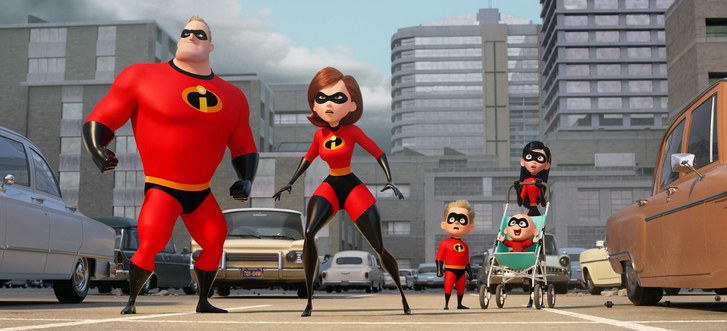
Brad Bird returns to the director’s chair, fifteen years after creating the widely beloved original, which dropped viewers into a retrofuturistic world where ‘Supers’ are made illegal after a one too many superpowered scuffle totals a great deal of infrastructure. Incredibles 2 picks up seconds after the first one ended, finally letting all of us who wondered just how the titular family would deal with The Underminer, all those years ago, see the fight in full. Of course, even more infrastructure is totaled, so the Supers are run underground yet again. Not long after, a shiny-toothed businessman (Bob Odenkirk) and his mysterious sister (Catherine Keener) join the story and offer to help the family, and all Supers, become legal again and protect the city unrestricted. 

What separates the Incredibles films from others of their genre, in both cases, is the heavy focus on the actual people under the suits. Bob Parr, a.k.a. Mr. Incredible (Craig T. Nelson), is back and funnier than ever, as this time he is overshadowed by his much more marketable wife, Helen Parr, a.k.a. Elastigirl (Holly Hunter). In a quite timely and interesting turn of approach, the business siblings, (and, notably, the film itself) specifically decide to push the female-leadership angle as more compelling to “today’s” audience, and put Elastigirl front and center in most of the film’s breathtaking action set pieces. 

Consequently, the greatest takeaways Incredibles 2 has to offer are indeed these stupendous sequences. One helicopter chase in particular struck me instantly as the most exciting superhero set piece I’ve seen in a while, (and I, unsheepishly, am a die-hard MCU fan). Though Disney had some apologizing to do for not warning patrons of a particularly strobe-lit scene, the scene in question is action film lighting at its absolute best, with the eerie villain textured with an utmost nightmarish quality, producing quite unnerving visuals. The groundbreaking studio’s penchant for industry-best animation is on display yet again; just try not to swoon when a glass of water is placed down, even in the corner of the frame, and the bubbles and minuscule waves in the surface are given every pixel of detail you would see in real life. These details, and the heights the animation can reach, make Incredibles 2 a true standout in action-excitement filmmaking.

On a slightly different note, the other side of the animation and craft being so exemplary is that one notices when the story stalls here and there, which happens more often than not. The plot ‘twists’ are  … predictable! The jokes are mostly recycled from the first film, and though that is for the most part very welcome — for The Incredibles is one of the most daring animated ‘children’s’ films of all time, I’d say — some do make one wonder if Bird and company just forgot to write more material. The ending, in particular, feels like they ran out of time, especially when compared to the layered, satisfying final beats of the first. Plus, I hesitate to mention it, but the ‘Frozone’s hilariously sassy offscreen Black wife’ joke is not only tired, but getting kind of distasteful, and it is no surprise that in this film she is relegated to a quick line, as a callback. (Notably, somehow, though Incredibles 2 introduces a wide array of new Supers big and small, with the exception of the offscreen spouse, there are no Black women in the whole thing. Odd.)

Altogether, however, Incredibles 2 is good fun, and a pleasant continuation of the jauntiness and aesthetics of the brilliant first go round. Michael Giacchino’s score is still excellent, opting for a more noir sheen alongside his memorable and delightful main theme for the fantastic family. Bird has done well, albeit by doing what he already knew. 

outstanding

StarStarStarStar

Reviewer: Nathaniel Brimmer-Beller (Seen 22 June)

Go to Incredibles 2 at the EIFF


EIFF: “Cold War”, UK Premiere, 21 June ’18.

“One of the best films of the year. “

Editorial Rating: 5 Stars: Outstanding

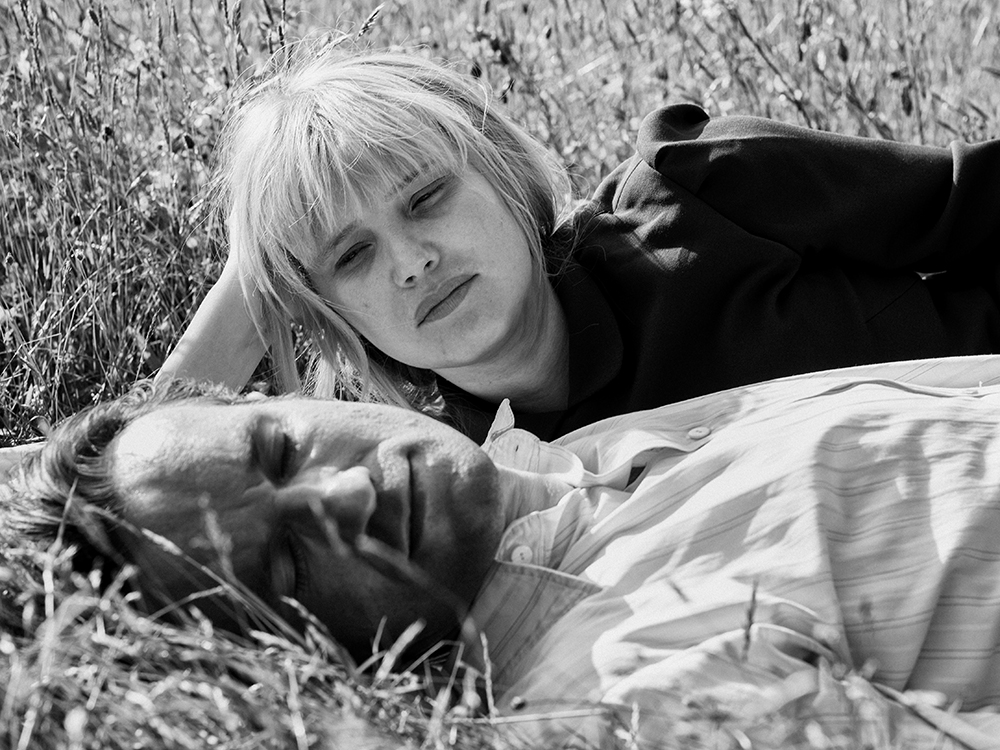
Pawel Pawlikowski has crafted a film that breathes life into multiple mid-century time periods and settings with the ease and authority of a master instrumentalist at play. Cold War, though not his first feature, is the Polish director’s second in a row shot in meticulously framed, gorgeously composed Academy-ratio monochrome. This approach began with the immensely celebrated Ida, which won the Academy Award for Best Foreign Language Film in 2015; yet while Ida’s plotting and method achieve their affecting levels of character development and artistic storytelling through a more bleak, distanced tone, Pawlikowski has imbued his latest with a pleasant amount of levity, joy, cinematic tricks, and transcendent musical sequences. It is no understatement to say Cold War ought to be regarded as one of the best films of the year. 

The story follows fifteen years of two parallel paths: that of complicated, tragically-fated lovers Wiktor and Zula, and that of complicated, tragically-fated Poland itself. The first scenes follow Wiktor (Tomasz Kot) and his team as they traverse the Polish mountain area in 1949, as part of a post-war effort to reinvigorate national pride through revitalizing traditional music. Through their search for singers and dancers for a government-sponsored traveling troupe, Wiktor meets Zula (Joanna Kulig), a captivating and immensely talented young woman, whose beauty is complemented well by her snarky wit. (During her singing audition for the troupe, she is told by Wiktor’s colleague that they have heard enough, to which she responds “Just the chorus,” and plows ahead, singing over the ‘Halt’ order — an example of the film’s wry and welcome sense of humour.) Their romance develops as the troupe’s tour radius grows larger and larger, encompassing more and more of the Soviet Union, until they are so well-known that the government decides to use them as a mouthpiece for its propagandic interests. More humour, albeit a darker tone of it, is on display as a government official suggests that they edit the carefree and poetic lyrics of the age-old folk songs the troupe normally sings, to better acquaint the citizenry with the government’s achievements, such as agricultural reform. 

Pawlikowski explores these dichotomous paths — a growing, twisting romance and a gradually  darkening society — in masterful contrast. Stalinism creeps in the edges of the love story with a breathtaking and unnerving progression, at one point literally coming out of nowhere as a massive depiction of Stalin rises above the dancers with nightmarish grandeur in one of their later performances. Most remarkably, the story of Wiktor and Zula becomes intractably interwoven with the imbalanced levels of freedom and artistry inside and out of the Soviet Union, for as Wiktor longs to leave and stay out, so does Zula question where her home truly is, and should be, leading her to some ill-advised returns to hostile territory. The perverted display of the traditional dancers performing Stalinist messages is contrasted with the liberally expressive Parisian musical scene as the action shifts to the mid-fifties, with some pitch-perfect jazz sequences offering some of the most pleasant monochrome pieces of filmmaking in my memory. Whatever possessed Pawlikowski to include so many musical scenes, from the introduction of Paris through a jazz solo to Wiktor’s alarmingly cacophonic piano playing as he experiences great loss, to the magnificent sequence where Zula throws herself around a bar to the tune of “Rock Around the Clock” by Bill Haley & His Comets, and most briefly but beautifully in a romantic moment between the two as they share a dance to “Is You Is Or Is You Ain’t My Baby,” this film treats its soundtrack incredibly well.

Credit must also go to the leading couple of Kot and Kulig, who ground the artistry in their compelling faces and physicalities; there are times where entire monologues of meaning are delivered in a silent glance or movement of the face. Also remarkable are the supporting performers, who represent the world outside Wiktor and Zula’s bumpy romance, from the stocky government stooge with a surprising amount of heart, Kaczmarek (Borys Szyc), to the stern but defiant musical director Irena (Agata Kulesza) to the amusingly pretentious French poetess Juliette (Jeanne Balibar). 

It came as delightful news when Pawlikowski was awarded Best Director at this year’s Cannes Film Festival, where Cold War premiered, and where I first saw the film. At the time, I would have said it was pretty good, maybe a niche art film crowd will like it. But on second viewing, I must say Cold War is much more: just as riveting as it is beautiful, just as musical as it is dramatic, just as prestigious as it is fun. Highly recommended viewing — and an excellent example of last minute scheduling .

outstanding

StarStarStarStarStar

Reviewer: Nathaniel Brimmer-Beller (Seen 21 June)

Go to Cold War at the EIFF here


EIFF: “Calibre” (Cineworld, 22 June ’18)

Image: British Council.

“Notable style.”

Editorial Rating: 2 Stars

Writer-director Matt Palmer’s depiction of a rural Highland town and its inhabitants is not doing the Scottish tourism board any favours. His new film, Calibre, out on Netflix in a week, walks the line between outright horror and pulse-pounding masculine drama with notable style, and gives rising star Jack Lowden some seriously grisly meat to chew on. Overall, however, this tidy, affecting morality play with an impressive cast and excellent sound work cannot escape some garishly ill-devised plotting, a tiresome amount of doom and gloom, and a seriously terrible haircut. 

The fun begins in Edinburgh, as Vaughn (Lowden), kisses his pregnant wife goodbye for a weekend hunting in the Highlands with his lifelong friend Marcus (Martin McCann). Upon their arrival in the rural town, they cross paths with aggressive locals, dangerous women, and some surprisingly friendly contacts. Palmer builds a commendably unnerving sense of dread as every craggy corner in this middle-of-nowhere locale seems to possess some unseen malice, and the director’s horror influences are well-established early on. At times one expects some glowing eyes or demonic cackle to make an appearance but Palmer’s film avoids the supernatural in favor of the more horrifying type of evil: the one within man himself.

If that last line struck you as a bit much, take it as a test. If that sort of melodramatic meditation on evil! and honor! and truth! and shame! strikes you as a fun time, maybe you’d love Calibre. If the line “This can only be paid for in blood” doesn’t strike you as laughable, by all means get on Netflix on June 29th and stream this thing. 

Otherwise, take my word for it, this film is poorly measured. Lowden turns in another commendable performance as Vaughn, who commits a horrendous act completely by accident, which is so genuinely shocking that I won’t dare ruin the surprise when it comes. McCann is impressive as the cunning and duplicitous Marcus, who is unnervingly good at covering their tracks after the act, which implicates both of them in heinous wrongdoing and will completely destroy both their lives if discovered. Also delivering the goods is Tony Curran, a reliable presence on screen, who gives great depth to local leader Logan, who keeps the most brick-headed townsfolk from tearing the city boys to shreds just for being outsiders. 

Indeed, though most of the narrative follows the young men as they try to evade discovery, Calibre also has a lot to say about the relationship between rural and urban, rich and poor, privileged and underprivileged, strong and weak. Yet as the tension rises and the plot twists and yanks itself around, most of these ‘insights’ are either screamed at a frenzy worthy of Nicolas Cage’s choicest meltdowns, or growled with such Straw Dogs-esque menace, turned up to 11, that it comes off as silly rather than terrifying. This all culminates in a climactic setup so dour, so tastelessly brutal, that one cannot help but feel like they are watching Saw: Highlands Edition rather than the Hitchcockian crime thriller it packages itself as. Calibre does not ultimately earn its dourness, but rather just piles it on, in the hopes that grisliness will make up for lack of direction. (Not to mention, it is hard to have much sympathy for Vaughn when all his weeping and moaning is done while sporting such a revolting hairdo. But that might just be me.)

Palmer clearly has a nice grasp on how to build tension, and he is particularly impressive in his use of sound to set a scene. But Calibre would be vastly better if it knew how to release that tension in its final act without lazing into tasteless impulses. Skip it, I reckon.

Star (blue)Star (blue)

Reviewer: Nathaniel Brimmer-Beller (Seen 21 June)

Go to Edinburgh International Film Festival here

(Calibre is showing today, Saturday 23 June & on Saturday 30 June. See EIFF programme for venues.)


EIFF: “Puzzle” (Festival Theatre: 20 June’18)

“Genuinely affecting moments of liberation and subtle defiance.”

Editorial Rating: 3 Stars

Our first coverage of the film festival. Nathaniel Brimmer-Beller will keep them rolling.

As she addressed the gathered public at the opening screening of the 72nd Edinburgh International Film Festival on Wednesday, Kelly Macdonald expressed both gratitude — that her new film, Puzzle, directed by former producer Marc Turtletaub, was opening Scotland’s foremost film festival — and amusement that in it the Glasgow-born actress was playing an American. “I’m in nearly every frame of the film,” Macdonald continued, “so I’m sorry! But you’re in your seats and the doors are locked so you can’t leave now!”

From that introduction, one might expect Puzzle to be a point of embarrassment for the experienced actress. Macdonald has worked with talent as renowned as the Coen brothers (No Country for Old Men), Martin Scorsese (Boardwalk Empire), and Danny Boyle (Trainspotting, T2), yet Puzzle marks her first prominent, meaty leading role. Macdonald oughtn’t be embarrassed by her work in Turtletaub’s film, however, quite the opposite; yet by the time the credits roll, one is left wishing she was given more to do within all those frames. 

This, Turtletaub’s directorial debut, is a remake of Argentinian film Rompecabezas, directed by Natalia Smirnoff in 2009, and follows shrinking violet suburban housewife Agnes (Macdonald) as she gradually sheds the suffocating monotony of her daily life caring for her boorish husband (David Denman) and two insufferable teenage sons. In the film’s opening sequence, a stylistic high point in an otherwise unremarkable storytelling strategy, Agnes diligently weaves through a house party, existing in the background as her guests make a mess and ignore her. After a few minutes of watching her scrub and kowtow, Agnes reveals an impressive birthday cake, and the guests sing Happy Birthday to … her. Her servile existence at her own birthday celebration presents a perfect introduction to the character as a product of circumstance. As Agnes unwraps her presents, she finds a 1,000-piece puzzle, which, although average citizens remark it will take days to complete, she finishes within half an afternoon. Soon, she seeks out more puzzles, and through them, more control, more exploration, and more freedom, assisted along the way by her serendipitously-met “puzzle partner” Robert (Irrfan Khan). To its credit, though the initial setup of a film based entirely on one person’s self-discovery through 1,000-piece puzzles seems like an aggressively dull use of 103 minutes, the film manages to achieve some genuinely affecting moments of liberation and subtle defiance that avoid total insignificance. 

Unfortunately, I would not blame viewers for tuning out before these moments are reached, for despite that beginning, Puzzle begins to lose its grasp over its plot’s moving pieces quite quickly. Turtletaub, though partially responsible in his role as a producer on films such as Little Miss Sunshine and Loving for some of the more compelling family-based stories of the 21st century, can’t quite master the art of keeping the story fresh and maintaining depth. Too often, the dialogue between Agnes and her family lists into high-school-play levels of one-dimensionality, with displeasing references to veganism, Buddhism, and masculinity in “today’s youth” that come off as tone-deaf. Nearly every stereotypical “overdramatic indie film” line you can imagine is somewhere to be found in here, which becomes frustrating — not to mention its lamentably obvious central metaphor. In case you hadn’t guessed, the eponymous activity comes to represent the unsolvable puzzles in Agnes’s own life, and yes, there is a dramatic monologue about the cosmic connection between solving a particularly hard 1,000-piecer and solving yourself. (Though, to be fair, it is delivered by Mr. Khan, who continues to elevate uninteresting Hollywood ideas with his undeniable charm and masterful delivery — though the words he recites are unoriginal and formulaic, his performance of them is everything but.)

Overall, Puzzle does a lot more telling than it does showing. It is less a film than an overlong Hallmark ad, with a semi-profound lesson in there somewhere that is often overlooked in favor of ‘family drama’ beats that we have all seen before, repeatedly. If you are looking for bombast, style, or cutting-edge storytelling, all of which this year’s EIFF promises to offer by measure over the next two weeks, Turtletaub’s film is not for you. Yet, though such a clichéd film is a puzzling choice to open such a dynamic festival, as a calm, pensive look at a chronically overlooked type of person, this film fits well. 


Star (blue)Star (blue)Star (blue)

Reviewer: Nathaniel Brimmer-Beller (Seen 20 June)

Go to Edinburgh International Film Festival here


A Girl and a Gun (Summerhall: 2-27 Aug: 18.00: 60mins)

“A greatly rewarding hour of insight and grace for cinephiles, feminists, and iconoclasts everywhere.”

Editorial Rating: 5 Stars: Outstanding

Louise Orwin is one savvy film buff and her one-woman show, A Girl and a Gun (the title of which is derived from Jean-Luc Godard’s notorious quote “All you need to make a film is a girl and a gun”) is sixty minutes of finely crafted satire/tribute/criticism/fun on that very notion. For cinephiles and non-cinephiles alike, A Girl and a Gun offers laughs, thrills, and intimate insights into some of popular culture’s most beloved genres and setups within film, while asserting a masterfully subversive message.

Orwin is an electric performer, constantly keeping the audience guessing and engaged as she flits from scenario to scenario as “Her,” representing the interchangeable, lazily written female in so many Hollywood films. She is accompanied onstage by an unspecific male counterpart, as “Him,” a random actor who had responded to the show’s online call for male performers, and who is a different person every night. “Him” reads his lines from a teleprompter, and is, charmingly, just as surprised, shocked, amused, and impressed at the show’s content as the audience is at every turn. For Orwin has created an amalgam of sorts, of every misogynistic and abusive male-female dynamic presented in male-ego-centered films, to prove how toxic and destructive masculinity in popular culture can be.

“Him” is scripted to seduce, kiss, betray, bully, abuse, physically hit, and generally mistreat “Her” in carefully structured ways, so that sometimes he has free reign to strut around and take advantage of the audience and damsel in front of him, and other times he has no real choice but to act like a heel. Her commentary is strikingly simple, as she uncovers the terrible unfairness and cruelties beneath many a male/female action hero/damsel dynamics.

What is most impressive and reassuring about the show’s approach is the level of research evident behind the faithful recreations of the films it satirises. It is presented in a format all Tarantino fans will recognise; divided into chapters with pseudo-poetic titles like “Cherry Picker” or “Why You Don’t Have to be American to have an American Dream,” which is a particularly impactful one. Taglines, catchphrases and devices from lots of Tarantino’s writing are featured, including dances reminiscent of Pulp Fiction and Death Proof, and the opening theme from Kill Bill – indeed the piece is chock-full of cinematic observations and criticisms that are spot-on if you are a fan of the retro-worshipping, Western-esque American odysseys Orwin comes after. There is a particularly impressive and hilarious sequence in which Orwin and the male actor recite all the typical names of “Him” and “Her” in these films, like Charlie, Bobby, Big Charlie, Big Bobby, Tommy, Tony, Big Tommy, Big Tony; Suzie, Jenny, Little Suzie, Little Jenny, et cetera.

Points like these are also, in a larger sense, what makes Orwin’s show so clever and incisive; there are no individual films or even individual scenes that are criticised on their own. Rather, A Girl and a Gun takes aim at the sheer repetitiveness and laziness of re-used, tired tropes, with great success. One of the most memorable sequences comes near the ‘end’ of the experience, when “Him” has forsaken “Her” and she must, as she does in so many films, die. Orwin’s “Her” dies at least ten times in a row, in various gruesome fashions, from being shot with numerous types of firearms to being tied to a train track and run over. Her point lands with a surprising amount of grace, as we recall so many female characters who have been extinguished simply to prove the male protagonist’s point, and it is the sheer quantity of such deaths that packs the greatest punch.

The attention to detail in this show is also commendable, from the use of projection and subtitling to recall a movie being written and filmed, and on-screen directions for “Him” to don various costumes, play with numerous prop firearms and “act like he is in an action movie”. This device in particular leaves a meaningful impression, presenting both “Him” and “Her” as pawns of the written scripts, and suggesting it is not necessarily inherent to a man’s composition that he acts so cruelly — he is written that way, much as many men may have learned their behaviour from movies where that very same behaviour got the girl and saved the day.

A Girl and a Gun presents an ingenious deconstruction of male ego, cinematic influence, and the truth beneath the beauty of so many of society’s favourite films. It is a greatly rewarding hour of insight and grace, plus a goldmine for cinephiles, feminists, and iconoclasts everywhere.

outstanding

StarStarStarStarStar


Reviewer: Nathaniel Brimmer-Beller

THIS REVIEW HAS NOT BEEN SUBEDITED