+3 Review: Growing Pains (Underbelly, Cowgate: 5-28 Aug: 16.30: 1hr)

“Oozes a quality that is rare and valuable”

Editorial Rating: 5 Stars

There’s a lovely tradition at the Fringe whereby all companies performing at a certain venue are permitted “standby” tickets to other shows at that venue: once all paying ticket holders have been admitted, any empty seats are then up for grabs – if there are any. For this performance Underbelly companies didn’t just fill the few empty seats: staff were frantically laying out two extra rows at the back to cope with a level of demand I’ve never seen before. Within about 10 seconds of the performance starting, I could understand the hype.

As is so achingly trendy at the moment, Growing Pains is written like a performance poem, with rhyme and rhythm, ridiculously clever wordplay, and a lot of witticism. It’s brutal, honest and unflinching in its portrayal of a young man growing up on an estate in Salford and wanting to make it as an actor. Energy is red raw from the get go and you can tell this is going to be an intense and emotional hour.

Central character Tom introduces his friends, portraying each with clear physicality and accent, and we get to laugh at their banter and endeavours to get served at the local pub while underage. Later on we see those same friends grown-up, stuck in a rut and stifled in small-town mentality that Tom so desperately longs to break away from.

Tom Gill gives absolutely everything in this production – from emotive, heart-wrenching pleas to his dad, amusing turns as his Caribbean neighbour and a posture-perfect well-heeled yuppie, to more puns on London tube stations than you can count and a stripped back and haunting break-up scene with an ex-girlfriend: it really is a one man tour-de-force. For me, it’s 2016’s Johnny Bevan.

Oh, and it’s also a musical. With poetic lyricism that effortlessly floats in and out of song it only seems right to blend the two, and it just works. Not in a corny, musical theatre I’m-just-going-to-burst-into-song kind of way, but in a genuine expression of music being the only way for Tom to be able to communicate what’s going on in his head. It’s funny. moving, and incredibly well performed.

However, it’s not perfect – there are several odd little skips, jumps and glossings over within the narrative that could be made clearer or more cleverly interwoven without the need to go to a blackout – but everything about it oozes a quality that is rare and valuable and definitely worth buying a ticket to. Just ask anyone else doing a show at Underbelly.

Star (blue)Star (blue)Star (blue)Star (blue)Star (blue)

Reviewer: Steve Griffin (Seen 8 August)
THIS REVIEW HAS NOT BEEN SUBEDITED

+3 Review: Jane Eyre: An Autobiography (Assembly Roxy: 4 – 29 Aug. 1115. 1h30m)

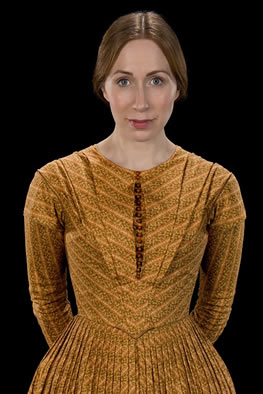
Image. Dyad Productions.

Image. Dyad Productions.

“Rebecca Vaughn’s solo work is outstanding.”

Editorial Rating: 3 Stars Outstanding

” ‘… and when I draw up the curtain this time, reader, you must fancy you see …’  me, plain and plain-spoken Jane Eyre, on stage for ninety minutes as I tell you the story of my life.”

We have an autobiographical telling, dramatic and full of character, with nothing of substance left out and everything of significance retained. From the window seat in the breakfast room, aged 10, to the parlour of Ferndean Manor, some nine years later where the blind Mr Rochester – he of the ‘brow of rock’ – reclaims his darling Jane. Writer Elton Townend Jones calls his work ‘an impressionistic adaptation’ of Charlotte Bronte’s book. Well, fair enough, along with the charged immediacy of the scene(s) comes the solid narrative, fused and monumental.

Performer Rebecca Vaughan is definitely impressive. She is Jane, of course, but she is also everyone else – except the source of crazed laughter from the attic. There is, inevitably, a cartoon Mr Brocklehurst, who might as well be the grim progenitor of today’s (English) free schools. Mr Rivers, impossible for the irreligious to figure, is left pallid and decent. Mr Rochester is gruff and always amused by Jane’s frank determinations. As Jane, Vaughan is upright and indomitable, which makes her excitement and frailty when it comes to the love story just a bit tricky. However, if romance is your thing, then Jane’s virtuous path to happiness is surely realised.

What makes the novel probably undoes its efficient telling. Jane ‘hadn’t intended to love [Rochester]’ but does and she certainly never expected riches but she gets them. That, to use Bronte’s unlikely word, is a ‘stunner’. The stage-succinct explanation of her 20K inheritance does advance a parallel narrative that gives Jane an easy living that is more assured than the trials and anxieties of any self-respecting literary heroine should be. I wondered, listening hard, whether her assessment of Position, Fortune, & Age in the marriage stakes – our century’s life-style choices – was beginning to count for more than love, which (I concede) is rather uncharitable.

Dyad Productions have worked the text of Jane Eyre to lucid and creditable effect and Rebecca Vaughn’s solo work is outstanding. I just found the whole piece satisfying and accomplished rather than remarkable or radical, which the novel is.

outstanding

StarStarStar

Reviewer: Alan Brown (Seen 7 August)

Go to Dyad Productions

Visit Edinburgh49’s Assembly Roxy archive.

+3 Review: Hot Brown Honey (Assembly Roxy, 5 Aug – 28 Aug : 20:20 : 1hr)

https://i0.wp.com/d2752rta4dscqv.cloudfront.net/ImageCache/1462324008_hot_brown_honey_h_0516.c935f3ad275ed95b1576ad8fb546a7d8.jpg

“Gleefully challenges stereotypes of sex and race with a full grin, bared chest and raised middle finger.”

Editorial Rating: 5 Stars Outstanding

I sat for some time before writing this review trying to think of an introduction which best captured what I thought of Hot Brown Honey. But the truth is, there’s not much else which can compare to the bombastic gut punch of a burlesque show Assembly Roxy has somehow managed to contain inside their theatre. From the second that the glass-panelled hive lights roar to life, this show is a nonstop ride that has the audience welded to their seats.

Hosted by unapologetically badass MC Kim “Busty Beatz” Bowers, Hot Brown Honey is a raucously funny and entertaining trip through acrobatics, beatboxing, song, dance and everything in between. But don’t be fooled – despite considerable comedy thrills, it never strays from what makes it so compelling: a show which not only celebrates the power and complex femininity of women of colour, but gleefully challenges stereotypes of sex and race with a full grin, bared chest and raised middle finger.

To talk too much about the acts would lessen their impact, but it cannot be said enough that each segment of performance was distinct, feverishly well executed and consistently jaw dropping. Every single honey from this hive is impressive enough to warrant their own review, let alone packing every single one into a single critique. Of course, for those who aren’t fans of audience participation, proceed with tentative caution: a show like this one demands to spill out into the aisles, to surprising and hilarious results.

The honeycomb that links up this show, however, is both more subtle and infinitely more loud than the performers themselves. There are West End shows that could learn things from the tech team behind the burlesque extravaganza. The sync between every technical element and the behaviour of the set is nothing short of breathtaking, for those who can bear to concentrate on anything but the inspired spectacle going on centre stage.

But what makes Hot Brown Honey such an outstanding show goes beyond its strength in immediacy. When the applause stops and the doors are open, that doesn’t mean the show is over: the messages, ethos and enthusiasm for equality, sexuality and sensuality stick around far after the day is done. As a piece of burlesque, Hot Brown Honey is outstanding simply by merit of its performance. But as a complete show, its greatest triumph is that it fully achieves the vision set out by creators Bowers, Lisa Fa’alafi and Candy B: not simply social activism masquerading as entertainment, but a genuinely thought provoking thrill which, at least personally, will open the eyes of many to any issue they never even know existed.

If you like your shows sexy, superbly skillful and socially conscious, you cannot miss Hot Brown Honey this Fringe. It’s a rare show indeed.


outstanding

StarStarStarStarStar

Reviewer: Jacob Close (Seen 6 August)

Visit the Assembly Roxy archive.

THIS REVIEW HAS NOT BEEN SUBEDITED

+3 Review: Tiff Stevenson: Seven (Assembly Roxy, Aug 8-14, 16-28 : 19.10: 1hr)

https://www.cityvarieties.co.uk/ArticleMedia/Images/CVTiffStevensonbig.jpg

“Stevenson has a presence you could smash a wine bottle on”

Editorial Rating:  4 Stars Nae Bad

When you see a comedian on TV, it’s almost a coin flip as to whether they’ll stand up to their digital performance when you’re maybe ten feet away. For some, it’s clear that they’re funnier as a bundle of pixels – but, as in the case of Tiff Stevenson, proximity makes joke grow funnier.

Even when loping around the stage, Stevenson has a presence you could smash a wine bottle on. Despite being wrapped up in a thick web of humour, it’s clear from the outset that there’s an iron core to every joke: it’s as if scientists managed to fuse Belva Lockwood and someone’s drunk aunt. Pushing their own distinct beliefs is something, consciously or otherwise, all comics do; and Stevenson is a masterclass in delivering it without sounding evangelical. Even if you don’t agree with what she’s saying (however you’ve managed to come to that outcome), you’ll be hard pressed not to laugh along with her.

From the get-go, it’s an unmistakably zeitgeist-y set. In a surprisingly speedy hour, Stevenson runs the full gamut from bus bombings to baby showers, joyously flicking up v’s behind her as she runs from topic to topic. We might be awash in a sea of Macintyres, but Stevenson is one of many happy islands where comedy’s rebellious, fringe roots are still dug deep. No subject is too taboo, as she very happily reminds the audience throughout – however, often the transitional link between these subjects can wave from tenuous to unneeded, but as it takes up perhaps a minute of time in total, it hardly spoils the bunch.

If there ever was a complaint, it was that sometimes Stevenson doesn’t seem to trust her own considerable wit enough. Several times throughout the show, a fantastic joke was extended far beyond its peak, simply for the sake of explaining it. Whilst none of these jokes fell into “unfunny”, it certainly blunted the otherwise fantastically sharp tongue which dominate the rest of the show.

To talk too much about Tiff Stevenson’s set at the Roxy is to do her a disservice: half of the enjoyment comes from the unexpected directions she swerves with every punchline. But if you’re looking to start your evening on a high note, you’ll have no tiff with her.


nae bad_blue

Star (blue)Star (blue)Star (blue)Star (blue)

Reviewer: Jacob Close (Seen 6 August)

Visit the Assembly Roxy  archive.

THIS REVIEW HAS NOT BEEN SUBEDITED

+3 Review: Life According to Saki (C: 3-29 Aug: 14.15: 1hr 10mins)

“As good as Fringe theatre gets… a triumph”

Editorial Rating: 5 Stars

It’s always telling when I leave a performance I’ve been reviewing with an almost empty page of notes. It doesn’t happen often, but in this case I was so engrossed that I simply forgot to write much down.

Set in the trenches in WW1, Saki writes to his dear Ethel at home, recounting stories to kill time. His fellow soldiers become the characters in each story and the piece flows seamlessly from one to the next like waves crashing against the shore.

Written by children’s author Katherine Rundell, the script maintains a playful and slightly mischievous feel throughout, expertly capturing the style and tone that Saki’s short stories are known and loved for. For those unfamiliar with his work, think Roald Dahl, but a bit more grown up. Among others there are tales of a man who becomes a living work of art, a couple who can’t get married due to already having 13 children between them, a politician forced to share a room with a pig and a chicken, and a small boy who believes his ferret has god-like qualities. It’s all good clean fun, but with a moral lesson behind each one. Oh and they are funny. Very funny.

The cast keep the piece moving at a fair pace, whipping out props and costumes seemingly from nowhere ready to set the scene the moment it is introduced. Their dexterity is something to be marvelled at, and Jessica Lazar’s direction makes the most of every look, tableau and minor character for maximum impact. It’s a show that pays great attention to detail, which I very much admire.

While the ensemble cast is fantastic, playing a multitude of characters of differing genders, ages and nationalities to comic perfection, it’s David Paisley (playing Saki himself) who stands out at as the star performer. Gentle, engaging and with great emotional sensitivity it’s almost impossible not to fall in love with him.

Yes, the props and set are quite basic and the narrative is little more than Saki recounting stories while killing time in the trenches, but the soul and spirit of this piece are really what makes it. And when I really think about it (which in this case I did, long and hard), in my humble opinion this is about as good as Fringe theatre gets. Simply, a triumph.

Star (blue)Star (blue)Star (blue)Star (blue)Star (blue)

Reviewer: Steve Griffin (Seen 7 August)

THIS REVIEW HAS NOT BEEN SUBEDITED

+3 Review: Queen Lear (Assembly Roxy: 4 – 29 Aug. 16.10. 1h)

Image. Assembly & Ronnie Dorsey productions

Image. Assembly & Ronnie Dorsey productions

“Exquisite”

Editorial Rating:  4 Stars:  Outstanding

Shakespeare’s Lear is a pathetic apologist : ‘I am a very foolish, fond old man’, who (by his frail reckoning) would have fathered Cordelia in his late sixties. And he didn’t stop there. Why should he? He’s a King of ‘wild, roaring, lecherous men’ who live for ‘war, wine, and whoring’. So, in Ronnie Dorsey’s new and exquisite piece we come to his second queen, heavily pregnant and in great pain. No Lear is to be seen but his expectation of a son, for once legitimate, is almost unbearable.

Remember Lear’s ‘Let copulation thrive’? Well, he ends that hateful, mad, speech longing for anything ‘to sweeten my imagination’. Enter Queen Lear.

Three characters: the young queen; her devoted companion Ursula; and her priest, Lawrence. Back story: the queen was married at 16 and leaves her home in the Borders for good. She is cruelly abused by a husband who, after beating her, kicks her small dog to death. Rooks caw about the castle walls (we assume that the queen’s chamber is in a castle) and in these harsh, loveless, circumstances it is doubly touching to hear Ursula call her queen ‘Sweeting’.

Dorsey writes words that hold and sustain. Queen Lear grasps sympathy where it can be found and does not let go. The queen, who knows that she will not be remembered, talks of the coming birth with dread. She would have the child but fears she will not survive the labour. In her time a caesarean section is all about cutting and not delivery. Alice Allemano plays a woman living the agony of the fact that ‘this child is killing me’, so if ever a role has to be in extremis, then this is it. Jane Goddard plays Ursula with a loving solicitude that is never familiar but always kind. Mary McCusker, as Lawrence, has ‘his’ own confession to make in a performance of great sensitivity and control.

Mark Leipacher directs. It is a tight work, physically and emotionally close, as you’d expect of a confinement and what lightness and lift there is comes from the lyrical quality of Dorsey’s lines. Three benches and an embroidered bolster are the only props required. The queen is in an elegant gown that denotes her high rank but which confers neither influence nor power. She can only hope against hope that Lear’s Fool will somehow protect Cordelia.

When resolution comes to such a forlorn situation it’s hard to take. You might not accept it, but that’s the point. For Lear’s queen there is no healing touch for her ‘female wounds’.


outstanding

StarStarStarStar

Reviewer: Alan Brown (Seen 6 August)

Visit Edinburgh49’s Assembly Roxy  archive.

+3 Interview: Albatross

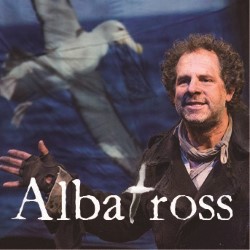
2016albatro_p1

“The piece was born out of desire to explore the relationship between poetic, language-driven live performance and sophisticated multimedia.”

WHO: Benjamin Evett – Performer & Co-author

WHAT: “The Mariner has wandered the earth for 300 years. Now he draws you to a theatre at the Fringe to share his ghostly tale. This award-winning solo performance, using state of the art multimedia technology, takes off from Coleridge’s masterpiece The Rime of the Ancient Mariner, telling the real story behind the poem – complete with sea battles, storms, ice-bound ships and a mystical seabird that reveals the interconnectedness of all living things. Thrilling, hilarious, terrifying and profound, Albatross speaks urgently about contemporary themes of human indifference and our responsibility to our planet.”

WHERE: Paradise in Augustines (Venue 152)

WHEN: Times vary (95 min)

MORE: Click Here!


Is this your first time to Edinburgh?

Yes, this our first time in Edinburgh. The show is having it’s U.K. premiere here in Scotland at Paradise Green.

Tell us about your show.

Albatross is a brand new play inspired by The Rime of the Ancient Mariner. Not just a recitation of the poem, it leaps off from it and thrusts the Mariner into the modern world, having wandered the earth for 300 years, and addresses both age-old issues of sin and redemption, but also contemporary themes of ecological depredation and our responsibility to our planet and to each other.

Albatross was co-written by Benjamin Evett, an actor based in Boston, Massachusetts, and Matthew Spangler, a San Jose-based playwright, whose adaptation of The Kite Runner has had a very successful run at the Nottingham Playhouse and a national tour in the UK, including at the King Theatre here in Edinburgh.

Albatross premiered last year in Boston, where it won three prestigious awards, including Outstanding Solo Performance and Outstanding Production. It is now enjoying its U.K. premiere at the Fringe, before going on to a production off-Broadway at 59E59 Theatre.

The piece was born out of desire to explore the relationship between poetic, language-driven live performance and sophisticated multimedia in a way that creates an environment in which the story can come to the life for the audience with an intensity that is visceral and immediate.

The piece was directed by Rick Lombardo, who served as Artistic Director of the San Jose Rep for six years – a major regional theatre in the U.S – and is produced by Michael Seiden & The Poets’ Theatre. Michael is a dramaphile and philanthropist from Phoenix, Arizona, while The Poets’ Theatre is a theatre based in Cambridge, Massachusetts devoted to exploring the poetic possibilities of theatre in all its facets.

What should your audience see at the festivals after they’ve seen your show?

Haven’t had much time to see anything, but we really liked Ghost Quartet, which has similar artistic ambitions. It’s haunting, poetic, thought-provoking, and has really strong music and performances.


LIKE WHAT YOU JUST READ? FOLLOW US ON TWITTER! FIND US ON FACEBOOK! OR SIGN UP TO OUR MAILING LIST!

INTERESTED IN BEING INTERVIEWED TOO? CLICK HERE!

+3 Review: The Rooster and Partial Memory (Dance Base: 5-14 Aug: 14.30: 45 mins)

“Stark and powerful”

Editorial Rating: 4 Stars

Knowing very little about Middle Eastern dance, I was delighted to get the chance to experience it for the first time. The Rooster and Partial Memory, brought to us by El-Funoun Dance Troupe from Palestine and SHAMS/Marhabtain from Lebanon is a real eye-opener culturally, and it’s wonderful to have them here on a global stage.

The Rooster interprets the idea of the male bird as many different things – not just ruler of the “roost” but disruptor of the peace, chauvinist, dictator, celebrity and general troublemaker. It fuses together Lebanese “dabke” folk dancing with contemporary styles to create a work that celebrates and shares traditional culture but which is also accessible to other audiences.

Much like a rooster first thing in the morning, it starts very slowly and calmly before waking up into an explosion of noise and energy. The role of “the rooster” switches between the dancers throughout the piece, allowing them to add their interpretation of what it means to them, while showing how any man become a rooster at any time.

Thematically, the rooster character generally remains physically separated from the rest of the pack to show their power and prowess over their fellow men, though there are interesting moments of unison depicting how, despite everything, equality sometimes wins through.

The piece creates many different moods and scenarios to demonstrate the different sides and interpretations of the rooster. At times it feels like an intimate solo contemporary piece with a chorus of four cowering behind the leading man, while at other times there’s a party atmosphere full of rhythm and energy.

With so many different interpretations, meanings and moods throughout, it can be a little tricky to follow what’s going on in this piece, especially for those unused to watching contemporary dance, so try not to read too much into it and enjoy it for what it is.

Partial Memory is much simpler to grasp, and also more emotive. It follows one man’s attempt to reconnect with his childhood through a series of projected photographs. With some spoken narrative to aid comprehension, we see him desperately struggle to understand his father’s absence with confused, incomplete sequences, followed be ferocious energy as he interprets his father’s desire to become a fighter.

As the projections speed up and he loses control, we seem him frantic and desperately trying to grasp the images – a feeling we’re all familiar with as something we try to recapture slips away. As the projections start to move around we really do feel his pain as he chases them and it’s a very stark and powerful end to the performance. It would be great to see this developed further.

Star (blue)Star (blue)Star (blue)Star (blue)

Reviewer: Steve Griffin (Seen 6 August)

THIS REVIEW HAS NOT BEEN SUBEDITED

+3 Review: Molly Whuppie (Assembly Roxy: 4-28 Aug. 1030. 1hr 15)

Image. Assembly & LicketySpit Theatre

Image. Assembly & LicketySpit Theatre

“Smiling, tuneful, and big-hearted”

Editorial Rating: 4 Stars: Nae Bad

Molly Whuppie is a pickle of a lassie. She’s bright, bonny and brave and saves her mother and sister from dying of hunger on a northern shore. She’s a fairy tale character from the Western Highlands , whom English cousin Jack – of beanstalk fame – would love to meet, for their stories are pretty close; although Molly (aka. Maol a Chliobain) steals it, as her baddie is no the giant, but one King Boris (!), who loves his meringues too, too much.

Smiling, tuneful, and big-hearted, Molly Whuppie has toured all over Scotland and has already, since 2001, delighted upwards of 30,000 people. Licketyspit Theatre Company is Edinburgh based but has decided, as the International Festival posters have it, to ‘Welcome [the]World’ so this is the company’s Fringe premier and it’s a treat.

If you’re still fortunate to be in your early years – and therefore very unlikely to be reading this! – Licketyspit is for you. If you’re alongside a young child, then you’ll appreciate the modesty of the fact that all actors do is ‘show the story’ in exciting and imaginative ways. First then, there’s fearless Molly (Amy McGregor) who keeps her pretty red beret on even when balancing for her life on the Bridge of the One Hair, and we sing “I’m Molly and you can’t scare me / I’m Molly, Hee Hee Hee!” Second, there’s Virginia Radcliffe as Ninian the Giant in tremendous sandals and as horrid King Boris with a wonderful polka dot jester’s cap. No crown of majesty for him, just fanfare by kazoo.

Radcliffe is also Artistic Director of LicketySpit and it is easy in Molly Whuppie to see hers years of experience in building drama-led work for children and their families. There’s a good strong narrative where the good and the kind – above all – prevail, constantly reinforced by repetitive elements of colour, music and song. Invention is everywhere, from the reveal of successive kind grannies to land clearance by tree hurling.

Yes, it was probably devised as a December, Christmassy show when Molly, her mum, and her sister are perishing of cold and, yes, there’s the question of how come only giants have a Never Empty Purse; but no matter really, this is a warm and generous show with stick puppets to colour in and cut out afterwards.


nae bad_blue

Star (blue)Star (blue)Star (blue)Star (blue)

Reviewer: Alan Brown (Seen 6 August)

Go to Assembly Children’s Shows

Visit Edinburgh49’s Assembly Roxy archive.

+3 Review: A Streetcar Named Desire (Assembly Roxy, 5 Aug – 29 Aug : 13.55 : 1hr 30mins)

https://files.list.co.uk/images/festivals/2016/fringe/2016STREETC-9D-300.jpg

“Consistently raw, emotional and human”

Editorial Rating: 2 Stars Nae Bad

For many years, Tennessee Williams’ immortal “A Streetcar Named Desire” conjured up two shared memories: the off-yellow, stained tooth colour of chipboard desks; and the strange, (and in hindsight, quite sad) familiarity with which my divorced, middle-aged English teacher spoke about the dangers of hiding in fantasies.Now, thanks to the Tumanishvilli Film Actor’s Company and director Keti Dolidze, it’s far easier to think of quiet intricacy, and the heartfelt ebb of Georgian on a smoke-filled stage.

From the get-go, it clear this is a production which has been undertaken with care. The monotone stamp of poverty is imprinted surprisingly well on the set. Had it not been lit up on the Assembly Roxy stage, I would have had no trouble believing it had all just been sitting in the French Quarter. But what was most admirable about the set was its clever use of shadow. Translucent material and a little light transformed what in any other production would have simply been a rearward wall into a very entertaining transition tool: whilst set is moved around, the audience is treated to dancing shadows, or the silhouette of a saxophonist. And whilst occasionally these transitory segments went on a little too long, they were nevertheless welcome. Combined with excellent, well-timed soundscaping, it was clear the overall audiovisual design had received the care it deserved.

However, the background paled in comparison to the string of strong performances. It would be difficult to place the strongest actor in what is obviously a very seasoned cast. Even sans translation, this was a show which was consistently raw, emotional and human. Nineli Chankvetadze’s Blanche in particular showed almost uncanny emotional range, bringing depth to every smile and frightened sob even when the emotions in between were few. Kudos also to Imeda Arabuli as Stanley Kowalski, who lent an almost frightening hypermasculine, bestial quality to a character who is so easily made trite by a lesser actor.

With the aforementioned strengths, then, you could be forgiven for wondering why I’ve given this show a surprisingly low rating. And whilst, clearly, many of its component parts merit celebration, it is unfortunate then that this production was completely and utterly failed by its translation. Whilst subtitling a foreign language work is a fine idea, its execution onstage was risible.

From half a line being completely cut off (which happened often), to the subtitles stalling or – even more frustratingly, skipping back and forth in an obvious effort to re-find the dialogue – and the surprisingly low quality of what should have been a simple transcription of Williams’ original transcript (Prize contenders include the immortal phrase: “I’ll never forget the colour of his yes!”), the translation of this show was consistently frustrating. Even worse, the form and punctuation of character dialogue was not so much confused as nonexistent, leaving much of the second half reading as if Blanche was having the most spectacular breakdown ever seen on stage.

But even worse was the fact that, as an audience member, I often found myself between Scylla and Charybdis: either losing myself in the wonderful performances on show and having no idea what was being said, or half-understanding the dialogue whilst being unable to see the show itself as I craned my vision to the extreme top left of the stage. Had the subtitling quality been better this may have been less of a problem, but given the internal problem-solving required to make the subtitles coherent, it was like I had simply stepped outside for half the play. I shudder at the prospect of having seen this work without first being familiar with the plot beyond cultural osmosis, as a surprising number of people are. Given that the importance that the language plays in Streetcar, I was legitimately shocked at the poor quality of its execution.

In terms of its actual materiality, Keti Dolidze has crafted a fine show indeed. And, if you’re fluent enough to understand Georgian on the stage, I’m sure it would make for an afternoon to remember. Had it been simply billed as a foreign language play, even an English speaker would be able to understand, at least, the raw emotional content from performance alone. But, as it stands, the almost fantastically poor quality of translation packaged with this show made engaging with it a chore by the final half hour. With some simple tweaks, A Streetcar Named Desire could have quite handily added two more stars. But, as it stands, perhaps the kindness of strangers is less important than the kindness of transcribers.


nae bad_blue

Star (blue)Star (blue)

Reviewer: Jacob Close (Seen 5 August)

Visit the Assembly Roxy  archive.

THIS REVIEW HAS NOT BEEN SUBEDITED