Mack the Knife (Bedlam: 25 – 26 Jan.’17)

mack-the-knife

“Lady, ‘the hottest ticket in town’”

Editorial Rating: 3 Stars

There’s a virtual Hall of Fame in this show: Brecht, Weill, Lotte Lenya, to start with; and a few music greats – Ella Fitzgerald, Ray Charles, Sinatra – and then Kevin Spacey as Bobby Darin with the title song. If you want more, there could be Tony Bennett and Lady Gaga’s The Lady is a Tramp and a passing literary reference to Raymond Chandler’s Philip Marlowe.

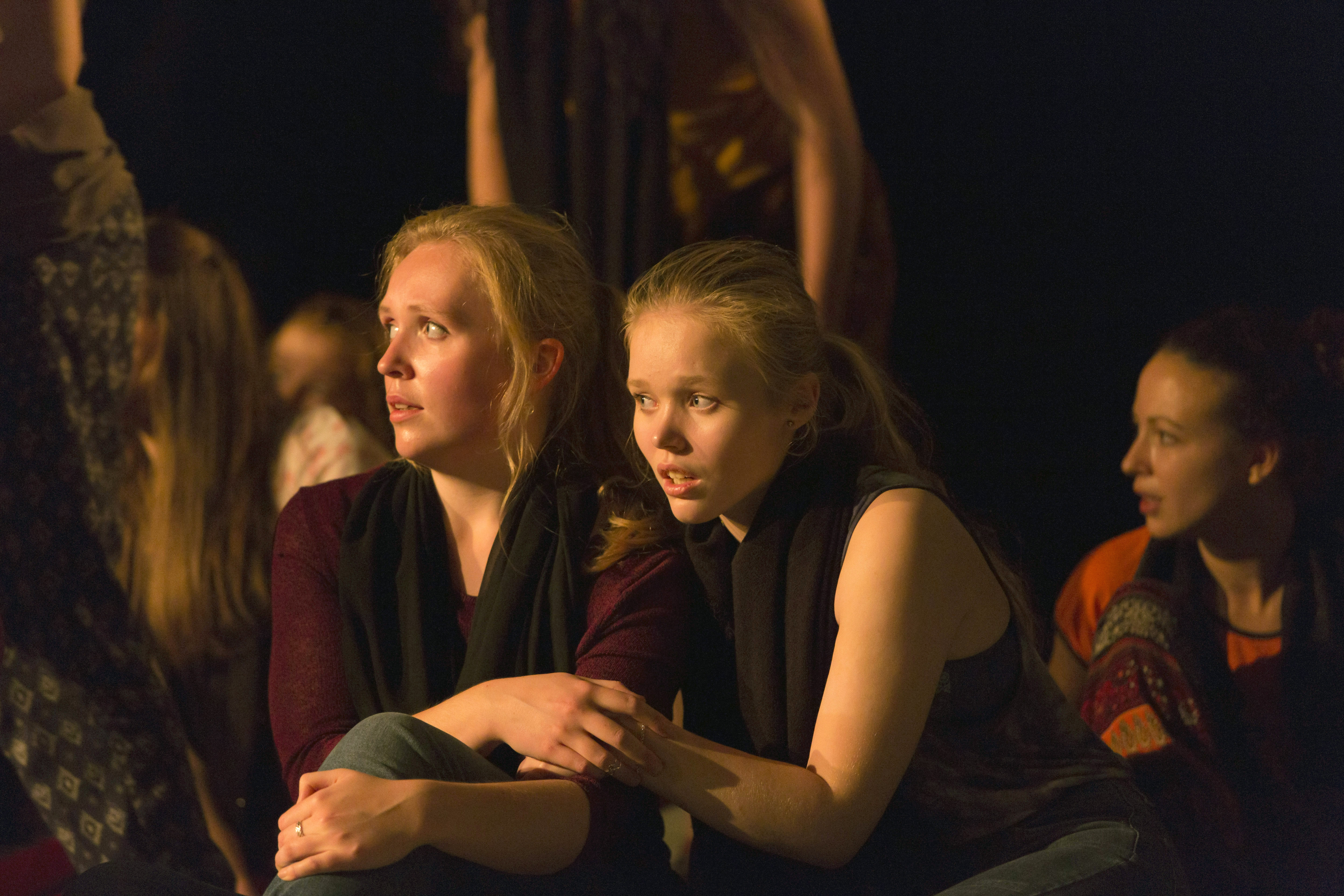
Nathaniel Brimmer-Beller would channel them all through his play. It’s a clever and applaudable conceit but the interference is too much. Too many signals from too many sources.  A mellow jazz intro’ – nice – leads into Oh, Lady Be Good which given what follows is practically hilarious. ‘Lady’ sings that she’s ‘all alone in this big city’ but for all her lonesomeness she is plainly making out just fine. It helps that the competition in the other clubs is thinning out, alarmingly so in fact, and the police appear clueless.

Detective Foster (Paddy Echlin) likes his work. He’s had lessons in psychological profiling and Jack the Ripper is on his mind rather than Georgia but he’s a poor sap. He has the sharp trench coat and the 50’s trilby but is not the hard-boiled character that he thinks he is. More a marshmallow with a toy gun.  Deacon (Jacob Brown), Lady’s trumpet player, is more on the case and knows a set-up when he sees one but unfortunately his incredulous WTF’s don’t help him. As for Lady, ‘the hottest ticket in town’, Jo Hill enjoys herself. She’s sassy at the mike, sings confidently, and is audacious beyond reckoning.

And here’s the rub. Lady’s luck – call it ‘cool’ if you must – is something else. It turns tension into the comic macabre, not least when she kneecaps herself and stays on her feet. Maybe her aim was off but even a flesh wound must hurt like hell. Then there’s the absolute gift of a police detective who ‘packs heat’ like Clouseau on holiday.

Will Briant on piano and Vebjorn Halvfjierdvik on bass give the piece a tempo and style that if extended – for the Fringe, say – could lift the play into the lighter, skilful register that Brimmer-Beller is reaching for.

Star (blue)Star (blue)Star (blue)

Reviewer: Alan Brown (Seen 25 January)

Go to Bedlam Theatre

Visit Edinburgh49‘s Bedlam archive.

Picnic at Hanging Rock (Lyceum: 13 – 28 January ’17)

hanging-rock-1

“It’s cool, it’s chilling and it shocks”

Editorial Rating: 4 Stars: Nae Bad

Do you approach Hanging Rock expecting to see corsets hanging in mid-air? Well, in which case you will have noted that the excised last chapter of Joan Lindsay’s 1967 book provides this astonishing feature. Either that or you’re wandering in a Dreamtime of your own (adolescent) imagination, set about with eucalyptus trees and hot flushes from Peter Weir’s 1975 screenplay. Now here comes the wake-up call, a dramatic restorative, if you will.  It’s cool, it’s chilling and it shocks.

This Picnic at Hanging Rock is a stylish outing, to say the least, from Melbourne’s Malthouse Theatre and Perth’s Black Swan Theatre Company. That’s Perth, Western Australia, and that’s a collaboration over 2170 miles, but who’s counting? This is Tom Wright’s adaptation but as in Lindsay’s story distance is of no consequence and time is suspended, ‘running out and spooling in’, between grey black panelling topped with brushwood. No rock is visible and there is no interval.

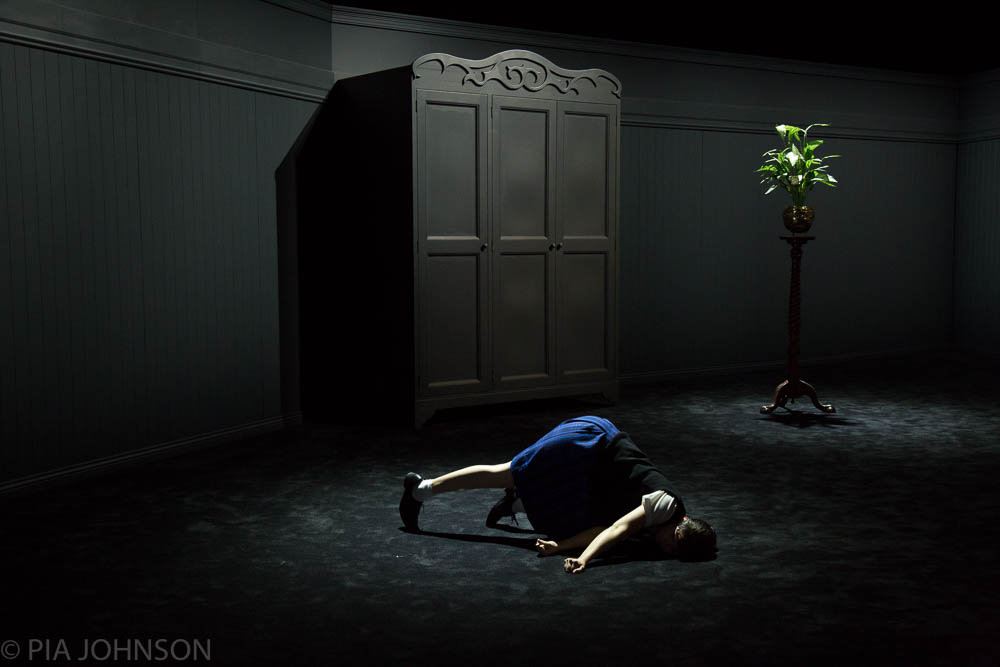
There is thunder and a blackout and five schoolgirls suddenly appear, side by side across the stage, in immaculate uniform ready for Speech Day 2017. They tell the story, their shared creepy story, of what happened on St Valentine’s Day, 1900, when a daytrip from Appleyard College went to Hanging Rock and four girls and one teacher disappear. One of them, Irma, is later found, close to death, and with absolutely no memory of what happened. It is, at its opening, a composed and perfectly disciplined account that you realise is the sure and safe way to rationalise the irrational, the unknown and the dangerous. It is a long introduction but necessary, for in this telling you understand that an ancient landmark is an abcess to be swabbed away for the sake of white Australians everywhere and young ladies from proper schools can never be too English. Whatever happened, dear, it’s really too, too bad that it happened in the state of Victoria.

hanging-rock-2

There are parasols to ward off the sun, a grand aspidistra to maintain respectability, and – figuratively – there must be ‘lino, asphalt, and axminster’ to hide the red earth. Mrs Appleyard, founder and Headmistress, remembers Bournemouth but dreams of the  intimate touch of her (?dead) husband. Irma, returns to the school before leaving for a stay in England and is viciously attacked by girls suffocating in their own propriety. Director Matthew Lutton works to challenge perceptions: angling the girls in contorted positions, immobilizing their movements in successive freeze-frame ‘shots’, subjecting the narrative to enigmatic surtitles over frequent blackouts. How else to refresh, even subvert, what has become an almost mythological text, complete with panpipes?

It is actually without humour – an unusual and tense achievement over eighty-five minutes – but the performances of the several characters are still appealingly unaffected and distinct. Amber McMahon cross-dresses as the young Englishman, Michael Fitzhubert, but there’s no caricature here. Elizabeth Nabben is Mrs Appleyard and builds a fragile role to its last despairing moment; Nikki Shiels suffers as Irma, whose fate it is to keep her nightmares under control, whilst Arielle Gray and Harriet Gordon-Anderson are in supporting roles that they make important.

Is an audience bushwhacked by theatrical device and intelligence? I think so, but it is performed with considerable respect for its source and the script is smart, spare and ingenious. Technically it works a treat with outstanding lighting and sound and this is probably one production where the ‘best’ seats, for the best effect, are probably at the front of the Upper Circle and you should definitely read the Director’s and Writer’s programme notes after the show because they’re too helpful. The play’s the thing.

[FYI. Bruce Springsteen and the E Street Band play at Hanging Rock on Saturday 11 February. You simply cannot keep a good place down!]

nae bad_blue

Star (blue)Star (blue)Star (blue)Star (blue)

Reviewer: Alan Brown  (Seen 14 January)

Picnic at Hanging Rock at the Lyceum

Visit Edinburgh49‘s The Lyceum  archive.

Alice’s Adventures in Wonderland (Lyceum: 26 Nov – 31 Dec.’16)

Photo credit Drew Farrell. (L-R) David Carlyle as Gryphon, David James Kirkwood as cast, Jess Peet as Alice, Gabriel Quigley as Queen of Hearts, John Macaulay as King, Alan Francis as Duchess, & Tori Burgess as cast.

Photo credits: Drew Farrell.
(L-R) David Carlyle as Gryphon, David James Kirkwood as cast, Jess Peet as Alice, Gabriel Quigley as Queen of Hearts, John Macaulay as King, Alan Francis as Duchess, & Tori Burgess as cast.

“This particular and generous invitation to Wonderland should be accepted at once”

Editorial Rating:  4 Stars: Outstanding

When Alice’s Adventures in Wonderland was first published Britain also got its first speed limits for horseless vehicles. The Locomotive Act of 1865 meant no more than 4mph in the countryside and 2mph in towns, together with a red warning flag. No doubt Edinburgh Council is heading that way again, and for good reason, but that does not stop Anthony Neilson’s version of Lewis Carroll’s nonsense classic from being very welcome, fast and surprising.

‘A large rabbit-hole under the hedge’ it has to be, for how else could a very round White Rabbit (WR) go down it? Wowza! It is some exit! Children gasped. And ‘in another moment’ down went Alice after WR, feet first, ‘never once considering how in the world she was to get out again’. No worries – as Alice plummets towards Australia – remember that this is a ten year old on approach to Wonderland.

 The Lyceum is bedecked with small hot air balloons and a fluttering kite. Fairground music plays on and up goes the title in lights, announcing the main attraction as part gaiety theatre, part fond and exuberant dream. It is all, quite naturally, larger than life. Wait until you see the size of the Duchess’s baby. And those arms! Surreal. The Cheshire Puss grins from within the disc of the sun, Alice gets stuck inside WR’s des res and there’s alarming talk of Giant Child infestation. Set a jumbo tea service upon designer Francis O’Connor’s super revolve, press the ‘On’ button and see the glittering tea leaves fly …

(L-R) Jess Peet as Alice, Isobel McArthur as Dormouse, David Carlyle as March Hare, & Tam Dean Burn as the Mad Hatter

(L-R) Jess Peet as Alice, Isobel McArthur as Dormouse, David Carlyle as March Hare, & Tam Dean Burn as the Mad Hatter

It may, at the close, be all Victorian and ‘lingering in the golden gleam’ – and that’s ok, as Carroll admired Tennyson after all (& photographed him) – but in terms of performance and effect the surface quality is lively and attractive. There’s nothing adrift here; no pool of tears either. Instead Alice (Jess Peet) is pretty contemporary: sure-footed and unfazed, arguably more midshipman in the Home Fleet than a dreamy little girl from Oxford, but resolute with crystal diction and a level gaze. Tam Dean Burn plays the Hatter as mad as mad can be without terrifying a young audience and he has maniacal fun with the safety curtain. Mordant humour might well be the preserve of the Welsh and – for me – David Carlyle’s glum Gryphon, marvellously at odds with his colourful plumage, is the co-star of the show. He (and not the Knave) stands accused of stealing the Queen’s tarts – surely a preposterous charge, for who could refuse to follow his courtly lead in the Lobster Quadrille?

As wholesome children’s picture books go The Very Hungry Caterpillar is up there with the best and Eric Carle’s creation, unlike Carroll’s, does not smoke a hookah but then it has long been observed that you ‘Do not look to ‘Alice’s Adventures’ for knowledge in disguise’. Quite what you do look for is your crazy, delighted, business and it might even, with a lot of luck, be the same as a child’s vision. A recipe for mock-turtle soup as pepper spray won’t appeal but otherwise this particular and generous invitation to Wonderland should be accepted at once, not least because no hedgehog was harmed in its production.

outstanding

StarStarStarStar

Reviewer: Alan Brown (Seen 1 December)

Go to Alice’s Adventures in Wonderland at the Lyceum

Visit Edinburgh49’s The Lyceum archive.

Too Long the Heart (The Biscuit Factory: 10 -12 Nov.’16)

Ian Sexon as Brady from the 2013 Siege Perilous production. Photo: Nicola Garman

Ian Sexon as Brady from the 2013 Siege Perilous production.
Photo: Nicola Garman

“a low flame thriller, splintered with humour, affection, and a weighty sense of modern history”

Editorial Rating: 3 Stars Nae Bad

Inbetween the ArmaLite and the ballot box there’s some poetry, at least that’s how it is in writer David Hutchison’s reworking of Too Long the Heart (Edinburgh, 2013). In literary terms it’s Yeats with a telling fragment from Easter 1916; in a softer more lyrical vein there’s the Mountains of Mourne. We’re in Ireland, sure enough, in a freezing cold cottage in County Cork, armed with a tin of biscuits, tea, handcuffs, a heavy duty revolver and a semi-automatic pistol.

Get the picture? This is a low flame thriller, splintered with humour, affection, and a weighty sense of modern history. Split screen projection of news footage of ‘The Troubles’ – still an understatement to die for – makes the backstory all the more apparent. Bloody Sunday, the Loughgall ambush, Shoot to Kill, and ‘Historic Compromise’; they’re all here. And when it’s more introspective, there’s quiet, live music and song on cello, flute and guitar.

There are four characters gathered in this cottage. Caitlin (Cabrina Conaty) and her boyfriend Marty (Des O’Gorman) arrive first. She, for good reason, is eager and excited. Marty, a third year History under-graduate, is likeable but clueless. When it really would have been best to have their faces hidden, he doesn’t get his balaclava on in time. Nevertheless and as planned they manage to snatch an English tourist, who 30 years ago was an army captain in Belfast, and – eejit! – has come to the Republic for a spot of fishing. Neil Lawson (Steve Hay) denies it, of course, but he’s still got the haircut, the neat moustache, the tattersall shirt and real composure under fire. Maybe he was taught some Yeats at Sandhurst. Anyway, he certainly has to prove his mettle when he’s up against Brady (Ian Sexon), a Provisional IRA commander, who has some unfinished business with the British officer class.

Three years on, the script is tighter and sharper, reckons David Hutchison. The play is still being developed and the sightlines are not all they should be but it certainly cracks along under Andy Corelli’s direction and the more tense the moment, the better the action that is called for. The closing fifteen minutes in which Brady plays the police against the media is not so neat that the suspense cannot work. Up to that point it’s more a case of each character smacking against their past – or, with Yeats again, negotiating ‘the stone [that’s] in the midst of all’. The topicality of the projected imagery helps here and there’s some digital ‘doubling’ for each character to confront. Interestingly I was ‘with’ each one of them, so sympathetic is the characterisation. Brady ridding his unit of the out-and-out headcases (terrorists?) for instance. It’s Caitlin who makes the patriotic call for her beloved country of Ireland, which is ok until – unwittingly – she’s trumped by the line to ‘Take your country back’ and so I stay firmly with the Army’s riposte, if not belief, that national myths are ‘convenient evasions’. Poor Marty cannot find traditional Irish music on the radio, but then he’s more a ‘Snow Patrol’ kind of guy.

Too Long the Heart is ninety minutes of well calibrated drama. If for you ‘The Troubles’ are simply another dismal instance of ethno-nationalist conflict, then this should enliven and disturb the category.

nae bad_blue

Star (blue)Star (blue)Star (blue)

Reviewer: Alan Brown (Seen 10 November)

Visit Edinburgh49 at the Other  venue archive.

Grain in the Blood (Traverse: 1 – 12 Nov.’16)

l to r: Frances Thorburn (Violet), Sarah Miele, Andrew Rothney, John Michie, Blythe Duff. Photos: Mihaela Bodlovic

l to r: Frances Thorburn (Violet), Sarah Miele, Andrew Rothney, John Michie, Blythe Duff.
Photos: Mihaela Bodlovic

“This hair-trigger of a play”

Editorial Rating: 5 Stars: Nae Bad

What is it about valleys? There’s the BBC’s Happy Valley and Edward Norton in Down in the Valley, also far from ‘happy’, and – seminally – there’s the Valley of the Shadow of Death, which is as good a place as any in which to locate Rob Drummond’s latest enthralling work. Once upon a time, ‘for hundreds of years in the valley everything was just so’, but then the thanksgiving poetry ran out, like blood. Time now, then, for a spell of compassionate release.

That’s the hope anyway, and it is hope that supports Sophia, whose grand-daughter Autumn, needs a kidney transplant if she is to live much beyond her twelfth birthday. Isaac, Sophia’s grown son, has it in him to help but naturally, dramatically, it is not as easy as that. In fact, after 85 minutes, it has all still to be decided, either by the words of a child terribly wise beyond her years or out of the barrels of a 12 bore shotgun. Orla O’Loughlin’s direction respects this hair-trigger of a play right to its showdown.

The action rises over 3½ days, counted as ‘three sleeps’ by Autumn, who is brat reporter and ancient Chorus combined. She knows the ‘Verses of the Harvest’ by heart and the rhythmic invocation of the Grain Mother as provider of health and happiness- sad joke –  sounds solemn and serious, ‘even though She doesn’t fucking exist’. That’s the thing about Autumn (Sarah Miele): she has that unnerving sacrilegious streak that adults can’t manage.

So, there is proper tension down on the farm. There’s even a game of ‘Truth or Dare?’ that contains the greatest reveal of them all, which is wickedly ironic as Isaac (Andrew Rothney) is described as ‘low risk’. Sophia (Blythe Duff) needs to believe that assessment whilst Burt (John Michie), is there as the phlegmatic companion to threatening circumstance. These two play out a nice challenge of ‘Would you kill scumbags to save your daughter?’, which just digs deeper into the disturbing, teasing, ethical dilemmas that Drummond delights in. Go to his Uncanny Valley for starters.

grain-in-the-blood-2

The remote rural location is part of the piece. Where better to unearth the unsettling and the rooted? The harvest moon can glint off Isaac’s blade and there’s the suffering of Auntie Violet’s horse to put alongside Sophia’s claim that ‘We’re all animals’, which might be what her veterinary practice has taught her. Her house is modern, of machined and polished wood, where you might expect low ceilings, wood smoke and warped timbers. The spare, snappy dialogue and careful movement suits the space, whose back wall slides away to show Autumn’s bed with its blood drip stand, or the barn, site of an earlier, bloodier horror. Introducing classical tragedy for our times, anyone?

Intrigued? You should be, because this is fascinating theatre, still and severe in its way, but emotionally resonant, well-focused and very well performed.

nae bad_blue

Star (blue)Star (blue)Star (blue)Star (blue)Star (blue)

Reviewer: Alan Brown  (Seen 1 November)

Go to Grain in the Blood at the Traverse

Visit Edinburgh49‘s Traverse archive

Dr Johnson Goes to Scotland (Traverse: 1 – 5 Nov. ’16)

l to r. Lewis Howden, Gerda Stevenson, Simon Donaldson, and Morna Young. Photo: Kirsty Anderson

l to r. Lewis Howden, Gerda Stevenson, Simon Donaldson, and Morna Young.
Photo: Kirsty Anderson

“Comic effect knocks against an open coffin on Iona”

Editorial Rating: 3 Stars

Would Samuel Johnson, heroic dictionary maker, essayist, critic, and celebrity wit ever have appeared on ‘Strictly’? Perhaps. He was, after all, prone to nervous shakes and tics and he would have been mercilessly brilliant at discombobulating the judges. Anyhow, in the last of the current season of a Play, a Pie, and a Pint, the big man is in polished boots and plaid and he steps up to a jig and seems to enjoy it.

And verily this is the same Dr Johnson, who noticed that ‘the whole [of Edinburgh] bears some resemblance to the old part of Birmingham’. Writer James Runcie continues his rehabilitation of the arch English nationalist by rowing him thoughtfully and fondly over the sea to Skye (and to Mull and Raasay). A Word with Dr Johnson – at the Traverse in October last year – was about the man, his wife, and his English dictionary; this time (1773) he’s in the boondocks and the heather and the Gaelic. For the proto London-centric it’s an ear-bending peregrination in a land where ‘you have more words than people’, which could well have been its chief attraction.

Lewis Howden plays Johnson sympathetically, of splendid girth and with orotund voice, and with a baffled interest in all things Scottish. An exploration of Fingal’s Cave, lantern in hand, leaves him only dimly enlightened but his enthusiasm for Thomas Braidwood’s school for the deaf and dumb is obviously sincere.  His companion throughout is, of course, the amiable James Boswell (admirable by Simon Donaldson), who treats us to evocative latin from Dunbar’s ‘Lament for the Makars’, whilst guarding his distinguished author friend from the sublime and local peril of being called a bampot.

So then, a pleasing trot through good old Scottish ways ? Runcie even brings on ‘Macbeth’ and the Bonnie Prince, which is fine until their comic effect knocks against an open coffin on Iona and a poem of freedom in earnest pursuit of the Scottish nation. Supporting roles by Gerda Stevenson and Morna Young are amusing and/or tuneful but my distinct impression was of looking in at the tartan themed windows of discount booksellers, The Works, on Princes Street. The learned Dr.’s eye would take in a remaindered copy of his  ‘A Journey to the Western Islands’; he would harrumph, say “I’m deeply obliged”, and move on.

Star (blue)Star (blue)Star (blue)

Reviewer: Alan Brown (Seen 1 November)

Go to Dr Johnson Goes to Scotland at the Traverse

Visit Edinburgh49‘s Traverse archive.

Walking on Walls (Traverse: 18 – 22 October’16)

Image: Leslie Black

Image: Leslie Black

“Funny and searching by turns”

Editorial Rating: 4 Stars

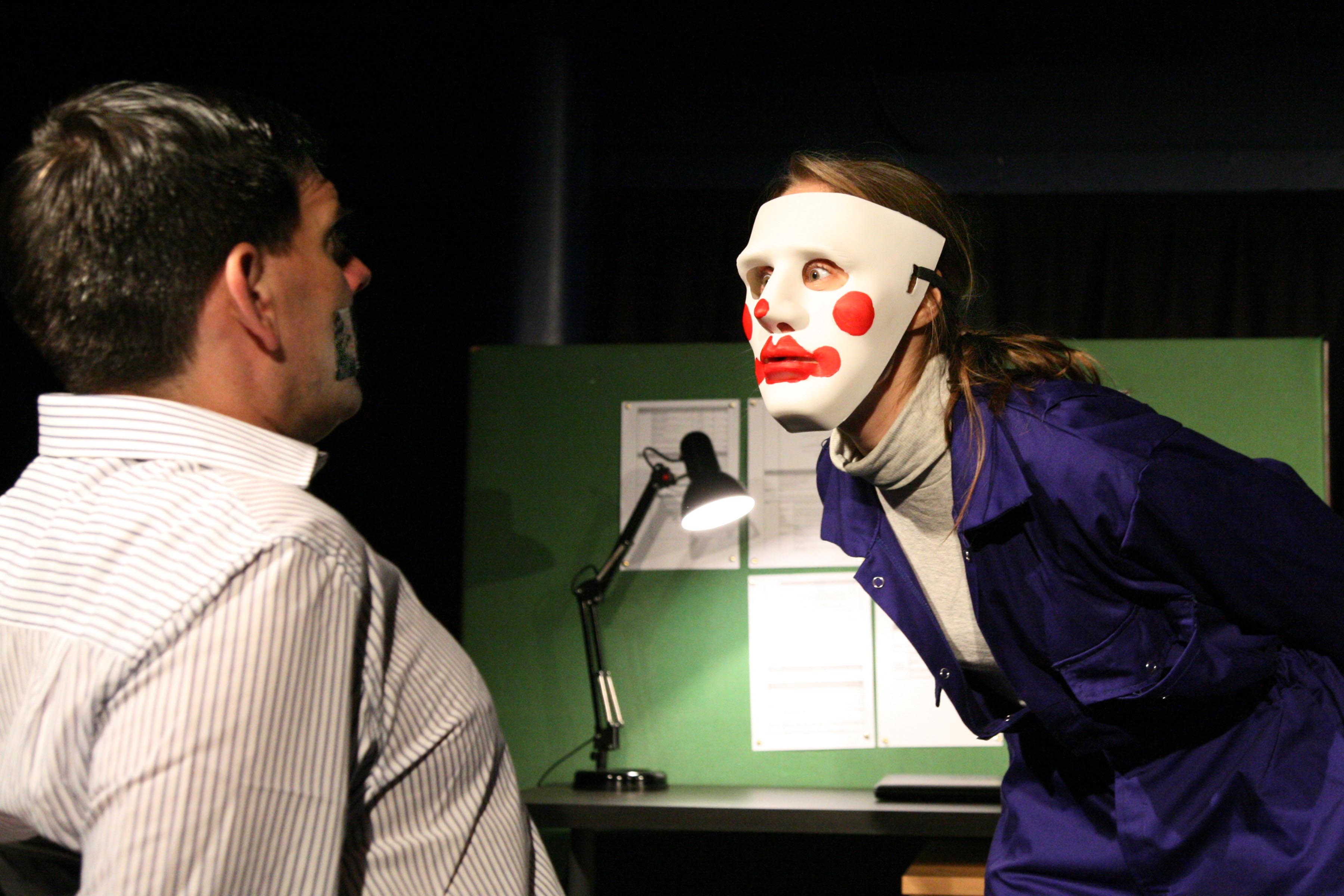
You would not take Claire for a creepy clown. Have there been any sightings in Edinburgh yet? With Halloween around the corner there may well be a few popping up at the window or from behind a wall, which is where Claire comes into her own. She’s the ever so earnest social scientist who doubles as a Super Helpful Person, who just happens to wear a clown mask when she’s out at night looking after people. You could say she looks over them.

Nobody’s laughing at the sinister clown craze, least of all the police, and we shouldn’t laugh at Claire, who has just called them – again; but we do laugh at her, just as the police do, because Morna Pearson’s script makes it all too easy to. Poor Claire with her big round specs and love of chat-defying stats, who’ll never be down the pub after work. But this is the same Claire who notices that (normal) ‘people don’t board themselves up’ unless they’ve been hurt and are vulnerable.

You’ll hear a lot from Claire (Helen MacKay) as she explains herself and her wacky, neighbourly, exploits. She is admirably audible, even from behind the mask. You’ll hear less from Fraser (Andy Clark), not least because of the duct tape across his mouth, but he’s impressive at being incredulous, dumb, and helpless. Unsurprisingly he’s in WTF mode and tries to stay there until he too is affected by Claire’s story. Well, he might be affected, and that’s the point of Pearson’s stinging, interrogatory close.

It is a questioning piece, funny and searching by turns. Who’s the victim here, for one thing, and what’s their space like? Andy is literally bound in his and is pushed around by a young woman, which has to be a valuable experience for him. With Claire it is more complicated. Work is probably the featureless desk, stage left. Home seems to have shut behind her and seems inextricably part of a very unhappy time at school. She sees the empty Buckie bottles and used condoms in the street and it’s all pretty ugly.

There’s tension, of sorts. I saw and heard the opening out and folding up of Claire’s neighbourhood map – with its anti-social ‘hotspots’ – and thought, characteristically, ‘Metaphor-for-Anomie’, which is almost certainly to go too far. Walking on Walls is more interested in seeking kindness than anything else.

Walking on Walls is the third play in the Traverse’s current series of ‘A Play, a Pie, and a Pint’ from Oran Mor, Glasgow.

Star (blue)Star (blue)Star (blue)Star (blue)

Reviewer: Alan Brown (Seen 18 October)

Go to Walking on Walls at the Traverse

Visit Edinburgh49‘s Traverse archive.

Frost / Nixon (Bedlam: 12 – 15 Oct.’16)

frost-nixon

David Frost (Callum Pope), left, interviews Richard Nixon (Paddy Echlin)

“The whole impression is one of a gathering and important moment.”

Editorial Rating:  4 Stars: Nae Bad

It’s a generational, media churned, thing. For Brits over 40 to call Peter Morgan’s Frost / Nixon (2006) the ‘real deal’, might be to ask ‘Collectable’ or ‘Antique’?; for Bedlam’s student audience this enthralling play on fact is simply ‘Legit’. Producer Patrick Beddow can be well pleased with its timeliness, coming as it does during the objectionable and tawdry business of the Hillary and Donald Show. Doubtless Frost / Nixon is relevant as U.S political history from 1977 but director Nathaniel Brimmer-Beller and cast make darned sure that it will still grab your attention as a piece of theatre.

David Frost died in 2013 and has the latest memorial stone in Poets’ Corner in Westminster Abbey, which says a lot about the influence of TV these days. Anyhow, he was 39 when he interviewed former President Richard Nixon, three years after Nixon was forced to resign following Watergate. Twenty-four hours plus of recorded material was edited into four ninety minute broadcasts. The first, on 5 May 1977, drew 45 million viewers, still the largest television audience for a political interview ever. Frost /Nixon is the story of how this big (and very real) deal happened, or kind of happened, and how it played out on all those screens. Frost was reckoned a lightweight, capable of only pitching softball questions, ‘puffballs’, that Nixon would just smash over the outfield fence and pocket $600,000. Well, he got his money – and a snazzy gift of Italian shoes – but not all the home runs.

Paddy Echlin is Nixon and Callum Pope is Frost and one on one, with a strong script, it’s a revealing double act. Frost, dapper and debonair, is still a shrewd operator. Nixon, is clever, practised, and self-assured almost to the last. Voice, gesture, timing are studied and effective. Off-camera – and there are cameras on stage – you get just enough of their personal lives to feel interested. Whether, you should sympathise with Richard Nixon is, of course, a contentious question but Echlin’s performance may well win you round. His chief of staff, Jack Brennan (Sasha Briggs), defends him against the liberal ‘side’, where Macleod Stephen as James Reston is particularly telling as player and commentator.

It’s 90 minutes straight through with no interval, which is a good call. Scenes proceed briskly and there are only a few chairs to move around and the whole impression is one of a gathering and important moment. The cameras provide some tight close-ups, and are a helpful reminder that this is a made-for-television ‘event’, but the flood lights do fade Nixon’s jowls to nothing. Otherwise, this is illuminating work.

nae bad_blue

Star (blue)Star (blue)Star (blue)Star (blue)

Reviewer: Alan Brown (Seen 12 October)

[Student? Want to review with us? Please email editor@edinburgh49.com]

Visit Bedlam Theatre

Visit Edinburgh49′s Bedlam archive.

The Suppliant Women (Lyceum: 1 -15 October ’16)

r. centre: Gemma May, Chorus Leader. Photos: Stephen Cummiskey.

r. centre: Gemma May, Chorus Leader.
Photos: Stephen Cummiskey.

“They do lovely huddled sounds of the night too, complete with sheep and Peloponnesian crickets.”

Editorial Rating: 4 Stars

Does it really come down to drink: a muscular Greek wine, £5.50 from Tesco say, against Egyptian small beer? Well, the libation was a full-bodied red and it went down a treat, all down the front of the stage in fact, and the bladdered sons of Aegyptos are repelled. The 50 refugee daughters of Danaus are safe in Argos – for now – protected by Zeus, the popular will, and by their father, whose clear head and savvy style suggests that he’s teetotal.

The Suppliant Women is heady, old theatre. Aeschylus wrote it for Athenians of his time (the demos of 500BC) and David Greig gives us his 90 minute version for our duty-free enfranchised time, when ‘border security’ matters and our leaders debate migrant quotas. Nevertheless and to its credit, as directed by Ramin Grey, this stays a civic piece, obliged to its community, retaining Aeschylus’ Chorus of (local) young women who seek asylum from forced marriage. It also – and very admirably – features original music by John Browne for percussion and aulos, single and double. What’s not to respect?

l.Imogen Rowe & Anna MacKennan, r.

l.Imogen Rowe & Anna MacKennan, r.

The Chorus is 36 determined volunteers from Edinburgh with a standout leader (Gemma May) and they have the angel’s share of the drama. The bare stage is all theirs, from top to bottom, side to side. It is sacred ground, a temple refuge supposedly, offering plenty of room for choreographed movement with some dance elements. Expert vocal direction from Stephen Deazley means that the devoted choral odes make sense and create their own rhythm and sway. They do lovely huddled sounds of the night too, complete with sheep and Peloponnesian crickets.

But still Father Danaus (Omar Ebrahim) presides. He is neat and conspicuous in black amongst the colourful mix of his daughters’ casual dress and his words are sage to the point, I thought, of being on a direct line to Zeus, which rather diminishes his daughters’ impressive praying. Pelasgos (Oscar Batterham), King of Argos, is the younger man and his sharp suit and tie speak ‘Lawmaker’. And, fair dues, he’s the one who has the job to do. How to convince his people to let these foreign women in? Sensitive. He pauses to consider the often terrible consequences of intervening in ‘another man’s war’ but, when in doubt and as quick as a Prime Minister in a jam, he decides: let the people vote … with some help from my silver tongue.

It is, actually, post-referenda, wildly familiar, if that’s not a paradox. The citizenry mistrusts authority, sees stitch-ups at its expense, and has faith only in the gods. Ah, but which god? And here’s where The Suppliant Women is mischievous and – in its modern semblance – a little muddled. For Aphrodite, she of lust and love, wants in on the act (and is in the cast photos of the suppliants, on p9 of the programme). If the women are saved from their Egyptian pursuers, why not – to honour the goddess – give themselves to their rescuers, the virile men of Argos? Father D, with an astonishing cherry metaphor, says “No, keep yourselves chaste”; whilst Zeus, ‘unknowable and unfathomable’, stays shtum. It is, at its stirring close, when the audience is face to face with Justice-For-Women, an appealing mash-up of the classic and the ballsy.

Star (blue)Star (blue)Star (blue)Star (blue)

Reviewer: Alan Brown(Seen 4 October)

Go to the Actors Touring Company  & The Suppliant Women

Visit Edinburgh49‘s The Lyceum archive.

The Cheviot, the Stag and the Black, Black Oil (Lyceum: 14 – 24 Sept’16)

Alasdair Macrae, Musical Director, as Texas Jim . Photo:Tommy Ka-Gen Wan

Alasdair Macrae, Musical Director, as Texas Jim .
Photo:Tommy Ka-Gen Wan

“43 years of agitprop stardom”

Editorial Rating: 4 Stars: Outstanding

Popular entertainment is a broad church. It is entertaining (& mildly provocative) when the Union flag is raised above Craigmillar Castle, as it has been these past few days, and – to pursue a theme – there’s the BBC’s Scotland and the Battle for Britain to watch and absorb. And now, from 1973 but fresh from Dundee and fit as a fiddle, comes Tom McGrath’s fabled The Cheviot, the Stag, and the Black, Black Oil. From the off you’ll be singing These Are My Mountains and asking yersel, ‘And whose mountains are those, exactly?’

For this is about the land and of its people (& famously of the 7:84 theatre company that brought it across the land to the people). You don’t see the vans but you could just about pack up these actor musicians, their many costumes and their instruments, into two Ford Transits, with room to spare for model crofts, wee sheep, an oil derrick and some fancy digital kit. It’s all highly portable and hugely worth the telling – and the singing and the dancing. The staging, in the Lyceum space, does not lend itself to community theatre but this is still a barnstorming effort.

This is not Land Economy by ceilidh and clàrsach but it’s not far off, which is actually the point, because here’s the old story-on-stage, ingeniously played but plainly told, of the people of Sutherland and Ross-shire being expropriated and displaced by the forces of profit and loss. The sturdy Highlander cannot stand against the combined agency of absent landowner, factor, police and lots of sheep. In fact Porky Highlander (Stephen Bangs) doesn’t stand at all but takes prudent cover behind his women and shoogles off to Canada in a string vest. It’s much the same when it comes to the east coast and Aberdeen with oil, Texaco and Mobil, and company men; and now – to update our scene, as this production cleverly does – there’s the Trump International Golf Links and layoffs on the rigs. And what are the burghers of Edinburgh going to do about that? Hmm, sadly, probably not that much, but we can tap our feet to Texas Jim (Alasdair Macrae), laugh at Jo Freer’s turn as hideous property developer Andy McChuckemup, and wonder what on earth the ghillie (Calum MacDonald) is talking about, because his gaelic is way beyond our ken.

Barry Hunter & Jo Freer.

Barry Hunter & Jo Freer. Photo:Tommy Ka-Gen Wan

Director Joe Douglas plays the script for what it’s worth, which is still not devalued by 43 years of agitprop stardom. The humour is all there, from panto to banter, as is the braying English accent (Emily Winter, all tweed and Golly!) and ‘Land of Hope and Glory’ on kazoo. There is also the nastiness and the pity of it: evictions in the face of defiance and protest; loss and frailty; the dignity of labour forced down and out by ‘owners’ who monetise the works, from creel to North Sea platform. Irene Macdougall’s top hatted Loch is as villainous and intractable as her Announcer’s role is friendly and open.

It is a young Bill Paterson who, in the 1974 TV adaptation of The Cheviot, the Stag, and the Black, Black Oil, introduces the story of ‘What’s been happening here in the Highlands, a story that has a beginning, a middle, but as yet no end’. Well, conceivably, the Scottish Parliament and land reform might wrap it up, or the price of crude could do it, or – Whisht! – a second vote on independence, but for the time being Dundee Rep is bringing it on just fine.

(That Union Jack at Craigmillar Castle? Sony Pictures is filming Outlander there … )


outstanding

StarStarStarStar

Reviewer: Alan Brown (Seen 14 September)

Go to Dundee Rep and  the Lyceum

Visit Edinburgh49‘s The Lyceum  archive.