+3 Interview: Ella Enchanted

“Almost our entire cast and crew are East 15 Acting School graduates.”

WHO: Frankie Regalia, Your Role in the Production: Director

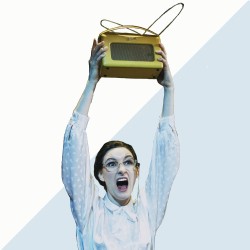
WHAT: “Ella is cursed with the “gift” of obedience. After her mother dies and father remarries, Ella begins a journey to break the curse – battling ogres, meeting giants, and trying to avoid her evil stepsisters. After becoming tangled in a possible romance with Prince Charmont, her curse makes things more complicated – does she accept his proposal and endanger the kingdom, or break her own heart and let him go?

Adapted from Gail Carson Levine’s novel, Ella Enchanted is an empowering retelling of the classic Cinderella story, where a young woman gains freedom through personal strength and love.”

WHERE: Pleasance Courtyard (Venue 33)

WHEN: 11:15 (75 min)

MORE: Click Here!


Is this your first time to Edinburgh?

Yes.

Tell us about your show.

The idea to do a stage adaptation of Gail Carson Levine’s beloved young adult novel Ella Enchanted came to myself and my friend Stephanie Neuerburg a few years ago when we were in University together. Last September Stephanie began working on the adaptation and we formed our theatre company Bushel/Barrel/Tun. Stephanie and I work as Co-Artistic Directors of the company, though she adapted the script and plays the title character, and I am the director of the show and lead producer. Steph and I have produced the show together.

Our premier is at the Colour House Theatre in London July 14-16. After we finish Edinburgh we will do one performance at the Roof Gardens in Canary Wharf as part of the Space’s summer family season.

What should your audience see at the festivals after they’ve seen your show?

Almost our entire cast and crew are East 15 Acting School graduates. Many other alumni are bringing really amazing shows up this year with us. We highly recommend The Starship Osiris, Scribbles, Leaf.


LIKE WHAT YOU JUST READ? FOLLOW US ON TWITTER! FIND US ON FACEBOOK! OR SIGN UP TO OUR MAILING LIST!

INTERESTED IN BEING INTERVIEWED TOO? CLICK HERE!

+3 Interview: Jack Barry: High Treason

“My show this year is all about the legalisation of drugs, the only political issue I care about.”

WHO: Jack Barry, Comedian

WHAT: “This show is about why we should legalise all the drugs. It’s serious business, so has a serious name. But it’s also a pun, so you know you’ll have fun. As seen/heard on Channel 4, Channel 5, ITV 2 and BBC Radio 4.”

WHERE: Just the Tonic at The Mash House (Venue 288)

WHEN: 19:40 (50 min)

MORE: Click Here!


Is this your first time to Edinburgh?

This is my 8th year at the fringe! I have been performing here since I was a student. I will never stop until everyone is dead.

What’s the biggest thing to have happened to you since Festivals ’16?

Professionally, I appeared in the Channel 4 sitcom Catastrophe. Romantically, I moved in with my girflriend. Physically, I had surgery on my knee. Culinarily, I learned to make quiche. Surreally, my genitals transformed into a bumblebee and pollinated all the flowers in Kew Gardens.

Tell us about your show.

My show this year is all about the legalisation of drugs, the only political issue I care about. I wrote it, because I feel so passionately about the issue. It’s being produced and directed by Berk’s Nest. I’ve worked with them since I was a student, before they started the company. Now they’re the most exciting production company around, so I am very happy to continue working with them. If the show is a success, who knows where it will go after the fringe. The sky’s the the limit, excuse me while I kiss it!

What should your audience see at the festivals after they’ve seen your show?

I previewed my show the other day with Nick Coyle. His new show is incredible. It’s a spoof horror story, about a governess looking after a haunted house. It’s hilarious, but at times also genuinely terrifying. You feel all the emotions while you’re watching it, I can’t recommend it enough.


LIKE WHAT YOU JUST READ? FOLLOW US ON TWITTER! FIND US ON FACEBOOK! OR SIGN UP TO OUR MAILING LIST!

INTERESTED IN BEING INTERVIEWED TOO? CLICK HERE!

+3 Interview: Laughing Stock

“We like to tell stories in odd and unusual ways, and so we experiment with sound and movement a lot in our shows.”

WHO: Rhys Bevan, Writer and Performer

WHAT: “Laughing Stock is a character-based and narrative-driven sketch comedy foursome. Sketches are interwoven within a rich tapestry of music, dance, mime and song in order to tell detailed and intricate tales of irreverence and irregularity. Expect reality to rub shoulders with absurdity and for everyday observations to be stretched to breaking point.”

WHERE:  Underbelly, Cowgate (Venue 61)

WHEN: 16:20 (60 min)

MORE: Click Here!


Is this your first time to Edinburgh?

As a company Laughing Stock have been up to the Fringe twice before. A couple of us did come up years ago with university plays but it’s a very different festival when you’re a student.

We love the Fringe and its relentless, serotonin-sapping, waistline-defeating, alcoholism-inducing bonkers-ness. But now that we’ve been a few times and it is, to an extent, our ‘job,’ we do have to look after ourselves a little better than we used to.

Tell us about your show.

Our show is sketch comedy with big laughs and a lot of heart. We’re all trained actors who grew up watching Smack the Pony, The Fast Show, League of Gentlemen etc and we try to bring a level of authenticity to our live shows, to commit to observed characters and situations.

It’s written by all of us, devised and directed by us, and produced and marketed by us. Self-made comedy for the crowdfunded generation!

We all met doing the Post-Grad course at the Oxford School of Drama. The show has had a first preview at the New Diorama Theatre and will probably return to London in the Autumn. After that, who knows!
We also love a song and a dance and there’s plenty of that. We like to tell stories in odd and unusual ways, and so we experiment with sound and movement a lot in our shows.

What should your audience see at the festivals after they’ve seen your show?

So so much. Shelf, Loren O’Brien, Rory O’Keeffe, Colin Hoult, Police Cops in Space, Jon Pointing, Red Bastard, Spencer Jones, Marny Godden, Kat Bond, Sleeping Trees, Joseph Morpurgo, Emma Sidi… Blah blah. We’re very excited. To be more succinct, here are three newcomers on the sketch scene to look out for: Dirty White Boys, Muriel and Cloak & Dagger Club. Three bright young things of sketch, mark our words.


LIKE WHAT YOU JUST READ? FOLLOW US ON TWITTER! FIND US ON FACEBOOK! OR SIGN UP TO OUR MAILING LIST!

INTERESTED IN BEING INTERVIEWED TOO? CLICK HERE!

+3 Interview: Two Sides of the Curtain

“We’re really excited to show the new and improve version this year at the Fringe.”

WHO: Jack Kelly, Director/Writer/Producer/Supporting Actor

WHAT: “Erich and Ada are separated by one of history’s most famous man-made divisions: the Berlin Wall. They both live in times of great global and personal shifts that throw their futures into disillusionment. But the times that Erich and Ada live in are not the same. When Erich journeys to the other side, he not only crosses an ideological line, but a temporal one as well, traveling 25 years in to the past. Stuck in between space and time, Erich and Ada’s relationship becomes a bittersweet take on star-crossed lovers.”

WHERE: theSpace on North Bridge (Venue 36)

WHEN: 19:05 (50 min)

MORE: Click Here!


Is this your first time to Edinburgh?

This will be my second time at Edinburgh Fringe, after taking another original piece TOYS in 2015, which I wrote and directed and lead man of Two Sides of the Curtain Andrew Crouch also starred in.

Tell us about your show.

I wrote and directed Two Sides of the Curtain and the show had a small but successful run in Brighton. Since then the piece has been tweaked and cut and messed around with and we’re really excited to show the new and improve version this year at the Fringe. I’ll probably look into developing the piece into a full two act play after the Fringe, though the length now is not a problem and works just fine.

What should your audience see at the festivals after they’ve seen your show?

I am definitely keen to camp out at the summerhouse and see as much stuff there as possible especially in the Paines Plough’s Roundabout Venue (Every Brilliant Thing is a must see).

However my top tip would have to be the Wardrobe Ensemble, who have their new show this year Education, Education, Education. These guys are great, physical and hilarious theatre.


LIKE WHAT YOU JUST READ? FOLLOW US ON TWITTER! FIND US ON FACEBOOK! OR SIGN UP TO OUR MAILING LIST!

INTERESTED IN BEING INTERVIEWED TOO? CLICK HERE!

+3 Interview: My Leonard Cohen

“Rather than a straightforward impersonation, the show offers arresting and imaginative arrangements of his best-loved music.”

WHO: Sandy, Producer

WHAT: “Following a sold-out season at the Sydney Opera House, D’Arrietta and his six piece band return, due to popular demand, with their rousing celebration of the late, legendary Cohen. This stirringly personal tribute offers arresting and imaginative arrangements of Cohen’s best work, punctuated with poetic anecdotes that give insight into the great musician’s life. The heartrending Suzanne, desperately sensual I’m Your Man and iconic Hallelujah are part of the 15 songs given the D’Arrietta treatment.”

WHERE: Assembly Rooms (Venue 20) ​

WHEN: 19:45 (80 min)

MORE: Click Here!


What’s the biggest thing to have happened to you since Festivals ’16?

We went on to play some pretty amazing shows – First a sold-out season at the Sydney Opera House – an iconic venue at which we received some rave reviews; then an amazing run at the Adelaide Fringe – packed houses once again, great reception from audiences and critics, it was a huge amount of fun.

Tell us about your show.

The show was written by Stewart D’Arrietta, who is also the lead performer, inspired by the great works the late singer-songwriter Leonard Cohen. Rather than a straightforward impersonation, the show offers arresting and imaginative arrangements of his best-loved music. It suggests new ways to approach these classic songs.

We’ve got a great team of musicians, who have an amazing, palpable energy on stage together. We always have a great reception at Edinburgh – We were here last year and played to many full houses, and Stewart has been before with Lennon: Through a Glass Onion and Belly of a Drunken Piano (a Tom Waits tribute). We hope to take My Leonard Cohen on a UK tour in the future, watch this space!

What should your audience see at the festivals after they’ve seen your show?

We recommend going to see EdFringe regular, Irish born Australian comedian Jimeoin, because he’s a mate of ours and hilariously funny. It’ll keep you in a great mood all evening!

In contrast with a bit of comedy, we saw Henry Naylor making waves with his theatre at last year’s EdFringe, so we plan to see Borders when we get a chance.


LIKE WHAT YOU JUST READ? FOLLOW US ON TWITTER! FIND US ON FACEBOOK! OR SIGN UP TO OUR MAILING LIST!

INTERESTED IN BEING INTERVIEWED TOO? CLICK HERE!

+3 Interview: Slooshy Wordshow

“I needed a direct form of expression – so poetry is what came out!”

WHO: Gavin Robertson, Writer/Performer

WHAT: “Appearing as performance poet Greg Byron. His poems reflect life’s confusions and cruelties, from social comment to quantum physics, with a grimace, a twinkle and a wry pointy finger! Poetry and prose… From witty to wistful, outraged to downright angry… Following 2016’s hits The Six-Sided Man and Escape From the Planet of the Day That Time Forgot! (Phew!) Greg has performed in the USA, the UK, Australia and Japan, on beaches, in bars, bookshops, tents and forests…”

WHERE: Assembly Hall (Venue 35) ​

WHEN: 12:20 (60 min)

MORE: Click Here!


Is this your first time to Edinburgh?

I first visited in 1987 with what became a West End hit, Thunderbirds F.A.B… I’ve brought my own shows (often) and been in 12 Angry Men with a load of comics including Dave Johns, Phil Nicol and Bill Bailey, the notorious Cuckoo’s Nest with Christian Slater, and last year at Assembly with The Six-Sided Man and Escape From The Planet of The Day That Time Forgot!

Tell us about your show.

This year I’m here in a different guise- a persona called Greg Byron- Performance Poet. It’s a risk because ‘he’ has no history! I wanted to make a 3rd solo theatre show but the world around me- Trump, the Tories etc made me so angry I couldn’t write a ‘story’ I needed a direct form of expression – so poetry is what came out! I’m taking ‘Greg’ to the USA in October; we’ll see what they make of my sardonic anti-Trump rhymes!

What should your audience see at the festivals after they’ve seen your show?

Hmmm… I’d always recommend a Dyad show, this year at Assembly with The Time Machine. Shellshock at Sweet Venues is great, and I want to see Loud Poets who are a regular Edinburgh group.


LIKE WHAT YOU JUST READ? FOLLOW US ON TWITTER! FIND US ON FACEBOOK! OR SIGN UP TO OUR MAILING LIST!

INTERESTED IN BEING INTERVIEWED TOO? CLICK HERE!

+3 Interview: LOVE+ and BlackCatfishMusketeer

2017blackcb_5b 2017love_5b

“Our double-bill brings sex, technology, and sex with technology to this year’s festival.”

WHO: Breffni Holahan, Performer and Producer

WHAT: “You meet someone online. All you know is their name and that they seem to like you as much as you like them. In fact, you think you love each other. But do you? Can you? What even is love, anyway? Maybe we not only don’t know, we can’t know; we can only know what love isn’t. So, let’s say what it isn’t. BlackCatfishMusketeer doesn’t look like the internet, but it feels like it. It’s about trust, doubt, closeness at a distance, and being worried you’ll die alone and cats will eat you. #BlackCatfish

“What happens to romance when there’s a machine who cooks for you, cleans for you, never forgets your birthday or how you like your tea, tells you you’re beautiful, holds you when you’re crying, and still makes you cum? Love+ is a one-woman two-hander about the inevitability of human/robot relationships. It’s about loving, being loved, being human and whether those things are intertwined. It’s not about whether or not you can love machines, because we all already do. It’s about what it’ll be like when they love us back. #Loveplus”

WHERE: Summerhall (Venue 26) ​

WHEN: 19:10 (60 min)

MORE: Click Here!


Is this your first time to Edinburgh?

This will be our first time presenting in Edinburgh.

By the end of 2017, we will have produced 3 shows in as many years at Dublin Fringe, so thought we’d take two of those shows over to EdFringe and see if audiences there like them as much as our wonderful Dublin audiences.

We’ve visited the festival before and always had a ball, but participating as artists is a whole other beast. We’re pretty nervous, but we’re mostly very excited to meet new audiences and start new conversations.

Tell us about your show.

Our collective, MALAPROP Theatre, is presenting two shows at Summerhall. LOVE+ and BlackCatfishMusketeer will both make their international debuts as part of EdFringe ’17, and will alternate in rep..

Our double-bill brings sex, technology, and sex with technology to this year’s festival. While both shows are very different in terms of form and content, they are both told with a measured balance of wit and insight into The Now.

Our debut production, LOVE+, was a stand-out hit of Dublin Fringe 2015. It is a one-woman two-hander about the inevitability of human/robot relationships. It’s all about what happens when (not if!) the machines we all already love so much start loving us back.

Our second show, BlackCatfishMusketeer, was nominated for Best New Play at Dublin Fringe 2016. It is a play about online dating and being afraid you’ll die alone and cats will eat you. It gives us an insight into how the Internet (a character in the play) might feel about how we use it.

MALAPROP is a Dublin-based theatre collective that aims to challenge, delight, and speak to the world we live in (even when imagining different ones). Other work includes JERICHO (Bewley’s Café Theatre commission 2017) and Everything Not Saved (to premiere at Dublin Fringe 2017).

We hope to show those who come along to our double-bill a good time. Hopefully we’ll leave people with a chuckle and a few thought-kernels that make them go “Hmm” the next day. We’re also looking forward to seeing what opportunities lie ahead for the shows and for MALAPROP. We’re young and hungry and welcome The Future in a big way.

What should your audience see at the festivals after they’ve seen your show?

On your way out of LOVE+, you should definitely consider coming back to us for BlackCatfishMusketeer the following evening (or vice versa, of course)!

Cheekiness aside, we’d recommend checking out Culture Ireland’s programme at this year’s festival. We’ve seen the other shows they’re sending over and they’re total hits and we’re very proud to be considered in their league. Our must-see would be Oona Doherty’s Hope Hunt at Dance Base. She’s so cool and so talented and we’d like to be her, please.


LIKE WHAT YOU JUST READ? FOLLOW US ON TWITTER! FIND US ON FACEBOOK! OR SIGN UP TO OUR MAILING LIST!

INTERESTED IN BEING INTERVIEWED TOO? CLICK HERE!

“Be thoroughly prepared as far as the work is concerned, so you can handle the madness.” – Author Michael Mears discusses Fringe success and This Evil Thing

9780993197567

“The absolutists were as their name suggests, absolutely opposed to doing anything at all that could even remotely be construed as helping the war effort.”

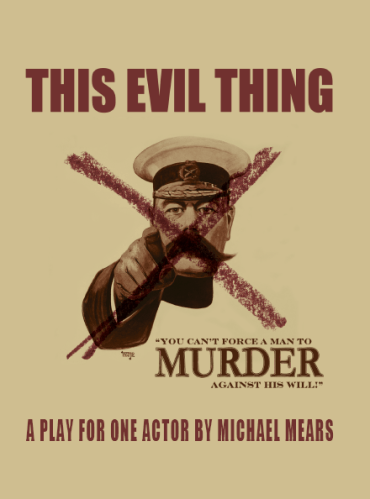
In 1916, at the height of the First World War, Henry Asquith, Britain’s beleaguered Liberal Prime Minister, “begged leave to introduce a bill with respect to military service.” Little did he know just how strong the opposition to it would be. Although he had ensured, as a result of vigorous campaigning both inside and outside Parliament, that one of the exemptions contained in the bill would be, “on the ground of having a conscientious objection to bearing arms,” in practice it proved extremely difficult to obtain this exemption.

Arrests soon followed. C.O.s would be forcibly escorted to barracks and there ordered to put on a uniform, and do drill – which they politely refused to do. This civil disobedience would result in punishments, bread and water diets, solitary confinement, and worse. At least they couldn’t face the ultimate threat – execution – as they were not in the war-zone, and therefore not deemed to be on active service. Unless, of course the Army started sending C.O.s across the Channel to France…

Michael Mears – actor, playwright, long-distance walker – has enjoyed a rich and varied career in theatre, television, radio and film. His on stage work includes seasons with the National Theatre, the Royal Shakespeare Company, and the Peter Hall Company, portraying many classical and Shakespearean roles.

On television, Michael’s roles include Rifleman Cooper in Sharpe, two series of The Lenny Henry Show, and appearances in Parades End, The Colour of Magic, My Family, and Birds of a Feather. On film Michael is most delighted to have been the hotel barman who brings Hugh Grant and Andie McDowell together in Four Weddings And A Funeral.

This Evil Thing was published in April 2017 by 49Knights. To find out more click here.


Why WWI conscientious objectors?

As a playwright, I was looking for a subject as the First World War 100 year commemorations were approaching. There I was, a pacifist, but I didn’t appreciate what my subject matter had to be until I casually picked up and read, the way you do, a book I’d been given for Christmas – Robert Graves’ autobiography, Goodbye To All That – in the course of which he describes his experiences in WW1, including his meeting and friendship with Siegfried Sassoon. Sassoon, known for his superb war (anti-war?) poetry – served loyally and courageously as a Lieutenant in the trenches, before having a Damascene conversion and realizing the horror and utter futility of it all – and becoming, in effect, a conscientious objector.

Oh yes, I now thought, who were the conscientious objectors exactly? Within days I was discovering all kinds of books, articles, you name it, about the subject – an utterly fascinating, riveting and rarely told part of the history of the First War. I felt compelled to make my own dramatic contribution, inspired by the stories I read, feeling I wanted to play my part in helping give their courageous stand against war and conscription more oxygen and daylight.

This Evil Thing is a play for one actor yet there are dozens of characters represented. What was your process to ensure that each has an individual voice?

michael-mears-in-this-evil-thing-2-999x450Myself and Rosamunde Hutt, my director, made sure that the smallest character, even an army sergeant who has just a couple of lines in the piece, say, had a name, a motivation and their own integrity. We ascertained what their background would be, how they might sound (through playful exploration) and similarly explored how they would move, what physical gestures/tics/mannerisms they might have. Obviously this work would be more in-depth when looking at the more substantial characters. We strenuously tried to avoid any kind of caricature – although occasionally a cartoon-like style might be briefly employed where appropriate.

You’ve enjoyed considerable success at the Fringe both with This Evil Thing and previous productions. What are the best and worst things a new company can do during August in Edinburgh?

Best things you can do – are to be thoroughly prepared as far as the work is concerned, so you can handle the madness of whirlwind get-ins and get-outs, as show follows show follows show. Be as charming and polite as possible to those you are given to work with in the venue, and your venue managers, publicity people etc. Whatever the frustrations, (and there are oh so many) try not to let these affect the way you are in public, and way you deal with people in public. And yes, unless you get that early 5-star review and then sell-out pronto, do hand out flyers and spread the word about your show on a daily basis, but as charmingly as possible – while being fully accepting of the many brush-offs and rejections of your leaflets that you will encounter. Tall order, I know.

Worst things – to get so inebriated, wrecked, spaced-out, whatever, that you can’t deliver brilliantly what you are here for in the first place. To quote some old playwright of yore – ‘The play’s the thing…’ (or the show, the stand-up act, the musical – substitute as necessary…) We all need a good moan. But try not to moan ad infintum. Edinburgh can be incredibly frustrating, but you’re there, you’re performing for better or worse in this huge arts festival, the city is beautiful and it’s an extraordinary place at Festival time, so relish being there, get out and see loads of stuff, especially the amazing stuff that comes from abroad, and let it feed your own work, your own imagination.

You’re an alumnus of the TV series Sharpe (in which Sean Bean plays the titular blood and guts Napoleonic war hero). Here you are writing a play about a different kind of heroism. Are the two types, soldiering and refusing to fight, antithetical?

chosenmen

My instinct is to say yes, and yet, as I highlight right at the end of This Evil Thing, there are different ways to be a hero, to be courageous. The very best soldiers are absolutely willing to sacrifice their lives for what they believe in – and it is exactly the same for the conscientious objectors. They were willing to face death if necessary, to face execution, rather than betray their belief that no man, no government, should be able to force another man to kill against his will.

And many COs, while imprisoned in barracks and guard-rooms, met soldiers who though they said they didn’t agree with the COs’ beliefs, nevertheless had great respect for them and their willingness to suffer in order not to betray those beliefs.

Did you ever mention that you might be a pacifist while playing Rifleman Cooper?

Warfare in those days, the days of Napoleon and Wellington, was a very different thing to warfare just a hundred years later. You got very close to your enemy, often saw the whites of their eyes, often grappled in hand to hand combat…somehow it seemed more honest, if that makes sense – unlike warfare now where generally it’s a question of dropping bombs from a great height or distance – without those doing the bombing ever having any contact with those to whom they are bringing such damage and devastation. The early 1800s was a fascinating period to research and though I was never truly comfortable holding and firing my rifle and taking part in those imagined battles, the characters were so vivid and rich and colourful – most of them survivors from the gutter, finding a home and purpose in the army. And at the time of filming Sharpe, in the early 1990s, I wasn’t consciously calling myself a pacifist. The job of being part of Sharpe was an acting challenge to me, first and foremost – to portray a hard-bitten soldier living on his wits and the camaraderie of his fellows, even though I would never have dreamt of joining the army in real life; much as to play Macbeth, you don’t actually have to have been a murderer (though I imagine it would help a bit).

Many of the absolutist COs came from a nonconformist background. Most Quakers, Methodists, etc accepted non-combat roles (such as front line stretcher bearing). What made the absolutists different, and how were they treated by their own congregational communities after WWI?

The absolutists were as their name suggests, absolutely opposed to doing anything at all that could even remotely be construed as helping the war effort. They were utterly opposed to this war, and in most cases, all war. There were 1,300 of them, and they endured tough prison sentences, with repeated stints of solitary confinement on bread and water diets, and enduring what was a Rule Of Silence for all prisoners in prison at that time. Many developed health problems as a result of their treatment.

After the war the responses the COs encountered on release varied – but in some communities there was a feeling that they had been shirkers, had had an easy war and didn’t deserve any kind of special treatment or status now. Finding work could prove very difficult, with many ads in the papers specifying that ‘COs need not apply’ ; and the vote was denied to COs for 5 years. But there were communities, such as in Huddersfield with its radical background and history, who were far more understanding of what the COs stood for and had endured.

Bert Brocklesby, the protagonist in my play, and who had been an absolutist, was ultimately spurned by his Methodist congregation in south Yorkshire. It wasn’t long before Bert joined the Quakers, understandably.

Do you see a difference between refusing wartime service between 1914-18 and 1939-45?

An early choice of title for my play was ‘What About Hitler?’ Sort of says it all, really – in terms of this question. The most passionate pacifists, and I consider myself one, are nevertheless brought up short when confronted with the ghastly phenomenon of AH. War is an appalling way to resolve international disputes, but when someone like Hitler appears on the scene – what do you do? But there were COs in WW2, a lot more in fact than in WW1, and because of those early trailblazers and the way in which they had in fact helped to reshape public opinion to a considerable extent, COs in WW2 generally had a far more sympathetic hearing.

Although This Evil Thing is a play for one actor you’ve been directed, stage managed, designed and produced. How does a solo player successfully pick a team?

There are all kinds of elements that go into picking a team – experience (the older you get, the more people you work with and thus gain an excellent knowledge of people’s abilities or particular skills); word of mouth; getting out there and seeing (in my case) other directors’ solo work (partly how I found Ros Hutt – I saw a splendid solo piece she had directed a year earlier); chance meetings; serendipity; and of course, calling on people you’ve worked with well before – like Mark Friend my set designer, who had designed a previous solo play of mine. I came across my sound designer Mark Noble, when I was in a play sat Salisbury that he had designed sound and video for – and I thought, ‘Gosh, he’s good. And he’s very young. So maybe he won’t be too expensive – yet!’

30477-6715What’s next for This Evil Thing?

A 600 seat tent, 3 Quaker school halls, the studio of Hull Truck theatre, London’s only surviving Elizabethan Church in Stoke Newington, a small wine bar in Wanstead, East London – all these with their differing shapes, sizes and acoustics, and many more, will be hosting the play this August, and through the autumn. Check out michaelmears.org for more details.

I’m also looking for possible American openings – no, not Hollywood, but the Quakers in Philadelphia perhaps…

What should be playing on the stereo when we’re reading This Evil Thing?

Ideally nothing. But if you do want something on in the background…then almost certainly something by Vaughan-Williams – his ‘Pastoral Symphony’ – which captures the sense of loss and sadness connected with the First World War… or his ‘The Lark Ascending.’

Or a haunting and beautiful piece of acapella music called ‘Unmarked Graves’ by Helen Chadwick, from her album ‘AMAR’ – she recorded other beautiful acapella material for the production of This Evil Thing.


LIKE WHAT YOU JUST READ? FOLLOW US ON TWITTER! FIND US ON FACEBOOK! OR SIGN UP TO OUR MAILING LIST!

“If this question is sarcastic, see my answer to Question Five.” – Author David Damant discusses The Luck of the Devil

9780993197550

“I can imagine that Sullivan’s music for the Devil would have been excellent, and Gilbert would have loved the plot.”

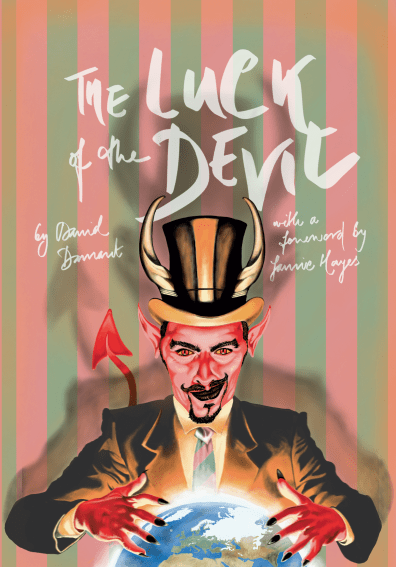
Vienna, May 1931. The Baron Bretzenny is a worried man. His banking house is bust. It seems nothing can prevent the Bank Bretzenny from becoming just another casualty, lost amid the global wreckage of the Wall Street Crash. As one of Vienna’s foremost public atheists, the Baron literally hasn’t got a prayer. Then a mysterious visitor offers the Baron a way out of his troubles… but at what price?

The Luck of the Devil is the coruscating debut comedy of financial guru turned scribbler, David Damant. Damant is at once both a respected elder statesman in the realm of finance, a pioneer of Modern Portfolio Theory in Europe, and also a keen observer of his fellow creatures, their vanities and profanities.

At his London club David has, in addition to the world premier of The Luck of the Devil, arranged for a performance of the melodrama Maria Martin and the Red Barn, as well as more than a dozen operas or parts of operas, each directed by the celebrated Jamie Hayes. These have included Dido and Aeneas (starring Jean Rigby), the second act of Tosca (Sue Bullock & Robert Hayward), the essential scenes from Don Giovanni (Robert Hayward again), and no less than four performances of Offenbach’s Not In Front Of The Waiter.

A browse of his social media profile reveals that David’s interests include food, wine, opera, history, and conversation – he has even, on suitably rare occasions, been known to allow his interlocutors to get a word in… although never the last one.

The Luck of the Devil was published in March 2017 by 49Knights. To find out more click here.


Why the Devil? Why an Austrian banker? Why the interwar years?

I had been revolving in my mind for some time the idea of a Faustian contract in which, unusually, the Devil has to ask for help. After the stock exchange crash in New York in 1929 the trigger for the serious depression on this side of the Atlantic was the failure of the Viennese bank the Creditanstalt in May 1931, so I thought that an Austrian banker in trouble at about that time would need money and would provide the basis for the plot.

I then added the idea that the Roman Church was about to issue an Encyclical saying that the Devil was no more than a psychological construct – something that the Devil would not like at all – and he needed human help to stop the Encyclical – the name of which Ad Deliramentum Expellendum was crafted for me by an expert in Papal Latin. I have portrayed the Devil in an fairly honourable light (accepting his standpoint as the Father of Evil).

LOD 3You’ve been involved in dozens of productions down the years. How did those experiences shape The Luck of the Devil?

Except for one play before this one, all the productions I have been involved with since 1987 have been operas in whole or in part. But operas are drama so I suppose that I learnt a bit from those productions. A greater influence was P G Wodehouse, who used to construct his novels as though they were plays, with the scenes balancing each other in the sense of what happens in each, and the various characters given balanced appearances – one cannot introduce a big character and then drop that character half way through. So I followed that rule in my play.

You’ve not written a play before, but you have written on financial matters, history, music etc. How have your previous endeavours informed this one?

Writing so much taught me to write clearly……in any case a lot of what I wrote in the financial world had to be translated, or anyway read by those who were not native English speakers – so I had to be clear. A lot of writing these days is not transparently easy to follow, My aim is always to have the reader (or the listener to the play) able to concentrate on the ideas which I (or a character) is expressing, and not have to work out from the language what the point might be.

When I thought of writing the play I read quite a lot of other plays to get the structure in my mind, and was pretty dismayed by the sordid or unhappy nature of the plots – failed marriages, hopeless careers, children and parents at loggerheads etc etc.

The drama centres on a banker who has run out of money and needs bailing out. Where did you get such an incredible notion from?

See the answer to Question One. If this question is sarcastic, see my answer to Question Five.

Your own background is in banking and the city. Bankers aren’t massively popular at present. What can they do to improve their public image, and what should us non-bankers always bear in mind about the sector?

The general view of bankers is completely unbalanced. The main reason for their unpopularity is the financial crash, which was caused not by them but by the Central Banks keeping interest rates too low, by the Regulators not checking on balance sheets, and by the Chancellor (Gordon Brown) stating frequently that he had abolished downturns. What does one expect bankers to do in such an environment? Sit on their hands with all that cheap money and refuse mortgages?

Of course bankers have behaved badly in specific areas, but one does not attack the game of football because FIFA was corrupt, or attack athletics because many athletes take drugs, The financial system is a tremendous asset to this country – we have a great talent in that area – but I cannot see the image improving much. Most people do not understand the enormous value of efficient capital markets in using everyone’s savings more efficiently, and of attracting vast amounts of business to this country…… another difficulty is that the salaries seem so high. I see that several football managers earn more than £10 million a year. But people understand football.

LOD 2Do you believe in the Devil? Is he abroad in the world of men?

I believe that the Cardinal Archbishop of Vienna in my play was right (originally). The Devil is no more than a psychological construction in the mind of the human race, but has even so some importance as part of the human psyche. Jung said that if the Christian religion was not true, it had to be psychologically valid, since otherwise it would not have succeeded, and the Devil is part of that analysis. Incidentally, the real Cardinal Archbishop of Vienna in 1931 was Cardinal Pifl……..

What makes for good theatre?

This is a matter beyond my sphere of expertise. Chekhov stands out, and is of great interest in any attempt to answer your question.Often very little happens in a Chekhov play until the middle of the second act, when they all meet and decide not to go to Moscow. Yet his plays stand out as an amazing analysis of the human predicament. Note that the plot is merely the skeleton on which the real drama is hung. That is why so many films of great novels miss the point. They can tell the story, maybe a good one, but miss the dimension which make the whole thing a great work of art.

Wuthering Heights is the extreme example. Shakespeare is in a different league from everyone else – one can only be astonished at his genius. Incidentally, it seems clear to me that Shakespeare wrote Shakespeare. It is impossible to imagine that he could have been in and around the London theatre scene for so long without anyone noticing the difference between his plays and his mind in conversation, not to mention having to wait whilst he rushed off the get input from Bacon or Lord Oxford. Also the comments by Ben Jonson and others.

What has been the response to The Luck of the Devil thus far?

The response is enthusiastic by those who have read it, but not many have read it outside my circle. Those in my circle are probably amazed that I have written a play at all. All profits from the first printing of the first edition went to a Charitable Trust.

LOD 1What’s next for The Luck of the Devil?

I have sent it to the BBC as it is perfect for radio. As regards a second play – Wodehouse when talking of novels always said that the second one was the real test of a writer, and no doubt the same is true of plays – I have started on a plot dealing with the incompetent bureaucracy of Heaven, where Stalin on arrival is not recognised (he uses his real name Josef Vissarionovitch Dzhugasvili) and is given the wrong papers, so that he is very nearly through the Pearly Gates, much to the delight of Satan.

What should be playing on the stereo when we’re reading The Luck of the Devil?

This is not an easy question. Any reference to the Devil brings to mind the Charles Williams piece The Devil’s Gallop, which the more ancient of your readers may remember as the theme for Dick Barton, Special Agent on the BBC, which was succeeded by the Archers (the Archers have never been the same since Squire Lawson-Hope sold the village). But the Gallop is for a melodramatic Devil, and for my play we need something more sophisticated. Handel’s Zadok the Priest would do, since the long and restrained build up is full of tension, relieved by the triumphant ending.

If the play were to be made into an opera, I think that Gilbert and Sullivan would have done it rather well. I can imagine that Sullivan’s music for the Devil would have been excellent, and Gilbert would have loved the plot. Or even better Offenbach – we have put on his Not in Front of the Waiter four times at my club. His humorous wit is sophisticated and some of his music might also do for background music when reading the play.


LIKE WHAT YOU JUST READ? FOLLOW US ON TWITTER! FIND US ON FACEBOOK! OR SIGN UP TO OUR MAILING LIST!

News From Elsewhere: Paisley City of Culture 2021 – Songs to Back the Bid

fountain face

“The Saturday morning busking experience was a microcosm of the features that make Paisley special and such a strong contender for the bid.”

Lisa Kowalski is a young Scottish singer, songwriter, and performer. A huge Taylor Swift fan, Lisa celebrated her idol’s ten year anniversary as a performer by bringing together ‘Swifties’ in both Glasgow and Edinburgh. Here Lisa talks about her support for Paisley’s bid to become UK City of Culture 2021.

Part of a wider push to use the town’s unique cultural and heritage story to transform its future, organizers hope that a successful bid by Paisley for UK City of Culture 2021 will deliver audiences, jobs, an increase in the quality of life, and a renewed sense of civic pride.

You can read Iona Young’s review of Ten Years of Taylor Swift Show (organised by Lisa) here.


As a 16 year old aspiring singer songwriter from Paisley, the announcement that I had been successful in my application for a grant from the Paisley 2021 Culture and Heritage fund was clearly great news. I was one of a limited number of successful applicants and was awarded a grant to fund the recording of an EP.

Having started busking regularly on the High Street a year or so previously, I of course considered myself to be a key part of the town’s cultural scene! The Saturday morning busking experience was a microcosm of the features that make Paisley special and such a strong contender for the bid.

From the start, a strong sense of community surrounded me, as I struck up a friendship with the local Big Issue seller, the Salvation Army collector and the security guard from the store next to my pitch. The economic challenges that the town has faced were clearly on display, with many of the stores behind me lying empty and the folk passing in front sometimes showing signs of troubled lives. Despite this and the often cold and wet weather, busking on the High Street soon became one of my favourite things in the world to do.

51nvf5qtjsl

The people of Paisley welcomed me as the youngest female busker to regularly brave the wilds of the High Street, even tolerating the fact my initial busking set was 80% early Taylor Swift songs that they didn’t know! They smiled, danced and gave generously, commenting on social media that I brightened up the town centre.

This led to me penning a song about my Paisley busking experience – with the chorus “The streets are paved with Hearts of Gold”, which features on the EP that has been funded by the 2021 linked grant. It has taken about a year from the date of being awarded the grant to complete the EP project and along the way I have ridden a huge wave of support from the town and the people of Paisley. St Mirren FC has invited me several times to sing at the stadium, and local promoters , sound technicians, photographers and record studios have all offered time and advice. Local press and social media sites have also rallied round and I am often invited to perform in the town pubs and at various community events.

220px-p1070865_louvre_tc3aate_de_fausta_ma4881_rwk

This experience it seems to be sums up the reasons why Paisley is a strong contender for the bid. I am certainly not your perfect, X factor ready pop star any more than Paisley is a thriving, chic, good to go tourist destination but we have in common enthusiasm, character, and an open and friendly heart. Paisley wants to win in order to better itself and give the town’s population hope and pride and that’s certainly what the town’s support has given me. The title track of my Paisley 2021 funded EP Free Spirits includes the lyrics – “So you can try and take our pride, or honey you can join us for the ride, either way, you will watch me rise.”

I would say the same to anyone who doubts that the Paisley 2021 bid is a worthwhile venture. While the town faces strong competition, the work that has gone in to the bid has already made the town’s heart beat faster and toes are tapping along to the rhythm of community, hope and pride.


LIKE WHAT YOU JUST READ? FOLLOW US ON TWITTER! FIND US ON FACEBOOK! OR SIGN UP TO OUR MAILING LIST!