Interview with indie author Tracey Morgan re. ‘Searching for Candy’

“One thing I can tell you is that everyone loved John, they all have so many stories and memories of him, he was generous and big hearted and almost magical.”

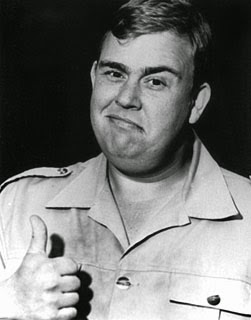
Tracey Morgan has a story to tell. It’s the story of a Canadian actor who became one of the most recognized, and best loved comedy stars ever to appear on the silver screen. In classics, ranging from The Blues Brothers to Cool Runnings, his performances are studies in subtly on an epic scale. John Candy (1950-1994) was a man liked and admired by everyone who knew him. And there’s the problem.

Was John Candy too nice a guy for modern publishing? Who on Earth would want to read a life entirely devoid of lurid scandals, debauched episodes, half-remembered highs and all-too-public lows? Here Tracey talks with Dan Lentell about the possibilities and pitfalls of self-publishing, as well as about the larger-than-life artist whose life she is rendering into print.

You can follow Tracey’s progress, and read fresh insights into the man and his legend, through her blog www.searchingforcandy.com & information on how to participate in crowd funding the book here.


What is your first memory of John Candy? Was it love at first sight?

My big brother was a huge influence on me and when we were younger, he was obsessed with various films, one of them being Brewster’s Millions, he used to watch that a lot and in turn so did I. Shortly after that I also saw Splash which I became obsessed with. Two very different characters in the films played by John, but both have that very human and funny element. I was always drawn to him, so yes I would say love at first sight.

What was Candy’s big break, the project or moment that made people sit up and take notice?

Well people started taking notice of him when the Second City Toronto troupe he was part of started their own TV show SCTV. Set up to rival Saturday Night Live (Second City were worried SNL would poach their talent) the show was huge in Canada and also started to get a US following.

However, I think the world took note when he played Dewey Oxberger (Ox) in Stripes, all of a sudden John was a movie star. His old agent Catherine McCartney told me John went incognito to a showing of Stripes in Toronto to see people’s reactions. He sat at the back of the cinema with Catherine and when Ox walked on screen for the first time the auditorium erupted! John was so touched he started to cry and had to leave. From then on in everyone knew who he was.

When did you decide to write his life, and was there a particular epiphany that determined you to do it?

About four years ago I was recovering from an awful bout of depression and I started revisiting things from my childhood that made me happy. One of those things were John Candy movies, there is something about Irv Blitzer, Uncle Buck, Gus Polinski, Del Griffith, Freddie Bauer, those characters that John played always made me feel like I could do anything and that it was OK to be yourself as long as you have a good heart.

So when I wanted to find out more about John I was shocked there wasn’t more about his life, the only real biography about him was written quite soon after his death and I think for some it was just too soon to talk about John, they were still grieving. The author had also decided to paint a darker side to John that I just couldn’t believe existed, so I thought I better do the research myself. They always say if you can’t find the book you want to read on the shelf, write it. Also if I am being honest, I felt like I had a calling from JC himself – just not the JC most people expect!

Have you had much contact with those who knew and worked with him? What has been their response to the project?

I have been very lucky to interview over sixty people that worked or were friends with John. Some have taken longer to trust me than others but the general response is that they are glad I am writing the book, after they have spoken to me they know that I am doing it for the right reasons. One thing I can tell you is that everyone loved John, they all have so many stories and memories of him, he was generous and big hearted and almost magical. Those that have contributed include Mel Brooks, Carl Reiner, Mariel Hemmingway, Kevin Pollak, Lonette McKee, Jay Underwood, Dave Thomas as well as many others.

There are a couple of other biographies out there, what’s going to be special about Searching for Candy?

Well for one Searching for Candy isn’t being written for money, just total love. The fact it is written from a fan’s perspective and that I have interviewed people who have not been in previous biographies will make it very different. But there is only one other biography written. Apart from that there is a fake Wikipedia article book that someone has fudged together, I don’t think anyone can class that as a work of passion.

Candy appeared in several classics, but he didn’t posses the midas touch. Did he do more than his fair share of dud flicks, or is it that he just didn’t live long enough to unassailably embellish his filmography?

John worked hard, very hard. He always thought he was going to die young so he wanted to bank role money to ensure his family were taken care of. He was also very bad at saying no and would always help people out if he could even if it wasn’t to his own advantage. In his career he was in over forty films, some that completely bombed, but every picture he did he always made the film better than it would have been without him and surely that is all any actor can hope for?

Could Candy have ever made a straight or serious role his own?

Yes, he was a brilliant dramatic actor. Just watch him playing Dean Andrews in JFK, John got to be the bad guy for a change and if you watch real life footage of Andrews you will see just what a brilliant job he did. There are also moments of true beauty in Planes, Trains and Automobiles where he will melt your heart.

How will your biography balance exploration of Candy’s professional and private lives?

Well I think his professional and private life were very intertwined. The interviews I have done dictate the balance and as many of his colleagues were also close friends it is hard to distinguish what falls into which category. He lived to work, and he lived for his family.

You’re crowd funding the project. What are the benefits and downsides?

Well the benefits so far are that I have been in contact with people like you, who have learnt about the project and have helped me promote it. I have had so many messages of support, people pledging and sharing the project and I would like to thank everyone who has contributed. If I raise the money I get to self-publish and make the book exactly as I want it to be.

The downside is that I am having sleepless nights worrying about not hitting the target! If I don’t hit the target I will find a plan B. Sometimes I think you just have to be brave, it doesn’t always work out but maybe that is because there is a better plan you have not come across yet.

What are the movies, made since 1994, that made you think, “Gosh! I wish he’d been available for that.”?

Good question! Very difficult to answer really, I think there are many roles he would have been fantastic at. I am not sure I want to say what they are, and I am not sure John would want me to, purely because he would hate me to disrespect any other actor. I think if John was still around he would have found more dramatic roles and taken on more projects as a Director. One thing for sure is his legacy still makes us laugh today.


You can follow Tracey’s progress, and read fresh insights into the man and his legend, through her blog www.searchingforcandy.com & information on how to participate in crowd funding the book here.

Kind of a BIG Deal – Season 1 – Recap

“I don’t know how to put this…but I’m kind of a big deal.” – Ron Burgundy

You might think that it’s simply not possible for 2 people have an intimate conversation in front of hundreds of people. But it is! And it’s all thanks to the marvel of sound recording. (BTW, did you know, in 1889 Thomas Edison presented a phonograph to M. Eiffel while calling at the latter’s private apartment at the top of his tower?)

In each episode of Kind of a Big Deal you can listen to an exclusive & wide-ranging conversation between our Features Editor, Dan Lentell, and the kind of big deal folks our world-class arts scene attracts – writers, performers, movers and shakers.

jung_chang_-london_england-15jan2010-e1415356797785downloadbeard2-e1415356822167

tim-o-shea-e1415356839282

145558428-e1415356851625philippa-langley-large-richardiii-team-e1415356869318


Season 2 of Kind of a BIG Deal will include: David & Hilary Crystal (Wordsmiths and Warriors: The English-Language Tourist’s Guide to Britain); Phil Whitchurch & Sally Edwards (Shakespeare, His Wife and The Dog); & Angela Bartie (The Edinburgh Festivals; Culture and Society in Post-war Britain). WATCH THIS SPACE!

Kind of a BIG Deal – S01E06 – Philippa Langley

“I don’t know how to put this…but I’m kind of a big deal.” – Ron Burgundy

In each episode of Kind of a Big Deal you can listen to an exclusive & intimate conversation between our Features Editor and the kind of big deal folks our world-class arts scene attracts – writers, performers, movers and shakers.

Last Week: Alternative comedy legend, Andy de la Tour. Conversations coming up in season two of Kind of a BIG Deal include: David & Hilary Crystal (Wordsmiths and Warriors: The English-Language Tourist’s Guide to Britain); Phil Whitchurch & Sally Edwards (Shakespeare, His Wife and The Dog); & Angela Bartie (The Edinburgh Festivals; Culture and Society in Post-war Britain). WATCH THIS SPACE!


This week’s conversation is between Dan Lentell and secretary of the Scottish Branch of the Richard III Society

PHILIPPA LANGLEY

philippa-langley-large-richardiii-team

Philippa is best known for her contribution to the 2012 exhumation of Richard III of England. She attributes the discovery to a feeling she had when first visiting the northern end of the Social Services car park in Leicester which acted as the catalyst to four years of research that confirmed this location, and where the king was later found. Philippa had gone to Leicester when researching Richard’s life for a screenplay she was writing.

She proceeded to raise money for, and organize the excavation of the site, leading to the eventual discovery of Richard III’s remains. She later contributed to a Channel 4 documentary about the project, titled The King in the Car Park. Philippa is co-author, with Michael K. Jones, of The King’s Grave: The Search for Richard III.

This conversation took place during the 2014 Book Festival.

E49 Interviews; Dan Lentell talks to Philippa Langley


The jingle is used with the gracious permission of Moving On Theatre’s Laurene Hope Omedal (star of Piaf: Love Conquers All) and is voiced by Edinburgh Nights host Ewan Spence.


PLEASE NOTE! If you are subscribed to Edinburgh49‘s emailing list, you may not see embedded audio links in your email alert, but they are on the website. (Promise!)

Kind of a BIG Deal Interview – S01E05 – Andy de la Tour

“I don’t know how to put this…but I’m kind of a big deal.” – Ron Burgundy

In each episode of Kind of a Big Deal you can listen to an exclusive & intimate conversation between our Features Editor and the kind of big deal folks our world-class arts scene attracts – writers, performers, movers and shakers.

Last Week: Prof. Sir Tim O’Shea (Principal, Edinburgh University & Chair, Edinburgh Fringe). Next week: Philippa Langley (The King’s Grave; The Search for Richard III).


This week’s conversation is between Dan Lentell and stand-up comedian

ANDY DE LA TOUR

145558428

Andy de la Tour is an actor and screenwriter. His film appearances including Plenty, Notting Hill, the Roman Polanski version of Oliver Twist and “44” Chest. His work in television includes The Young Ones, Bottom, Kavanagh QC and The Brief. On stage he has appeared at the National Theatre in Harold Pinter’s No Man’s Land and Alan Bennett’s People.

His credits as a television writer include Lovejoy, Peak Practice, The Vet, Kavanagh QC and Clem. Andy has also written many stage plays including Safe In Our Hands (winner of the LWT Plays on Stage Award)

But before all that, Andy was a stand-up comedian in the 1980s with the likes of Rik Mayall, Ben Elton as well as French and Saunders. In 2012 he wrote Stand-Up or Die about his most recent adventure – returning to the stand-up scene in New York.

This conversation took place during August ’14 almost 3 decades on since Andy last played the Fringe.

E49 Interviews; Dan Lentell talks to Andy de la Tour


The jingle is used with the gracious permission of Moving On Theatre’s Laurene Hope Omedal (star of Piaf: Love Conquers All) and is voiced by Edinburgh Nights host Ewan Spence.


PLEASE NOTE! If you are subscribed to Edinburgh49‘s emailing list, you may not see embedded audio links in your email alert, but they are on the website. (Promise!)

Kind of a BIG Deal Interview – S01E04 – Prof. Sir Tim O’Shea

“I don’t know how to put this…but I’m kind of a big deal.” – Ron Burgundy

In each episode of Kind of a Big Deal you can listen to an exclusive & intimate conversation between our Features Editor and the kind of big deal folks our world-class arts scene attracts – writers, performers, movers and shakers.

Last week: Prof. Mary Beard (Laughter in Ancient Rome: On Joking, Tickling, and Cracking Up). Next week: Andy de la Tour (Stand Up or Die).


This week’s conversation is between Dan Lentell and the Principal of Edinburgh University and Chair of the Fringe Festival

PROF. SIR TIM O’SHEA

tim-o-shea

Prof. O’Shea grew up in London, attended the Royal Liberty School, in Romford, Essex. A computer scientist, he was Master of Birkbeck College from 1998 and Pro-Vice-Chancellor of the University of London from 2001.

A graduate of the Universities of Sussex and Leeds, he has worked in the United States and for the Open University where he founded the Computer Assisted Learning Research Group and worked on a range of educational technology research and development projects, later becoming Pro-Vice-Chancellor there. He was a Research Fellow at the University of Edinburgh, Department of Artificial Intelligence, from 1974-78.

Professor O’Shea became Principal of the University of Edinburgh in October 2002. Since his appointment he has sat on various boards including the Boards of Scottish Enterprise, the Intermediary Technology Institute Scotland Ltd, the British Council, the Governing Body of the Roslin Institute and has been Convenor of the Research and Commercialisation Committee of Universities Scotland and Acting Convener of Universities Scotland.

This conversation took place during Fringe ’14 and examined the interplay of O’Shea’s University and Fringe roles.

E49 Interviews; Dan Lentell talks to Tim O’Shea


The jingle is used with the gracious permission of Moving On Theatre’s Laurene Hope Omedal (star of Piaf: Love Conquers All) and is voiced by Edinburgh Nights host Ewan Spence.


PLEASE NOTE! If you are subscribed to Edinburgh49‘s emailing list, you will not see the embedded audio links in your email alert, but they are on the website. (Promise!)

Kind of a BIG Deal Interview – S01E03 – Prof. Mary Beard

“I don’t know how to put this…but I’m kind of a big deal.” – Ron Burgundy

In each episode of Kind of a Big Deal you can listen to an exclusive & intimate conversation between our Features Editor and the kind of big deal folks our world-class arts scene attracts – writers, performers, movers and shakers.

Last Week: Ian Lavender (Don’t Tell Him Pike). Next week: Sir Tim O’Shea (Edinburgh University Principal & Fringe Chair).


This week’s conversation is between Dan Lentell and historian

PROF. MARY BEARD

Winifred Mary Beard, OBE, FBA, FSA is the professor of classics at the University of Cambridge where she is a fellow of Newnham College. Her blog, A Don’s Life, appears in The Times as a regular column. Her books run from Rome in the Late Republic (with Michael Crawford, 1985); through The Colosseum (with the late & much lamented Keith Hopkins, 2005); to Laughter in Ancient Rome: On Joking, Tickling, and Cracking Up (2014). Mary Beard’s work on television, as well as her robust social media presence, have made her Britain’s most widely recognized Classicist.

If George Washington didn’t fly around on Air Force One or live at the White House, and yet is still the first US President, then why was Julius Caesar not Rome’s first emperor? Did the ancient Ostians live entirely on takeaways? These (and other weighty matters) were covered in a conversation which took place during the 2014 Fringe.

E49 Interviews; Dan Lentell talks to Mary Beard


The jingle is used with the gracious permission of Moving On Theatre’s Laurene Hope Omedal (star of Piaf: Love Conquers All) and is voiced by Edinburgh Nights host Ewan Spence.


PLEASE NOTE! If you are subscribed to Edinburgh49‘s emailing list, you will not see the embedded audio links in your email alert, but they are on the website. (Promise!)

Kind of a BIG Deal Interview – S01E02 – Ian Lavender

“I don’t know how to put this…but I’m kind of a big deal.” – Ron Burgundy

In each episode of Kind of a Big Deal you can listen to an exclusive & intimate conversation between our Features Editor and the kind of big deal folks our world-class arts scene attracts – writers, performers, movers and shakers.

Last week: Jung Chang (Wild Swans et al). Next week: Prof. Mary Beard (Laughter in Ancient Rome: On Joking, Tickling, and Cracking Up).


This week’s conversation is between Dan Lentell and actor

IAN LAVENDER

download

Ian Lavender attended the Bristol Old Vic Theatre School. In 1968, aged 22, he was cast as Private Pike in sit-com classic Dad’s Army where he starred alongside some of the most experienced actors in Britain. Over 9 series and 80 episodes Lavender honed his craft under the tutelage of such celebrated thespians as John Laurie, Arnold Ridley, John Le Mesurier and especially Arthur Lowe – among the greatest character actors of all time.

What was it like working with such figures and how has their influence shaped Lavender’s career which has encompassed some of the UK’s best loved stage and TV vehicles? The conversation took place during the 2014 Fringe.

E49 Interviews; Dan Lentell talks to Ian Lavender


The jingle is used with the gracious permission of Moving On Theatre’s Laurene Hope Omedal (star of Piaf: Love Conquers All) and is voiced by Edinburgh Nights host Ewan Spence.


PLEASE NOTE! If you are subscribed to Edinburgh49‘s emailing list, you will not see the embedded audio links in your email alert, but they are on the website. (Promise!)

Kind of a BIG Deal Interview – S01E01 – Jung Chang

“I don’t know how to put this…but I’m kind of a big deal.” – Ron Burgundy

In each episode of Kind of a Big Deal you can listen to an exclusive & intimate conversation between our Features Editor and the kind of big deal folks our world-class arts scene attracts – writers, performers, movers and shakers.

The jingle is used with the gracious permission of Moving On Theatre’s Laurene Hope Omedal (star of Piaf: Love Conquers All) and is voiced by Edinburgh Nights host Ewan Spence.

Next week: Ian Lavender (Don’t Tell Him Pike).


This week’s conversation is between Dan Lentell and biographer

JUNG CHANG

Jung Chang in London January 2010. Photo by Guy Aitchison via Wikimedia Commons
Jung Chang’s bestselling family history, Wild Swans, has been translated into 37 languages yet remains banned in her native China. If you’re smart enough to put up with the hyperbole and bombast of Edinburgh49, chances are one of the 13 million copies sold since 1991 is sitting on a bookshelf close at hand.

Together with her husband, Jon Halliday, Jung Chang is also author of Madame Sun Yat-sen: Soong Ching-ling (1986); Mao: The Unknown Story (2005); and, most recently, Empress Dowager Cixi: The Concubine Who Launched Modern China (2013).

The conversation took place on August 11th 2014 at Edinburgh’s Channings Hotel during the book festival.

E49 Interviews; Dan Lentell talks to Jung Chang


PLEASE NOTE! If you are subscribed to Edinburgh49‘s emailing list, you may not be able to see the embedded audio links in your email alert, but they are on the website. (Promise!)

Interview with indie flim-maker Jon Spira re. ‘Elstree 1976’

ELSTREE19760146

“The film industry is horrible, it’s cynical and doesn’t care for passion or real creativity. It’s a business and nobody in it is happy. But when you choose the crowdfunding model, it’s like throwing a party.”

Film-maker Jon Spira graduated from the Scottish Film School (a part of Napier) in 1999. He started his career as a screenwriter on cult sci-fi TV series Lexx, before moving on to several other ground-breaking projects.

Disillusion with the industry drove him into (seriously) early retirement. In his native Oxford he opened Videosyncratic, a chain of two indie VHS rental stores. Despite being a hub for creatives everywhere, Videosyncratic could not swim against the digital tide forever. His letter on its passing partly inspired the creation of Edinburgh49 as a support for emerging artists struggling for recognition amid pinstriped indifference. As Joni Mitchell famously sang, you don’t know what you’ve got till it’s gone.

In recent years Jon has emerged as a well-respected voice in the British film world. He is also an in-house film-maker at the British Film Institute on London’s Southbank, where he makes documentaries about film culture and interviews talent.

His first feature film was independent music documentary Anyone Can Play Guitar. It’s about the small-town scene which spawned Radiohead, Candyskins, Foals, Supergrass, Ride and Swervedriver and became an instant classic, rated as one of the top-20 must-see music films of all time by NME.

Jon is currently promoting Elstree 1976 via Kickstarter – check it out here. In this interview with Edinburgh49 Jon talks about his early start in Edinburgh, gives his views on the film industry, reflects on past success and looks forward to his latest challenge.


What made you pick Edinburgh as a place to study in?

Because there was a photo of a werewolf in the prospectus. Honestly. I just wanted to go to film school and it was really hard working out which one was going to be right for me and I saw the photo and thought ‘Wow, this place lets you make werewolf films!’ and that was enough for me. It was the right choice too.

You didn’t stay in the city long after graduating, was that a reflection on the state of Scottish filmmaking?

I stayed for 18 months or so. I was managing Box Office Video on Lothian Road (long gone now) I left because all the work I was getting was in London; it wasn’t a reflection on the Scottish film industry, it was just where life took me. To be honest, I don’t think I ever actually engaged with the industry in Scotland.

When you think of Edinburgh now, what’s the first thing that comes to mind?

Just, you know, joyous nostalgia. I just remember Edinburgh as being an intensely creative place. I was surrounded by actors, musicians, poets, artists, comedians, photographers. I don’t think I even appreciated how special it was at the time. I was living with Roddy Woomble at the time he started Idlewild. So, yeah, when I think of Edinburgh I just think of constant creativity.

When people think of Oxford they might be more likely to think of college lawns than Radiohead et al. How did you approach chronicling a contemporary arts movement in an antiquarian setting?

Oxford is two cities. The university is very much a closed world. I grew up in Oxford and I don’t think I ever got behind those walls more than a handful of times. The Oxford I grew up in was much more like every other town. I was a suburban kid and hung out in the skeezier parts of town as I got older. One of the things that I like about ACPG is that it doesn’t even address the university. That’s just not a part of that story, none of the bands had any real ties to that world. It was definitely gratifying to show audiences ‘our’ Oxford, though.

Did the success of Anyone Can Play Guitar surprise you, or are you an arrogant git?

A bit of both. I couldn’t have made ACPG without a certain arrogance. It was made for no money and in a completely different way to how documentaries are usually made – I had a lot of cameramen quit on me. My producer quit four separate times and he’d probably be the first to call me arrogant because I was absolutely obsessed with that film.

I knew my own mind at every step of the process and had no interest in what other people thought. I made that film for me and I still don’t really care what people think about it because it’s 100% the film I wanted it to be. The success it had has been a really odd one – it’s not well known at all, it completely circumnavigated the traditional industry. We chose not to go with distributors, so we organised the cinema release ourselves and we self-released the DVD, but it found its audience.

The BBC told us the film was too niche to screen, that it was too demanding on the viewer.

We looked at the formulaic pop-culture docs they churn out endlessly and decided that actually we’d rather be niche. It’s a positive and now I aim my films squarely at the niche, at people who want thoughtful, but not inaccessible films. I love that people connected with it so strongly and that it still sells steadily but, yeah, it’s my arrogance that allowed that to happen.

Elstree 1976 explores the relationship between commerce and art, focusing on the later lives of Star Wars extras. Are the featured extras right to cash in on their relatively minor role in other people’s creations?

That’s not my call to make and I’m presenting both sides of that issue equally in the film. I will say that I’ve met a lot of these guys over the past couple of years and I can say hand on heart that, although they’re all doing it for different reasons, I’ve yet to meet one who I feel is doing it cynically or pretending to have had a bigger involvement in the films than their role as an extra. Some of them do a lot of appearances to raise money for charity and even when they’re not, they earn the money they make.

“I’ve sat with them at conventions where they literally spend a whole weekend being ignored and that doesn’t seem like cashing-in to me. Equally, I can see how frustrating it is to the professional actors who trained and played an active role in Star Wars to find themselves sharing billing with extras, it can be seen to cheapen their contribution. It’s a really interesting issue from a really interesting community.

Is there something wrong with a company such as Polygon making SO much more money from a film like Four Weddings and a Funeral than the creators?

No. Not really. It’s capitalism and we all play our role in that. If someone pays you £100,000 to make a film and that film goes on to make £100,000,000, that’s not your business. You were paid to do a job. That’s part of the reason I work outside the system.

I make no money upfront on my films. I self-fund on a shoestring budget and use crowdfunding to pay for post-production and at the end of the process I own the films outright. That’s unheard of in the industry – a director owning his own film but it’s going to become the norm. I think you’ll see a lot less millionaire directors but you’ll see film-makers who own and build their own body of work, offering it online to download and making respectable living wages from that.

Is the fall of Blockbuster a sign that film distribution is changing, that the distance between producer and consumer is shrinking, or are we simply changing formats?

Yeah, film distribution is in a constant state of flux. Despite what I just said, I don’t like where it’s heading. I don’t like the Netflix model of paying a monthly fee and streaming unlimited movies. People will get screwed in that model. Just as musicians are getting shafted by Spotify. It devalues the creative industry. It devalues film. A few years ago, you understood that a film was generally worth a tenner to you – as a cinema ticket or a dvd – now a lot of people think it’s outrageous to pay that much, if at all. It’s a shame.

Films are no longer treats or something special, they are content to be consumed. I particularly worry about Netflix and Amazon and streaming as when you have just one or two companies controlling all film consumption, it means they can act as censors. They can make films completely unavailable to the public [and] they can control and influence the market and the kind of films that get made.

I don’t like it. I still buy DVDs. I think we’ll miss video shops a lot in the next few years. Like everything else, we’ve thrown beautiful organic things under the bus in favour of wretched convenience. That experience of walking to a video shop, walking around the aisles and really browsing, chatting to the staff and other customers while you’re waiting for your takeaway is now gone forever. Replaced by an M&S £10 meal deal and a depressing flick though whatever Netflix has. Ah well.

How have you found using Kickstarter or is it too early to tell? What other projects should folks support after mortgaging their houses to support yours?

I used Indiegogo on my last film and that was a great experience. So far Kickstarter has been incredible. It’s really a gorgeous process. You get to stand infront of a global audience of people like you and say ‘Hey, I want to make this thing, I think it’ll be really good and I’m making it for the love of it. If you give me a hand, you can have a copy’ – it’s almost like bartering before money – ‘You help me do this, I’ll give you some of it’ and the wave of passion and enthusiasm and support that you get – from complete strangers – just fills your fucking heart with joy.

The film industry is horrible, it’s cynical and doesn’t care for passion or real creativity. It’s a business and nobody in it is happy. But when you choose the crowdfunding model, it’s like throwing a party. Everyone’s motives are pure, it’s all done for the sheer joy of doing it and the audience totally get that.

What projects should others support? Whatever they want.

The point is that people need to go to Kickstarter and Indiegogo and browse the things that interest them. Crowdfunding is still a young concept but it’s not as left-field as people might think. There’s a lot of business and technology choosing to fund that route now too. Just go and check it out. The last campaign that truly excited me was the Mini Museum on Kickstarter – I can’t WAIT to receive my Mini Museum!

[NB. Mini Museum by Hans Fex raised $1,226,811 from 5,030 backers.]

And finally… which character are you from Star Wars and why?

Oh, I’ve always been Chewbacca. I’m shaggy, loyal, dependable, mouthy and I’ll rip your arms out of their sockets if you don’t let me win.


Check out Jon’s first feature film Anyone Can Play Guitar here.

Note: The Kickstarter video embedded in this post don’t show up in the email notification sent out to those of you following us through WordPress (but they are on the website, promise).

Dan Lentell in Conversation with Craig Miller re. Close Fest

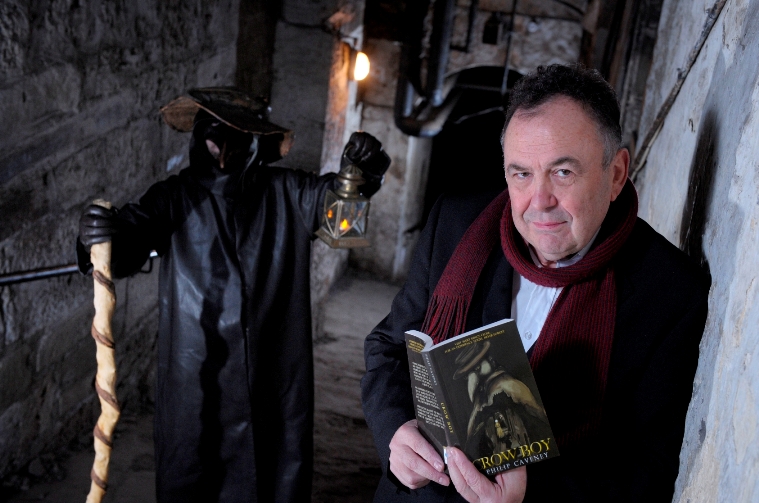
Philip Caveney with Plague Doctor on The Close

Crow Boy author Philip Caveney with Plague Doctor on Mary King’s Close

“We don’t do disappointment!”

On the afternoon of 28 October Dan Lentell spoke with Craig Miller, manager of landmark attraction Mary King’s Close about the upcoming Close Fest which will run from 31 October – 9 November. Craig enthuses about the venue as a dramatic setting; talks about the challenges of utilizing the space for live performance; and describes how The Close will grow as a local resource during its second decade.

Listen to our interview with Craig Miller

See all the events in the Close Fest line up here.