SCO: Krivine, Chamayou (Usher Hall: 23 Nov.‘18)

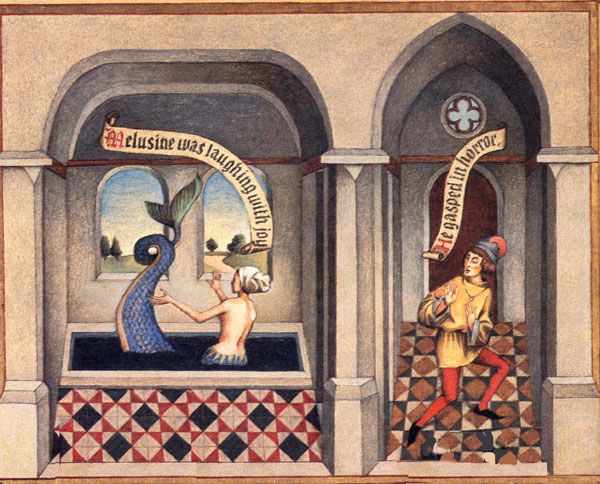
Melusine, mermaid to the Plantagenets. A modern “illumination” by Troy Howell.

“Not a question of playing, but interpretation

Editorial Rating: 3 Stars

I was very much looking forward to this concert with its collation of beautiful, early Romantic works all written within 35 years of each other and during the afternoon I listened to recorded interpretations to refresh my memory of them: Maria Joao Pires with Daniel Harding and the Swedish RSO for the Beethoven (a 1994 recording), Yannick Nezet-Seguin and the Chamber Orchestra of Europe (2014) for the Schumann, and Claudio Abbado and the LSO for the Mendelssohn (1988); a good cross section of interpretational styles over the last 30 years.


One should not, generally, compare recorded music with live.  One is essentially a photograph whilst the other  is a painting: technical perfection against the raw result of human artistic endeavour.  Yet I wasn’t comparing the playing, but the interpretation, and for this I point the baton at guest conductor Emmanuel Krivine, a musician whose pedigree is considerable, and whose style, at least on the night, was deeply conservative and –  too often – too slow.  I was reminded of Klemperer or Sir Reginald Goodall, but without their depth.  I was not inspired.  Neither was I convinced by the necessity of putting the double basses on the left and separating the horns from the trumpets and trombones either side of the woodwind.  For a very classical conductor, this was a somewhat enigmatic move.


I was wryly amused at the passing of time and customs that have led to these three works, Mendelssohn’s Overture The Fair Melusina, Beethoven’s Piano Concerto no 4 in G, and Schumann’s Symphony No 4 in D Minor (1851 revision) being put on the same programme , as they were all very badly received at their premieres, but perhaps this has, with the passing of time, become a badge of honour.


The legend of Melusina is almost too ridiculous to recount but involves a maiden turning into either a sea monster, mermaid or serpent one day a week as punishment for favouring a knight; make of it what you will.  The piece is meant at times to convey the rippling of the sea and the manliness of the knight, but I don’t go with these interpretations.  Given the storyline it is an eleven minute work of considerable meatiness, if not in the Ruy Blas or Fingal’s Cave class.


The SCO’s playing was sound with some notable results from the wind section, but overall the impression was an almost ponderous interpretation lacking spontaneity or attack.  This from the people who gave you a simply amazing rendition of Brahms’s four symphonies but four months ago.  Not a question of playing, but interpretation.


Everyone knows Beethoven’s Fourth Piano Concerto in G, but I wonder if they realise how revolutionary it was at the time, and remains today.  A brief solo piano introduction followed by a long orchestral interlude; the orchestra attacking aggressively followed by plaintive murmurings from the piano, almost as if piano and orchestra are in separate rooms and we can hear them both.  It is a glorious work and the second movement Andante con moto divine.


Bertrand Chamayou’s playing lacked perfect clarity and precision in the solo entrance.  There was a loss of definition in some of the immensely challenging demi-semi-quaver passages and the orchestral accompaniment was a tad muddy.  I was surprised to see music on top of the piano, if only for occasional reference, rather than reading.  Settling down or lack of rehearsal? Perhaps settling down, because the cadenza was brilliantly executed and as orchestra and soloist got used to each other there were some better dynamics.  In the second movement Andante con moto we heard confident, attacking strings pitted against a soulful, responsive piano.  We concluded with a splendid, fresh lively Rondo (justifiably marked Vivace.)


Chamayou obliged us with an encore of the second movement of a Haydn sonata, restful, beautifully played, clear and well phrased.


The final work, Schumann’s Symphony No 4 in D minor bears the opening remark in my notebook of “Too slow!”. It was a rather pedestrian performance lacking in verve.  It was as if, as for much of the evening, notwithstanding some very good orchestral playing, the music was somehow struggling to get out. The second movement contained some wonderfully rich string playing.  In the Scherzo the horns brought some liveliness to an otherwise rigid interpretation.  The spirited, energised finale Langsam-Lebhaft at last gave one a real lift and the final 20 second coda an insight into what this great little orchestra is capable of.


Star (blue)Star (blue)Star (blue)

Reviewer: Charles Stokes (Seen 22 November)

Go to the Scottish Chamber Orchestra

Visit Edinburgh49 at the Usher Hall archive.

Education, Education, Education (Bedlam: 14 – 17 Nov.’18)

” It’s funny and fast, dances to a 90s soundtrack, and skewers English education.”

Editorial Rating:  4 Stars:  Nae Bad

“Willkommen, Tobias. Boys and girls, please welcome Tobias from Berlin who will be helping out in the Modern Languages department”. And Tobias has the lunatic misfortune of arriving at Wordsworth comprehensive school on ‘Muck Up Day’ when the Year 11 (S5) pupils go off into the fabled ‘mists of Study Leave’. Run-up activities include include pinging shag bands, playing basketball in the corridors and placing a live chicken in the library. The finale will be an Achievement Assembly with a suicidal child on the roof.

Welcome, also, by happy coincidence to May 2, 1997 when Labour wins a record-breaking 419 seats to form its first government since 1979. The manifesto promise of ‘Education, Education, Education’ is all over the staff room. The teachers are excited, jumpy, and the febrile atmosphere is only fanned by the breakout of Cool Britannia. Noel Gallagher of ‘Oasis’ will be at a Downing Street reception on the 10th, but Tobias (Max Prentice) is friendly and unassuming, a ‘Take That’ kind of guy. You’ll like him immediately and come to trust him, which is handy because where there’s perspective and order, there’s Tobias. Elsewhere, on this important day, the school is a frenzied, entertaining mess.

Education, Education, Education won a ‘Fringe First’ in 2017 for the Wardrobe Ensemble. It seems, to my mind, a perfect choice for student performance. It’s funny and fast, dances to a 90s soundtrack, and skewers English education. Headteacher Hugh (Fergus Head) has all the moves – watch him go in D:ream’s Things Can Only Get Better – wants the best for all his pupils but all his enthusiasm cannot remedy the fact that his school is falling apart and has porta-cabins for classrooms. His Deputy, Louise (Kelechi Hafstad), is trying to hold it all together with discipline and an imaginary semi-automatic, which is dodgy, surely. History teacher Paul (most convincing by Lewis Foreman) has seen too many awkward kids to bother with them anymore. Tim (Giorgio Bounous) is the gormless PE jock and Sue (Becca Chadder) is the dedicated English teacher who inhabits that lovely world where she would share Malory’s Morte d’Arthur with 14 year olds but without the resources of Games of Thrones. No wonder then that Tobias marvels at it all whilst quietly enjoying a confiscated cheestring.

A serious narrative is provided by Lauren’s story. Lauren Robinson is spot on as the difficult, challenging, pupil who shouldn’t be expelled but who probably will be. It’s good to learn, within Tobias’ retrospective account, that it’s Lauren who comes out to Berlin to visit him and to see a grown-up European country. Director Tom Whiston ensures that your sympathies go where they should.

It’s those twenty years, 1997 to 2017, that give the play its bite. Its frenetic pace and half daft characters are contained within a frame that exposes the optimism of that Labour promise. Jack Whitehall’s Bad Education (BBC 3 2012 -14) was brilliant and ridiculous. As a 60 minute stage show this production of Education, Education, Education cannot be telly but it’s a riot of understanding and good sense, which ain’t easy.

nae bad_blue

Star (blue)Star (blue)Star (blue)Star (blue)

Reviewer: Alan Brown  (Seen 14 November)

Go to Education, Education, Education at Bedlam theatre

Visit Edinburgh49 at its Bedlam archive.

The Unreturning (Traverse: 24-27 October ’18)

“The third storyline takes place in a (presumably Brexit-induced) war-torn futureworld, where everyone’s information is publicly displayed by the government, people are wanted for ‘Dissent,’ and everything has completely gone to hell.”

Editorial Rating: 3 Stars: Nae Bad

The effect of armed conflict on the already fragile male psyche is a deeply fascinating subject. Anna Jordan’s The Unreturning takes a timelessly important issue — the return of the soldier from war — and creatively explores touching and interesting variations on what these returns mean and have meant through time. Told through three constantly overlapping and intersecting storylines, the play paints a gripping and tragic picture of the collision of memory, trauma, and men who will never exist the same way again — for whom a true ‘return’ is impossible. Performers Jared Garfield, Joe Layton, Jonnie Riordan, and Kieton Saunders-Browne take on the production with intense spirit, and compellingly elevate Jordan’s impactful choice of subject matter. One will truly feel moved by the real-life implications of the play’s content, such as meditations on the legacy of war crimes, the role of friends, family, and average people in the return of discharged members of the military, and how truly detached so many of us are from the experience of war. 

This play is produced by Frantic Assembly, a group both admired and infamous for the wall-to-wall physicality of their shows. The Unreturning plays to their strengths in many respects; the extensive and balletic movement all four performers put themselves through over the course of the three stories are a marvel to watch, and embed the stories with clever visual connections. The structure of the show is at its best when the three stories overlap in direct parallel to each other, such as a sequence near the beginning when all three board or initiate their respective transports ‘home’ — home in each case being Scarborough. George (Garfield), boards a train; Frankie (Layton) sits in a cramped plane next to sunburnt tourists; Nat (Riordan) barters with Norwegian boatmen to smuggle him into a war-torn United Kingdom. The parallel is revisited in a breathtaking setpiece following the three men as they wander around the area, each distraught for their own reasons, and deliriously visit Scarborough monuments and landmarks; they stand next to each other onstage, separated by time but alike in their disconnection from what is meant to be their home. George, you see, is returning home after armistice in 1918; Frankie has been discharged for committing a hate crime in Afghanistan in 2013; Nat is searching a bombed-out Scarborough for his brother in 2026. 

Yes, 2026. The third storyline takes place in a (presumably Brexit-induced) war-torn futureworld, where everyone’s information is publicly displayed by the government, people are wanted for ‘Dissent,’ and everything has completely gone to hell. For all the immense emotional intelligence at work in The Unreturning, this aspect of Jordan’s script, along with director Neil Bettles’ over-reliance on the overcomplicated revolving set, render a great deal of the actual stage time irritatingly silly. For although the subject matter is compelling, the tone and pace of the Frantic Assembly approach are a poor match. The breakneck energy, high-bravado set-changes and head-spinning multi-roling repeatedly jar against the profundities of the story, producing deeply unfortunate moments like a floating hat and dress cartoonishly symbolizing George’s lovestruck wife, or the discordant wiggling the company members return to over and over when George experiences haunting flashbacks or Frankie succumbs to substance abuse. 

The show has a lot of wiggling. This is not always a bad thing, of course, though it seems to be Frantic Assembly’s bread and butter. To evoke a shaky memory, the actors wiggle. To show the passage of time or space, the actors wiggle. To recreate a pub or a discotheque, the actors wiggle drunkenly. All this wiggling is finely choreographed and expertly executed, but the main result of it all is a simple: why? Why take so much focus away from the intriguing narrative elements to just move around like spaced out dancers? It is pleasant, impressive movement, but mostly has very little to do with the gravity of the situation — like if a bunch of mourners started breakdancing at a wake. Sure, it’s impressive, but is now the time?

When the wiggles pause, and moments of achingly tender performance are allowed to play out, the talent is notable. Garfield, in particular, imbues George with a brilliantly measured depth, wherein he visibly wrestles with both his wartime experience and anxiously rethinks every aspect of the rest of his life. Jordan’s script detracts from itself, especially early on, by piling far too many profound statements on top of each other in nearly every line, yet Garfield turns most of them into affecting ruminations rather than fortune-cookie-esque dictums — his parable about the Christmas day truce near the middle of the show is the performative high point of the piece, without a doubt. Layton is also an electric performer, who displays expert timing and delivery every time he is onstage; while Frankie has much less multi-dimensionality than George (the supposed ambiguity of his character’s racial crimes are a weaker element of the script), Layton nevertheless leaves a lasting impression as a versatile actor. This is not as true for Riordan, who is outmatched by his fellow actors; the 2026 storyline he leads is, again, incongruously silly, and Riordan deserves credit for the desperation and consistency of his take on Nat’s miserable trajectory, but overall he does not bring enough verve to a storyline already lacking justification. Saunders-Browne, playing various supporting parts, does a solid job bouncing around so many characters and time periods, and in his case, the future-set monologue he delivers late in the show is thankfully not so opaque as the rest of that storyline to overshadow his well-measured delivery. 

Overall, The Unreturning is a curious example of a potentially mismatched writer and company. Yet, aside from the more incongruous choices onstage, the performances are memorable and affecting, the treatment of the subject matter is mostly excellent, and one can easily overlook the weaker elements in favor of a truly noble intention.


nae bad_blue

Star (blue)Star (blue)Star (blue)

Reviewer: Nathaniel Brimmer-Beller (Seen 24 October)

Visit the Traverse archive.


Cyrano de Bergerac (The Lyceum: 12 Oct. – 3 Nov.’18)

Image result for Cyrano de Bergerac Scotland 2018

Photo: Mihaela Bodlovic

“A production that oozes professionalism”

Editorial Rating: 4 Stars Outstanding

Good theatre, I think, is both a puzzle and a pleasure. A treat for the eyes, ears and heart – but also something layered, where the picking apart of each thread in a production leads only to more curiosity and wonder. To that end, Dominic Hill’s production of Cyrano de Bergerac is the theatrical equivalent of a delicious chocolate cake with a Rubik’s cube shoved in it.

The year is 1640, and much like every other time prior to the 21st century, things aren’t going so great: the Spanish are acting up again, social conduct is bloodier than ever, and everyone seems to be talking in rhyming couplets. Enter Cyrano de Bergerac, a witty warrior and poet cursed with a face like a production of “Eyes Wide Shut” starring Pinocchio. Deeply in love with his cousin Roxanne but damned by his features, Cyrano soon finds himself helping another man win her heart with his words. Hi-jinks ensue.

It seems prescient here to point out that the first thing that struck me about this performance was its language. The original verse drama becomes – in Edwin Morgan‘s lyrical translation –  a mix of modern, light and heavy Scots and is wonderfully effective from the outset. I was surprised – as someone who is naturalised Scottish enough not to mispronounce “Cockburn” but who falters on “Kirkcaldy” every time – surprised that I was never confused.

And make no mistake: this review could just as easily been a list of the cast from ensemble to music, with associated favourite lines and individual strengths. Part of the joy of this production (especially from a reviewing standpoint) is that the acting chain suffers no weak link. Keith Fleming’s pompous and yet strangely respectable portrayal of De Guiche and Jessica Hardwick’s firecracker rendition of Roxanne stood out as particular favourites, but that isn’t by much – each ensemble character could have acted alone on an empty stage, and I still would have paid to watch it.

However, I would be remiss not to give extra praise to Brian Ferguson’s portrayal of Cyrano de Bergerac himself. And what a portrayal it is: the sting of heartbreak, the fever of victory and the occasional misery of acting morally – combine alchemy-like in Ferguson’s performance, which stands out as the most singularly believable portrayal of De Bergerac since Depardieu’s on screen. Whether duelling with steel or syllables, Ferguson not only succeeds in creating a character who is larger-than-life, but is also imbued with a vulnerable, raw kind of groundedness.

The sheer energy and verve of Ferguson’s act is amplified even further by a director with a clear talent for the physical. Each group movement and mime is executed so expertly, it’s akin to watching a single organism twitch, undulate and react to its own dramatic movements. My theatre partner for the night, a stage combat instructor and enthusiast, had particular praise for the fights (especially in the first half, where rapiers abound).

However, this is not a flawless production. Any criticisms, though, are minor in comparison to its strengths, and are mostly relegated to the second half, where accents occasionally slipped and lines of dialogue were directed to the back of the stage. It also proved a little difficult to see some of the beautiful physical accompaniments performed in the background of many scenes, owing to actors being swallowed up by the impressive scenery.

A thought may also be given to the length of the show itself: the first act alone stretches to just under two hours. And whilst the production is of high enough quality that its length does not detract too much from the experience, I found myself hoping that it did not receive a deserved standing ovation for fear of my legs giving out for numbness.

These moans do very little to muddy the sheen of care and talent which is buffed into every scene of Cyrano de Bergerac. This is a joint production that oozes the professionalism of Edinburgh’s Lyceum, Glasgow’s Citizens, and the National Theatre of Scotland.  Its ability to mix what many might consider disparate ingredients into glorious, singular, drama cannot be understated. Just admire the dramatic polish!

Give this one a watch while you still can.

outstanding

StarStarStarStar

Reviewer: Jacob Close (Seen 13 October)

Go to Cyrano de Bergerac at the Lyceum

Visit Edinburgh49 at its Lyceum archive.


Russian State Symphony Orchestra. Uryupin, Douglas. (Usher Hall: 14 Oct.’18)

Image result for russian state symphony orchestra

“.. We had just experienced something magical”

Editorial Rating:  5 Stars: Outstanding


Orchestras from foreign lands are always a pull, whether they be good, bad or indifferent, and so the Usher Hall’s annual Season of international classical orchestras, along with recognisable and highly accessible programmes, is a clever marketing tool. It pulls in not just the regulars but irregular concert goers as well, and is thus to be lauded. Unfortunately there are some downsides in terms of concert etiquette.


The Stalls and the Grand Circle were full and the Upper Circle pretty empty, symptomatic of the target demographic, relatively well off retirees, a sort of silver screen for music lovers, but without the coffee and biscuits. I was pleased to see evidence of champagne being taken at the interval. Dress code was pretty smart too. Many had been out to Sunday lunch, the opposite of what I have experienced in Vienna, where the well heeled visit the Brahms Halle in the morning for a recital from members of the Philharmonie before retiring to the Imperial Hotel for torte or wurst. 

However, such slightly patronising thoughts were brought up with a short, sharp shock as the players got going. Russian orchestras sound different, play differently, interpret very differently. The Russian State Symphony Orchestra (they change names so often it is hard to know who you are hearing: I remember booking to hear the Leningrad PO only to find because of political changes the programme on the night referred to them as the St Petersburg PO ), the RSSO, is officially known as the State Academic Orchestra of Russia “Evgeny Svetlanov” and is one of Russia’s older ensembles having debuted in Moscow in 1936 under the baton of Erich Kleiber and Alexander Gauk.

The orchestra’s take on Suite and national dances from Swan Lake (Tchaikovsky) almost blew me out of my seat. No gentle Sunday afternoon lollipops here. The collection was their own “cherry pick” from the ballet and covered the full gamut of well known sketches and dances, the ‘Black Swan’ being very much in evidence in the full on, almost clodhopping interpretation of all bar the opening “Scene” (Morecambe and Wise, anyone?”) as dance music as opposed to an orchestral suite, and of course this was portraying the music just as it was originally scored. For sugar plum fairies kindly look elsewhere. Aggressive almost brutal harshness with strong rhythmic intensity, incredibly strong tone, yet never harsh or crude. The Waltz, for example, was played as yearning and passionate rather than gentle and coy. Oh those Russians!

Somewhat taken out of myself I was pleased for the pause as the strings went off stage to bring on the Steinway. A couple of days ago it was in situ as the orchestra played before it was needed. Spoiled the view, and anyway, this is a big orchestra to stage.

Shostakovich is not guaranteed to bring in the casual concertgoer, but his second piano concerto is short, and an aural treat. The audience loved it. Barry Douglas, very much on form, dispatched the first movement in the composer’s tongue-in-cheek mode with easy precision, but as a movement it was unremarkable. It was in the second movement Andante that we began to drool. The strings’ opening bars are of such tangible emotion and the plaintive sadness of Douglas’s introduction and exposition got everything out of the music without overplaying. Real judgement and artistry. If you don’t know it, you can hear the composer play it himself on You Tube. In fact, you should.

The third movement by contrast is pure bravura. I was frankly amazed at Douglas’s technique, making as if nothing of these incredibly demanding Allegro passages in double time. It is to me quite extraordinary that Shostakovich thought so little of the work, notwithstanding writing it as a birthday present for his nineteen-year-old son. Perhaps composers are their own harshest critics, for this work, in microcosm, has much to commend it.

After the interval we were treated to Rachmaninov’s Second Symphony, an hour-long treat that never palls unlike some of the extended passages we get in symphonies of similar duration from Bruckner or even Mahler. It was particularly interesting to me having heard the first symphony (written twelve years earlier and to general opprobrium) a couple of days earlier. Here was a fully developed work deploying every part of the orchestra to full effect. The interpretation of the orchestra was much more mainstream than in the Tchaikovsky and none the worse for that. From beginning to end it was a textbook example of how the work should be played compared to the more esoteric, but entirely valid Tchaikovsky interpretation.

Notwithstanding a two hour performance the orchestra generously gave us the tactfully chosen Elgar’s Menuet de Matin as an encore.

I cannot finish without complaining about the insensitive and self-indulgent coughing throughout much of the performance. It was particularly hard to bear in the beautiful Shostakovich Andante, and the unrestrained coughing so soon after the interval could, I assume, have been despatched beforehand. Holding a rolled handkerchief to the mouth and coughing into it can greatly limit the noise of unavoidable coughing, as the Royal Festival Hall advise in all their programmes. Also, but thankfully after leaving a few seconds silence after the Andante, there was a small outbreak of applause ( … Noooooo!). There has been talk of this at the Proms this year. On this particular occasion I could not find it in me to complain, for we had just experienced something magical.


outstanding

StarStarStarStarStar

Reviewer: Charles Stokes (Seen 14 October)

Visit the State Academic Symphony Orchestra (RSSO)

Go to Edinburgh49‘s Usher Hall archive.

RSNO. Sondergard, Morison (Usher Hall: 12 Oct. ’18)

Illus. Vesper Stamper.
‘In the Hall of the Mountain King’

“Well played throughout. One has complete confidence in the RSNO’s craft.”

Editorial Rating: 4 Stars


I have written before of the RSNO’s skill in programme selection. Often a short warm up piece, followed by a concerto, and after the interval a symphony. Last night we were completely spooked. For sure, we had the symphony after the interval, but we started with Grieg’s Peer Gynt Suites Nos 1 and 2, a good 30 minutes worth, and finished the first half with Ravel’s Scheherazade. That’s right, Ravel’s Scheherazade, not Rimsky-Korsakov’s. I suspect that many people didn’t realise it wasn’t the one they knew until it was over, in about eighteen minutes as opposed to the better known version’s fifty.


Moreover, Thomas Sondergard in addressing the audience before the concert started, as is the RSNO custom, pointed out that he had moved the various movements of Peer Gynt around to make for a better musical flow, and it worked. We started, as we absolutely had to, with “Morning Mood”, commonly known as “Morning” and hijacked by virtually everyone from TV commercials to Monty Python. A confident opening with crystal clear flutes and oboes before the glorious strings took over. Following on such well-loved sketches as Solveig’s Song and Anitra’s Dance Sondergard rightly chose to end with the splendidly tub-thumping In the Hall of the Mountain King. The trolls seemed to be clambering all over the Usher Hall as we left for the interval. A much underrated work, I would suggest that the Peer Gynt Suite is one of the most gloriously lyrical orchestral pieces ever written, and the RSNO did more than justice to it.


Not unlike its counterpart, Ravel’s Sheherezade is an exotic, ethereal yet sensual piece, and the excellent 2017 first British winner of BBC Cardiff Singer of the World Catriona Morison had less time to get us in the mood. The work comprises just three songs taken from Tristan Klingsor’s poem, Asie (Asia), La Flute Enchantee (The Enchanted Flute) and L’Indifferent (The Heedless One). At first a little arid in interpretation and finding balance with the orchestra, Morison wowed us with ‘La Flute Enchantee’ and began to develop some of the magic and mystery of this short piece. ‘L’Indifferent’ showed nuances of world-weariness of a woman watching a young man walk by, apparently indifferent to her charms. I detected in the music shades of the Pavane pour un infante defunte and also –  albeit arranged later –  Bailero from Joseph Canteloube’s Songs of the Auvergne. A pleasant interlude.


If anyone’s symphonic career got off to a terrible start it was surely Rachmaninov, the more extraordinary considering how popular his works are today. Poorly played and conducted by a supposedly inebriated Glazunov it was a critical and popular disaster, so much so that the composer retired from composition for three years and returned only after hypnosis therapy, (and to great acclaim) with his second piano concerto.


It is not difficult to see why. Rachmaninov’s 1st Symphony is clearly a nascent work and never published in his lifetime. “Bold as brass” is an appropriate description of the opening followed by the strings playing as if in marching order. Very little development of a melodic line, lots of noise not really going anywhere. The second movement was again striking but cannot be described as good music, although there was a definite promise of things to come by the time we came to the third and fourth – a lot of good stuff trying to get out. It is a courageous decision to programme this work (no faint praise intended): it is of considerable interest, and terrific if you like noise. The closing Tan Tam and Timpani were an audiophile’s delight! Well played throughout; one has complete confidence in the RSNO’s craft.


Star (blue)Star (blue)Star (blue)Star (blue)

Reviewer: Charles Stokes (Seen 12 October)

Go to the RSNO, Scotland’s National Orchestra

Visit Edinburgh49‘s Usher Hall archive.

Arctic Oil (Traverse: 9-20 Oct.’18)

Photo: Roberto Ricciuti

“An intelligent piece from an ambitious team.”

Editorial Rating: 3 Stars: Nae Bad

In the genre of ‘home drama’ (call it neo-kitchen sink realism), blood relatives screaming devastating jabs and hurling haunting revelations back and forth feels oddly natural; what kind of play would deny an audience their fair share of soul-baring conflict and painful familial reconciliation when there is literally a functioning washbasin onstage? Claire Duffy’s new play Arctic Oil both soars and drops as it follows this particular approach to dramatic storytelling. It goes high, with its airtight atmosphere and its dialogue’s sweeping scope, and achieves a good deal. 

However, Duffy’s script, while clever and relevant by all means, flaps a few times too often, mixing stale melodrama into its more striking twists, and thereby takes the air out from under it. Not much harm comes of this, for actors Neshla Caplan and Jennifer Black are very capable of holding the audience’s attention and heartstrings as necessary, and imbue their respective characters with internal torments and desires. 

Caplan is Ella, an activist and young mother struggling with existential guilt for staying at home to raise her baby, Sam, rather than fight the forces of capitalism alongside her more daredevil comrades. Black is Margaret, Ella’s entirely different-minded mother — or so it initially appears — a woman so concerned that her daughter’s activism will cause irreversible damage to herself and her son that she takes her worry to uncomfortably strict lengths. Set on “a remote Scottish island,” it’s all contained within a pristine bathroom, in which Margaret has chosen to lock Ella and herself so that Ella does not pursue what might be a fatal mission protesting an oil rig. As with any home drama worth its salt, while the characters spar and try to explain their side, accusations of abandonment, betrayal, and shoddy parenting fly, harrowing family secrets are uncovered, and certain thematic topics are eventually revealed to have been proxies for familial resentments and personal demons. Climate change gets a number of notable and nod-worthy statements, but the political discussions melt away fairly quickly into allegories for generational divide and reconciliation with past wrongdoing between mother and child. The effect is literary, but rather loses the environmental focus of the first half.

Director Gareth Nicholls builds the rage and personal angst but once the initial shock of the play’s claustrophobic setting has worn off, and apart from one or two sharper later moments, a sense of what is important goes missing. In particular, one ill-measured fakeout sequence near the middle is so hammed up that whatever energy the play had been coasting on is visibly squashed for no discernible reason, other than melodrama.

Visually, Nicholls does well to trap the viewer in this oppressive box of anger and anxiety, with considerable credit due to his and Kevin McCallum’s cleverly imposing set design, a warped construction of a modern bathroom that looms over both the characters and audience to morbid effect. Duffy’s script also generously offers moments of levity that land well, most memorably in the head-turning line: “The truth? You wouldn’t know the truth if it farted in your face.”

Less successful is the uneven and unnecessary musical underscoring. The soundtrack mostly consists of glum electronic hums and whirs, which does set the tone at the beginning, layering the fateful onto the domestic surfaces. Frustratingly, these sounds are brought back again and again and again, undercutting some interesting dialogue and generally siphoning the clarity out of the show . The use of music seemed like a safeguard against the audience possibly not understanding that a conversation was ‘Important’, but in reality, Duffy’s characters and the skilled performances are capable enough on their own without the heavy-handed signaling. 

Arctic Oil uses mother and daughter in conflict to cut through to political topics of current consequence. Its conversations are difficult and compelling but do force inconsistencies into the drama.  It is, regardless, an intelligent piece from an ambitious team.


nae bad_blue

Star (blue)Star (blue)Star (blue)

Reviewer: Nathaniel Brimmer-Beller (Seen 11 October)

Go to Arctic Oil at the Traverse

Go to Edinburgh49‘s Traverse archive.


Scottish Ensemble (St. Cecilia’s Hall 9 Oct.’18)

St Cecilia’s Hall, University of Edinburgh.

“I kept returning to my notes and underlining the words “Rich tone.” It was an aural joy”

Editorial Rating: 4 Stars: Nae Bad


What do Edinburgh’s New Club, Cameo Cinema, and Usher, Queen’s and St. Cecilia’s Halls all have in common? They are all hosts to the most glorious live music, and this most fortunate of music writers has had the privilege of attending five concerts within just six days in these various venues. My conclusion after living here for approaching four years? Edinburgh is a world class music city, with some world-class music being performed here. We are very lucky.


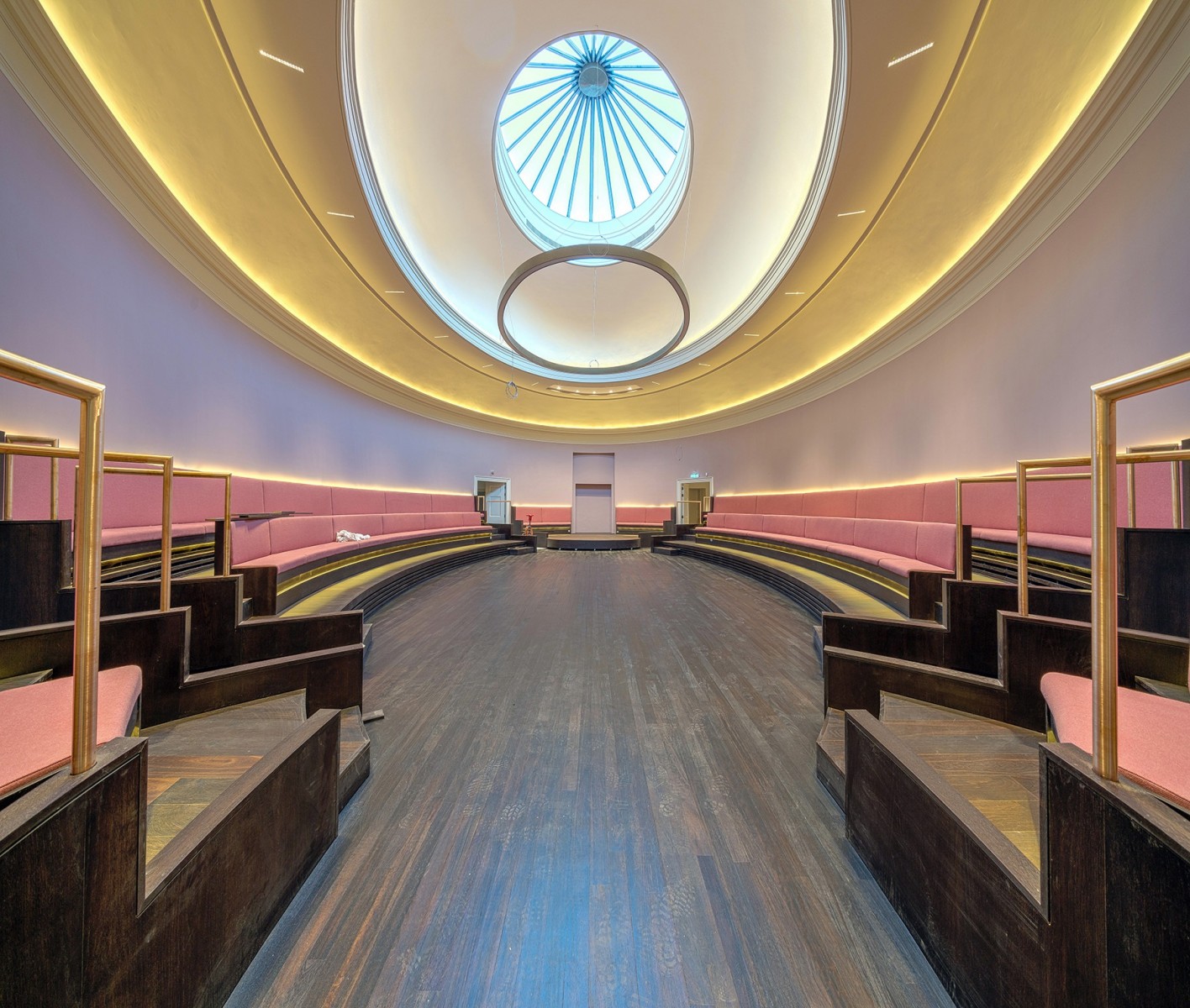
There aren’t many new concert halls being built these days, although there are plans for one in Edinburgh, so the inspirational redevelopment of St Cecilia’s as a museum of musical instruments (you simply must see their fantastic harpsichord collection, many still playing) and enchanting, bijou oval 200 seater auditorium with central chair and perimeter soft bench seating is a delight. Only problem with the venue? No bar. However, the instrument showcases make for an adequate non-alcoholic distraction.


Notwithstanding the building’s eighteenth century origins (built for the Edinburgh Music Society in 1762) the concert style was modern. Ipads instead of music, standing instead of sitting in the custom of Chris Warren-Green and the LCO (all bar the cello!) and sleek modern tieless black rather than evening dress.


Four members of the Ensemble were playing on the evening, Music Director and first violin Jonathan Morton, Cheryl Crockett on second, the fabulously lively Jane Atkins, principal violist of the Scottish Chamber Orchestra and Alison Lawrence on cello. Star soloist on clarinet was Matthew Hunt guesting from the Deutsche Kammerphilharmonie. The standard was remarkably high, and while it is a well-known adage that a string quartet can sound as loud as an orchestra, what struck me about tonight’s combo was not so much their volume but more their rich tone. Time again during the evening I kept returning to my notes and underlining the words “rich tone”. It was an aural joy.


We started with the Brahms Clarinet in B minor Op.115 (1891). Less easily accessible than the Mozart (being held back, one suspects, for a lollipop finish), the players brought a generosity of spirit and a refreshing lushness of tone, particularly in the second movement Adagio, to what is quite a dry, late Brahms work, making it one of the most enjoyable renditions that I have heard. The intensity of sound from the strings, with the clarinet (Clara Schumann described it as “wailing”) soaring above them in full, unforced tone. It never wavered.


After the interval we were treated to an extraordinary amuse-bouche, Mclaren Summit by contemporary composer John Luther Adams, written in Alaska some five years ago and played by the quartet alone. Entirely on open strings and harmonics it was a strangely melodious work that reminded me of near namesake John Adams.


The uber popular Mozart Clarinet Quintet in A Major, K.581 (1789), which one might have expected, because of its chronology, to be the concert opener, was held back until last, a bit like a rock star ending with their biggest hit. One felt almost a sense of reassurance by the familiar opening and the playing of first violin Jonathan Morton really came into its own. The second movement Larghetto, matched only perhaps by the Adagio from the Gran Partita as one of the most beautiful pieces of woodwind and string music ever written, more than met our expectations with a degree of perfection often found only on recordings, clarinet and first violin calling and answering each other with a breathtaking poignancy. The third and fourth movements took us on a joyous romp home. In the final movement I was surprised to be reminded of the final movement of Schubert’s Trout Quintet, the players almost teasing us with their phrasing, deliberate pauses, and changes of tempo.

All in all a delightful evening’s music. I have to confess it was the first time I have heard the Scottish Ensemble. I want to hear more.

nae bad_blue

Star (blue)Star (blue)Star (blue)Star (blue)

Reviewer: Charles Stokes (Seen 9 October)

Go to the Scottish Ensemble

Edinburgh Quartet (Queen’s Hall: 7 Oct.‘18)

Photograph by Cecil Beaton

Benjamin Britten (1913-1976)

“This work, [Britten’s String Quartet No 3] unknown to me, was the event of the evening”

Editorial Rating: 3 Stars


The Edinburgh Quartet, one of the country’s longest standing musical ensembles, has been through many changes, but perhaps none so great as in the three years past that I have been writing about them. Personnel changes, obviously, but changes in performance strategy as well. A move away from formal, evening concert giving to less formal lunchtime and afternoon recitals, working with makars and artists, educating, and, splendidly, offering internships to aspiring musicians to actually take a desk for a period of concerts with them. All this makes it difficult to achieve an enduring opinion of their actual playing together as a combo, and I have not written about them for almost a year.

Sunday afternoon’s concert at the Queen’s Hall featured only one member of more than a year or so’s standing, 10 year veteran cellist Mark Bailey. Tijmen Huisingh has taken over the 1st Violin desk after a year of guests; with Tom Hankey and Catherine Marwood on 2nd violin and viola respectively.

A further unusual aspect of the quartet’s branding is choosing a theme for each season. This year it is ‘Exile’. These themes in my view have always been a little contrived and in his chat after the Beethoven Tijmen Huisingh did confess that they had to be “broadly interpreted”. Exile from deafness in the case of Beethoven, homesickness form England in the case of American based Britten, and yearning for Bohemia from Dvorak whilst in America. Hmmn.

The programme notes were sparse but learned. Deep analysis of the works in question, but with no mention of the players or their biographies. Pleasingly, no advertisements. A puzzling frontispiece titled “Death in Venice” and a reference to phrases quoted in the final movement of the quartet to Britten’s opera. Helpfully, there is an attractive and up to date website to provide further information. 

The Quartet, continuing their very pleasing custom of not fine tuning on stage but getting right down to it, kicked off with an early Beethoven Quartet, Op.18 No 3, a competently despatched if not especially inspiring rendition of an unspectacular early work.

There followed Britten’s String Quartet No 3, a more mature, introspective work, to which the players brought everything they could, from the desolate duets at the beginning between first violin and cello, some breathtaking first violin playing in the highest positions with barely a couple of inches of metal to derive a sound from, lively ensemble playing in the Burlesque finishing with bold pizzicato leading to a sublime conclusion in the final La Serenissima. This work, unknown to me, was the event of the evening.

Tijmen Huisingh had explained earlier that they were unable to play the published Dvorak String Quartet in E flat major, no 10 op.51, through lack of practice owing to illness. Instead we heard Dvorak’s String Quartet no 14 op.105, played in previous recitals. A melancholy opening in the first movement Adagio non troppo – the work was started in America and completed in Bohemia –  it grew livelier and more entertaining as it progressed. In the second movement Molto Vivace – Trio we were obviously back in Bohemia, there was some rich tonal playing in the lento e molto cantabile and in particular masterful cello playing in the final Allegro non tanto as the Quartet showed their evident bonding notwithstanding a relatively recent coming together.


Star (blue)Star (blue)Star (blue)


Reviewer: Charles Stokes (Seen 8 October)

Go to the Edinburgh Quartet

Go to Edinburgh49 at the Queen’s Hall archive.

RSNO: Sondergard, Piemontesi (Usher Hall: 5 Oct. ’18)

Gustav Mahler (1860 – 1911)

“The RSNO just gets better and better”

Editorial Rating: 5 Stars:Outstanding


The RSNO Supporters’ Hospitality Suite was packed, the dress code considerably upscale, the auditorium full, save a few seats in the very furthest reaches of The Gods. It was opening night in Edinburgh for the RSNO 2018/19 season, and the induction of long time Principal Guest Conductor, 49 year old Dane Thomas Sondergard, as Music Director, who had celebrated his birthday the previous evening with this same programme in the Caird Hall, Dundee.


Expectations were clearly high and were not disappointed. We experienced an evening of real musical craftsmanship, the thoroughness, depth and preparation of the music expressed though a mixture of strong technical accomplishment accompanied by restrained, contained emotion which in this age of hyperbole made it all the more effective. Not so much “Less is More”, for there was plenty, but “thoroughness is all” rather than showmanship, particularly in the Mahler, where hearts were not worn on sleeves, but beat resonantly from within.


As is the RSNO’s habit, we were welcomed with a few words by a member of the string section, which in my mind achieves a helpful bond between players and audience.


We started the evening with a warm up, Lotta Wennakoski’s aptly named Flounce, a five-minute escapade that reminded me of a fairground ride and premiered at last year’s Proms under the baton of fellow Finn Sakari Oramo. Result? Good mood all round.


Piano already in situ so no delay for the next piece, except for a brief address from Sondergard himself, full of Scandinavian modesty as he spoke of his pride at becoming Musical Director after those seven years as Principal Guest Conductor.


Our soloist on the night was Francesco Piemontesi, perhaps best known as a proponent of Mozart and so, given the Mozartian nature of Beethoven’s first two piano concertos, and also his first two symphonies, was a profoundly logical choice.


As in many of his concertos, in his Piano Concerto No 2 in B flat major Beethoven keeps you waiting for the soloist’s entry with a long introduction. When Piemontesi came in, it was a natural segue rather than grand opening, emphasising the synergy between soloist and orchestra that marks the best played concertos. With very strong cadenzas Piemontesi brought verve and precision to the music with the band in taut and timely response. There was a collective (but just about silent) “… aah” from the audience as the familiar third movement Molto Allegro brought us to the work’s conclusion. I would describe this performance as perfect.


We were treated to a thoughtful, unexaggerated interpretation of the well known Schubert Impromptu in A flat major before retiring for the interval, a work I suspect many of us have played in our time, but nowhere near as well as this.


The Mahler Symphony No 5 in C sharp minor was the work we had all been waiting for, a seventy-minute epic. And it was. One’s heart went out to the trumpet soloist opening the work whose first note had just a trace of uncertainty in its first moments but then delivered a masterly performance throughout the work. I suspect few noticed, and none cared, I certainly didn’t. This is all part of the bargain of live music. In fact the orchestra’s playing throughout this very long, demanding work, was exemplary. Huge contrasts in dynamics, avoidance of sensationalism (“It’s not as loud as you play it on the HiFi” my wife remarked), brilliant pianissimi between timpani and basses, joyous chucking of the theme from strings to brass, the orchestra never tiring through this musical and emotional marathon.


The fourth movement Adagiotto. Sehr langsam more commonly known as “The Adagio from Mahler’s Fifth” or, worse, “Theme from Death In Venice” deserves a paragraph to itself. It was a textbook example of how this movement should be played. First, it is an Adagietto, which means very slowly, and it was at a very slow pace –  indeed, the slowest I have heard – that Thomas Sondergard guided his players through an incredibly exposed piece of scoring, in which bow and breath control, depending on the instrument, are stretched to their physical limits. Abbado does it all in a couple of seconds over nine minutes, Rattle in nine and a half. I reckon Sondergard took us to nearer ten. The result was an achingly poignant, again understated but utterly compelling interpretation of this famous musical sketch.


The RSNO just gets better and better. If tonight is an example of what is in store for us in the coming winter and spring, we are in for a series of real treats.

outstanding

StarStarStarStarStar

Reviewer: Charles Stokes (Seen 5 October)

Visit the RSNO, Scotland’s national orchestra, here.

Go to Edinburgh49‘s Usher Hall archive.