‘Dear Scotland’ (Scottish National Portrait Gallery: 24 April to 3 May)

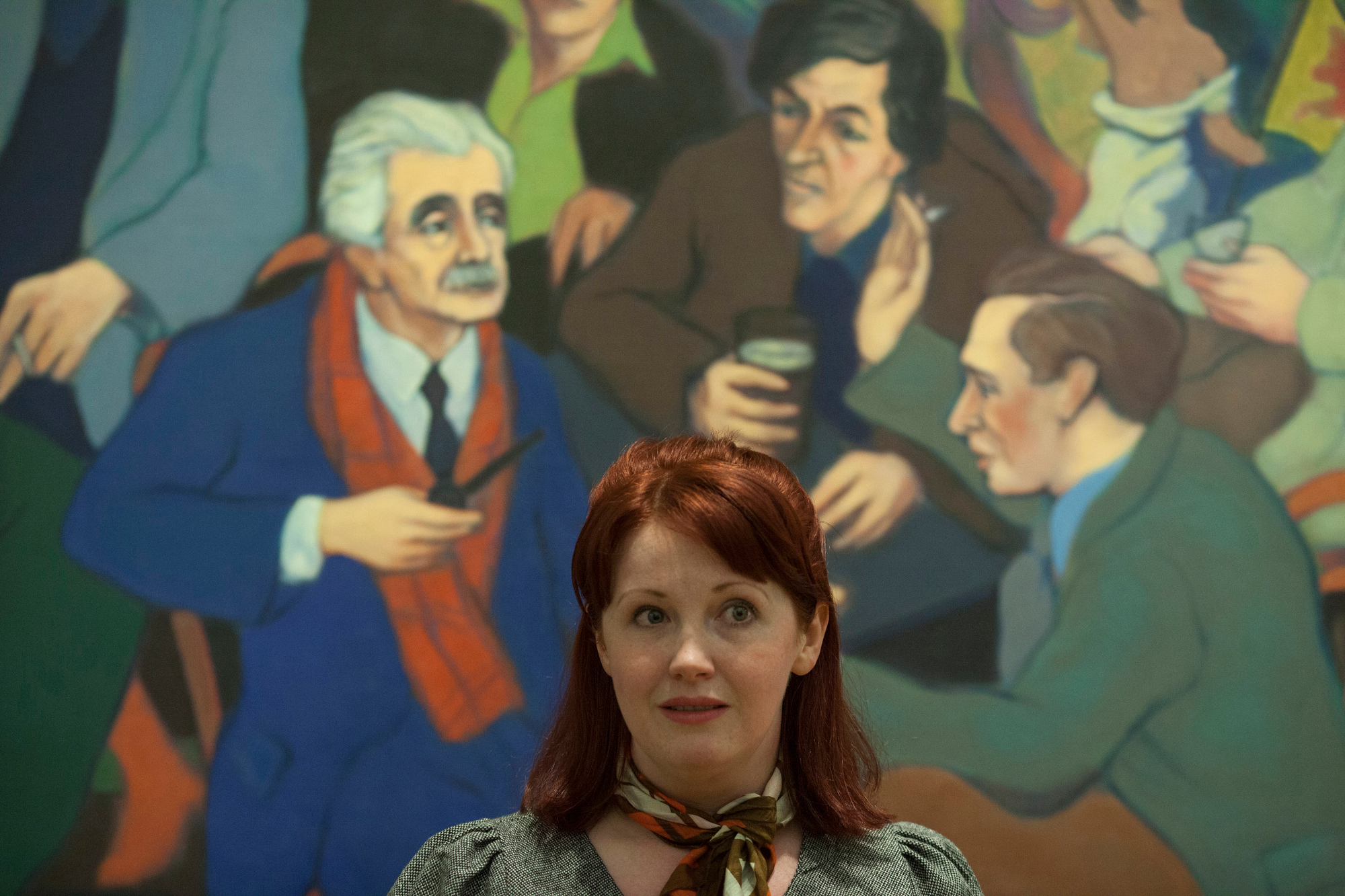
Sally Reid as the unnamed woman in the 'Poets' Pub'. Photo: Peter Dibdin Painting by Alexander Moffat (1980)

Sally Reid as the unnamed woman in the ‘Poets’ Pub’.
Photo: Peter Dibdin
Painting by Alexander Moffat (1980)

‘Finely-honed, finely-tuned productions … You’ll have to go twice – because the twenty short plays are split into two groups of ten, performed on alternate days.’

Editorial Rating:Nae Bad

A National Theatre of Scotland production.

Dear Scotland provokes some complex responses, but the concept underpinning it is a wonderfully simple one. As you’re led round the National Portrait Gallery on Queen Street, you’ll find actors stationed in front of portraits – each of them cast as the man or woman portrayed in the work of art. Each actor delivers a script penned by a different playwright, in the form of a letter addressed to the nation. So you might hear, for example, the unmistakeable voice of Liz Lochhead … but spoken by a man, in the persona of Robert Burns.

The actors are paired with portraits without reference to their looks, or (hilariously) even to their gender. Colin McCredie as the Queen is a particular highlight; in some ways, he better captures our image of the monarch than the unflattering portrait hanging behind him. Such an overt mismatch avoids some moral issues, too. Playwright Johnny McKnight isn’t putting words in Her Majesty’s mouth, but offering an alternative Queen – one who tells us things the real Elizabeth would never be so gauche as to say.

Another piece, written by Peter Arnott, pulls the same trick the other way around; this time, he has Walter Scott lay bare the things we think, but don’t dare to mention. A gender inversion again works well, with Lesley Hart offering a memorable performance as a thoroughly modern Sir Walter. But to see both the pieces I’ve mentioned, you’ll have to go twice – because the twenty short plays are split into two groups of ten, performed on alternate days.

It’s worth a second visit, since seeing the same actors re-cast in different roles presents some intriguing juxtapositions and parallels. The scenes explore a fine range of the gallery’s exhibits too, from an exalted king to a nameless woman and from photographs through paintings to sculpture. There’s even, bizarrely, a monologue delivered by a dancer’s knee (though mercifully it’s played over loudspeakers).
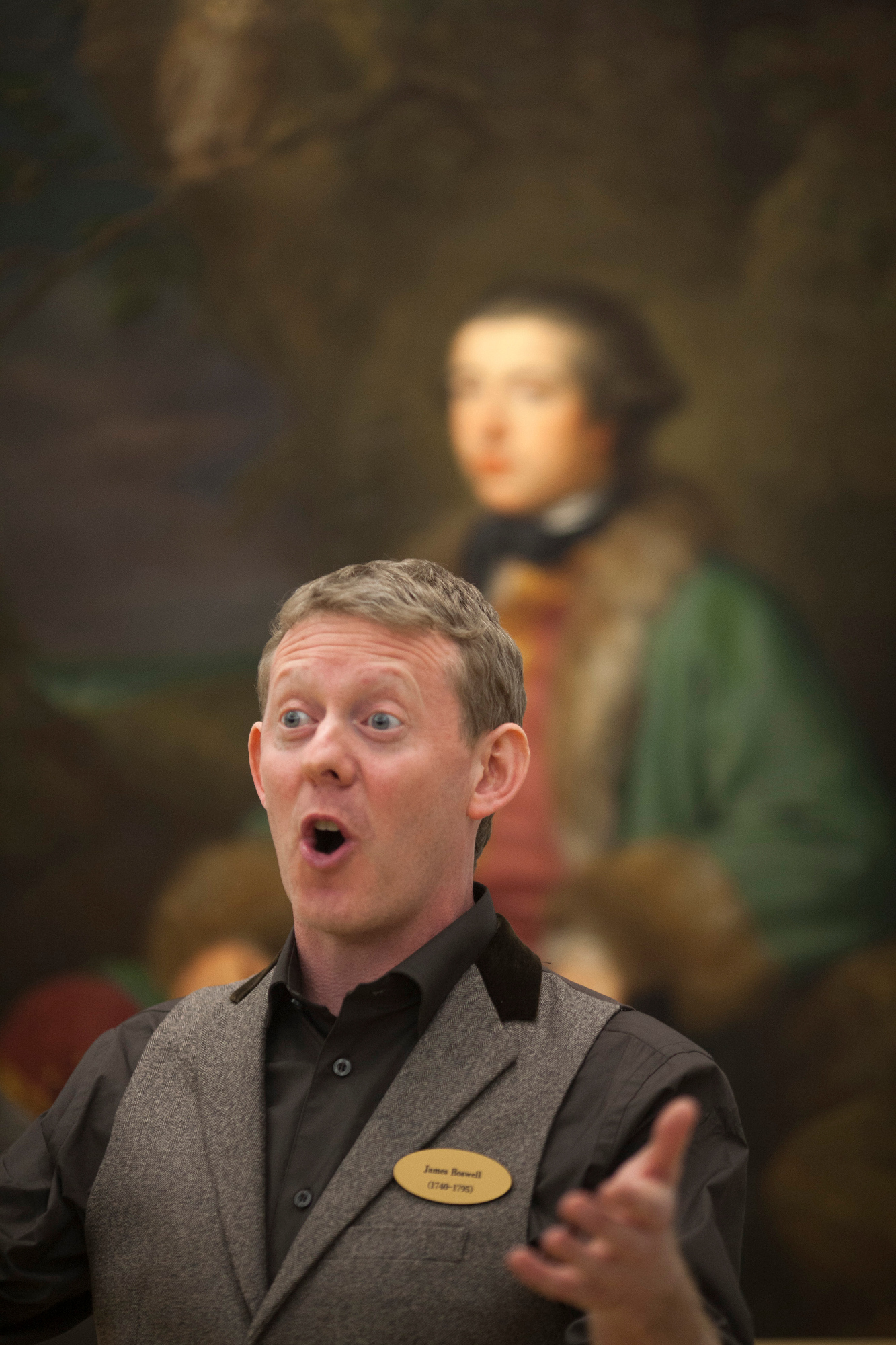
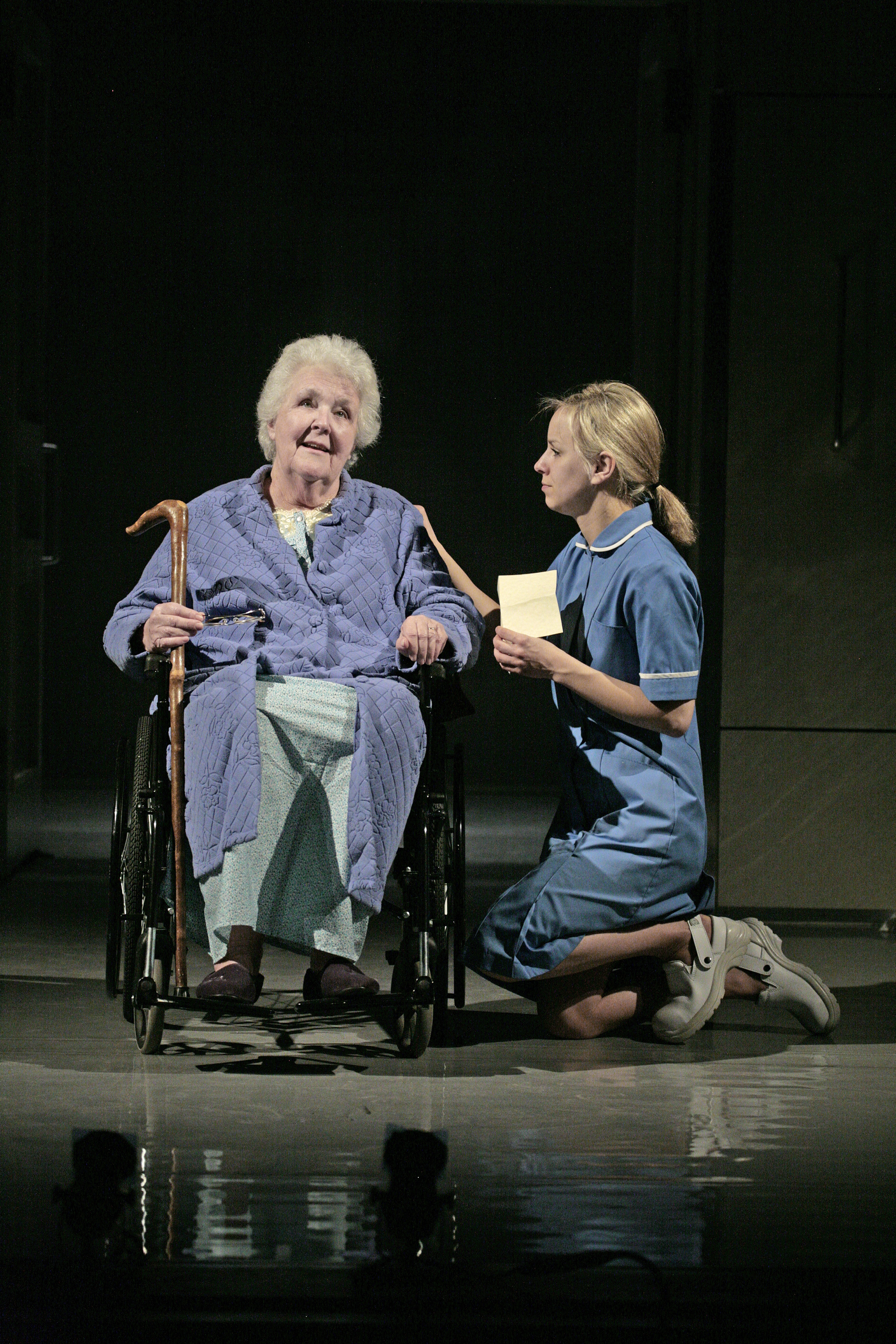
Colin McCredie as James Boswell Photo: Peter Dibdin Painting by George Willison (1765)

Colin McCredie as James Boswell
Photo: Peter Dibdin
Painting by George Willison (1765)

So the individual pieces are often compelling, but does the whole show hang together? Overall, yes; the itineraries are finely-honed, finely-tuned productions. The actors’ dress and poses subtly echo the portraits – enough for you to notice, but not so much that it starts to feel mechanistic or trite. And the logistics are impeccable too, with an array of assistants escorting the audience through the gallery, in groups which feel like they move at their own pace yet somehow never collide.

But inevitably perhaps, for a work built from so many different pieces, there’s a clumsy repetitiveness to some of the themes. “Tour B” in particular shoe-horns a discussion of independence into each and every vignette – as though the whole of Scottish consciousness can be reduced to a “yes” or a “no”. “Tour A” explores a wider view of society, and feels much more subtle and thoughtful as a result.

Across both nights, the most striking scenes were those which challenged our complacent assumptions – dared to suggest that some of our nation’s faults might originate from within. Zinnie Harris’ script for a chorus of forgotten women will linger in the memory, touching a type of pain that lives inside us all. And Nicola McCartney’s complex, riddling monologue, spoken by a bystander, opens with a welcome yet carries a bitter sting in its tail.

At the end, you’re invited to write your own note to the nation – so here is mine: ‘Dear Scotland, let’s remember how to have this conversation; not just till September, but onward, into whichever future we choose. Let’s carry on learning about our past, and speculating about our present; because, with this elegant production, the National Theatre of Scotland shows just how entertaining that thought-provoking dialogue can be.’

 nae bad_blue

Reviewer: Richard Stamp (26 & 28 April)

Visit Dear Scotland homepage here.
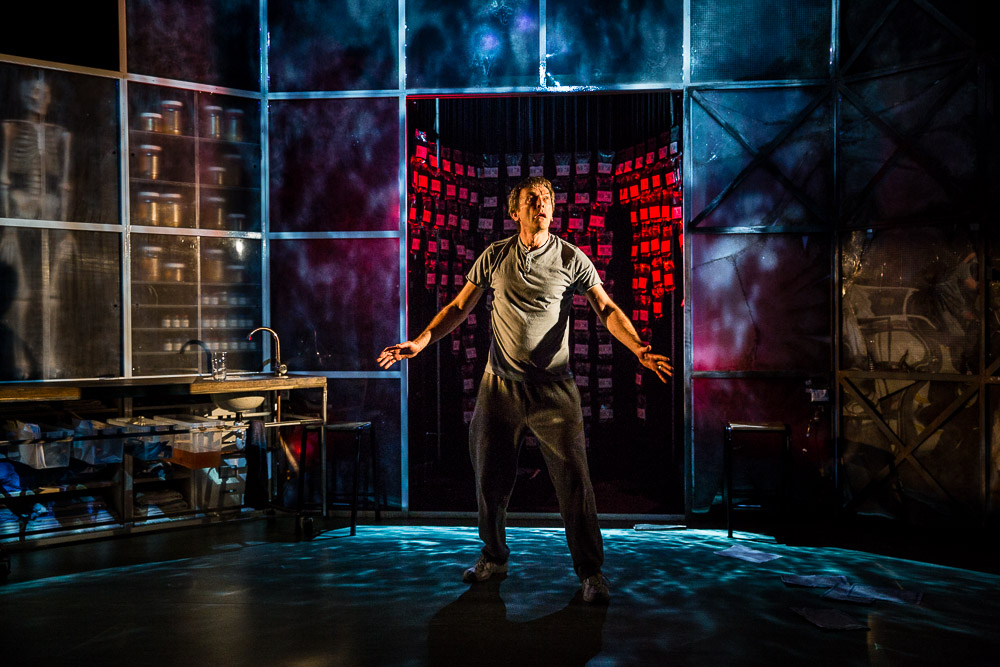
‘Factor 9’ (Traverse: 24 – 26 April’14)

Matthew Zajac as Bruce (Norval)

Matthew Zajac as Bruce (Norval)

‘Blood bags swing in the central section … Death certificates litter the stage floor throughout.’

Editorial Rating: Outstanding

There is an eye-catching stainless steel angel outside the Scottish National Blood Transfusion Service centre in Ellen’s Glen Road, Liberton, barely four miles south of the Traverse. There is also, facing Reception, a rust streaked 40 cubic yard capacity waste skip. Factor 9 shows us what happened when, in 1984, contaminated blood product did not end up in the bin.

Injury, pain, hurt and a raging sense of injustice is how writer Hamish MacDonald sees it. His script could have taken on some late gothic horror, as in Stevenson’s Olalla, but that is torpid and exotic compared to the energy and ghastly proximity of Factor 9.

Dramatic, genuine, testimony is given by two haemophilia sufferers, Rab (Stewart Porter) and Bruce (Matthew Zajac). Together, but occasionally taking different parts along the way, they tell the story of their lives. In medical reports and studies they are classified as ‘Unfortunate individuals’ who were exposed to that single batch of HIV contaminated factor VIII concentrate from Scottish donors. Rab would have been a ghillie but now only drives into the hills to scream insults at the view. Bruce tried to be a nurse but is thrown off his course – and onto the streets – as an unacceptable infectious risk. He has a recurring hopeless dream of taking a hammer to water and trying to smash his way out of all-enveloping misery. Bruce has, in his words, become shockproof: “Fucking unfortunate?” No, try “Fucking incredible”.

“How could this happen?” is the furious and tendentious question that fronts Factor 9. Director Ben Harrison and Designer Emily Jones get the answers out in impressive and surprising order. Visual, contextual information is screened on the grid squares of a threefold set. Important dates and locations clearly register, not least the security fencing around the Arkansas state prison(s) where donor prisoners are paid for their blood, some of it infected with viral hepatitis and HIV. White symbols turn red when, of those 32 patients in that 1984 cohort, another one is ‘away’. A lab bench wheels into use as a bed. Utility chairs are in the Waiting area where Rab and Bruce and their families spend a horrible amount of time. Blood bags swing in the central section and the names of drug companies – notoriously IG Farben and latterly Hoechst, Armour, Baxter and Bayer – are indexed above. Death certificates litter the stage floor throughout.

L. Stewart Porter as Rab (Mackie)

L. Stewart Porter as Rab (Mackie)

Actors Porter and Zajac are utterly convincing. You see Rab and Bruce briefly, innocently, having fun in the Children’s Hospital when their parents have gone home for the night but otherwise, as stigmatised plague-carriers and guinea-pigs, it is their outright, unequivocal anger that registers. Rab knows magic tricks and the vehemence of his ironic “Abracadabra” when significant medical records just disappear is punishing. Zajac also plays the haematology consultant and actually wins sympathy for a professional who, grappling with the uncertain and the unknown, finally does not know what to say. The scene when an anatomical skeleton is substituted for the doctor and ‘examined’ by his patients is ingenious and macabre.

Factor 9 is properly more than a tongue-lashing for pharma. Neither is it a pitiless exposee of medical practice in the face of an emerging pandemic within the haemophila community. It is much better than viral polemic because of terrific performance and inventive direction. In the House of Commons the Contaminated Blood (Support for Infected and Bereaved Persons) Bill waits for its 2nd Reading. This Dogstar Theatre production should introduce it.

outstanding

Reviewer: Alan Brown (Seen 24 April)

Visit Factor 9‘s homepage here and preview the show’s Fringe ’14 run here.

‘Skeleton Wumman’ (Traverse: 22 – 26 April ’14)

Buchan Lennon as Young Man and Amy Conochan as Skeleton Wumman. Photo: Lesley Black.

Buchan Lennon as Young Man and Amy Conochan as Skeleton Wumman.
Photo: Lesley Black.

‘Buchan is seamless, fluid and graceful. If he were Salome, I’d have the head of John the Baptist brought to him with an apple in its mouth.’

Editorial Rating: Nae Bad

“I’m not entirely sure I understood that,” I confided to no one in particular walking out into the thick Spring mist. The questions raised by Gerda Stevenson’s lunchtime script continued to buzz round my head as I wandered through the exhibition of Edward Lear watercolours at the National Gallery. It’s a sign that the magic of theatre is working I suppose. There’s a similarity in the way Lear represented mid-nineteenth century Greece and the seascape of myths conjured by Stevenson.

Both evoke folk memories held deep in the collective conscience. Both present skilled artists with a canvas for intricate flair – none of Lear’s paintings is larger than A3 while a Play, a Pie and Pint runs not much more than an hour. And neither entirely satisfy.

The muted colours of the Scots dialect run from Stevenson’s pallet into something of a monologue delivered by Amy Conachan as the Skeleton Wumman. The plot is an interplay of narratives woven from Inuit tales and mythology, offset by the innermost thoughts of a contemporary young girl.

There is an Inuit tale of a fisherman who ensnares bones of a forgotten young woman, cast out by her disapproving father. When the seemingly lifeless, barnacled relic of a past tragedy drinks a single tear shed in sorrow by the fisherman, her flesh and animation return, in turn ensnaring him. In Stevenson’s narrative the Skeleton Wumman might also stand for Sedna, Inuit goddess of the deep.

The young girl portrayed by Conachan is severely disabled. We find her at home being cared for by her father, an oldskool fisherman stuck on land by the inclement season. We hear her innermost thoughts, ideas and perspectives, which she is otherwise unable to communicate especially to her uncommunicative father.

Conachan leads a trio of performers who somehow sprint the marathon. She is an extremely gifted performer, one who knows how best to present the results of her Royal Conservatoire of Scotland training (where she is currently studying). She is the glue holding the narratives together and does not come unstuck even as the script’s monologue starts to skirt the bounds of monotony. Conachan’s relationships with Buchan Lennon (as her Father and as the Young Swimmer who has caught her eye at the city pool) are truly enervating.

Buchan is seamless, fluid and graceful. If he were Salome, I’d have the head of John the Baptist brought to him with an apple in its mouth. He inhabits both characters more like a Game of Thrones warg than someone playing make believe. Every nuance is there. The Father is at once terrified of nappies, especially now his daughter’s becoming a woman, whilst also tender, attentive and affectionate. The Young Swimmer is shy but friendly, a breath of fresh exotic air. Buchan fills Kipling’s unforgiving minute in If with miles of distance run.

Completing the trio is Seylan Baxter. Noted as one of the small, but growing, number of players reintroducing the cello into Scottish traditional music, Baxter provides far more than a soundscape. She employs the electric cello for both music and sound effects. The beating heart, the familiar musical phrase, the playful twist, each is managed from a push pedal system allowing her to sample herself as merrily she rolls along. Sitting on the far left, I’ve got the best view of the pedal system in action. Not a foot wrong, although one time Baxter almost hands Buchan an umbrella instead of an inflatable rubber ring; happens to the best of us.

The props, set, lighting and sound were all of the highest standard. The gentle sobbing from the techies responsible for all those cues added not unpleasantly to the overall effect. This was a production of very high production values and higher ambitions, the more so for having hit almost every mark.

I’ll be thinking about Stevenson’s script long after Edward Lear’s watercolours have washed out of memory. Spooky, to the point of spine-tingling, Skeleton Wumman is however unfairly weighted between the trio on stage. But that Conachan is a thoughtful and compelling performer, one who carries much more than her own weight, the play might have foundered.

nae bad_blue

Reviewer: Dan Lentell (Seen 22 April)

Visit Skeleton Wumman‘s homepage here.

‘The Comedy of Errors’ (King’s: 16 – 19 April ’14)

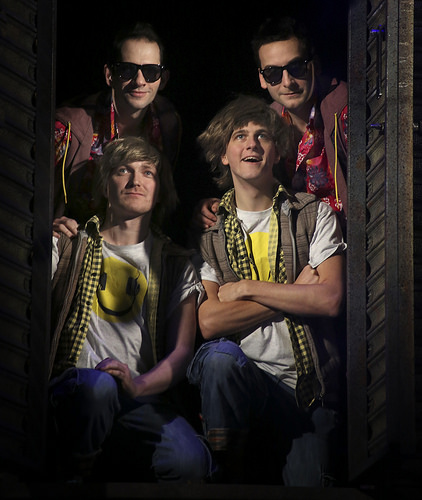
Guess who? Antipholuses of Ephesus x2 & Dromios of Syracuse x2. Photo: Nobby Clark

Photo: Nobby Clark

“James Tucker as Adriana pushed out all the stops. He built up a fantastic head of steam, crashing into the terminus barriers with enough force to lift the plot’s ludicrous conclusion to the heights of hilarity.”

Editorial Rating: Nae Bad

The three preceding (and four subsequent) plays of the RSC’s 2001 Histories Cycle had been so brilliant, that the unutterable awfulness of Edward Hall’s take on Henry V came as a serious shock to the system. It’s taken thirteen years of painstaking therapy for the flashbacks and nightmares to subside. Unforgettable was the moment when Hall had hundreds of tennis balls bounce across the stage on Essex’s line, “Tennis balls, my liege.” One of the most dangerous and dramatic moments in the canon blown out of all proportion for the sake of a cheesy visual gag. For those of us embarked on the whirlwind tour of eight history plays in six days the forced funny fell flat.

By contrast, two nights earlier the definitive Richard II of my lifetime had snatched our collected breath away. The late, much lamented Steven Pimlott punctuated the opening play of the Cycle with the lines, “I have been studying how I may compare, This prison where I live unto the world: And for because the world is populous And here is not a creature but myself, I cannot do it.” Shakespeare gave the line to Richard II alone. Pimlott shared it with Queen Anne (Act 3: Scene 4), Richard (Act 5: Scene 5) and at the very end with Bolingbroke. The effect was profound, out barding the Swan.

The recurring lines appealed to my grumpy teenaged sensibilities. More consequentially, it conclusively demonstrated that a director can be reverential to Shakespeare’s unmatched genius without embalming his text. David Troughton played Bolingbroke, opposite Sam West in the title role. Both are scions of great acting families. Edward Hall, director of the Propellor Theatre Company, has an equally impressive pedigree, but as Tony Benn liked to quip, there’s no such thing as an hereditary pilot.

Back in 2001, when mobile phones were still a novelty (just about), the cast of Henry V had been slouching around on stage at the start when a ringtone rang out. It was Pistol’s! How funny was that? What a clever and inventive way to remind people that they might inadvertently interrupt the script with a needless distraction.

Thirteen years later, we enter to find the same busy business on stage and off. Actors flit hither and dither one-sidedly chatting with the audience, establishing The Comedy of Error’s Rocky Horror aesthetic. Perhaps this bonphonie is your cup of tea. All I’d suggest is that in the nature of things, a person standing can’t help but talk down to a person sitting, figuratively and literally.

An all-male cast (as in Shakespeare’s own day) necessitates cross-dressing. Hold the panto, why are we meant to find this intrinsically funny? All-female Lears et al don’t tend to tap this varicose vein of comedy mould. In the week when India recognised transgender people as belonging to a third gender, I can’t help wondering if we aren’t being invited to backhandedly giggle at the black and white minstrels of our age.

Similarly the all-caucasian Mariachi band seemed to suggest something diminishing about Mexican culture not uttered, outside the Top Gear studio, since the producers of Fraiser toyed with the idea of Daphne being a laconic hispanic housemaid back in the early ‘90s. Did this production seep out of the Blue Peter millennial time capsule? Even the prolific use of football shirts nodded towards the Nick Hornby-era, when the beautiful game’s gentrification was at fever pitch. The 21st century appeared above the Madness inspired soundtrack in the form of the e-cigarette which is now all but ubiquitous in productions lacking mature vision.

The Comedy of Errors is a tough nut to crack. Two pairs of mistaken identical twins causing double the hilarious consequences. It’s a silly play requiring serious talent on stage. Fortunately, even the Dead Sea can reflect starlight.

This was an exceptional cast without exception. Joseph Chance and Dan Wheeler, as the twin masters, established the musky basenotes from which the playful rifts of Will Featherstone and Matthew McPherson, as the twin servants, emerged to enliven. Although all four were not on stage together until play’s end, they conjured a continuum which turned the narrative arc into a canopy of luscious woodbine, sweet musk-roses and eglantine which perfectly perfumed the performances of the entire cast.

James Tucker as Adriana pushed out all the stops. He built up a fantastic head of steam, crashing into the terminus barriers with enough force to lift the plot’s ludicrous conclusion to the heights of hilarity. Beneath the dragging drag act both he, as well as the flawless Arthur Wilson (Luciana), established the emotional range required for the darker comedy.

Dominic Gerrard as The Duke, as with the whole production, came into his own after the interval. Suddenly the pace got pacier, with time being left for the actors to enjoy the fruits of their labours. The plot may be thin as tissue during a paper pulp shortage but it frames some fantastic lines, banter and badinage.

To see a strong cast with swift bite slow to sink their teeth in requires the Russian Revolutionary remedy. After 1917 Soviet orchestras divested themselves of importunate conductors, preferring to guide the collective collaboration by the mutual light of their individual talents. The Propeller Theatre Company should propel their Jonah overboard.

nae bad_blue

Reviewer: Dan Lentell (Seen 18 April)

Visit Propellor at King’s homepage here.

‘A Midsummer Night’s Dream’ (King’s: 16 – 19 April)

Chris Myles as  Bottom Photo: Nobby Clark

Chris Myles as Bottom
Photo: Nobby Clark

‘unambiguously, unashamedly, unpretentiously hilarious’

Editorial Rating: Nae Bad

When I was a child, I couldn’t understand why half of Shakespeare’s plays were described as “comedies”; they seemed so resolutely unfunny. I wish I could have seen Propeller back then – because whatever else you might think of their Midsummer Night’s Dream, it’s unambiguously, unashamedly, unpretentiously hilarious. There’s one particular scene which might just be the most entertaining five minutes I’ve ever spent in a theatre, and if they just stood and read from scripts for the rest of the running time, it would still be worth the ticket price for those moments of joy alone.

But of course, that’s not what they do. The director’s notes highlight a “rigorous approach to the text”, but his style and presentation are unashamedly modern. The piece is filled with bold, striking images – and it’s performed very much in three dimensions, with actors clambering and capering on ledges across the backdrop. The literal high point comes when Oberon and Titania first confront each other, perched on matching thrones far above the other actors’ heads, divided by the chasm of the stage.

The physicality of Propeller’s performance adds a lot to the humour, but it has a serious edge to it too. Joseph Chance’s Puck delivers just the right mix of the carefree and the sinister. The Rude Mechanicals are re-invented with a dash of Dad’s Army, though their comic play-within-a-play arguably suffers a little in comparison to the earlier scenes. And it’s all set off by an appropriately other-worldly soundscape – intriguingly created by the actors, live on stage.

But of course, Propeller’s work is best known for a completely different reason: specifically that the actors are all men. And surprisingly, it’s here that the sense of effortless coherence begins to break down, with their approach to Shakespeare’s women feeling distinctly variable. At one end of the scale, Will Featherstone plays Hippolyta convincingly as a female, while James Tucker’s punkish Titania is a fascinating creation – the perfect equal for Darrel Brockis’ magnificent, half-crazed Oberon. But with other characters, the gender inversion seems more of a parody, and seeing a male actor mincing and flouncing is a major part of the humour.

Humour, perhaps, is enough. But you can’t quite divorce Propeller’s concept from the gender politics of our modern day – and I’d been hoping for something more than that, some surprising sudden insights which a mixed cast simply couldn’t provide. As it is, I’m not sure they do quite enough to justify their most defining artistic decision. Still, this has to rate as one of the most entertaining Midsummer Night’s Dreams you’re ever likely to have – and a comedy that proves itself still worthy of the name.

nae bad_blue

Reviewer: Richard Stamp (Seen 16 April)

Visit Propellor at King’s homepage here.

The Last Bloom (Traverse: 15 – 19 April’14)

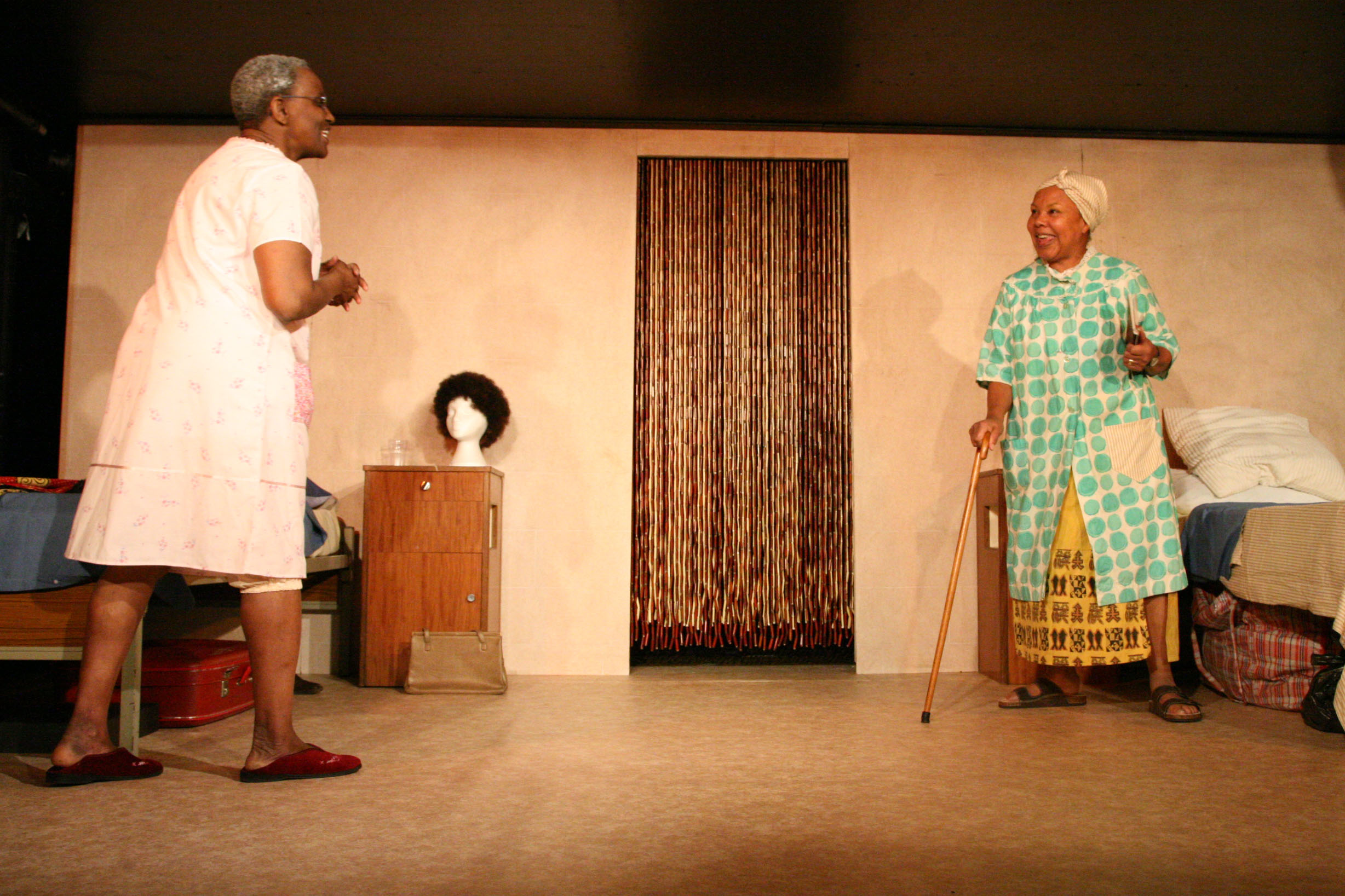
Anni Domingo as Cynthia and Cleo Sylvestre as Myrtle in The Last Bloom. Photo by Lesley Black

Anni Domingo as Cynthia and Cleo Sylvestre as Myrtle Photo by Lesley Black

” … questions about the alternative lives we all could have led, and whether it’s so very wrong to seek solace in them”

Editorial Rating: Unrated

In an old folks’ home somewhere in Jamaica, two elderly women squabble over the room they’re forced to share. Myrtle is fussy, inflexible, used to getting her way; Cynthia likes to please, but quickly turns prickly when she’s pushed too far. Myrtle’s the type who knows everyone else’s business, while Cynthia has a secret or two she’d really rather hide. The two have been sharing the room for three days now … and yet, they’ve only just got round to learning each other’s names.

It sounds like the set-up for a sit-com, and there are indeed some delicate moments of humour in this softly-spoken production. But as soon becomes clear, the bickering’s not quite as inconsequential as it seems: there’s a tragedy, perhaps two tragedies, developing before our eyes. It’s something we can easily imagine happening to people we love. It’s something which, one, day, might happen to ourselves.

Anni Domingo is striking as the newcomer Cynthia, deftly introducing the almost-imperceptible moments of confusion which hint at a weakness in her ageing mind. Later, when she starts to flash a child-like smile, it’s hard to know whether to feel deepest sorrow or purest joy. Cleo Sylvestre, meanwhile, perfectly embodies a character we all think we recognise – cantankerous and obstructive, yet soft and tender inside her shell. But the young-looking actors don’t quite capture the physical decay implied by the script; there are some stiff joints, admittedly, but the true bone-weariness we’re told they feel never quite comes through.

There are some interesting ideas in Amba Chevannes’ script: questions about the alternative lives we all could have led, and whether it’s so very wrong to seek solace in them. There are terrifying insights, too, into the future that might await us, and the possibility that the one thing we hold most precious might be stolen away.

And in a year when Scotland has its eyes turned inward, it’s refreshing to see the Traverse stage a play that’s set in Jamaica. The women’s shared patois is challenging at first, but soon develops into a well-judged point of interest – an insight into life that’s an ocean away, yet very much the same as our own.

Ultimately, though, the script leaves too much unexplained or unexplored. At times it feels like there’s a missing scene; at one point, an inconceivably terrible wrong is forgiven and forgotten in the blink of an eye. And the brief epilogue, though poignant, returns to the generic – doing little to crystallise or resolve the tumult that’s gone before.

It’s a shame, because this is a play which speaks of personal experience, and it feels like Chevannes has an elusive message she’s hoping we might hear. But still, there’s plenty to ponder. And perhaps it’s appropriate – when the play’s so much about lying – that it isn’t too specific about what we’re meant to believe.

Reviewer:Richard Stamp (Seen 15 April)

Visit The Last Bloom homepage here.

‘Wendy Hoose’ (Studio at the Festival Theatre: 29 March ’14)

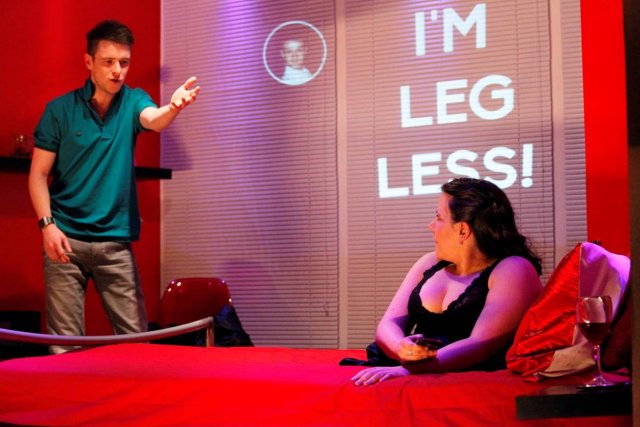
Photo: Eamonn McGoldrick

Photo: Eamonn McGoldrick

‘a comedy of lack of manners, or of mannered people’s cringe-worthy attempts to misbehave’

Editorial Rating: Nae Bad

Wendy Hoose is by Johnny McKnight and is A Birds of Paradise Theatre Company and Random Accomplice production. Directed by Robert Softley Gale & Johnny McKnight.

If you’re the sort of person who reads the small-print of theatre programmes, you’ll know all about audio description. Sitting at the back of selected performances, audio describers explain – for the benefit of those who can’t see the action themselves – exactly what’s happening on stage. lt’s normally done using headphones. But Julie Brown, Wendy Hoouse’s audio describer, wants to share her thoughts with all of us … so they’ve ditched the technology, and just let her speak over the PA.

Which, put like that, sounds suspiciously right-on. But Wendy Hoose is all about messing with expectations – and this particular subversion proves truly inspired. Like the opinionated narrator of a Victorian novel, Brown seemingly can’t keep her thoughts to herself, and colours her commentary with a hilarious blend of upper-crust unshockability and deadpan disdain. ”Jake touches Laura’s breasts. She doesn’t seem to mind,” Brown’s disembodied voice observes primly. And then, a moment later: “Which I guess is what makes her different from me.”

Wendy Hoose has been called a “comedy of manners”, but it’s more a comedy of lack of manners, or of mannered people’s cringe-worthy attempts to misbehave. Paisley man Jake meets the confident, sassy Laura on the internet, and turns up at her flat in Cumbernauld with casual sex on both their minds. But neither of them’s particularly good at it — and Jake, in particular, proves comically bad at actually getting the job done. You’ll have gathered that this isn’t a play for the easily-offended, but the whole thing’s played with a crucial measure of restraint; it’s explicit enough to draw squeals of shock from the audience, yet it somehow never quite lapses into being crude.

James Young is sweetly engaging as the nervous, restless Jake, deftly capturing a veneer of confidence disguising insecurity and confusion. Amy Canachan, playing the bold-as-brass Laura, mocks Jake’s Paisley tones – as do the captions above the stage, which also feature cheery cartoons and other unexpected visual flourishes. The two actors share a deft comic timing, and they carry the audience effortlessly into the few more serious scenes.

The story takes a thought-provoking turn part-way through, but it’s only at the end that it hints at its true message – a comment on isolation in our seemingly connected world, with resonance even for those completely unlike Jake or Laura. Perhaps there’s more to draw from that concept; the ending feels distinctly abrupt. And the pace drops a little around the twenty-minute mark, though the gasps of laughter soon start coming again.

When all’s said and done, though, the plot of Wendy Hoose was always going to be upstaged by its design. lt takes the tools of accessibility — the narration, the surtitles, the sign-language interpreter — and rather than letting them divide the audience, turns them into an entertaining treat which everyone in the room can enjoy. So you should try to see Wendy Hoose; not because it’s commendable or inclusive (though it’s surely those things), but just because it’s clever, and tremedously good fun.


nae bad_blue

Reviewer: Richard Stamp (Seen 29 March)

Visit Wendy Hoose homepage here.

‘This May Hurt A Bit’ (Traverse: 8 – 12 April’14)

ThisMayHurtABit_0743

‘The Grim Reaper cannot wait for the good times to roll.’

Editorial Rating:Nae Bad

NHS England and not NHS Scotland is examined in Stella Feehily’s agile new work, which is mildly or wildly reassuring depending on the state of your health and where you live. This May Hurt a Bit is still a jag of a play, needle sharp where it matters and good for you. It will also, with luck, get stuck into government.

There is no squirming away from the political point of Feehily’s writing or from Max Stafford-Clark’s expert direction. The National Health Service is sixty-six years old, is in a High Dependency Unit, and needs your support before it is wheeled off as a terminal case. Here is an acute and tender understatement of a critical condition.

The play begins deep in the vein, if you will, of Ken Loach’s new film, the documentary The Spirit of ’45 when in his words ‘generosity, mutual support and co-operation were the watch words of the age.’ Aneurin Bevan, Minister of Health in the post-war Labour government, is on stage and brings the attention of the House to the extraordinary fact that ‘we are still able to do the most civilised thing in the world – put the welfare of the sick in front of every other consideration.’

That was in 1948, as indicated by the LED display. Move straight on to 2011 and then to the here and now but not before I, poor sap, thought that the medical staff were ‘serving’ customer/patient No.1948. Rather like those long waits in the East Coast advance booking hall at Edinburgh Waverley or, come to think of it, my time in A&E at the new ERI when a low-flying discus cracked my head.

The set of This May Hurt a Bit actually looks like an interior of the Old Royal before the PFI op. You cannot see it but there’s blood on the ceiling. Long and narrow gothic windows and grubby whitewashed brickwork and a screened treatment area centre stage with a disconcertingly large EXIT sign suspended above it. By scene 17, of 18, The Grim Reaper cannot wait for the good times to roll.

Nicholas James (66) is being treated for a prostate the size of a space hopper but has the good manners not to worry anyone but himself. His mother, Iris (91), suffers a fall and is admitted to the local District General for investigation. Fond but limited daughter Mariel is visiting from New York where all-American husband, Hank, is an orthopaedic surgeon. In Hank’s professional opinion – because you die in city hospitals – Iris should be treated privately where she’ll enjoy a lovely view of the Thames. Iris, bless her, swears (profanely) by NHS care, and refuses to move. Nicholas is with his mother all the way.

On the wards, or more accurately on the corridors, there is near bedlam. As well as Iris, Nurse Gina has to look after incontinent stroke patient Rev. John and dementing, bonkers, Dinah. Paramedics, porters, and police dispense black humour. There is a corpse in the screened cubicle, left.

Deadpan funny is rarely in remission but neither is the rolling political script. There is no positive narrative behind NHS reform, Prime Minister, so you just go out there and spiel away; and Feehily provides a wacky retinue – from within the cast of eight – of singing nurses, advisors, strategists, a board of directors, Churchill, a weather girl, and Maggie Thatcher on her perch. I have mentioned Death.

Stephanie Cole and Natalie Klamar

Stephanie Cole and Natalie Klamar

Iris is at the play’s selfless heart. Her absolute, principled, and dear refusal to leave NHS care means she is immune to what afflicts it. Peerless Stephanie Cole cannot be touched in the role. Similarly, Natalie Klamar as Nurse Gina from God knows where – possibly Poland, maybe Serbia – has an angelic part, made all the sweeter when she explodes in effing fury at the specious ‘Culture’ of shitty spending cuts.

It is a bit too easy, I think, to import Hank as the big bad US example – not one reference to French or German systems of social health insurance for instance – but that goes with the staked out territory of this continuing debate, which as Freehily palpably demonstrates gets far too close for comfort to the cynical truths of ‘Yes, Minister’.

This May Hurt a Bit has deft feel and touch all over it but it is also an invigorating shot in the arm for the campaign to keep the NHS safe and in public hands. Scotland, I propose, is reminded to keep its resistance up.

nae bad_blue

Reviewer: Alan Brown (Seen 9 April)

Visit Traverse, This May Hurt  A Bit  homepage here.

‘A Perfect Stroke’ (Traverse: 8 – 12 April ’14)

Anita Vettesse and Scott Reid. Photo: Lesley Black

Anita Vettesse and Scott Reid. Photo: Lesley Black

‘The superbly cast Scott Reid (Thomas) proves he’s still very much in-touch with his inner 16-year-old gobshite.’

Editorial Rating: Nae Bad

We enter to find a typical classroom. The learning environment consists of teacher’s desk set before a blue background wall. The audience are in the round. Between me (on the far left, as ever) and the performance space is the actors’ door onto the stage. Beside the door are two clear boxes of universal props. These, together with the drama studies posters, tell us that we’re at the heart of Spud Control.

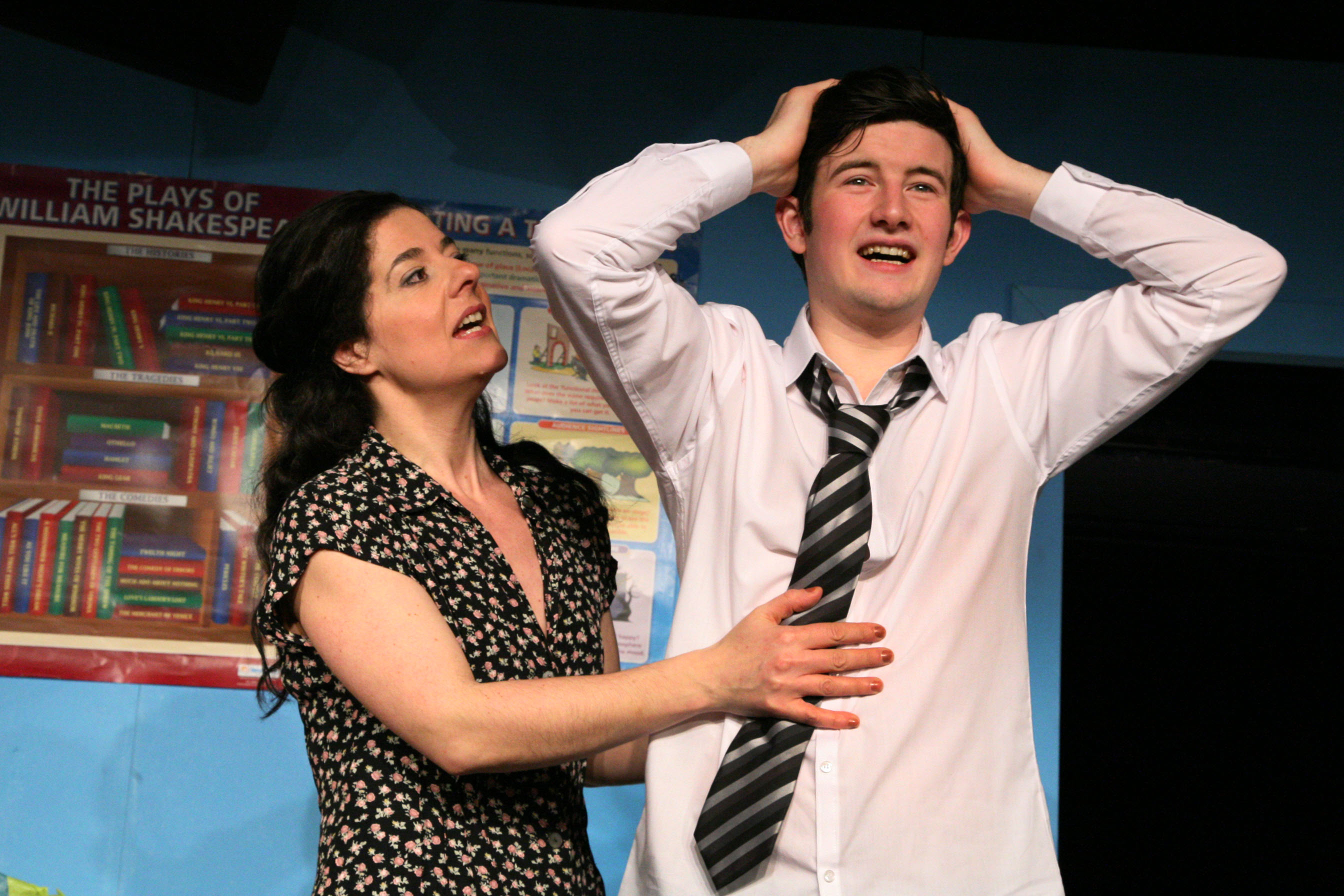
That pejorative is how the other teachers, them what teach grammar and sciences, describe Ms. Stone’s Drama department. It’s where the kids not unique enough to be special go to pass the day. Despite the condescension of the foreign language teachers, Ms. Stone hasn’t given up hope. She gives as much of herself to releasing the potential of pupils like Thomas as she once gave to her on-screen parts in Casualty, etc – ‘those who can, teach’ and all that.

Thomas has an important audition coming up and Ms. Stone is forgoing her Friday evening to coach him. As she teases out his inner Romeo the teacher/pupil relationship blossoms into a thorn-bush.

Johnny McKnight’s script is as packed with sweet and sour flavours as one of the Warhead Candies me and the other school spanners shared behind the bikesheds. At first you’re watching the introductory moments of a Naughty America porno – young guy being beguiled by a sexy older teacher – then the tables are turned, you can’t remember who’s exploiting who, and by the end everyone feels nice and dirty.

“No teacher would allow such a situation”, cluck a gaggle of mortar-boarded, Easter-happy schoolmarms within earshot. Despite the suspension of professional realities, McKnight insists we must experience the unfolding emotional manipulation as prescribed. Society’s moral certainties are not up for discussion. Unlike Glen Chandler’s Fringe ’13 landmark adaptation of Sandel, and more like A Play For September of the same year, McKnight’s script closes off the audience’s options for moral self-determination.

Even so, director Amanda Gaughan gets serious mileage out of the railroading. You could cut the tension with a metaphor. It’s been ratcheted up as though for a tyre change on a fleet of Hummers. Anita Vettesse (Ms. Stone) compellingly combines sensitive charm with dramatic flair. She is so real and really something. The superbly cast Scott Reid (Thomas) proves he’s still very much in-touch with his inner 16-year-old gobshite. Reid’s genius is to hint at the man Thomas is becoming as much as to lampoon the boy he is. Vettesse and Reid demonstrate active and reactive character work of the highest order.

Dani Heron’s finely carved cameo as Carly, Thomas’ girl, replete in skimpy schoolgirl outfit, allegorically illustrates that this cast is overdeveloped for the limited material allowed in the time available. Until Heron bursts in, you might be forgiven for worrying you’re stuck watching theatre about theatre – isn’t the Alexander Technique hilarious?

‘Actors only exist to serve the script’ agrees everyone when only I am allowed to speak. But there are times when the script must play supernumerary to stellar performances, and this is one such. Yet there’s no doubt McKnight knows how to bring the funny; the three-way with Heron especially could teach Catherine Tate a thing or two.

In the hands of this cast and director this script deserves a second half. Presently Ms. Stone’s crisis point is absent. It’s not clear where she eventually found her courage. Could it have been from imagining Thomas’ true treatment of Carly, with whom she might have more in common that she’d care to admit? There isn’t time to tell.

nae bad_blue

Reviewer: Dan Lentell (Seen 9 April)

Visit A Perfect Stroke‘s homepage here.

‘7 Billion Others and Me’ (Lyceum Youth Theatre: 28 March & 4 April’14)

7 Billion Others and Me

“It is Andy Murray’s Will He – Won’t He? victory at the All England Club last year that ends the roll-call “

Editorial Rating: Unrated

Directed by Christie O’Carroll and devised by the Company.

It is a fun, effective, image. The kilt, Royal Stewart tartan no less, the plain sock, the half-tied All Star Converse resting on a slightly squashed globe. Some photoshopping might just have had the heel depressing England but, no, that would not have been right.

7 Billion Others and Me had two performances, both prior to evening performances of Union. That too made sense, as did the three Perspex voting boxes at the Exit doors: ‘Yes’, ‘No’, ‘Don’t Knows’. When I saw them the piles of votes were evenly distributed. This LYT show might influence your views on the independence referendum but that is not its intention. This engaging piece of youth theatre is much more to do with proposing community and friendship as the proper platform for whatever we stand for – or on.

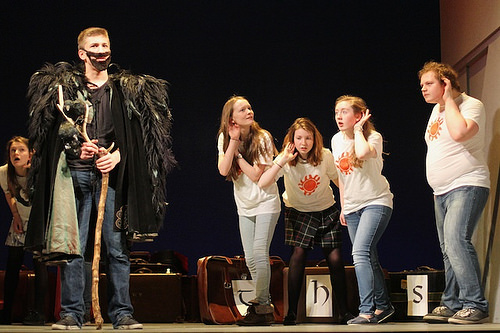
The islands of St Kilda are used to tell a shared story. To begin with there is island history: a nasty but comic severed hand, puffin catching, puffed-up ‘Morning Manly Meetings’, and mention of May 1918 when a German submarine blew apart the island’s signal station. In August 1930 the remaining thirty-six inhabitants leave for the mainland at their own request. There follow scenes of modern and popular Scottish history – highly selective but of near legendary proportions, if you are 15 – the amalgamation of proud regiments; The Bay City Rollers; Lockerbie; Dunblane (sensitively not named); wicked Mrs Thatcher and her poll tax; and almost to top them all, CBBC’s Raven, 2002 – 10; but it is Andy Murray’s Will He – Won’t He? victory at the All England Club last year that ends the roll-call and brings us to the ‘Yes’ / ‘No’ seesaw of the referendum debate.

7 Billion Raven

The confident young cast (? S3-S4) embodied a sense of their history being made. The repacking of the belongings of the Lockerbie victims is especially sad and evocative. Courtney and Keir carry their romancing and their love through from the earliest times to the present day. Ironic and familiar ‘sides’ of latte, jaffa cakes and sushi accompany the main narrative that employs voice, song and movement to keep it fresh and memorable.

Raven (and improbably, magnificiently, Mrs T) appear in fine costume but otherwise all is kept plain and unaffected. The message is plainly voiced that even if you are one in seven billion you still count and that, again on the plus side, there are lots of people around to join hands with.

“Are you ready? Then let the challenge… begin.”


Reviewer: Alan Brown (Seen 4 April)

Visit LYT homepage here.