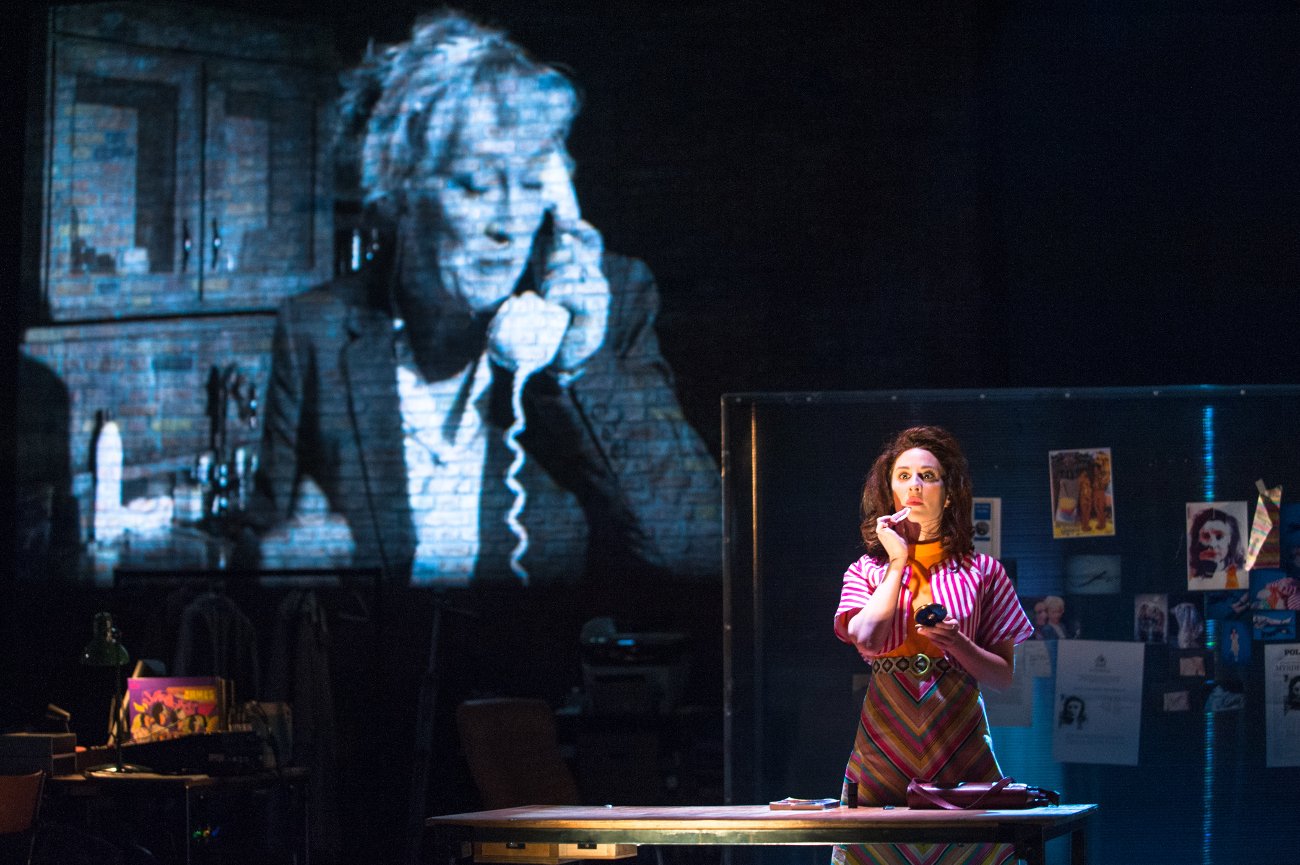
Sophie Pelham: Country Files (Pleasance Courtyard, 7 – 30 Aug : 16.45 : 1hr)

“Likeable, effusive, hilarious”

Editorial Rating: 3 Stars: Nae Bad

Upon entering the Pleasance Cellar (sorry, Dorset) the audience is offered a tot of sherry and a sausage roll to get into the mood. For me, in this, my third back-to-back show, this seemed like a dream come true. And indeed the dream continued for the first 10 minutes or so when Pelham, as village lady-of-leisure Vanessa Bluwer hilariously tells us about life in Kilmington, her noble employers, and the various courses she runs on a voluntary basis (everything from breast-feeding to bereavement counselling). As this character Pelham is likeable, effusive and strikes a good balance between prepared material and audience interaction.

Alas, after this the show falters somewhat, with a series of less well developed characters, too much audience interaction and little drive to keep the performance moving. Pelham’s Lord Ponsanby, a drunken country gent utters my funniest line of the show “I’m not homosexual, just bloody posh”, but falls flat after a few minutes and it’s a bit of a relief when she goes off to change again. Two of her characters are animals (a badger and a fox respectively, the less said about those the better), but posh school girl Primrose and yummy mummy Sulky Waterboat are both enjoyable, making fun of relevant stereotypes.

While some parts of the audience interaction in this show were great – getting various members to hold a hobby horse, read a letter and answer the odd question – I felt that on the whole there was an over reliance on this, and as the show went on there was a definite sense of awkwardness in the room, particularly among those in the front row who seemed to get “picked on” multiple times.

And just as the level of audience interaction was pushing it, sometimes her jokes also strayed over the line into being somewhat cringeworthy, the worst offender of these definitely being the one about the Muslims… hushed silence all round. Some gags were spot on tone-wise though: safer topics included politics and class, both suitably ridiculed, while even references to underage sex got a few chuckles.

Overall, I think this show has the bones of something that could be really special, but would be better if it focused on fewer individual characters, and having a clearer sense of narrative between them, to keep the show flowing from one scene to the next. A good effort.
nae bad_blue

Star (blue)Star (blue)Star (blue)

Reviewer: Steve Griffin (Seen 22 August)

Visit the Pleasance, Potterrow & Teviot archive.

THIS REVIEW HAS NOT BEEN SUBEDITED

Waitless (Greenside @ Royal Terrace: 9 – 22 Aug : 15:00 : 55 mins)

“Sometimes wry, sometimes touching and constantly captivating”

Editorial Rating:  4 Stars Nae Bad


If forced to choose a combination of seemingly innocuous words which form something terrible when combined, my first would probably be “flavoured toilet brush” – in a very close second, however, would be “long distance relationship”. They’re frustrating, tense and more often than not leave you utterly unsatisfied with the way you’re spending your time – it’s a great pleasure, then, that Cailin Harrison’s “Waitless” summons up completely opposite feelings thrown up.

Focusing on the lives of New York newlyweds Shelly and Trent, the show largely follows the former’s fraught journey of self-realisation as she struggles with the loss of identity that comes with both expatriation and the changing nature of her marriage.

Although Jessica Moreno and Andrew Boyle are the only two on stage, you’d be forgiven for thinking otherwise. Boyle’s skill with rapid, crisp and amusing character shifts are an absolute joy to watch – several times writing this review, I had to mentally check there were only two actors involved.

And as the leading lady, Moreno utterly steals the show with her raw energy and stage presence: she could be reading the shipping forecast and still hold an audience’s attention. The nature of Shelly’s character would be difficult to pull off for any actress, but Moreno manages to be endearingly gregarious without it ever becoming irritating or unneededly fake.

It’s clear from the outset that these are two very versatile, very impressive actors: both in terms of their individual talents and onstage chemistry.

However, the energy that makes this show shine also threatens to burn: some of the more poignant moments felt slightly muddled in, simply because there was seldom any moment of slowness to fully appreciate Harrison’s dramatic turns. And although appropriately bittersweet, the ending left me somewhat wanting. Take it as a sign of the show’s knack for characters, but I felt the story lacked closure. Perhaps that’s the nature of the beast, as anyone who has suffered through the British visa system will tell you, but I was nevertheless disappointed that the final curves of Shelly’s character arc seemed to be cut short.

At the end of the day, though, there’s no avoiding that this is a very good show indeed. Sometimes wry, sometimes touching and constantly captivating, Waitless is worthy of heavy praise.


nae bad_blue

Star (blue)Star (blue)Star (blue)Star (blue)

Reviewer: Jacob Close (Seen 17 August)

Visit the Other  archive.

THIS REVIEW HAS NOT BEEN SUBEDITED

The Bakewell Bake Off: A New Musical (C, 5 – 22 Aug : 17.00 : 1hr 10 mins)

“A sweet, easy-to-watch crowd pleaser”

Editorial Rating: 3 Stars: Nae Bad

It was only a matter of time before a GBBO-themed show made it to the Fringe, and this one has all the necessary ingredients for a sweet, easy-to-watch crowd pleaser.

The plot is exactly what you would expect – an eclectic group of wannabe bakers pit their culinary skills against each other to please three ultra-competitive judges and be crowned Bakewell’s best baker. There are some interesting characters and relationships, including a cross-dresser, a nun, a woman obsessed with Christmas, an Asian doctor (who becomes the subject of some racist abuse), and it’s all hosted by the very talkative yet incredibly likeable hostess called Victoria Sponge.

The script is full of wonderful baking-related puns: from characters whose names include, Tina Tartan and Henrietta Apfelstrudel, to a nun’s “Desecrated Coconut” cake, which tickled me the most. Indeed the writing is clever throughout the piece with lots of quips and wordplay to keep the audience amused, even if the narrative itself is pretty thin.

For me Sophie Forster as catty judge Griselda Pratt-Dewhurst delivered the best comic performance with an array of scathing put downs, while rival judge Hugh Dripp, played George Rexstrew, commanded the stage with great presence and energy.

Overall the singing was good, but at its best in the choral numbers. One can’t be too critical of sound levels of a student production in the Fringe space – the soloists did as best they could and with a full band and microphones I am sure they would have dazzled. This was most evident in gospel number Bake Your Way to Heaven, where I was longing for Imogen Coutts’s vocals to soar above the rousing backing singers. Alas, a commendable effort.

The choreography was perhaps more impressive, with a great range of routines for the varied musical numbers, all delivered deftly and with great energy. My favourite was the tango to the cleverly named “The Original Bakewell Tart”, which was performed with great finesse.

At an hour and 10 minutes this show is a decent length, although I feel that one or two of the characters could have been sacrificed to allow us to get to know the others better and build up more tension between them. There was a lovely moment towards the end between Freddie Twist (Charlie Keable) and Susie Sunflower (Ros Bell), who formed a very believable romance throughout the competition, and more layers like this would help turn this show from being good into really great.

nae bad_blue

Star (blue)Star (blue)Star (blue)

Reviewer: Steve Griffin (Seen 16 August)

Visit the Other archive.

THIS REVIEW HAS NOT BEEN SUBEDITED

RENT (Greenside @ Nicolson Square, 7- 30 Aug : 22.00 : 2hr 30 mins)

“A masterclass in simplicity and stunning individual performances”

Editorial Rating: 3 Stars: Nae Bad

RENT is one of my absolute favourite musicals, and I was very excited to see a full length version of it at the year’s Fringe. I’ve seen it many times in many guises, and this one offered a fresh approach, performed on a thrust stage for a more immersive experience. In some ways this interpretation packed real musical theatre punch, but unfortunately it fell flat in others.

In many ways this was a production of two halves. The first half, on the whole, was somewhat mediocre, with a few missed notes, some questionable staging (particularly in the support group scenes) and some rather “wooden” performances – Today 4 U in particular seemed a bit awkward and forced. Yet something completely flipped in the second half, and apart from the death scene that really should have been cut, it was a masterclass in both simplicity and stunning individual performances.

What I felt often held the show back was a real sense of grit and connection with the material – the opening number about the horrors of being made homeless seemed to be more mildly annoying to the actors rather than traumatic; while some of the dancing seemed clumsy and could have been sacrificed in favour of a simpler, stripped back approach. Perhaps I’m being harsh, but given how spectacular the second half was in comparison to the first, it’s clear that this company does have the ability to dazzle.

I must highlight this performance’s real triumphs. La Vie Boheme/I Should Tell you was a very powerful ensemble number and arrangement, with a genuine sense of life and passion that had been missing up until that point. In the second half, the duet Take Me or Leave Me was both incredibly staged and incredibly sung with intense grit and emotion, while the funeral scene was the stand out moment of the show. Performed with heart-wrenching rawness, it is one of the best versions of this section of the show that I have ever seen.

Rob Young as Collins was stunning throughout, with a smooth and souly voice, layered with emotion and depth. Hannah Simpson as Maureen was also very impressive, with an original take on the “drama queen”, making her cheeky and very likeable, while also delivering with a stunning vocal performance. Special mention should also go to Stephanie Marie Napier as Mimi, who struggled slightly on the higher notes in Take Me Out, but delivered all of her other songs with real gusto.

Overall, this is a very commendable effort from New Horizons Theatre Company, with some very exciting stand out moments. I hope to see them back at the Fringe next year with an even more impressive production.

nae bad_blue

Star (blue)Star (blue)Star (blue)

Reviewer: Steve Griffin (Seen 14 August)

THIS REVIEW HAS NOT BEEN SUBEDITED

The Art of Reduction and the Distillation of Humanity (Jenners: Aug. 19, 21 – 23, 25 – 26, 28 – 29 : 1hr 30m)

Picture of Delta flag & anorak. John Mark Di Ciacca.

Picture of Delta flag & anorak. John Mark Di Ciacca.

” .. Choice flavours, like custard creams and Fisherman’s Friend, and choice knowledge ..”

Editorial Rating:  4 Stars: Nae Bad

For a start that’s a crafted title. If you know your whisky making, you might think ‘Angel’s Share’, but precious little escapes the ken of the Whisky Anorak. Take naval flags, for example. If you’re out in a dinghy in the Firth, would you recognise the signal flag ‘Delta’? Me neither. Well, set a course for the old Board Room at Jenner’s and drink your fill of select knowledge, chased down by some very distinctive whiskies. You’ll leave it a happier and wiser person.

OK, it’s a fun history lesson of the 20th Century with three drams –  a mellow Spoken Word event rather than ‘Theatre’, but so what? It’s clear, easy-going, and I learnt good stuff. Next time you nose a whisky, hold the glass to one nostril and then to the other one. Sensational! What’s the connection between the Monarch of the Glen – the painting of 1851 – and the 1967 album cover of the Beatles’ ‘Sgt. Pepper’s Lonely Hearts Club Band’? What did the ‘Right Spirit Boys’ use for a cricket bat in 1930? And, your last snifter, what was the CIA’s Project MKUltra all about?

John Mark Di Ciacca is the Whisky Anorak. He has years of experience in the drinks trade behind him and tells us all the answers over the course of ninety minutes. He talks, he uses a PowerPoint slideshow throughout, and he has significant objects: books, bottles, art works, album covers – all over the front of the oak panelled Board Room. It’s a smallish space, with room for ten to twelve, comfortably seated at two nicely dressed long tables with three spotless Glencairn glasses (with tasting caps) at each cover. A teaspoon is to hand to add water – not too much! – and you do need it with the 56.3% Dalmore …

I’m sure there is ‘structure’ to an excellent whisky. John Mark did not use the word but he does use the drink(s) to assemble his talk. Three bottles, three time periods: 1850s to the early 1900s; the 1920s – just consider the effect of Prohibition in the USA upon the whisky business – through to the 1950s; and then from the Cold War to the Internet and beyond. His theme is the liminal, tracing the development of a counter culture whose markers are just visible at the edge of school history books. To take one example: dazzle camouflage from the 1914 -18 war links to Aldous Huxley’s mescaline-induced ‘The Doors of Perception’ (1954) that in turn opens up to ‘The Doors’ (1968) on the tripping West Coast scene in a summer of love.

In-between times, and the lesson dragged just a tad during the 1960s, we enjoyed our whisky tasting and John Mark offered some choice flavours, like custard creams and Fisherman’s Friend, and choice knowledge of old bottle effect and of casks and ‘finishing’.

Where have we got to? Well, the whisky trade has boomed and bust and boomed again, from the Blend to the Single Malt to ‘maybe a product that has lost its way’ where a Dalmore 19 year old ‘Constellation’ bottle can be yours for around £11,000. And as far as the moral story of humanity is concerned, John Mark is a Trekkie, confessing that “The Federation is the way forward.”

That Delta question? Here’s the answer: ‘Keep clear of me; I am manoeuvering with difficulty.” Neat.

nae bad_blue

Star (blue)Star (blue)Star (blue)Star (blue)

Reviewer: Alan Brown (Seen 13 August)

Visit the Other archive.

The Rape of Lucrece (Assembly Hall : 10 – 31 Aug : 16:30 : 1hr)

https://i0.wp.com/dulwichonview.org.uk/assets/uploads/2012/01/Rape_of_Lucrece.jpg

“Nothing short of breathtaking”

Editorial Rating: 4 Stars Nae Bad

Watching actors tackle Shakespeare can usually be categorised into one of two columns: boring, or brilliant. The latter is much harder to find, which is why watching Gerard Logan’s performance of Shakespeare’s “The Rape of Lucrece” impressed me so thoroughly.

Throughout the narrative poem, which details one of the principal and ghastly acts which led to the founding of the Roman Republic, Logan’s time-honed professionalism shines. His dynamism is nothing short of breathtaking, filling each of the character roles in the work with almost uncanny shifts in energy; grief stricken one moment, and then furious the next without it ever feeling sporadic. This is a piece which has obviously been rehearsed and tweaked to the nth degree, and it shows.

And perhaps the most impressive facet of Logan’s performance was his verbal skill. His speed and dexterity meant that not only did Shakespeare’s Elizabethan writing lose none of it’s meaning, it lost none of it’s original intended impact. Even to someone who has never encountered Shakespeare before, this performance would be easily understandable and immensely enjoyable – at least, in a dramatic sense, given that the subject matter doesn’t easily lend itself to a happy mood.

However, Logan’s seemingly infinite stores of energy sometimes worked against him: certain flourishes in his physical performances, and the feverish speed of some movements, threatened to push select lines over the boundary from compelling to overwrought. And whilst these moments were few and far between in an otherwise well restrained performance, they were nevertheless noticeable.

But despite these small complaints, it was clear from the chatter after the show that the one-man performance was a clear hit – and I cannot say I disagree. Though it may not have made me into a lover of Shakespearean poetry yet, it’s nevertheless an artistic and directorial triumph.

nae bad_blue

Star (blue)Star (blue)Star (blue)Star (blue)

Reviewer: Jacob Close (Seen 9 August)

Visit the Other archive.

THIS REVIEW HAS NOT BEEN SUBEDITED

Chicken (Summerhall, 8th-10th 12th – 17th 19th – 24th 26th – 30th Aug : 17:05 : 1hr)

“Cerebral and exhaustingly intense”

Editorial Rating: 3 Stars Nae Bad

The act of waking up dazed and confused, often by a strangely realistic half dream, comes under the medical umbrella term of “parasomnia”. I say this because upon leaving the hay-strewn, smoke wreathed tent in which I saw writer Molly Davies’ dark comedy  “Chicken”, I felt a very similar sensation. I was impressed, dazed, and confused as all hell.

“Chicken” takes place in a dystopian future (though, as someone from the north can tell you, the themes are very much contemporary) in which the north and south of Britain have become so alienated from each-other that they are formally separating. In East Anglia, witchcraft and politics threaten to tear rural life apart – especially the town’s most precious export: chickens.

First thing’s first: the tech in this show was absolutely beautiful. The concerted use of blackouts, swells and musical stings to make one character seemingly materialise horror-esque on stage was the tip of what proved to be a technically marvellous iceberg. If you’re looking for inspiration for your next horror show, look no further than the chattering, eerie soundscapes and moody lights programmed by Elliot Griggs and George Dennis.

There was also some very strong acting talent on display: Benjamin Dilloway shone as gruff, masculine Harry, and Rosie Sheehy absolutely stole the show as Emily, the town’s resident Wiccan; often silent, but with a stage presence which spoke louder than an exploding tannoy speaker. There were no weak links in this cast, all of whom lent gritty humanity to an otherwise bafflingly surreal setup.

However, although this show was billed as a dark comedy, I was often confused as to whether to laugh or simply sit there in confused silence. There were moments which were genuinely humorous, but most of it was spent pondering whether the strange spectacle unfolding in front of me was meant to be ridiculous or harrowing. And whilst it could be argued that is the very point, which I would be fully apt to admit I may have missed, it sometimes lent itself to a muddled rather than complementary pairing.

And this was not helped by a script which occasionally felt clunky and forced in its weaker moments, especially when compared to the uncanny naturalism of dialogue at stronger points. Characters would mingle rural vernacular with oddly robotic cadence and non-foreshortened speech on occasion, which was jarring.

This is a show which requires time and attention to enjoy properly, and an appreciation for subtle, rather than explicit humour. Although short, it’s cerebral and exhaustingly intense ride. And while it’s shortcomings meant it could not grab me as I think it should have, I can see fans of dark comedy latching onto it with eager claws.


nae bad_blue

Star (blue)Star (blue)Star (blue)

Reviewer: Jacob Close (Seen 8 August)

Visit the  Summerhall archive.

THIS REVIEW HAS NOT BEEN SUBEDITED

The Turn of the Screw (Assembly Hall, Aug 6 – Aug 30 : 21:40 : 1hr)

https://files.list.co.uk/images/festivals/2015/fringe/2015TURNOFT-Y9-300.jpg

“Ambitious, but unmistakeably flawed”

Editorial Rating:  2 Stars Nae Bad

The Turn of the Screw, in the words of it’s author, is a tale wherein “the strange and sinister” is embroidered on the normal for dread rather than horror – bold for the time, and even bolder as a minimalistic, two-person stage play. However, what resulted on stage was much like the mind of the story’s governess: ambitious, but unmistakeably flawed.

Rik Grayson proved a strong and surprisingly diverse actor, playing not only the male narrator but also providing powerful and eerie performances as the housekeeper Mrs Grose and Miles, one of the troubled children. His mannerisms were specific, sustained and on point – he turned what was at first a strangely humorous old woman into a figure of suspicion and palpable dread.

The same, however, cannot be said of his stage mate Suzy Whitefield. Whilst at certain points in the production she showed genuine emotional depth (a tense, genuinely unnerving darkness scene stands out), her performance felt oddly flat throughout the rest of the piece – which unfortunately, due to both the small cast size and the show’s dependence upon her character, took much of the essential fear and trepidation out of the drama. Although at times her fear was completely believable, the sense of a desperate, slowly crumbling human being behind it was not. Whitefield shows promise, but unfortunately certain aspects of her character portrayal hold her back.

This was helped, however, by simple yet brilliantly effective lighting design from the tech team, whose use of light and darkness during night and evening scenes carved the atmosphere so deep into the stage that it was nearly inescapable.

All in all, this was the very epitome of a curate’s egg: both actors had scenes which made my hair stand on end, but at the same time, parts of the show were utterly devoid of the tense, sinister fear that makes The Turn of the Screw such an enduring tale of horror. I sincerely wish I had been able to like it more. With an extra sheen of polish and a few tweaks to the pacing and delivery, this is a production which could be much more powerful.


nae bad_blue

Star (blue)Star (blue)

Reviewer: Jacob Close (Seen 8 August)

Visit the Other  archive.

THIS REVIEW HAS NOT BEEN SUBEDITED

I, Elizabeth (Assembly Roxy, Aug 7-9, 12-16, 19-23, 26-31 : 11:45 : 1hr 15mins)

I, Elizabeth at Edinburgh Fringe Festival Banner

“Vaughn’s command of the stage is utterly iron-fisted.”

Editorial Rating: 4 Stars Nae Bad

The two hardest things as an actor, at least in my experience, are to memorise your lines and then make to them appear spontaneous and real. To do so without ever losing energy, alone and over a period of a straight hour is nothing short of astounding – and, a feat which Rebecca Vaughn pulls off as Queen Elizabeth nearly effortlessly.
I, Elizabeth is a monologue act pieced together from the Tudor Queen’s assorted letters, poems and private correspondence, and offers a glimpse into the chaotic and rich emotional life behind one of England’s most memorable rulers as presented by the Queen herself.

Vaughn’s character work is undeniably slick: she channels both regality and humility so realistically and so honestly that, even watching from the front, I often forgot I was watching an act at all. And even more impressive was her talent at making irregular, Tudor-style cadence not only make sense to a modern audience, but do it so well that it becomes compelling and, when she wants it to, genuinely funny. Unlike her character’s sometimes shaky political life, Vaughn’s command of the stage is utterly iron-fisted.

But Vaughn’s considerable talent cannot suspend reality by itself, and was aided by a very talented makeup and costume team; the result being a costume with such substance and attention to detail that it wouldn’t have looked out of place in a high-budget period drama. However, just as Vaughn portrayed a partly flawed monarch, so did her performance. Occasionally her emotional energy bordered on the melodramatic, and her tight emotional u-turns sometimes meant that gaps of monologue were lost as the volume increased. And perhaps I’m simply not smart enough to understand it, but some of the tech decisions- particularly a strange, electrical jolting sound to punctuate the monologue – seemed utterly out of place in what was otherwise a very faithful historical recreation, and sometimes completely broke the show’s atmosphere.

Despite these shortcomings, the rest of the show was nothing short of regal. Vaughn should be praised for her unmistakeable dedication to character work. Short of necromancy, it seems she is the woman to call for bringing the long dead back to complex, compelling life.


nae bad_blue

Star (blue)Star (blue)Star (blue)Star (blue)

Reviewer: Jacob Close (Seen 7 August)

Visit the Assembly Roxy archive.

THIS REVIEW HAS NOT BEEN SUBEDITED

‘The Driver’s Seat’ (Lyceum: 13 -27 June ’15)

Driver's Seat

“Prime Muriel Spark”

Editorial Rating: 4 Stars Nae Bad

Never mind the 4th wall, how about knocking down the back wall? Break out upstage centre from the Lyceum and you’ll be into Saltire Court on Castle Terrace. You know you’re in one of Edinburgh’s superior premises when the tenants include global accountants Deloittes and KPMG. A neat, if accidental, location then for a play whose principal character has had enough of audit, who hammers her stapler into her desk, has hysterics and takes a holiday but with absolutely no intention of coming back to the office.

Bye-bye patronizing suits, hello lemon yellow, orange, purple and blue V stripes. It’s 1970 (kind of), when you could buy novelty knives at the airside shops before boarding at Gate 14. Stressed out Lise is all decked out for the fervid south – could be Naples, might be Palermo – and with one type of man very definitely in mind.

This is prime Muriel Spark territory. She had been living in Italy since 1967 and the shocker that is The Driver’s Seat was published three years later. Here we have it adapted – call it exposed – and directed by Laurie Sansom in a one act, ninety minute, cross-over between garish psychodrama and police procedural. It is articulated, televisual theatre; think anglepoise lamp on accountant’s desk and mess with the springs.

Gabriel Quigley (on screen) and Morven Christie. Photos: Tommy Ga-Ken Wan

Gabriel Quigley (on screen) and Morven Christie.
Photos: Tommy Ga-Ken Wan

Centre stage is the incident ‘room’. As the investigation into ‘What-Happened-to-Lise?’ is conducted, so information, photographs, etc. go up onto a transparent wipe board. You see ‘VICTIM’ in marker pen. That’s retrospective action for you, sorted, marginally distracting, smart; very unlike the downstage action, where ‘What-Is-Happening-to-Lise’ is compulsive, jumpy, and unstable.

Lise herself (in an impressively tight performance by Morven Christie) is vulnerable because she is alone and out there, fixated, conflicted. At home in her bedsit, trying to sleep, she suffers – hands over ears – the moans of her neighbours having sex. Thirty-four years old in the book, she masquerades as the lady abroad: at one point a ‘widow and an intellectual from Iowa, New Jersey’ (sic) – supposedly fluent in four languages but plainly lost when it comes to real Italian. And it is real, via potent supporting roles from Ivan Castiglione and Andrea Vopetti.

There are no hands to the big clock in the incident room, which does point to alienation theory, but up come the sound cues and they appear, chronicling Lise’s known movements from hotel lobby to department store . There’s live mapping of her taxi on the large upstage screens while handheld TV cams relay fraught close-ups. You would think that little is hidden on such a tech-savvy set but as to why Lise acts the way she does there’s not much to go on, which is probably the existential point. Are we watching an object/abject study in self-destruction or an introverted and skittering operetta, complete with CS gas? Composer and sound designer Philip Pinsky uses mild jazz in ironic counterpoint to the spiky and alarming story. Did he, I wonder, smile at the desperate lyrics of the Sniff ‘n’ The Tears’ hit single Driver’s Seat (1979), where  “She had another way of looking at life”?  Accept stunned recall of Elizabeth Taylor & Ian Bannen in film-of-the-book Identikit of 1974 and you can see that Spark’s work is heading straight for Thelma and Louise some twenty years down the road, except that Lise has no buddy to go over the edge with.

Take that original, startling writing of 1970 – you’ll want to read it – and lay bare its mucky gender issues. The result, from creatives and excellent cast, is hard sprung. You won’t enjoy its forlorn subject, unrelieved by some crazy Italian driving in outsize shades, but it is acute work.

A National Theatre of Scotland production.

nae bad_blue

Star (blue)Star (blue)Star (blue)Star (blue)

Reviewer: Alan Brown (Seen 18 June)

Go to The Driver’s Seat and the National Theatre of Scotland here.

Visit the The Lyceum archive.