The Big Lie: (theSpace @ Jury’s Inn: 6-16 Aug: 12:35: 50 mins)

“A story of blockbuster proportions”

Editorial Rating: 4 Stars: Outstanding

Every now and then you hear a story and wish the whole world could hear it too. The Big Lie is one of those. Based on the real life of an Iraqi-Kurdish refugee (and a survivor of Saddam Hussein’s genocide) who earns her place as an associate at one of Sweden’s top law firms, it tells of overcoming racism and several other barriers to achieve the unthinkable.

And the remarkable woman sharing her semi-autobiographical tale is the eminently watchable Shaniaz Hama Ali. Now an actor (though formerly the lawyer at the heart of the story), she beams with honesty, vulnerability and likeability throughout the performance, impressing with her grasp of comedy and subtlety in a language which isn’t her mother tongue.

Beginning with a snippet of a conversation which hints at the outcome of the tale, Hama Ali takes us back to where it all began, and her journey to the peak of her legal career. There’s a playful as aspect to the reflections on her childhood and the innocence of it, though a darkness develops as the parents of her new friends in her adopted country begin to stir up racism against her family.

There’s not long to dwell though, as Hama Ali deftly moves on to the positive aspects of her blossoming career in law, and the cases she gets to work on. At the climax is the offer from above to work on a case all her colleagues want a piece of, but which forces her to question her identity and moral compass – whether to assist a company in selling chemical weaponry to the Middle East, and potentially facilitate the kind of genocide she and her family escaped from just a few years before. This section in particular oozes with tension in consideration of the debate, and Hama Ali’s frankness here accentuates the humanity at the heart of the piece.

There’s a pleasing resolution that ties into the opening lines of the piece, but which could be made more obvious and epic to give a real wow-factor ending, and overall the story aches with more detail bursting to be told. It’s a shame this show is only 50 minutes long!

As a theatrical performance it’s basic, with little more than just Hama Ali herself on a tiny stage to tell it. It would be great to see slightly more investment in theatricality to help bring about the changes in mood, location and time, which would in turn elevate this show into award-winning territory. As it is though, The Big Lie is an urgent and captivating story, told by a voice the world needs to hear.


outstanding

StarStarStarStar

Reviewer: Steve Griffin (Seen 13 August)

THIS REVIEW HAS NOT BEEN SUBEDITED

The Battle of Frogs and Mice (Assembly Roxy: 12-19 Aug: 16:10: 60 mins)

“Appease the Gods and pay homage at the earliest possible moment to this crowning achievement of the dramatic arts.”

Editorial Rating: 5 Stars: Outstanding

It’s the late afternoon. Daughter 1.0 and I are standing outside Assembly Roxy waiting for our third show of the day. Neither of us have had naps and one of us didn’t like the lunch they were offered and only ate half. Our energy levels are being sustained solely by caffeine (me) and a the memory of a large chocolate cupcake (her). We’re both more tired than we care to admit and it’s odds on that one of us will go bang in the not too distant. I want the next show to be good. I need the next show to be good.

Daughter 1.0 (aged 3 going on 14) picked out our first shows, Finding Peter and Paddington Bear’s First Concert. I chose The Battle of Frogs and Mice because I’m more of a philhellene than Lord Byron dancing in a bucket of equal parts taramasalata and hummus singing The Hymn To Liberty. Frogs and Mice was the original introduction to epic poetry used by ancient parents to clear their progeny a path to The Iliad and The Odyssey. An improvised epic poem after a long day, with a tired 3 year old. Hubris. Now for Nemesis. I feel like Dedalus when he first sniffed the melting beeswax from the emptying airspace above. This could all come crashing down. Oh Dionysios hear my prayer.

3 actors and 3 musicians set out to tell the tale of the enmity that grew up between frogs and mice. Of how that enmity turned violent, and how (finally) peace was restored. Puppets, movement, visual gags, and amphorae of audience participation transform the Snug Bar at Assembly Roxy into a bubbling cauldron of noise and excitement. Director Hayley Russell orchestrates 60 minutes of genuine improvisation which maintains a graceful pace and flow while enabling the kids to really feel control and ownership over the narrative’s twists and turns.

“Dad, I thought you said this was going to be educational!” laughs a boy in the row behind confident that, once again, he has outsmarted his old man just like when Odysseus convinced Laertes to buy a puppy, “so we can name him Argos and everyone will remember that you were a brave and fierce Argonaut.”

The performances are some of the strongest I can recall at any Fringe. Individually they are strong, powerful enough to complete the heavy lifting demanded by Caspar Cech-Lucas’ bold dramaturgy. In combination both the actors and musicians generate a pulsing rhythm that never once lets up, soaring on the updrafts of the combatants’ jingoism then plunging down when it turns out that war is good for absolutely nothing.

Daughter 1.0 is dancing on stage, hurling ping-pong balls during the volley of arrows loosed by the mice against the frogs, keeping the mouse princess stuffed toy so safe and quiet that everyone forgets about the regal rodent and she isn’t included in that day’s telling of the tale.

The Gods of the ancient world had punishments both cruel and unusual for those headstrong mortals who displeased them. Why take the risk of incurring the wrath of a petulant Fringe deity? Why risk spending eternity drinking from an endless glass of G&T that contains no gin, or constantly eating artisanal honey that’s actually made by wasps? Appease the Gods and pay homage at the earliest possible moment to this crowning achievement of the dramatic arts.

outstanding

StarStarStarStarStar

Reviewer: Dan Lentell (Seen 9 August 2018)

Visit the Assembly Roxy archive.

THIS REVIEW HAS NOT BEEN SUBEDITED

Action Man (Paradise in Augustines: 4-11 Aug: 17:35: 75 mins)

“The benchmark that all young theatre companies should aim for”

Editorial Rating: 4 Stars: Outstanding

Action Man follows the journey of army Corporal Liam Drury (Michael Moulton), who, upon returning home after eight years’ service, is severely affected by PTSD, causing the breakdown of his marriage and other relationships. Performed as an ensemble piece with seven actors in addition to Moulton, it pulses with the urgency of a tale that needs to be told, and interweaves choreography, sound and silhouette to convey the intensity of the action.

Rather than being a linear piece, Action Man flashes back and forwards in time, covering key moments and influential characters in Corporal Drury’s life. While early on it’s difficult to grasp the structure of the piece (when and where each scene takes place), everything soon slots into place and what’s presented is an intelligent and concise story that maintains interest and tension from start to finish. At 75 mins this performance is slightly on the lengthy side for a Fringe show, but there’s little fat to cut given the complexity of the relationships and emotions at stake – writer Lizzie Morris does very well to gauge just how much to present from scene to scene.

Moulton turns in a powerhouse performance as Drury, with seemingly unflagging energy. His impressive range of emotions across each scene makes him compelling to watch, and his emotional monologue at the PIP meeting really does tug at the heart strings. The supporting cast more than capably do their bit to build and sustain tension and drive the emotive choreography, and there’s an earnestness about their performance that demands attention.

Though while the company generally handle the topics covered in the show very well, and with sensitivity, at times they do seem slightly out of their depth. The army scenes in particular are perhaps too naïve, and the difficult conversations Drury has with his current and former partner occasionally lack the presence and power in performance for them to ring true. But given how young this company are, a little slack can be given.

In many ways this production of Action Man captures the very spirit of the Fringe – a talented and ambitious group of artists sharing a powerful story with every weapon in their arsenal – and there’s plenty of exciting stuff happening on this stage. For me, Plaster Cast Theatre are the benchmark that all young theatre companies should aim for. Bravo.


outstanding

StarStarStarStar

Reviewer: Steve Griffin (Seen 8 August)

THIS REVIEW HAS NOT BEEN SUBEDITED

Velvet (Pleasance Courtyard: 1-27 Aug: 14:00: 60 mins)

“A tour de force from Tom Ratcliffe”

Editorial Rating: 4 Stars: Outstanding

If the #metoo campaign taught us anything last year, it’s that sexual harassment is far more common than we think – especially in the entertainment industry where (generally) younger and (generally) female individuals are too often coerced into performing sexual favours in the promise of getting some sort of career boost from it.

Velvet (written and performed by Tom Ratcliffe) shows it’s not always women that are the victims in these cases, as it follows the plight of a young male actor longing to hit the big time, and who finds himself questioning how far he’s willing to go to get ahead. After turning down a spurious offer of a drink from an overly familiar casting director, and subsequently being dropped by his agent, Tom thinks twice when he is contacted on an app by an apparent big-wig in the film industry. Should he put his scruples aside to potentially further his career? And what would his partner think if he did?

While perhaps not the most original of plots, Velvet does go to show an honest and accessible account of one actor desperate enough to dance with the devil, with sufficient depth and perspective to make it a balanced and gripping show. It’s a fairly pacey piece, with scenes jumping from one to the next to push the story along, but it’s those where Tom converses with the mysterious man online that are the most disquieting and pleasingly restrained. Something about seeing each message flash up on screen behind the action gives added weight to the dark discourse, and the development of this plot-line in particular is edge of the seat stuff – how would any of us respond given that situation?

As a one-man show it’s a tour de force from Ratcliffe, who himself plays everyone from snooty agents to stuffy actor friends, and even his own mum. Only at rare moments do individual personalities blur, and it would be great to see some more extremes and risk-taking come to the fore to make each and every character unique and identifiable.

There are a couple of convenient coincidences and moments in the script where suspension of disbelief is pushed to its limits, but on the whole this is an honest and heartfelt performance that I could very happily sit through again. It’s only my seventh show of the Fringe this year, but absolutely my favourite so far. Well worth watching if you’re an (aspiring) actor, in particular.


outstanding

StarStarStarStar

Reviewer: Steve Griffin (Seen 5 August)

Visit the Pleasance, Potterrow & Teviot archive.

THIS REVIEW HAS NOT BEEN SUBEDITED

Bowjangles: Excalibow (Gilded Balloon: 1-26 Aug: 14:00: 60 mins)

“I don’t think I’ve ever come across a more multi-talented group”

Editorial Rating: 4 Stars: Outstanding

Bowjangles are not your average string quartet. Indeed, they extend the well-known triple threat (performers who can sing, dance and act) to a fourth dimension by adding the musical string to their bow. (Sorry). And what’s more: they can do all four at the same time. Prepare to be amazed as these performers act out a dramatic saga while accompanying themselves (more than capably) on their instruments.

Excalibow is Bowjangles’ latest Fringe offering (marking the troupe’s 10th year together) and sees them embark on an adventure to find the magical bow Excalibow, which will enable them to become (ahem) the Lords of the Strings. Yes, the jokes and musical puns are that good throughout. It’s a fairly ridiculous story, that unfortunately come across as a rather hastily put together pastiche of fairytales, but the characters are fun and fantastical, and the ever-changing mood created by the performers and their instruments is nothing short of masterful. I don’t think I’ve ever come across a more multi-talented group in all my years of reviewing.

What really makes this performance special, though, is the chemistry and personality that ooze from this awesome foursome. They appear very natural onstage together, and are clearly very well-rehearsed and comfortable in being able to deliver this slick and energetic production. Their smiles never stop beaming, so even if the thought of watching an all-singing, all-dancing string quartet brings you out in a cold sweat, you’ll no doubt find yourself swayed into at least a grin by their charm and charisma.

For me, the overall structure and narrative of the piece is where it all falls a little awry, as the action chops and changes between many locations and subplots that it all gets somewhat confused – though the fun and frolicking nature of the performance makes this relatively unimportant in terms of overall enjoyment. Particular highlights include a snippet from a well-know ABBA song, and a comedic take on a certain moment from the film Titanic.

This is a show that’s bags of fun, packed with personality and great for the whole family (bar the odd naughty word which slips out). A definite for the shortlist as a welcome break from some of the harder-hitting shows out there.


outstanding

StarStarStarStar

Reviewer: Steve Griffin (Seen 2 August)

Visit the Pleasance, Potterrow & Teviot archive.

THIS REVIEW HAS NOT BEEN SUBEDITED

Formation Festival: Mr & Mrs She (7-8 July)

“Pleasingly disquieting”

Editorial Rating: 3 Stars: Outstanding

It’s not often I’m lost for words when coming out of the theatre, but Mr & Mrs She is one of the most bizarre plays I’ve ever seen. Yet, while its incomprehensibility may be perceived as a negative, there’s something to be said for a play whose questions stay with you for many hours – even days – afterwards.

The show opens with what appears to be a fairly stereotypical wealthy couple enjoying a generous amount of their favourite tipple and getting rather merry. Cue the entry their very eager-to-please staff, a comment about enjoying oneself too much before breakfast, and suddenly the play takes a much darker turn.

Hollie Glossop’s script may well be abstract, but there’s something gripping about the subversion of power from these seemingly stock characters that becomes pleasingly disquieting. The level of detail and pace at which the action develops is masterful, and while I would prefer a greater sense of grounding and cohesion to be able to connect more with the action, Glossop has created a world that begs to be explored further.

Sofia Nakou’s direction embraces and extends the quirkiness with intelligent physicality and proxemics, making the most of the large performance area to highlight the power struggle between each character and the vast emptiness each one is in. As the action creeps closer to the audience, the level of discomfort rises on all fronts and it’s impossible to predict what will happen next, or how you should feel about it.

Kudos to all of the young company performing this work, embracing its weirdness and committing to their roles in it. David Llewellyn in particular demonstrates fantastic range and risk-taking throughout his demise, while Grant Jamieson is suitably sinister as his butler.

It would be fantastic to see this show developed further – it has the makings of a truly memorable piece of theatre. That being said, it seems somewhat unfair to attribute a star-rating to a piece like this, which might easily alienate some audiences while titillating others. Either way, if you’re on the lookout for something different that will leave you with many unanswered questions to debate afterwards, this may well be for you.


outstanding

StarStarStar

Reviewer: Steve Griffin (Seen 8 July)

Visit the Assembly Roxy archive.

THIS REVIEW HAS NOT BEEN SUBEDITED

EIFF: “Piercing” (30 June ’18)

“A trippy, entertaining, & masterfully nightmarish romp.”

Editorial Rating: 4 Stars: Outstanding

For a completely bonkers, aesthetically anarchic, sonically and visually unnerving nightmare thrill ride, Piercing has a lot of humor, heart, and fabulous artistry beneath its hood. The film is directed by Nicolas Pesce, creator of well-liked arthouse horror The Eyes of My Mother, and based on a novel by Ryû Murakami, the mind behind some of Japanese cinema’s most twisted and depraved screenplays. This film is very much in the same vein, but swaps its Japanese influences for Italian Giallo and a charming 70s setting. While it is revoltingly violent and demented, somehow everything in Pesce’s film just works, and it is a truly outstanding genre film.

Piercing continues a pleasing trend in many of the films this year: performers who traditionally fill supporting roles getting a shot at the lead. Take, for example, Kelly Macdonald in Puzzle, Natalie Dormer in In Darkness, Nick Offerman in Hearts Beat Loud, Rob Brydon in Swimming With Men, Steven Ogg in Solis. And now, Christopher Abbott as Reed, the enigmatic, bizarre focus of Pesce’s surreal tale. Abbott has turned in fascinating, unsettling, always capable performances in films like Sweet Virginia and Tyrel, (plus his lead role in the small James White), and it is lovely to see him stretch out as the protagonist in a film so odd. He is joined by the always entertaining Mia Wasikowska, and the charming Laia Costa, all of whom get their share of fascinating chances to shine and bend the audience’s minds.

The film follows Reed as he decides to take some time away from his wife (Costa) and child, so he can indulge his twisted murderous fantasies. He meticulously plans to lure and dispatch an unsuspecting prostitute, and in true jet-black humor fashion, Pesce has the camera follow Reed around the room he has rented as he walks through the steps of exactly how he will administer the necessary sedatives, do the deed, and dispose of the body. The clincher is, Pesce includes all the implied sound effects of the execution, and as Reed mimes the sawing, hacking, and gruesome handling of the various parts and bits, the squelches and drips are heard in full. This is a stylistic highlight, yet Piercing features many more sequences of filmmaking just as delightfully twisted. 

Wasikowska plays Jackie, the prostitute he eventually lures into his plan, but needless to say it does not go according to plan. The story twists and turns with gleeful insanity, with Reed and Jackie taking it in turns to torment the other with horrifying weapons and substances. It all spirals into hallucinogenic madness, perfectly contrasted against remarkable production design and music. Delirious grotesqueries are frequently performed on and around plush 70s interior design, while stupendously odd themes from classic Giallo films play above them. The film intermittently cuts to an uncanny miniature set meant to evoke the heights and depths of the New York City skyline, evoking a maze or a puzzle akin to the disorienting content of Reed’s story. 

It’s a trippy, entertaining, masterfully nightmarish romp, with an unlikely balance of class and cruelty, harrowing scenes and hilarious horror, and a hellishly sadomasochistic partnership for the ages in Abbott and Wasikowska’s characters. If you enjoy stylish craftiness and chills down the spine, plus some captivating costume work and musical dexterity, pick Piercing, and have fun with it.


outstanding

StarStarStarStar


Reviewer: Nathaniel Brimmer-Beller (Seen 30 June)

Go to Piercing at the EIFF


EIFF: “The Gospel According to André” (27 June ’18)

Gospel according to andre

“A captivating, unique form of ‘The American Dream’ that is both inspiring and honest.”

Editorial Rating: 5 Stars: Outstanding

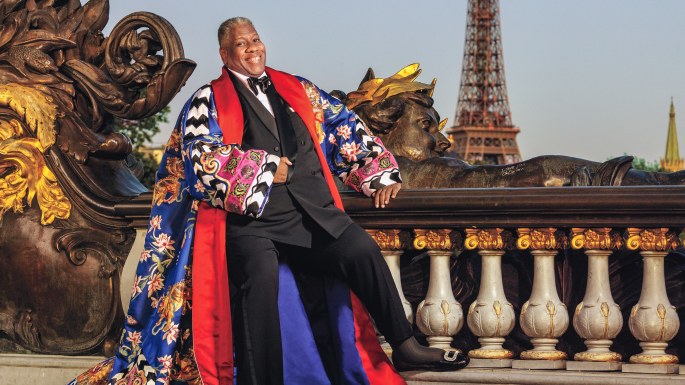
I don’t think biographical documentaries get any more delightful than this. The latest unsung cultural icon to get the documentary treatment is gentle giant and “Black superhero” André Leon Talley, a true larger-than-life figure. Director Kate Novack has wisely just let Talley’s remarkable story tell itself, through a combination of interviews with the man, his friends, and his colleagues, and a period of simply following him around his daily life over 2016 and 2017. Along the way, The Gospel According to André reveals a captivating, unique form of ‘The American Dream’ that is both inspiring and honest, and not afraid to examine the darker, crueler sides of fame, success, fashion, and race. 

Talley is known the world over as a fashion writer with a flamboyant pen and a deeply knowledgable eye. He rose high in the ranks of Vogue magazine, at one point leading its Paris edition, and has in many ways come to represent the diverse possibilities of the fashion world. Talley is a tall, wide Black man from Durham, North Carolina, raised in a conservative household by his loving but stern grandmother. From an early age he was fascinated by accounts of the fashion world, such as John Fairchild’s novel The Fashionable Savages, and of course, the covers and contents of Vogue and its ilk. From there, his story just grows more and more awe-inspiring, as he climbed higher and higher in the fashion industry through his unique eye and captivating personality. Editor-and-chief of Vogue at the time, Diana Vreeland, took one look at the way he had assembled a vintage Hollywood costume for an exhibition and selected him to be her right-hand-man on the spot. He worked with Warhol at Interview Magazine, he befriended Karl Lagerfeld and just about every other designer and model since the early 70s with ease and charm. The film captures all this miraculous story with clever montages of clips, magazine pages, archival footage, and, best of all, long stretches where the film just lets the inimitable Talley talk. 


And talk he does. This may go down as one of the best individual-focused documentaries where the individual in focus tells their own story. Unlike the recent head-in-hands bore that was Westwood: Punk, Icon, Activist, Novack’s film does not resort to hagiographic worship of the protagonist as if the viewers are automatically joining in from the off, but instead convinces you, remarkably quickly, that Talley is a figure worth exploring, understanding, and uplifting. The murderer’s row of stylish interviewees seem to agree: everyone from Anna Wintour to Marc Jacobs to Tom Ford to Fran Lebowitz to Whoopi Goldberg has something lovely to say about Mr. Talley, both about his work and his character – and his importance. These interviews and Novack’s framing, in a way that reminded me subtly of Mark Cousins’ The Eyes of Orson Welles, turns the spotlight on the societal implications of the subject’s life and work, and leans heavily into Talley’s groundbreaking achievement as a large, verbose, delightfully charming Black man who became widely beloved and respected by the usually homogeneous, cold fashion world. Though brief, the film’s revisiting of Talley’s progressive work within the pages of Vogue is utterly fascinating — I instantly made a note to look up his “Scarlett in the Hood” series from the 1990s, starring Naomi Campbell as Gone with the Wind’s Scarlett O’Hara, which is brilliant and brave in multiple ways. 

The film achieves real gravity at times, in between the celebrations. Aside from the (slightly extraneous) discussions of the 2016 election, as Novack happened to be filming during the lead-up to it and its aftermath, many of the serious aspects are deeply, movingly personal. Talley has moments of great reflection and sombre reckonings with treatment he suffered in his life, from outright racism lobbed at him from ‘dear friends’ in the fashion world, to the overarching question of whether he was so successful simply because of his talent, or possibly because he was considered an ‘exotic’ ornament to keep around for amusement. Talley himself suggests this and more heartbreaking ideas that he has had to grapple with over the course of this remarkable journey, and he deserves immense credit for his honesty and heart.

It is clear that the filmmakers, the assembled guests, his legions of fans, and the majority of the fashion world absolutely love Mr. Talley, and by the end of this film, I expect you will too. See this film as soon as possible. 


outstanding

StarStarStarStarStar

Reviewer: Nathaniel Brimmer-Beller (Seen 27 June)

Go to The Gospel According to Andre at the EIFF


EIFF: “Flammable Children” (25 June ’18)

“A delight, if you can stomach it.”

Editorial Rating: 4 Stars: Outstanding

What a ride! Rarely does a ‘family comedy’ pack this much bite and savagery, yet complement them so well with side-splitting dialogue and visual bedlam to boot. But the latest from Stephen Elliott does not beat around the bush — it is not for the whole family, it is about the whole family, and how depraved, classless and outrageous three families become during a period of adult idiocy, adolescent recklessness, and young love in 1970s Wallaroo, Australia. The film is a delight, if you can stomach it, but so heinous at times that I would not blame you if you can’t.

Elliott’s film is variably titled Flammable Children and Swinging Safari, depending on its different releases, but in this reviewer’s opinion the former is far better suited to its tone. At the core of the ensemble piece are Jeff Marsh (Atticus Robb) and Melly Jones (Darcey Wilson), the only two kids in this massive group that seem to have any morals — they are sort of in love, sort of best friends, sort of just clinging onto each other to keep themselves sane, and due to a freak accident when they were young, involving a match and their synthetic 1970s clothing, they are known as the ‘flammable children.’ The grown-up Marsh narrates the story, which is mainly led and constantly derailed by the parents on the block, played with breathless energy by a delightful lineup of Aussie icons. Proving once again that he is no one trick pony, Guy Pearce delivers in an off-the-wall turn as sunburnt but jacked encyclopedia salesman Keith Hall, patriarch of the Hall family, married to Kaye Hall, played by none other than Kylie Minogue herself. The Jones family is led by evil-grin expert Julian McMahon and catlike Radha Mitchell as Jo, whose motto for their sizable clan, much to the chagrin of neighboring kids/victims, is “If they’re going to experiment, they should do it at home!” Completing the unholy trinity is the Marsh family itself, led by lovable Jeremy Sims as Bob and hilarious Asher Keddie as Gale. As they intertwine and spar intermittently over the course of Flammable Children, the film makes amusingly and dishearteningly clear that people like this just should not be parents. 

If you are wondering just why the film deserves its ribald reputation, observe a brief summary of the goings-on within these 97 minutes: there’s an attempted orgy, infidelity, aggressive urination (albeit after a jellyfish sting), animal abuse, child neglect, child smoking, child drinking, underage sex, violence, partial immolation, and a phenomenally gory finale that I will not dare spoil. Despite what you might be thinking, it’s all just a blast. The film is ruthless with its humour, be warned, and surely depraved, but it somehow avoids being outright tasteless and having a good time above all — or perhaps it is tasteless, but in all the right ways. When Rick tells his daughter to “go play in traffic,” or Gale holds down Kaye’s daughter to pee on her, or when the titular burning episode happens and the parents seem more interested in finishing their card game than putting out their kids, the horrifying misbehavior is somehow far funnier than it is upsetting.

All the insanity is helped along enormously by the natural ridiculousness of the 1970s setting. As Jeff’s early narration quips, a small Australian town like Wallarroo is a town that “time, and taste, forgot,” yet it seems to fit right in with the cacophonous consumerism and colorful grandeur of the 70s aesthetic, and the grainy film stock look that Elliott has used fits the remarkable amorality quite well somehow. Not to mention, the natural beauty of the Australian coast is presented in gorgeous vintage tones, and even the shots of the rotting blue whale carcass that washes up on the local beach are aesthetically pleasing. 

Overall, Flammable Children is good fun, and a pleasure to watch, even though it will probably repulse you at least once a minute. Its frenetic editing, the surprisingly beautiful photography, and the crackerjack insane performances make this possibly my Festival top choice for viewers at home — if you are looking for a funny, crazy, unique midnight watch, Elliott has the film for you. 


outstanding

StarStarStarStar

Reviewer: Nathaniel Brimmer-Beller (Seen 25 June)

Go to Flammable Children at EIFF


EIFF: “Solis” (25 June ’18)

“A commendable slice of cosmic panic.”

Editorial Rating: 4 Stars: Outstanding

Space survival films are a genre all of their own. From Danny Boyle’s surreal Sunshine, to Daniel Espinosa’s polarizing Life, to the best of the bunch, Alfonso Cuarón’s immaculate Gravity, the film world seems fascinated with throwing interstellar obstacles at terrified protagonists in the deep reaches of space. Carl Strathie’s Solis pays varying levels of homage to not only these films, with its white-knuckle situations and harrowing depictions of the vastness of the cosmos, but also to their headier predecessors, particularly the monumental daring of 2001: A Space Odyssey, through its notable use of imagery and colour. Ultimately, the artistry of Solis, though understandably subtle enough for some to  overlook, elevates the film from what could have been a somewhat staid space flick to a commendable slice of cosmic panic. Plus, a great deal of credit belongs to the captivating lead performance from cult-favorite Steven Ogg, finally given the chance to take the spotlight. 

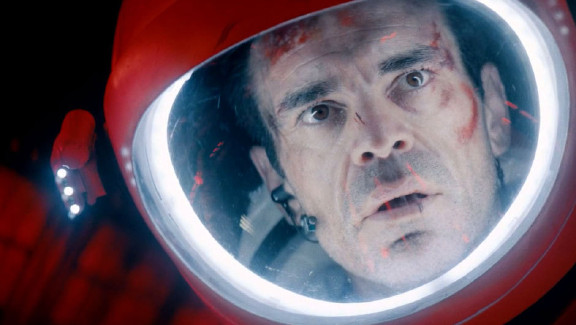
Ogg, most well-known for his gloriously twisted embodiment of Grand Theft Auto V psycho Trevor Philips, is the sole visible performer in Solis, playing Troy Holloway, an employee of interstellar mining company Orbis. The action begins after a devastating accident onboard the main mining craft, as Holloway awakes in an escape pod hurtling through space, on a crash course towards the sun. While it may seem a tad overdramatic that he is literally going to smash into the sun, Solis keeps its visuals polished and oddly elegant.

The film’s first 2001 reference, of many, arrives as the sun itself is introduced in a manner very reminiscent of the opening chords of Kubrick’s masterpiece. From there, Strathie incorporates a method borrowed from that other space-epic, Star Wars, as Holloway’s minuscule vessel shoots into frame like the Rebel ship, subsequently pursued by a behemoth – in this case a massive cloud of space debris also on a course for the eponymous star. Solis continues its choice aesthetics through its use of colour to augment Holloway’s various attempts to better his situation — blue and orange populate most of the frame during the calmer, more dialogue-heavy interactions, while red creeps in from time to time to signal danger and mortality, to great effect.

As he makes contact with Commander Roberts aboard the main vessel, played by another talented cult favorite, Alice Lowe, Holloway’s fate is considered and reconsidered many times over, as both he and Roberts seem unsure whether his is a lost cause just yet or not. The building sense of doom is well established, again not only in its high order performances but its visual craft. I must specifically mention two particularly unnerving uses of imagery that elevated the experience: the first, a crack in the pod’s window, which progressively grows bigger and bigger, coming to ominously resemble a spider’s web by the climax, effectively reasserting the futility of Holloway’s attempts to escape fate. The second, the more subtle, is the continued return to images of eyes and of spheres resembling eyes, which both recall blips of humanity in the inhumane void, and the stark absence of an over-watching presence in such a vast emptiness. 

In fact, the aesthetics and plotting of Solis seem altogether consumed by the mercilessness of space, which, notably, means the film does not spend much time considering its intriguing potential for beauty, or mystery. This dourness becomes  overbearing at times, as the film seems only to take the most decidedly tragic turns at every corner. The filmmakers do not take their foot off the pedal for long enough to truly empathize with much, and even though Lowe delivers some compelling monologues, and Ogg legitimately carries a great deal of the film with his strenuous energy, its character beats come off as somewhat rushed – as a fan of Ogg’s, I found myself wishing he was given perhaps a few more chances to spread out as a performer.

Overall, however, Solis is a great way to spend 90 minutes, especially for fans of the space-is-scary approach, and/or fans of Mr. Ogg or Ms. Lowe. What’s more, Strathie must be commended for not only delivering a tale worth telling, with a stellar lead performance, but also for making his yarn as aesthetically captivating as this.


outstanding

StarStarStarStar

Reviewer: Nathaniel Brimmer-Beller (Seen 25 June)

Go to Solis at EIFF