‘The Steamie’ (Brunton Theatre, 27 – 28 March’15)

Photo: Sam McNab

Photo: Sam McNab

“Out-and-out hilarious .. a cleansing experience “

Editorial Rating: 4 Stars: Outstanding

Many plays aspire to be immersive, but few could claim that word as literally as Scottish favourite The Steamie. Set in a Glasgow wash-house one 1950’s Hogmanay, this much-loved play is a rhapsody of basins and bubbles – following the gossipy banter of four local women as they look forward to the party to come. And in this out-and-out hilarious version of The Steamie, Lothians-based Quirky Pond faithfully recreate the unique ambiance of the communal laundry – starting with David Rowley’s set that is so realistic, I swear I even smelt the soap-suds in the air.

If the truth be told, Tony Roper’s 1987 script teeters on the borderline between the charmingly nostalgic and the wilfully old-fashioned. Very little actually happens – and while we get to know and love its cast of four indomitable women (plus one hapless man), the directions in which their characters develop are thoroughly predictable ones. So The Steamie will never make for a night of thought-provoking theatre, but it’s a carefree celebration of a simpler and friendlier age, a world which (if it ever existed) vanished down the plug-hole many years ago.

Director Andy Corelli has understood this straightforward appeal, and delivered a production that’s filled with witty detail yet feels uncomplicated too. There are plenty of crowd-pleasing set-pieces, while a constant bustle of physical activity sets the scene for a joyful gallop through Roper’s dense script. All of the cast display impeccable timing – faultlessly selling the humour Roper extracts from the unlikeliest of topics – and Sam McNab’s effective lighting creates some highly believable vignettes, bringing scenes from the characters’ imaginations right into the eponymous wash-house.

Among a uniformly strong cast, Alice T Rind deserves special note for her portrayal of Mrs Culfeathers – the steamie’s ageing matron, whose single-minded monologues underpin much of the script’s most memorable humour. But all of the characters are rounded and developed, avoiding the stereotypes which might bedevil a lesser treatment of Roper’s script. And there’s no doubting that the audience – some of whom knew the play so well they were reciting favourite lines a few seconds ahead of the cast – loved every minute of it. One of Rind’s best punchlines even triggered that ultimate accolade, a show-stopping round of spontaneous applause.

As a Steamie first-timer, though, I spotted a handful of minor issues. The opening scenes seemed a little rushed, especially as my Edinburgh-tuned ears struggled to adjust to full-throated Glaswegian. It was difficult to visualise the world outside the wash-house – they could surely have made more of their 1950’s soundtrack to help set the scene – and, churlish though it might be to comment on this, I sometimes sensed that the actors were enjoying themselves just a tiny bit more than I was. The fourth-wall-busting opening, which saw the whole audience joining in to get the party started, set an expectation of camaraderie which the rest of the play never quite managed to match.

These, though, are details. This is a laugh-aloud treatment of a laugh-aloud script, and a play which somehow contrived to make me nostalgic for a time I can’t even recall. And more than that, it’s reminded me of the importance of blether and friendship. This play about laundry is a cleansing experience for even the most jaded of souls.

outstanding

StarStarStarStar

Reviewer: Richard Stamp (Seen 27 March)

Visit Quirky Pond and the Brunton, Musselburgh, here.

‘Chess’ (Church Hill Theatre: 10 – 14 March’15)

The Chess game between Anatoly Sergievsky (Kenneth Pinkerton) and Freddie Trumper (Ali Floyd). Photo: Alan Potter, StagePics.co.uk

The Chess game between Anatoly Sergievsky (Kenneth Pinkerton) and Freddie Trumper (Ali Floyd).
Photo: Alan Potter, StagePics.co.uk

“Gorgeous creativity”

Editorial Rating: 4 Stars Outstanding


Fifteen years ago, in what can only be classed as a folly of youth, I went all the way to Frankfurt to see a production of Chess. I tell that anecdote to highlight two key points: firstly, that performances of this musical aren’t that easy to find, and secondly that I’m a dyed-in-the-wool Chess nut. You can trust me, then, when I say it’s worth the bus trip to Morningside – because Edinburgh Music Theatre’s interpretation of the story is among the best I’ve seen.

Since its West End opening in 1986, Chess has had an appropriately chequered past. Written by Tim Rice and – of all people – Benny and Björn out of ABBA, it’s a 1970’s tale of Cold War intrigue set against the backdrop of a world-championship chess match. Being a musical, however, it’s also a schmaltzy love story; the juxtaposition doesn’t quite work, and the book’s been through a string of revisions in an attempt to find a winning endgame. Yet for all the plot’s faults, the soft-rock score ranks among my favourites, and there’s a sly humour to be found underpinning some of Rice’s more preposterous rhymes.

Without a doubt, the greatest strength of Edinburgh Music Theatre’s version is its engaging and hard-working ensemble. When they fill the stage, their voices truly fill the room, and I loved the little story vignettes that were often built into their tableaux. It’s a huge group of people, yet they’re made to seem even more numerous by a slew of rapid costume changes: far from the black-and-white styling you might be expecting, we’re treated to an unashamed riot of lumberjack shirts, sparkly pom-poms, leather hot-pants and flamboyant jeans.

There’s a gorgeous creativity to Mike Davies’ direction too – not just in the broad sweep, but in the minor detail, bringing out insights that are unexpected and new. A trivial example will show you what I mean: there’s a particular moment in a particular song when every director has the cast stamp their feet. It’s what the music seems to demand, and it captures the menace inherent in the East – vs – West storyline. But in this production, when the time comes, they look towards each other with cloying false smiles – turning the number on its head, to uncover a glorious comedy of manners.

Unfortunately though, the sheer size of the chorus occasionally overpowers the production. The iconic Anthem, for instance, is all about solitary defiance – and the impressive Kenneth Pinkerton was perfectly capable of holding the stage for it, without having twenty-odd singers troop into the foreground. More significantly, the chorus and the principals sometimes seemed to be in competition, with the leading actors’ lyrics often drowned out by a swelling accompaniment.

Among the other principals, it took me a while to warm to Ali Floyd as the American grandmaster Freddie Trumper; he lacked some of the boorish aggression his lyrics seem to imply. Still, he comprehensively won me over with his character-defining solo ‘Pity The Child’, which he performed with both vicious anger and electrifying restraint. Josephine Heinemeier also delivered some show-stopping moments as his partner Florence, while Lauren Gracie made an all-too-brief appearance as the Soviet grandmaster’s wife Svetlana. Gracie has a stunning voice, and it’s just a shame that the script (which, to be honest, isn’t all that big on women) makes us wait so long to hear it.

In the end though, the crowning achievement of Edinburgh Music Theatre’s production isn’t the solos or even the set-pieces, but the way it tells the story. The pace occasionally slips, but at their best they segue seamlessly from song to scene to song – building a sense of coherence and immediacy that even professional musical productions often lack. The climactic number ‘The Deal (No Deal)’ is genuinely exciting, presided over by a mischievous pair of god-like figures who delight in the havoc they’ve wrought. So if you’re tempted by this one, be sure not to miss it – that would be a folly at any age..


outstanding

StarStarStarStar

Reviewer:  Richard Stamp (Seen 12 March)

Go to Edinburgh Music Theatre here

Visit the Church Hill Theatre archive.

‘Long Live The Little Knife’ (Citizens, Glasgow: 24 – 28 Feb.’15)

Neil McCormack as Jim Wendy Seager as Liz Photo: Tommy Ga-Ken Wan

Neil McCormack as Jim Wendy Saeger as Liz. Photo: Tommy Ga-Ken Wan


“Exquisite performances”

Editorial Rating: 2 Stars Outstanding

nb. Long Live The Litte Knife is now on tour and plays at the Traverse  this Saturday, March 7, at 7.30pm.

This is a show about having balls, which might explain our curious ‘2* Outstanding’ rating, but it doesn’t. That’s down to great acting.

Ballsy, I maintain. Both literally – the “little knife” of the title is the one used to emasculate castratos – and figuratively, too. So here’s a ballsy statement of my own: despite playwright David Leddy’s reputation, despite compelling and committed acting, and despite the plaudits heaped on the show during its run at the Edinburgh Fringe … it isn’t actually very good.

There’s just far, far too much packed in. The play’s themes include love, loss, art, infertility, deception, class, and modern slavery – all tackled at breakneck pace, with alternating comic and tragic tones. At the very end, Leddy brings out the darkest topic of all – one that’s proved more topical than he can possibly have feared when he penned the script back in 2013. But by that point, and perhaps to my shame, I was so overloaded that I couldn’t bring myself to care.

Don’t get me wrong: it’s fine for a script to seem anarchic, as long as there’s something constant threaded through it, something you can recognise and grab onto. The problem with Little Knife is that there’s no central premise – unless you count a foggy concept that things aren’t ever what they seem. The principal characters are confidence tricksters, and the script is pulling a kind of trick of its own: persuading us that, because we’re feeling slightly confused, there must be something deep going on.

But I’m sorry, there isn’t. And that’s a big shame – because there are the outlines of some thought-provoking themes visible through the murk. At one point, it seems that Leddy’s about to deconstruct the whole concept of verbatim theatre, an exercise which could be both entertaining and genuinely profound. But it goes nowhere: there’s some off-the-wall dialogue between an actor and a techie, then the theme is quietly dropped, never to be discussed again.

The avant-garde clichés are abundant – that on-stage techie, actors who announce that they’re actors, stage directions read aloud – and there’s an over-worked set-up for a final flourish, which on the night I attended was thoroughly ruined by a glowing fire-exit sign. As I write this, they’re tweeting that they bought all their equipment from a builder’s yard. So?

Neil McCormack as Jim Wendy Seager as Liz Photo: Tommy Ga-Ken Wan

Neil McCormack as Jim Wendy Saeger as Liz.                                   Photo: Tommy Ga-Ken Wan

What redeems the show, however, are exquisite performances from Wendy Saeger and Neil McCormack, who acquit themselves with considerable distinction in extremely challenging roles. Out of character, they’re friendly and welcoming; once the story begins, they keep the energy high as events become more and more absurd. And on the few occasions they’re allowed a little time, they show intense sensitivity, dropping the mood in an instant as the pain in their past is revealed.

Saeger is particularly powerful when her character recalls a dying son; McCormack, meanwhile, endures a wince-inducing crux scene, which very few actors could make so horribly real. It’s worth watching the background, too, as their reactions to events are often as compelling as the cavorting in centre-stage. So it’s five stars for them – but alas, even stellar performances can’t counteract a thoroughly frustrating and self-indulgent script.

outstanding

StarStar

Reviewer: Richard Stamp (Seen 25 February)

Go to Fire Exit here (!).

Visit the Traverse archive.

‘Equus’ (Bedlam: 3 – 7 March ’15)

Douglas Clark as Alan Strang Samuel Burkett as Nugget, the God Equus Photo: Mihaela Bodlovic.

Douglas Clark as Alan Strang
Samuel Burkett as Nugget, the God Equus
Photo: Mihaela Bodlovic.

“You’re out there with the cowboys”

Editorial Rating:  4 Stars Outstanding

Track suits and gloves of chestnut velour, anyone? Well, maybe in 1973 when Equus first cantered and careered into stage history. Now, we’ve lost the strutted hooves and it’s black Sculpt Tight leggings and sports bras. No matter, for this is a super fit production and the horses look the part. Do not, under any circumstances, think germinal, theatrical, War Horse, for director Emily Aboud achieves blinding drama.

Literally. Alan Strang (17) took a hoof pick to four horses and put out their eyes. (It was six in the original production but play fair with Bedlam’s space). Martin Dysart is the psychiatrist who gets inside Alan’s head to see what went ‘wrong’ and – maybe – to make him ‘well’. These are troubled and relative terms, as becomes extremely clear. Dysart reports Alan’s story as Alan tells it and is assisted by the testimony of parents, girlfriend and employer, and in so doing lays bare his own obsessions and vulnerability. This is one treatment plan where the word sacrificial does not beggar belief.

The two principals are admirable. Douglas Clark as Alan is lean, hurting, and his voice breaks from soft assent to pain and furious anger with remarkable force. His few scenes with Jill (Chloe Allen), his unexpected girl, are both tender and acutely awkward. He is also, in the extraordinary last scene of Act One, and alone with Equus, in complete control of what could be disastrously affected language. Charley Cotton plays Dysart as the decent doctor who has just about given up on the prescription ‘to heal thyself’. His dreadful marriage – to a Scottish dentist! – is as neatly dissected as his vain hopes to discover real pagan Greece in his Kodachrome snaps of Mount Olympus.

Douglas Clark as Alan Strang Chloe Allan as Jill Mason Photo: Mihaela Bodlovic.

Douglas Clark as Alan Strang
Chloe Allan as Jill Mason
Photo: Mihaela Bodlovic.

Designer Emiline Beroud respects Peter Shaffer’s original setting. The cast is on stage throughout, sitting at the back or to the sides when not performing. The centre stage is railed off on two sides and provides consulting room and stable floor. The horse masks hang left and right. Bedlam cannot accommodate the back-drop of tiers of seats, as if in an old anatomy lecture theatre, so Dysart’s talk becomes more confessional than public spirited and – if anything – more characterised by what Shaffer called its ‘dry agony’.

And the visual action is extraordinarily effective. That’s a lot of rehearsal time, I reckon. Mimetic movement, snap-tight lighting (predominately blue) and an electric beat do deliver Shaffer’s choric element. When these horses move and when one is ridden you’re out there with the cowboys of Alan’s wishes. When it all goes dark, in between the strobe flashes, it’s a stampede of the mind.

Equus has an awesome reputation and that’s in the classical, God fearing sense of the word but its notoriety has probably gone and it might seize up and appear contrived. There was some first night stiffness to the supporting roles but for the most part this exacting production gives its language and ideas free rein and exciting liberty.

outstanding

StarStarStarStar

Reviewer: Alan Brown  (Seen 3 March)

Visit Equus at Bedlam here

Visit the Bedlam archive.

THIS REVIEW HAS NOT BEEN SUBEDITED

‘Twelve Angry Men’ (King’s: 23 – 28 February ’15)

“Such astute casting goes to show why people go to shows produced by Bill Kenwright.”

Editorial Rating: 5 Stars: Outstanding

What is the surest way to provoke a fist fight amid the genteel splendour of London’s Garrick Club? You could start by loudly telling the one about the Earl of Grantham and the absolutely fabulous Fashion Director – that gets the members catty quick.

To really get them mad, try suggesting that John Laurie must have been better as Shakespeare’s Lear than as Dad’s Army’s Private Frazer. Tables will upturn, CP will get some poor sod in a headlock, NG’s eyes will be rolling as he bellows “We’re aul doom’d” in his best attempt at a Hebridean accent, the ghosts of JMB and AAM will appear, searching out suitable opportunities to glass someone with a broken bottle.

Then again, if you really want the furniture flying through the Irving Room, declare that Tom Conti is the definitive Jeffrey Bernard (which he is – so shut it before I shove this portrait of Dame Nellie Melba where the footlights don’t shine).

Seeing Conti in the titular role of Keith Waterhouse’s masterpiece, and as Joseph in Jesus My Boy, defined my ‘90s adolescent infatuation with theatre. Would seeing him tread the boards years later be like sneakily looking up the school totty on Facebook, only to discover they’ve now got more kids than teeth? No. Conti’s as awesome as ever. As the enigmatic naysayer in Reginald Rose’s jury room classic he does for the part of Juror 8 what Costas did for Shirley Valentine on that Greek boat. Conti lightly leads a heavyweight cast through a meaty narrative.

It’s the story of 12 strangers deciding the outcome of a murder trial. The wheels of justice are in motion, the defendant is on his way to the chair, when a lone voice drops a little doubt into a sea of certainty.

Originally shown on US television in 1954, the script of Twelve Angry Men calls for an up close and personal approach to blocking in order that each juror’s thinking can be established, examined and evolved. Michael Pavelka’s design places much of the action on an imperceptibly revolving platform. Turning the table at which the actors sit neatly enables us to see the tables turned on their characters’ prejudices. The effect is not unlike watching the dog drift off to sleep. His eyes don’t suddenly close, they slide shut slowly, languorously, until suddenly he’s chasing rabbits in the Land of Nod.

I’ve been lucky enough to see David Calvitto catch his share of rabbits at Fringes past. The grace and insight which are his trademarks are perfectly suited to Rose’s Juror 2 – the quiet man who up with this will no longer put. Alexander Forsyth (Juror 5, young) and Paul Beech (Juror 9, old) bookend the group’s age spectrum. Beech’s conversion to doubt is calm and collected, while Foryth’s is the opposite. Perhaps the appeal of Twelve Angry Men endures because it provides a showcase for such raw and careworn performances each alike in dignity.

Dignity is not high on the list of words used to describe bigoted Juror 10. Having lambasted the dignity of others in a hate-fueled tirade directed at the unseen defendant, the advocate for a lynching is hung out to dry when basic decency takes a stand. Included in Denis Lill’s unflinchingly delivery of the part is a degree of pathos unexpected as it is thought-provoking. With this powerful and emotive character study Lill digs out the intellectual foundations on which the final scenes will later rest.

This British production of an American classic superbly catches the rampant class conflict of a drama in which every juror is a king, but no man wears a crown. When Andrew Lancel (Juror 3, the opinionated businessman) locks horns with Mark Carter (as Juror 6, the blue-collar house painter) the tension is ratcheted up notch by furious notch. Such astute casting goes to show why people go to shows produced by Bill Kenwright (an Honorary Prof at TVU when Pater was VC).

Equally inspired is Edward Halsted (Juror 11, the new American). The decision not to reimagine the play in a more contemporary setting opens the goal for Halsted to strike at the original post-war, Cold War totalitarian milieu. Although my companion reckons he’s more Pete Campbell than Don Draper, Gareth David-Lloyd (Juror 12) is the Mad Menic icing on the period cake.

If there is a broad range of acting styles on show, there is also serious depth. Robert Duncan (Juror 4) is the shadow contrasting Conti’s light. Duncan’s not the shouty one, he’s not the juror with the biggest chip on his shoulder, but he is the one Conti needs to beat. Juror 4 is a self-assured stockbroker who doesn’t have a ball game to watch (as does the fabulously flighty Sean Power, Juror 7). He’s got all the time in the world. Conti’s character grinds down the others, the mortar, but it’s Duncan’s guy whose opposition is solid. The cast photo adorning the theatre programme and posters suggest to expect Conti v. Lancel. In actuality it’s Conti v. Duncan, theirs is the dynamic around which the rest orbit.

My aunt (the one who chews broken bottles and makes saltwater crocodiles cry real tears) shows Twelve Angry Men in her RE classes. It’s a morality play in which you might be watching an innocent man set free, or a juvenile delinquent get away with murder. It might be about frailty or egotism, certainty or doubt. What this production absolutely is, to paraphrase Duncan in Drop The Dead Donkey, is a raft for top quality character acting, several rafts in fact, lashed together into a “pontoon of excellence.”

outstanding

StarStarStarStarStar

Reviewer: Dan Lentell (Seen 23 February)

Visit the Assembly Roxy Bedlam Church Hill Theatre Festival Theatre King’s Theatre Other Pleasance, Potterrow & Teviot Summerhall The Lyceum The Stand Traverse archive.

THIS REVIEW HAS NOT BEEN SUBEDITED

‘The Caucasian Chalk Circle’ (Lyceum: 18 Feb. – 14 March ’15)

Grusha :Amy Manson Photo: Alan McCredie

Grusha :Amy Manson
Photo: Alan McCredie

“Compelling”

4 Stars: Outstanding

‘Standing between doorway and gateway, she heard
Or thought she heard …’

Listen up, “I’ve looked into the pockets of the rich and that is [considered] bad language.” Here is a contemporary, full-on production of Bertolt Brecht’s great and humane play; its profane political resonances not so much hanging in the air as gusting out of the wind machine. As it goes, these days and then, HSBC (Swiss arm) could be up there on the gallows with the town judge, the Chief Tax Collector and the rest. At a grim stretch, you’ve seen what’s happening in the eastern Ukraine, well, here we go again.

We’re talking piastres of indeterminate (Ottoman?) origin rather than of pound, franc or euro but who cares provided you’ve got a shedload? And that’s the economics of the piece: “Those who had no share in the fortunes of the mighty / Often have a share in their misfortunes.” Out of confusion, collapse, coup and revolution come the have-nots-have-all stories of brave Grusha and of His Worship the excellent, the most scurrilous Azdak. Theirs, in amongst the rifles, rape and the noose, is the unlikely, virtuous, lyrically unco traffic of our stage.

The Caucasian Chalk Circle is a play with songs and director Mark Thomson realises how entertaining it should and can be, in or out of the shadow of Soviet tractors. Sarah Swire, as the Singer-Narrator, is not Brecht’s ‘sturdy man of simple manners’ but a punchy and versatile performer whose style and presence guides and informs rather than commands. Cast members double as musicians and Composer/Musical Director Claire McKenzie creates a strong and urgent soundscape: the city falls to a fearsome clockwork beat; Grusha is held in a ghastly tango by her brute of a husband. There is dancing, quite rightly, at the close.

The Singer: Sarah Swire Azdak: Christopher Fairbank Photo: Alan McCredie

The Singer: Sarah Swire
Azdak: Christopher Fairbank
Photo: Alan McCredie

The Singer sings of once upon a time, for the legend of the circle of chalk is based upon an old Chinese play. At its centre Brecht places Grusha, the kitchen maid, who saves the Governor’s child and runs for the mountains. These are not kind times. Papa’s head ends up on a lance and soldiers are hunting them down. Grusha’s flight is perilous, not least when she’s crossing a 2000 foot drop on a half rotten bridge. This is terrifically staged, as befits the moment when ‘Grushna Vachnadze decided to be the child’s mother’. Thomson realizes that this play works when an audience is exposed to why people behave the way they do. Azdak’s decision not to hand over the fugitive Grand Duke makes sense when you are gripped by his arch reasoning. Trial by chalk circle is palpably, deliberately, grotesque but it’s a dramatic triumph.

Christopher Fairbank is a stomping success as Azdak. More the truculent Ariel than any burdened mage, he is the rogue Time Lord with an impish spirit who obliges and provokes in the blink of an eye. Amy Manson gives an unwavering performance as the steadfast Grusha and harvests all the sympathy that the audience as collective can supply. Nasty, uncomfortable menace comes from the Sergeant, frighteningly well played by Deborah Arnott whilst Shirley Darroch as fat Prince Kazbeki is a cigar chomping nightmare, only marginally offset by her blaring trombone.

Kazbeki: Shirley Darroch Photo: Alan McCredie

Kazbeki: Shirley Darroch
Photo: Alan McCredie

Alistair Beaton’s translation matches the lucidity of his programme notes on translating Brecht but is not helped when the accents travel far and wide: from the Thames estuary to the Welsh valleys, to Birmingham, to the North East, and to Scots, high and low. Strained rather than epic, I thought. And light features like smooth, RP-ridden lawyers, Barbour-clad farmers, mobiles, and a Lidl bag signify too much, too unnecessarily. You can speak uber German, I’m told, but all the same posh English for the ‘upper’ class is becoming too easy a target to mean much.

Still, “All pleasures have to be rationed” says the Girl Tractor Driver. Actually, not so in this eager and compelling production.


outstanding

StarStarStarStar

Reviewer: Alan Brown (Seen 21 February)

Visit The Caucasian Chalk Circle at the Lyceum here.

Visit the Assembly Roxy Bedlam Church Hill Theatre Festival Theatre King’s Theatre Other Pleasance, Potterrow & Teviot Summerhall The Lyceum The Stand Traverse archive.

THIS REVIEW HAS NOT BEEN SUBEDITED

‘Leap in Time’ : Erich Salomon and Barbara Klemm (Stills: 07 February – 05 April ’15)

[2015-02-20] Leap in time (Stills)Image: The Fall of the Wall, Berlin (1989) Barbara Klemm. © Barbara Klemm


‘ Isolating the unguarded human moment within the ebb and flow of history ‘

Editorial Rating: 4 Stars: Outstanding

‘My aim is to document things that everyone can see if they want to but that people do not really notice in the course of their everyday lives… To record the unspectacular, something that takes place in public everywhere and is able to tell part of the story of our lives …’ — Barbara Klemm

Photojournalism is a strange beast. With its origins in war photography, the medium straddles the documentary aspirations of reportage and the loftier aspirations of artistic photography – with the best examples able to move seamlessly from one to the other. Such is the case with the images that make up the current exhibition at the Stills gallery, ‘Leap in Time’: Erich Salomon & Barbara Klemm. Organised in conjunction with the Institut für Auslandsbeziehungen/Institute for Cultural Relations (IFA), Germany, and the Goethe-Institut, Glasgow, this exhibition presents the work of two of Germany’s most profoundly influential and sensitive photographers. Though there is no overlap in the careers of Salomon and Klemm, together their work provides a deep, poignant and multifaceted view of twentieth century German life.

Upon entering the exhibition space at Stills many visitors will be tempted to linger among the more recognisable and recent subjects of Barbara Klemm’s work in the front gallery. For the sake of chronology, however, I would recommend charging through to the rear gallery and beginning with the work of Erich Salomon. Though he took to photography late in life, Salomon’s innovations came to dominate the golden age of photojournalism, including coining the phrase “the candid camera” and pioneering “hidden camera” techniques in his work – famously cutting a hole for the camera lens in his bowler hat. With his education, wealth and social standing, Salomon found easy access to the highest echelons of Weimar society. Such access allowed him to photograph scenes such as the Reichstag debating chamber, private meeting rooms at the League of Nations and The Hague, imbuing the scenes with a reality and a human urgency that leaves the printed word behind.

Salomon’s social access extended beyond politics, and the exhibition includes candid and personal photographs of contemporary celebrities, including an intimate photograph of Marlene Dietrich on the telephone with her daughter. Even without celebrity subjects, Salomon’s work is characterised by his ability to capture unguarded moments, those opportunities to peek behind the curtain of public events and see the actors as fellow human beings.

Barbara Klemm’s portion of the exhibition, which occupies the front gallery, the stairwell and the reception area one floor below, beautifully parallels that of Erich Salomon. Though Klemm’s career spanned from the 1960s through to the 1990s, the loose groupings of celebrity, politics, society, and social commentary retain their power. Working at a time when photojournalism had become codified as a profession, there are necessarily differences between Klemm’s work and Salomon’s, but Klemm nonetheless shares Salomon’s gift for isolating the unguarded human moment within the ebb and flow of history. She possesses an uncanny ability to capture the individual at a moment when they stand for something greater than themselves.

Nowhere is this skill more evident than in Klemm’s political photography. Covering the tumultuous period surrounding Germany’s reunification, Klemm’s photographs manage to display great tension and joy, but they also find moments of stillness and contemplation – often within the same image. Among my personal favourites is the photograph, View Over the Wall, Berlin 1977. Here the ominous, monolithic imagery of the Berlin wall dominates the space, while the mood is gently subverted by the presence of two men casually  standing and chatting atop an unmanned watchtower while a young boy playfully perches on the tower railing.

Notably, within this exhibition of twentieth century German photography there are few overt references to the Second World War. In fact, the Nazis make a lone, foreboding appearance in Salomon’s photograph National Socialists in Their Party Uniform in the Reichstag, Berlin, 30 October 1930. From a purely practical perspective this was because Salomon didn’t photograph them; he largely disregarded the Nazis and considered their actions unworthy of his interest. He was able to leave Germany for Holland and worked in The Hague but was detained during the Occupation. He died in Auschwitz in July 1944.

This is not to say that the war is ignored by the exhibition; its antecedents and effects are as present in both photographers’ work as they are in the lives they photographed. Rather, the effect of this absence on the exhibition is akin to that of the candid portraiture in both artists’ work. The goal of such photography is to catch the rarely seen side of a subject we’ve seen so often that we feel we know it. The combined work of Barbara Klemm and Erich Salomon create a complex portrait of Germany that is often overlooked, shining a light on the more private, unguarded and human side of the country’s recent history.

outstanding

StarStarStarStar

Reviewer: Michelle Lee Leonard

Visit Stills here

THIS REVIEW HAS NOT BEEN SUBEDITED

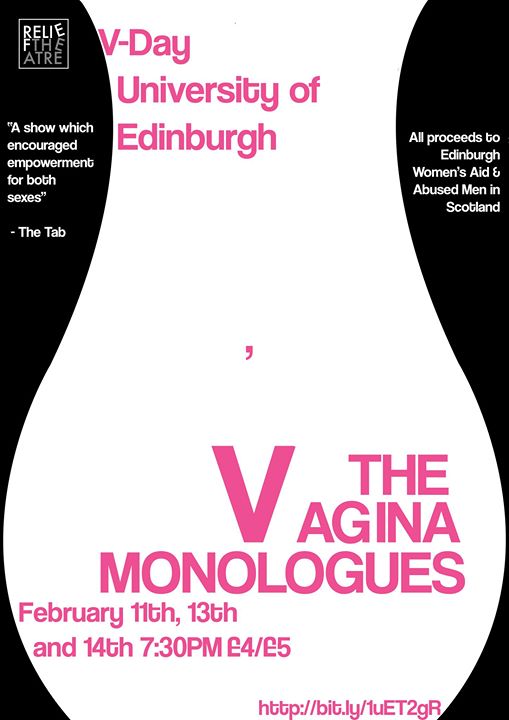
‘The Vagina Monologues’ (Teviot: 11, 13 -14 February ’15)

v monologues

“No hiding.”

Editorial Rating: 4 Stars: Outstanding

Let’s talk about what it means to be a woman, and let’s be real about it.

That is the message of The Vagina Monologues from Edinburgh University’s Relief Theatre.

There was no hiding from the awkwardness of the topic. Director Rachel Bussom was not about to allow for the comfort of anonymity that an audience can revel in, cloaked in darkness and removed from the stage space. This theatre-in-the-round was intimate and uncomfortable and sobering. A lack of props kept this show from feeling like a staged event. Instead, it took on the live and shameless persona of an organic story-telling. The close proximity to the actors in a brightly lit room created a close connection; a sense of shared identity regardless of age or gender.

Sex is a common theme in theatre, but sexuality is more obscure. Obscurer still is female sexuality in all its forms. Not today. Today, women were talking, or in the case of Julia Carstairs they were shouting, about vaginas and everything that comes with them.

For instance: hair. Martha Myers’ exasperation and resignation shone through as she hit home about the societal pressures attached to expectations of body image  – something Julia Carstairs’ first monologue, “My Short Skirt”, energetically pulled apart.

The combined efforts of the narrators, Ella Rogers, Caitlin McLean and Maddie Haynes, along with Marina Johnson’s statistical ‘Factbook’, kept the show current and hard-hitting – an impressive task considering the original show premiered nineteen years ago and society’s views on women and womanhood have changed since then. That this strong production is dedicated to the transgender community is also properly noteworthy.

Carstairs’ second monologue, “Cunt”, was a valiant attempt to reclaim a word used solely now as a derogatory term. Her exploration of sound, language and pace was invigorating and allowed a positive humour to surround the controversial language. That humour was carried on by En Thompson who offered a passionate performance in honour of her “Angry Vagina”. Her bluntness and frustration was eye-opening and tore through long-accepted notions of what womanhood means and entails.

Her anger was shared and increased tenfold in a gut-wrenching performance by Kirstyn Petras who fiercely conveyed the utter devastation of the Bosnian women who had been interviewed by playwright Eve Ensler after being subjected to the horror of rape camps. Petras pulled no punches, emulating a loathing that raised hairs and drew tears – the pain so tangible and the truth unbearable.

Jezneen Belleza may have been talking about vaginas, but her performance certainly took a pair of brass ones. As “The Woman Who Loved Vaginas”, she discussed the life of a sex worker with an honesty and intensity that, despite some more uncomfortable moments, made it impossible not to watch, listen and laugh. She lightened the mood with comedic re-enactments and did so with a grace that kept the story from becoming farcical. Instead, her frank analysis reached deep into the beauty and magic of female sexuality.

Both Isobel Dew and Siân Davies tackled sexuality and body image in a kinder manner – managing to capture the incredible feeling of self-discovery, and the subsequent elation, in a beautiful way. Sophie Harris, too, carried an air of hope in her phoenix-like rising from such a dark place to a position of acceptance and learning. Meanwhile, Ruth Brown’s impressive embodiment of generations gone by in her recollection of “The Flood” brought an endearing humour as well as a sense of pity and despair to the play. For Danielle Farrow it is the sheer beauty of womanhood and nature that matters as she recounted being present for the birth of her granddaughter. Her testimony was infectious and heart-warming.

Leaving the venue, I felt elated and empowered. This  is an inspiring production that entertains, empathises and educates. Bussom, assistant director Mary McGuire and sole male of the team – producer Jacob Close – bring together a group of really talented women who do themselves, and all women, justice.

outstanding

StarStarStarStar

Reviewer: Amy King  (Seen 11 February)

Go to Relief Theatre at EUSA here

Visit the Potterrow & Teviot  archive.

THIS REVIEW HAS NOT BEEN SUBEDITED

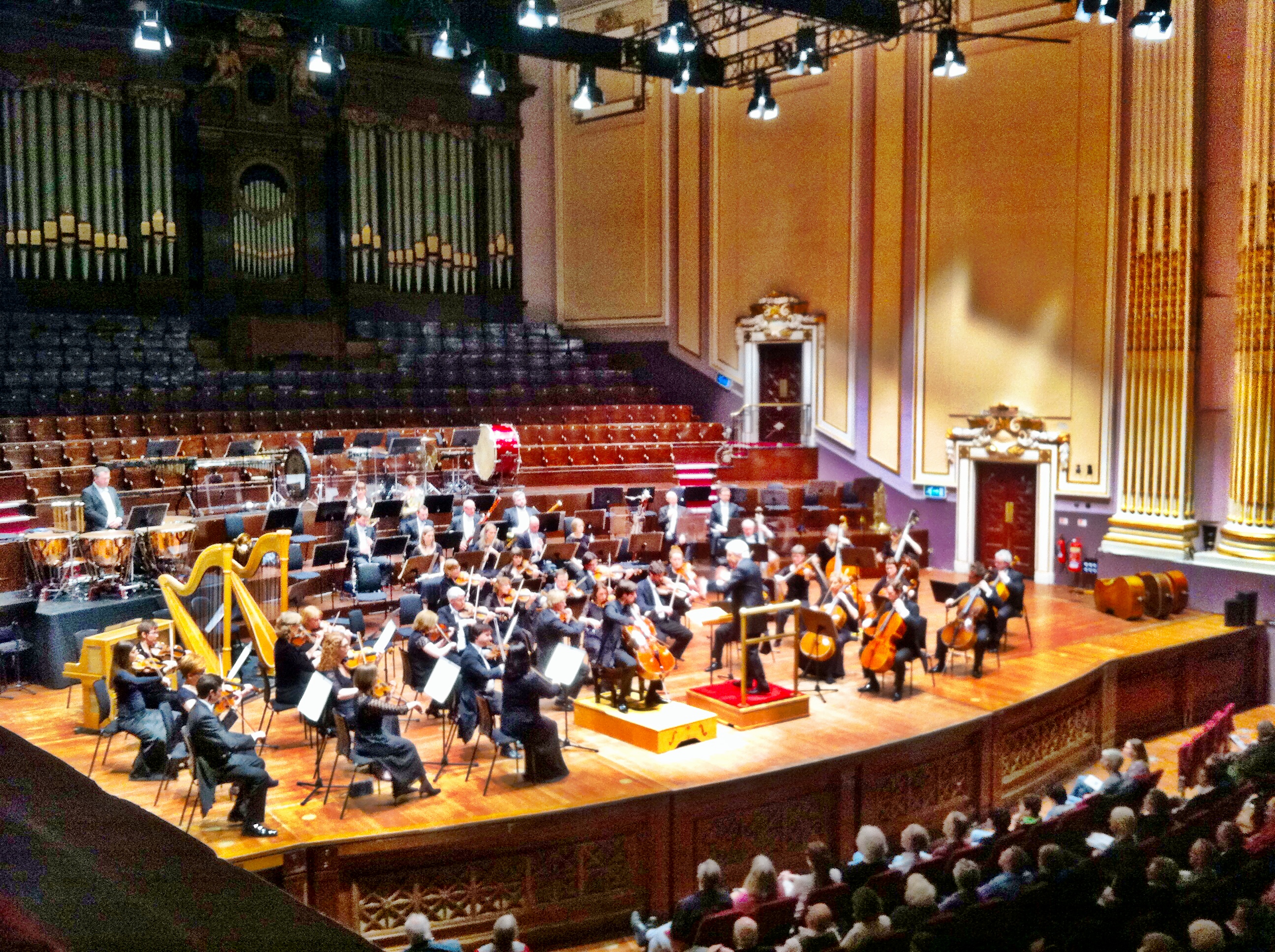
♫ ‘A French Feast’, RSNO (Usher Hall, 6 Feb.’15)

A French Feast

“Müller-Schott’s cello lines sing”

Editorial Rating: 4 Stars Outstanding

A ‘French Feast’ of music with the Royal Scottish National Orchestra

Tall, dark-haired, handsome, talented, humble, charming – yet I still cannot begrudge him anything. Daniel Müller-Schott was the immensely capable German solo cellist taking part in tonight’s performance of a ‘French Feast’ of music with the Royal Scottish National Orchestra. In a talk in the bar of the Usher Hall with RSNO violinist Ursula Heidecker Allen prior to the concert, Müller-Schott described his musical ability as being “his mother’s fault”, she being an accomplished harpsichord player who always had the house full of music and musicians when he was growing up. He had many anecdotes, including the time his friend Philipp Lahm, former captain of the German football team, came to his house. Lahm had a go on Müller-Schott’s cello but professed that he might find it easier if he could play it with his feet!

This concert, of largely Romantic music, kicked off without the cellist. César Franck’s Les Éolides is a symphonic poem based on a poem of the same name and was composed during the latter part of his life when, as professor of organ music at the Paris Conservatoire, he was at his happiest and his work was more refined. The beginning of this piece has a lot of exposed entries by different orchestral groups and unfortunately one of the brass entries slightly misfired, but it was largely unnoticed by the audience. The silver-haired Gilbert Varga, conducting, has a very elegant baton style and strikes a debonair pose on the podium. He conducted without a score and, despite being a guest conductor, connected really well with the orchestra, conveying subtleties within the subdued dynamics which really evoked the ebb and flow of the wind subject of the original poem.

Müller-Schott  joined the orchestra for Camille Saint-Saëns’ Cello Concerto No.1 in A-minor. I liked the programme. French-born Saint-Saëns wrote the piece for Belgian cellist Tolbecque; Franck, whose music came before, became a citizen of France but was originally Belgian. Ok, maybe I’m just being a bit of a sad europhile, but it tickled me. What anybody could appreciate, however, was the quality of the performance. This is a gem of a piece of music anyway; regarded by Rachmaninoff, no less, as the best cello concerto ever written. But Müller-Schott’s cello lines sing, achieving a remarkably consistent tone from the lowest open strings through to the highest register, from dazzlingly quick triplets to whole phrases in harmonics. He achieves the hardest thing: to make the virtuosic look effortless. Müller-Schott’s own modesty showed through in the music as he let the music speak and it spoke magnificently.

The melancholic Elégie to follow was all emotion and so beautiful. Every time I hear Fauré’s music I always think “I must listen to more Fauré”. I suppose it’s akin to watching the Olympics and vowing to get fit, you know it’s good for you. The audience loved Müller-Schott’s performances and did not want to let him go. For his encore he played a movement from one of Benjamin Britten’s cello concertos. I feared at first that it would be a little too discordant for the ‘French Feast’ audience but they lapped it up. I think he could have played anything!

Some conductors are a bit too up themselves to even attempt to engage meaningfully with an audience, but Varga is not one of them and he made a deliberate, helpful, effort to introduce and explain each piece. After the intermission he quoted Einstein, “Imagination is stronger than knowledge”, and explained that “we musicians give you food for your imaginations, especially in Ravel’s Five Tales from Childhood”. Ma mère l’Oye (Mother Goose) is the collective title for them. It was a pleasant surprise to see a conductor who has the courage to get the strings to play so quietly for conductors are often “More string, please!” and it really allowed the woodwind soloists to be fully ‘cantabile’. Orchestral lead Maya Iwabuchi enjoyed some lovely, very expressive, solo lines in the 4th and 5th sections.

The finale was Ravel’s La Valse, a hugely fun, engaging piece of music which I think is difficult to get right but which the RSNO pulled-off with energy and precision. Varga’s conducting became purposefully jerky and robotic towards the end, hamming-up the idea of the music representing a petulant child breaking up his ‘waltz’ toy to make something more mechanical, supposedly better, but actually more ferocious and alarming.

Great entertainment and musical good times! We can be proud to have a national orchestra such as this and with upcoming programmes to suit a variety of tastes I would certainly recommend supporting them at a concert near you soon.

.outstanding

StarStarStarStar

Reviewer: David Jones (Seen 6 February)

Visit RSNO here.  Visit Usher Hall here.

THIS REVIEW HAS NOT BEEN SUBEDITED

‘Faith Healer’ (Lyceum: 14 January to 7 February ’15)

Photo: Eoin Carey

Sean O’Callaghan as Frank. Photo: Eoin Carey

“He walks across a cobbled yard and smack into classical tragedy.”

Editorial Rating: 4 Stars: Outstanding

I don’t suppose Glasgow’s Celtic Connections features a whippet on the bagpipes. Well, Brian Friel’s forlorn yet devout play has one. It also has an Academy Award Best Original Song, from 1936, in The Way you Look Tonight and the Troon to Larne ferry. From Ceann Loch Biorbhaih (aka Kinlochbervie) in Sutherland to Welsh Methodist halls to Donegal to digs in rundown Paddington, Faith Healer – first performed in 1980 – has evocative mileage.

It is all in the voice and the story telling and in the sad and unaccountable distance between them. Three characters explain themselves to their audience. Simples. Each in turn stands alone on stage and talks of how it was when they were together, how it is now, and how it might have been – or might have seemed. Memory is fallible. What you once thought you had learnt by heart or by experience, bitter or sweet, can be a struggle to recall. Their time is provisional. Contingent. (Go to Philip Larkin in Ambulances where ‘what cohered ..across the years .. the unique random blend .. At last begin to loosen’.) You cannot miss the tatty banner, centre, ‘Fantastic Francis Hardy, Faith Healer. One Night Only’.

We have a correlated but discrepant narrative. That’s four monologues in four scenes. Francis, or Frank, appears first and last; first, anxious to justify his billing, dismissive of rhetoric but still fervent of speech and gesture. An act, in effect, that he protests is balanced between ‘the absurd and the momentous’. And last, in an extraordinary extended coda, he is steadier, a little prouder, and with a crumpled press clipping of ‘10 Healed in Glamorgan’ he walks across a cobbled yard and smack into classical tragedy. Grace, mother of his child, loves him selflessly but suffers incomprehension and loss. She has the second scene, casting Frank as immoderately talented but possessed by his own impossible calling. Then, after the interval, there’s Teddy from down the Old Kent Road or Stepney or Bow. Breezy, enduring, big-hearted Teddy: skint impresario, dog lover, pigeon manager, fixer, van driver and bedsit philosopher. Teddy’s responsible for the ‘Fan-tas-tic’ on the banner and his exasperated, “For Gawd’s sake!” is about as Christian as this play gets. Friel, after all, dumped the priesthood.

Nevertheless, I think director John Dove is going for Frank’s miraculous redemption here. Earnest self-doubt proves definitive, more so than the poetic drifts over Loch Clash. The set may be cheerless and angular with a job lot of bistro chairs arranged left stage but then Frank is lucky if more than half a dozen of the lame or the disfigured roll up to receive his ‘gift’.  The keen monologue form is necessarily upfront and in your face, as it were, but even so the acting is unusually expressive and open. Gesture is weighted. The lightest it gets is Teddy (Patrick Driver) wafting another pale ale onto the table. Frank (Sean O’Callaghan) seeks rest and certainty with dire conviction. Grace (Niamh McCann), fighting despair, is bright eyed with hope. Driver’s performance does stand out, “Dear ‘earts”, almost too much maybe, but Teddy’s bow tie and patter can do soul searching as well as the single crucifix high on the side wall and when he chokes up it is all the more compelling.

Anticipating the ignorant and hapless English soldiers of Friel’s next play, Translations, Teddy is not understood in the Irish-speaking community of Baile Beag / Ballybeg. Regardless, this is an eloquent production. Admirable in fact.

(By n’ by, listen up for Translations on BBC Radio 4 Extra on Sunday 25 January at 1330.)


outstanding

StarStarStarStar

Reviewer: Alan Brown  (Seen 17 January)

Visit Faith Healer at the Lyceum here

Visit the Assembly Roxy Bedlam Church Hill Theatre Festival Theatre King’s Theatre Other Pleasance, Potterrow & Teviot Summerhall The Lyceum The Stand Traverse archive.

THIS REVIEW HAS NOT BEEN SUBEDITED