Pajama Men: 2 Man 3 Musketeers (Assembly Roxy, 7-30 Aug : 20.20 : 1hr)

“Ridiculous, but genius”

Editorial Rating: 4 Stars: Outstanding

The Three Musketeers is one of my all-time favourite books, and as an epic tale of friendship and valour, I was intrigued as to how it would work as a two-man comedy in under an hour. As it turns out, it is hilarious.

I lost track of the number of characters they played between them after just a few minutes – men and women of all shapes and sizes, an array of animals, and people that could well have been animals.

It sounds ridiculous, and in many senses it was, but it is also genius. They kept the plot fairly accurate (give or take a few creative embellishments) and it was – remarkably – quite easy to follow. But that is coming from someone who already knows the story – for those who don’t, I can imagine it looked like two idiots in pajamas running around with multiple personality disorder.

My absolute favourite of the characters portrayed was the slithering swamplike Cardinal and his range of repulsive yet hilarious noises. This was also the most clearly defined character in the performance, with strong physicality, accent and language. Other highlights for me were how the personalities of Athos, Porthos and Aramis (the real musketeers) were distilled into very simple caricatures, and how Allen and Chavez could jump between them seamlessly.

What really kept the show alive was the fact that throughout, the two actors always seemed to be keeping each other on their toes, with various, seemingly improvised, Family Guy-esque capers into similes and side stories. There were just enough of these to keep variety and energy, without them detracting too much away from the plot and purpose of the piece.

The pair were more than ably supported by musician Ignacio Agrimbau, who also seemed to semi-improvise sounds and music to support the action, given the selection of instruments he had in front of him. This was always done very effectively, and moments where actors and musician interacted were also very amusing.

What could be seen as a good or bad thing, or indeed just a thing, was that Allen and Chavez never once seemed like they were actually “acting”, more just capering around as if having fun in their own spare time. They were very knowledgeable and confident in what they were doing, very in tune with one another, and the piece flowed with the ease of a stream of consciousness or children in their own fantasy world. The apparent effortlessness gave it an incredibly professional feel and it was easy to engage with from the get go.

outstanding

StarStarStarStar

Reviewer: Steve Griffin  (Seen 8 August)

Visit the Assembly Roxy archive.

THIS REVIEW HAS NOT BEEN SUBEDITED

ErictheFred (Assembly Roxy, 8-30 Aug : 21.45 : 55 mins)

“Lynam is very expressive and engaging, oozing with energy and charisma”

Editorial Rating: 3 Stars

This show is an insight into the life of a performer whose memories still haunt him, and he begins to envision what could have been. It’s a fairly simple concept, which to me is a bit too drawn out and unoriginal, and I would have liked a few more twists or developments to take the piece somewhere new.

There’s no dialogue – it’s just actor Chris Lynam alone with a menagerie of props and projections. He begins standing on stage dressed as a ballet dancer, and in frustration he tears off his costume and throws it away. Then, as if decreed from above, a new costume flies in, which he puts on, and transforms himself into a clown for the rest of the performance. It was never made particularly clear how or why this transformation took place, but as the show progressed, it seemed to become an unimportant detail.

Throughout this performance Lynam is very expressive and engaging, oozing with energy and charisma, and from very early on we are drawn in to his world and visions. Through the twists and turns he suffers, the clown’s physicality and facial expressions are strong enough to portray each emotion and it is a very capable performance.

What makes the show stand out is the interaction with various technical elements. The whole show is seen from behind a projection screen, onto which various scenes and “thoughts” are projected throughout. In addition, there is a vast array of props which enter and exit of their own accord, adding to the sense of mysticism and imagination.
At the end of the show there are two shock moments (which I won’t spoil), that add a fresh dimension to what until then had become a quite tired and monotonous format. It’s a shame moments like these did not come in sooner to give the piece more variety and sense of surprise.

To me, the problem with shows that have a high reliance on technical aspects, especially at the Fringe, is that one never feels quite at ease that everything will go to plan. And while nothing major went wrong in this performance, there were numerous occasions when there was an air of hope as opposed to confidence that the right thing would fly in and fly out at the right time, which prevented me from becoming fully absorbed in the work. But perhaps towards the end of the run these details will be more ironed out.

Overall, a very strong solo performance, but I was left feeling a little bit with the sense of “So What?”.

Star (blue)Star (blue)Star (blue)

Reviewer: Steve Griffin  (Seen 8 August)

Visit the Assembly Roxy archive.

THIS REVIEW HAS NOT BEEN SUBEDITED

Chicken (Summerhall, 8th-10th 12th – 17th 19th – 24th 26th – 30th Aug : 17:05 : 1hr)

“Cerebral and exhaustingly intense”

Editorial Rating: 3 Stars Nae Bad

The act of waking up dazed and confused, often by a strangely realistic half dream, comes under the medical umbrella term of “parasomnia”. I say this because upon leaving the hay-strewn, smoke wreathed tent in which I saw writer Molly Davies’ dark comedy  “Chicken”, I felt a very similar sensation. I was impressed, dazed, and confused as all hell.

“Chicken” takes place in a dystopian future (though, as someone from the north can tell you, the themes are very much contemporary) in which the north and south of Britain have become so alienated from each-other that they are formally separating. In East Anglia, witchcraft and politics threaten to tear rural life apart – especially the town’s most precious export: chickens.

First thing’s first: the tech in this show was absolutely beautiful. The concerted use of blackouts, swells and musical stings to make one character seemingly materialise horror-esque on stage was the tip of what proved to be a technically marvellous iceberg. If you’re looking for inspiration for your next horror show, look no further than the chattering, eerie soundscapes and moody lights programmed by Elliot Griggs and George Dennis.

There was also some very strong acting talent on display: Benjamin Dilloway shone as gruff, masculine Harry, and Rosie Sheehy absolutely stole the show as Emily, the town’s resident Wiccan; often silent, but with a stage presence which spoke louder than an exploding tannoy speaker. There were no weak links in this cast, all of whom lent gritty humanity to an otherwise bafflingly surreal setup.

However, although this show was billed as a dark comedy, I was often confused as to whether to laugh or simply sit there in confused silence. There were moments which were genuinely humorous, but most of it was spent pondering whether the strange spectacle unfolding in front of me was meant to be ridiculous or harrowing. And whilst it could be argued that is the very point, which I would be fully apt to admit I may have missed, it sometimes lent itself to a muddled rather than complementary pairing.

And this was not helped by a script which occasionally felt clunky and forced in its weaker moments, especially when compared to the uncanny naturalism of dialogue at stronger points. Characters would mingle rural vernacular with oddly robotic cadence and non-foreshortened speech on occasion, which was jarring.

This is a show which requires time and attention to enjoy properly, and an appreciation for subtle, rather than explicit humour. Although short, it’s cerebral and exhaustingly intense ride. And while it’s shortcomings meant it could not grab me as I think it should have, I can see fans of dark comedy latching onto it with eager claws.


nae bad_blue

Star (blue)Star (blue)Star (blue)

Reviewer: Jacob Close (Seen 8 August)

Visit the  Summerhall archive.

THIS REVIEW HAS NOT BEEN SUBEDITED

Going Viral (Summerhall, Sat 8th Aug – Sun 30th Aug: 14:10 : 70 mins)

https://i0.wp.com/www.theyardtheatre.co.uk/wp-content/uploads/2015/01/danielbye-.jpg

“Daniel Bye’s energy and wit are utterly infectious”

Editorial Rating: 4 Stars  Outstanding

There was no better way to set the tone for Daniel Bye’s storytelling show “Going Viral” than the way in which he began: simply appearing covertly from the audience, charmingly and verbosely commentating. A one man show such as this one requires charisma, boundless energy and utter command of a room to be pulled off correctly: and I am very happy to say that Bye did so with flying colours.

Without revealing too much, the story revolves around two themes: grief, and viruses. It tells the story of a worldwide epidemic of a disease which causes uncontrollable weeping, and along the way the audience expect to learn a surprising amount of information about viral biology. This was the only show I’ve encountered so far which listed a doctor of Epidemiology in its crew, and the touch of real-world expertise lends rock-hard substance to Bye’s tale.

And what a tale it was: intercut with inventive illustrative examples (my favourite being an extremely clever metaphor involving an unholy amount of liquorice allsorts), Bye’s seventy minute story took the audience on a journey through both medical conditions and the human condition, with an atmosphere so thick and engrossing that I often forgot to make notes. As someone who is often disappointed by the predictability of many plots both written and spoken, this realistic and unpredictable tale was a breath of fresh (if pathogen-laden) air.

And by far the most entertaining facet of the story was Bye himself, who approached what for others would be a daunting subject matter with razor-sharp humour and a seemingly ineffable confidence – but his greatest trick was to pull this off whilst still retaining that touch of the everyman which had the audience eating out of the palm of his hand from beginning to end. In short, Daniel Bye’s energy and wit are utterly infectious.

Combined with subtle but theatrical lighting, the drama was solid enough to break a pool cue over.

However, without giving too much away, I was left slightly disappointed by what seemed an oddly enigmatic and anticlimactic ending. After becoming so wrapped in the world Bye creates, it was almost akin to disappointment of the last bite of a cake dropping from your fork and onto the floor.

However, this did little to affect the rest of what was a noteworthy and slick performance. Daniel Bye and his team should be extremely proud of what has proven to be one of the best storytelling performances I’ve seen at Fringe yet. This is not one to be missed.


outstanding

StarStarStarStar

Reviewer: Jacob Close (Seen 8 August)

Visit the  Summerhall  archive.

THIS REVIEW HAS NOT BEEN SUBEDITED

The Turn of the Screw (Assembly Hall, Aug 6 – Aug 30 : 21:40 : 1hr)

https://files.list.co.uk/images/festivals/2015/fringe/2015TURNOFT-Y9-300.jpg

“Ambitious, but unmistakeably flawed”

Editorial Rating:  2 Stars Nae Bad

The Turn of the Screw, in the words of it’s author, is a tale wherein “the strange and sinister” is embroidered on the normal for dread rather than horror – bold for the time, and even bolder as a minimalistic, two-person stage play. However, what resulted on stage was much like the mind of the story’s governess: ambitious, but unmistakeably flawed.

Rik Grayson proved a strong and surprisingly diverse actor, playing not only the male narrator but also providing powerful and eerie performances as the housekeeper Mrs Grose and Miles, one of the troubled children. His mannerisms were specific, sustained and on point – he turned what was at first a strangely humorous old woman into a figure of suspicion and palpable dread.

The same, however, cannot be said of his stage mate Suzy Whitefield. Whilst at certain points in the production she showed genuine emotional depth (a tense, genuinely unnerving darkness scene stands out), her performance felt oddly flat throughout the rest of the piece – which unfortunately, due to both the small cast size and the show’s dependence upon her character, took much of the essential fear and trepidation out of the drama. Although at times her fear was completely believable, the sense of a desperate, slowly crumbling human being behind it was not. Whitefield shows promise, but unfortunately certain aspects of her character portrayal hold her back.

This was helped, however, by simple yet brilliantly effective lighting design from the tech team, whose use of light and darkness during night and evening scenes carved the atmosphere so deep into the stage that it was nearly inescapable.

All in all, this was the very epitome of a curate’s egg: both actors had scenes which made my hair stand on end, but at the same time, parts of the show were utterly devoid of the tense, sinister fear that makes The Turn of the Screw such an enduring tale of horror. I sincerely wish I had been able to like it more. With an extra sheen of polish and a few tweaks to the pacing and delivery, this is a production which could be much more powerful.


nae bad_blue

Star (blue)Star (blue)

Reviewer: Jacob Close (Seen 8 August)

Visit the Other  archive.

THIS REVIEW HAS NOT BEEN SUBEDITED

Leper + Chip (Assembly Roxy, 6-31 Aug : 15.00 : 50mins)

“Simple story-telling at its absolute finest”

Editorial Rating: 4 Stars: Outstanding

Sometimes the best thing to do with a play is to keep it utterly, utterly simple. Leper + Chip did just that with astonishing effectiveness.

As the audience enters, the two actors are alone on stage, pacing, as if gearing up for a fight. When the house lights dim, what follows is a high octane, turbo-charged, non-stop pummelling of drama, from two fine young actors.

The play follows 24 hours in the life of two young people from different sides of Dublin. They meet by chance at a party and their two social groups end up in a full-on brawl. The next day is a mad-dash tale of pursuit and rivalry as Leper and Chip try to come to terms with the previous evening’s actions.

It is structured as two interweaving monologues, enabling us to see both sides of the story from the night of their meeting. Each frank account goes on to introduce other friends and acquaintances, who, from just a few lines, seem as real as the actors on stage. As the story unfolds, we’re taken through feelings of pride, guilt, anger and desperation, all against a backdrop of the grittier side of Dublin.

The actors are alone on stage the whole time, with no set, props or complex effects to aid the story telling. The piece is driven completely by the energy and expression of Leper (played by Conall Keating) and Chip (Amilia Clarke Stewart), whose chemistry and personalities complement each other perfectly.

Leper is a real “lad” who thinks nothing of downing countless shots and hitting on older women for fun, while Chip is a feisty wee girl with a distinctly challenging home life. Both characters are incredibly likeable despite their many imperfections: their honesty and heart-on-your-sleeve attitude, which drive some of the more tragic consequences, make them true anti-heroes.

It really is a pacey piece that’s full of drama, and I was on the edge of my seat throughout. The quality of the writing (and directing) was such that the play didn’t seem like it was written at all – indeed, the words fell out of the actors mouths so easily that it really felt like it was a true, if at times a little far-fetched, story. It has clearly been very well rehearsed and never once felt staged or unnatural.

Although at times just a little rough around the edges, these were two heroic performances – full of energy, conviction and real sensitivity to every aspect of the individual characters. Simple story-telling at its absolute finest.

outstanding

StarStarStarStar

Reviewer: Steve Griffin  (Seen 8 August)

Visit the Assembly Roxy archive.

THIS REVIEW HAS NOT BEEN SUBEDITED

I, Elizabeth (Assembly Roxy, Aug 7-9, 12-16, 19-23, 26-31 : 11:45 : 1hr 15mins)

I, Elizabeth at Edinburgh Fringe Festival Banner

“Vaughn’s command of the stage is utterly iron-fisted.”

Editorial Rating: 4 Stars Nae Bad

The two hardest things as an actor, at least in my experience, are to memorise your lines and then make to them appear spontaneous and real. To do so without ever losing energy, alone and over a period of a straight hour is nothing short of astounding – and, a feat which Rebecca Vaughn pulls off as Queen Elizabeth nearly effortlessly.
I, Elizabeth is a monologue act pieced together from the Tudor Queen’s assorted letters, poems and private correspondence, and offers a glimpse into the chaotic and rich emotional life behind one of England’s most memorable rulers as presented by the Queen herself.

Vaughn’s character work is undeniably slick: she channels both regality and humility so realistically and so honestly that, even watching from the front, I often forgot I was watching an act at all. And even more impressive was her talent at making irregular, Tudor-style cadence not only make sense to a modern audience, but do it so well that it becomes compelling and, when she wants it to, genuinely funny. Unlike her character’s sometimes shaky political life, Vaughn’s command of the stage is utterly iron-fisted.

But Vaughn’s considerable talent cannot suspend reality by itself, and was aided by a very talented makeup and costume team; the result being a costume with such substance and attention to detail that it wouldn’t have looked out of place in a high-budget period drama. However, just as Vaughn portrayed a partly flawed monarch, so did her performance. Occasionally her emotional energy bordered on the melodramatic, and her tight emotional u-turns sometimes meant that gaps of monologue were lost as the volume increased. And perhaps I’m simply not smart enough to understand it, but some of the tech decisions- particularly a strange, electrical jolting sound to punctuate the monologue – seemed utterly out of place in what was otherwise a very faithful historical recreation, and sometimes completely broke the show’s atmosphere.

Despite these shortcomings, the rest of the show was nothing short of regal. Vaughn should be praised for her unmistakeable dedication to character work. Short of necromancy, it seems she is the woman to call for bringing the long dead back to complex, compelling life.


nae bad_blue

Star (blue)Star (blue)Star (blue)Star (blue)

Reviewer: Jacob Close (Seen 7 August)

Visit the Assembly Roxy archive.

THIS REVIEW HAS NOT BEEN SUBEDITED

The Very Grey Matter of Edward Blank (Assembly Roxy, 7 – 31 Aug : 17.35 : 55mins)

https://s3.amazonaws.com/assembly_production/wp-content/uploads/2015/05/The-Very-Grey-Matter-of-Edward-Blank-square.jpg

“A potential creative masterpiece whose shortcomings locked it into simply being “alright””

Editorial Rating: 3 Stars

I’m a firm believer that the human mind is one of the most complicated and amazing pieces of organic engineering the world has ever seen. Therefore, a witty, entertaining show exploring its contents is like my personal holy grail; and whilst I nearly found it in The Very Grey Matter of Edward Blank, it fell excruciatingly short of something which could have been incredible.

The show tells the story of its titular, reclusive protagonist as he struggles with his own ill mind in a desperate attempt to identify a voice on an old tape; both helped and hindered by his inner voices, who clown and joke their way through his surprisingly dark existence. A nuanced and creative genius, Blank’s goal takes him into the often nonsensical depths of his own sick psyche, and his inner voices are all along for the ride.

To start with, members of the team whose job relies on hardly noticing their work: a huge congratulations to the set and team, who succeeded in creating an on-stage apartment which was not only visually pleasing, but also functioned very cleverly in some of the most simple yet effective visual trickery I’ve seen in a long time. And similar kudos must go to the costume and makeup which went into the creation of the simultaneously ghoulish and comic “Mister Boo-bag” (whose mime work was worth every second).

With regards to the acting talent on show, Edward Blank’s mad, clowning inner characters all had flashes of utter comic genius, and showed a cohesion in their onstage chemistry which many theatre companies could take lessons from. And especial praise must be given to Sam Redway, who played the eponymous Edward, for managing to play an unstable character who remained endearing, charming and dynamic without fail.

However, this was a show which was constantly leaving me wanting to see more, and unfortunately not in a good way. I often wanted to see more energy and dynamism from most of the inner voices, who were always tantalising close to having the physicality and force to really hammer their characters home, but only occasionally hit the target. And perhaps it was a matter of the (admittedly, very witty) writing, or some fault of the occasional silences or unintended moments of stillness, but the show seemed to have a problem maintaining it’s dramatic momentum. And, even worse, the show ended abruptly with a whimper rather than a bang. I was left feeling like I’d gotten to the last glorious bites of a meal, only to have it slapped out of my hand. Had this show’s world been able to maintain itself with the extra needed force, I would have been hooked. But as it stood, I couldn’t quite get into it.

Would I see Edward Blank again? With a few tweaks, gladly. But despite strong performances and clever writing, the show’s shortcomings often ripped me out of what could have been an utterly engrossing story – and even more frustratingly, it’s weaknesses felt just a draft away from being solved. This was a potential creative masterpiece whose shortcomings locked it into simply being “alright”.

If this returns to Fringe in any altered form, I’ll be the first in line – but until then, Edward Blank left me feeling a little grey.

Star (blue)Star (blue)Star (blue)

Reviewer:Jacob Close (Seen 7 August)

Visit the Assembly Roxy  archive.

THIS REVIEW HAS NOT BEEN SUBEDITED

Jurassic Park (Assembly Roxy: 5 – 30 Aug : 18.50 : 1hr)

“A show with so much heart mine nearly burst”

Editorial Rating: 4 Stars: Outstanding

I was slightly worried, from the name, that this would be one of those overly geeky shows where the actors become a bit self-absorbed in being dinosaurs that they lose the plot – literally. Thankfully, this production strikes a wonderful balance between storytelling, humour and a moving tribute to one of the world’s best loved films.

It really is a show with everything – packed with laughs from start to finish, touching moments of tenderness, dinosaurs, family dramas, a ballad to the triceratops and even a Britney Spears dance break. More importantly, it’s performed with so much energy, love and conviction that one can’t help but be carried along with the fun.

The premise: a father (Terry) and his two children (Noah and Jade) welcome the audience to the village hall for a screening of their favourite family movie (Jurassic Park), as a tribute to Terry’s wife and the children’s mother Madeline, who died a year ago. What follows is a tale of a broken family, love, heartache… and dinsoaurs.

As a piece devised and performed by a Lecoq-trained company, it is understandably very physical, with each of the actors switching between human character, dinosaur and the cast of Jurassic Park with ease and finesse. Moments involving lifts and embodying the larger dinosaurs are particularly impressive, as is the creative use of props – who knew a rucksack could look quite so much like a Tyrannosaurus’s mouth?!

I would have liked to have seen the initial scene (in the village hall) developed throughout and have gotten to know the character of Madeline a bit better, perhaps at the sacrifice of one or two of the scenes involving the film’s reenactment. If any of these are intended to show parallels to the family’s story, the references are too subtle and disjointed to be effective. Some of the transitions between scenes also come across as somewhat forced, but in all other respects this show is hard to fault.

The cast work incredibly hard to deliver an hour of non-stop action, with personalities that really shine: Maria Askew as Jade is the perfect moody teenager, Frode Gjerløw is perhaps most impressive with his array of character changes, while Simon Maeder is just incredibly likeable – even while pretending to be a porn star!

This is a hilarious yet touching tale of one family’s coming to terms with grief through the medium of Jurassic Park, and I give it a roar of approval.

outstanding

StarStarStarStar

Reviewer: Steve Griffin  (Seen 6 August)

Visit the Assembly Roxy archive.

THIS REVIEW HAS NOT BEEN SUBEDITED

‘The Children’ and ‘Mancub’ (Lyceum: 17 July ’15)

Mancub & The Children

“Evolutionary studies”

Editorial Rating: 3 Stars

A Lyceum Youth Theatre double bill.

It must be heroic happenstance that Mancub opened on the Lyceum stage on the same day, July 17, that Ant-Man came to a (film) theatre near you. The little guy wins out and gets out, but it’s tough going. As for The Children, performed by the senior class after the interval, it is kind of the same story but a whole lot nastier. The despairing cry is, “We’re not animals”. The shame is that no-one told the adults.

Mancub

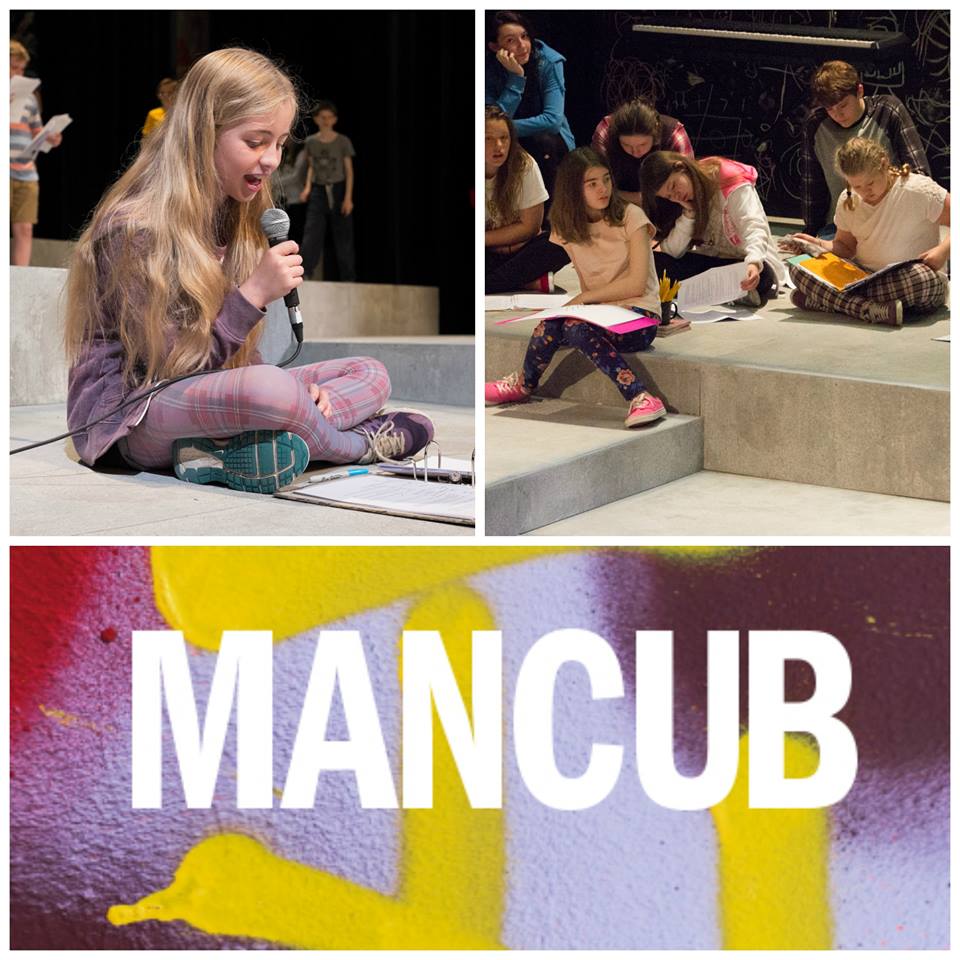
Mancub is Douglas Maxwell’s 2005 adaptation of John Levert’s book Flight of the Cassowary. Paul is in S4. On the good days school is an adolescent aviary; on the bad days, it’s a jungle with teachers in their lairs. A diagram of the human eye is up there on the board in Biology class but Paul only sees foxy Karen (Emma Gribbon) and gulps with nerves. That’s the goldfish in him. He gets a red card in a cup game for roaring at the referee. That’s the grizzly bear in him. He makes friends with the neighbour’s dog (cute and canny Max Hampson) and they chat together. His younger brother, Wee Luke, hates Kipling’s Jungle Book but loves the Disney version. Their Mum and Dad don’t have the imagination to enjoy either.

Xana Mawick, Director, does well to put a cast of 26 on stage all the time and to keep the many episodes distinct. There’s a camera for bonus close-ups and five narrators do a good, clear voiced, job of introducing and accompanying the action. Alexander Levi is Paul, shy but plucky, and able to survive becoming the road kill of insensitive grown-ups; although Tom Borley as football coach, Susskind, is a likeable chump. Best friend Jerry, ably played by Carson Ritchie, is the smart dude with the knockout comeback lines.

The representation and/or mention of those other species, teachers, parents, gran, and – awkwardly, Neds – is a little sketchy, even foolish, but that’s evolutionary studies for you.

The Children tech

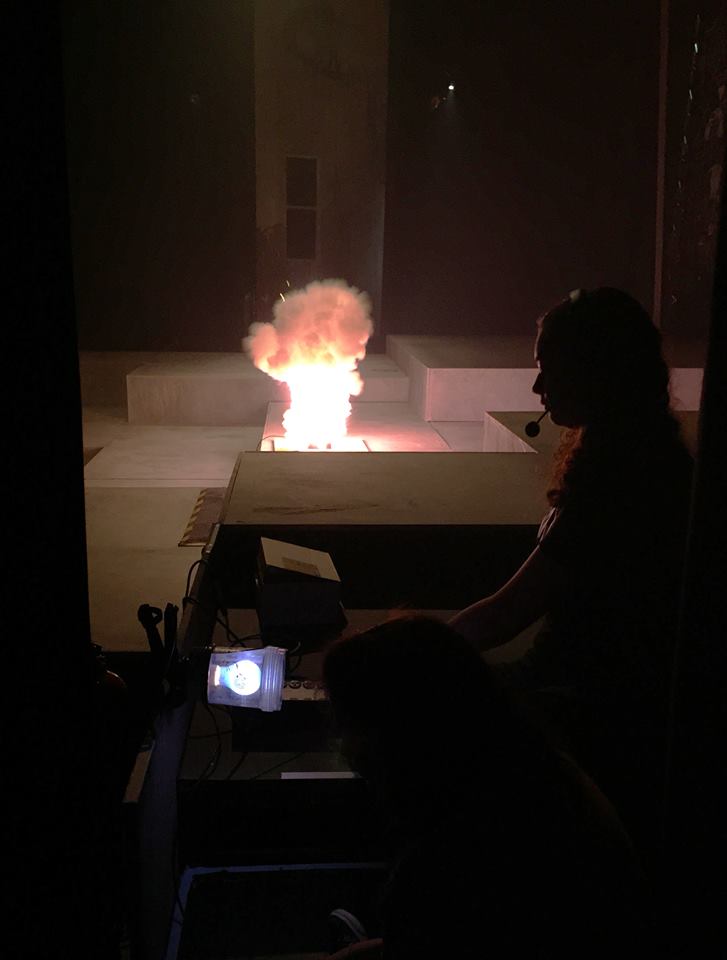
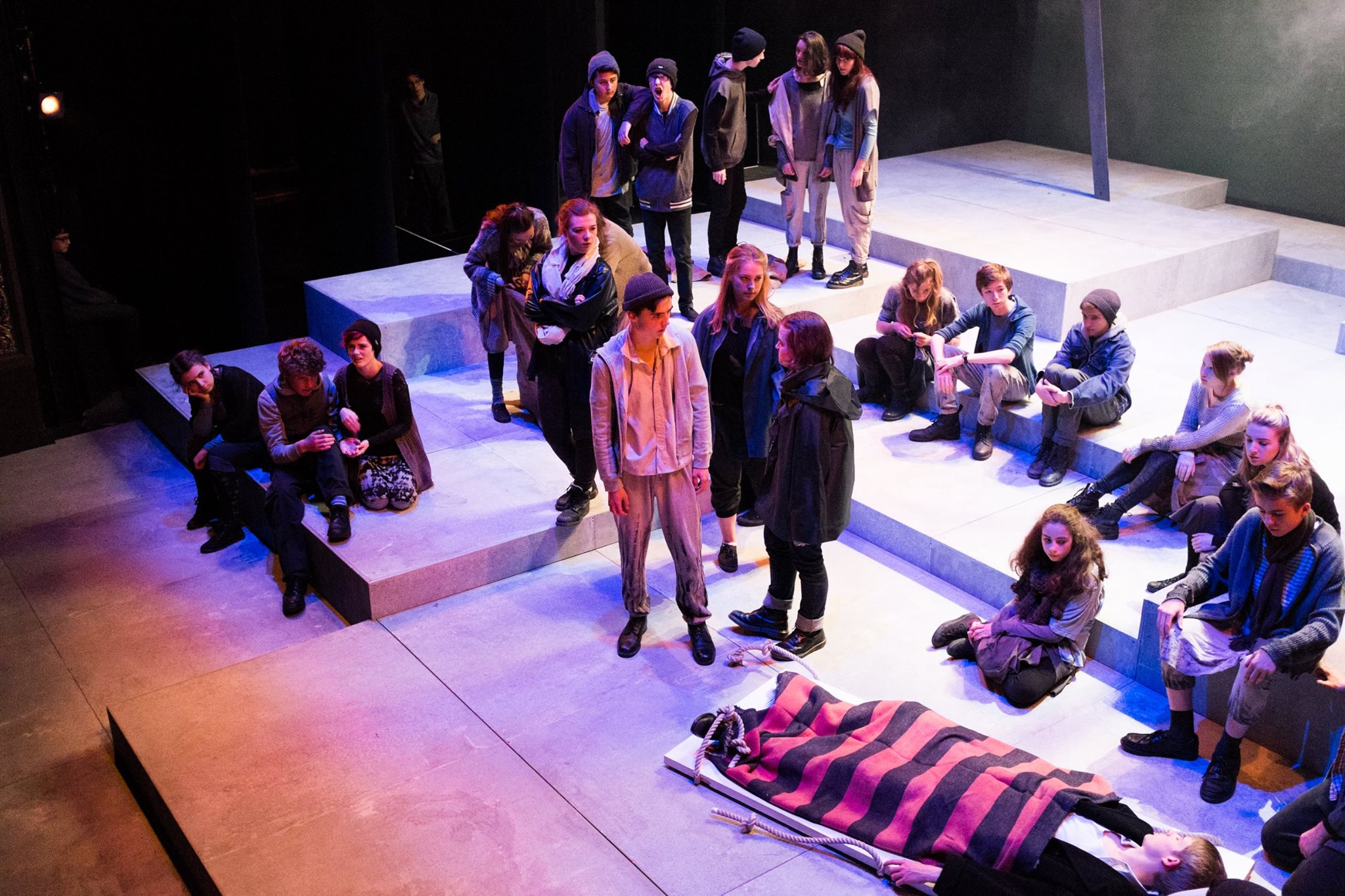
There is nothing ill-defined about Edward Bond’s The Children (2000). It is determinedly and definitely in your face – and there’s a brick to hand. When a mother’s instruction, fuelled by fags and booze, is to burn down a house it is no surprise that blood splatters to an acoustic treatment of The Offspring’s The Kids Aren’t Alright.

P

Daughter Jo, in a firm and touching performance by Caitlin Mitchard, does what she is told and is abandoned to a bleak, murderous, environment that offers no features, no direction, no way out (although Fraserburgh is on the map!). Her several – too many? – friends don’t make it. When, at the close, we’re in a harbour with a lighthouse the quiet relief is unlooked for and rather welcome.

There are two adult roles – principally Mum (Jenny Barron) and then the male Stranger shows up. Christie O’Carroll as director must have thought about playing the Stranger himself. Certainly Bond wanted that effect: the dreadful weight and mistaken, if not extinct, certainty of the adult up against the weaker, unscripted promise of the young – and at times it told.

All credit to LYT for holiday performances of a special kind.

Star (blue)Star (blue)Star (blue)

Reviewer: Alan Brown (Seen 17 July)

Go to LYT here.

Visit the  The Lyceum  archive.