‘The Forbidden Experiment’ (Traverse: 1 – 3 May ’14)

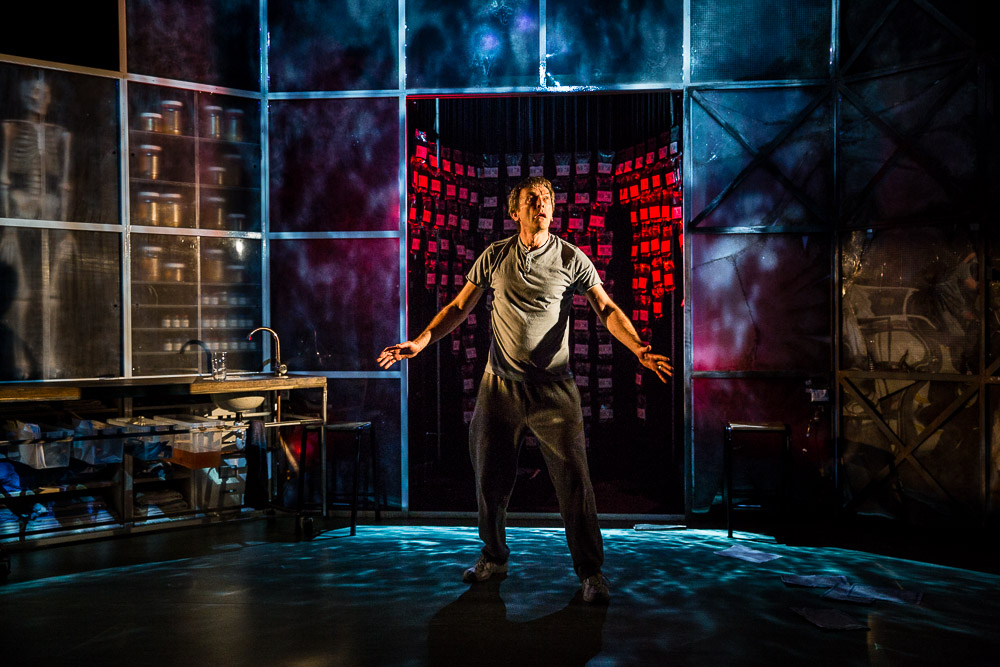
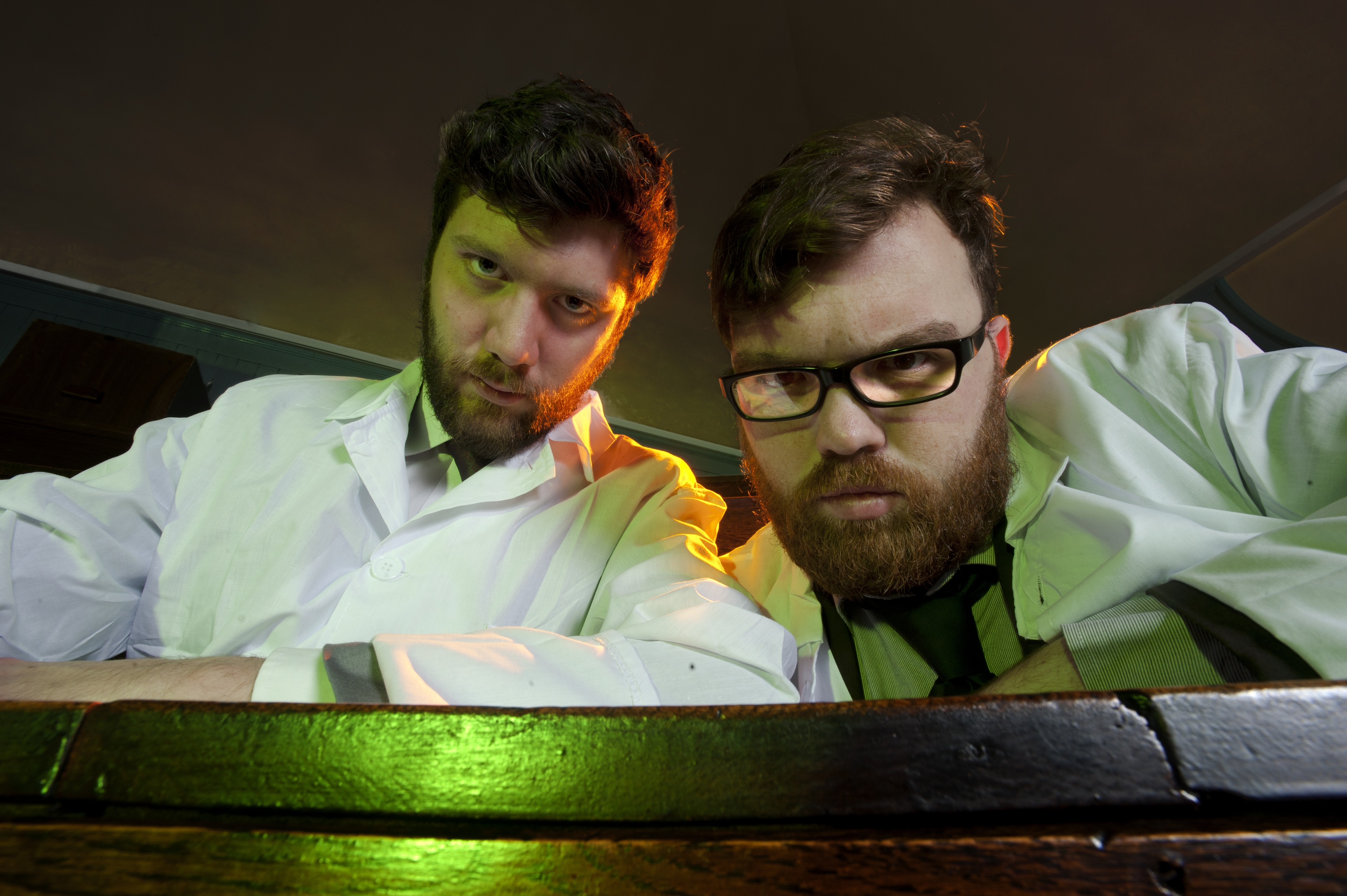
Michael John O'Neill and Rob Jones Photo: Chris McNulty

Michael John O’Neill and Rob Jones
Photo: Chris McNulty

‘Halting thesis: that we exist to be dumbfounded’

Editorial Rating: Unrated

Produced by ‘Enormous Yes’, The Arches Platform 18 Award Winners.

Ever wanted to get inside a clever comic strip? Here’s your chance. For me The Forbidden Experiment is highbrow, secret, Numskulls from The Beano. D.C.Thomson can be proud of this Glasgow borne variation on its team of little technicians who live inside your head, trying ever so hard to do it right but suffering mischievous upset and body blows time and again. The play is self-conscious, ingenious and cerebrally in-your-face; but its audience, to experiment with the passive voice, is likely to end up scatterbrained.

Not that there isn’t strategic purpose. It’s there in box loads over the impressive laboratory of a set: microscope, desk microphone, molecule model, lots of important looking files marked ‘Inchkeith’ with – a bit of a date fixer, these two – a carousel slide projector and a rolling blackboard (never used; shame!). All to investigate what may have happened on Inchkeith island out there in the Firth in – specifically – 1493 and 1944/45. Subjects of study are (i) Language before we fouled it up at Babel and (ii) Language when we messed with it again but this time with practised deceit, as in the British Fourth Army on Inchkeith and with radioactive fallout from the Manhattan Project . You may think that there’s not too much to go on to join (i) and (ii) but that’s where you’re wrong and the two guys in lab coats are right, kind of.

Halting thesis: that we exist to be dumbfounded, for our understanding is forever partial.

So, there’s writer/actor Michael John [Brainy] O’Neill as Himself in a white coat, when he’s not cut up in love or sailing out to Inchkeith with those boxes. He is also penitent, freighted, James IV, who would learn to speak with God, and Mr Alvarez whose small ranch in Socorro County, New Mexico, turns out to be way too close to the nuclear test site. And there’s director Rob [Blinky] Jones, with suitable beard and always in a white coat, a natural at the lab bench you might think, but no. Laconic and spare assistance – not least on keyboards, guitar and harmonica – is provided by Matt [Radar]Regan, whose Abbot Counsellor to James IV is Gollum at his most precious. The Company is completed by Zosia Jo (too expressive for a Numskull), whose dancing in the two roles of ‘Creature’ and Michael John’s ‘Ex’ is especially demanding and pairs well with the cryptic kaleidoscope of the slide show.

Were there an ‘Only Connect’ wall on that blank blackboard then The Forbidden Experiment would have been easier. As it is its different narratives describe fraught or frenetic situations that defy sorted outcomes, let alone a conclusion. Radiation sickness breaks down Alvarez’s speech; redacted documents frustrate History, capital ‘H’. Love overturns a dingy crossing to Inchkeith. We are left with revolving images and impressions of marvellous and necessarily strained acting – O’Neill’s in particular – and the light relief of actors, as well as boffins, getting peeved with each other and with the script.

As a body of work The Forbidden Experiment is terrific and will stay in your head. Mine is not big enough to see it all at once.


Reviewer: Alan Brown (Seen 1 May)

Visit The Forbidden Experiment homepage here.
‘The Queen of Lucky People’ (Traverse: 29 April – 3 May ’14)

Eileen Nicholas as Patrice French Photo: Lesley Black

Eileen Nicholas as Patrice French
Photo: Lesley Black

‘Patrice’s impish tittle-tattle lands her in some embarrassing shite.’

Editorial Rating: Nae Bad

The last in the Traverse’s very welcome A Play, a Pie and a Pint season.

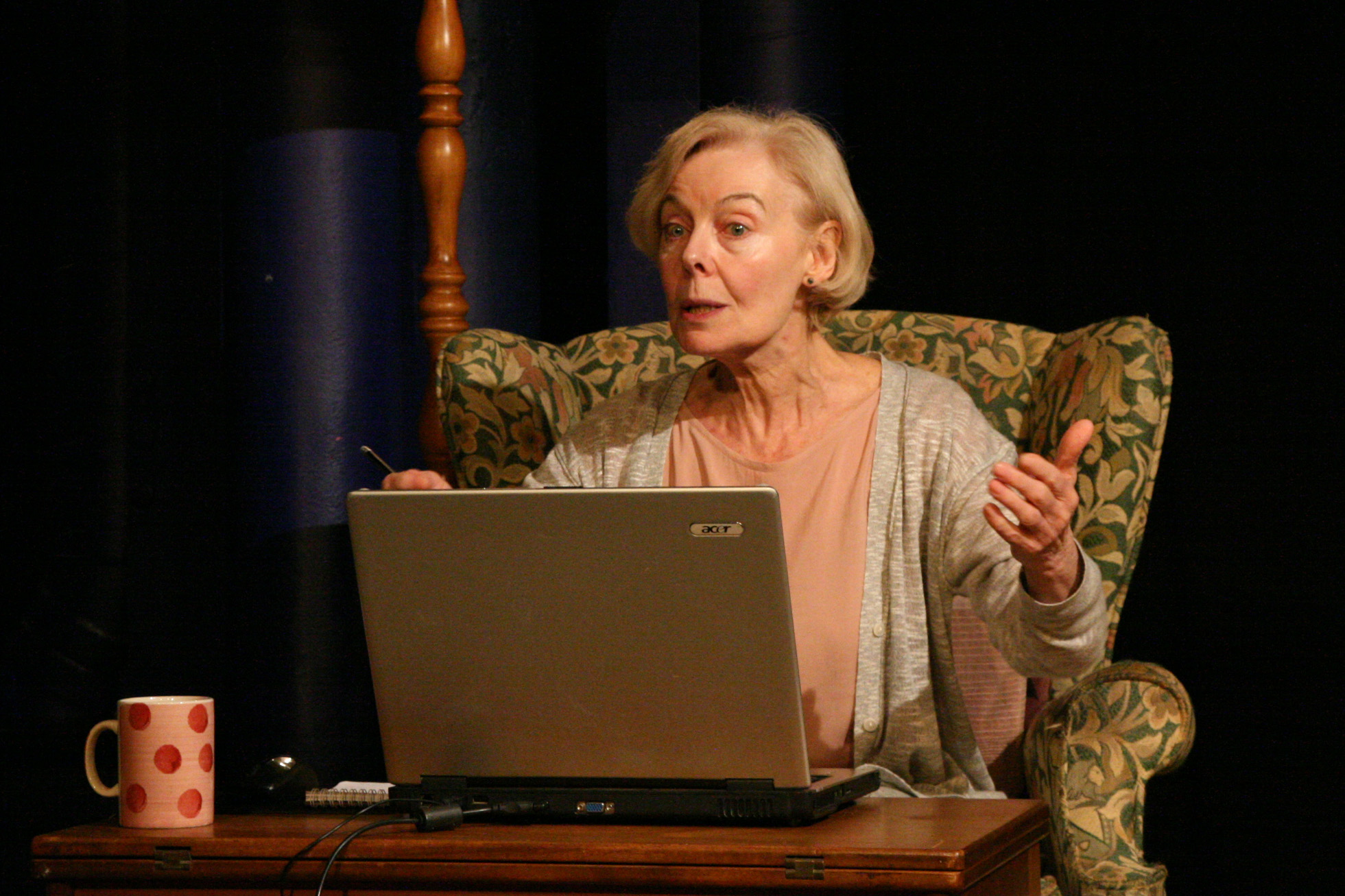
A venetian blind is prone to twitch not tweet. Anyhow, it provides the tell-tale keeking backdrop to The Queen of Lucky People, without doubt set in a tenement flat near you.

Patrice French, clerical officer, retired, lives there, which might just be the cheap end of Kelvin Drive, G20, or off the Warriston Road, EH7; either way, close enough to really notice the neighbours and to go out once in a while for a walk by the river. Not that Patrice gets out much as she prefers to be in the immediate vicinity of her laptop, spending cushioned hours within her social network of choice, ‘Lucky People’.

She has the site’s language at her fingertips. She tallies ‘Awesomes’, ‘LOLs’, and ‘Friends’ –  they’re ‘Buddies’ on ‘Lucky People’ –  with mounting glee and notes her “Record!” stats with pride. A euphoric Third-Age experience or late onset OCD? Regardless, out of sight and careless, Patrice pushes out her gossipy posts. She does not answer the phone and the blind is kept down.

Writer Iain Heggie gives Eileen Nicholas as Patrice many a winning line of solo banter. Laughs are frequent (and a little easy?) when you give an elderly character the energy and the assurance of the hip and snappy catchphrase. The script is at its best when, through the piece, Patrice’s impish tittle-tattle lands her in some embarrassing shite. You will be pleased to see how Marigold Extra-Life kitchen gloves and doggie bags, off, do the business.

It is a redemptive tale. You might argue that Patrice is a better person for having discovered – and thrown out – the troll within. Certainly Nicholas’ sure and appealing performance is of a lonely woman who is happier and kinder at the end. Sympathetic direction by Emma Callander and focused design by Patrick McGurn combine to lift a bright but brittle character into a companionable place. And so the blind goes up.

My only problem, and quite possibly mine alone, was that I could not get Alan Bennett’s A Woman of No Importance and the other Talking Heads out of my head. It is actually to compliment Iain Heggie that the thought of Bennett’s Miss Schofield (Patricia Routledge) with a lap-top is so alarming. Patrice, though, is the more forgiving creation. More of a quiche person, than a pie eater.


nae bad_blue

Reviewer: Alan Brown (Seen 1 May)

Visit The Queen of Lucky People homepage here.

‘Dear Scotland’ (Scottish National Portrait Gallery: 24 April to 3 May)

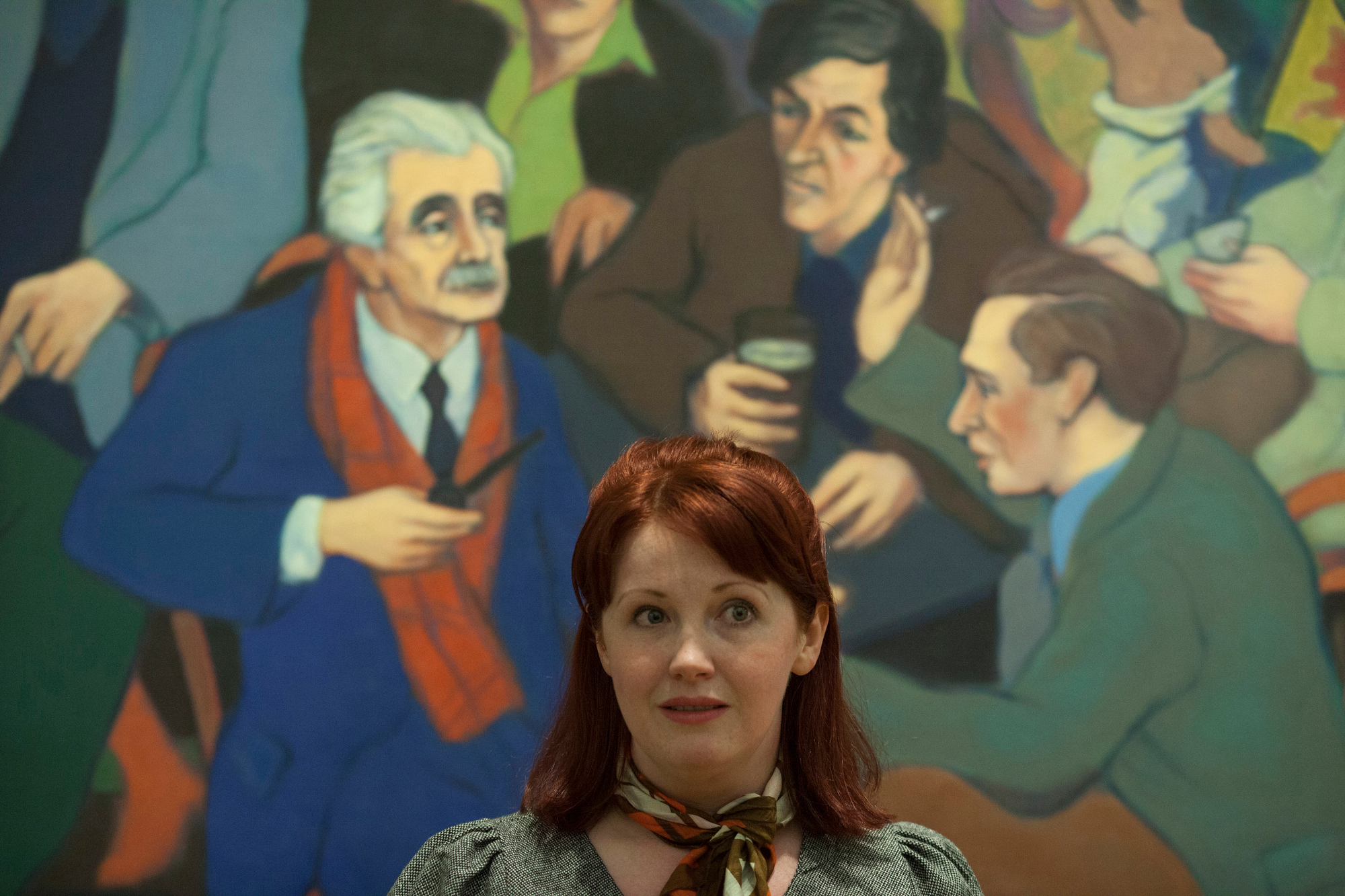
Sally Reid as the unnamed woman in the 'Poets' Pub'. Photo: Peter Dibdin Painting by Alexander Moffat (1980)

Sally Reid as the unnamed woman in the ‘Poets’ Pub’.
Photo: Peter Dibdin
Painting by Alexander Moffat (1980)

‘Finely-honed, finely-tuned productions … You’ll have to go twice – because the twenty short plays are split into two groups of ten, performed on alternate days.’

Editorial Rating:Nae Bad

A National Theatre of Scotland production.

Dear Scotland provokes some complex responses, but the concept underpinning it is a wonderfully simple one. As you’re led round the National Portrait Gallery on Queen Street, you’ll find actors stationed in front of portraits – each of them cast as the man or woman portrayed in the work of art. Each actor delivers a script penned by a different playwright, in the form of a letter addressed to the nation. So you might hear, for example, the unmistakeable voice of Liz Lochhead … but spoken by a man, in the persona of Robert Burns.

The actors are paired with portraits without reference to their looks, or (hilariously) even to their gender. Colin McCredie as the Queen is a particular highlight; in some ways, he better captures our image of the monarch than the unflattering portrait hanging behind him. Such an overt mismatch avoids some moral issues, too. Playwright Johnny McKnight isn’t putting words in Her Majesty’s mouth, but offering an alternative Queen – one who tells us things the real Elizabeth would never be so gauche as to say.

Another piece, written by Peter Arnott, pulls the same trick the other way around; this time, he has Walter Scott lay bare the things we think, but don’t dare to mention. A gender inversion again works well, with Lesley Hart offering a memorable performance as a thoroughly modern Sir Walter. But to see both the pieces I’ve mentioned, you’ll have to go twice – because the twenty short plays are split into two groups of ten, performed on alternate days.

It’s worth a second visit, since seeing the same actors re-cast in different roles presents some intriguing juxtapositions and parallels. The scenes explore a fine range of the gallery’s exhibits too, from an exalted king to a nameless woman and from photographs through paintings to sculpture. There’s even, bizarrely, a monologue delivered by a dancer’s knee (though mercifully it’s played over loudspeakers).

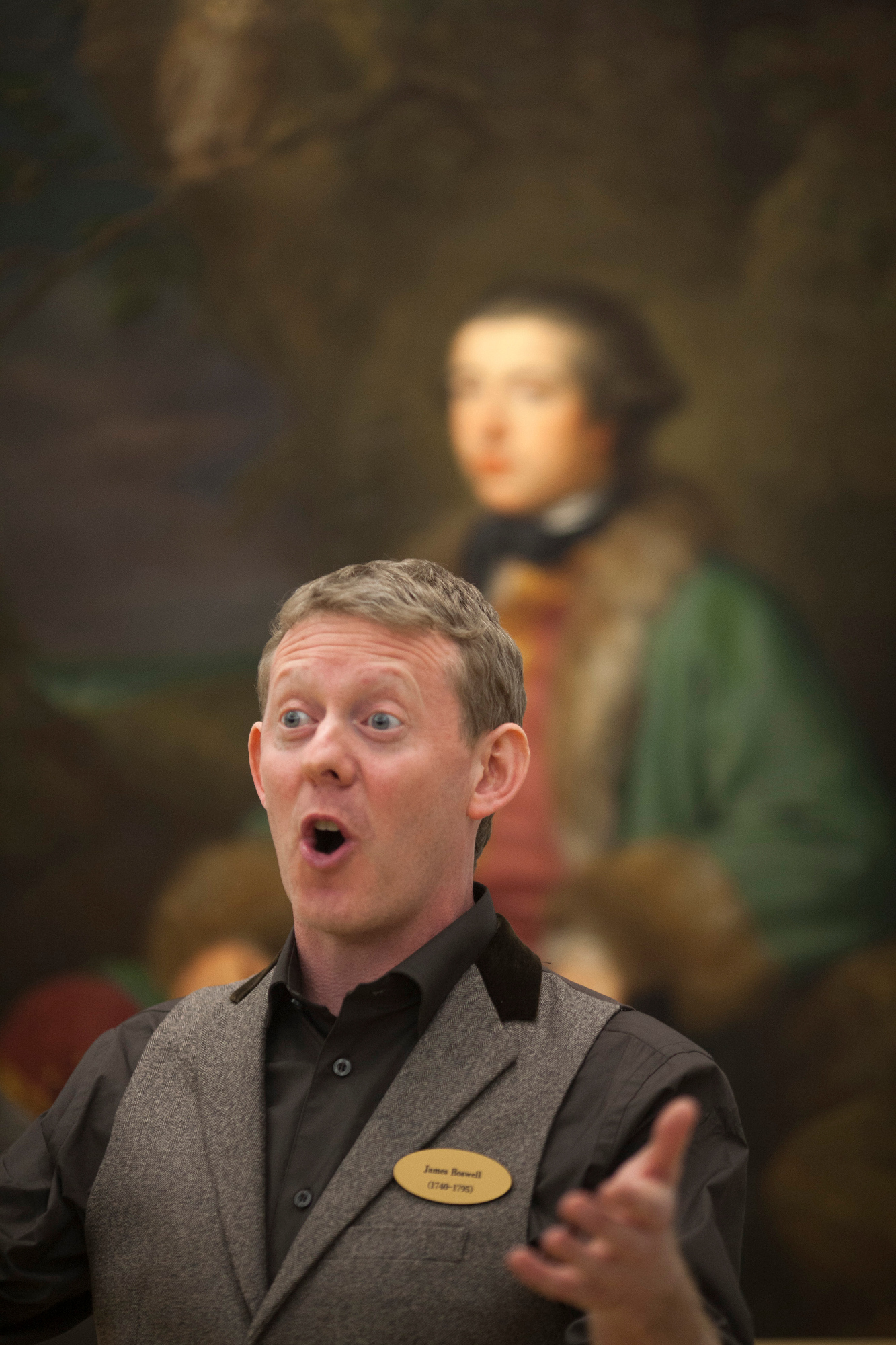
Colin McCredie as James Boswell Photo: Peter Dibdin Painting by George Willison (1765)

Colin McCredie as James Boswell
Photo: Peter Dibdin
Painting by George Willison (1765)

So the individual pieces are often compelling, but does the whole show hang together? Overall, yes; the itineraries are finely-honed, finely-tuned productions. The actors’ dress and poses subtly echo the portraits – enough for you to notice, but not so much that it starts to feel mechanistic or trite. And the logistics are impeccable too, with an array of assistants escorting the audience through the gallery, in groups which feel like they move at their own pace yet somehow never collide.

But inevitably perhaps, for a work built from so many different pieces, there’s a clumsy repetitiveness to some of the themes. “Tour B” in particular shoe-horns a discussion of independence into each and every vignette – as though the whole of Scottish consciousness can be reduced to a “yes” or a “no”. “Tour A” explores a wider view of society, and feels much more subtle and thoughtful as a result.

Across both nights, the most striking scenes were those which challenged our complacent assumptions – dared to suggest that some of our nation’s faults might originate from within. Zinnie Harris’ script for a chorus of forgotten women will linger in the memory, touching a type of pain that lives inside us all. And Nicola McCartney’s complex, riddling monologue, spoken by a bystander, opens with a welcome yet carries a bitter sting in its tail.

At the end, you’re invited to write your own note to the nation – so here is mine: ‘Dear Scotland, let’s remember how to have this conversation; not just till September, but onward, into whichever future we choose. Let’s carry on learning about our past, and speculating about our present; because, with this elegant production, the National Theatre of Scotland shows just how entertaining that thought-provoking dialogue can be.’

 nae bad_blue

Reviewer: Richard Stamp (26 & 28 April)

Visit Dear Scotland homepage here.

‘Factor 9’ (Traverse: 24 – 26 April’14)

Matthew Zajac as Bruce (Norval)

Matthew Zajac as Bruce (Norval)

‘Blood bags swing in the central section … Death certificates litter the stage floor throughout.’

Editorial Rating: Outstanding

There is an eye-catching stainless steel angel outside the Scottish National Blood Transfusion Service centre in Ellen’s Glen Road, Liberton, barely four miles south of the Traverse. There is also, facing Reception, a rust streaked 40 cubic yard capacity waste skip. Factor 9 shows us what happened when, in 1984, contaminated blood product did not end up in the bin.

Injury, pain, hurt and a raging sense of injustice is how writer Hamish MacDonald sees it. His script could have taken on some late gothic horror, as in Stevenson’s Olalla, but that is torpid and exotic compared to the energy and ghastly proximity of Factor 9.

Dramatic, genuine, testimony is given by two haemophilia sufferers, Rab (Stewart Porter) and Bruce (Matthew Zajac). Together, but occasionally taking different parts along the way, they tell the story of their lives. In medical reports and studies they are classified as ‘Unfortunate individuals’ who were exposed to that single batch of HIV contaminated factor VIII concentrate from Scottish donors. Rab would have been a ghillie but now only drives into the hills to scream insults at the view. Bruce tried to be a nurse but is thrown off his course – and onto the streets – as an unacceptable infectious risk. He has a recurring hopeless dream of taking a hammer to water and trying to smash his way out of all-enveloping misery. Bruce has, in his words, become shockproof: “Fucking unfortunate?” No, try “Fucking incredible”.

“How could this happen?” is the furious and tendentious question that fronts Factor 9. Director Ben Harrison and Designer Emily Jones get the answers out in impressive and surprising order. Visual, contextual information is screened on the grid squares of a threefold set. Important dates and locations clearly register, not least the security fencing around the Arkansas state prison(s) where donor prisoners are paid for their blood, some of it infected with viral hepatitis and HIV. White symbols turn red when, of those 32 patients in that 1984 cohort, another one is ‘away’. A lab bench wheels into use as a bed. Utility chairs are in the Waiting area where Rab and Bruce and their families spend a horrible amount of time. Blood bags swing in the central section and the names of drug companies – notoriously IG Farben and latterly Hoechst, Armour, Baxter and Bayer – are indexed above. Death certificates litter the stage floor throughout.

L. Stewart Porter as Rab (Mackie)

L. Stewart Porter as Rab (Mackie)

Actors Porter and Zajac are utterly convincing. You see Rab and Bruce briefly, innocently, having fun in the Children’s Hospital when their parents have gone home for the night but otherwise, as stigmatised plague-carriers and guinea-pigs, it is their outright, unequivocal anger that registers. Rab knows magic tricks and the vehemence of his ironic “Abracadabra” when significant medical records just disappear is punishing. Zajac also plays the haematology consultant and actually wins sympathy for a professional who, grappling with the uncertain and the unknown, finally does not know what to say. The scene when an anatomical skeleton is substituted for the doctor and ‘examined’ by his patients is ingenious and macabre.

Factor 9 is properly more than a tongue-lashing for pharma. Neither is it a pitiless exposee of medical practice in the face of an emerging pandemic within the haemophila community. It is much better than viral polemic because of terrific performance and inventive direction. In the House of Commons the Contaminated Blood (Support for Infected and Bereaved Persons) Bill waits for its 2nd Reading. This Dogstar Theatre production should introduce it.

outstanding

Reviewer: Alan Brown (Seen 24 April)

Visit Factor 9‘s homepage here and preview the show’s Fringe ’14 run here.

‘Skeleton Wumman’ (Traverse: 22 – 26 April ’14)

Buchan Lennon as Young Man and Amy Conochan as Skeleton Wumman. Photo: Lesley Black.

Buchan Lennon as Young Man and Amy Conochan as Skeleton Wumman.
Photo: Lesley Black.

‘Buchan is seamless, fluid and graceful. If he were Salome, I’d have the head of John the Baptist brought to him with an apple in its mouth.’

Editorial Rating: Nae Bad

“I’m not entirely sure I understood that,” I confided to no one in particular walking out into the thick Spring mist. The questions raised by Gerda Stevenson’s lunchtime script continued to buzz round my head as I wandered through the exhibition of Edward Lear watercolours at the National Gallery. It’s a sign that the magic of theatre is working I suppose. There’s a similarity in the way Lear represented mid-nineteenth century Greece and the seascape of myths conjured by Stevenson.

Both evoke folk memories held deep in the collective conscience. Both present skilled artists with a canvas for intricate flair – none of Lear’s paintings is larger than A3 while a Play, a Pie and Pint runs not much more than an hour. And neither entirely satisfy.

The muted colours of the Scots dialect run from Stevenson’s pallet into something of a monologue delivered by Amy Conachan as the Skeleton Wumman. The plot is an interplay of narratives woven from Inuit tales and mythology, offset by the innermost thoughts of a contemporary young girl.

There is an Inuit tale of a fisherman who ensnares bones of a forgotten young woman, cast out by her disapproving father. When the seemingly lifeless, barnacled relic of a past tragedy drinks a single tear shed in sorrow by the fisherman, her flesh and animation return, in turn ensnaring him. In Stevenson’s narrative the Skeleton Wumman might also stand for Sedna, Inuit goddess of the deep.

The young girl portrayed by Conachan is severely disabled. We find her at home being cared for by her father, an oldskool fisherman stuck on land by the inclement season. We hear her innermost thoughts, ideas and perspectives, which she is otherwise unable to communicate especially to her uncommunicative father.

Conachan leads a trio of performers who somehow sprint the marathon. She is an extremely gifted performer, one who knows how best to present the results of her Royal Conservatoire of Scotland training (where she is currently studying). She is the glue holding the narratives together and does not come unstuck even as the script’s monologue starts to skirt the bounds of monotony. Conachan’s relationships with Buchan Lennon (as her Father and as the Young Swimmer who has caught her eye at the city pool) are truly enervating.

Buchan is seamless, fluid and graceful. If he were Salome, I’d have the head of John the Baptist brought to him with an apple in its mouth. He inhabits both characters more like a Game of Thrones warg than someone playing make believe. Every nuance is there. The Father is at once terrified of nappies, especially now his daughter’s becoming a woman, whilst also tender, attentive and affectionate. The Young Swimmer is shy but friendly, a breath of fresh exotic air. Buchan fills Kipling’s unforgiving minute in If with miles of distance run.

Completing the trio is Seylan Baxter. Noted as one of the small, but growing, number of players reintroducing the cello into Scottish traditional music, Baxter provides far more than a soundscape. She employs the electric cello for both music and sound effects. The beating heart, the familiar musical phrase, the playful twist, each is managed from a push pedal system allowing her to sample herself as merrily she rolls along. Sitting on the far left, I’ve got the best view of the pedal system in action. Not a foot wrong, although one time Baxter almost hands Buchan an umbrella instead of an inflatable rubber ring; happens to the best of us.

The props, set, lighting and sound were all of the highest standard. The gentle sobbing from the techies responsible for all those cues added not unpleasantly to the overall effect. This was a production of very high production values and higher ambitions, the more so for having hit almost every mark.

I’ll be thinking about Stevenson’s script long after Edward Lear’s watercolours have washed out of memory. Spooky, to the point of spine-tingling, Skeleton Wumman is however unfairly weighted between the trio on stage. But that Conachan is a thoughtful and compelling performer, one who carries much more than her own weight, the play might have foundered.

nae bad_blue

Reviewer: Dan Lentell (Seen 22 April)

Visit Skeleton Wumman‘s homepage here.

Kickstarting the Edinburgh Fringe pt.7

A wander through the parks and byways of the city this Easter Sunday reveals the twin themes of rebirth and renewal to be topping the bill. Spring has sprung. I’ve even managed to ‘catch the sun’ – meaning that I have shifted on the tanning spectrum, from White Walker to Wildling.

“Magnolia in bud is a fairer prospect than when in bloom.”

With spring comes the promise of summer, and for Edinbuggers, resident and diaspratic, summer is the Fringe. In this online, plugged-in age of wonders the budding of the Fringe is most manifest in the Kickstarter campaigns launched by hopefuls aiming to bring their shows to the festivals in August.

Not sure what a Kickstarter is? Check out our 6 previous installments here; here; hereherehere and here.


Andromeda Turre: Kiss Me

Spending ten years on the dating scene has been an experience of heart-break and hilarity for Andromeda Turre. She has woven this wealth of tragicomic material into the songs and stories of Kiss Me, the show which will mark the sultry songstress’ Fringe debut.

Her sound has been described as a cross between Sting, Sade and Adele. The show’s launching pad will be at Space Cabaret on the Royal Mile, perhaps with an album and book to follow. Accompanying Turre in August will be a band of four including her drummer brother Orion.

Turre, who is the daughter of jazz musicians, currently stars in Sleep No More in New York, and does background vocals at Saturday Night Live. She has toured 17 countries with her own band, was the last Raelette hired to sing background vocals for Ray Charles, and starred in Woody Allen’s Murder Mystery Blues.


Have a look at the other potential shows we’ve previewed: Kat Woods’ Belfast BoyFinn Anderson’s Alba; A Scottish MusicalThe Wrong Shoes Theatre Company’s The Anima Project; Apphia Campbell’s Black is the Color of My VoiceIan Harvey Stone’s The Devil WithoutThe Red Oak Theatre Company’s Funny GirlLuc Valvona’s The Improvised Improv ShowDogstar Theatre’s Factor 9Unprescribed by almuni of the Royal Central School of Speech & DramaWac Arts’s Journies BeyondPaperbark Theatre Company’s This Is Where We Live; A Collection of Grimm’s Fairy Tales by the bright young things of Kent State Uni’s Transforum TheatreJess Thom’s Touretteshero: Backstage In Biscuit LandUnbound Productions’ TravestiBerserker Residents’s The Post Show Talk Back.

Note: The Kickstarter videos embedded in this post don’t show up in the email notification sent out to those of you following us through WordPress (but they are on the website, promise).

‘The Comedy of Errors’ (King’s: 16 – 19 April ’14)

Guess who? Antipholuses of Ephesus x2 & Dromios of Syracuse x2. Photo: Nobby Clark

Photo: Nobby Clark

“James Tucker as Adriana pushed out all the stops. He built up a fantastic head of steam, crashing into the terminus barriers with enough force to lift the plot’s ludicrous conclusion to the heights of hilarity.”

Editorial Rating: Nae Bad

The three preceding (and four subsequent) plays of the RSC’s 2001 Histories Cycle had been so brilliant, that the unutterable awfulness of Edward Hall’s take on Henry V came as a serious shock to the system. It’s taken thirteen years of painstaking therapy for the flashbacks and nightmares to subside. Unforgettable was the moment when Hall had hundreds of tennis balls bounce across the stage on Essex’s line, “Tennis balls, my liege.” One of the most dangerous and dramatic moments in the canon blown out of all proportion for the sake of a cheesy visual gag. For those of us embarked on the whirlwind tour of eight history plays in six days the forced funny fell flat.

By contrast, two nights earlier the definitive Richard II of my lifetime had snatched our collected breath away. The late, much lamented Steven Pimlott punctuated the opening play of the Cycle with the lines, “I have been studying how I may compare, This prison where I live unto the world: And for because the world is populous And here is not a creature but myself, I cannot do it.” Shakespeare gave the line to Richard II alone. Pimlott shared it with Queen Anne (Act 3: Scene 4), Richard (Act 5: Scene 5) and at the very end with Bolingbroke. The effect was profound, out barding the Swan.

The recurring lines appealed to my grumpy teenaged sensibilities. More consequentially, it conclusively demonstrated that a director can be reverential to Shakespeare’s unmatched genius without embalming his text. David Troughton played Bolingbroke, opposite Sam West in the title role. Both are scions of great acting families. Edward Hall, director of the Propellor Theatre Company, has an equally impressive pedigree, but as Tony Benn liked to quip, there’s no such thing as an hereditary pilot.

Back in 2001, when mobile phones were still a novelty (just about), the cast of Henry V had been slouching around on stage at the start when a ringtone rang out. It was Pistol’s! How funny was that? What a clever and inventive way to remind people that they might inadvertently interrupt the script with a needless distraction.

Thirteen years later, we enter to find the same busy business on stage and off. Actors flit hither and dither one-sidedly chatting with the audience, establishing The Comedy of Error’s Rocky Horror aesthetic. Perhaps this bonphonie is your cup of tea. All I’d suggest is that in the nature of things, a person standing can’t help but talk down to a person sitting, figuratively and literally.

An all-male cast (as in Shakespeare’s own day) necessitates cross-dressing. Hold the panto, why are we meant to find this intrinsically funny? All-female Lears et al don’t tend to tap this varicose vein of comedy mould. In the week when India recognised transgender people as belonging to a third gender, I can’t help wondering if we aren’t being invited to backhandedly giggle at the black and white minstrels of our age.

Similarly the all-caucasian Mariachi band seemed to suggest something diminishing about Mexican culture not uttered, outside the Top Gear studio, since the producers of Fraiser toyed with the idea of Daphne being a laconic hispanic housemaid back in the early ‘90s. Did this production seep out of the Blue Peter millennial time capsule? Even the prolific use of football shirts nodded towards the Nick Hornby-era, when the beautiful game’s gentrification was at fever pitch. The 21st century appeared above the Madness inspired soundtrack in the form of the e-cigarette which is now all but ubiquitous in productions lacking mature vision.

The Comedy of Errors is a tough nut to crack. Two pairs of mistaken identical twins causing double the hilarious consequences. It’s a silly play requiring serious talent on stage. Fortunately, even the Dead Sea can reflect starlight.

This was an exceptional cast without exception. Joseph Chance and Dan Wheeler, as the twin masters, established the musky basenotes from which the playful rifts of Will Featherstone and Matthew McPherson, as the twin servants, emerged to enliven. Although all four were not on stage together until play’s end, they conjured a continuum which turned the narrative arc into a canopy of luscious woodbine, sweet musk-roses and eglantine which perfectly perfumed the performances of the entire cast.

James Tucker as Adriana pushed out all the stops. He built up a fantastic head of steam, crashing into the terminus barriers with enough force to lift the plot’s ludicrous conclusion to the heights of hilarity. Beneath the dragging drag act both he, as well as the flawless Arthur Wilson (Luciana), established the emotional range required for the darker comedy.

Dominic Gerrard as The Duke, as with the whole production, came into his own after the interval. Suddenly the pace got pacier, with time being left for the actors to enjoy the fruits of their labours. The plot may be thin as tissue during a paper pulp shortage but it frames some fantastic lines, banter and badinage.

To see a strong cast with swift bite slow to sink their teeth in requires the Russian Revolutionary remedy. After 1917 Soviet orchestras divested themselves of importunate conductors, preferring to guide the collective collaboration by the mutual light of their individual talents. The Propeller Theatre Company should propel their Jonah overboard.

nae bad_blue

Reviewer: Dan Lentell (Seen 18 April)

Visit Propellor at King’s homepage here.

‘A Midsummer Night’s Dream’ (King’s: 16 – 19 April)

Chris Myles as  Bottom Photo: Nobby Clark

Chris Myles as Bottom
Photo: Nobby Clark

‘unambiguously, unashamedly, unpretentiously hilarious’

Editorial Rating: Nae Bad

When I was a child, I couldn’t understand why half of Shakespeare’s plays were described as “comedies”; they seemed so resolutely unfunny. I wish I could have seen Propeller back then – because whatever else you might think of their Midsummer Night’s Dream, it’s unambiguously, unashamedly, unpretentiously hilarious. There’s one particular scene which might just be the most entertaining five minutes I’ve ever spent in a theatre, and if they just stood and read from scripts for the rest of the running time, it would still be worth the ticket price for those moments of joy alone.

But of course, that’s not what they do. The director’s notes highlight a “rigorous approach to the text”, but his style and presentation are unashamedly modern. The piece is filled with bold, striking images – and it’s performed very much in three dimensions, with actors clambering and capering on ledges across the backdrop. The literal high point comes when Oberon and Titania first confront each other, perched on matching thrones far above the other actors’ heads, divided by the chasm of the stage.

The physicality of Propeller’s performance adds a lot to the humour, but it has a serious edge to it too. Joseph Chance’s Puck delivers just the right mix of the carefree and the sinister. The Rude Mechanicals are re-invented with a dash of Dad’s Army, though their comic play-within-a-play arguably suffers a little in comparison to the earlier scenes. And it’s all set off by an appropriately other-worldly soundscape – intriguingly created by the actors, live on stage.

But of course, Propeller’s work is best known for a completely different reason: specifically that the actors are all men. And surprisingly, it’s here that the sense of effortless coherence begins to break down, with their approach to Shakespeare’s women feeling distinctly variable. At one end of the scale, Will Featherstone plays Hippolyta convincingly as a female, while James Tucker’s punkish Titania is a fascinating creation – the perfect equal for Darrel Brockis’ magnificent, half-crazed Oberon. But with other characters, the gender inversion seems more of a parody, and seeing a male actor mincing and flouncing is a major part of the humour.

Humour, perhaps, is enough. But you can’t quite divorce Propeller’s concept from the gender politics of our modern day – and I’d been hoping for something more than that, some surprising sudden insights which a mixed cast simply couldn’t provide. As it is, I’m not sure they do quite enough to justify their most defining artistic decision. Still, this has to rate as one of the most entertaining Midsummer Night’s Dreams you’re ever likely to have – and a comedy that proves itself still worthy of the name.

nae bad_blue

Reviewer: Richard Stamp (Seen 16 April)

Visit Propellor at King’s homepage here.

Kickstarting the Edinburgh Fringe pt.6

In computer game parlance an “Easter egg” is defined as an unexpected or undocumented feature, included as a bonus. A key benefit of Kickstarter, the crowdfunding website, is its use of promotional videos. These allow promoters to boost their shows by offering potential audiences a preview of their work in progress.

Why not spend this Good Friday checking out this dawn chorus of the Fringe? Don’t forget to see our 5 previous installments here; here; herehere and here.


Touretteshero: Backstage In Biscuit Land

In 2006 Jess Thom – artist, writer and part time superhero – was diagnosed with Tourettes Syndrome. The condition compels her to make movements and noises which she can’t control. She is reckoned to say ‘biscuit’ 16,000 times a day. Her unusual neurology gives her a unique perspective on life, which she’s ready to share with the rest of the world.

Backstage in Biscuit Land is Thom’s brand new show for the Edinburgh Fringe Festival exploring spontaneity, creativity and disability. We’re promised ticcing, singing, stand-up, story telling and things we never knew would make us laugh. With Kickstarter support Thom will be bringing “the most biscuity theatre ever” to Pleasance Above.

https://www.kickstarter.com/projects/1262474519/touretteshero-backstage-in-biscuit-land?ref=discovery


Travesti

Written and directed by Rebecca Hill, and produced by Bradley Leech of Unbound Productions, Travesti is a verbatim play incorporating music and dance. It takes women’s real stories about unruly body hair, being groped on public transport, and experiences of sexual violence, and puts them in the mouths of an ensemble cast of six male actors.

Unbound are an ambitious company of multitudinous talents. It’s no surprise that they have been offered some prime theatrical real estate, 14:50 in Pleasance’s Jack Dome, a place of honour in the venue’s 30th anniversary programme.

https://www.kickstarter.com/projects/515214248/travesti-edinburgh-festival-14?ref=discovery


The Post Show Talk Back

This August, the pop-comic aesthetic honed and owned by the Berserker Residents is going to be pitched in a curve ball. Audiences will arrive to discover they are already late. Having just managed to catch the curtain call they will bear witness a surreal take on the time-honoured post show discussion.

Hailing from Philadelphia the Berserker Residents blend physical theatre, puppetry, music, sketch, and prop comedy to create memorable theatrical events.

https://www.kickstarter.com/projects/1618511435/berserker-residents-take-edinburgh-0?ref=discovery


Have a look at the other potential shows we’ve previewed: Kat Woods’ Belfast BoyFinn Anderson’s Alba; A Scottish MusicalThe Wrong Shoes Theatre Company’s The Anima Project; Apphia Campbell’s Black is the Color of My VoiceIan Harvey Stone’s The Devil WithoutThe Red Oak Theatre Company’s Funny GirlLuc Valvona’s The Improvised Improv ShowDogstar Theatre’s Factor 9Unprescribed by almuni of the Royal Central School of Speech & DramaWac Arts’s Journies BeyondPaperbark Theatre Company’s This Is Where We Live; and A Collection of Grimm’s Fairy Tales by the bright young things of Kent State Uni’s Transforum Theatre.

Note: The Kickstarter videos embedded in this post don’t show up in the email notification sent out to those of you following us through WordPress (but they are on the website, promise).

The Last Bloom (Traverse: 15 – 19 April’14)

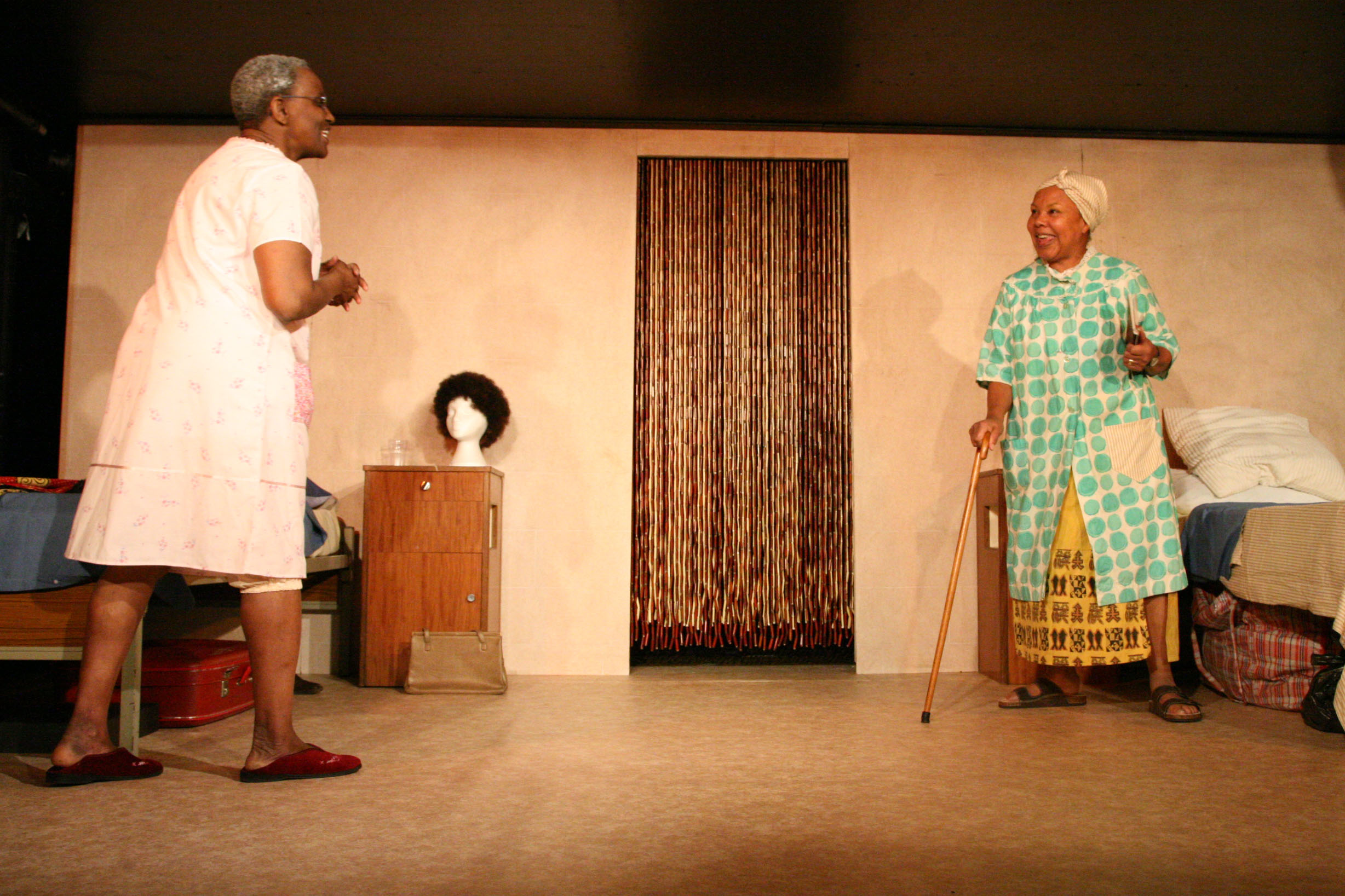
Anni Domingo as Cynthia and Cleo Sylvestre as Myrtle in The Last Bloom. Photo by Lesley Black

Anni Domingo as Cynthia and Cleo Sylvestre as Myrtle Photo by Lesley Black

” … questions about the alternative lives we all could have led, and whether it’s so very wrong to seek solace in them”

Editorial Rating: Unrated

In an old folks’ home somewhere in Jamaica, two elderly women squabble over the room they’re forced to share. Myrtle is fussy, inflexible, used to getting her way; Cynthia likes to please, but quickly turns prickly when she’s pushed too far. Myrtle’s the type who knows everyone else’s business, while Cynthia has a secret or two she’d really rather hide. The two have been sharing the room for three days now … and yet, they’ve only just got round to learning each other’s names.

It sounds like the set-up for a sit-com, and there are indeed some delicate moments of humour in this softly-spoken production. But as soon becomes clear, the bickering’s not quite as inconsequential as it seems: there’s a tragedy, perhaps two tragedies, developing before our eyes. It’s something we can easily imagine happening to people we love. It’s something which, one, day, might happen to ourselves.

Anni Domingo is striking as the newcomer Cynthia, deftly introducing the almost-imperceptible moments of confusion which hint at a weakness in her ageing mind. Later, when she starts to flash a child-like smile, it’s hard to know whether to feel deepest sorrow or purest joy. Cleo Sylvestre, meanwhile, perfectly embodies a character we all think we recognise – cantankerous and obstructive, yet soft and tender inside her shell. But the young-looking actors don’t quite capture the physical decay implied by the script; there are some stiff joints, admittedly, but the true bone-weariness we’re told they feel never quite comes through.

There are some interesting ideas in Amba Chevannes’ script: questions about the alternative lives we all could have led, and whether it’s so very wrong to seek solace in them. There are terrifying insights, too, into the future that might await us, and the possibility that the one thing we hold most precious might be stolen away.

And in a year when Scotland has its eyes turned inward, it’s refreshing to see the Traverse stage a play that’s set in Jamaica. The women’s shared patois is challenging at first, but soon develops into a well-judged point of interest – an insight into life that’s an ocean away, yet very much the same as our own.

Ultimately, though, the script leaves too much unexplained or unexplored. At times it feels like there’s a missing scene; at one point, an inconceivably terrible wrong is forgiven and forgotten in the blink of an eye. And the brief epilogue, though poignant, returns to the generic – doing little to crystallise or resolve the tumult that’s gone before.

It’s a shame, because this is a play which speaks of personal experience, and it feels like Chevannes has an elusive message she’s hoping we might hear. But still, there’s plenty to ponder. And perhaps it’s appropriate – when the play’s so much about lying – that it isn’t too specific about what we’re meant to believe.

Reviewer:Richard Stamp (Seen 15 April)

Visit The Last Bloom homepage here.