Bedfringe 2021 Interview: Stolen: President Obonjo

“A great festival happens because of the way it is curated.”

WHO: President Obonjo: Writer and Producer

WHAT: “Lafta Republic becomes the first fictional country to experience a coup by the west. It is a story about an African dictator who fights back seeking justice and equality supported by the justice for Obonjo army.”

WHERE: Quarry Theatre

WHEN: 28 July 2021 @ 19:30 (60mins)

MORE: Click Here!


Is this your first time to Bedfringe?

Yes, but I am experienced producer I have produced shows at Edinburgh Fringe, Brighton Fringe , Leicester Comedy Festival and Hastings Fringe well over 10 years experience. Bedfringe is a local fringe which means it caters for the needs of comedy lovers who live outside London saving costs of travel in London. No need to travel into London to enjoy comedy. I believe audiences would also be able to see non TV comedy acts and local acts showcasing their talent.

A great festival happens because of the way it is curated, the level of comedians attracted to do the festival, the line up of comedians, the promotion, organisation and the publicity for the festival. The energy, the ambiance, and the buzz all make a good festival.

What are the big things you’ve learned since 2019 and have you absorbed any of the lessons yet?

Looking for other avenues for creative outlets and focusing on content to promote what I do.

Tell us about your show.

An Exiled dictator fights back after an attempted coup by the West, with his army of comedians he garners support to reinstate himself as the Original African dictator. An undemocratic world leader , classified as an evil and brutal dictator fighting for social justice and fair play. The Original African dictator fights back to save his Presidency.

What should your audience see at Bedfringe after they’ve seen your show?

They should see civilian comedians performing at the Fringe they are all good to have been accepted at the Fringe. I think Fringe audience members will be spoilt for choice, its difficult to recommend one particular comedian and after a year of not performing all shows will provide audiences.


LIKE WHAT YOU JUST READ? FOLLOW US ON TWITTER! FIND US ON FACEBOOK! OR SIGN UP TO OUR MAILING LIST!

INTERESTED IN BEING INTERVIEWED TOO? CLICK HERE!

Bedfringe 2021 Interview: Nightmare Magic

“I love ghost stories. Old tales of haunted houses with long dead creatures lurking behind the dark. I remember being fifteen and performing a monologue I’d written for drama class about a frightened boy whose parents and doctors didn’t believe in his imaginary friend.”

WHO: David Alnwick: Writer & Performer

WHAT: Magician and horror writer David Alnwick uses magic to tell ghost stories. Part play, part magic show, entirely scary.

WHERE: Quarry Theatre

WHEN: 31 July 2021 @ 19:30 (60mins)

MORE: Click Here!


Is this your first time to Bedfringe?

I first performed at Bedfringe in 2019 at their opening night show, sharing the stage with some super cool acts. It must have gone well because when I came back two weeks later with my full show ‘Actual Magic’ I was grateful to find they had moved me into the main performance space because of high ticket demand.

What are the big things you’ve learned since 2019 and have you absorbed any of the lessons yet?

I’ve discovered how much I love writing. Live performance has always been my life, but when everything closed down, I hid behind my laptop and wrote story after story. It kept me going.

Tell us about your show.

I love ghost stories. Old tales of haunted houses with long dead creatures lurking behind the dark. I remember being fifteen and performing a monologue I’d written for drama class about a frightened boy whose parents and doctors didn’t believe in his imaginary friend. As I spoke, I played with a dinner fork, and at the end I put it down, and it moved across the floor. It was just a magic trick, but I’ll never forget the reaction it got. ‘Nightmare Magic’ is the grown-up version. A collection of scary stories brought to life with magic.

What should your audience see at Bedfringe after they’ve seen your show?

Go see Thomas Benjamin Wild Esq, it’s funny as hell and he’s such a nice guy. Patrick Monahan too, great comedian.


LIKE WHAT YOU JUST READ? FOLLOW US ON TWITTER! FIND US ON FACEBOOK! OR SIGN UP TO OUR MAILING LIST!

INTERESTED IN BEING INTERVIEWED TOO? CLICK HERE!

Town and Gown, Cambridge – 2021 Season Interview: Peter Pan in Kensington Gardens

“The story, about the value of home and family, is one which everyone, regardless of age, can relate to.”

WHO: Charlotte Ellen: Creator

WHAT: “Fly away with Betwixt-and-Between’s magical stage adaptation of J.M.Barrie’s prequel to Peter Pan. Meet Mary and her father, George as they explore the origins of ‘the boy who wouldn’t grow up’. Introducing a host of new characters- from regal fairies to talking birds – with tons of imagination, ‘joyful playfulness’,* and five wonderful, original songs by Patrick Neil Doyle, we invite you and your family to join us in Kensington Gardens this summer to hear the story behind the legend and to remember that to live is an awfully big adventure.’

*This family show is recommended for children aged 5+”

WHERE: Town and Gown Pub & Theatre, Cambridge

WHEN: 18th – 22nd August (3pm)

MORE: Click Here!


What does Cambridge mean to you?

Daniel and Charlotte, who set up Betwixt-and-Between and perform in this play, met in Cambridge in 2014 whilst they were both performing at the Cambridge Shakespeare Festival, it is a city with many happy associations for them – although they have both succumbed to swallowing too much water from the Cam during punting and let’s just say that is not a wise move when you are sewn into your costume the next day!

Tell us about your show.

Peter Pan in Kensington Gardens tells the origin story of Peter Pan – back before he flew to Neverland to meet Captain Hook, Wendy or Tinkerbell – when he first flew away as a baby and lived in Kensington Gardens with the birds and the fairies! The story, by J.M.Barrie, has been adapted for the stage and our versatile cast of two, who play all the characters as they tell the story. It is a show with storytelling at it’s heart, full of imagination, play and five catchy new songs. The story, about the value of home and family, is one which everyone, regardless of age, can relate to.

What kind of art makes you ‘Get Your Coat On’ and go see it?

Favourite plays include ‘The Grinning Man‘ (Bristol Old Vic), ‘The Light Princess‘ (The National) and ‘Spillikin‘ (Pipeline Theatre). From my first experience of the West End at ‘The Lion King‘ (Disney) to the one woman ‘Animal Farm’ I saw at Loughborough Town Hall in 2001 (Lizzie Wort), I love ambitious, creatively rich theatre with soul which aims to tell stories in imaginative ways.

I have come to recognise I am often drawn to puppetry as a particularly potent form of what theatre is – making something imaginary, real – and am enchanted by the work done by Gyre and Gimble.

During lockdown ‘Flowers for Mrs Harris‘ (Chichester Festival Theatre) and ‘The Flying Lovers of Vitebsk‘ (Bristol Old Vic) kept me hoping and dreaming about the return to theatre.

You’re the age you are now. What’s the one thing you wish you could tell your younger self? What’s the one thing you’d like your older self to remember about you now?

At 35 I would like to tell my younger self to do, do, do – whatever feeds your soul – and not to wait to be ‘ready’; but to do things for their own sake not for outside approval or ‘success’. I think I’d like my older self to remember … well just to remember things would be good! I’d like to remember that this is the time that I took all my doubts and said, ‘come on and fly with me’ – even if that means falling with style!


LIKE WHAT YOU JUST READ? FOLLOW US ON TWITTER! FIND US ON FACEBOOK! OR SIGN UP TO OUR MAILING LIST!

INTERESTED IN BEING INTERVIEWED TOO? CLICK HERE!

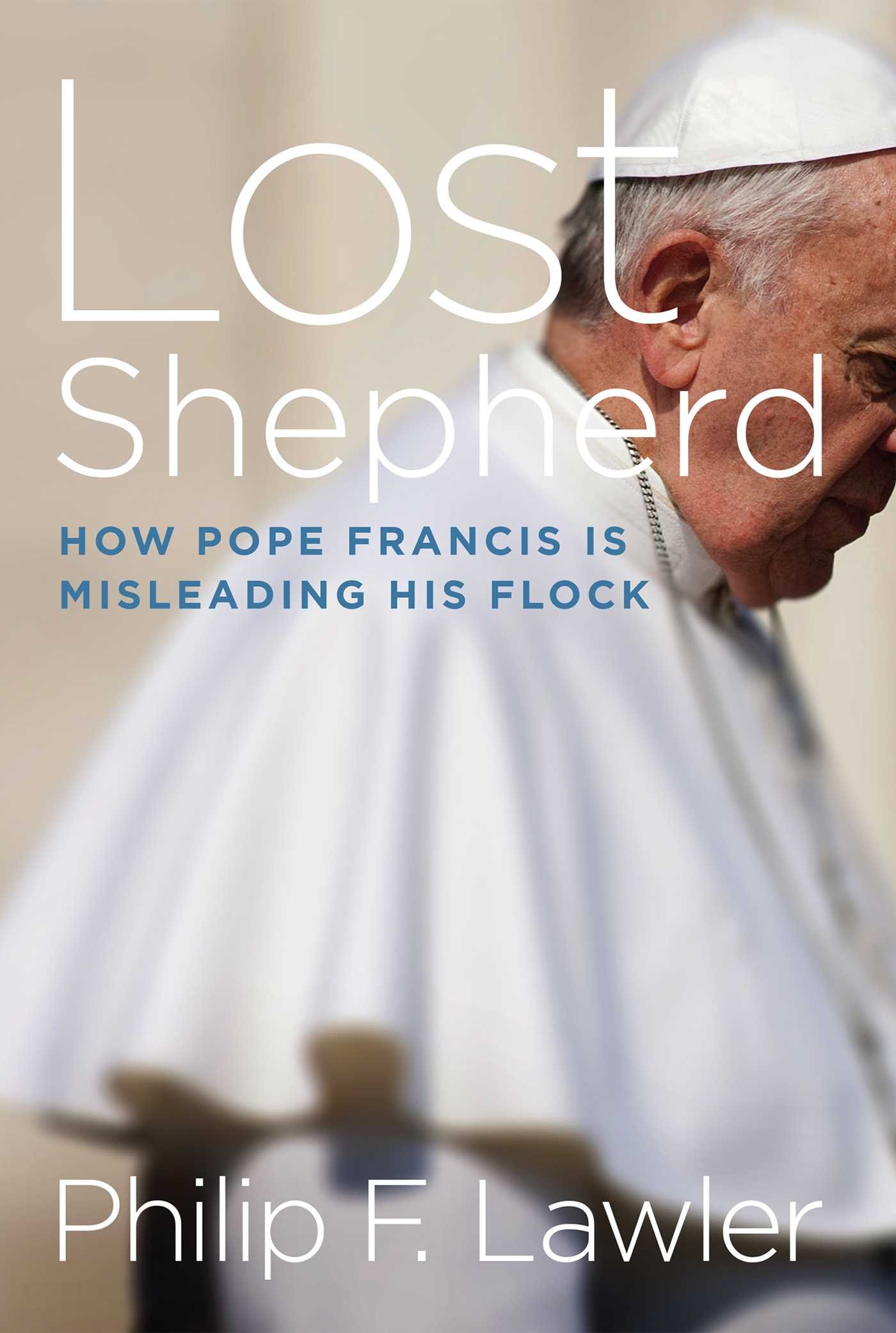
“During the early days of his pontificate I was fascinated, and supportive. Like many others I was caught up in the Francis effect.” – Author Philip Lawyer talks about ‘Lost Shepherd’

“If I were selecting bishops, I’d look to priests who had seen a healthy growth in the activities of their parishes.”

WHAT: “Faithful Catholics are beginning to realize it’s not their imagination. Pope Francis has led them on a journey from joy to unease to alarm and even a sense of betrayal. They can no longer pretend that he represents merely a change of emphasis in papal teaching. Assessing the confusion sown by this pontificate, Lost Shepherd explains what’s at stake, what’s not at stake, and how loyal believers should respond.”

WHO: “Phil Lawler is the editor of Catholic World News (CWN), the first English-language Catholic news service operating on the internet, which he founded in 1995. CWN provides daily headline news coverage for the Catholic Culture site, where Phil Lawler also offers regular analysis and commentary.

Born and raised in the Boston area, Phil attended Harvard College and did graduate work in political philosophy at the University of Chicago before entering a career in journalism. He has previously served as Director of Studies for the Heritage Foundation, as editor of Crisis magazine, and as editor of the international monthly magazine Catholic World Report.

Phil Lawler is the author or editor of ten books on political and religious topics. His essays, book reviews, and editorial columns have appeared in over 100 newspapers around the United States and abroadA pro-life activist and veteran of many political campaigns, Phil was himself a candidate for the US Senate in 2000, running against the late Sen. Ted Kennedy.”

MORE? Here!


Why Pope Francis?

Well, any Pope is always going to be a figure of special interest: to Catholics, to anyone interested in the Catholic Church, and certainly to a Catholic journalist like myself. But Pope Francis was particularly interesting because he has set out along a route so markedly different from that of his immediate predecessors.

During the early days of his pontificate I was fascinated, and supportive. Like many others I was caught up in the “Francis effect”— the excitement over his informal style and his willingness to engage in new and different ways. But as I explain in Lost Shepherd, as time passed I saw the dangers created by his approach.

The Catholic Church ascribes a great deal of authority to the Bishop of Rome. But that authority is strictly limited in scope: the Pope has the power commensurate with his duty, and his duty is to preserve and defend the truths of the faith. If he questions those truths, he subverts his own authority. That is the danger that I saw developing, more and more clearly, in this pontificate.

What is Francis doing right?

He has— belatedly, and after several false steps— begun holding bishops to account for their own stewardship, particularly in their responses to sexual abuse. He has continued the work begun by Pope Benedict in cleaning up Vatican finances. But in both areas he has unfortunately sent some mixed signals, so that the final results of his reforms are not yet clear.

The media initially ran with a narrative of Francis as an kindly outsider, an innocent abroad in murky realms of skullduggery and intrigue. How true to life is that portrait of the man who became (and who is) Pope Francis?

Not very. He came to Rome as an outsider, but now he’s been in power for long enough to assemble his own “team,” and the net result has been an increase in the power of the Vatican insiders. He has shown his own willingness to reward his allies and punish his critics within the hierarchy and at the Vatican. Staff morale is not good; there is an atmosphere of tension that I did not notice in previous papal administrations.

Could The Francis Effect have been sustained after the initial honeymoon?

Good question; it’s hard to say. As I see it, one reason the “Francis effect” wore off is the gradual realization that the public image didn’t match the man. (By the way that was also true, in a very different way, of Pope Benedict XVI. The public image of him as a stern authoritarian was completely upside-down; he was and is a very meek and gentle man who goes out of his way to be fair to those who disagree with him.)

Non-Catholics might look at this institution, perhaps even at this whole way of thought, and seeing Borgia Popes, the suppression of Galileo, systemic child rape by priests, et al., and find themselves wondering what (if any) moral authority such a Church retains. How should an effective Pope respond?

There have been plenty of bad popes, bad prelates, bad priests. It does the Catholic Church no good to try to suppress that unhappy fact. As St. Augustine said, “God does not need my lie.” The Church should never be afraid of the truth, on the contrary, should always encourage people to see the whole truth. Toward that end, the Pope should:

  • Encourage bishops to acknowledge problems before they hit the press, and urge them to stop stonewalling.
  • Change the way the Vatican releases information. On sensitive issues, the Vatican operates on a “need to know” basis. Change that; be open. For example, when a bishop is forced to resign because he’s been found grossly negligent, say that; don’t have him step down quietly.
  • Welcome capable outsiders to explore the facts, and cooperate with them in their research.
    Conduct and publish an outside audit of Vatican finances.

Things that like will change public perceptions and restore trust.

Ultimately the moral authority of the Church rests on the belief that the Church can provide the truth. If the Church is providing the truth only part of the time, or only on some subjects, obviously that harms public confidence.

Why shouldn’t two consenting gay adults build a life of love together and enjoy the same civil protections afforded to every other couple? How should a compassionate Pope respond?

Same-sex couples already have the same civil protections afforded to other couples. The question is whether their relationships can be recognized as marriages. They can’t, because marriage is an institution established by God and by nature— not by the state— and we’re not at liberty to re-define it.

How is artificial contraception as bad as abortion? Wouldn’t more of the former result in less of the latter? How should an informed and informative Pope respond?

The acceptance of contraception hasn’t reduced the demand for abortions; quite the contrary. And that shouldn’t be surprising, because abortion is seen as a back-up plan for when contraception fails (which it inevitably does in some cases). The fundamental problem here is that the link between sexual activity and reproduction has been broken, and the result has been a devaluation of both marital sex and the dignity of life. Pope John Paul II offered the world an alternative view of sexuality as the “theology of the body.” That was a model of papal teaching. It’s terribly unfortunate that Pope Francis has downplayed that line of teaching, and gutted the Vatican institutions (the Pontifical Academy for Life, the John Paul II Institute) that were set up to promote the teaching.

Why are the views and careers of bishops whose flocks are dwindling so often promoted over those to whom the faithful gather in great number?

Another very good question. Fundraising is obviously at least a part of the answer, I’m sorry to say. The Catholic Church in Germany has been losing tens of thousands of faithful every year, but due to the “church tax” (which is an arrangement the Church should never have encouraged), the Church in Germany is extremely wealthy, and that wealth brings undue influence.

If I were selecting bishops, I’d look to priests who had seen a healthy growth in the activities of their parishes. (I’d set the same standard for choosing a pope.) But often the best pastors aren’t particularly interested in climbing up the ecclesiastical ladder; they’re too busy with their parishes. The Church is an institution made up of ordinary humans, after all, and as in most institutions, the ambitious people are most likely to get ahead. “Ambitious” isn’t a word you’d ordinarily associate with a good shepherd of souls.

Pope Francis calls you up and asks you to suggest the names of three worthy individuals for a Cardinal’s hat. Who are you suggesting and why?

Hmmm. I’m tempted to name a few bishops I heartily dislike— confident that my recommendation would scuttle their chances for advancement. On the other hand I’m also pretty confident that no one in Rome will pay much attention if I play it straight, so:

Bishop Athanasius Schneider, because he has been among the most persistent critics of Pope Francis– but always thoughtful and respectful in his criticisms— and a good leader should surround himself with thoughtful people who will not be afraid to question his judgment.

Archbishop José Gomez, because he leads the largest archdiocese in the US (Los Angeles) and is now president of the US bishops’ conference, and the Vatican badly needs a counterweight to offset the influence of the liberal Americans (Cupich, Tobin) most recently added to the College of Cardinals.

Father Jacques Philippe, because when you hear him speak, you feel the peace that comes with the embrace of truth.

What are you currently working on?

My latest book is Contagious Faith: a study of how the Church responded to the Covid epidemic— not very well, I’m afraid. I’m mulling another new book, about the prediction of Pope Benedict that the Church in the near future will be much smaller yet paradoxically much more influential. I think that’s right, and I’d like to explain why.

LIKE WHAT YOU JUST READ? FOLLOW US ON TWITTER! OR SIGN UP TO OUR MAILING LIST!

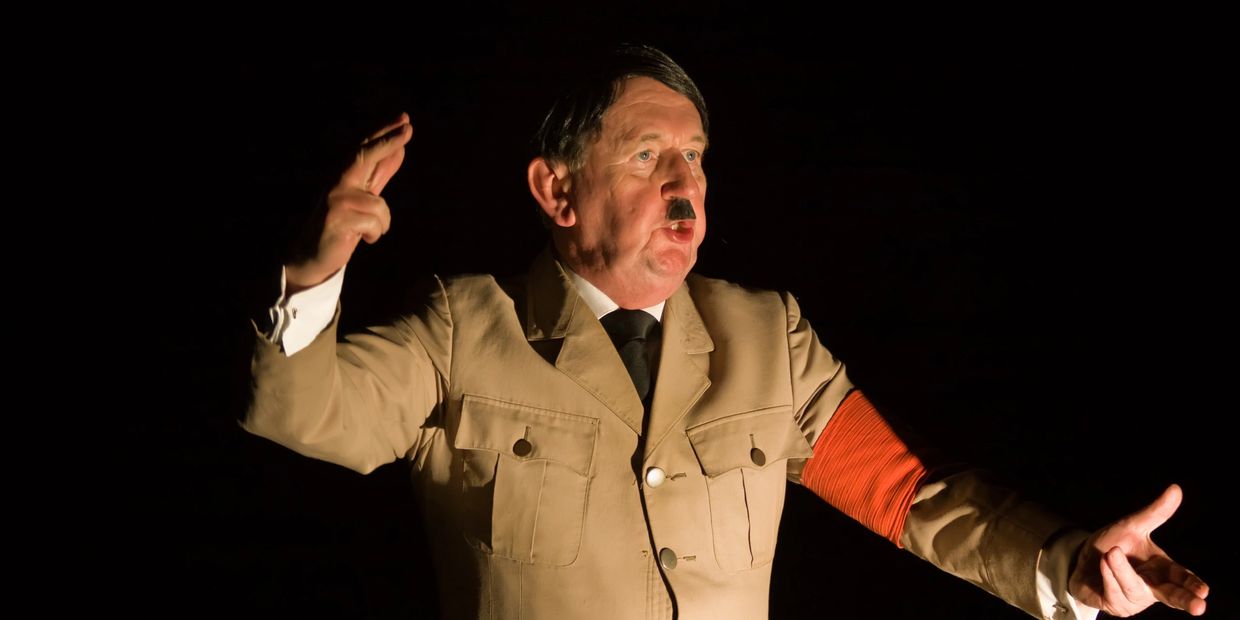
‘Adolf’ (Town and Gown, 4th & 5th June)

Pip Utton is THE leading solo player strutting the boards in our time.

Editorial Rating: 5 Stars (Nae Bad)

Among the most damning things that can be said about Adolf Hitler is that he was a politician. Perhaps the most damning thing that can be said about politicians is that Adolf Hitler was one. We know that Hitler was a politician first and foremost because at the end of his 12 year reign of terror and error, the Germany that he had promised to leave stronger, happier, healthier, and wealthier was in utter ruin. Its cities had been shattered. Its youth slaughtered (yet again) on the altar of bombastic statecraft gone wrong. Its minorities piteously tormented, robbed, and murdered under the smiling guise of due process. Germany had been conquered and was occupied by the very people and nations Hitler had spent his public career vilifying. Germany would not be a single, united state again for the better part of half a century. It takes a politician to make such a god awful mess of things.

Hitler was a narcissist, a liar, a user, an abuser, intellectually shallow, personally callow. His biography is a case study in how the divine spark of a rather ordinary human being was snuffed out by a violently tyrannical parent, an indoctrinating hate-fuelled school teacher, a world indifferent to his early self-delusions of grandeur, exposure to the soul-crushing loneliness of life as an urban vagrant and the horrors of industrial warfare on the Western Front. This hapless self-involved manchild, a figure all too familiar these days, was spun by the fates into the author of atrocities great and small from which the world may never recover. Hitler became what he was because instead of seeking therapy he sought votes. He wanted unthinking adulation when he needed unrelenting help. Why would anyone vote for such a sorry specimen of putrid, pusillanimous, perversion?

Pip Utton is THE leading solo player strutting the boards in our time. No one in the business is more respected by their peers for the sheer bloody effort they bring to each game, set, match and championship. When I first reviewed ‘Pip Utton is Charles Dickens’ at EdFringe in 2011 the master was appearing in no less than three separate solo bouts – as Charles Dickens, as the Hunchback of Notre Dame, and as Adolf. It took a toll on the artist, but the art was all the more exquisite for his feat of endurance. Now, with the COVID-crisis having shuttered our theatre spaces, Utton is (naturally) among the first to return. It’s like hearing the purr of a vintage tiger moth or the growl of a perfectly maintained hurricane fighter coming out of a cloudless Duxford sky. A thing of not-so-quiet beauty. An engineering masterpiece roaring back to life.

Utton’s portrait of Hitler is pictured in the bunker in the final hours of that misspent life. Those wanting only a rehash of Bruno Ganz’ landmark and ultra-realistic performance in Oliver Hirschbiegel’s 2004 biopic ‘Downfall’ will be disappointed, as will those hoping for a return of the camp clown presented by Dick Shawn in Mel Brooks’ 1967 ‘The Producers’. Pip Utton’s ‘Adolf’ isn’t about Hitler. It’s about us.

The show is about how an expert performer can tempt us, lull us, draw us away from what we know to be right and sink us in a mire of half-baked half truths. It is sad to think how many people come away from their encounter with the ultimate politician believing that none of the health warnings apply to their own preferred pedders of political spume. Arguing that one politician is better than another is like claiming that one bucket of lukewarm vomit tastes better than another. As Dr. Ben Carson put it, “We’ve been conditioned to think that only politicians can solve our problems. But at some point, maybe we will wake up and recognize that it was politicians who created our problems.”

Given how many problems the politician Hitler created for so many people it is a feat of editorial genius that this show is as tightly packed as it is. If the production’s Director, the legendary Guy Masterson no less, were a tailor for M&S we would all be looking sharper than Sinatra on our way to the office. Masterson is a genius for getting even very heavy and cumbersome material to hang just right. For all that this is a dark tragedy, there is a light, even a breezy feel to this intense and intensely upsetting piece of theatre.

Aspects of the script are in need of a little updating. These days Prince Harry wears a mask, not a costume, and wants us all to know that he is woker than woke (and open for business). Utton is in better physical shape than any of us, so the line about a tubby little English actor is as discorant as Blackadder’s describing Hugh Laurie’s Prince Regent as fat. But what’s so impressive (if not altogether unexpected) is how well the script has held up over nearly 30 years of performance. It’s proof positive that we cannot hear its warnings too many times. Whether we choose to heed those warnings on the other hand…


Reviewer: Dan Lentell

ALL our Town & Gown coverage? Click here!

Town and Gown, Cambridge – 2021 Season Interview: Shell Suit Cher AND Believe In Bingo & Bingo at Tiffany’s with Audrey Heartburn!

“Years of dramatic disco dancing and rolling around dance floors has not been kind to my lumbar region.”

WHO: Tracey Collins: Writer and performer

WHAT (Cher): “Imagine if Cher left showbiz behind, swapped leather for leisure wear and became a shell suit wearing, chain smoking, bingo host…

Well, imagine no longer as award-winning performer Tracey Collins brings her brand new weird and wonderful character to the stage for SHELL SUIT CHER: I Believe in Bingo! 

She’s flammable and her balls are on fire! 

* Laugh, dance and play to win life-changing prizes!

* Singalong to all Cher’s hit songs hilariously reworked!

* Be amazed as Shell Suit Cher unzips the story of her wild journey from Vegas to Mecca and beyond! 

She’s got balls babe!

WHAT (Audrey): “Daaarlings!

Calling all dream makers, heart breakers and bingo lovers!

Join award winning character comedian Tracey Collins (Tina T’urner Tea Lady) as she hosts Bingo at Tiffany’s with Audrey Heartburn! An evening of hilarious bingo games, raucous singalongs and glamorous dancing!

Laugh, dance and play to win luxury prizes as Audrey spins her deluxe cage of bingo balls and shakes her maracas to a marvellous party soundtrack.

Fresh from performing all over the UK, including a sell-out Edinburgh Festival Fringe run in 2019, Audrey Heartburn leaves Hollywood once again in search of love and laughter in the real world.”

WHERE: Town and Gown Pub & Theatre, Cambridge

WHEN (Cher): 11th June 2021 and 3 other dates

WHEN (Audrey): 2nd July and 27th August 2021

MORE: Click Here!


What does Cambridge mean to you?

I adore Cambridge! It’s such a beautiful place. I have wonderful memories of going on a guided punt river tour in the winter – which was very romantic. Taking in the architecture and then sitting in a cosy pub for hours.

Tell us about your show.

I perform two regular events at The Town & Gown Theatre. ‘Bingo at Tiffanys with Audrey Heartburn’ and ‘Shell Suit Cher – Believe In Bingo’. The shows merge musical character comedy performance with bingo games.

I’ve been writing and performing character comedy for almost a decade now, and in recent years I have really enjoyed merging my heightened, ridiculous character comedy with songs, games and plenty of audience interaction. Its a chance for the audience to let go, have fun, play together and win some fabulous prizes!

The two shows differ in the concept, story and style. ‘Bingo at Tiffanys’ is a melodramatic, classy, night of entertainment delight! Whereas ‘Believe In Bingo’ is a wild, trashy evening hosted by Cher in a shell suit with pop-rock anthem parody songs and a lot of costume changes!

What kind of art makes you ‘Get Your Coat On’ and go see it?

Oooh I am a huge fan of mixed bill variety shows. I especially love Pull The Other One in London, where you’ll always find incredible creativity and freedom. I love venues such as Bethnal Green Working Mens Club and the eclectic shows they curate. I also adore Lenny Beige and his band of freaks – he always puts on an amazing show.

I love The Edinburgh Festival Fringe and really hoping to return again. Nothing beats having no plan and wandering into a show in a sweaty cave and being mesmerised by an artist/ company you’ve never heard of.

You’re the age you are now. What’s the one thing you wish you could tell your younger self? What’s the one thing you’d like your older self to remember about you now?

I would tell my younger self to look after your back! Years of dramatic disco dancing and rolling around dance floors has not been kind to my lumbar region.

I would like my older self to remember this time of creativity and freedom. To cherish the random and ridiculous memories.


LIKE WHAT YOU JUST READ? FOLLOW US ON TWITTER! FIND US ON FACEBOOK! OR SIGN UP TO OUR MAILING LIST!

INTERESTED IN BEING INTERVIEWED TOO? CLICK HERE!

Town and Gown, Cambridge – 2021 Season Interview: Naughty Boy

“I wanted to tackle this belief that everyone seems to have an excuse for their behaviour these days, rather than accepting that sometimes their are no excuses.”

WHO: Eddy Brimson: Actor/writer/producer

WHAT: “Acclaimed writer and comedian Eddy Brimson presents his debut play Naughty Boy to the theatre in this brand new stage adaptation. This one-man play brings Brimson’s natural wit into the darkly hedonistic world of Joe, a mysteriously complicated character whose life is full of twists and turns, violence and compassion, lies, and reality. All of which exposes some uncomfortable questions about both responsibility, and truth.”

WHERE: Town and Gown Pub & Theatre, Cambridge

WHEN: 23rd – 24th June

MORE: Click Here!


What does Cambridge mean to you?

For me Cambridge means football away days and having the laces taken out of my boots by the police. Strawberry Fair (What I can remember of it), and dying on my arse here at the start of my comedy career…. And the Cambridge Folk Festival as my old man played it year after year. I loved it.

Tell us about your show.

Well don’t bring the kids as it is a bit full on. I first performed the play at the Edinburgh Festival in 2019 and the reviews exceeded all expectations. My main focus was on the writing. In the play I take you from mental institution to a hedonistic weekend away full of sex drugs and violence. The piece looks at nature nurture, them and us and mental health. I wanted to tackle this belief that everyone seems to have an excuse for their behaviour these days, rather than accepting that sometimes their are no excuses. The play also looks into love, loyalty, identity and the role of class in society. I’m very proud of how it has turned out, and the fact that people are left with as many questions as the piece provides answers.

What kind of art makes you ‘Get Your Coat On’ and go see it?

I love all forms of art. I am a comedian by trade, and although I am pretty scripted I love the absurd. But I also love to see art that pushes a message, be it in print or on stage. Music seems to have lost it’s way since the days of punk and ska, but bands such as The Newtown Aces are starting to use music to get people thinking again.

You’re the age you are now. What’s the one thing you wish you could tell your younger self? What’s the one thing you’d like your older self to remember about you now?

Ha … Loyalty is all well and good, but if you are going to devote your life to one thing then pick Barcelona rather than Watford Football Club. I would tell my younger self to always carry a spare pair of jeans and wet wipes in the car … Which is the same thing I’d tell my older self to remember, but maybe double up on it once you pass 45.

I would also tell anyone of any age that creativity never stops. And we are here to create.


LIKE WHAT YOU JUST READ? FOLLOW US ON TWITTER! FIND US ON FACEBOOK! OR SIGN UP TO OUR MAILING LIST!

INTERESTED IN BEING INTERVIEWED TOO? CLICK HERE!

Town and Gown, Cambridge – 2021 Season Interview: Quentin Crisp: Naked Hope

“The student drama scene hugely influenced my choice of career. I made lifelong friends. And sank enough ale to flood Parker’s Piece.”

WHO: Mark Farrelly, Writer / Performer / Producer

WHAT: “Fresh from its Off-Broadway debut and milestone 100th performance, Mark Farrelly’s hugely acclaimed solo comes to the Town and Gown Theatre.

From a conventional upbringing to global notoriety via The Naked Civil Servant, Quentin Crisp was one of the most memorable figures of the twentieth century. Openly gay as early as the 1930s, Quentin spent decades being beaten up on London’s streets for his refusal to be anything less than himself. His courage, and the philosophy that evolved from those experiences, inspire to the present day.

Naked Hope depicts Quentin at two phases of his extraordinary life: alone in his Chelsea flat in the 1960s, certain that life has passed him by, and thirty years later, giving a performance of his one man show An Evening with Quentin Crisp in New York. Packed with witty gems on everything from cleaning (“Don’t bother – after the first four years the dirt won’t get any worse”) to marriage (“Is there life after marriage? The answer is no”), Naked Hope is a glorious, uplifting celebration of the urgent necessity to be your true self.

Mark Farrelly’s West End credits include Who’s Afraid of Virginia Woolf? opposite Matthew Kelly. He is directed by EastEnders star Linda Marlowe (Berkoff’s Women).”

WHERE: Town and Gown Pub & Theatre, Cambridge

WHEN: Thursday 27th May 2021 and 2 other dates

MORE: Click Here!


What does Cambridge mean to you?

I studied English Literature at Jesus College in the late nineties. I’ve always found Cambridge magical. It took me three attempts to get accepted. So once I arrived, I was on a mission to make the most of it. The student drama scene hugely influenced my choice of career. I made lifelong friends. And sank enough ale to flood Parker’s Piece. I was so happy there that when I returned to Civvy Street in 2001, I found it very hard to cope, and spiralled into depression. Ordinary life seemed so aggressively mundane. But I have no regrets about overdosing at the Fountain of Pleasure. It was a heady, life-affirming privilege.

Tell us about your show.

The show, which I wrote, is a salute to the courage of the individual to be themselves. Quentin Crisp wittily and bravely emphasised his flamboyant gayness at a time when it was illegal. That’s an extraordinary thing to look back on from the vantage of 2021. But the show is also a timely nudge in the ribs for anybody who may be slipping into conformity and not letting their sparkly, dangerous genius shine before it’s too late.

The first night at The Town and Gown will be the 125th performance. It delights me how much hunger there is for Quentin’s message of hope, his determination to meet adversity with what he calls “laughter in the dark”.

What kind of art makes you ‘Get Your Coat On’ and go see it?

I have a passion for solo work, because of its immediacy and intensity. Sarah-Louise Young, and her amazing “An Evening Without Kate Bush”, are quite something. She is directing my next solo, about Derek Jarman, which debuts at The Town and Gown in August.

But I can’t lie…I go to the theatre infrequently. I much prefer sitting on my sofa, drinking Puligny-Montrachet and dreaming up ideas for new pieces. Going to the theatre can feel a bit like a busman’s holiday for me…I’m performing so often that I like a break from it whenever possible.

You’re the age you are now. What’s the one thing you wish you could tell your younger self? What’s the one thing you’d like your older self to remember about you now?

To younger self: you will survive. You will weather the storms of rejection, depression and suicidal impulse, and one day your hot, furious little ego will find its quietus and the true you will arise. Nothing will be wasted, nothing forgotten, and everything will come when the timing is deliciously, inexplicably right.

To older self: you were living, breathing, feeling your dream day after day.


LIKE WHAT YOU JUST READ? FOLLOW US ON TWITTER! FIND US ON FACEBOOK! OR SIGN UP TO OUR MAILING LIST!

INTERESTED IN BEING INTERVIEWED TOO? CLICK HERE!

Town and Gown, Cambridge – 2021 Season Interview: The Nobodies

“The play explores the ‘us vs them’ mentality of the class divide, and the politicisation of vigilante activists. We look at the feeling of restlessness in the working classes in a time where class divisions are widening, the poor are getting poorer, and Brexit threatens to tear the country apart.”

WHO: Sam Edmunds, Co-Director & Co-Producer

WHAT: A town is in turmoil. A hospital is closing. And an MP is dead on the train tracks… Accident? Or opportunity?

When a local hospital announces its closure, panic ensues. Healthcare Assistant Rhea is forced to look for work elsewhere. Local lad Aaron worries about his mum’s treatment in the cancer unit. And Curtis just isn’t sure where he’s going to sleep. But when the three witness a horrific accident, a rare opportunity presents itself. As a dangerous decision triggers a wild chain of events, Rhea, Aaron and Curtis soon find themselves gathering power, influence and infamy – and inspiring a cohort of vigilante activists. What does it take to enact real change? And what would you sacrifice to keep it?”

WHERE: Town and Gown Pub & Theatre, Cambridge

WHEN: Tuesday 8th and Wednesday 9th June 2021

MORE: Click Here!


What does Cambridge mean to you?

Bringing The Nobodies to Cambridge will actually be my first time visiting! I have heard lots of wonderful things however and I am really excited to explore the city and take in its amazing architecture and culture. I’m also really excited by the theatre scene in Cambridge, which is renown for producing incredible artists. I hope during my time there I can meet some likeminded creatives and learn more about the arts scene in the city. Having spoken about Cambridge to Karl from The Town & Gown, I was thrilled to hear that the city is actively engaging in local politics and that there is a buzz in younger people especially to implement change within their local community. That is really what The Nobodies is about and I’m sure it will resonate with those who come to see it.

Tell us about your show.

The Nobodies is written by award-winning playwright and screenwriter Amy Guyler. Amy is a regular writer for East Enders and recently was voted top of the Brit List for ‘The Jude Problem’. It stars David Angland (I Like The Way You Move– Frantic Assembly), Joseph Reed (The Wipers Times – Arts Theatre & UK Tour) and Lucy Simpson (The Happy Warrior – Harrogate Theatre). The creative team consists of many different professionals including Sound Designer Mekel Edwards who was the previous production manager on the New York & UK Tour of The Babershop Chronicles by The National Theatre. It is produced by Chalk Line Theatre company who are a multi-award-winning company based in Luton who tour work both nationally and internationally. Chalk Line are an Associate Company of The Lion and Unicorn Theatre, as well as a Graduate Emerging Company of The New Diorama. The company is run by Co-Artistic Directors Sam Edmunds and Vikesh Godhwani.

The Nobodies first premiered at The Vault Festival where it received the COMMON Award 2020 presented by COMMON and The Pleasance Theatre. It performed to great critical acclaim receiving multiple 5* and 4* star reviews as well as being one of Lyn Gardner’s Top Picks for the festival, a British Theatre Recommended Show and one of A Younger Theatre’s Top Shows of 2020. It is now embarking on a UK summer tour and is published with Salamander Street Publishing.

The play explores the ‘us vs them’ mentality of the class divide, and the politicisation of vigilante activists. We look at the feeling of restlessness in the working classes in a time where class divisions are widening, the poor are getting poorer, and Brexit threatens to tear the country apart. Fuelled by the ‘taking back the power’ mantra, the play capitalises on the need for action for those feeling impotent in the current political climate.

Writer Guyler said, ‘The Nobodies follows three characters who – initially, at least – just want to make the world a better place. They want to help their own community. I think we all know what that feels like in today’s climate. I was tired of working-class stories being doom and gloom. This is a new version of our story – a version where we win. …Almost. ‘

In a time where political and social unrest is in abundance, The Nobodies aims to inspire communities to speak up against systems which do not represent them and to take action to provoke change, (no matter how small or large that action or change may be).

What kind of art makes you ‘Get Your Coat On’ and go see it?

I am a huge fan of contemporary work which tackles socio-political issues. Some of my favourite plays include: Good Dog by Arinze Kene and The Angry Brigade by James Graham. I like theatre which amplifies narratives of underrepresented communities, telling stories which do not often get given the platform they deserve. I like bold, visually striking work, often combining physical expression and intricate designs to compliment the text. Rhum & Clay’s recent production of Mistero Buffo was an exemplary piece of theatre which uses all the styles of theatre I love. I’m more a festival, off-west goer than West End theatre.

I love going to The Vault Festival in London or up to The Edinburgh Fringe Festival, where people really create new, challenging work, pushing the expectations of what theatre can be. I also love venues such as the The New Diorama, The Pleasance and Soho and companies like Gecko and Complicite. My taste in theatre isn’t too specific or fussy however, I like experiencing a multitude of work, engaging with lots of different genres.

You’re the age you are now. What’s the one thing you wish you could tell your younger self? What’s the one thing you’d like your older self to remember about you now?

I would tell myself that believe it or not, you are going to grow up and make theatre haha! No my advice would be, to take risks, have fun, don’t be afraid of being silly and try not to compare yourself to others, your journey will be hugely different to everyone else’s.

I’d like my older self to remember how hard I worked to keep making theatre and all the amazing memories I made with all of the incredible artists I worked with.


LIKE WHAT YOU JUST READ? FOLLOW US ON TWITTER! FIND US ON FACEBOOK! OR SIGN UP TO OUR MAILING LIST!

INTERESTED IN BEING INTERVIEWED TOO? CLICK HERE!

“If I had Oswald’s skull sitting on my desk, looking at me, Yorick-like, with its three-finger sword-slash cut, it would be a potent reminder that for all our romanticising of ancient times, these people could be pretty thuggish.” – Author Max Adams talks about ‘The King in the North’

The King in the North ( The life and times of Oswald of Northumbria) – A Book by Max Adams from Lonely Tower Film & Media on Vimeo.

“Bede saw Oswald as the torchbearer of God’s will and England’s destiny; and while I attempt a more modern analysis of Oswald’s role in English history, there is little doubt that his conversion on Iona and triumphant return to reclaim his kingdom from exile was a profoundly significant moment in both British and European history.”

WHAT: “The magisterial biography of Oswald Whiteblade, exiled prince of Northumbria, who returned in blood and glory to reclaim his birthright.

A charismatic leader, a warrior whose prowess in battle earned him the epithet Whiteblade, an exiled prince who returned to claim his birthright, the inspiration for Tolkein’s Aragorn.

Oswald of Northumbria was the first great English monarch, yet today this legendary figure is all but forgotten. In this panoramic portrait of Dark Age Britain, archaeologist and biographer Max Adams returns the king in the North to his rightful place in history.”

WHO: “Max Adams is an archaeologist, historian and traveller, the author of twelve books and numerous articles and journal papers. Born in 1961 in London, he was educated at the University of York, where he read archaeology. After a professional career which included the notorious excavations at Christchurch Spitalfields, and several years as Director of Archaeological Services at Durham University, Max went to live in a 40-acre woodland in County Durham for three years. He wrote and presented two feature documentaries for Tyne-Tees Television and made thirty short films as the ‘Landscape Detective’.”

MORE? Here!


Why ‘The Life and Times of Oswald of Northumbria’?

Oswald was a king of Northumbria during one of the most obscure periods in British history. Most readers won’t, I think, be able to give him much context out of their general knowledge. So I thought what he needed was the most detailed and evocative historical setting possible. That setting is rooted in the geography of the North – open country; the sea; the legacy of Hadrian’s Wall and Roman forts.

And then, one has to understand how a kingdom of Northumbria emerged in the late 6 th century; how it became so dominant among the competing warrior kingdoms of Britain. Our principal historical guide is Oswald’s fellow Northumbrian Bede, whose purpose was to explain how God’s hand came to convert the Northumbrian kings from paganism; how they united (in Bede’s view) the peoples of England under a universal church. Bede saw Oswald as the torchbearer of God’s will and England’s destiny; and while I attempt a more modern analysis of Oswald’s role in English history, there is little doubt that his conversion on Iona and triumphant return to reclaim his kingdom from exile was a profoundly significant moment in both British and European history. In his life and times we see the birth of nations and of a European Christian state – but also, I think, the plainest possible model of how state politics and religion work together to forge royal power in medieval Europe.

If you could ask Oswald one question, and tell him one thing, what would they be?

As an archaeologist and historian of the landscape of power, I would want to know how he knew what was his – an odd question, perhaps. But in a period of no written deeds, this prince in exile, who leaves his homeland at the age of 12 and returns as a grown man and proven warrior in his late 20s, and yet seems to have a very good immediate grasp of how to deploy his control over the Northumbrian kingdom. He is able to hand vast estates over to his Ionan Christian protégés – landed estates with an income and known boundaries. How that knowledge was transmitted is an enduring question that I would love to understand better. And what would I tell him? Do not underestimate your enemies! After eight years of rule he was cut down on the battlefield of Maserfield by a pagan Mercian warlord; dismembered and his body parts mounted on stakes.

Oswald was killed at the Battle of Maserfield. What would have happened if he had
survived?

Who can say? Historians are hopeless at prediction. In the manner of such dynasties, there would very likely have been a civil war between his son and his brother (as there ultimately was, it seems, when his brother Oswiu succeeded him). But I doubt if he would have instituted the crucial reforms through which his brother cemented the place of a literate, European church at the heart of British royal politics. Had Oswald killed Penda at Maserfield, on the Welsh border in 642, in all probability Northumbria would have crushed the emerging Mercian state and imposed Christianity on its kings; and Wessex might not have emerged as a later English powerhouse.

The women around Oswald were forces to be reckoned with. Which one should everybody have heard of?

The 7th century is conspicuous for the number of outstanding, politically active women who played key roles in the emergence of the British kingdoms. In the ‘fictive family’ of the warband, they played the part of peace-weavers; but also of inciters to action. They brought substantial wealth and power into a royal marriage and maintained political interests as well as being powerful patrons of religious establishments and of their own collateral kin. We know little of Oswald’s mother, Acha, but we know she managed to get her young family safely away from Northumbria after her brother Edwin killed Oswald’s father. She established key relations (and sponsors) for her children with both Pictish and Dalriadan kings. Another northern force, St Hild, was a heavyweight ecclesiastical entrepreneur – the founder of Whitby Abbey, who oversaw the most important political event of her day, at Whitby in 664.

But It’s Oswald’s brother Oswiu’s wife, Eanflæd, who is the outstanding figure, I think. She was the daughter of King Edwin, Oswald’s uncle and rival. Exiled after her father’s death in 633, she was taken to Paris where she was introduced to the sophisticated, bloody politics of the Frankish court. She returned to Northumbria to marry Oswald’s brother, Oswiu – a purely political alliance – and with him set about deploying their huge estates to found monasteries under the rule of their various relations: cementing Oswald’s legacy and investing working, rational capital into the landscape for the first time since the end of Rome. Reading between Bede’s lines, she was a shrewd, wise, thoughtful operator. The fact that England has, ever since, been a Christian state with a literate ‘civil service’ is at least as much their legacy as it is Oswald’s. Eanflæd shows how women (and she stands for many) of noble birth exercised ‘agency’ in a warrior’s world.

Your travel agent offers you: A day and a night living and studying with the Venerable Bede*; A passage on one of Benedict Biscop’s trips to Rome**; OR A season living the holy life on Iona with Columba.*** Which do you choose?
*You may ask the scholars anything, but you may not take any notes away with you.
**Sorry, but the ticket doesn’t allow you beyond the pomerium (you can’t go into the city).
***Columba insists you take a vow of silence so that you don’t distract the brothers from their
work. You can listen and observe only.

That’s easy: I would go to Iona to see how Columba ran his island empire and spiritual domain. The glimpses that we get from his hagiographer Adomnán of how the monastery functioned, backed up by various, not entirely satisfactory, excavation campaigns make me want to know much, much more: how Iona was connected so far afield (to Gaul and the Mediterranean world beyond) by trade, by ecclesiastical links and the shared language and culture of the church; how their economy functioned; how they dealt with great secular lords and maintained diplomatic links across the North of Britain and Ireland.

And I’d want to know if Columba was really the huge personality that comes across in his Vita. Naturally, I’d have to learn Irish and vastly improve my Latin to be able to eavesdrop on their conversations. But what a place to learn – both on the edge of the known world and at the same time the beating heart of Early Medieval life and politics – it would be like being a Westminster AND Vatican AND UN insider – and at the same time living on a jewel in the ocean.

Scottish and Welsh identity have both gone on to inform contemporary political outlooks.
Why hasn’t Northumbrian Nationalism ever gone beyond the occasional display of a gold and red bumper sticker?

There’s a huge contrast in attitudes both North and South of here. Scotland presents a self- consciously nationalist in outlook – flag waving and caricaturing of its own history. Wales offers a vision of cultural and linguistic vibrancy that has outgrown its nationalist movement. Then there’s Yorkshire – also very proud of its geography and historic identity – not wanting independence from England because it thinks it IS England. When you ask Northumbrians about their identity they put a finger to their lips and ….Ssshhh…. I think that is a function of the last thousand years of being ‘other’ – a border territory fought over by competing interests and, quite frankly, happy to be left alone to enjoy its quite pleasures of landscape, sea and space. I doubt if all that many drivers of cars with Oswald’s banner on their bumper sticker could quite say what it means – or where the image comes from.

Can you read Bernard Cornwall’s ‘The Last Kingdom’ series without tutting or rolling your
eyes?

No, not really. I should say that I admire any attempt to evoke the period through fiction – it’s thoroughly merited both artistically and intellectually as a thought experiment in animating a world otherwise known only in stilted snapshots. If I were brave enough I’d try it myself. But I have not yet been very convinced by many ‘Dark Age’ stories – although I thought Nicola Griffith’s Hild was a fascinating and worthy novel. It’s much, much worse when those complex works are translated onto the screen. The fact that Monty Python’s Holy Grail movie is the most realistic screen portrayal of the period says it all…

If you could possess one item described in your narrative, which would it be?

Like most archaeologists, I don’t possess any ancient artifacts of my own – they all end up on museum shelves. But I fancy if I had Oswald’s skull sitting on my desk, looking at me, Yorick-like, with its three-finger sword-slash cut, it would be a potent reminder that for all our romanticising of ancient times, these people could be pretty thuggish. I might just have it tested for its DNA, though – curiosity would be hard to resist…

The people who inhabit both ‘The King in the North’ and ‘Britain in the age of Arthur’ had a strong belief in magic and the supernatural. Are you ever inclined to think there might be more things in heaven and earth than are dreamt of in our modern philosophy?

Absolutely. Just look at a Bruegel painting of people in 16th century Flanders going about their eccentric lives. In The First Kingdom, which was published in February of this year, I’ve tried to explore more of the sense of alternative consciousness that archaeologists sense, but find it hard to describe. It was a world both pragmatic and wonderful, in which the rules that governed behaviour both in this world and the next are at one and the same time comprehensible in their own context and a little alien to us, with their capricious gods and dread omens. But reckon that if you went to live with them for a while, the bigger culture shock would be in coming back to the present – equally weird, wonderful and eccentric, when seen from another perspective.

What are you currently working on?

Having, as it were, now completed an early medieval trilogy, from the end of the Roman Empire (The First Kingdom) to the Viking Age (Ælfred’s Britain), I’m stepping back a little and taking a look at our oldest and most persistent technology, with a book about the history of humanity and its relations with wood. The Hand that Wields the Axe will tell the story of technology and creativity through the tools, wheels, boats, art, machines and buildings that have accompanied the great human adventure from the African Rift Valley to the end of the Wood Age in the 18 th century. I’m enjoying the trip…

LIKE WHAT YOU JUST READ? FOLLOW US ON TWITTER! OR SIGN UP TO OUR MAILING LIST!