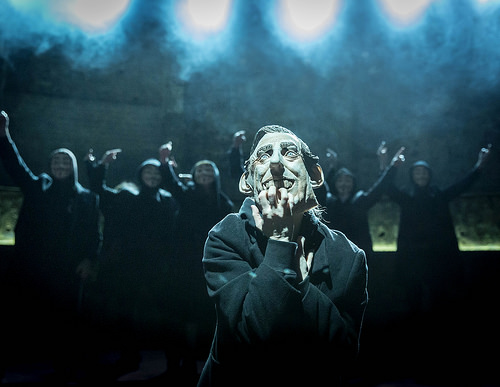
The Weir (Lyceum: 15 Jan – 6 Feb. ’16)

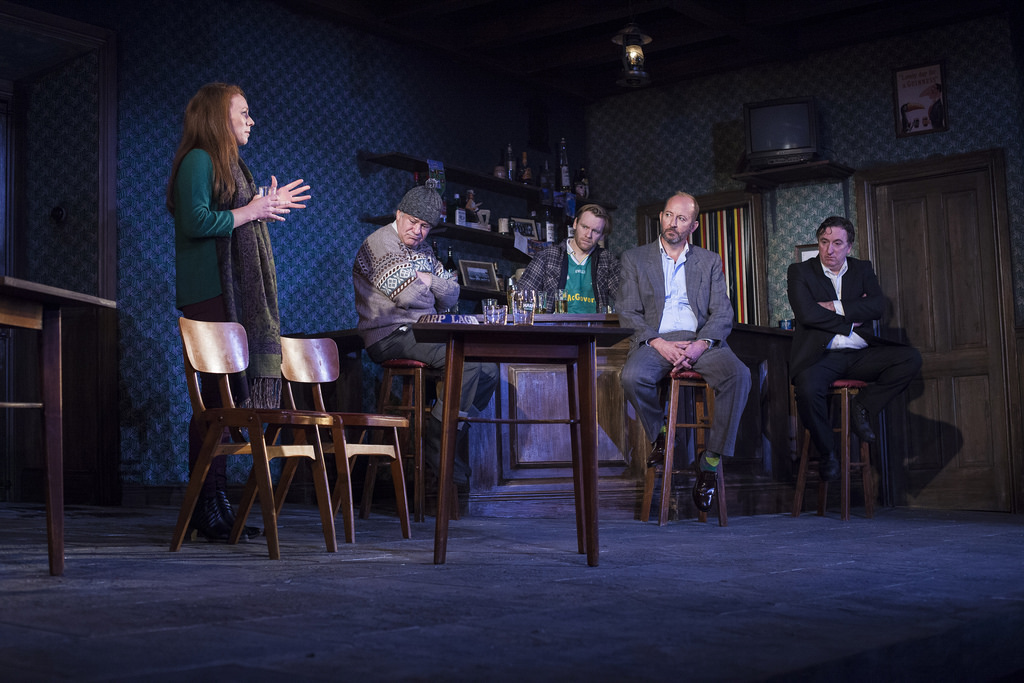
l to r. Lucianne McEvoy, Darragh Kelly, Brian Gleeson, Frank McCuster, Gary Lydon. Photo. Drew Farrell

l to r. Lucianne McEvoy, Darragh Kelly, Brian Gleeson, Frank McCuster, Gary Lydon.
Photos. Drew Farrell

“You will not want to let these characters go home”

Editorial Rating:  4 Stars: Outstanding

For an Irish play set in an out of the way bar, The Weir is pretty sobering. That it is also witty, articulate, and beset by place, loss and sprites is less of a surprise. Writer Conor McPherson has serious form by now when it comes to the dregs of self at the bottom of a glass,  or more cheerfully, to the poetry in the head of a creamy pint of Guinness.

Except that the Guinness in Brendan’s bar is ‘off’ because the fecking tap is broken. Jack has to help himself to a bottle (it’s that kind of village pub); Finbar’s ok because he’s become a tad more sophisticated and drinks Harp Lager; Jim, gentle soul, is happy with small chasers; Brendan is pleased to keep them company; and Valerie, well, she’s down from Dublin and might stay a while. She has a white wine – awkward – poured in a straight glass. There is no smoking ban yet and Designer Francis O’Connor has the craic curling across a wide, low beamed, space with the telegraph poles leaning drunkenly outside. There is a television above the bar but it’s a careful, appealing touch when Jack reaches up to switch off the rugby – it might have been gaelic football. The reception was bad anyway.

Nothing interferes with the story telling and there is no interval. First, Jack with his faerie road and spooky knocks at the door; then Finbar, with a terrifying old woman on the stairs; then Jim’s unwitting shocker in the graveyard that summons Valerie’s nightmare; and finally, cleverly, at the fireside, it’s back to Jack as he mournfully recalls his lost chance at love and marriage. Each tale is far too enthralling, too involving and heartfelt, to be contained as a monologue. The silence after Valerie’s story is literally stunning. Director Amanda Gaughan lets it down evocatively, rendering the men helpless in their sympathy.

McPherson’s achievement is to write bar stool conversation that is as moreish as good peanuts, wholesome against the odds. And the Irish cast are very, very good at helping themselves: Gary Lydon as Jack, sturdy, crumpled; Darragh Kelly as Jim, fond, credulous; Brian Gleeson (yes, son of ….) as Brendan, open, obliging; Lucianne McEvoy as Valerie, injured, self-possessed. And Frank McCusker as Finbar, whose equable, decent, tones stay short of the self-satisfied.
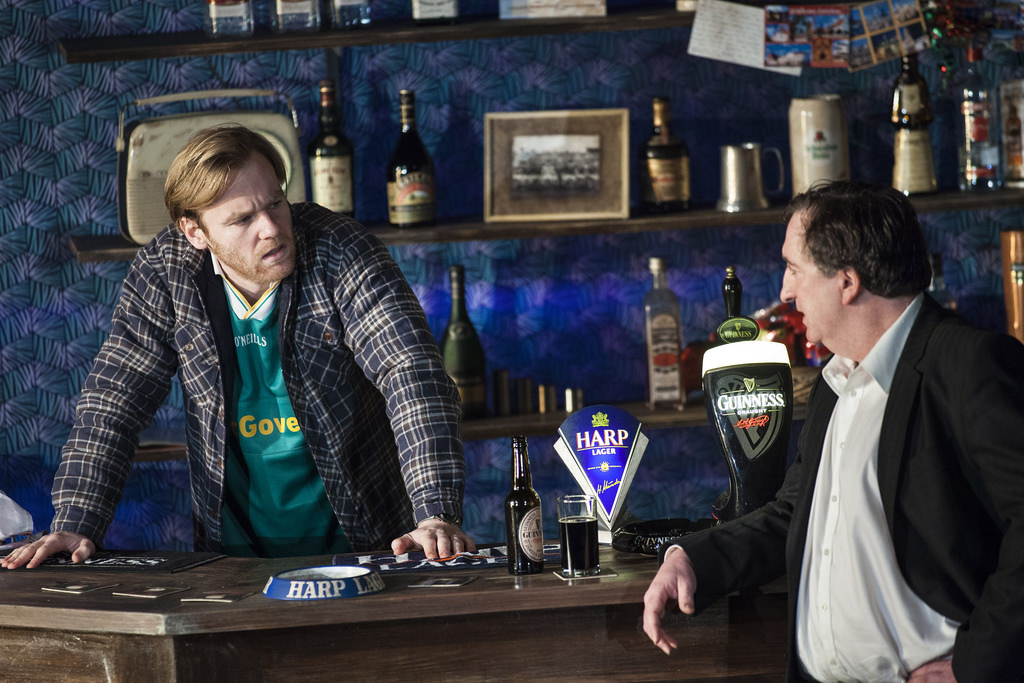
Brian Gleeson, Brendan, and Gary Lydon as Jack. Harp Lager and Draught Guinness as themselves.

Brian Gleeson, Brendan, and Gary Lydon as Jack.
Harp Lager and Draught Guinness as themselves.

‘The Weir’ was written in 1997, enjoyed immediate success and has attracted lyrical approval thereafter. Personally, I’ll play safe and just recognise how companionable a piece it is. You will not want to let these characters go home in the rain*. Single men, who know each other well, have gathered hospitably, stood each other a drink (or two), and have talked idly. However, there is the one woman amongst them and it’s Valerie who’s channeling the hard stuff.

(*Too tempting, sorry, not to cross -reference to Seamus Heaney’s Casualty from a darker period whose subject is the ‘Dawn-sniffing revenant’ plodding home from the pub in midnight rain.)


outstanding

StarStarStarStar

Reviewer: Alan Brown (Seen 19 January)

Go to The Weir

Visit the The Lyceum  archive.
Snow White and the Seven Dwarfs (King’s Theatre: 28 Nov. ’15 – 17 Jan. ’16)

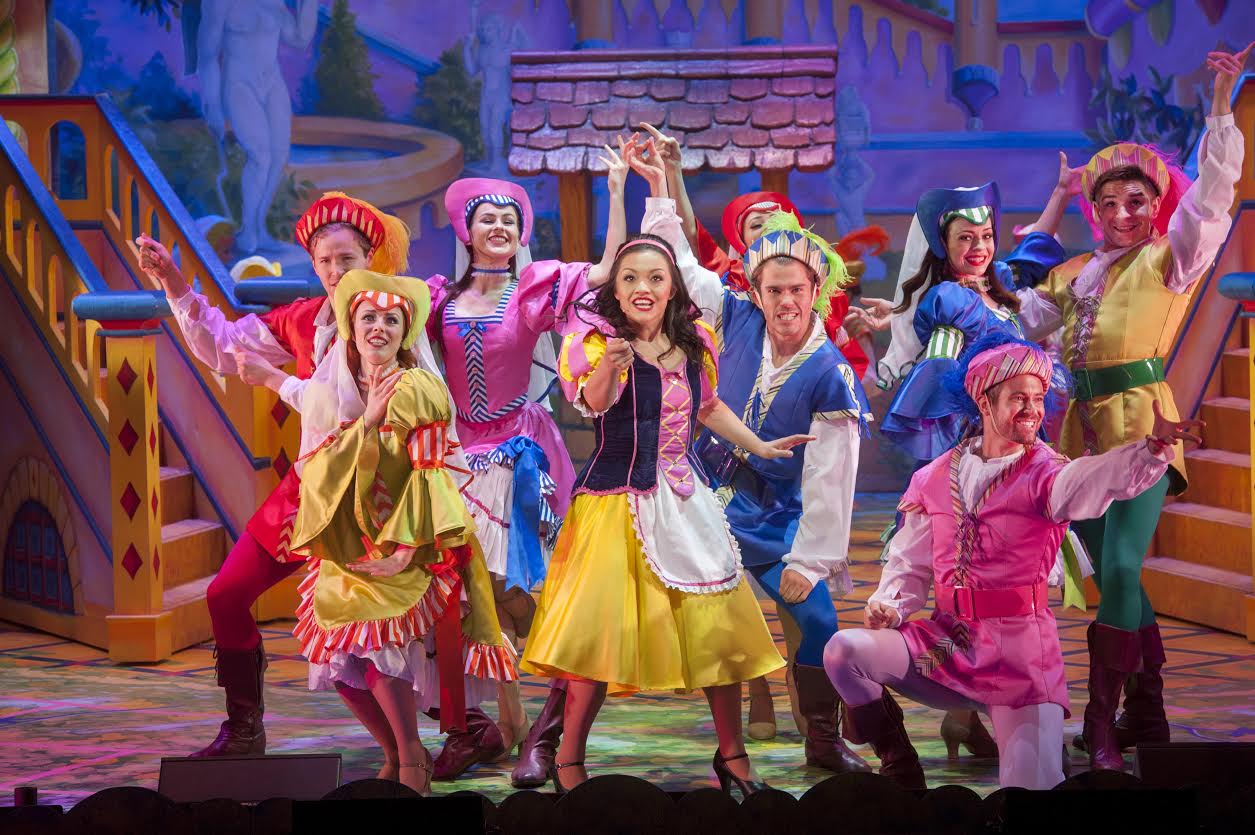
Frances Mayli McCann as Snow White with Ensemble. Photos by Douglas Robertson

Frances Mayli McCann as Snow White with Ensemble.
Photos by Douglas Robertson

“Packed with laughs for audiences of all ages”

Editorial Rating: 4 Stars: Outstanding

I’ll admit, ever since the age of about 9, panto has never been very near the top of the list of my favourite art forms. And it’s true that I do tend to like my theatre a bit more high-brow. In saying that, this panto all but shattered my age-old preconceptions by being very, very funny, and at the same time embodying surprisingly high production values.

Where to start, but with Edinburgh’s pantomime royalty – Grant Stott, Allan Stewart and Andy Gray. Their on-stage chemistry is just as visible as they say it is, with lots of friendly jibes and presence that oozed confidence and star quality. The banter between them was great, and their improvisation and cover-up skills were spot-on. Stewart in particular impressed as Nurse May, with a dazzling array of seamless costume changes and a likeability that almost made the stage feel instantly more alive whenever he was on it.

Andy Gray, Allan Stewart and Grant Stott.

Andy Gray, Grant Stott and Allan Stewart.

Both Greg Barrowman as Prince Hamish and Frances Mayli McCann as Snow White also impressed with powerful singing voices, and their personalities perfectly balanced out those of their more esteemed cast members. But for me it was the dwarfs who stole the show, in particular the scene where they were riding an array of animals, and I was disappointed these characters were not used more often. The troupe showed fantastic energy and comic timing, and brought the ridiculous hilarity already on display to new heights every time they made an entrance (or exit!).

The script wasn’t so much littered as smothered with witty one-liners, topical references, football jokes, and a healthy sprinkling of good old-fashioned farce. Indeed, this show certainly has a bit of everything for the little’uns and their respective elders: there’s flying, dinosaurs, pyrotechnics, colourful costumes and a touch of audience interaction. I defy anyone not to giggle at at least one element of this offering.

The musical numbers were all delivered with aplomb, with dance sequences many grades above the step-ball-change choreography I was expecting. Song selection (mainly covers of popular songs) often seemed shoehorned in for the spectacle, but then again, one doesn’t go to panto for that. Still, the music was upbeat, in tune and full of fun.

I can forgive that the structure was a bit all over the place, that some of the scenes between the fab three bordered very closely on self-indulgent, and the almost never-ending rendition of a well-known Christmas song towards the end. It’s a show packed with laughs for audiences of all ages, and brings a lot of sparkle to brighten even the hardest of hearts. Oh yes it does!

outstanding

StarStarStarStar

Reviewer: Steve Griffin (Seen 8 December)

Go to Snow White and the Seven Dwarfs.

Visit the King’s Theatre archive.

The Lion, the Witch and the Wardrobe (Lyceum: 28 Nov.’15 – 3 Jan.’16)

l.tor: Charlotte Miranda Smith as Susan, Ben Onwukwe as Aslan, and Claire-Marie Sneddon as Lucy. Photos. Royal Lyceum Theatre.

l.tor: Charlotte Miranda Smith as Susan, Ben Onwukwe as Aslan, and Claire-Marie Sneddon as Lucy.
Photos. Royal Lyceum Theatre.

“Fantastical adventure and heart”

Editorial Rating: 4 Stars: Outstanding

Allegory or not, “It’s [still] a magic wardrobe. There’s a wood inside it, and it’s snowing, and there’s a faun and a witch and it’s called Narnia. Come and see.”

And enchanting it certainly is. This 2009 adaptation follows the adventures of four WWII evacuees as they travel through the wardrobe and discover the mysterious, wintry world of Narnia, encountering everything from witches to talking lions, to Father Christmas. C S Lewis’ wondrous story is expertly captured on the Lyceum stage by director Andrew Panton, and is an absolute triumph of a Christmas show.

The one thing that is immediately evident is how polished a production this is. Each scene change is almost like an smooth apparition; as if in some transitory dream, the audience move from one moment to the next without really knowing how they got there, and it’s wonderful. As the oak-panelled set opens out to reveal Narnia for the first time, one cannot help but gasp – with the younger audience – at the intricate display on stage: snow falls and coats the floor in a sparkling white blanket; tall icy trees seem to go on forever and that iconic lamp post glows in the shadows, waiting patiently for Mr Tumnus to appear. The impressive set is further complimented by sumptuous costume design, particularly in that of the animals. Mr and Mrs Beaver and Aslan the Lion are brought to life not only through their physicality but also through that wardrobe, but literally this time.

Stunning set and faithful costume aside, it is the strength of the cast that bring the real magic to this production. Special commendation must go to James Rottger, Charlotte Miranda Smith, Christian Ortega and Claire-Marie Sneddon, playing children Peter, Susan, Edmond and Lucy, respectively. As an audience member, there is often an underlying fear when watching adult actors in child roles as, if poorly performed, it can often remove you from the story. Yet this troupe executes their performances with such a warm and honest vulnerability that it is impossible not to be drawn into their adventure.

This childlike wondering proves all the more effective through the addition of song to the narrative. While some numbers do feel unnecessary, they do give the show another dimension of fantastical adventure and heart. After defeating the Witch, and the cast start singing the words, “You can’t know, but you can believe”, the spellworking in the theatre is almost palpable, and it is hard to suppress the urge to wave back at Aslan and the faun as they bid their farewell to their audience.

As stage magic goes, cutting the mustard might be up there as tricky; and evil White Witch (Pauline Knowles) has trouble living the part that is forever Tilda Swinton’s. A chilling performance works for her at times but it is often ambushed by pantomime warmth and is limited by the reach and power of the virtuous characters.

However, this is holy Advent time and this is a lovely production of a miraculous story that will delight the expectations of the children and grown-ups who come to see it.


outstanding

StarStarStarStar

Reviewer: Rachel Cram (Seen 4 December)

Go to The Lion, the Witch and the Wardrobe at the Lyceum.

Visit the The Lyceum archive.
‘The Great Train Race’ (Interchange, Galashiels: 29 Nov. ’15)

Ellie Zeegen and Simon Donaldson Photo: Firebrand Theatre

Ellie Zeegen and Simon Donaldson
Photo: Firebrand Theatre

“You might want to take sides and cheer your engine along”

Editorial Rating: 4 Stars: Outstanding

Where better to stage this play of trains than in a bus and railway station? And so to the impressive Galashiels Interchange, which may have a Borders postcode, but whose track once more runs straight to Edinburgh and onto the ED49 platform. The permanent way is back – ‘Hurrah!’ – and the winding A7 is properly historic.

Redoubled ‘Hurrahs!’ too for the return of Robert Dawson Scott’s 2013 flag waving, whistle tooting, tale of men and locomotives (and a gender bending signal box). It is the summer of 1895 and two railroad companies – the North British and the Caledonian – are competing to run the fastest overnight service between London and Aberdeen. They take different routes – up the east and west coasts respectively – but the two eventually converge at Kinnaber Junction, 38 miles from the finish, which is where the signal box comes in – big time. And, just to add to the headlong fun, there are no speedometers in the cabs.

This is main-line ‘Play, Pie and a Pint’: three actors and 45-50 minutes long, which happily enough is almost the journey time between Gala’ and Waverley on the Borders Railway. Could The Great Train Race be performed on a moving train? Maybe director Richard Baron entertained the idea and brought it to the (Fat) Controllers of ScotRail. Well, we do get a Sir Topham Hatt character of sorts, and the piece is staged in the rectangular ‘round’. Not exactly in a carriage but the action goes from side to side, round n’ round, with the passengers occasionally buffeted by the wind from a passing train. Never mind, you might be on a ‘Grouse Express’ and the shooting parties have lobster in their hampers. You might want to take sides and cheer your engine along or – more likely – just sit forward and enjoy a show performed at speed and with great, engaging, spirit.

It is easy to distinguish the actors. When they are not sporting beards or holding balloons or dumping ‘hot’ coals in your lap, livery is all. Ali Watt is decent Norrie, railway clerk of the North British. He has the uniform, English accent, and manners of a man who believes in the rulebook and in fair competition. Dumping timetables and ‘dropping’ stations is simply not on. On the other footplate, in overalls, is Cammie (Simon Donaldson, educ. Earlston High School), a fitter in the engine sheds whose speech runs more along the lines of “Yer dancer”, which to describe a 2-4-0 ‘Hardwicke’ locomotive is going some. In-between the two and indicatively Doric, stands Kinnaber (Ellie Zeegen), whose friendly and eager narrative is the coupling rod.

It is a chuffing good story, merrily told, and with such invention and detail that the Borders Railway might wish that they were passenger numbers. Oh, sorry, there are tales of overcrowding already; which is scarcely Firebrand Theatre’s fault.

outstanding

StarStarStarStar

Reviewer: Alan Brown (Seen 29 November)

Go to Firebrand Theatre


King Charles III (Festival Theatre: 16 – 21 Nov ’15)

Photographs from the West End Production of 'Charles III' by Johan Persson

Photographs by Johan Persson from the West End Production of ‘King Charles III’

“The best of Shakespeare, bang up to date”

Editorial Rating: 4 Stars: Outstanding

Given how topical this production is, I still can’t quite get my head around why someone hasn’t thought of doing a play like this before. Yes, it’s daring and bound to spark discussion on either side of the Royalist debate, but perhaps that’s what makes it utterly ingenious.

Mike Bartlett’s script really is the star of the show – conceiving an idea both dangerous and compelling, that’s also utterly believable. That’s a mean enough feat for many a playwright, but then consider it is also written in Shakespearean style blank verse (with nods to more of his works than I could keep track of), bang up to date, witty, funny and gripping to the very last stage direction.

It’s cleverly structured to allow for scenes and opinions to unfold between all characters, and pacey enough to keep the action flowing, without ever cheating the audience of any details. I would have preferred more ensemble scenes to break up the endless soliloquies and duologues (again, very Will’), while a more contrasting sense of status between the Royals and others would have gone some way to create even more tension.

The style of the performance took some getting used to early on: interpretations of well-known people seemed over-theatricalised, while showing a distinct lack of respect to each other and occasion. This made it hard to engage with immediately, as I was expecting a subtler and more faithful approach to character. For this reason, for me it was the “made-up” characters of Mr Stevens (Giles Taylor) and Jess (Lucy Phelps) who rang most true, and achieved the optimum balance between the theatrical style of the script and connection with the audience.

Charles III 2

In saying that, the very beauty and intelligence of this piece is the subtle level of detachment from presenting something real and expected, to an exploration of imagination and possibility. Once this performance was in full swing, and I could appreciate the characters as part of an intriguing story (as opposed to what I would expect to see in real life), I was all but blown away by its power and craft. Ben Righton’s William was bang on the money in terms of character development throughout, progressing from stable wallflower to dominant leader, while the descent of Charles (Robert Powell) into public ridicule was nothing short of masterful.

If the King could grant me one wish, it would be to fast forward 100 years, when the population know comparatively little of our current royal family, and see how well it is received then. My money would be on it being viewed in the same way we lap up the best of Shakespeare today.

outstanding

StarStarStarStar

Reviewer: Steve Griffin (Seen 16 November)

Go to King Charles III at the Festival Theatre

Visit the Festival Theatre archive.

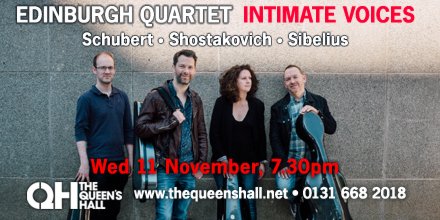
♫ Edinburgh Quartet (Queen’s Hall: 11 Nov. ’15)

“Precision mirrored with passion”

Embedded image permalink

Editorial Rating: 5 Stars:  Outstanding

One of the many appealing aspects of our home string quartet is the creativity of their programming.  Chamber Music is beautiful but a full concert can be a little samey.  Not so tonight.  Who else would start with the young Schubert, and then follow it immediately with Shostakovich, a leap of almost 150 years in composition, and make it work?

This was the second Edinburgh Quartet concert in their Intimate Voices series.  Following its successful launch at St Andrew’s and St George’s West almost a month ago, the Intimate Voices concept highlights the extraordinary intimacy created by the intense exposure and interdependence of the string quartet genre.

The publisher who mistook Schubert’s 10th String Quartet when discovering it posthumously could be forgiven for mistaking it to be a more mature work, but we now know Schubert wrote it when he was sixteen.  Properly fashioned nonetheless, the Edinburgh Quartet immediately developed its luscious, rich and warm tone that quickly drew us in.  Confidently and perfectly executed, this delightful piece with its nuances of Haydn and Mozart set us up for the treats to come.

The Shostakovich String Quartet No 7 proved an exciting thirteen minute contrast.  The F sharp minor key created an atmosphere of loss (Shostakovich’s first wife Nina died suddenly of undetected cancer of the colon. Their marriage had had its moments, but he was irreconcilable to the loss and the work is dedicated to her).  As so often with Shostakovich, the sparse strings have all the unstated menace of a horror movie, the fearful anticipation that worse is to come.  Throughout the three movements the tension gradually built into a cacophony of searing anguish only to fade away into the ether at the end.  Here the Edinburgh Quartet’s playing was undoubtedly world class. Precision mirrored with passion.

After the interval we dropped back fifty years and settled down to Sibelius’ String Quartet “Voces Intimae”.  Even though Sibelius himself was extremely wary of “names” for his compositions, (“You know how the wing of a butterfly crumbles at a touch? So it is with my compositions; the very mention of them is fatal”) the applied nomenclature is apt as it was self-penned.  The intimate nature of the work was immediately set by the opening violin and cello passage.  It is almost a feeling of reassurance that one gets from the Quartet’s complete homogeneity; they are at ease with each other and handled the frequent dynamic and tempo changes assuredly. They kept the spirit going all the way through the five movement work; their playing at times spellbinding, with aching tenderness in the Adagio di molto where Sibelius wrote the words Voces Intimae on the manuscript, and then frantic, with a wild moto perpetuo in the final Allegro, as they drove it to a breathtaking finish.

Not many promoters would put on a programme as varied as we had tonight.  It gave us a rich panoply of romantic music spanning 150 years.  The Quartet’s reputation continues to grow.

outstanding

StarStarStarStarStar

Reviewer: Charles Stokes (Seen 11 November)

Go to the Edinburgh Quartet.

Visit the Queen’s Hall archive.

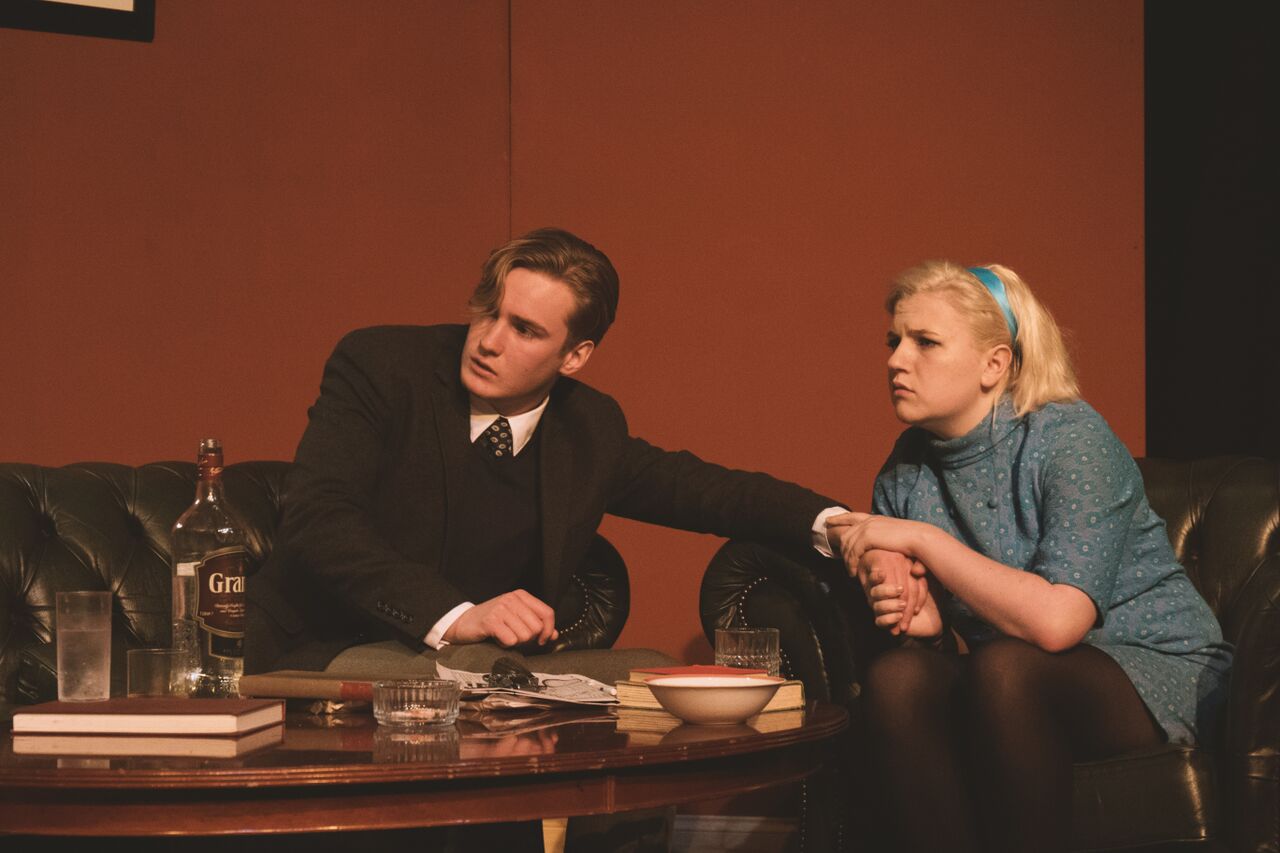
Who’s Afraid of Virginia Woolf? (Bedlam: 13 – 17 October ’15)

zmNi2cSofHsDbaIu5q-ZCYi3vqRNwW5e63TtyzVN5zI,f1EKqPn7WaRX-pS8CIy4irpbv6ccB19vfHCH_eUY46U,D3UV8nQ7mgS7WOJ6yu2AIVkv_JjciZjbTs92rIMErL8,vNbY3VPQeN9NnOf0OBZQ5XYk4-h5o47OPKJJfiCgOVE

Henry Conklin as George and Caroline Elms as Martha.

“Courageous and spirited performance”

Editorial Rating: 4 Stars: Outstanding

There are drinks before a party and there are drinks after a party. The LADbible, a new source for Edinburgh49, lists ‘17 Things That Always Happen During Pre-Drinks’; but what about Post-Drinks? The lads should go back to George and Martha’s place and learn how Mom and Dad get down at two in the morning on a Saturday night. And then some. Don’t play these party games at home, boys and girls.

Edward Albee’s 1962 play is a lacerating shocker of a marriage on the rocks. Martha is 52, is really high-maintenance and has a nice line in mixing ice-cubes and tears. George is 46 and – to quote his wife – doesn’t “do anything; you never mix. You just sit around and talk”, which explains the two chesterfield sofas on stage but under-estimates by a long, long shot George’s mocking and mordant words. Total war is not declared until halfway through the second act but the skirmishing is unrelenting and bloody. When they are not ripping into each other they practice on their late night guests, Nick (30) and Honey (26), whom they have just met.

We’re in a small university town in New England where George hasn’t made professor in the History faculty, despite marrying the college President’s daughter, and Nick – fresh in from Kansas, blond and bright – has just joined the Biology Department.

It’s like Albee is swirling his first couple in a highball glass (and note the cheeky correspondence between George and Martha Washington …). Actors Henry Conklin and Caroline Elms give a performance of such fortified intensity that you wonder how they’ll recover. Conklin is the measured, oiled one, his level delivery only once or twice spilling into fury. Elms is more intemperate, emotionally more profligate, but still vulnerable. Albee would have her past her prime, which is tricky at the undergraduate stage, but then George is supposed to be thin and going grey. Neither performer worries about that and they give each other such a goddam kicking that not for one second did I doubt the wasted nature of their twenty-three years of marriage. Tender proof positive is provided by their exhausted, mutual dependence at the end.

Stephen MacLeod as Nick and Jodie Mitchell as Honey.

Macleod Stephen as Nick and Jodie Mitchell as Honey.

George calls Nick and Honey ‘children’ and they are: not so much innocent as defenceless. Jodie Mitchell plays Honey as – frankly – clueless and squiffy and there’s an honesty to it that is very appealing.  Macleod Stephen has the harder part, trying to stand against George, to withstand Martha (he flops) and manage several whisky sodas. Nick’s sudden understanding of the acute sadness that slashes through the whole action is important but was almost blindsided.

Director Pedro Leandro should be delighted with courageous and spirited performance. It is a long play but the tension held and what might have turned mannered and flat did not. The sofas, stage left, could have been more in the centre and I did miss Martha banging against the door chimes (my bad, I reckon) which needs to be seen to make sense of George’s ruthless masterplan to wipe her out.

Simon and Garfunkel’s The Dangling Conversation opens up the second act and is a pitch perfect choice. Remember the line, “Is the theatre really dead?” Well, it ain’t.

outstanding

StarStarStarStar

Reviewer: Alan Brown  (Seen 13 October)

Go to EUTC here

Visit the Bedlam archive.

Waiting for Godot (Lyceum: 18 September – 10 October ’15)

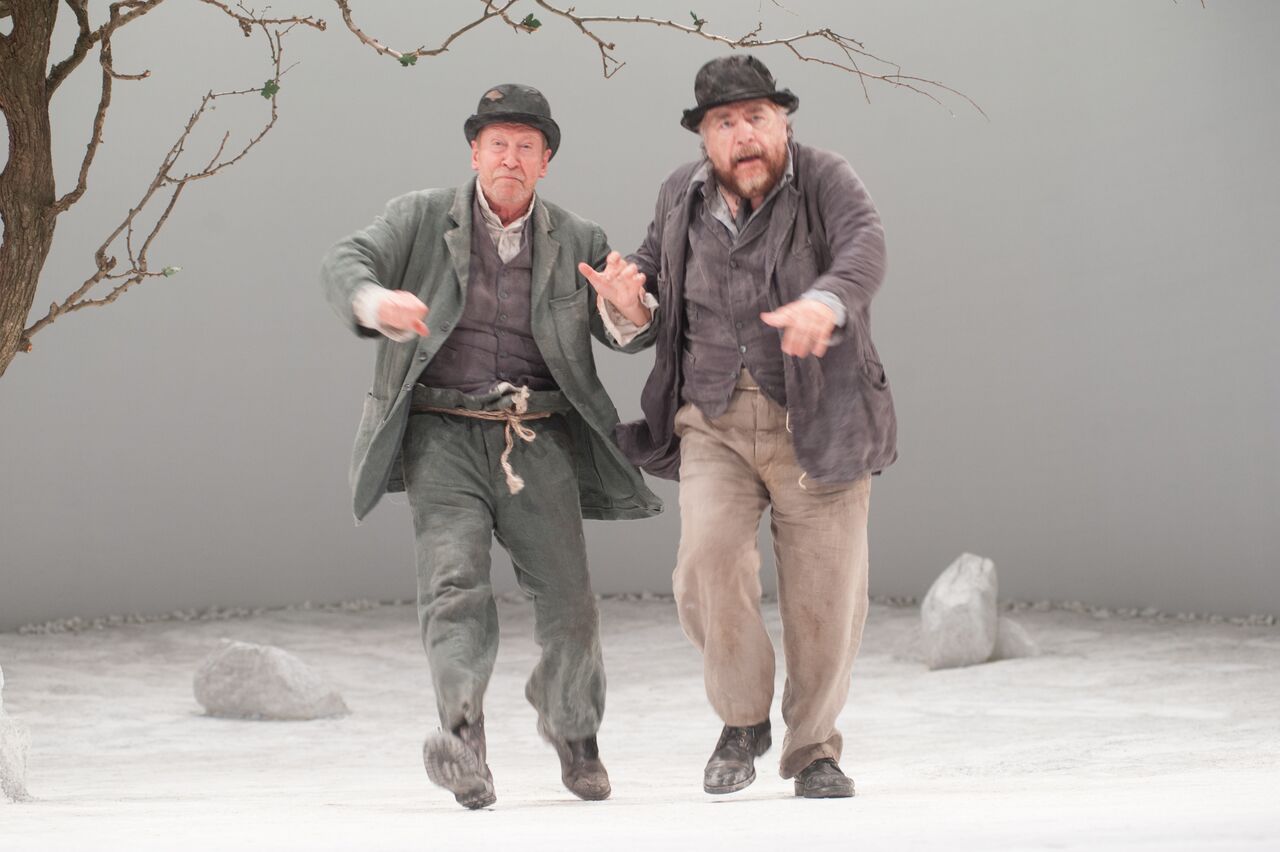
Bill Paterson and Bian Cox as Estragon and Vladimir. Photos by Alan McCredie.

Bill Paterson and Bian Cox as Estragon and Vladimir.
Photos by Alan McCredie.

“Magic and compassionate”

Editorial Rating: 5 Stars  Outstanding

A production dedicated to the memory of Kenny Ireland (1945 – 2014), artistic director of the Royal Lyceum Theatre Company from 1992 to 2003.

It’s celebratory. 50 years of the Lyceum Theatre Company and 50 years, thereabouts, that Vladimir and Estragon reckon that they’ve been together. It’s always nice to be definite about those two, as over the years they’ve acquired a reputation for being as equivocal and as moot as Monsieur Godet, Godot, or Godin, himself. Well, not any more, for this indelible production of Samuel Beckett’s famous play nails them as surely as any I’ve seen – and that includes the Ian McKellan and Patrick Stewart show of 2009. I’m in complete agreement with Gogo (Estragon) when he says ‘They all change. Only we can’t’.

It is probably Didi’s pee stained trousers that did it. For a play that elsewhere is often taken as an exhibition piece for metaphor, where the grave digger puts on the forceps, etc., here a weak bladder in a sixty-two year old man is a weak bladder and that’s that. Gogo’s boots stink, his feet are putrid, and every time that he is reminded that they’re waiting for Godot he stiffens in a gut churning, stomach cramped response. It is unsurprising then that the here and now – the blasted tree on the bleached cold set, the vicious kicks to the hapless Lucky – is ‘kackon country’.

And there’s the marvel: one shitty situation made bearable by kindness and affection, because that is what the magic, compassionate, pairing of Brian Cox and Bill Paterson achieves. Cox plays Vladimir as philosopher clown, constrained to smile rather than laugh. Paterson as Estragon has the pallor to match his delivery. It would be deadpan were it not so forlorn. And it would, of course, be a Laurel and Hardy tribute act were it not for the existential, timeless, pitch and spin of the dialogue. There’s that moment, early in Act 1, when Vladimir is telling the story of the two thieves crucified alongside Christ and Estragon is seriously unimpressed by the ‘Saviour’ word. Didi just wants his story listened to and Cox makes light of his exasperation with a gentle, relaxed ‘Come on, Gogo, return the ball, can’t you, once in a way?’ The half crouch and the outstretched hands look to be off the rugby field to me, which is neat (and topical). Funny too how easily Beckett’s language adapts to Scottish performance for there’s a near constant exchange between blethering and ‘discourse’ that is practically endearing and is certainly comic.

This is not bleak end-gamed Beckett. Take Estragon’s sudden ‘Que voulez-vous?’ that arrests another of their little riffs. That could be a surly or desperate, ‘What do you want?’, but actually it’s much more generous and appealing than that. ‘What do you know [of me]?’ is what Mark Thomson, as director, answers and so two preposterous, hopeless down-and-outs from somewhere wasted and foreign, acquire an extraordinary humanity that fetches warm-hearted laughter from their audience. They might have finished themselves off years ago ‘hand in hand off the top of the Eiffel Tower’ but too late for that now. Instead, we hear of Gogo and Didi picking grapes in Burgundy and Didi rescuing his friend from a suicidal dive into the Rhone.

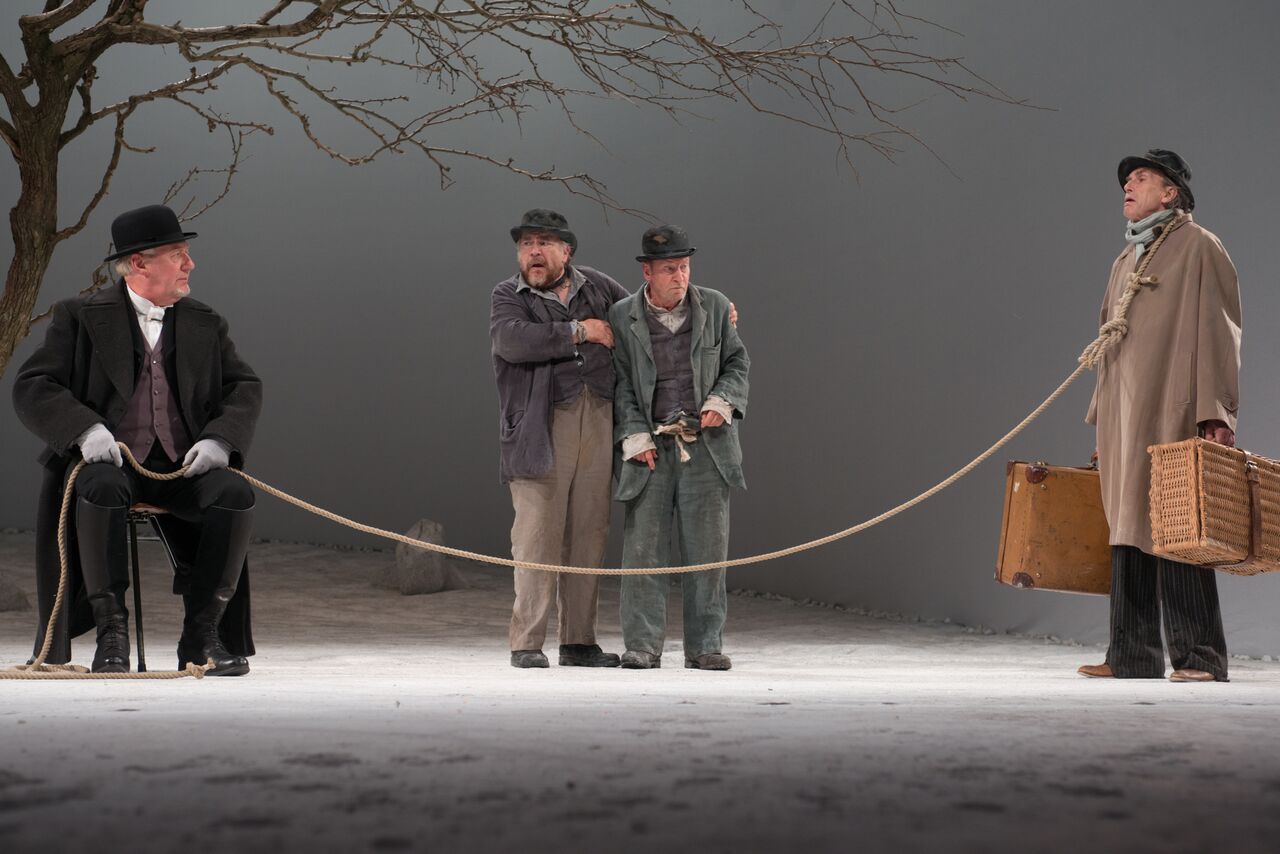
John Bett as Pozzo (l) and Benny Young as Lucky (r)

John Bett as Pozzo (l) and Benny Young as Lucky (r)

So the blaring inhumanity of the nihilist Pozzo (John Bett) towards Lucky (Benny Young) is made all the more pronounced. These two are truly displaced, dispossessed, and bound. The rope between them just gets shorter as they become increasingly helpless and incoherent. As they collapse, Estragon’s spirits rise and he is almost cheerful. Paterson has that wonderful line: ‘We’ll go to the Pyrenees .. I’ve always wanted to wander in the Pyrenees’.

Yes, it is a question of make-believe and tone but this Godot stands in the light at the mouth of the tunnel and turns its back on the darkness beyond. I found it really illuminating.

(And, ‘cos it’s good and relevant, go to the BBC’s Today programme on http://www.bbc.co.uk/programmes/p031g8l1 to hear a magisterial Michael Billington explain why Waiting for Godot is not in his list of ‘101 Greatest Plays’. Actor Lisa Dwan will have none of it.)


outstanding

StarStarStarStarStar

Reviewer: Alan Brown  (Seen 22 September)

Go to Waiting for Godot at the Lyceum here.

Visit the The Lyceum archive.
RENT (Paradise in St Augustine’s, 7 – 30 Aug : 18.00 : 2hrs 40 mins)

“Full of the life and passion that the ethos of this show embodies”

Editorial Rating: 4 Stars: Outstanding

There’s always something really special about seeing the closing night of a particular show, as they can often trigger performers into giving everything they have left in their bodies to deliver the performance of their lives. That’s exactly what happened with Uncompromising Artistry’s Edinburgh Fringe production of RENT.

Opening chorus number Rent was bursting with energy and was a fantastic introduction to the desperation, hardship and grit of 90s New York, while being full of the life and passion that the ethos of this show embodies. The company filled the stage with their presence and the theatre with stunning vocals, and it was a truly wonderful sequence. It seems somewhat unfortunate that after setting the bar so high so early on, the remaining chorus numbers, although excellent, were not quite able to live up to that show-stopping standard.

There were however, some exhilarating solo performances. For me, Johnny Newcomb absolutely stole the show as Roger, bringing a wonderful fragility to the character, while nailing every note he sung. He was captivating to watch in every scene, and showed a huge emotional range, even in the chorus numbers when he wasn’t centre of attention.

Injoy Fountain was also incredibly engaging in each of her minor roles, bringing bags of vitality to every scene, as well as a truly knockout vocal performance, including that riff in Seasons of Love. Zia Roberts as Joanne and Janet Krupin as Maureen really came into their own during Take Me or Leave Me, which was spine-tinglingly delivered, while Jonathan Christopher’s performance as Collins in the funeral scene was emotional enough to bring everyone to tears.

What really made this show special though was engagement with the audience and the cast’s ability to really bring us into the performance. During every chorus number the performers made eye contact with various people in the audience, always in character and with purpose. Seasons of Love was deliberately performed right at the front of the stage in one line, giving a very inclusive and welcoming feel to the show.

However, while showcasing some truly phenomenal individual moments, at times some of the staging seemed a little clumsy and laboured, with a few too many moments that relied on stage crew to move various things around on stage. In addition some of the choreography, particularly the death motif, seemed a bit over the top. But in all other respects this really was a tremendous effort and a very emotionally charged performance from still such a young company. Vive la vie bohème.

outstanding

StarStarStarStar

Reviewer: Steve Griffin (Seen 30 August)

Visit the Other  archive.

THIS REVIEW HAS NOT BEEN SUBEDITED

Submarine (theSpace Niddry Street: 1 – 29 Aug: 20:25 : 1hr 25mins)

https://i0.wp.com/res.cloudinary.com/indiegogo-media-prod-cld/image/upload/c_fill%2Cf_auto%2Ch_413%2Cw_620/v1430134987/wdfwzatevts68bz9gueq.jpg

“Slick and powerful”

Editorial Rating: 4 Stars Outstanding

Go see a stage adaptation of an indie film adaptation of an award-winning book they said. It’ll be fun, they said. Luckily, they were right. Popcorn Theatre’s “Submarine” is an undeniably enjoyable piece of theatre, whether you’ve even seen the original work or not – or even if you’re not a fan of indie movies.

Following the adolescent trials of misfit Oliver Tate, “Submarine” addresses themes of love lost, youth reconsidered and the nature of human emotion in relativity; if that all sounds a bit much, rest assured – it never feels overwrought or artsy for art’s sake, staying firmly rooted in it’s homely welsh drab and expertly weaved soundtrack.

Jonas Moore and Rachel Kelly are a tour-de-force as Oliver and leading female Jordana Bevan. There’s such palpable substance in their characterisation, it’s easy to get lost in their characters. Every physical tic and vocal quirk feels energetic yet realistic, aided hugely by a skilled, slick set of supporting actors. A particular favourite was Tom Titherington as the wonderfully ridiculous Graham, who managed to summon laughs up without fail every time he appeared on stage.

And the comedy really is good. Every punchline is unexpected, driven by the sustained, cerebral oddness of Dunthorne’s characters. But Submarine is also a show which pulls no punches in regard to poignant, emotional drama either. The scenes between Jill and Lloyd Tate (Catherine Prior and Josh Hunter) were often heartbreaking in their portrayal of a marriage falling apart – not with a bang, but with a disappointing slump.

But slump seems the right word to describe parts of this show also. Despite it’s strengths, it’s inescapably “indie”: meaning the often manufactured dramatic turns and heightened energy many theatregoers are used to just isn’t present. It stays at a high but disappointingly constant drone which, though it helps it succeed in imitating real life, also meant that certain scenes felt like they needed a little something more.

However, that does little to diminish the strong performances and time-tested writing underpinning a very slick and powerful show. The clever staging, the wonderfully implemented Super-8 footage and the expertly talented cast pull together what for others may have ended up being a tedious and pretentious spectacle. Taking no prisoners when it comes to left-field humour and commentary on the human state, Submarine is definitely a show with six full miles of depth.


outstanding

StarStarStarStar

Reviewer: Jacob Close (Seen 25 August)

Visit the  Other archive.

THIS REVIEW HAS NOT BEEN SUBEDITED