On the surface, this could so easily be “Mumsnet: the play”: a tale of a mother passing judgement on the parents of another child that attends the same nursery as her daughter, juxtaposed with an admin worker whose main priorities are arranging for a pinboard to be put up in her office and responding to radio phone-in competitions. But scrape away that layer of shallow prejudice and what lies beneath is a dark, eye-opening fable of flawed humans and why they do what they do.
The play is written almost exclusively as three intertwining monologues, allowing us to understand multiple viewpoints, with rare yet powerful instances of dialogue when the characters’ paths cross. Director Rosie Kellagher shrewdly opts for simple staging throughout, with each character in their own part of the stage, and keeps the action slick, resulting in an engaging performance I couldn’t take my eyes off.
The writing in this piece is very clever, and quite understandably of award-winning quality, in how it teases and develops action throughout. Early on we are led to be on the side of Alice’s Mum in her mission to ensure a child is properly looked after, while Billy’s Dad comes across as the kind of lout we all love to hate. The tensions are clear, but as the action unwinds and we learn more about who’s who and what has led them to where they are, perspectives slowly change, and at the play’s chilling denouement I was left unsure as to who I should feel most sorry for and whether they really had it coming.
Rosalind Sydney displays great depth, power and fragility as the do-goody Alice’s Mum, from her cutting judgements to her exquisite intonation as a heard-it-all-before call centre operative. It’s hard to believe that Anthony Strachan is anything other than the foul-mouthed, donut-eating, wrestling fanatic Billy’s Dad given the integrity of his performance, while Hilary Lyon is a master of deadpan comedy as the Admin Lady. The acting is controlled, consistent and utterly believable from all three.
In saying that, there were a couple of moments when the action didn’t quite ring true and seemed a little far-fetched (an anecdote of spending 20 hours waiting in A&E being one example), while the weight of action seemed to leave one character a little redundant for the second half of this performance. However, on the great scale of things, these are very minor idiosyncrasies to what is on the whole a compelling production.
For a show that’s this energetic, chopping and changing between three stories with such rapidity, you do have to be on your toes to keep up, but it’s absolutely worth it. Get in there quick.
There was a real buzz at this, the opening performance of the first in the new season of A Play, A Pie and A Pint at the Traverse Theatre, as audience members of all ages filled the studio – an indicator of the wide appeal the programme has. Opening the batting order is Some Other Stars, which depicts honestly, beautifully and painfully, the journey travelled by a loving couple when one of them, for whatever reason, ends up in a coma.
Performed as two interweaving monologues, Clare Duffy’s script deftly covers a plethora of feelings and thoughts from both sides, from confusion and pain in the early days, through hope, helplessness, boredom and betrayal. The play begins in darkness, with a sizeable monologue from Ian (Martin McCormick) describing what’s going on in his head while in a vegetative state. The discomfort of the darkness and simplicity and repetition of his words work to set a deep and personal tone, drawing us into the obvious conflict of his physical incapability of communicating with his wife, Cath (Kristin Murray).
Once the action gets going it’s quite a pacy affair that is full of dramatic contrasts in perspective that interweave, each seamlessly making way for the next without ever getting bogged down on one idea. Cath’s opening speech is delivered very fast, which on one hand jars against the sensitive, human element of the production, while on the other very ably and stylishly communicates a headful of thoughts that aren’t able to form themselves into cohesive sentences before the next comes along. Perhaps a little too “theatrical” for me, but powerful all the same.
Both McCormick and Murray are very believable in their respective roles, with a command of emotion and tension that makes this play gripping until the very end. While not wholly believable in terms of chemistry as a couple, their energy, pace and variety of emotional intensity are evenly balanced, and that missing spark almost works in their favour in sections where the breakdown in their relationship becomes more apparent.
Yet while the acting is on whole very powerful, I wasn’t convinced by Jonathan Scott’s design which seemed too “artsy” against the very sensitive performance. The use of a hospital bed with a body constructed of plastic bottles and other flotsam certainly represented Ian’s apparent lifelessness, but to me detracted from the integrity of the emotion on display, especially when it was being interacted with. Some of the other design elements also seemed redundant – the table and dolls downstage and the gazebo-like structure didn’t add anything to the production, and I feel that a more stripped back approach, relying on the actors to do the work with their physicality would have aided to the rawness and fragility of the piece. There were moments of this towards the end of the production, where Cath, in desperation straddles her husband in his wheelchair in the hope to get him to feel, which were very moving and required no special effects. It’s a shame this technique was not used more often.
Overall, this is a simple yet moving exploration of a situation none of us ever hopes to be on either side of, presented with real human honesty. Compelling.
If you think a log cabin Republican is the kind of guy who would fire off a Patriot missile at a low flying angel, that would be way, way off target. And what would be his (her?) Democrat equivalent? I dunno but it might involve tepees and he / she might major in lines like ‘Respect the delicate ecology of your emotions’. You get both sorts on the Bedlam stage this week. Yay!
This is Tony Kushner’s cultural blockbuster of a play from the early 90s: that’s actually two plays, Millenium Approaches and Perestroika, with a runtime – then – of around seven hours. See this EUTC production, ably directed by Liam Rees, and you’re done in just over three hours but you will probably want to know what has had to be cut. (There is the made-for-cable HBO miniseries that might help and you won’t have to suffer the Baltic temperatures of Bedlam, although the scenes in Antarctica might feel familiar.) In the original script there are 67 scenes for two characters and that’s more or less how it all proceeds, two-handers with stand-out monologues for the principals. It’s sharp, witty, political, and yet manages to shade from the domestic to the mythic. Its subtitle, ‘A Gay Fantasia on National Themes’ sets the scene.
To begin with it is 1985, Cats is going strong on Broadway and Ronald Reagan is President. In New York City Prior Walter – latest of the Walters who got off the Mayflower – is getting sick from AIDS and his partner of four years, Louis Ironson, is not coping. Lou works in the same building as Joe Pitt, a legal clerk, who is offered a big move to Washington DC by his powerful associate and friend, Roy Cohn. Joe does not know if he can take the job because his wife, Harper, is popping Valium like there’s no tomorrow. You are never entirely sure how many tomorrows Prior has left, not least when he’s visited by two ancestors in black capes who regard his pestilential condition as entirely befitting a sodomite. Angel wings hang above the stage and at the close a tremendous thrumming heralds the arrival of the ‘Messenger’. In all likelihood the bearer of glad tidings has arrived but there have been angelic voices before and Prior, bless him, has no idea what they’re talking about.
The excellent cast does not leave the stage which works well to impress a sense of full-on, marginally dislocated action. Prior’s sick bed stays up centre throughout. Brooks Hudgins plays the stricken WASP with timing that stings and with biting bittersweet delivery. Abandoned by Louis, he muses on his desperate isolation: it’s a sad joke that his dermatologist is on a [long] vacation in Hawaii and his mother … well, his mother just stays away. Rob Younger as Louis has all the lines and tousled angst of a Woody Allen character. It’s a kind, thoughtful part, full of faltering starts, punctuated by ‘Okay ..’ and ‘Right ..’ as he tries to explain himself. At home, stranded in her Brooklyn apartment, Emily Deans is outstanding as Harper Pitt, managing her depressive state with what amounts to mischievous glee in pyjamas and spotted dressing gown. Andrew Hally as husband Joe has to behave decently against demanding odds and more insuperable than even his Mormon upbringing or his sexuality is the foul mouthed, monster ego of Roy Cohn. The fact that Al Pacino took this part gives you a measure of what Peter Morrison has to do and he does well, lurching from one ghastly judgement to the next upon what’s rotten in the land of the free. It is not at all difficult to realise that Cohn (1927-1986) was a real-life horror show.
Peter Morrison as Roy Cohn
Supporting roles by Meera Munoz Pandya (notably as Belize, onetime drag queen, Prior’s ex-boyfriend and best friend) and by Erica Belton are clearly defined and remarkably effective within the significantly reduced script. The inevitable problem in this half and half version of Angels in America is that the impact of the ‘blockbuster’ cannot be the same as it was when young Americans were all ‘Reagan’s children’. It even predates Friends for heaven’s sake! The angelic chorus gets muffled, as it certainly did up in the rafters of Bedlam. Exhortations to ‘Look up, look up’ did not just baffle Prior Walter. Nevertheless, when ‘Modern Studies’ in many a Scottish high school can still stop at JFK’s assassination and when HIV infection and AIDS simply register as component parts of the Health and Well Being curriculum, this EUTC production is important work.
“How do you express his executive leadership? It’s much easier to talk about the night he spent with Churchill or the meeting he had with Stalin.”
Harry Hopkins (1890–1946) trained as a social worker. He rose to prominence administering the work relief program in New York, where his tenacious efficiency brought him to the attention of Governor Franklin Delano Roosevelt. When FDR won the White House, Hopkins was presented with opportunities to put his knowledge and experience to use on an even larger scale. An one of the architects and implementers of the New Deal, Hopkins grew the Works Progress Administration into the largest, most ambitious, and arguably most successful program to put Americans back to work, thus countering the effects of the Great Depression.
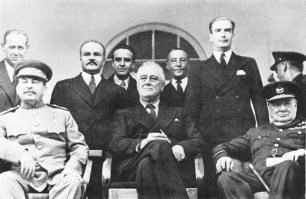
As the President’s chief diplomatic adviser and wartime troubleshooter, Hopkins oversaw billions of dollars of Lend-Lease aid to America’s Allies. His intimate partnership with Roosevelt – Hopkins actually lived at the White House for three and a half years from 1942-1944 – enabled him to build close working relationships with Winston Churchill, Joseph Stalin, and General George Marshall. Churchill was to write of Hopkins, “His was a soul that flamed out of a frail and failing body. He was a crumbling lighthouse from which there shone beams that led great fleets to harbour.”
Author David L. Roll was educated at Amherst College and The University of Michigan Law School. After more than 35 years as a partner at international law firm Steptoe & Johnson LLP, he founded the Lex Mundi Pro Bono Foundation serving as its Managing Director from 2006 to 2008. Roll is presently under contract to write a new appraisal of General George C. Marshall.
The Hopkins Touch: Harry Hopkins and the Forging of the Alliance to Defeat Hitler (published by OUP USA, April 2013).To find out more click here.
Why Harry Hopkins?
I ran into him when I was writing an earlier book, and I saw, I got a glimpse, of how he operated. It was a night (in about May of 1942) that he was with Winston Churchill at Chequers. It was the middle of the night. They were (as usual) having a beverage or two and a cable came in to Churchill from India. It announced that Louis Johnson and Churchill’s envoy (Sir Stafford Cripps) to India had reached an agreement with Jawaharlal Nehru and the other Indian leaders. The agreement was that the Indians would resist an imminent Japanese invasion in exchange for a measure of independence after the war was over.
Churchill, as you know, was quite keen on his India colony and wasn’t about to make major concessions. What happened when the cable reached Churchill for his approval was that he threatened to resign in Hopkins’ presence and Hopkins basically just off the top of his head said, “Mr. Prime Minister, Louis Johnson does not speak for the President. I can assure you.” Hopkins obviously knew Johnson DID speak for the President and he basically calmed Churchill down, they had that kind of relationship. Johnson had been undercut.
It’s sort of a fascinating incident. I got interested in pursuing it after the Johnson book came out.
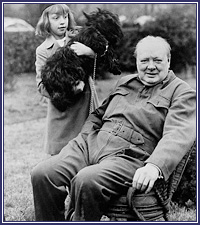
Woven into your narrative are threads drawn from previously private sources. What were they, where and how did you find them?
The entrée was Diana Hopkins (Harry’s daughter by his second wife, Barbara). She lives in the DC area still. She’s in her 80s. Barbara died of cancer in 1937. When war in Europe broke out, Roosevelt asked Harry to live in the White House, in the Lincoln Room right down the hall from the President. Diana (then about 6 or 7) went too. She lived on the third floor and Mrs Roosevelt was her surrogate mother for about 3 years. Diana now lives out in Virginia and was a wonderful source that had not been interviewed for many years. She had observations about the workings of the White House when she was a child.
Her father remarried in 1942. So Diana had a stepmother and she was able to tell me a lot of things about the stepmother who in her own right was a fascinating character and no one had really written much about her either.
The way in which I got to Diana was through her daughter, Audrey, who is a lawyer (and I’m a Washington lawyer also) with another firm down the street from where I am. That was my entrée. Diana was not interested, it was difficult to get the first interview with her. I invited her and her daughter over to our house for a few drinks and she loosened up and we got along.
I did not find a cache of letters in the attic like the kind writers love to come upon, but I had some still living sources including Hopkins’ granddaughter who is a professor of history in Georgia, June Hopkins. She’s written a book focusing on Hopkins’ years as a social worker and is a descendent of Hopkins and his first wife – another fascinating character who was a social worker and a Jewish woman who Hopkins met when he was working in a settlement house in New York City.
Hopkins once quipped that he had “a leave of absence from death.” How true a word was spoken in that jest?
That was his quip when he was over in Russia with Stalin after Roosevelt died. He really did. He had a cancer operation after his second wife died of cancer in late 1937. Hopkins had an operation at the Mayo Clinic and they discovered cancer of the stomach. They removed, some say half, some say more than that, of his stomach and they reattached the plumbing. He didn’t ever function properly after that. Although, amazingly, the cancer did not recur and usually with stomach cancer it does.
So he survived but he was always having difficulty after that absorbing nutrients. Exactly what the medical problem was is still not precisely known. Several people have written about it – coeliac disease, allergic to some of the things people are allergic to today that they didn’t know about then. He didn’t take care of himself, he drank all the time. But he had injections, took liver extract and so on. One of the reasons Roosevelt invited him to live in the White House was that he was sickly and didn’t look so good. Of course Roosevelt wanted someone to be right there anyway.
After he got back from Tehran at the end of 1943, on New Year’s Day of 1944, he basically collapsed and had to go to the Mayo Clinic to recover. They said that he did not have a recurrence of cancer, but they did experiment with various ways to increase his intake of nutrients. He was in Mayo for 6 months before he came back and then he was way behind in terms of his relationship with Roosevelt. So it wasn’t until late 1944 that he restored his place at Roosevelt’s elbow. He missed out on a lot, but he actually saved Roosevelt from making some mistakes in late 1944. He recovered enough to go to Yalta (early 1945) but he spent the entire time in bed. He did get out of bed for the plenary sessions, but spent the rest of the time in bed.
Hopkins was witness to some of the biggest geopolitical decisions of his era – including the decision that keeping in with Churchill was more important than supporting the aspirations of Indian national leaders like Nehru; and the decision that keeping in with Stalin was more important than the independence of Eastern European or the Baltic States. These big decisions had big impacts on the lives and freedoms of millions of people. How conscious was Hopkins of the effect of those decisions?
It was all about winning the war. Even Churchill said he would court the devil – meaning Stalin – to win the war. The survival of civilization was at stake. Living with Roosevelt, he knew Roosevelt’s mind, if anyone knew Roosevelt’s mind. Hopkins was not immune from being seduced by Stalin, but I think he was more careful with Stalin than he was with Churchill. He had relationships with the Soviet Ambassadors Maisky (London) and Litvinov (Washington) as well as Molotov.
There was a guy named Joseph E. Davies who was a former Ambassador to the Soviet, very wealthy, living in Washington. Davies kept copious notes of dinners and meetings where he would call Hopkins over to his house and talk about how the Russians should be handled. Hopkins was in a position where he was speaking for the President on some pretty major issues, but i think he knew where the President stood on issues like the Baltics or Eastern Europe
During his lifetime (and afterwards) Hopkins was accused of profiting from public office. Why was he targeted for such character assassination and how did he afford to live in the manner to which he became accustomed?
Well first of all he was a proxy for Roosevelt and the right wing would use him as a way to criticise or challenge FDR.
Hopkins died with almost no money. When he resigned from the Truman administration in the summer of 1945 he went to New York. He had no money, neither did his 3rd wife Louise – she was working as a nurse in the war – but they were New Yorkers and they went house hunting. He was out of the administration and he was going to write a book. You would think they would get a two bedroom or one bedroom apartment but they ended up in a three or four storey town house on 5th Avenue overlooking Central Park. He hired a writer to help him write his books and he got all his papers assembled in that place.
I asked Diana, “How could they possibly afford that?” Diana said, “Well that was Averell Harriman [son of a railroad baron, Secretary of Commerce under Truman and later Governor of New York] who basically paid for that place.” Hopkins lived there and in late 1945 he really went downhill and had finally to go into a hospital. Louise was really connected in New York. She was friends with Jock Whitney who was a very eligible, very wealthy guy who started the Museum of Modern Art.
He leant her some of his paintings – very, very famous paintings. Hopkins got interested in art as he was in the hospital surrounded by some of these paintings that were leant to him, and which were around him when he died in 1946. Diana has one of those paintings out at her house in Virginia.
Insinuations were made about Hopkins’ ties to the Soviets. Did he, as is claimed, pass nuclear secrets and arrange for shipments of uranium to the USSR?
There were allegations that came from a guy called Major Jordan who claimed to have personally observed or overheard conversations between Hopkins and Air Force officers in which Hopkins authorised nuclear secrets to be put into boxes or briefcases and boarded onto planes in Montana bound for the Soviets. Major Jordan claims Hopkins authorised the disclosure of designs for building an atomic bomb to be shipped to the Soviets. It was very specific kinds of testimony in a congressional hearing. Of course the Republicans and the right wing gave those allegations creedence.
The cross-examination and report written after, in my judgement, completely vindicated Hopkins. By the time those hearings were held, Hopkins was dead. I have a book on my bookshelf that was written by Major Jordan after that and he makes the same allegations, but there’s no proof that designs were sent to the Soviet Union through authorisation from Hopkins.
The intercepts that the Russians got in Moscow through their spies were collected, translated and published after the collapse of the Soviet Union. When that book came out there was a flurry of newspaper articles and reports saying Hopkins was one of the sources of Soviet intelligence. It later turned out that the agent concerned was Laurence Duggan. The decrypts reveal that Duggan had worked for the Soviets before he fell to his death from his office in 1948. In my view, and most rational observers conclude too, Hopkins was not a Soviet spy.
Hopkins was brilliant one on one. He was the personal bridgehead between FDR, Churchill and Stalin. Yet what makes him fascinating in terms of his own legacy was his capacity to manipulate the bureaucratic machine. How do you write an engaging portrait of someone who’s very good in meetings and very good at paperwork?
You just put your finger on it. I think a lot of writers, including me, will just try and brush that off because it’s too difficult to write.
It’s very difficult to put meat on all those meetings. How did he really drive the New Deal programs that he did before the war started? The WPA, all of the jobs programs, the Federal Writers’ Project. His battles with Harold Ickes over who’s gonna get to build all the dams and the roads. He was on top and he remained on top. It was terribly difficult with infighting and backbiting.
The same thing happened with Lend-Lease which was his major bureaucratic responsibility, he got it up and going. How do you write about that without becoming dreadfully boring? Where were the key levers that he had to pull to make Lend-Lease work? Lend-Lease was not that effective but at least it gave everybody hope. You can write about that, about how much did it actually help Russia.
And how do you express his executive leadership? It’s much easier to talk about the night he spent with Churchill or the meeting he had with Stalin. Stalin is a character that has tremendous power so you can write about the tension between the two or with Churchill, but there are hundreds of bureaucrats, faceless bureaucrats who were going out and doing wonderful things.
Ultimate armchair general question – and without preempting your work on Marshall – if you had been in Roosevelt’s chair when he had to decide who was to lead the Normandy landings, which commander would you have picked – Marshall or Eisenhower?
If Marshall had expressed his preference to Roosevelt, Roosevelt would have given it to him. But he didn’t. He said, “It’s your decision and I’ll happily go along with whatever you want to do” – although he desperately wanted to do it. At that time Roosevelt was being heavily lobbied by the other Joint Chiefs and also by a bunch of congressmen. So if I were Roosevelt then I would have given it to Eisenhower, but if Marshall had said “I want it” and I were Roosevelt I’d have done it because he needed Marshall more than anything. It turned out to be the right decision but there was a huge lobbying campaign going on in Washington at that time behind Marshall’s back.
The key thing in the Hopkins book took place in July 1942 and that’s when Marshall was desperately trying to leverage the British into letting him invade Western Europe in 1943, or if they had to do an emergency thing he’d have put something together for ‘42. But he didn’t want them to go to North Africa. Hopkins was playing both sides of that thing and I think the significant moment in those meetings in London was when the British were saying, “We’re not going to do this. We want to go to North Africa.” Hopkins wrote on a note, “I’m terribly depressed.” Hopkins wanted to go the way the British were headed and so it was a moment when Hopkins was doing something to placate Marshall, and make him think he (Hopkins) was on the General’s side, but he really wasn’t. My editor at OUP emailed me when he got to that point in the book and he said, “That’s the essence of Hopkins.”
During the 6th Democratic debate for the 2016 Presidential nomination, Senator Bernie Sanders named Roosevelt and Churchill as leaders who would influence his decisions on foreign policy. In this important election cycle how important is that question and how impressed are you by Senator Sanders’ answer?
They always say it’s the most important election of our time. I think Roosevelt was one of our most admirable presidents. What’s really hard to understand is how difficult it must have been to work with Churchill. As the balance between the US armed forces and the British shifted, Churchill would just not let go of this peripheral strategy for defeating the Germans. How maddening it must have been for Hopkins, Marshall and everyone who had to deal with him. But certainly Churchill will always be so much of a profound figure from when he basically stood alone. That was his moment.
What should be playing on the stereo when we’re reading The Hopkins Touch: Harry Hopkins and the Forging of the Alliance to Defeat Hitler?
A Nightingale Sang in Berkeley Square and As Time Goes By from Casablanca. It’s so interesting that on New Year’s Eve of 1942 they played the Casablanca movie at the White House and a week later they’re in Casablanca. If anyone ever writes a screenplay of Hopkins at that time, that would be something good to put in.
LIKE WHAT YOU JUST READ? FOLLOW US ON TWITTER! FIND US ON FACEBOOK! OR SIGN UP TO OUR MAILING LIST!
In this ‘Year of Lear’ the Edinburgh University Shakespeare Company is not afraid. It should be though, for the ‘True Chronicle Historie of the life and death of King Lear and his three daughters’ is a terrifying play. The voracious, great, Samuel Johnson could not stomach its last scenes and for near on 200 years it had to put up with the rewrite to end all rewrites. This is the tragedy that puts the brave into bravo.
And, first off, there were standing cheers at the curtain call. Will Fairhead’s performance as the foolhardy, maddening, mad, Lear deserved them. MacLeod Stephen acted out of his skin and nearly out of Poor Tom’s loincloth. Goneril (Caroline Elms) and Regan (Agnes Kenig) did that nasty, alluring thing with crystal diction on high heels and Cordelia (Marina Windsor) would break any father’s heart. Oliver Huband put the bad boy into whoreson, if that’s possible, and Tom Stuchfield made the worthy Earl of Kent positively exciting. Dual death by dagger thrust – Cornwall’s (Jordan Roberts-Laverty) and of the servant who dares protest at the blinding of Gloucester – is admirably dealt and nothing, nothing, disguises the naked brutality of the action that follows the ‘hideous rashness’ of Lear’s decision to dismember his kingdom. Cue the ‘What is Britain?’ line, topical then as now.
Still, forget history, or politics come to that, which is a professional undertaking. Henry Conklin directs a student production that bleaches affection and colour in favour of cold and dreadful suffering. The air drums relentlessly. Grey / blue, white and black predominate in a setting that may as well be called expressionist-noir. Only the all-licensed Fool is allowed to stand out but where, oh where, is the motley coat? A cheeky alpine hat is not enough support, even for the accomplished and confident Pedro Leandro. The wit and the timing worked well enough in the moment, prompting chuckles, but the effect was more often glib than penetrating. There was too much bleak distance between the king and his fool to reach across. Rid them of sympathy and these huge lines get the shakes:
Fool: Thou shouldst not have been old till thou hadst been wise.
Lear: O! Let me not be mad, not mad, sweet heaven;
Keep me in temper; I would not be mad!
Actually, of all things, it was near indistinguishable costume not age or aging that looked inescapable. No one stoops and Edgar, as poor bare Tom, is unmissable. Lear, mad, should appear ‘fantastically dressed with wild flowers’. You are more likely to notice his pronounced twitching and swinging arm than his headband. Presumably, in a man of eighty plus, this is a sign of Parkinson’s but then it makes sense to join the destruction of Lear’s reason to a modern interpretation that trembles upon Alzheimer’s.
Caroline Elms as Goneril & Oliver Huband as Edmund.
Set aside the difficulties of keeping the verse safe – and some of it is gunned down – Lear can still be a bewildering nightmare of a play, if not downright disorientating, which might put an audience alongside the blind Gloucester (Ben Schofield) who thinks that he has just thrown himself off the white cliffs of Dover when he’s just taken a tumble in a field. Incriminating letters fall out of pockets and the foul Edmund proves irresistible to both Goneril and Regan, which provoked some inopportune laughter. For some reason, at the herald’s command, ‘Sound’ [trumpet] you hear a bell. Swords are fencing foils and you are treated to some impressive attacks and parries.
At heart, of course, this is a production where that throwaway “Love you” at the end of a 21st century phone call meets Lear’s last howling entry with Cordelia dead in his arms. Conklin and cast have done their very best to get you back to 1606 when it really hurts.
An (almost) Perfect Murder is taking place at the King’s this week, which, on the whole, I think is worth witnessing. Despite the slightly shaky plot and occasional drop in pace and energy, this stage adaptation of Peter James’ original novella is filled with enough dark humour and jumpy moments throughout to ensure a thoroughly entertaining production.
The plot centres around the rocky married life of Joan and Victor Smiley, played by Jessie Wallace and Shane Richie of Eastenders fame, as they each plot to kill the other in order to run away with their respective new lovers and start a new life on a beach in Spain drinking mojitos all day. Idyllic? These characters seem to think so, and what ensues is a darkly funny and occasionally completely ridiculous two hours, as they attempt to carry out their cunning plan.
The majority of the audience are clearly there to see ‘Kat and Alfie’ in action, yet as the play progresses and we witness the duo in their first scene alone on stage together, the shadow of the soap opera couple diminishes and Wallace and Richie prove they are not one trick ponies, with convincing performances of new characters. The chemistry that works so well between the two on screen is immediately evident on stage, and despite the potentially dull moments of petty marital bickering throughout the first act, the two carry this off with such exuberance and fine-tuned comic timing that it is more than bearable to watch. Wallace in particular, through her portrayal of Joan, is successful in being totally neurotic and batty, yet kooky and loveable at the same time, and for me her solo moments on stage were one of the play’s highlights.
While not quite matching up to the prowess of Wallace and Richie, the rest of the cast are largely commendable in their efforts to bring heart to moments in the plot that don’t quite work. Stephen Fletcher as Joan’s ‘new man’ and subsequent partner in crime, Don, was delightful in a simple, buffoonish performance that worked well alongside Wallace’s Joan. Equally, Simone Armstrong as the psychic Croat prostitute provides necessary comedy and warmth. Benjamin Wilkin’s DC Grace falls slightly off the mark, and there is an immediate drop in the pace of the action in his scenes with Armstrong. While Grace doesn’t seem to do any policing and comes across as quite an unnecessary character altogether, there is definitely potential for a deeper exploration of character to create more interest that Wilkin does not fully exploit.
Michael Holt’s set works well alongside the action, using large homey rooms built on top of one another in a house-like structure to provide the different locations in the plot. High-pitched screams and ghostly flashing lights, reminiscent of an old-school horror movie, do add a certain haunted air that ensures many a jolt of shock among the audience. Director Ian Talbot has led this cast to create an audience-pleasing production whose strong performances allow us to forget about the nitty gritty details of the slightly silly plot and instead enjoy an evening of dark comedy and ultimately, sheer entertainment.
Reimagining Shakespeare’s classic tale in the modern day world of professional football may seem like lunacy to some, but with themes like loyalty, pride in one’s city, questions over physical fitness and a bit of back-stabbing, the parallels between ancient Rome and football today aren’t as dissimilar as might be first assumed – it certainly piqued my interest. However, as can happen in football, I think there was perhaps too much theorising behind this production, which didn’t quite convert to success on the pitch.
Much like when reading a Hilary Mantel novel, I worry when I find myself constantly having to flick back to the character list to be reminded who everyone is and what side they’re on. And with this interpretation assigning each character a footballing role (for one or more teams) as well, it’s certainly not the easiest to follow for someone unfamiliar with the play.
Adam Butler as Caesar is every inch the star player in this outing, commanding attention and respect from all around him, and it is easy to build rapport with him as the fans’ favourite. He is confident, charismatic and handles Shakespeare’s text very well. Charlie Angelo is also enjoyable and convincing as Casca, bringing an air of comedy into what is otherwise quite an intense evening’s entertainment.
Various women are cast in male roles in this production, the most interesting of these being Alice Markey as Decius, who holds her own with strength and precision. However, in arguably the most important scene of the play, where Calpurnia convinces Caesar not to go out, only for Decius to then persuade him otherwise, I would have really liked to have seen the female Decius use a more sexual approach to her argument, heightening the tension in the scene which unfortunately seemed rather rushed.
Indeed, missed opportunities seemed the name of the game throughout, with many great ideas going unfulfilled or veering off-target. With almost all characters being football players, it is surprising how much standing around there is in group scenes, whereas seeing some football in action and the interactions that come naturally within that could add more depth and integrity to the performance. Given the interpretation of this piece I was also disappointed the fight scenes are not reimagined as football matches between the rival factions, and that stabbing is so faithfully used as the murder method of choice. With interesting references to performance-enhancing and other kinds of drugs throughout, maybe “dagger” could have had a whole new meaning?
However, what I particularly enjoyed about this production was the inventiveness of the projected films throughout, showing characters as models, celebrities and footballers on the pitch. These sections work very well to give background and depth to the characters, and to cover any edits from the original script. Additionally, when all characters are on stage reacting to Antony’s speech after Caesar’s death the atmosphere is very powerful and sustained, while the fight scenes show great energy and control. The use of hoodies instead of cloaks, paparazzi and mobile phones were all nice modern touches showing the kind of unbridled creativity I often only see in student productions.
Overall, I admire the headstrong strategy and imagination of the squad in this play, but for me the formation didn’t allow it to achieve a resounding victory.
“People admire superheroes, the larger-than-life figures who fight for justice. They also enjoy hearing about eccentrics, and Holmes certainly is an eccentric.”
Like insects trapped in amber, preserved in situ for all time, the cast of characters who populate the environs of 221B Baker Street offer a glimpse into a vanished milieu. Sir Arthur Conan Doyle wrote what he saw. The canonical Sherlock Holmes stories are filled to bursting with charmers and charlatans, machiavellians and muddleheads inspired by, or taken directly from, the Victorian and Edwardian eras. In March 2016 MX Publishing will be setting 800 Sherlockian period portraits in a single gallery, a biographical dictionary to accompany fans as they journey in company with Holmes and Watson.
Canadian author Christopher Redmond is a Sherlock Holmes expert of exceptional standing. His Welcome to America, Mr. Sherlock Holmes (1987) chronicled Conan Doyle’s 1894 tour of America, while his In Bed With Sherlock Holmes (1984) examines the sexual elements in stories of the great detective. Arguably Christopher’s most important contribution thus far is his A Sherlock Holmes Handbook (1993) which went into a second edition in 2009.
The editor, past and present, of leading scholarly journals focused on all things Holmes, Christopher is also a founder and guiding genius behind Sherlockian.Net – the web portal about Conan Doyle’s most famous creation.
Lives Beyond Baker Street: A Biographical Dictionary of Sherlock Holmes’s Contemporaries (published by MX Publishing, March 2016).To find out more click here.
Why the lives of Sherlock Holmes’s contemporaries?
Most people who are interested in the original Sherlock Holmes are interested in the world in which he moved, and the people around him. Most of the characters in the Holmes stories may be fictitious, but they are convincing portrayals of how people lived and behaved in that era. Standing just behind them (and, surprisingly often, making brief appearances in the stories) are the real people of the 1880s and 1890s. I wanted to introduce them to readers, in more depth than the footnotes in an annotated edition can do.
Each biography is a paragraph long. How on Earth do you go about scaling down the great and the good to fit that frame?
Of course it means leaving out lots of details and many accomplishments, but it’s always possible to summarize who an individual was and what he or she did. I was constantly asking myself: what would an encyclopaedia say about Willam J. Burns? How would I tell my grandchild the story of Nelly Bly? What’s the elevator pitch for Sir Thomas Lipton?
Lives Beyond Baker Street is going to contain the lives of names who remain household even today, but who’s the who in there who’s been most unfairly overlooked?
That would be Bertha (Ringer) Benz, the wife of automotive engineer Karl Benz, who drove his prototype car 120 miles cross-country in 1886 to demonstrate that it worked, and invented brake linings during her trip. Without her efforts at marketing and technical improvement, the “100-horse-power Benz car” mentioned in one of the Sherlock Holmes stories would never have existed.
What kind of sources have you been using?
My introduction to the book lists a number of Sherlockian sources that have helped me identify people I should include. General information about them came from reference books and, primarily, online reference sources. I have to acknowledge constant use of Wikipedia, which contains a mountain of information about both well-known and obscure historical figures; the hard part is knowing which details to pull out and how to combine them into a narrative that’s interesting and doesn’t waste words.
Why only 800 biographical sketches? Or why so many?
I set that as the target early in the project, when I thought that each biography could be limited to 100 words. Eight hundred paragraphs each 100 words long would make 80,000 words, which I thought was a reasonable size for a substantial book. Unfortunately I rarely was able to stick to the 100-word target. I did manage to write exactly 800 biographies, if my count is correct, although one reviewer has already said that he thinks there are 806.
Why does Sherlock Holmes continue to fascinate, especially North Americans?
People admire superheroes, the larger-than-life figures who fight for justice. They also enjoy hearing about eccentrics, and Holmes certainly is an eccentric. Discriminating readers admire his dedication to sheer logic, pure reason, at the expense of emotion and human frailty. And, to justify my book a little further, the Victorian age in which his life is set has a great appeal because we see it as stable and reasonable, a time when inventors and reformers were making life a little better every year.
How did your own love and fascination for Holmes begin? Does it extend to Conan Doyle’s other work?
I read Sherlock Holmes as a young teenager — most people did in those days — and never really grew out of my enthusiasm. I have read most of Arthur Conan Doyle’s other books but don’t often return to them.
Conan Doyle wrote the original Sherlock Holmes stories, inspiring others to take up his characters and carry on writing where he left off. Sir Arthur was the first Holmes writer, but is he still the definitive and best?
Yes indeed. Of course he is the definitive author because he is the one who created the character and his immediate setting, his Watson and Mrs. Hudson, his Baker Street sitting-room and magnifying glass and all the rest. Any subsequent Sherlock Holmes is based on the original, either trying to match it or deliberately varying from it. And ACD is the best author of Sherlock Holmes because of his brilliantly clear, simple, straightforward and yet imaginative style, which has not been equalled and is infuriatingly hard to imitate.
If you were having a dinner party, and could only invite two of the figures profiled, who would you invite?
I can eliminate many of the 800 immediately: no murderers at dinner, please, no politicians, and I think no soldiers if their talk would all be of blood and battles. I would love to dine with Caroline Otero, but perhaps that meal should be tête-à-tête rather than with a party! So perhaps I’ll choose Anthony Hope Hawkins, who wrote some of the Victorian era’s other popular adventure fiction including The Prisoner of Zenda, and music-hall star Bessie Bellwood, who was known for her uninhibited repartee. That should keep the conversation lively.
What should be playing on the stereo when we’re reading Lives Beyond Baker Street: A Biographical Dictionary of Sherlock Holmes’s Contemporaries?
I don’t have a close relationship with music, and I don’t play anything when I’m reading or writing, but perhaps it would be pleasant to hear something by one of the composers or performers mentioned in the book. I wonder if there are any recordings of Sir Charles Hallé’s orchestra, which Sherlock Holmes himself supposedly heard in concert.
LIKE WHAT YOU JUST READ? FOLLOW US ON TWITTER! FIND US ON FACEBOOK! OR SIGN UP TO OUR MAILING LIST!
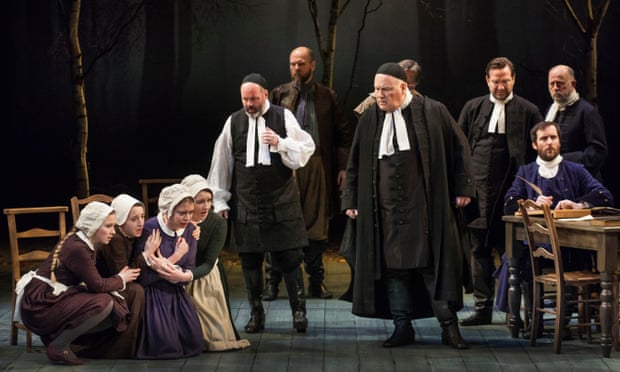
Nothing says “a good night” like unchecked hysteria, unopened hearts and unnecessary hangings. That’s why I’m always excited to see a production of Arthur Miller’s “The Crucible”, and even moreso in the beautiful Lyceum theatre. But does Mark Thomson’s staging of Miller’s work deserve a standing ovation or a slipknot? The star rating above may be a small clue as to which is true: this was a beautiful, if flawed, production of a well beloved American classic.
Set in the year 1692, ‘The Crucible’ follows the path of destruction wreaked by mass hysteria, lust and shame in the town of Salem, Massachusetts. As rumours of witchcraft fly and secret affairs are uncovered, what begins as a simple dance in the woods becomes a matter of law, life and death. Lighthearted stuff.
As you might imagine, Miller’s classic demands atmosphere. From the outset, it’s clear that Thomson has a knack for choosing set designers. It’s not often I open with talk about the furniture, but I was extremely impressed with the quiet ingenuity of Crucible’s set. From the authentic, rustic comfort of the Proctor house to the cold rigidity of the courthouse, each setting hit all the marks in terms of visuals. But even further, it wasn’t just pretty – the use of space was downright clever. Each little quadrant of the stage was self-contained enough to render smaller scenes intimate, and yet interconnected enough to make group sections seem cavernously intimidating. And the use of trees for scenery and blocking lent what felt like meters of depth to a finite stage. For set alone, this show ticked all the boxes.
But luckily, the set isn’t all I’ve got to write happily about. As can be expected from the Lyceum, the acting talent on display is considerable – my personal MVP goes to David Beames as the most entertaining and human interpretation of Giles Corey I’ve seen yet. If I could pay him to narrate my life, you’d bet he’d never go hungry.
But aside from pure entertainment value, I was most impressed by Richard Conlon as Reverend John Hale. When I first read The Crucible, I disliked Hale. I thought he was two-dimensional and boring – but none of these problems so much as touch Conlon. No other portrayal of the character has been as compelling or realistic as his, and I’ve similarly never felt for Hale as much as I did in this production. The emotional depth, the body language, the subtle vocal tics; they all come together almost flawlessly. Fan-bloody-tastic.
Similarly, Philip Cairns shines as John Proctor, applying a great amount of force and raw emotion to the character’s more intense scenes. He moves from tenderness to scepticism to fury as if it were easy as breathing – though this is no doubt benefited from acting opposite the likes of Irene Allan as Elizabeth Proctor. The part of Elizabeth is by no means easy: showing an audience the culmination of years of insecurity and indecision without overacting is like slacklining drunk; that’s what I was so pleased to see how powerful the character was in Allan’s hands. Her final scene and famous closing lines gave me chills.
That same strength runs through the rest of the cast. Meghan Tyler as Abigail Williams is wonderfully duplicitous, mixing sensuousness with devious brutality in the same breath. The Putnams (Douglas Russell and Isabella Jarrett) are as abrasive as the narrative demands, and Greg Powrie’s Reverend Parris is pathetic is the best way possible. Even the young company capture the panic and vulnerability of young girls in the hard frontier of the American East.
So, with such a talented cast and clever design crew, why isn’t this a five star show? Predictably, there are always a few flies in the soup.
As a general note, whilst the accent work at play generally good, it was prone to slippage. Often, the cadence showed more sense than the characters by fleeing from Massachusetts to upstate New York – and, on occasion, Cairns’ Bostonian drawl threatened to slide into a strange mix of Henry Kissinger and Arnold Schwarzenegger. Whilst it won’t bother the average Brit theatregoer, those more familiar with the voices of the new world may find it slightly grating.
Furthermore, I had a huge problem with the sound design. Whilst at times it was a dramatically advantageous decision, at others (especially in the courtroom scenes) it was, at best, a distraction and at worst it utterly broke the tension and dramatic pacing of the scene. I found myself consciously wondering why on earth a scene of screaming hysterics and implied cold-blooded murder for the sake of sex was accompanied by a pleasant violin trill in a major key. In any other show this might not be such a large issue, but in one which is so dependent on atmosphere and audience absorption, it gets amplified.
And it’s in the hysteria that we find my biggest complaint with the production. Whilst certain scenes were certainly not lacking in gravitas, the play’s overall arc of tension was patchy. Some sections jump from being devoid of dread to bursting with it – instead of a steadily escalating fever pitch, it jumps from extreme to extreme.
Unfortunately, this also wasn’t helped by the fact that it felt strangely static at points, as if all the fear had been sucked out of the room. There’s a difference between strained silence and dull quiet, and sometimes this production seemed to confuse them.
Do I think these flaws ruined The Crucible? Far from it. Mark Thomson’s formidable cast rides out the few choppy waves this show presented, and Miller’s famous talent for dialogue is hardly diminished. There are definitely more strengths to this production than weaknesses, and the audience chatter at both the interval and end attest to that fact.
If you get the chance, definitely give The Crucible a look. It’s a production that never fails to entertain whether you’re a Miller virgin or a die-hard fan. Though perhaps a little clunky in the seams, the overall fabric of the show is just as bleak and brilliant as it Miller’s tragedy demands. You might not see Sarah Good with the devil, but you’ll definitely see a strong production.
“Dr. Bell kept the name of his confederate anonymous, but I have deduced that he was Arthur Conan Doyle. Who better to work with on the Ripper case than the world-famous mystery author?”
Could Sir Arthur Conan Doyle have deduced the identity of Jack the Ripper? That’s the premise of novelist Diane Gilbert Madsen’s third book featuring ace investigator Daphne December McGil.
Author Diane was born in Chicago and has an M.A in English literature (specializing in the 17th century) from Roosevelt University. Cited in both the World Who’s Who of Women and the Who’s Who in Finance and Industry, Diane worked a range of government jobs from Deputy Village Clerk, to Director of Economic Development for the State of Illinois. She oversaw the Illinois Film Office during the filming of Blues Brothers.
Diane became a writer after moving to Florida with her husband, Tom. Her acclaimed DD McGil Literati Series of murder mystery novels also includes Hunting for Hemingway & A Cadger’s Curse.
The Conan Doyle Notes: The Secret of Jack the Ripper (published by MX Publishing, August 2014).To find out more click here.
Why Conan Doyle and Jack the Ripper?
First of all, thanks so much Dan for interviewing me about The Conan Doyle Notes. I must tell you that I love your questions. I’ve always been a fan of Doyle, and I’ve always been interested in the Ripper murders. These two passions fortuitously came together resulting in my third book.
It all began because I was fortunate to know Ely Liebow when I lived in Chicago, and we talked about his book, Dr. Joe Bell, model for Sherlock Holmes, which mentions that Joe Bell was given access to the Ripper files and that he solved the case with “another friend who liked solving deep problems.” Bell himself wrote in an article in Tit-Bits in October of 1911 that “there were two of us in the hunt, and when two men set out to find a golf ball in the rough, they expect to come across it where the straight line marked in their mind’s eye to it, from their original positions, crossed.
In the same way, when two men set out to investigate a crime mystery, it is where their researches intersect that we have a result.” Dr. Bell kept the name of his confederate anonymous, but I have deduced that he was Arthur Conan Doyle. Who better to work with on the Ripper case than the world-famous mystery author? Doyle and Bell were friends and colleagues, and it stimulated my imagination. Dr. Bell and his anonymous friend, according to Ely Liebow, deduced the murderer and each wrote a name on a piece of paper, put the paper in an envelope and then exchanged enveloped.
Both men had the same name, and Dr. Bell sent a report to Scotland Yard. A week later, the Ripper murders ceased, but no report has ever been found. This incident forms the basis of the plot in The Conan Doyle Notes, and I have endeavored to include only factual information about the Ripper case. Although I name the suspect whom I believe was deduced by Doyle and Dr. Bell, I include the clues I used to arrive at my conclusion. I had lots of challenges writing this book, but I loved doing it and hope my readers enjoy it as much as I do.
The Conan Doyle Notes: The Secret of Jack the Ripper is inspired by Sir Arthur’s historical trip to Chicago. When and why did that happen?
Conan Doyle arrived in Chicago on October 12, 1894 when he was 35 yrs old, in the prime of his life and famous world-wide for his Sherlock Holmes stories. He was booked in 15 northeast cities for a series of 67 “set” lectures including Readings & Reminiscences and Facts and Fiction. He wanted to see the states – his favorite childhood books were American wild west adventure stories, especially those of Bret Harte.
The US population at this time was double that of Great Britain and a big market for selling his stories. He stayed at the Grand Pacific Hotel, a 6 story luxury hotel where Oscar Wilde had stayed in 1882 on his 1st tour. He was shown the Water Tower, the elevated and Marshall Field’s, and he took a lot of snapshots whenever he could with his Kodak camera. It is highly likely that he met the Chicago lumber baron, David Gage Joyce, on this trip. Joyce is another character I used in The Conan Doyle Notes because David Gage Joyce did in fact own the manuscript of Doyle’s The White Company, which is now at the Newberry Library.
Doyle arrived a year after he’d written The Final Problem, killing off Sherlock Holmes. In Britain, Doyle had been shocked when over 20,000 people cancelled their Strand Magazine subscriptions in protest. The magazine nearly went under, and the staff referred to Holmes’s death as “the dreadful event.” Although the Chicago press greeted him warmly, they too all wanted to know WHY he’d killed off Sherlock Holmes. Doyle was dismayed. He didn’t want to talk about his detective, and he revealed his true feelings when he said: “I have been much blamed for doing Holmes to death, but I hold that it was not murder, but justifiable homicide in self-defense, since, if I had not killed him, he would certainly have killed me.”
Interestingly, Doyle was asked about the Ripper murders on his tour of America in 1894. He must have given some thought to the Ripper case, as he outlined to an American journalist just how Sherlock Holmes would have set about tracing the culprit:
“I am not in the least degree either a sharp or an observant man myself. I try to get inside the skin of a sharp man and see how things strike him. I remember going to Scotland Yard Museum and looking at the letter which was received from the Ripper. Of course it may have been a hoax, but there were reasons to think it genuine, and in any case, it was well to find out who wrote it.
“It was written in red ink in a clerky hand. I tried to think of how Holmes might have deduced the writer of that letter. The most obvious point was that it had been written by someone who had been in America. It began ‘Dear Boss’ and contained the phrase ‘fix it up’ and several others which are not usual with Britishers. Then we have the quality of the paper, and a round, easy, clerky hand. He was, therefore, a man accustomed to the use of a pen.
“Having determined that much, we cannot avoid the inference that there must be somewhere letters that this man has written over his own name, or documents or accounts that could readily be traced to him. Oddly enough, the police did not, as far as I know, think of that, and so they failed to accomplish anything. Holmes’ plan would have been to reproduce the letters in facsimile and on each plate indicate briefly the peculiarities of the handwriting. Then publish these facsimiles in the leading newspapers of Great Britain and America and in connection with them offer a reward to anyone who could show them a letter or any other specimen of the same handwriting. Such a course would have enlisted millions of people as detectives on the case.”
What do we know for certain about Conan Doyle’s own reaction to the Ripper murders?
Here’s information I’ve collected on Doyle and the Ripper murders:
Doyle visited Scotland Yard’s Black Museum on December 2, 1892, four years after the Ripper murders. He was shown one of the Ripper letters. He said that the murderer might have dressed as a woman.
On April 19, 1905, nearly 7 years after the murders, a number of police gave Doyle a guided tour of all the Ripper murder sites in Whitechapel. Doyle said the police knew who the Ripper was.
Nigel Morland, who died in 1986, possessed an enormous library of books on criminology and his wide circle of friends shared his considerable knowledge of the subject, especially the mystery of Jack the Ripper. Morland said Edgar Wallace had told him he knew the Royal identity of Jack the Ripper and Sir Arthur Conan Doyle told him the same thing.
Doyle and Dr. Joseph Bell, one of the world’s first forensic pathologists, were friends and colleagues. Few people know that Bell was part of the police net that was thrown around the Ripper, in spite of the fact that Dr. Bell lived hundreds of miles from the Ripper murders in London. Dr. Bell was set up in Edinburgh while the Ripper murders took place in London. However, the London force was under so much pressure, they were ready to try just about anything. Dr. Bell was given all the facts of the case by the Metropolitan Force. Based on this, he wrote a report which named the suspect he believed was the Ripper. However, Dr. Bell’s report disappeared and has never been found.
Doyle’s son, Adrian Doyle, told Tom Cullen in 1962 what he remembered of his father’s views on the Ripper case: “More than 30 years having passed, it is difficult to recall his views in detail on the Ripper Case. However, I do remember that he considered it likely that the man had a rough knowledge of surgery and probably clothed himself as a woman to approach his victims without arousing suspicion on their part.” (From: Conan Doyle, Detective, By Peter Costello)
The setting for the novel is the Kenwood / Hyde Park districts on the Southside of Chicago, home to the Obama family. Dust of your Director of Economic Development hat for a second, tell us about the area and its advantages as a literary setting.
I love Chicago. It’s where I grew up, and I try to use it as a “character” in the DD McGil Literati Mystery Series. I recently wrote an article entitled “Chicago Rules,” in which I explain my fascination.
Chicago – my city of birth Chicago – my city of choice. My curse and my muse That’s why I refuse To write about anywhere else.
There is a distinct feel about the place and its people. We Chicagoans tend to be down to earth and hard working and perhaps a little sentimental. We love our heroes and hate our villains. We support our city, our teams, our schools and our friends; and above all we display an enduring hope for the future. These characteristics come from our connective, collective experiences living in the city.
First of all, we must contend with our name which, taken from the Ojibwa Indians, means ‘skunk.’ Then too, we used to be known as the Second City before LA went on steroids. We knew we were number two, not number one, and we were never allowed to forget it. That mind set fostered a certain perverse twist to our egos and our ids. Then there’s our weather. Let’s face it, when it’s nice, it’s really nice, but when it’s not, it’s horrible. And it’s horrible usually 6 months out of the year. That’s why we don’t act like carefree Californians. No – we need our coats, our scarves and our gloves. We don’t go naked into that good sunlight in January, and it marks us for life.
On top of that, as fans of the Chicago Cubs, we are doomed to never win a pennant. In setting my books, I’ve used many well known Chicago landmarks such as Soldier Field, Wrigley Field, and Graue Mill, the oldest working mill in the area and where I served as a Board Member. I’ve also used all four of Chicago’s seasons to give readers a feel of the hardiness it takes to be a Chicagoan. And, as with every writer, my characters are connected to my own life and experiences in the city.
My main character, DD McGil, lives in Wrigleyville, as I did, and she’s a Cubs fan, as am I. Her university connections come from my own associations with the University of Chicago which I attended as an undergraduate. Like Chicago, DD is stubborn, sassy, determined, and loyal to her friends. Another character in the series, Tom Joyce, is a real Chicagoan who owns and operates the famous Joyce and Company Rare Books on Racine Street. He’s been great fun to include and has also been invaluable as a resource on texts and book prices and rare manuscripts and ephemera.
When did you and DD McGil first “meet”?
When I sat down to write a mystery story, I knew I wanted it to be a “Literati” mystery, and I knew I wanted to write first person. So I decided to use a female investigator. Many people have asked if I am DD McGil, but as Hemingway pointed out, a writer’s characters are a combination of many people and many observations. There is a core of DD that’s very like me, but I’ve tried to make her fit the mold of an academic turned insurance investigator who’s had some difficult times in life. And she, like the other characters in my Literati Mystery Series, always surprises me with dialogue and actions that I haven’t planned out. That’s the fun of writing.
What are the qualities that make McGill an engaging personality?
DD is a fun character to write. She’s always surprising me. She lives in Chicago and is very quick on her feet. She’s loyal and has a soft spot for her friends and her neighbors, but she has a lot of quirks, too. She’s lippy and sassy and superstitious, but not nearly as much as her Scottish Auntie Elizabeth. She loves puzzles, like any good detective, and as an insurance investigator, she’s always throwing around statistics.
She’s fond of her cat, Cavalier, and she definitely likes men – a lot. She also has a sense of humor and is able to laugh at herself when she gets into a scrape, which she regularly does. Here’s what Kirkus Reviews said: “Crime follows DD McGil almost as closely as eligible bachelors do. DD’s dry wit and internal monologue go far… Another fast read with quirky characters and due reverence for the Second City.”
Do you ever look back and wish you’d given her a sidekick?
In my first DD McGil Literati Mystery, A Cadger’s Curse, my agent loved the bookseller character, Tom Joyce, and she urged me to write more about him in the stories. He turned out to become DD’s sidekick. Tom is a real person, a Chicago icon who runs Joyce and Co. Rare Books and Appraisals. Whenever we’re at a book signing, he signs as many books as I do. As a writer, especially since I write in the first person, using the device of a sidekick allows me to add a great deal to the story through the eyes and actions of someone other than DD herself.
If you were on a gameshow and your grand prize could either be a secret trove of Conan Doyle papers or a lost manuscript of Robert Burns (the premise of A Cadger’s Curse) which would you pick (assuming you didn’t go for the holiday of a lifetime)?
Could any true Sherlockian turn down the grandest gameshow prize of all time – a secret trove of Conan Doyle papers? Some have (literally) died for this – I reference the strange death of Lancelyn Green, who was obsessed with Doyle and Sherlock Holmes. By the way, Lancelyn Green was the model for the character of Philip Green in The Conan Doyle Notes. Philip Green is a character in The Disappearance of Lady Frances Carfax. He is one of a number of character names from the Canon I’ve used in
Together you and McGil have investigated Hemingway (Hunting for Hemingway), Burns (A Cadger’s Curse), and Conan Doyle. Who’s next?
I am working on the next three in the DD McGil Literati Mystery series: The 4th book in the DD McGil series is The Cardboard Palace, featuring a true incident in the life of Bram Stoker. DD investigates the oldest women’s club in Chicago and finds that – The candle burns, And lights the way. For trouble past, Someone must pay.
The 5th is Dark As Shadows, featuring a true incident in the life of Robert Louis Stevenson. DD’s Auntie Elizabeth – known as the Scottish Dragon – asks DD to drop everything and “hie to Scotland for it’s dark as shadows here.”
The 6th is Restless Bones which features an incident in The Gold Bug by Edgar Allen Poe. DD’s idyllic vacation is interrupted when her lover Scotty is determined to go hunting after Captain Kidd’s buried treasure.
Right now I’m editing my first non-fiction book for MX Publishing entitled, Cracking The Code of the Canon: How Sherlock Holmes Made His Decisions. It takes a look at how Holmes views crimes, criminals and victims and what he considers justice in the Canon. It will be out shortly.
I’ve also written a play entitled, Sherlock Holmes and the Queen of Hearts. My agent has submitted it to several theaters in hopes of getting it produced soon.
What should be playing on the stereo when we’re reading The Conan Doyle Notes: The Secret of Jack the Ripper?
Read the book under a soft light so there are shadows and dark corners about you while you listen to the soundtrack from Link Wray’s 1959 instrumental Jack the Ripper which as I understand begins with an evil laugh and a woman’s scream.
LIKE WHAT YOU JUST READ? FOLLOW US ON TWITTER! FIND US ON FACEBOOK! OR SIGN UP TO OUR MAILING LIST!


 Woven into your narrative are threads drawn from previously private sources. What were they, where and how did you find them?
 Hopkins was witness to some of the biggest geopolitical decisions of his era – including the decision that keeping in with Churchill was more important than supporting the aspirations of Indian national leaders like Nehru; and the decision that keeping in with Stalin was more important than the independence of Eastern European or the Baltic States. These big decisions had big impacts on the lives and freedoms of millions of people. How conscious was Hopkins of the effect of those decisions?
 Hopkins was brilliant one on one. He was the personal bridgehead between FDR, Churchill and Stalin. Yet what makes him fascinating in terms of his own legacy was his capacity to manipulate the bureaucratic machine. How do you write an engaging portrait of someone who’s very good in meetings and very good at paperwork?



 First of all, we must contend with our name which, taken from the Ojibwa Indians, means ‘skunk.’ Then too, we used to be known as the Second City before LA went on steroids. We knew we were number two, not number one, and we were never allowed to forget it. That mind set fostered a certain perverse twist to our egos and our ids. Then there’s our weather. Let’s face it, when it’s nice, it’s really nice, but when it’s not, it’s horrible. And it’s horrible usually 6 months out of the year. That’s why we don’t act like carefree Californians. No – we need our coats, our scarves and our gloves. We don’t go naked into that good sunlight in January, and it marks us for life.
 Get Your Coats On
You must be logged in to post a comment.