‘The Driver’s Seat’ (Lyceum: 13 -27 June ’15)

Driver's Seat

“Prime Muriel Spark”

Editorial Rating: 4 Stars Nae Bad

Never mind the 4th wall, how about knocking down the back wall? Break out upstage centre from the Lyceum and you’ll be into Saltire Court on Castle Terrace. You know you’re in one of Edinburgh’s superior premises when the tenants include global accountants Deloittes and KPMG. A neat, if accidental, location then for a play whose principal character has had enough of audit, who hammers her stapler into her desk, has hysterics and takes a holiday but with absolutely no intention of coming back to the office.

Bye-bye patronizing suits, hello lemon yellow, orange, purple and blue V stripes. It’s 1970 (kind of), when you could buy novelty knives at the airside shops before boarding at Gate 14. Stressed out Lise is all decked out for the fervid south – could be Naples, might be Palermo – and with one type of man very definitely in mind.

This is prime Muriel Spark territory. She had been living in Italy since 1967 and the shocker that is The Driver’s Seat was published three years later. Here we have it adapted – call it exposed – and directed by Laurie Sansom in a one act, ninety minute, cross-over between garish psychodrama and police procedural. It is articulated, televisual theatre; think anglepoise lamp on accountant’s desk and mess with the springs.
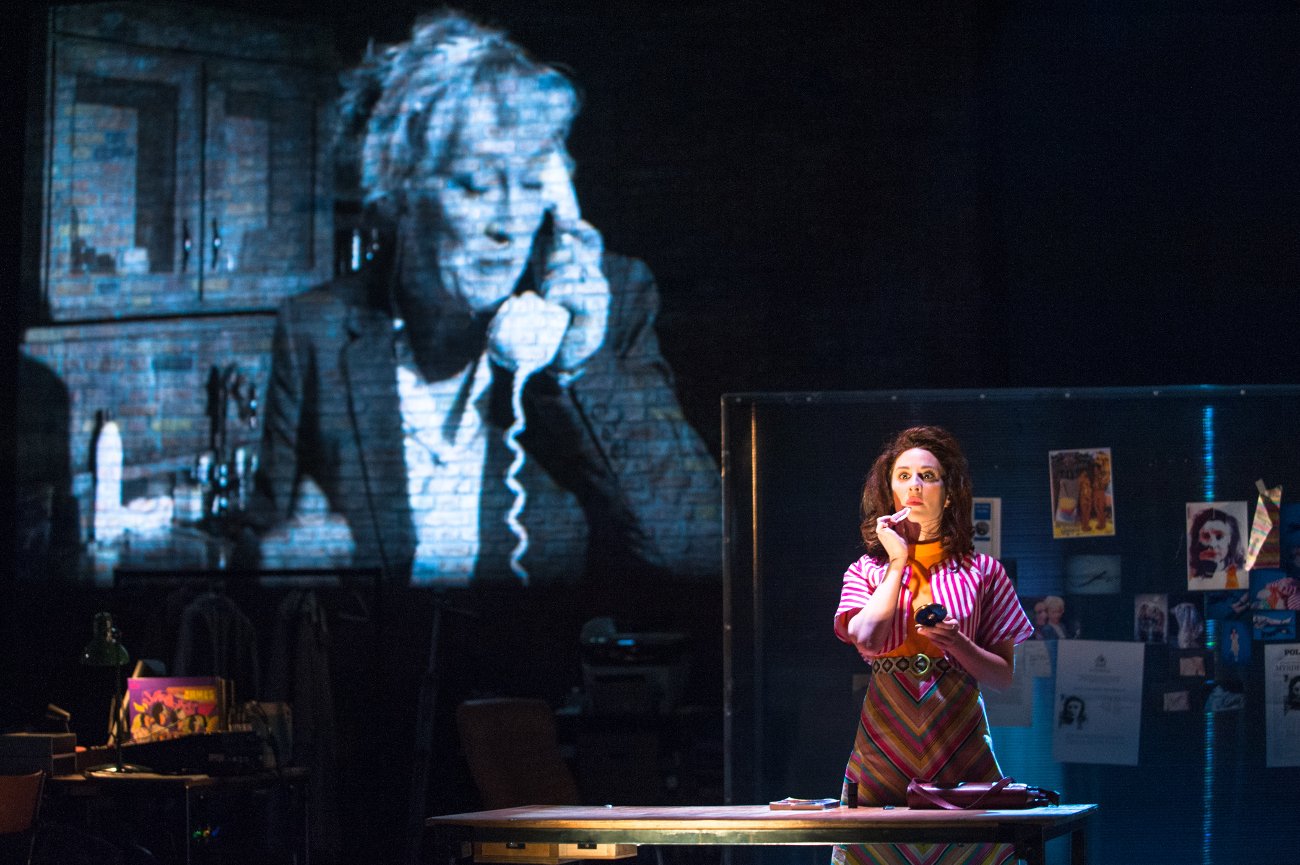
Gabriel Quigley (on screen) and Morven Christie. Photos: Tommy Ga-Ken Wan

Gabriel Quigley (on screen) and Morven Christie.
Photos: Tommy Ga-Ken Wan

Centre stage is the incident ‘room’. As the investigation into ‘What-Happened-to-Lise?’ is conducted, so information, photographs, etc. go up onto a transparent wipe board. You see ‘VICTIM’ in marker pen. That’s retrospective action for you, sorted, marginally distracting, smart; very unlike the downstage action, where ‘What-Is-Happening-to-Lise’ is compulsive, jumpy, and unstable.

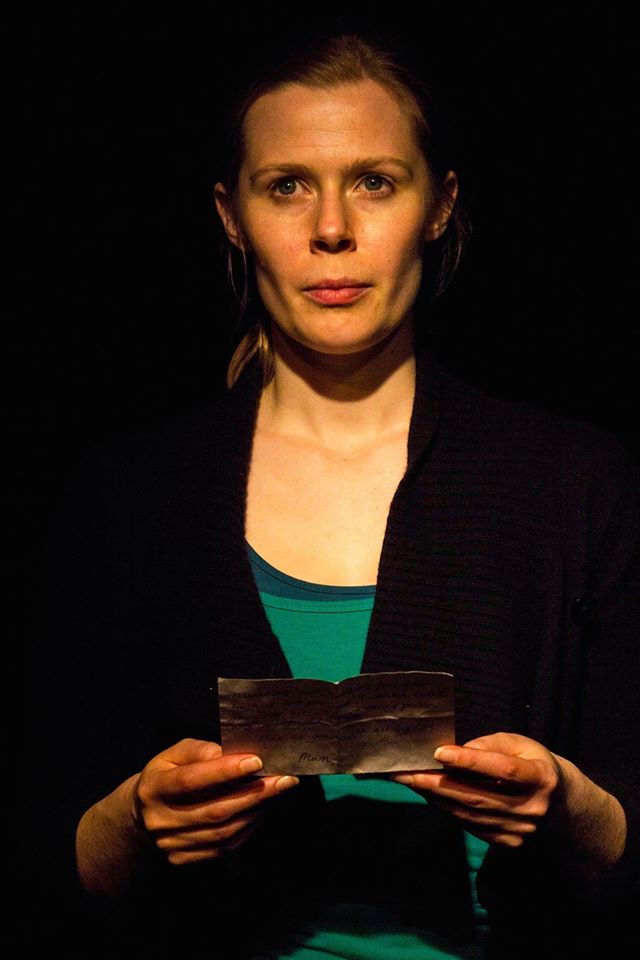
Lise herself (in an impressively tight performance by Morven Christie) is vulnerable because she is alone and out there, fixated, conflicted. At home in her bedsit, trying to sleep, she suffers – hands over ears – the moans of her neighbours having sex. Thirty-four years old in the book, she masquerades as the lady abroad: at one point a ‘widow and an intellectual from Iowa, New Jersey’ (sic) – supposedly fluent in four languages but plainly lost when it comes to real Italian. And it is real, via potent supporting roles from Ivan Castiglione and Andrea Vopetti.

There are no hands to the big clock in the incident room, which does point to alienation theory, but up come the sound cues and they appear, chronicling Lise’s known movements from hotel lobby to department store . There’s live mapping of her taxi on the large upstage screens while handheld TV cams relay fraught close-ups. You would think that little is hidden on such a tech-savvy set but as to why Lise acts the way she does there’s not much to go on, which is probably the existential point. Are we watching an object/abject study in self-destruction or an introverted and skittering operetta, complete with CS gas? Composer and sound designer Philip Pinsky uses mild jazz in ironic counterpoint to the spiky and alarming story. Did he, I wonder, smile at the desperate lyrics of the Sniff ‘n’ The Tears’ hit single Driver’s Seat (1979), where  “She had another way of looking at life”?  Accept stunned recall of Elizabeth Taylor & Ian Bannen in film-of-the-book Identikit of 1974 and you can see that Spark’s work is heading straight for Thelma and Louise some twenty years down the road, except that Lise has no buddy to go over the edge with.

Take that original, startling writing of 1970 – you’ll want to read it – and lay bare its mucky gender issues. The result, from creatives and excellent cast, is hard sprung. You won’t enjoy its forlorn subject, unrelieved by some crazy Italian driving in outsize shades, but it is acute work.

A National Theatre of Scotland production.

nae bad_blue

Star (blue)Star (blue)Star (blue)Star (blue)

Reviewer: Alan Brown (Seen 18 June)

Go to The Driver’s Seat and the National Theatre of Scotland here.

Visit the The Lyceum archive.

49 +3 Shows to See #EdFringe15

It’s been two weeks now since the official programme launch, and we’ve finally made it through all 439 pages, featuring over 3,330 shows. Needless to say we’re VERY excited for what this year’s Fringe has in store.

Being the arts geeks that we are, Alan Brown and I have managed to narrow down a list of 49+3 shows we’re really looking forward to seeing, shared below to help guide your choices.

We haven’t been bribed, cajoled, threatened or in any other way influenced in making our selection, we’re just being honest.

+ Many thanks to Loclan Mackenzie-Spencer and Andrew Strano of Nailed It! for their song in praise of our choices!

So, without further ado…

One from each of the 10 categories:
Cabaret – Nailed It!
Children’s – Dreamkeepers
Comedy – Matt Forde: Get the Political Party Started
Dance, Physical Theatre and Circus – Hitch!
Events – Edinburgh Gin’s Night of Literature and Liquor
Exhibitions – Unexpected Excesses
Music – Afropella Night
Musical Theatre – The Bakewell Bake Off: A New Musical
Spoken Word – TES
Theatre – Trans Scripts

My top 10
The Misfit Analysis
La Meute (The Wolf Pack)
Citydash
Brian Molley Quartet – Britunes
Ushers: The Front of House Musical
Poetry Can F*ck Off
Bloody East Europeans
Clickbait
Willy’s Bitches
Smother

Alan’s top 10
Ada
Down & Out in Paris & London
Light Boxes
Our Ladies of Perpetual Succour
Picasso stole the Mona Lisa
Scarfed for Life
The Sunset Five
The Titanic Orchestra
Wendy Hoose by Johnny McKnight
What Would Spock Do?

19 other recommendations (including returning favourites from former years)
Bromance
Every Brilliant Thing
Homme | Animal
Can’t Care, Won’t Care
Austentatious: An Improvised Jane Austen Novel
Doris, Dolly and the Dressing Room Divas
The Art of Reduction and the Distillation of Humanity: Whisky Theatre
Jess Robinson: The Rise of Mighty Voice
Chicken
The Jennifer Tremblay Trilogy. Parts 1, 2 & 3
We’re not dogs
The Oxford Gargoyles: Jazz a Capella
UKIP! The Musical
Going Viral
Dorian Gray
Lemons, Lemons, Lemons, Lemons, Lemons
Richard III
My Name is…
The Rape of Lucrece

+3 we both agree on!
Crash
E15
Free for All

Phew – bring on August! If there are any other shows you think should be brought to our attention please get in touch with us at plus3@edinburgh49.com

.

‘Yer Granny’ (King’s: 2 – 6 June ’15)

Gregor Fisher as Granny. Photography: Manuel Harlan

Gregor Fisher as Granny.
Photography: Manuel Harlan

“A performance of grotesque delights”

Editorial Rating: 5 Stars: Outstanding

This is a rollicking and roiling mix. The Russo family grew up with Fritto Misto and Potato Croquettes but it has all gone belly up since then. Their chip shop closed two months ago and perky Cammy is scraping a living out of his old burger van. There is no De’Longhi Deep Fryer on the worktop, just a hazardous barrel drum of cooking oil downstage right. Halfway to tragic maybe, but I took my seat to the whooping sound of Slade’s Mama Weer All Crazee Now, which (looking back) is one lurid invitation to excess. “Don’t stop now a c-‘mon” is what happens next and it’s flammable fun.

Writer Douglas Maxwell has lifted Roberto Cossa’s La Nona from Buenos Aires in 1977 and puts it down in Glasgow in the exact same year. Cue the glam soundtrack of the late 70s with Mrs Thatcher warming up and set that against the dismal fortunes of famiglia Russo; not that dizzy Marissa (20) knows any Italian beyond “Ciao” but at least she’s bringing home some cash. Best not ask what her boyfriend is selling to the kids in the high rise flats. Her uncle Charlie is definitely not making it as a composer, although his aunty Angela has high hopes for him. She hears his bedsprings squeaking rhythmically at night, you understand. Marie, Cammy’s wife and Marissa’s mother, is keeping the home together but is screaming inside, not least when the Bay City Rollers are playing Money Honey. And that leaves Nana, 100 years old, a metre wide, and yer granny at the maw of Hell. Against Nana, no jar of mayonnaise is safe, no food bank secure.

Gregor Fisher, as Nana, puts in a performance of grotesque delights. He growls Glaswegian gobbets, waddles athletically, and reaches for the digestives behind the clock with unflinching courage. The audience actually feels for the old glutton as she balances on the step stool. The family chippy was ‘The Minerva’ but that didn’t last. Nana is the awful immortal here. Invoke her, if you dare, by calling out “Anymare?” Ironic that the Romans got around to seeing Nemesis, aka Nana, as the maiden goddess of proportion.

Barbara Rafferty as Aunt Angela

Barbara Rafferty as Aunt Angela

Maureen Beattie as Marie

Maureen Beattie as Marie

Considerable credit therefore to Maxwell’s adaptation and to Graham McLaren’s direction for ensuring that Nana does not swallow the whole play. Cammy (Jonathan Watson) gives us two hilarious spiels of HM the Queen in his shop – reopened for business. He’s a proud Unionist is our Cammy but still manages to tell the sovereign to bugger off. She, for good measure, calls him a fanny. By contrast, Maureen Beattie is serene and strong as Marie and would save them all if only her good sense got the respect it deserved. Unfortunately that’s unlikely to begin with and downright impossible when sensitive brother-in-law Charlie (Paul Riley) has a mad and smutty idea. Enter very slowly rival fish bar owner Donnie Francisco (Brian Pettifer) halfway through the second act who, together with Barbara Rafferty’s amphetamine addled Angela, creates category one scatological bedlam. Suddenly poor, obliging Marissa (a great turn by Louise McCarthy) has a lot on her plate too. Never, ever, will chips and cheese pass my mouth and the wonderful Singing Kettle’s You Cannae Shove Yer Granny Aff a Bus has all gone to pot.

Brian Pettifer (l) as Donnie Francisco  with Jonathan Watson (r) as Cammy.

Brian Pettifer (l) as Donnie Francisco with Jonathan Watson (r) as Cammy.

My favourite (after Susi Quatro)? Donnie’s ‘It’s no that I dinae go fur older women … Mrs Robertsons (sic)? I love a Mrs Robertson so I dae. But surely to Christ there’s an upper limit on Robertsons?’

I enjoy eating at Nonna’s Kitchen on Morningside Road but that’s nothing to what Yer Granny serves up of West Kilbride. This National Theatre of Scotland production is a feast of Scottish comedy: clever and exquisitely tasteless.

outstanding

StarStarStarStarStar

Reviewer: Alan Brown (Seen 2 June)

Go to ‘Yer Granny’ here.

Visit the King’s Theatre archive.

‘Normal / Madness’ (Assembly Roxy: 12 – 13 May ’15)

Photos: Kidder theatre

Photos: Kidder theatre

“A show that is performed with great sympathy that you will take heart from”

Editorial Rating:  4 Stars: Nae Bad

You say ‘Normal’, slash, ‘Madness’; I say ‘Normal’, oblique, ‘Madness’. WTF; you’re right, ‘slash’ is sharper, more definite. But it cuts both ways. Yes, there’s separation but they’re related, surely?

And that’s the point. Look at the flyer for Kidder theatre’s Normal / Madness. Mother and daughter, backs to the camera, are walking down a railway track holding hands; each balances on one rail, each supports the other. They walk beneath a star filled sky – in golden light – and it’s a lovely, endearing picture; but were it for real we’d have an irresponsible, lunatic, piece of parenting.

Here’s the crass response: “Pull yourself together woman!” Oh, is that all you have to do? What if you can’t because you’re ill? What if your whole life can become precarious in an instant? That’d be mental, then.

Kirsty McKenzie, 30, tells it how it is and how it was. Her mother, Mary, has schizoaffective disorder and has had it for a long time. She suffers psychotic symptoms, similar to schizophrenia, and the mood symptoms of the manic depressive. We see Mary overwhelmed and scared. We see Kirsty caring, trying to help and to understand.

Writer/Actor Fiona Geddes is alone on stage. She’s Kirsty with a broad smile, a ready sense of humour and a wonderful positive manner. She’s also Mary, low, terribly anxious and scrabbling in the sand for the six pounds in coppers that she buried and now cannot find. The tide is coming in along the Moray Firth and the children’s treasure hunt has had it. As a metaphor for how mental illness wipes you out, time and again, that’s hard to beat.

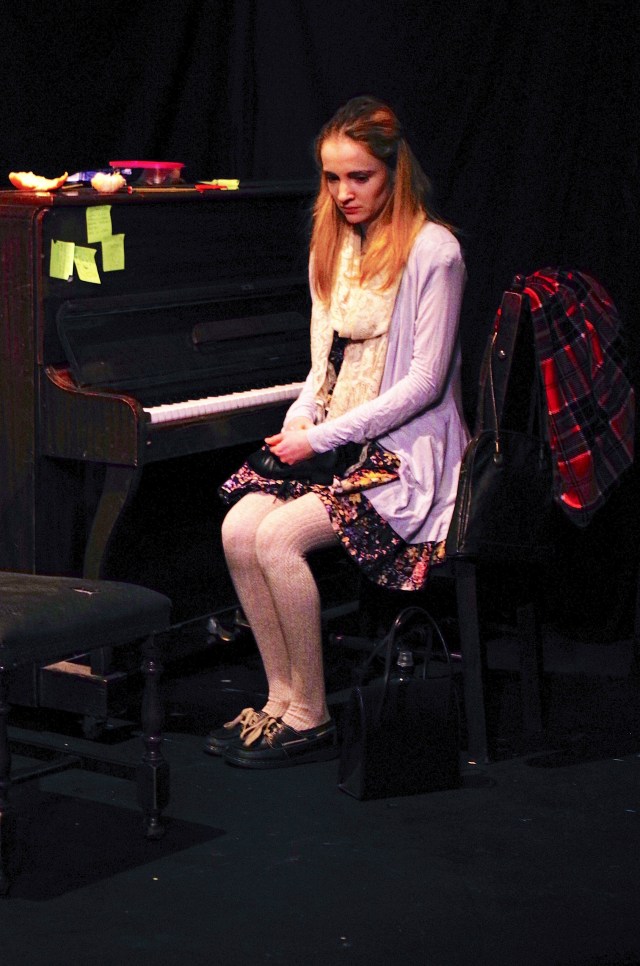
Fiona Geddes as Kirsty

Fiona Geddes as Kirsty

We get to learn a fair bit about schizoaffective disorder. Medical information is relayed in tones halfway patronising and/or foreign. I couldn’t help wishing for some projected slides with bullet points to do a professional job. More time with Mary, Kirsty, and bipolar boyfriend Patrick, would have been better, especially as mother and Patrick don’t get on. The familiar, homely, strains of ‘Coronation Street’ are almost therapeutic and are certainly ironic.

You’ll like Kirsty because of her honesty and because she is a loving person. Yes, the issue is her Mum’s condition but the story is Kirsty’s. Consider the choices she (& Patrick) have to make regarding children of their own. Genetic counselling gives you fair enough odds but ….

Geddes and director Jessica Beck brought Normal / Madness to the Fringe last year. Now, during Mental Health Awareness Week, it is back in Edinburgh and on tour. It’s on next at The Tron in Glasgow . The charity ‘Rethink Mental Illness’ supports this production, which – forgive me – is a no-brainer. It is a show that is performed with great sympathy that you will take heart from. ‘Help and Hope’ is the message.

nae bad_blue

Star (blue)Star (blue)Star (blue)Star (blue)

Reviewer: Alan Brown (Seen 12 May)

Go to ‘Normal / Madness’ at Kidder here

Visit the Assembly Roxy archive.

‘Jeeves & Wooster in Perfect Nonsense’ (King’s: 11 – 16 May ’15)

Robert Webb as Bertie Wooster and Jason Thorpe as Jeeves. Photos: Hugo Glendinnig

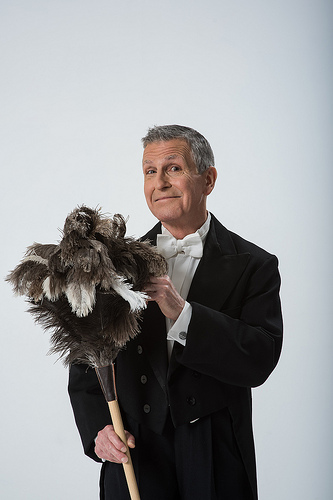
Robert Webb as Bertie Wooster and Jason Thorpe as Jeeves.
Photos: Hugo Glendinnig

“I laughed so much I was reprimanded by the woman in the seat in front for being too loud.”

Editorial Rating: 5 Stars: Outstanding

I’ll admit, I wasn’t a massive fan of Peep Show when it was out (is it still out?), and being of a certain age (in my twenties), I can’t say I’m particularly au fait with the works of P G Wodehouse. Therefore, my expectations in going to see a period potpourri starring Robert Webb weren’t particularly high. But what a comedy it is!

As the curtain rose to a near bare set with Webb postulating alone, it could easily have turned into a rather self-indulgent affair; but the snappy delivery of some great one-liners, commanding physicality and fine character acting from the three actors were all top notch. It is anything but a one-man show.

The script (created by the Goodale Brothers from original Wodehouse works) and the concept are charmingly British and brilliantly written for the stage. The scenes move at a cracking pace and individual moments of lyrical wit are delivered with comic perfection all the way through. While the first half is more about word play and establishing a tone, the second half raises the game – and then some – by introducing elements of farce that are so well pitched as to make them outrageous but not clichéd.

The hilarity is at its peak when the numerous ‘others’, played by Jason Thorpe and Christopher Ryan, start to overlap in the same scenes. One particular highlight is when Ryan, playing two characters at the same time (one male, one female) holds a quick-fire argument with him/herself, without slipping out of either character for a second. Fabulous! I think this was when the lady in the seat in front of me turned around to reprimand me for laughing too loudly. But I was far from alone in my gutsy chortling.

Christopher Ryan as Seppings.

Christopher Ryan as Seppings.

The slickness of the costume changes and clever use of the impressive set made the piece feel very professional and daring (reminiscent of shows such as Noises Off at the Old Vic in 2013). The smashing of the ‘fourth wall’ gives the piece a contemporary blast, without losing anything of its finesse. It was particularly enjoyable being able to watch the cast do their own sound effects at times, with ne’er a thought for boring naturalism.

Any faults? If one were to be really picky, perhaps it was a little shouty at times, and the narrative got itself somewhat confused in all that dash and panache. But that is literally it. The whole show is a corking romp through the best of polite British comedy, superbly acted and with enough laughs to cheer even the grumpiest of young grumps.

outstanding

StarStarStarStarStar

Reviewer: Steve Griffin  (Seen 11 May)

Go to Jeeves and Wooster in Perfect Nonsense.

Visit the King’s Theatre archive.

‘The Steamie’ (Brunton Theatre, 27 – 28 March’15)

Photo: Sam McNab

Photo: Sam McNab

“Out-and-out hilarious .. a cleansing experience “

Editorial Rating: 4 Stars: Outstanding

Many plays aspire to be immersive, but few could claim that word as literally as Scottish favourite The Steamie. Set in a Glasgow wash-house one 1950’s Hogmanay, this much-loved play is a rhapsody of basins and bubbles – following the gossipy banter of four local women as they look forward to the party to come. And in this out-and-out hilarious version of The Steamie, Lothians-based Quirky Pond faithfully recreate the unique ambiance of the communal laundry – starting with David Rowley’s set that is so realistic, I swear I even smelt the soap-suds in the air.

If the truth be told, Tony Roper’s 1987 script teeters on the borderline between the charmingly nostalgic and the wilfully old-fashioned. Very little actually happens – and while we get to know and love its cast of four indomitable women (plus one hapless man), the directions in which their characters develop are thoroughly predictable ones. So The Steamie will never make for a night of thought-provoking theatre, but it’s a carefree celebration of a simpler and friendlier age, a world which (if it ever existed) vanished down the plug-hole many years ago.

Director Andy Corelli has understood this straightforward appeal, and delivered a production that’s filled with witty detail yet feels uncomplicated too. There are plenty of crowd-pleasing set-pieces, while a constant bustle of physical activity sets the scene for a joyful gallop through Roper’s dense script. All of the cast display impeccable timing – faultlessly selling the humour Roper extracts from the unlikeliest of topics – and Sam McNab’s effective lighting creates some highly believable vignettes, bringing scenes from the characters’ imaginations right into the eponymous wash-house.

Among a uniformly strong cast, Alice T Rind deserves special note for her portrayal of Mrs Culfeathers – the steamie’s ageing matron, whose single-minded monologues underpin much of the script’s most memorable humour. But all of the characters are rounded and developed, avoiding the stereotypes which might bedevil a lesser treatment of Roper’s script. And there’s no doubting that the audience – some of whom knew the play so well they were reciting favourite lines a few seconds ahead of the cast – loved every minute of it. One of Rind’s best punchlines even triggered that ultimate accolade, a show-stopping round of spontaneous applause.

As a Steamie first-timer, though, I spotted a handful of minor issues. The opening scenes seemed a little rushed, especially as my Edinburgh-tuned ears struggled to adjust to full-throated Glaswegian. It was difficult to visualise the world outside the wash-house – they could surely have made more of their 1950’s soundtrack to help set the scene – and, churlish though it might be to comment on this, I sometimes sensed that the actors were enjoying themselves just a tiny bit more than I was. The fourth-wall-busting opening, which saw the whole audience joining in to get the party started, set an expectation of camaraderie which the rest of the play never quite managed to match.

These, though, are details. This is a laugh-aloud treatment of a laugh-aloud script, and a play which somehow contrived to make me nostalgic for a time I can’t even recall. And more than that, it’s reminded me of the importance of blether and friendship. This play about laundry is a cleansing experience for even the most jaded of souls.

outstanding

StarStarStarStar

Reviewer: Richard Stamp (Seen 27 March)

Visit Quirky Pond and the Brunton, Musselburgh, here.

‘Hatters!’ (Assembly Roxy: 31 March – 3 April’15)

“Awash with lots of individually interesting ensemble moments and devices.”

Editorial Rating: 3 Stars: Nae Bad

Hatters is an intriguing piece of ensemble theatre. It follows the story of Robert, a hapless member of the Bright Young Things in 1930s London, and his attempts to navigate a minefield of sinister characters and mistaken identities in order to marry his fiancé.

Loosely inspired the Evelyn Waugh novel Vile Bodies, the company devised the production around the novel’s key dramatic moments and characters. Keeping very much in theme with the “modernist” style adopted by Waugh in his book, a more experimental approach is used by the company in its presentation of society in the run up to World War 2.

It’s a very physical production, which at times hinders the narrative of the piece as the actors often parade around from scene to scene embodying furniture, cars and general London street scenes. This makes it quite difficult for the audience to know what’s going on. In fact, the show opens with all nine actors stood in a circle facing inwards, and one by one they appear to suffer some sort of epileptic fit before ending in a pile on the floor. By the end of the performance we still had no idea what relevance this had to everything else, and moments like this unfortunately detracted from what was actually a very interesting exploration of modernist theatrical storytelling.

In saying that, in many of the physical sections the action was accompanied by human soundscaping, which worked particularly well in creating atmosphere, and was executed with just the right level of depth and detail. In some cases though, a subtler approach could have been more effective and less jarring to the main action, which was on the whole, very well executed.

As a devised work, facilitated by the passionate Sibylla Archdale Kalid, Hatters is awash with lots of individually interesting ensemble moments and devices. One good example of this was the tea party scene, where actors swapped character with each other many times, but managed to maintain continuity and clarity of action and dialogue. Indeed, the cast’s overall approach to and execution of characterisation, aided by different hats to help identify them, was a real strength of the show.

However, the fragmented style and seeming need to cram in everything that had been devised for fear of wasting it did end up being a bit overkill. With so many different devices and styles used, the piece lacked some consistency. It would have been more effective to see more themes running throughout the performance, rather than something new adopted for every new scene.

The production was certainly not without its laughing moments. Comic timing was very good throughout, as was delivery of some of the witty one-liners worked into the script. My particular favourite was uttered by Robert’s fiancé, just after he’d had to sell her to pay off his debts: “These feelings don’t just go away when you’re sold!” Something about the pure innocence in the delivery had the whole audience in stitches.

Overall, this was a courageous and admirable effort, with a lot of potential to be expanded and developed over time. It’s just not quite there yet.

nae bad_blue

Star (blue)Star (blue)Star (blue)

Reviewer: Steve Griffin  (Seen 3 April)

Visit the Assembly Roxy Bedlam Church Hill Theatre Festival Theatre King’s Theatre Other Pleasance, Potterrow & Teviot Summerhall The Lyceum The Stand Traverse archive.

THIS REVIEW HAS NOT BEEN SUBEDITED

‘Stepping Out’ (Bedlam: 25 – 26 March ’15)

Olivia Evershed as Andy

Olivia Evershed as Andy

“Tap isn’t easy to master, so respect must go to the whole cast for giving it a very good shot, as well delivering a solid comedic acting display.”

Editorial Rating: 3 Stars: Nae Bad

Stepping Out is a comedy about a group of mismatched characters in the 80s who are all in the same recreational tap dance class. And yes, they do actually dance. If that doesn’t sound funny already, Lorna Treen’s performance as ancient, grouchy pianist Mrs Fraser in the opening scene, delivering witty one-liners in brilliant dead pan style, sets the show off to a very good start.

As the play progresses, we get to learn more about each character and their relationships with each other, some of which aren’t as rosy as they might initially seem. Although a bit of a slow burner in terms of narrative in the first half, when the class is offered the chance to put on a real show to a paying audience the tension is raised a notch and it picks up some of the pace it had been lacking.

The script posed some difficulties with staging, largely due to its ensemble nature (most of the cast were on stage a majority of the time) and the structure of the dialogue into small snippets rather than full scenes. This had the effect of it all feeling a bit fragmented and having a stilted sense of flow, but director Zoe Most and the cast did well to keep action on stage alive from every angle despite this.

Interspersed with the comedy were some very touching moments, particularly between Andy and Geoffrey. However these got a little bit lost among the more active, ensemble scenes, and could have been more impactful with a bit more contrast in pace and dynamics.

The dancing itself was very enjoyable and was well choreographed to show progression in the class’s ability from the beginning to the end of the play. Tap isn’t easy to master, so respect must go to the whole cast for giving it a very good shot, as well delivering a solid comedic acting display.

The stand out performer (for me) was Isabella Rogers as the outspoken, middle class Vera. Her facial expressions, comic timing and perfect delivery of the line “I used to be fat, you know” had the whole audience giggling with glee. She drew attention whenever she was on stage and delivered a captivating and comical performance. Olivia Evershed, playing the browbeaten Andy, showed great depth in a complex character and was also compelling to watch.

For the opening night of a student production, one can forgive it being a little rough around the edges. The heart and soul of the piece were definitely intact and it delivered laughs a plenty. Overall, a very enjoyable evening, well worth stepping out to.

nae bad_blue

Star (blue)Star (blue)Star (blue)

Reviewer: Steve Griffin  (Seen 25 March)

Visit the Assembly Roxy Bedlam Church Hill Theatre Festival Theatre King’s Theatre Other Pleasance, Potterrow & Teviot Summerhall The Lyceum The Stand Traverse archive.

THIS REVIEW HAS NOT BEEN SUBEDITED

‘The Producers’ (The Festival Theatre: 23-28 March ‘15)

“David Bedella and Louie Spence brought a frivolity that couldn’t be outdone.”

Editorial Rating: 5 Stars: Outstanding

If there is one thing Mel Brooks never fails to do, it is to entertain. To the average person, on hearing the premise of a political satire including a failed Broadway producer, a musical homage to Adolf Hitler, nymphomaniac geriatrics and a cross-dressing director, it would be inconceivable to enjoy any show remotely related. But the average person would be wrong. Brooks created a genuine comedy masterpiece that is as absurd as it is entertaining, and as politically questionable as it is uplifting.

Director Matthew White has created something spectacular in his touring production of The Producers. His cast are well-shaped in their roles; the entire performance was slick and musically, under the direction of Andrew Hilton, they were faultless.

Set and costume designer Paul Farnsworth delivered a spectacle bedecked in glitz and glam worthy of a Broadway show. With touring productions it can often be the case that set is left too minimalistic to fit every venue, but Farnsworth created a masterpiece on wheels. Max Bialystock’s office was the most impressive set piece with Broadway memorabilia piled high without encroaching on the stage space available – a most impressive feet.

Cory English offered a stellar performance – his comic timing was slick and he completely owned the stage as his madness – driven in equal parts by a desperate need for money and success – led him down darker, murkier paths, dragging the fresh-faced, naïve Leo Bloom behind him.

Jason Manford’s role saw him shine in the spotlight. His portrayal of the nervous dreamer Leo Bloom was highly entertaining – his attachment to his blue blanket and quirks were hilarious and Manford really embraced the manic side of his character.

The blossoming love between Leo and Ulla that grew throughout the show was reminiscent of a pre-pubescent unsure footing on the ladder of love and it was brilliantly matched with Tiffany Graves’ unabashedly sexual Ulla who carried an air of innocence through her clumsy grasp of English which contrasted greatly with her side smirks and comfort in skimpy outfits. Graves’ vocal performance was incredible too – definitely an attribute to flaunt.

As if there wasn’t a strong enough comedy factor already; double act David Bedella and Louie Spence brought a frivolity that couldn’t be outdone – their overtly camp exuberance was aided by sequins, glitter and a troupe of openly gay production team members that left a definitive feel of

Mardi Gras in the air. Bedella’s outrageous portrayal of a gay, sequin-wearing Adolf Hitler in Springtime for Hitler was hysterical and increased the political satire tenfold. In fact, the entire number was fantastically put together. The choreography was sharp and clean, the costumes were as over the top as ever and the stage design was downright dazzling.

The Producers is, in my opinion, a massively underrated piece of musical theatre gold. It is crass without being crude, it is fast-paced without being dizzying and the musical numbers are big and bold but not ridiculous – despite the sparkly swastikas.

While there are very few morals to be learned from this story, there is still a beautiful friendship at the heart of it that can be seen blooming in the unlikeliest of places – they do say showbiz is cutthroat, but not in this case. There is a poetic symmetry between the teachings of Max to Leo and the camaraderie and chemistry shared between seasoned stage performer Cory English and rising star Jason Manford.

outstanding

StarStarStarStarStar

Reviewer: Amy King (Seen 24 March)

Visit the Assembly Roxy Bedlam Church Hill Theatre Festival Theatre King’s Theatre Other Pleasance, Potterrow & Teviot Summerhall The Lyceum The Stand Traverse archive.

THIS REVIEW HAS NOT BEEN SUBEDITED

‘The Strange Case of Jekyll and Hyde’ (Traverse: 19 – 21 March ’15)

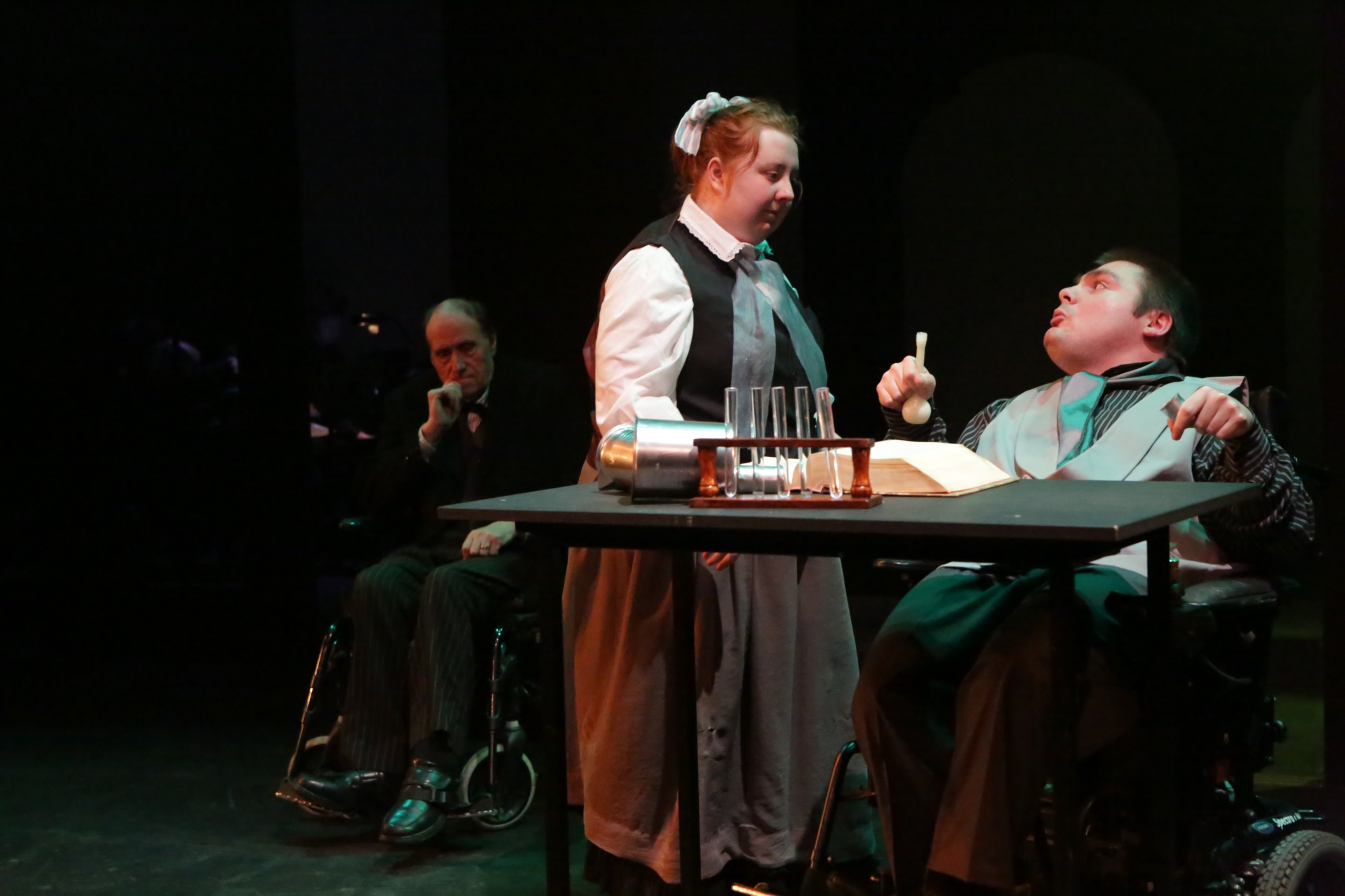
(l - r) John Edgar as Poole, Emma McCaffrey as Miriam Jekyll and Stephen Tait as Dr Jekyll Photos: Douglas Jones

(l – r) John Edgar as Poole, Emma McCaffrey as Miriam Jekyll and Stephen Tait as Dr Jekyll
Photos: Douglas Jones

“A fleet and surprising adaptation of a famous story”

Editorial Rating: 4 Stars

It is strange indeed when Miriam Jekyll puts Hyde onto her shoulders and carries her off stage. You might think that light work is being made of RLS’s ‘classic’ shocker of morbid psychology. You’d be wrong though. Stevenson’s story is here, it’s just been gifted with some nimble ideas and relocated to Edinburgh. Hair restoration and topiary outrages in the New Town are up there together with the double consciousness.

Writer Morna Pearson gives Dr Jekyll a family: Jane, his wife, who finds anaesthesia from marriage in drink; William, his son, a friendly soul who is never going to get to Uni’; and Miriam, his daughter, who should be in the Chemistry labs but who has become Hugo’s darling Intended. It is Miriam who helps herself to her father’s green potion and who finds Hyde (a dead ringer for The Woman in Black) at the bottom of the glass. And it is together, through the toun, that the two young women enact ‘the thorough and primitive duality of man’. It is not the case, in this version, that when Hyde appears Jekyll disappears. No, theirs is a prime alliance.

The pathological strain is replaced by social horrors: Jekyll has money problems and his creditor, Dr Black, sexually assaults Miriam. Hyde fights back. Police enquiries get nowhere as the good folk cannot see that the evil doers are just like them – sometimes. To frame the action Director Caitlin Skinner has the twenty cast members divide into pairs and to eyeball each other accusingly and then “Shush!” us into a conspiracy of silence.

The thematic assists from composer Greg Sinclair and the musicians of Drake Music work extremely well. The opening soundscape of bells and chimes and hooves quickly gives way to single notes and jagged chords. Miriam suffers the effects of the concoction as pins and needles stick in our ears. Solo voices intone in uncanny ways and wind about the silhouetted archways, stairs and closes of the city.

Nicola Tuxworth as Hyde

Nicola Tuxworth as Hyde

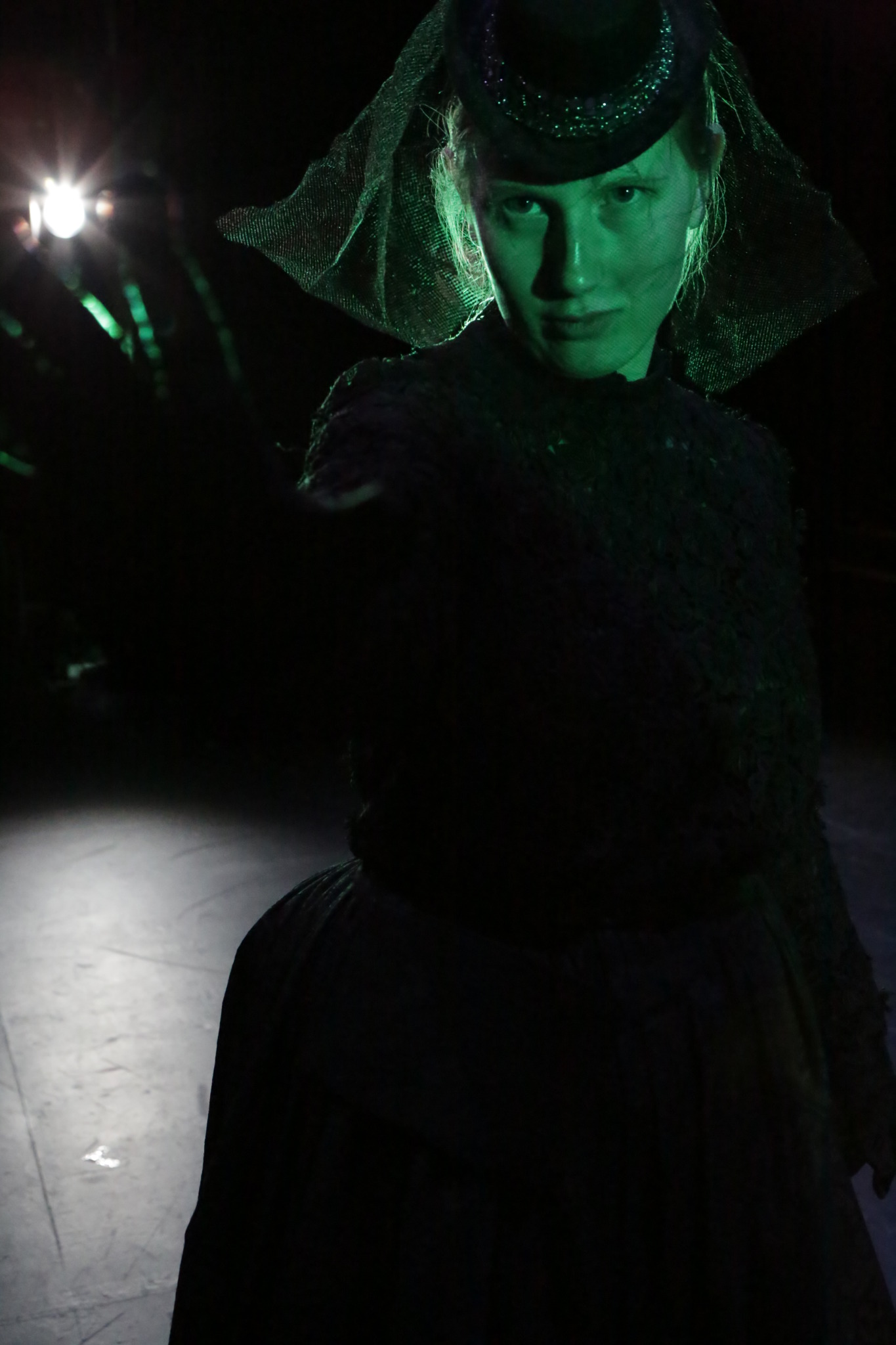
The open stage and precise blocking allows the performers to distinguish themselves. Stephen Tait as Dr Jekyll is the focused professional with secrets to concentrate on. He loves his daughter but is the late Victorian father with some lunatic ideas about the brain. Emma McCaffrey’s Miriam responds with due affection but has her own abiding demon to wrestle with, both in the parlour and on the roof. Hyde (Nicola Tuxworth) does not speak but is a veiled and forbidding presence whose outstretched hand you would not want to hold. For me, though, it is the lugubrious Poole (John Edgar), butler to Jekyll’s household, whose words you hang onto. After all, it is Poole who reveals that he has heard Miriam talking to her ‘friend’.

So, a fleet and surprising adaptation of a famous story that really belongs to Edinburgh and which Lung Ha Theatre make their own.

Star (blue)Star (blue)Star (blue)Star (blue)

Reviewer: Alan Brown (Seen 21 March)

Go to Lung Ha Theatre Company and Drake Music Scotland here.

Visit the Traverse archive.