+3 Review: A Streetcar Named Desire (Assembly Roxy, 5 Aug – 29 Aug : 13.55 : 1hr 30mins)

https://files.list.co.uk/images/festivals/2016/fringe/2016STREETC-9D-300.jpg

“Consistently raw, emotional and human”

Editorial Rating: 2 Stars Nae Bad

For many years, Tennessee Williams’ immortal “A Streetcar Named Desire” conjured up two shared memories: the off-yellow, stained tooth colour of chipboard desks; and the strange, (and in hindsight, quite sad) familiarity with which my divorced, middle-aged English teacher spoke about the dangers of hiding in fantasies.Now, thanks to the Tumanishvilli Film Actor’s Company and director Keti Dolidze, it’s far easier to think of quiet intricacy, and the heartfelt ebb of Georgian on a smoke-filled stage.

From the get-go, it clear this is a production which has been undertaken with care. The monotone stamp of poverty is imprinted surprisingly well on the set. Had it not been lit up on the Assembly Roxy stage, I would have had no trouble believing it had all just been sitting in the French Quarter. But what was most admirable about the set was its clever use of shadow. Translucent material and a little light transformed what in any other production would have simply been a rearward wall into a very entertaining transition tool: whilst set is moved around, the audience is treated to dancing shadows, or the silhouette of a saxophonist. And whilst occasionally these transitory segments went on a little too long, they were nevertheless welcome. Combined with excellent, well-timed soundscaping, it was clear the overall audiovisual design had received the care it deserved.

However, the background paled in comparison to the string of strong performances. It would be difficult to place the strongest actor in what is obviously a very seasoned cast. Even sans translation, this was a show which was consistently raw, emotional and human. Nineli Chankvetadze’s Blanche in particular showed almost uncanny emotional range, bringing depth to every smile and frightened sob even when the emotions in between were few. Kudos also to Imeda Arabuli as Stanley Kowalski, who lent an almost frightening hypermasculine, bestial quality to a character who is so easily made trite by a lesser actor.

With the aforementioned strengths, then, you could be forgiven for wondering why I’ve given this show a surprisingly low rating. And whilst, clearly, many of its component parts merit celebration, it is unfortunate then that this production was completely and utterly failed by its translation. Whilst subtitling a foreign language work is a fine idea, its execution onstage was risible.

From half a line being completely cut off (which happened often), to the subtitles stalling or – even more frustratingly, skipping back and forth in an obvious effort to re-find the dialogue – and the surprisingly low quality of what should have been a simple transcription of Williams’ original transcript (Prize contenders include the immortal phrase: “I’ll never forget the colour of his yes!”), the translation of this show was consistently frustrating. Even worse, the form and punctuation of character dialogue was not so much confused as nonexistent, leaving much of the second half reading as if Blanche was having the most spectacular breakdown ever seen on stage.

But even worse was the fact that, as an audience member, I often found myself between Scylla and Charybdis: either losing myself in the wonderful performances on show and having no idea what was being said, or half-understanding the dialogue whilst being unable to see the show itself as I craned my vision to the extreme top left of the stage. Had the subtitling quality been better this may have been less of a problem, but given the internal problem-solving required to make the subtitles coherent, it was like I had simply stepped outside for half the play. I shudder at the prospect of having seen this work without first being familiar with the plot beyond cultural osmosis, as a surprising number of people are. Given that the importance that the language plays in Streetcar, I was legitimately shocked at the poor quality of its execution.

In terms of its actual materiality, Keti Dolidze has crafted a fine show indeed. And, if you’re fluent enough to understand Georgian on the stage, I’m sure it would make for an afternoon to remember. Had it been simply billed as a foreign language play, even an English speaker would be able to understand, at least, the raw emotional content from performance alone. But, as it stands, the almost fantastically poor quality of translation packaged with this show made engaging with it a chore by the final half hour. With some simple tweaks, A Streetcar Named Desire could have quite handily added two more stars. But, as it stands, perhaps the kindness of strangers is less important than the kindness of transcribers.

 

nae bad_blue

Star (blue)Star (blue)

Reviewer: Jacob Close (Seen 5 August)

Visit the Assembly Roxy  archive.
THIS REVIEW HAS NOT BEEN SUBEDITED

+3 Review: Lords of Strut: Late Night TV Talk Show (Assembly Roxy: 5-28 Aug: 19.00: 1hr)

“Crams so much ridiculousness into an hour that you can’t help but laugh at something”

Editorial Rating: 4 Stars

Sometimes you have to see a DJ dressed as a bunny, a man pretending to be a rock and a Michael Flatley tribute to really feel like you’ve experienced the Fringe properly. This show crams all that and so much more ridiculousness into an hour that you can’t help but laugh at something.

It’s very full-on and upbeat, if a little chaotic, and the energy of our hosts Sean and Seamus is infectious – striking that perfect balance between confidence and self-deprecation to form an instant connection with the audience. We join them in their attempt to put on their own late-night tv talk show, and we are their live studio audience. Of course it doesn’t go at all to plan and they have to make various fudges to keep things running – and that’s when the hilarity ensues.

As with any chat show the format is a serious of skits and characters making guest appearances, the funniest of these being the appearance of the hosts’ mother as a last-minute stand-in – a plus-sized, randy cougar who of course makes her rounds in the audience to find a man. I won’t spoil the surprise, but let’s just say I (along with various other male members of the audience) was invited to do something I have categorically NEVER done before, and something which caused much hilarity (and a little disbelief) among the crowd. To those with a delicate disposition, look the other way and run, fast!

In saying that, what is pleasantly surprising about this show is how talented the Lords are: early on we are treated to a no-holds barred dance routine to one of Queen’s greatest hits, with various acrobatic tricks thrown in for good measure, and both gentleman are genuinely funny and creative in their costume designs and skit ideas. The “rough around the edges” and slightly improvised feel adds to its charm, if not to my personal taste.

With stand-up, storytelling, dance breaks, weird and wonderful characters, fight sequences, and of course, a healthy dab of audience interaction this show does have something for everyone, but having a drink or two before going to see it might be advisable…

Star (blue)Star (blue)Star (blue)Star (blue)

Reviewer: Steve Griffin (Seen 5 August)

Visit the Assembly Roxy archive.
THIS REVIEW HAS NOT BEEN SUBEDITED

+3 Review: Teatro Delusio (Pleasance Courtyard: 5-29 Aug: 13.45: 1hr 15mins)

“Physical mask theatre at its finest”

Editorial Rating: 4 Stars: Outstanding

After last year’s sell-out smash Hotel Paradiso, I was excited to see what Familie Floz would come back with in 2016, and for the first 50 minutes at least, Teatro Delusio more than meets expectations. It’s physical mask theatre at its finest, with three actors playing well over 20 individual characters between them, each of whom are clearly defined, consistent and a joy to watch.

The setting is backstage at a theatre, where we see the stage crew attempt to set everything up (without killing themselves or each other in the process), and then assist various members of the orchestra, singers and ballet dancers onto stage, even though they may hate, love or just be plain bored with them.

There are tricks and treats aplenty, from simple slapstick moments of falling through ladders and playing with exploding lights, to sword fights and disappearing through trap doors. Familie Floz’s real strength, though, is their character work and dexterity of changes, from a grumpy stage manager to a diva singer, and my absolute favourite: a blind and deaf violinist who has no clue where he is. The changes are so slick you’d assume there were at least six performers constantly running around, while the physicality required to define each character was so perfect that simple gestures often had the audience howling with laughter.

Yet for all their great character work and ability to build a believable world on stage, I feel that Familie Floz perhaps tried to reach too far with this production, by introducing a few too many characters, and deliver a story that could easily have been at least 10 minutes shorter and not lost any of its power. About three quarters of the way through the performance, when ends could have been tied up and rounded off, still more new things happened, and the performance hit a new level of ridiculousness that I think lost me, and many of my fellow audience members. What began as a perfectly plausible, if a little stylised, day or two in the life of a Stage Manager seemed to turn into a dream sequence with stabbings, stage crew achieving their lifelong dream of filling in for wounded ballet dancers at the last minute and unexplained resurrections that pushed the suspension of disbelief a little too far.

A beautiful piece, but be prepared to get uncomfortable: those seats in the Pleasance Grand don’t give much wiggle room and by the end of this performance you’ll need it.

outstanding

StarStarStarStar

Reviewer: Steve Griffin (Seen 5 August)

Visit the Pleasance, Potterrow & Teviot archive.

THIS REVIEW HAS NOT BEEN SUBEDITED

+3 Review: Wilde Without the Boy (Assembly Hall: 4-29 Aug: 11.00: 1hr)

“Masterfully delivered by Gerard Logan”

Editorial Rating: 3 Stars

In this one-man adaptation of De Profundis by Oscar Wilde, we join the infamous writer in prison, shortly before his release. What unfolds over an hour is a real-time monologue, directed at his lover, reminiscing on their relationship and the events that led him to become incarcerated.

While masterfully delivered by Gerard Logan, the script is quite tricky to follow as it jumps about in referring to different events in the past, with precious little obvious through-line or connection from anecdote to anecdote. For a theatrical adaptation I would have preferred a more linear and logical approach to his musings to make it easier for Wilde novices to engage with, and give a sense of progression and journey that could be followed. The show also contains an excerpt from The Ballad of Reading Gaol which seems to come from nowhere, while various other dramatic moments (for example, a sudden mention of his mother’s death), seem to be thrown in for dramatic effect, without a clear link to the flow of the piece.

In saying that, the lyricism of the language is exquisite, and the whole piece retains everything we love about how Wilde writes. It includes plenty of pertinent detail including reference to several key turning points in Wilde’s later life and many gaps in my knowledge of the writer were more than adequately filled by the depth of biography covered.

While somewhat chaotic, the script does allow to demonstrate a full emotional range, so we get to see and know Wilde in every circumstance, from emotionally fragile, to proud, defiant, smitten and everything in between. Everything’s there, it’s just a little all over the place. Following last year’s triumph in The Rape of Lucrece, Logan has certainly lost none of his craft in delivering a very emotional and compelling performance and this is another very creditable showing.

Although perhaps a slightly unfair criticism, I can’t shake the feeling that this show is playing in the wrong venue – I think a dingier room somewhere in the caves or along the Cowgate would help more easily more establish the setting as a 19th century prison than the very obvious very studio feel of Assembly Hall’s Baillie Room. On this point I must make a special mention to the sound design, which was excellent in setting the scene to start with and giving background to the court case that landed Wilde in jail, and creating atmosphere at various other points throughout.

Overall, this is a production that doesn’t quite come together as well as it could have – the pieces don’t seem to fit. An exquisite performance and an interesting story, but a little unfulfilled.

Star (blue)Star (blue)Star (blue)

Reviewer: Steve Griffin (Seen 5 August)

THIS REVIEW HAS NOT BEEN SUBEDITED

+3 Review: A Lady’s Guide to the Art of Being a Wingman (Gilded Balloon: 4-28 Aug: 23.30: 1hr)

“Performed with great energy… the trio really can sing”

Editorial Rating: 3 Stars

This show sees three young Australian women in suits and huge pink beehive wigs attempt to adopt the traditionally male “wing man” mentality to get them laid on a night out. To assist them in their farcical mission they follow the steps of a recorded self-help manual, and a lot of pop songs.

Of course it’s all a bit ridiculous, but it’s a (fairly) light-hearted comedy show that doesn’t take itself too seriously. However, it took me 10 minutes or so to work out what was going on to start with, as the show opens quite frantically with a lot of attitude and numerous snippets of well-known pop songs, all sung by the girls live.

Once the piece settles down it becomes much more enjoyable, and I was able to appreciate more of the artistic merit behind it. Three interesting characters emerge, each representing women with different levels of sexual confidence and experience, and we follow their plight through every step of their night.

At every juncture the girls burst into song, each of these being a well-known pop-song with lyrics cleverly and subtly adapted to suit the message. They are performed with great energy, and the trio really can sing, making the whole experience infinitely more enjoyable than having to sit through seemingly endless karaoke car crashes. The accompanying choreography is slick and performed with pizzazz, so on the whole, the actual performance element ticks almost all the boxes.

The surprising a capella rendition of Imogen Heap’s Hide & Seek towards the end is the best showcase of just how talented the girls are as vocalists, even if this number seems a little out of place among the rampant and upbeat pop numbers throughout the rest of it.

I was a bit disappointed in the over-reliance on the recorded advice, and would have preferred a more creative technique to keep the action on track and flowing from one section to the next. A little more focus on control and less mayhem at the beginning of the piece would also make it seem more professional and easier to engage with from the off.

This show won’t be to everyone’s taste – it’s loud, unapologetic and very fast-paced. But it is funny, full of life and contains a surprising amount of depth, particularly towards the end.

Star (blue)Star (blue)Star (blue)

Reviewer: Steve Griffin (Seen 4 August)

Visit the Pleasance, Potterrow & Teviot archive.

+3 Review: Bonita & Billie Holiday (Assembly Roxy: 4-28 Aug: 21.50: 1hr 10mins)

“An alluring performance that I couldn’t take my eyes off”

Editorial Rating: 3 Stars

I wanted so much to be blown away by this performance – a tribute to one of my favourite singers, by an actor coming to Edinburgh with a very good reputation and bags of experience in the States. Unfortunately, this opening night was somewhat nervy, and while it was difficult to tell how much of that was the actor and how much was the character, either way it left me with a sense of unease that stayed with me throughout the performance.

Bonita Brisker clearly has bucketloads of talent, even though in this performance it took her a while to find her feet. She seemed to struggle with range a little bit in the opening couple of numbers, but by Good Morning Heartache she really hit her stride, with the high notes floating with all the ease of Billie in her heyday and an alluring performance that I couldn’t take my eyes off.

Bonita also beautifully captured the mood and personality of Lady Day in the spoken sections in between each number, and the script enabled her to show different sides of the singer from her career to her relationship with her family, her drug habit and time in prison. We also see her irreverent disregard for the FBI and a very touching portrayal of her relationship with drinking and her views on racial inequality, which was rife during the 1950s. Indeed, signature song Strange Fruit, which I didn’t realise had such personal and political meaning, is a standout moment of the performance, accompanied by horrifying projections of public hangings and mutilations. It is heartfelt and very powerful.

Structurally I found this show a bit peculiar, with a short opening section in Billie’s dressing room, before the bulk of the show is delivered cabaret style as Billie on stage, and then another section in the dressing room with a bizarre twist that almost subverts everything that went before. Suffering from a bit of an identity crisis, I don’t think it has quite worked out whether it is a cabaret or a theatre piece so I think there is still some work to be done to give it a real sense of completeness.

This does have the potential to be a really special show, but the performance I saw unfortunately didn’t quite live up to that potential. Look out for it over the next couple of weeks, I believe it could be a real grower.

Star (blue)Star (blue)Star (blue)

Reviewer: Steve Griffin (Seen 4 August)

Visit the Assembly Roxy archive.

THIS REVIEW HAS NOT BEEN SUBEDITED

+3 Review: Pss Pss (Assembly Roxy: 4-29 Aug: 16.00: 1hr 5mins)

“Utterly charming”

Editorial Rating: 4 Stars

There aren’t many times that I wish I could construct a review purely out of facial expressions and hand gestures, but for this piece whose only words are the occasional utter of “Pss Pss”, it seems only fitting. It’s part clown, part mime, part acrobatic display and almost completely beguiling.

The performance is quite a slow burner to start with, with a short sequence where the two performers comically fight over possession of an apple – which wouldn’t look out of place in a Punch and Judy show on Blackpool beach – but when the music starts the fun really gets going and a real treat of a show unfolds.

Pss Pss dances along that very fine line between slapstick and gymnastic artistry, with glimpses of physical prowess and control that would put most performers to shame. Throw in the fact that they are also very funny and play musical instruments and you have a very impressive show.

Yet while physically impressive (by the end of the performance I truly believed there was no end to the performers’ talents), structurally it was a little lacking, with odd teases of narrative and motif, but little to drive it along from section to section, giving quite a stilted flow. I would have liked to have seen more plot and character development from beginning to end rather than a series of seemingly unconnected skits.

For all the skill and composure on display, perhaps it’s somewhat telling that the loudest and most consistent laughs in this performance were from the five or so primary-aged children in front of me. Although not specifically billed as a children’s show (indeed, their online listing says otherwise), some of the stunts seemed slightly more tailored to the younger audience, so I would definitely recommend it as a family show. Not that it isn’t enjoyable for audiences of all ages, but those with open minds and who are at least young at heart will appreciate it the most.

If there were an award for best facial expressions, Pss Pss would certainly be my early favourite – the range and timing throughout were enough to set most of us giggling at some point. The overall style and feel of the piece is utterly charming, even if substance-wise it occasionally lacks a little depth.

Beware, there is a small amount of audience interaction…

Star (blue)Star (blue)Star (blue)Star (blue)

Reviewer: Steve Griffin (Seen 4 August)

Visit the Assembly Roxy archive.

THIS REVIEW HAS NOT BEEN SUBEDITED

+3 Review: Adele is Younger Than Us (C Nova: 4-29 Aug: 14.30: 1hr)

“A real gem of a show”

Editorial Rating: 4 Stars

I can’t believe it’s already that time of year again where I dust off my quill for Fringe season. Time seems to be moving incredibly fast and before the madness of the month commences I find myself taking stock of just how far I’ve come since my first Fringe experience 10 years ago. It’s somewhat fitting then that my first review of the year is for Adele is Younger Than Us – a frank and funny assessment of one’s life’s achievements in comparison to those of a global superstar. And while, in so doing, it would be easy to wallow, have existential crises or bury one’s head in the sand, Sally O’Leary and Rhiannon Neads take a light-hearted musical look back at their journey to (almost) thirty.

Opening number “How do you write a love song?” isn’t the most original of subjects, and early on I was worried that this show would end up being one big cliché of every “unlucky in love” story ever told. But there’s more than enough personality and punch in the song to maintain interest, and a likeability and professionalism about the partnership that command respect.

Indeed, likeability and laughability are perhaps the words I would use most emphatically in describing the qualities of this show. The script is full of witticisms and puns (my particular favourite: describing the notion of being romantically unavailable as “Taken – like the daughter of Liam Neeson”), while the delivery and comic timing from both performers left me giggling on numerous occasions.

The framing and structure of the show, using Adele’s life and works to compare their own lives to works really well, and helps bring a sense of originality to proceedings. It allows the O’Leary and Neads – by all accounts two normal girls – to trace their own lives in comparison with Adele’s, giving the audience the chance to join them on their journey through adolescence into adulthood. It’s personal and revealing, but also reassuring that actually, we’re all in the same boat.

While there is some variation in mood and genre of the musical numbers, I would have liked to have seen a bit more risk taken creatively here. The attempted rap was a nice try but perhaps a little undercooked, or just a pastiche of itself – I’m not sure.

Overall, it’s a slick, polished and accomplished performance delivered with verve. A real surprising gem of a show.

Star (blue)Star (blue)Star (blue)Star (blue)

Reviewer: Steve Griffin (Seen 4 August)

THIS REVIEW HAS NOT BEEN SUBEDITED

+3 Review Moondogs (Edinburgh International Film Festival: 17 June ’16)

“Heartwarming and well written”

Editorial Rating: 3 Stars: Nae Bad

This year the 70th edition of the Edinburgh International Film Festival brought a wide range of films and documentaries home to Scotland. We took a look at the world premiere of Philip John’s Moon Dogs – a Scottish coming-of-age film – released on the 17th of June 2016.

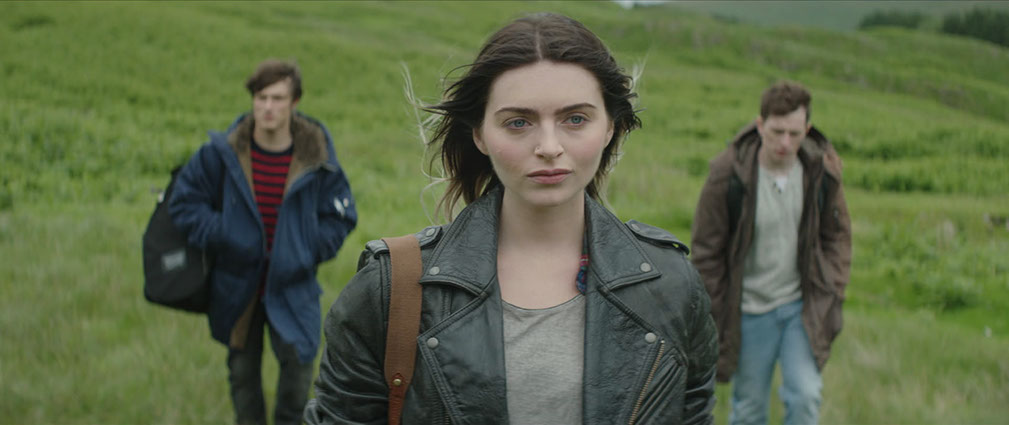
Two step-brothers Michael (Jack Parry-Jones) and Thor (Christy O’Donnell) are thrown together through their parents’ marriage and the relationship between the two is far from perfect. Michael is a temperamental, slightly gullible young lad who having just finished high school is trying to figure out his future. Thor is the more quiet, reserved, artistic type who prefers to lock himself in his room to focus on his music and block out the rest of the world.

For their own individual reasons they decide to embark on a trip from their home on Shetland to Glasgow. With no money or any idea how they will get to there, they are lucky – or perhaps unlucky – to meet the wild, free-spirited yet slightly troubled young woman Caitlin (Tara Lee) who decides to accompany them on their journey.

The story focuses on the trio’s travels rather than their final destination. Throughout the film there are some beautiful shots of Scottish scenery and at times it almost feels like you are on a tour through Scotland’s landscapes and its society. With brutal honesty the film shows the best and the worst sides of Scotland. The three meet a variety of characters, from kind hearted locals to cruel criminals, whom anybody in their right mind would avoid.

The script, written by Derek Boyle and Raymond Friel, brings out a range of emotions with some charming and funny exchanges but also some darker, serious moments. Although this independent drama does at times appear a little awkward and staged this could be a reflection of how the characters themselves are feeling. At the beginning the boys, despite needing one another to make their journey to Glasgow possible, are both displeased at the idea of travelling together. As they begin to warm to each other the scenes and the interaction between the three appears to become more natural, resulting in some endearing moments for the audience and some sympathetic giggling.

The casting works. Michael and Thor are naive through their sheltered upbringing and young age and actors Parry-Jones and O’Donnell are very authentic in their roles. Tara Lee gives a captivating performance as Caitlin, although her questionable decision making and flirtatious nature make her a somewhat difficult character to comprehend. Personally I found this made her quite difficult to warm to, although perhaps the point of her role is more to provoke the boys and test their boundaries rather than to be a likeable character.

I would say Moon Dogs is a heartwarming, well written film that causes much amusement as the trio battle with the hardships of their journey and with growing up – as you do!


nae bad_blue

Star (blue)Star (blue)Star (blue)

Moondogs at the EIFF 2016 & at the British Films Directory

Reviewer: Iona Young (Seen 17 June)

Thon Man Moliere (Lyceum: 20 May – 11 June ’16)

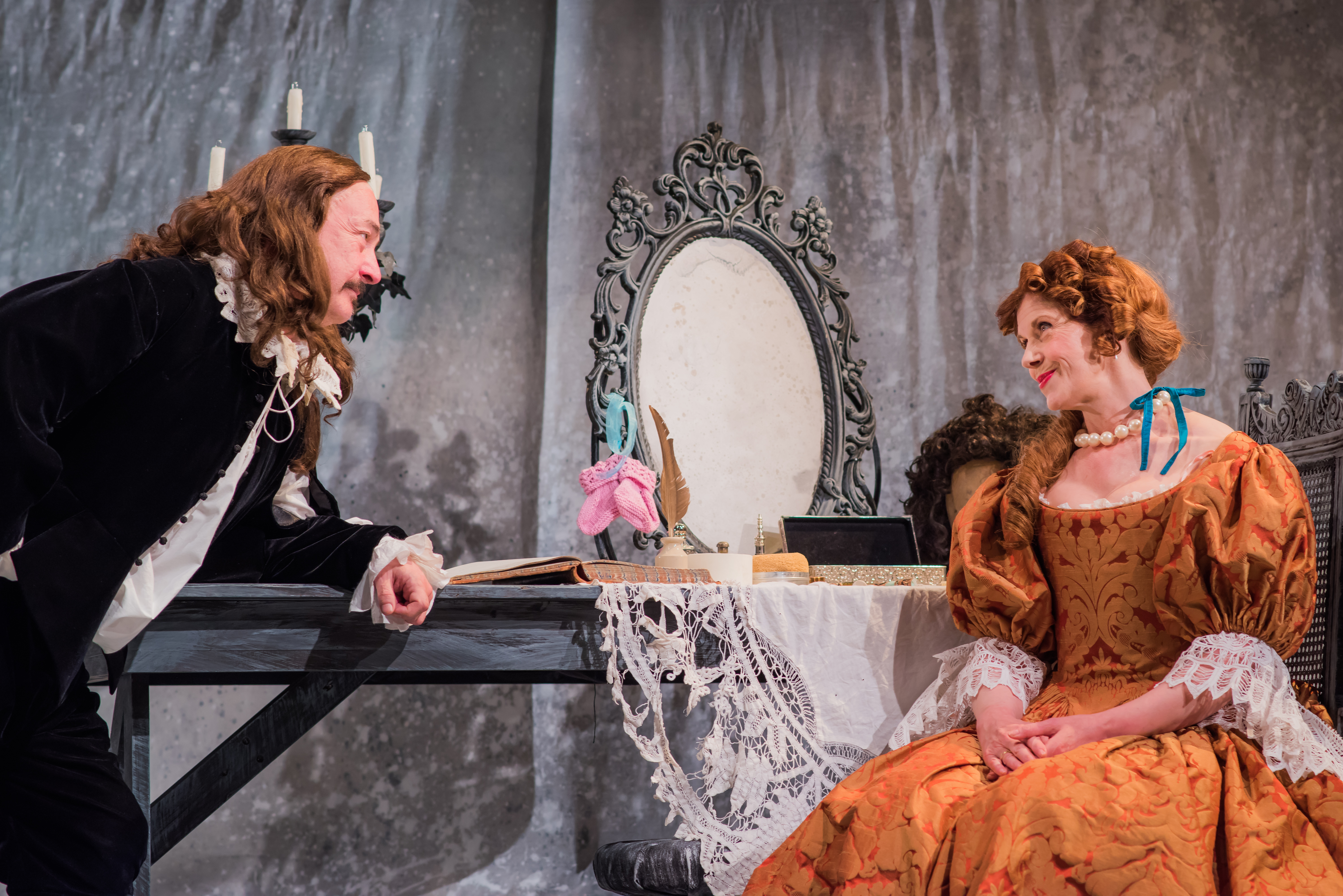
Jimmy Chisholm as Moliere & Siobhan Redmond as Madeleine. Photo: Mihaela Bdlovic.

Jimmy Chisholm as Moliere & Siobhan Redmond as Madeleine.
Photo: Mihaela Bdlovic.

“Siobhan Redmond as Madeleine and Jimmy Chisholm as Molière are perfectly, affectionately, matched.”

Editorial Rating: 4 Stars  Outstanding

In February 1662 Louis XIV sent flowers on the occasion of the marriage of Molière (40) to the seventeen year old Menou (Armande) Béjart. Perhaps the feted playwright was encouraged by the success in the previous year of his School for Husbands. And maybe those flowers were roses, for Menou draws firm, long stemmed roses in her sketch book. Wait up, they look like roses but maybe they’re …. Oh no! Surely not?

This is Liz Lochhead’s new play and she can have a garland too. Thon Man Molière is a comfortable winner. First off, it is a tribute piece to the man’s comedic genius; but second, it closely involves the women in his life, and third this play loves theatre and theatre-making.

Lochhead is an artist with the man’s biography. Born Jean-Baptiste Poquelin, her MacMolière is ‘Pokey’ indoors. Scaramouche is a pal but the fortunes of the ‘Illustrious Theatre’ company are dire to the point of collapse (and imprisonment for debt). There is rarely enough money and there are too few commissions until the king: “Vive le Roi!” – tires of the tragedies of Racine and Corneille. Tartuffe may well be a great play – and Pokey is inordinately proud of it – but it took nearly five years to get its revised version past the Archbishop of Paris. Molière’s first child is named after his royal godfather but Louis dies at eleven months.

There is a sub-title to shape the facts: ‘Whit got [Pokey] intae aw that bother …’ – and it’s sex; not so much sex with his teenage wife but the naughty fact that Menou is the daughter of his former lover, business partner and bestie, Madeleine, and that Madame Béjart will not – under any circumstances – have her daughter tread the boards. Siobhan Redmond as Madeleine and Jimmy Chisholm as Molière are perfectly, affectionately, matched. She has the reserve, bearing, velvet voice and wide skirts of a grande dame. He has the effrontery, the wit and the audacity of his celebrated character.

Ever around and about the principals is the troupe, historically verifiable and altogether mischievous. Gros-René (Steven McNicoll), in streaked green wig, gives a command performance in lugubrious drinking and losing his breeks. Therese (Nicola Roy) is his bed-hopping wife, who would be so much more than the maid in yet another farce. James Anthony Pearson is Michel Baron, the huge star-to-be, lithe and cocksure, but who is still unable to seduce the naïve Armande, very engagingly played by Sarah Miele. At a guess, only the more than capable, laconic and kind Toinette (Molly Innes) is entirely the writer’s invention.

Tony Cownie directs with an assurance born of his previous productions at the Lyceum of Lochhead’s ‘Molières’: Tartuffe (1986!), Miseryguts (Le Misanthrope) in 2001, and Educating Agnes (L’Ecole des Femmes) in 2011. Musical entr’actes by Claire McKenzie, a la Lully, are accompanied by sweet mime and when the drapes lift the action resumes, ‘at home’ or backstage where outsize greyscale putti come second to the wooden stool, wicker baskets and some splendid costumes that were too much even for the Comédie – Francaise, aka. ‘La Maison de Molière’.

Dinnae think Thon Man Molière is daft. The script is too sharp for that and its composed effect is almost tender, which, with all those satiric impulses flying around, is some achievement.

The theatre programme contains an excellent ‘Who Was Molière?’ by Liz Lochhead herself and there’s a helpful preview article by Neil Cooper in the Herald.


outstanding

StarStarStarStar

Reviewer: Alan Brown  (Seen 24 May)

Go to Thon Man Moliere at the Lyceum

Visit Edinburgh49‘s Lyceum  archive.