+3 Interview: Give Me One Moment In Time by Doug Crossley

“Lyn Gardner … name-checked me as “a young actor of promise”, so yeah, basically, dreams can come true.”

WHO: Doug Crossley, Writer / Performer

WHAT: “Doug Crossley’s solo show brings together songs, comedy and the heartache of trying to understand a friend’s suicide. It’s happy, sad and sometimes silly. It’s a life-affirming love letter to shared moments in a theatre.”

WHERE: Pleasance Dome – JackDome (Venue 23) 

WHEN: 14:50 (60 min)

MORE: Click Here!


Is this your first time to Edinburgh?

It is my first show as a writer and performer. I have performed at the festival before (ten years ago – shit!) and along with a full run in an “adventure comedy” (still not sure what that is) that fringe included a twenty-four-hour rapid response written piece about Fred Goodwin who had at the time just heralded RBS’ spectacular fall into nationalisation. That was a collaboration with Stephen Moss who was writing an article for the Guardian. He dragged Lyn Gardner along to review it and she gave it one star but name-checked me as “a young actor of promise”, so yeah, basically, dreams can come true.

What’s the biggest thing to have happened to you since Festivals ’18?

Oxford Playhouse (and Louise Chantal specifically) decided to produce my debut solo show. That’s a bloody big deal for me. I’ve been hustling my way in this industry for a long time so to have a bit of backing from them is very new and very cool. The show has also been supported by Pleasance Futures as part of the Regional Theatre Partnership Programme. It’s a deeply personal show so having some help has made it feel possible to keep taking the risk to tell this story. I’m ridiculously excited/terrified about the whole thing. I also learnt to play the piano to do this show, which has been fun and a cheeky little challenge for my mid-30s brain.

Tell us about your show.

My show is called GIVE ME ONE MOMENT IN TIME. Written by me (Doug Crossley). I was on attachment as a playwright at Oxford Playhouse and immediately before the programme began I found out my friend had died. She wasn’t my best friend, but she was a deeply formative friend. I’ve spent a lot of my time as a playwright (10+ years) writing about trauma, shame, addiction, and most poignantly suicide. My friend took her own life. So, I spent most of my time on that attachment programme feeling angry, confused, and all the other feelings that come with grief. I used to think the theatre could save the world. I didn’t anymore.

Consequently, I really threw my toys out for the pram and didn’t want to write another play. John Retallack, who leads the programme, really championed this mini theatrical rebellion I was in and challenged me to just write. Since I’d “quit” writing plays, I played the piano instead. I took lessons and as I became a human being again I started to write songs. They were observing this one moment in time. Eventually, those songs started to weave a story. That story became this play. It’s a solo show, a musical I guess, about loss, grief, and anyone who ever had a mate that they dreamt big dreams of putting shows on with. It will premiere in Edinburgh this year. 2.50pm, Jack Dome. First Edinburgh. Next? The world.

What should your audience see at the festivals after they’ve seen your show?

Go see anything, and everything. At all hours of the day. That’s what I plan to do. I’ll be seeking out my other solo show compadres to compare notes and war wounds. I’m not able to recommend those shows yet because I don’t know what they are. But some others I’ll definitely be checking out are Spencer Jones, An Audience With Yasmin Day, and Bryony Kimmings.


LIKE WHAT YOU JUST READ? FOLLOW US ON TWITTER! FIND US ON FACEBOOK! OR SIGN UP TO OUR MAILING LIST!

INTERESTED IN BEING INTERVIEWED TOO? CLICK HERE!

+3 Interview: Laura Lexx: Knee Jerk

“I definitely think solo shows are my favourite thing… since I started doing that I feel like the Fringe has just got better and better.”

WHO: Laura Lexx, Comedian

WHAT: “Star of Live at the Apollo, Laura Lexx is a ‘bouncy, bubbly stand up star’ (Telegraph) shining a hilarious light on how hard it is to be a good person these days. Can you change the world without offending anyone? Her sell-out 2018 show Trying was ‘a masterpiece’ ***** (VoiceMag.uk) and earned her a prestigious Comedian’s Choice Award. Now, Lexx takes on society’s big issues… but come for jokes, not answers. It’s sure to be ‘stomach-achingly funny’ **** (Entertainment-Focus.com) and ‘another skilfully-constructed hour from an underrated performer’ **** (Fest). Early booking recommended.”

WHERE: Gilded Balloon Teviot – Turret (Venue 14) 

WHEN: 17:15 (60 min)

MORE: Click Here!


Is this your first time to Edinburgh?

Heck nooooo! This is actually my 10th year visiting the Fringe! I first went up in 2009 to do the Chortle Student Final and then I got hooked. 2010 was my first full Fringe run, 2011 I got together with my husband up there, 2015 I did my first solo show “Lovely”, 2016 was “Tyrannosaurus Lexx” and 2018 was “Trying”. In amongst those solo shows I’ve done a plays: “Ink” (self-written and directed – good lord I was a tedious drama student) and “You Left Me In The Dark”, a sketch show “Maff Brown’s Parade of This”, a quiz panel show “Quiz In My Pants” and a couple of mixed bill line ups “AAA Late” and “The Lunchtime Special”.

I definitely think solo shows are my favourite thing… since I started doing that I feel like the Fringe has just got better and better.

What’s the biggest thing to have happened to you since Festivals ’18?

Without a doubt Live at the Apollo.

What a day that was! I was fizzing, I felt like I was in a dream and it went better than I could ever have hoped. You dream about getting to play with the big guys and then, suddenly I was doing it and holding my own! When it went out the reaction was amazing… it’s been a total whirlwind since then! I barely know where I am!

Tell us about your show.

My show is called Knee Jerk this year… Last year I opened up about my own mental health issues in my show Trying, and this year I’m using the techniques I learned in my therapy to cope with anxiety to analyse the things society is anxious about. I know with me when I’m frightened and obsessed with something, there’ll be a root fear that’s irrational driving it and that’s why I can’t put it to bed. I want to take on some bigger subjects this year and I want to look at what’s driving divisions in society at a point where we should be coming together to fight carbon emissions.

What should your audience see at the festivals after they’ve seen your show?

Oooh so many… um… Jessica Fostekew, The Noise Next Door, Paul F Taylor, John Pendal, The Delightful Sausage, Joz Norris, Sooz Kempner… that’ll get you started, let me know when you’ve got their tickets and I’ll get you some more.


LIKE WHAT YOU JUST READ? FOLLOW US ON TWITTER! FIND US ON FACEBOOK! OR SIGN UP TO OUR MAILING LIST!

INTERESTED IN BEING INTERVIEWED TOO? CLICK HERE!

+3 Interview: The Art of Skipping

“The Scottish Theatre scene is a beautiful and thriving one, it feels like the festival all year round.”

WHO: Eleanor Griffiths, Writer and Director

WHAT: “‘Never been afraid of the dark, only curious for the spark.’ Alex Peel is a young and bright astronomer, destined for a life in the stars. Then Alex’s life is turned upside-down. Alex is going blind. After working all her life for this big moment of freedom, for her eyes to be opened and released into the mysteries of space, the windows have been shut firmly over her eyes. Follow Alex in understanding whether our destiny is written in the stars and if sometimes there is more to life than in front of our two eyes.”

WHERE: Greenside @ Nicolson Square – Emerald Theatre (Venue 209) 

WHEN: Times vary (50 min)

MORE: Click Here!


Is this your first time to Edinburgh?

This is my first time taking a show to Edinburgh. I was fortunate to have done my drama school training in Scotland so was able to venture to the Fringe many times while I studied there. The Scottish Theatre scene is a beautiful and thriving one, it feels like the festival all year round. I feel very privileged to have been able to grow as an artist up there.

What’s the biggest thing to have happened to you since Festivals ’18?

I gained an iron and ironing board after all these years, it turns out my mum is right, your clothes do look better when they have been de-crinkled.

Tell us about your show.

The musical’s story was created by myself with music by one my closest friends – Megan Hughes. The story was imagined after a particularly tough few years where I learned I had an asympotmatic lung problem, that if left untreated would probably kill me. This meant that one of my lungs had to be removed in an incredibly intensive and invasive surgery. For a young person on the brink of finishing her training as a musical theatre performer and someone who relies heavily on their voice and pulmonary stamina it was incredibly daunting.

To help me get through these challenges I began writing. I desperately wanted to build a life around the arts and at that moment the only thing I had the strength to do was to pick up a pen and write. I began thinking about other vocations in life where parts of your body are a seemingly necessary tool to be able to build a career in it. I also enjoy reading popular science books, in particular physics – I read a lot while I was in hospital! This is a joy that has been passed on to me by my dad and I have always wanted to combine the two worlds of musicals and physics. Another factor in creating The Art of Skipping story is that I had also been dealing with problems with my eye-sight for a long time and blindness had always been one of my biggest fears. I was then posed with my question for writing “How does an astronomer see the stars if they cannot use their eyes?”

From here The Art of Skipping was created, it’s a heart-warming musical about an astronomer, Alex, who has always kept her head in the books but her eyes on the skies. She has a bright future ahead of her. But just on the brink of finishing her degree in astro-physics she is given the news that she is going blind. It’s her biggest challenge to date and sends her spiralling out of control in a bid to see everything before she can’t see anything at all. From fear that she will never be able to pursue her dreams of becoming an astronomer, the panic sends everything she truly loved out of focus. But with the help of her mum and partner Jay they encourage her to use this as an opportunity to see the world from a different perspective, just like we do as children skipping across the park, with the world at our feet.

I am producing it with my own production company Purple Doors Productions and heading to Edinburgh with a team of four other brilliant women, who have helped shape the story into what it is today. We took it to the Theatre in The Fields festival in the summer last year and have had a successful preview at the Kings Head Theatre in London already. After the fringe we hope to take it on tour. The dream would be to perform it under the stars in some of the countries fabulous open air theaters.

What should your audience see at the festivals after they’ve seen your show?

Go see as much as possible across all the different genres showcased at the festival. The beautiful thing about Edinburgh Fringe is the abundance of perspectives you can be challenged with and the questions you come away with asking.

I piece of physical theatre I saw recently called Identity by CTC company is one I’d definitely recommend as this continues the questions and understanding of who we are outside the parameters of our own body.

I also recently heard about a new play while at an Edinburgh Fringe conference called Algorithms. It’s about loneliness in the online world

And if you like space stuff and musicals there’s another new musical out covering these themes at the fringe called Space Junk by Slipshod theatre which I’ll definitely be heading to this year.


LIKE WHAT YOU JUST READ? FOLLOW US ON TWITTER! FIND US ON FACEBOOK! OR SIGN UP TO OUR MAILING LIST!

INTERESTED IN BEING INTERVIEWED TOO? CLICK HERE!

+3 Interview: Konstantin Kisin: Orwell That Ends Well

“I think the job of comedians is to challenge the mainstream narrative, not reinforce it.”

WHO: Konstantin Kisin, Comedian

WHAT: “Konstantin Kisin, who made international headlines by refusing to sign a safe space contract for a university gig, offers an intelligent, uncompromising look at free speech and “wokeness” in his debut show. Full of strong gags, tales of rags-to-riches, back-to-rags (as the son of a former oligarch) and razor-sharp observations about the world, Kisin’s comedy walks the line between offence and humour as he tears into the sacred myths of modern society. Directed by Jonathan Pie with co-writer Andrew Doyle, the show is guaranteed to entertain and ruffle feathers in equal measure.”

WHERE: Gilded Balloon Teviot – Wee Room (Venue 14) 

WHEN: 19:00 (60 min)

MORE: Click Here!


Is this your first time to Edinburgh?

It’s my debut hour but I’ve been a couple of times before to do shorter shows and I lived in Edinburgh for many years.

What’s the biggest thing to have happened to you since Festivals ’18?

I made international headlines when I refused to sign a “behavioural agreement form” for a gig at a London university.

Tell us about your show.

The show is called Orwell That Ends Well and it’s about the eroding freedom of expression in the UK. I think the job of comedians is to challenge the mainstream narrative, not reinforce it so it’s a show that will make you laugh, think and sometimes it might even piss you off.

What should your audience see at the festivals after they’ve seen your show?

Chris McGlade – you’ve never seen a comedian like him.


LIKE WHAT YOU JUST READ? FOLLOW US ON TWITTER! FIND US ON FACEBOOK! OR SIGN UP TO OUR MAILING LIST!

INTERESTED IN BEING INTERVIEWED TOO? CLICK HERE!

+3 Interview: Robin Morgan: What A Man, What A Man, What A Man, What A Mighty Good Man (Say It Again Now)

“It’s got a very stupidly long title – something I thought would be funny to see on posters but has really battered my word-count in the brochure. So that’s a lesson learnt.”

WHO: Robin Morgan, Writer / Performer

WHAT: “Following a sell-out 2018 Fringe and debut UK tour, the ‘utterly hilarious’ **** (BroadwayBaby.com) stand-up returns with a new hour. Robin’s a father to his son. A son to his father. But what makes a good male role model? As seen on BBC Two’s Stand-Up At BBC Wales. Writer for The Mash Report (BBC Two) and The News Quiz (BBC Radio 4). Tour support for Ellie Taylor and Iain Stirling. Warm-up for The Graham Norton Show. **** (Sunday Times).”

WHERE: Laughing Horse @ The Pear Tree – Main room (Venue 257) 

WHEN: 16:05 (60 min)

MORE: Click Here!


Is this your first time to Edinburgh?

This will be my fourth year performing at the Fringe – I did a 30 minute show in 2015, my first hour in 2016, second in 2018 and here we are now, in the Year of our Lord 2019. I’ve loved every one, but last year was wonderful – great audiences, loved my venue – so much so that I’m going back to the same room, at the same time. What a treat.

What’s the biggest thing to have happened to you since Festivals ’18?

I’ve just finished my first tour – I took the show I did at the 2018 festival around the UK which was lovely, being able to give it life after Edinburgh.

But in more important news, my wife is pregnant with our second child, due 10 days after Edinburgh 2019 finishes. Oh boy.

Tell us about your show.

It’s got a very stupidly long title – something I thought would be funny to see on posters but has really battered my word-count in the brochure. So that’s a lesson learnt.

It’s a new hour of stand-up about my Dad, my son, and what makes a good male role model in 2019. I’ve been slowly building it since September last year, and I’m really excited to take it to Edinburgh. I’ve had 5 people walk out so far at the same bit of material, which I find hilarious, because I’ve never been polarising before, and I really think it could be the thing to start off my bad-boy persona.

I think I’ll tour the show in Spring 2020 but perhaps under a title that won’t baffle people.

What should your audience see at the festivals after they’ve seen your show?

They should see Comedy In The Dark. It’s mad. Four comics perform their sets in a pitch black room. Visual jokes OBVIOUSLY don’t work but it’s so fun to do. I’m hosting it every day.

But if you’re sick of me, then Sophie Duker and Helen Bauer have their debut shows which will be nothing short of brilliant. Maisie Adam and Olga Koch have been making me cry with laughter when I’ve gigged with them recently so definitely them too.


LIKE WHAT YOU JUST READ? FOLLOW US ON TWITTER! FIND US ON FACEBOOK! OR SIGN UP TO OUR MAILING LIST!

INTERESTED IN BEING INTERVIEWED TOO? CLICK HERE!

+3 Interview: Art of Believing – Flamenco

“Our Flamenco Company consists of truly wonderful musicians who not only have the raw talent but an exceptional passion for what they do.”

WHO: Gabriela Pouso, Manager & Dancer

WHAT: “Daniel Martinez Flamenco Company presents Art of Believing, a must-see powerful flamenco performance bursting with passion and authenticity. Daniel’s unique production boasts incredible musicians (singers, guitarists, percussionists, a violinist and a dancer), joining Daniel in a mesmerising and evocative flamenco music/dance show. Art of Believing debuted in Edinburgh’s Royal Lyceum Theatre in 2017. Since, the Daniel Martinez Flamenco Company has been touring with sell-out theatre performances and gracing the stages of prestigious guitar festivals. After 2018’s hugely successful Edinburgh Festival Fringe, Daniel returns with his vibrant and exciting production full of fantastic new material.”

WHERE: theSpaceTriplex – Big (Venue 38) 

WHEN: 21:15 (65 min)

MORE: Click Here!


Is this your first time to Edinburgh?

As the Daniel Martinez Flamenco Company, this is our second year in the Edinburgh Fringe, but as individual artists, we have all been involved in the festival for many years; ranging between 4 and 16 years!

Daniel came to perform as a Flamenco Guitarist in the Edinburgh Fringe of 2015…and the rest is history! During that month he met myself, a Flamenco dancer, as well as incredible Flamenco singers Inma Montero and Danielo Olivera.

From there we all began working together in various projects, including the annual Fringe Festival.

What’s the biggest thing to have happened to you since Festivals ’18?

Since last year’s festival, we have been continuing our tour of the UK.

In 2019 so far we have performed in theatres in Surrey and Brighton as well as the prestigious Royal Conservatoire of Birmingham’s guitar festival, playing alongside amazing artists such as David Russell and Miloš Karadaglic.

In June we are taking our production to Liverpool’s Epstein Theatre and we have been invited back for a second year running to Ludlow’s Fringe Festival.

Tell us about your show.

‘Art of Believing’ was written and composed by Daniel himself and premiered in Edinburgh’s Royal Lyceum Theatre. The company has since gone on to perform in theatres and festivals across some of the most fantastic cities in the UK…and counting!

Our Flamenco Company consists of truly wonderful musicians who not only have the raw talent but an exceptional passion for what they do. Daniel is joined on stage by Flamenco singers, percussionists, guitarists, a dancer and a violinist which together produce real authentic Flamenco music and dance from the heart.

Don’t miss this fantastic show, whether you are new to Flamenco or are a true aficionado, we promise you a beautiful trip to Andalucia…ole!

What should your audience see at the festivals after they’ve seen your show?

They should check out Tu Flamenco’s ‘Flamenco Tablao’ and ‘FlamencoNova’ as well as The Rootless Company’s ‘From India to Triana’ – both fantastic!


LIKE WHAT YOU JUST READ? FOLLOW US ON TWITTER! FIND US ON FACEBOOK! OR SIGN UP TO OUR MAILING LIST!

INTERESTED IN BEING INTERVIEWED TOO? CLICK HERE!

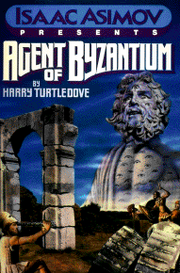
“History is much bigger than I am.” – Author Harry Turtledove discusses Agent of Byzantium

“Keep writing.  Nothing happens if you don’t.”

WHAT: The Byzantine Empire has not only survived but flourishes. However, the Eastern Roman Empire has many jealous enemies. Enter Basil Argyros, Byzantium’s version of 007, who has his hands full thwarting subversive plots from plotters foreign and domestic. In each story, Argyros finds himself operating in the context of a newly emerging technology – including the printing press, gunpowder, and distilled alcohol – each of which has the potential to disrupt the civilisation and society he is pledged to protect.

WHO: Harry Turtledove is an author in the genres of alternate history, historical fiction, fantasy, and science fiction. In this universe, he was born in Los Angeles, CA in June 1949. After failing out of his freshman year at Caltech, he attended UCLA, where he received a Ph.D. in Byzantine history in 1977. His dissertation was on ‘The Immediate Successors of Justinian: A Study of the Persian Problem and of Continuity and Change in Internal Secular Affairs in the Later Roman Empire During the Reigns of Justin II and Tiberius II Constantine (A.D. 565-582).’

In 1979, Turtledove published his first two novels, ‘Wereblood’ and ‘Werenight’, under the pseudonym Eric G. Iverson. Turtledove later explained that his editor at Belmont Towers did not think people would believe the author’s real name was “Turtledove” and suggested that he come up with something more Nordic. He continued to use the “Iverson” name until 1985 when he published his ‘Herbig-Haro’ and ‘And So to Bed’ under his real name. Since then he has gone on to write bestselling ficition, including stories set in a world in which the Confederacy triumphed in the American Civil War, and in which aliens invaded Earth during WWII.

He is married to mystery writer Laura Frankos. They have three daughters.

MORE? Here!


Why ‘Agent of Byzantium’?

Why not?  I was someone who wanted to write science fiction.  I had a doctorate in Byzantine history.  Was I going to write about Estonians?

When one of the big streaming services comes knocking to produce ‘Agent of Byzantium’ as a miniseries, which actor would you like to play Basil Argyros?

Given how little TV and how few movies I watch, I have no idea who actors are these days.

You’ve collaborated with other writers, including Richard Dreyfuss and Judith Tarr. What are the pros and cons? Does collaboration result in better writing?

With luck, the big pro is getting someone who is strong in areas where you are less so, and at the same time shoring up that person’s weaknesses.  The weakness, of course, is that in a collaboration each partner does 100% of the work for less than 100% of the money.

Is there a historical period you haven’t yet tackled that you’d like to?

Probably.  Almost certainly.  History is much bigger than I am.

As a writer what’s the one rule you never break?

Keep writing.  Nothing happens if you don’t.

If you could turn back time and make one change to make today’s world a better place, other than smothering some would-be-tyrant in their crib, when are you going and what are you altering?

There are so many unintended consequences and the web of history is so vast and complex, you never know what changing anything would do.  Even smothering tyrants is dangerous.  There was going to be a World War II after World War I; reasonably smart people saw it as early as the end of the first war.  If you strangle Hitler in his crib, maybe the Germans get a more capable dictator in 1939.

You’ve got a PhD in Byzantine history. What drew you to this “tedious and uniform tale of weakness and misery”?

I read L. Sprague de “Camp’s Lest Darkness Fall” when I was 14 or 15.  I got fascinated and started trying to find out what he was making up and what was real (not much and most of it, respectively).  After I flunked out of Caltech at the end of my freshman year–calculus was much tougher than I was–I looked around for something else to do.  Byzantium turned out to be it.  A colleague in grad school got drawn in the same way by Gore Vidal’s “Julian”.

What’s the one thing everyone should know about the Persian problem and of continuity and change in internal secular affairs during the reigns of Justin II and Tiberius II Constantine (AD 565–582)?

Justin II and Tiberius II were trying to hold together the expanded Empire Justinian had left them with the paper clips and duct tape he’d also left them after burning through resources to expand it.  That didn’t go real well.

You’ve got a solo return ticket for either a year on campaign with Julius Caesar; a fortnight with Hadrian and his entourage at Tivoli; or a day in the library of Alexandria. Which do you pick?

None of them would do me much good, I fear.  Campaigns are apt to be unpleasant and dangerous, I’m no warrior, and I presume I’m not allowed an AK-47. 😉  I don’t speak Latin, and I’m not really enough of a paleographer to work through manuscript Greek, which was written in all caps and without spaces between the words.  So I’ll stay in the 21st century, thankyouverymuch, with antibiotics, anaesthetics, and the Net that lets me annoy people at great distances and with great speed.

What are you working on now, what’s next for you?

I’m writing a new straight historical, “Salamis”, which is next in the adventures of Menedemos and Sostratos, the Hellenistic traders.  It will be done by this fall.  And I’m working on an a-h novella set in a time more recent than the 4th century BC(E).  We’ll see what happens with it.

LIKE WHAT YOU JUST READ? FOLLOW US ON TWITTER! FIND US ON FACEBOOK! OR SIGN UP TO OUR MAILING LIST!

Interview: Shine (Traverse 16 – 18 May ’19)

“The show has been like therapy to me…”

WHAT: “Kema’s 3 years old when his family move from Zambia to Newcastle.

It’s a story of new surroundings, about making a new life and then watching that life fall apart. A story about self-belief, trusting your head, your heart and always chasing your dreams.

Actor, rapper, singer, rising star and Live Theatre Associate Artist Kema Sikazwe (I, Daniel Blake), also known as Kema Kay, makes his powerful stage debut mixing a bittersweet coming-of-age story with an electrifying live soundtrack and heartfelt words.”

WHO: Kema Sikazwe, writer & performer

MORE? Here!


Why ‘Shine’?

The title of the show, Shine, is named after my name which means ‘one who shines’ in one of the Zambian languages. I hope people join me on this journey of finding out who we are, accepting who we are, and come away inspired to go find their shine! It’s never too late.

This is your life story. How have the people in your life and audiences reacted to its telling?

There are definitely find some parts in the show they can relate but you can never really judge how an audience will respond. There are a lot of questions that are left unanswered and I know people will want to know. The show has been like therapy to me and I just want the audience to keep fighting the good fight of life and find their shine!

What’s the one thing about Zambia that everyone should know?

It’s a beautiful country!

The Newcastle and Gateshead skylines are famous for their bridges. Which is your favourite?

The Millennium Bridge. I love when it lights up!

What’s the one thing you wish you’d known at the start of rehearsals?

I underestimated how emotional it would be. It’s been a real mixture of emotions. In rehearsals, I broke down a few times as I realised how much bottled emotion I’ve had in over the years. Also, I wrongly judged theatre in the beginning, but once I got a taste of it, I was hooked from then onwards. I’ve been a sponge since starting but I’ve learnt so much in a short space of time.

LIKE WHAT YOU JUST READ? FOLLOW US ON TWITTER! FIND US ON FACEBOOK! OR SIGN UP TO OUR MAILING LIST!

Interview: The Lark (Bellfield, Portobello 4 – 8 June ’19)

“Latterly, I’ve become interested in the story of the woman who takes on the establishment and for a little while, is hailed as a hero. Until it no longer suits them and they decide to get rid of her.”

WHAT: “Joan of Arc. Saint, saviour or someone who heard voices?

Against the backdrop of one of the world’s longest wars, a 17-year-old peasant girl led an army of men into battle and carved a victory that defined France. She claimed God told her to do it; the church says she’s a witch and should be burnt alive.

Jean Anouilh’s classic play tells the tale of how Joan convinced the church, the state – and her dad – to let her tackle an apparently impossible feat. And then plays witness at her trial: a nineteen-year-old uneducated woman held to account for her successes by the world’s most educated men.”

WHO: Claire Wood, Director

MORE? Here!


Why ‘The Lark’?

I’ve always loved the story of Joan of Arc. I was brought up Catholic so feel as if I’ve always known the story. I didn’t realise how much of a cult comes with her story. Look up Joan of Arc tattoos on Pinterest – it’s incredible. I discovered the plays as an adult. At first I was interested in the story of a young peasant woman who claimed God was talking to her – much to the outrage of all the educated men in the church who assumed that only they had a direct line to the Lord’s intentions. Latterly, I’ve become interested in the story of the woman who takes on the establishment and for a little while, is hailed as a hero. Until it no longer suits them and they decide to get rid of her.

One of the characters in the play, Bishop Cauchon, who has his own darkly sinister agenda, says “when a man can keep his dignity and purpose in that loneliness, in that silence of a vanished God, that is when he is truly great.” Joan’s story is relevant to activists and political prisoners, religious or not, across the world.

The real Joan lived 600 years ago but looking at people like Greta Thunberg, Malala Yousafzai, the story also feels incredibly current. They’re both about the same age as Joan was, both doing incredible things in their field. This is a slice of history that has all sorts of messages about the courage and determination needed to hold your ground in the face of fierce opposition.

Do you see Joan as a revolutionary prime mover, fighting for the timeless cause; or was she simply a pawn on the familiar medieval chessboard promoting the self-interest of the real players?

She was both. Isn’t Greta Thunberg? Joan was fighting to get France out of the control of the English. Getting the rightful king crowned was a significant step towards that. At the same time – to my modern day mind! – she was fighting for the right, as a woman, to do the things she wanted to do. To wear what she wanted to – which wasn’t a skirt. To be listened to. To be taken seriously. To make a difference. Rather than festering away in skirts in her sleepy little French village.

Anouilh (and translator Gill Taylor ) do a brilliant job of condensing the history but if you look at what actually happened, it looks as if Joan’s confidence did finally outstrip her ambition. She started losing battles, her soldiers started abandoning her. She first attempted to march on Paris to drive the English out of France’s capital city – without the king’s permission. And then it all started going wrong. The history doesn’t all fit in the play necessarily – or we’d be there for hours!

But back to your question, at the same time as she was trying to achieve all these things, the establishment were busy there using her for their own ends. And this comes through really neatly in the script. The king’s mother-in-law, Yolande, trying to persuade the king to see Joan as she might help give him some much-needed celebrity sparkle. The Church’s various representatives greeting her with suspicion and then conspiring to squash her when their godly status has been affirmed. The army taking pains to point out that she’s nothing but a puppet soldier – albeit a puppet who achieved more than they had in fifty years of fighting. Few of the characters in Anouilh’s play have any interest in her as a person and are interested only in what Joan can achieve for them.

What makes Gill Taylor’s new translation of the original special?

It’s easy to tell this story in a way that’s very black and white. She was certainly hearing god talking to her. The church thought she was lying and burnt her. It’s my bugbear with the Shaw version of the story. I love Anouilh’s script for acknowledging the convenience of this girl turning up at a time when the country was in a political mess and had lost its sense of self. Joan gave them an opportunity to rediscover that. Where Christopher Fry’s translation from the 1950’s feels very much like a script from the fifties, Gill Taylor’s script does a brilliant job of highlighting how current the story is. Joan’s dad swaggers about cursing his daughter for the shame she’ll bring on the family with her claims of hearing voices – then calls her a slut for sneaking about in the fields meeting someone he’s certain is an illicit boyfriend rather than the holy St Michael. Gill’s use of the sort of language we use now to diminish women – particularly topical now as gender equality is so high on the public agenda – make the story that happened six hundred years ago feel really current.

What will a band and choir add to the mix?

At one level, we’re performing the show in a church – so it seemed rude not to have a choir. The shape of what’s now the performing space was perfectly suited to locating the choir in the balcony above what used to be the altar, acting as real live angels on high!

Looking purely at the words in the script, and getting your head around all the protagonists in the story and their respective agendas, it’s easy to lose sight of contemporary resonances. The pop music we’ve woven into the story is there as a reminder that these are all issues we’re still tussling with today.

What’s the one thing you wish you’d known at the start of rehearsals?

What a big story this is! Unusually for that time in history, we’ve inherited an enormously thorough record of her story as the transcripts from her trial still survive. The trial lasted for over 80 days, Joan was on her feet for 12 hours a day being quizzed by a conveyor belt of clerics trying to catch her out, and throughout her interrogation, her story remained remarkably, impressively consistent. The one thing she refused to tell the court was what her angels looked like. She said that was between her and god.

I would love to have known at the start of rehearsals whether Joan was really hearing God talking to her. Really hearing some sort of voice in her head. Or capitalising on prophecies that had been doing the rounds for several centuries – which she would have heard from travellers visiting their house as she grew up – about a virgin girl who would come from the countryside to save France.

There’s a fabulous podcast by an Italian professor called Daniele Bolleli (‘History on Fire‘) that sees him reviewing all of the evidence and concluding that we can’t possibly tell whether she was mad, whether she’s was God’s spokesperson on earth or whether her talent was putting herself in the right place at the right time – and consequently, having a ball doing all the things that women weren’t allowed to do at the time. I’ve been boring the poor cast with the history – as most of the cast are based on known historical figures – since we started rehearsals.

So I wish I’d known the answer before we set off. But I suspect that the reason Joan’s story continues to fascinate us – is precisely because we don’t know that answer. And that’s what makes it such a brilliantly intriguing tale.

LIKE WHAT YOU JUST READ? FOLLOW US ON TWITTER! FIND US ON FACEBOOK! OR SIGN UP TO OUR MAILING LIST!

“So many people were killed to make Nero Emperor, it was kind of his destiny. He couldn’t opt out of it.” – Author Margaret George discusses The Confessions of Young Nero

“I’ve known a lot of Neros in my life, maybe I’m sort of a Nero too because I was lucky that I could write novels and make a living as an artist, but so few people can.”

WHAT: A mother’s deadly ambitions. A boy who would be sovereign. A name that would be infamous. This is the epic tale of Nero’s rise to power, a thrilling story of survival, betrayal, love, and the struggle for the Roman empire that would change history.”

WHO: Margaret George writes biographical novels about outsized historical characters: Henry VIII, Mary Queen of Scots, Cleopatra, Mary Magdalene, Helen of Troy, and Elizabeth I. Her latest subject is covered in ‘The Confessions of Young Nero’ and ‘The Splendour Before The Dark’. Her novels have been ‘New York Times’ bestsellers, and the Cleopatra novel was made into an Emmy-nominated ABC-TV miniseries.

Margaret especially enjoys the research she has done for the novels, such as racing in an ancient Greek stadium, attending a gladiator training school in Rome, and studying the pharmacology of snake poison.

MORE? Here!


Why Nero?

Why Nero? It’s because I think of all the Roman emperors, he seemed more like a person that you know. He seemed very modern. He reminded me of so many people I know personally who want to be artists. How many people do you know like that? Children want to go to film school, they want to become playwrights, they want to write novels, they want to play music and their parents say “No, I really think you’d better go to law school”.

So he was very modern in that way. It just happened that the law school his parent wanted him to go to was being the Emperor. That’s not something you can refuse by saying, “Well I don’t care to go to law school, I don’t want to be a doctor.” When that happens, most parents usually say, “All right then, go off to New York and if you don’t make it in five years, you’re going to come crawling back and we’ll see about law school.”

In this case, so many people were killed to make Nero Emperor, it was kind of his destiny. He couldn’t opt out of it. That was what really made him so interesting to me. It made his character alive in a way that say, Septimius Severus or even Julius Caesar or any of those people, who didn’t have that other side, couldn’t be. That is where I got the idea of the three Neros from. The Augustus one that did his duty, the artist in him and, last of all, the third one that had to facilitate the other two.

I feel as if I’ve known a lot of Neros in my life, maybe I’m sort of a Nero too because I was lucky that I could write novels and make a living as an artist, but so few people can.

Of course, this was a real life story so it wasn’t up to me to come up with a plot for the sequel that was as good as the first one, because history itself has provided me with that plot. It was a tragedy, of course. I must be drawn to tragic figures because when I think about it, Mary Queen of Scots was executed, Cleopatra and Nero committed suicide, Helen of Troy caused a war where many people were killed, and I’ve written about all of them. Life is sad even if you’re an emperor.

I like to write novels that cover a whole life. I think that you can’t understand the adult until you’ve met their younger self. The modern thing is to do just a slice of the life. When I started out I wanted to write about Henry VIII. At the time most of the books and plays just focused on a small part, usually the Anne Boleyn part and / or the Thomas More part – but I thought, “you can’t understand those out of context, you have to know the person, how he grew up, what formed him, you can’t just leap into the middle of his life.” That’s what people do now, because of space, I think, which is understandable, but I think you wouldn’t know the grown- up Nero until you knew the child.

How did you find writing the story in the shadow of Robert Graves’ I, Claudius novels?

I am thankful that ‘I, Claudius’ is told from Claudius’ point of view. Thank goodness Robert Graves didn’t get to do too much about Nero, because I find myself, especially from the mini-series, I just can’t get out of my mind the images I have of the actors that played those roles. Livia will always be Siân Phillips and of course, Caligula will always be John Hurt to me. Had there been a continuation with a grown-up Nero, I would certainly have had trouble in battling that image in my mind.

[DL: It’s interesting that neither you or Robert Graves haven’t got very much nice to say about Seneca.]

Neither of us do, do we? You know there’s such a difference of opinion about Seneca. He’s rather a mystery. It’s the old problem – stay within an institution and try to improve it, work from within and do what you can, don’t desert the field— or do you quit like Thomas More and say, “I just can’t have anything to do with this.” Seneca chose the first path, though he’s criticized a lot for that. You can make a case for the fact that he tried, he didn’t desert the ship. But you can also make a case that he stayed because he was getting so fabulously rich from serving Nero.

Is rehabilitating the reputation of Nero the ultimate act of iconoclasm?

I found that people are the most resistant to rehabilitating Nero. More so than they were to Henry VIII, which is kind of surprising because Henry was so much closer to modern times. What I found in some of the reviews, and some of the comments, is that people really prefer the villain. I have a friend who’s trying to rehabilitate Richard III, but it’s really hard because that colourful kind of villain is so attractive. Even in my Mary Magdalene book, Maureen Dowd in the ‘New York Times’ said that we prefer the golden-haired reformed prostitute because she’s so visual, she’s so easy to identify with. The disciple is not as interesting.

I was a little naïve in thinking that I could change many people’s judgment about Nero. I can see now how entrenched these ideas are about him. Public Broadcasting System recently did a programme, a kind of rehabilitation, called ‘The Nero Files’ and I braced myself. In it forensic scientists examined the case against the crimes of Nero and concluded was that he didn’t do a lot of these purported things and we can prove it by scientific evidence, for example, that plant-based poisons, which is what they had in the ancient world, worked slowly and could not cause someone to drop dead instantly, as Britannicus did. I wonder if many people watched the show and if some were convinced.

[DL: There is, of course, one crime that Nero’s associated with which is his kicking to death of his Empress Poppaea and her unborn child. She is perhaps the most famous victim of domestic abuse in history…]

Many modern historians don’t think that happened, and even the ancients fudged about it. But even if it wasn’t really true, it is so much in the popular mind that there had to be a version of it in the novel that involved Nero, but was involuntary. I couldn’t just get away with the modern view that she was ill and she had had a miscarriage. I had to acknowledge the belief that blamed Nero. But the only way to answer it, without being accused of just dodging the whole thing, was to have it happen but have it be an accident.

I say in my author’s afterword that Nero was not known to take physical action against people, striking them or abusing them. So it’s out of character if he did that, especially to his wife whom he loved very much, and they both wanted children. There’s even a papyrus, a poem written in Egypt afterwards, about Nero and Poppaea and their love, and no mention of his injuring her.

One of the problems of being a historical novelist is that a real historian can say here are the theories: one, two, three, four and he can lay them all out for the reader. But, if you’re writing a novel it has to be consistent, and you can only choose one, just one, not a list of alternative theories. So, that’s the way I handled it.

Other famous events in his reign you really cannot get away from, such as the fire in Rome and his killing Agrippina— those things really happened. The only way I can handle those them is to try to give the reasons they happened, not pretend they didn’t.

Do you have a role in selecting the narrators of the audiobook editions of your
novels?

Long, long ago when they still had cassette tapes, I would preview tapes for books from the library for a long car trip, because if I didn’t like the sound of the narrator I knew I couldn’t stand listening to it for hours. Sometimes the narrator just isn’t right.

After a certain point in my publishing career, I got the right to select the readers and that makes such a difference. If someone doesn’t sound like Nero or doesn’t sound like what I think he sounds like, I think that it just won’t capture the spirit of the book.

[DL: Why was Susan Denaker, the reader for the poisoner Locusta, so noticeably an American? Steve West, the reader for Nero, only once gives his new-found Americanness away with his pronunciation of ‘herbs’.]

I really wanted the main characters to be British – because everybody knows—ha ha— that the ancient Romans spoke with British accents. At least they do in all the movies! I think Susan sounded like an older, canny woman, the other two proposed readers sounded either really spacey or weird or else way too prissy to be like I pictured Locusta— a wise, older, and very level headed and practical person, so I hope it wasn’t too jarring that she had a different accent.

Since Peter Ustinov is unavailable, who would you cast to play your Nero?

People think of Nero as so much older than he really was. Every time I give a talk and I say, “you know he didn’t live long – he died when he was 30”, people are shocked. They had no idea. I’d like the young Robert Redford, but the current actor I came up with is Joe Alwyn. He’s 28, he looks like the young Nero, and of course, he’s British so he has the right accent.

I thought it was brilliant Zeffirelli cast ‘Romeo and Juliet’ with actual teenagers. You get older actors playing teenaged parts sometimes and it just feels ‘off’. Since the death of Luke Perry, ‘90210‘ has been back in the news. But the actors playing teenagers in it were not teenagers. One woman was 30 and Luke Perry himself was 26 so I think that if you really want to get the real Nero, you had better ask an actor who is that age, and so Joe Alwyn is my choice and I hope he is available! If he’s not taken up with Taylor Swift! But yes I think he’ll be perfect but we’ve got to do it right away or he’ll soon be too old.

[DL: Is there anything in the works to bring the novels to the screen?]

No not yet. I do have an agent in Hollywood who is working very hard to find a way of bringing it to the screen because the streaming services, like Amazon and Netflix and now Apple, are budgeting billions of dollars to bring out new series. So I’m hoping that in this climate there will be an interest in Nero because of course, a mini-series offers so much more scope than a two-hour movie. I don’t see how you could get Nero’s story into a traditional 2-hour movie format.

Did Nero’s rule produce any lasting achievements?

Ah, that’s a good question. I’m not trying to dodge this, but let me frame it a little, and consider whether anybody has real lasting achievements. It’s very rare because often the person’s accomplishments, at least within a couple of centuries, get superseded or wiped out. Nero had great diplomatic success with that treaty of peace with Parthia. That lasted 50 years.

Longer term, I would say the beginning of urban planning is his lasting legacy. He was the first one to tackle this, as he had a clean slate after the devastating Great Fire of Rome, so he had an opportunity to put green space in the rebuilding plan of Rome. He also dictated that the new streets had to be a certain width. They had to have fire fighting equipment in each house and the walls had to be at least a yard apart with no more common walls, and they had to build with a certain kind of stone that was fire resistant. Of course, people grumbled about these restrictions but he could mandate them because he was the emperor. Today we accept the necessity of city planning, but it was a radical idea then.

I have a new issue of ‘National Geographic’ examining planning cities – what did China do wrong in the last 30 years and Los Angeles in the last 15 years? How do you shape urban spaces in cities? How do we learn from past mistakes so that we have pleasant places to live? I’d say that urban planning is Nero’s one legacy which he would be very surprised about. He was proud of it but it came to him by accident because of the fire. It’s not that he set out saying, “I think I will redesign a city.” He was too focused on a different kind of art.

I would also say perhaps preparing the way for Hadrian was a legacy. Nero was a bit ahead of his time. Later, Hadrian could grow a beard and be a Grecophile and be gay, be all kinds of things that Nero did and was pilloried for.

If you could possess any one item associated with Nero, what would you have?

I would like to have his very own cithara, I could have it enthroned in some kind of shrine because none have survived from his time, and it was a very difficult virtuoso instrument to master. I’ve seen statues of Apollo holding it and that way it’s like 3D; you can walk around it and see how big and boxy and bulky it was but I’d like to see the real thing.

I do have some things from Nero’s time. I have coins which I have collected and I do have some jewellery from that era that is wearable. That I love having because I know someone wore it when Nero was emperor. I have learnt so much about history through my coin collecting. I did it with Cleopatra too.

If you could ask Nero any question what would it be?

I assume by your question that that means he’d have a retrospective vision. Because if he knows what’s happened since I would ask him for an honest appraisal of his art. Would he make the same choices knowing how posterity has painted him? To answer he would have to know how posterity painted him.

In the book I have him saying, “Do I care enough to throw everything over for my art?” If he cannot know what happened after his life, I would still ask him toward the end of his life: if you could go back and do it all over again, will you throw everything over for your art?

You’ve got a one way ticket to the Roman Empire for you and your family, you’re not coming back, when and where are you taking them?

I’m never coming back? Then I would go to England at the time when Hadrian was building his wall, and it would be okay for me to stay there because my ancestors were all there, so I’m going back to my roots. That’s one reason I want to go, seriously, but the Roman Empire in Britain fascinates me. It’s odd that Britain ever was in the Roman Empire, but it was for 400 years, so it’s a bit like the EU and Britain. Were they ever really and truly in their hearts, part of it?

I’d like to see Roman Britain at its height. I want to live in one of those heated villas but that’s so far from Rome it’s almost a mythological place. I remember my father saying years and years ago when I was writing Henry VIII, that I ought to do a novel about the end of the Roman Empire in Britain because they just upped and left and it must have been very strange to have this suddenly happen for both sides. So that’s what I would do but I’d better take some warm clothes.

You’ve got a solo return ticket for either a year on campaign with Julius Caesar; a fortnight with Hadrian and his entourage at Tivoli; or a day in the library of Alexandria. Which do you pick?

I wouldn’t take the library of Alexandria because I’ve spent so much time in libraries lately, I need a change of scene. And I’m sure I’d have a great time with Hadrian and his entourage, but I would choose the Julius Caesar campaign. Now I hope, because I’m being magically transported back in time, this would mean that I could keep up with the rigors of the campaign as I would be a ramped up version of myself.

I became fascinated by Caesar when I saw him through Cleopatra’s eyes as I was writing about them. He’s such an extraordinary character and I am curious about his genius on campaigns. But he also had the trait of being easy going and tolerant of his soldiers. When some of them ran away in a key battle, he grabbed them by the shoulders, turned them around and said calmly, “the enemy is this way.” He was unique and I would just like to watch him in action.

Also, his campaigns were the beginning of Europe, when it was wild and untamed. I would like to experience that moment in time. When Augustus, (Octavian) and Antony split up the Roman Empire, Octavian got the bad part, he got Europe, and Antony got the rich part, the Eastern part. How things have changed!

What are you working on now, what’s next for you?

I would love to stay in the ancient world and as I said I really am drawn to Britain and Roman Empire Britain. I haven’t quite decided who is calling me to go there. I hear a few voices, but I’m not sure which one is absolutely the loudest–or the most beguiling. So I will demur on that until I know for sure.

LIKE WHAT YOU JUST READ? FOLLOW US ON TWITTER! FIND US ON FACEBOOK! OR SIGN UP TO OUR MAILING LIST!