+3 Review: Dreaming under the Southern Bough (theSpace @Niddry St, Aug 05 – 13 : 10.55 : 50 mins)

 “Consistently charming and fun to watch”

Editorial Rating: 3 Stars Nae Bad

If asked for which playwright 2016 marks four hundred years in the grave, you could be forgiven for answering “William Shakespeare”, rather than Ming dynasty writer Tang Xianzu. And with Fringe Shakespeare productions soliloquizing on every street corner, it’s almost refreshing to celebrate another famous, dead bard.

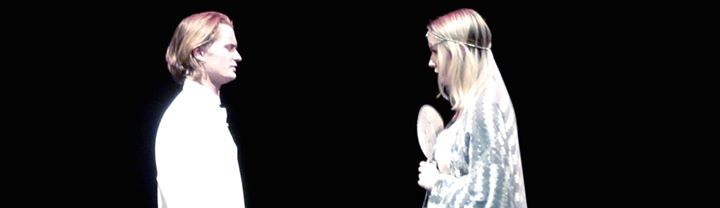
Telling an Alice-in-Wonderland-esque tale of transformation, reflection and po-faced absurdity, Dreaming under the Southern Bough follows the story of a veteran soldier gone to the dogs. However, a chance encounter with retainers from the Kingdom of Ants thrusts him into a world of royal intrigue, prophecy and war.

This is a performance which hits its stride when the surreality really hits the fan. As the plot goes into full swing, it’s hard not to be charmed by the performances at play: drunken retainers, pantomimic warlords and purer-than-thou royalty make for an experience which, whilst somewhat eclectic in terms of energy, is consistently charming and fun to watch.

Even with minimalistic lighting, stage and props, the atmosphere of classical mysticism is heavy even with the seemingly lightest of touches. Incorporation of the original Chinese in particular lends this production an often enthralling sense of place and context, adding significant substance to what in other hands may have been flimsy and unconvincing. Although the scenes taking place in the “real world” seem strangely jarring and stiff, the prose and flow of the writing feels right at home as soon as things hit microscopic.

The strongest aspect of this adaptation is the original writing, and it is a significant shame that the edition presented to Edinburgh is abridged – it would have been far more gratifying to spend more time amongst the follies and twists of the Ant Kingdom, rather than the emotionally unsatisfying ersatz-grit of the modern day bookends.
Despite its flaws, Dreaming under the Southern Bough is a pleasant and entertaining way to spend a lazy mid-morning. Whilst its denizens may be ants, it’s clear they’re standing on the shoulders of giants.

 

nae bad_blue

Star (blue)Star (blue)Star (blue)

Reviewer: Jacob Close (Seen 12 August)

Visit the  Other archive.

THIS REVIEW HAS NOT BEEN SUBEDITED

+3 Review: 2044 (Greenside @ Infirmary Street, 5-20 Aug: 11.30: 50min)

“Twists, turns and tensions aplenty to keep the audience on their toes”

Editorial Rating: 3 Stars: Nae Bad

I’m normally wary of anything that describes itself as dystopian, as I have found that many such works (across all art forms) often struggle to create a world believable or compelling enough to hold my attention. 2044, however, is an intriguing and thoughtful piece, and while a little far-fetched, makes some very interesting conjectures on the future – made all the more timely given the current political landscape.

An independent Scotland, spurred on by a new right-leaning political wave, has developed extremely hostile relations with England, and when floods batter the English coastline, many “southerners” seek refuge north of the border. But, given the political situation, only one member of each family is allowed in – provided they meet the required standards of health, age and skills required for work.

It may seem reminiscent of various events in history, but the situation is presented with a very current and engaging interpretation. The script centres on two such refugees, and their struggle to follow the rules, lest they be seen as a burden on the country’s resources and be punished accordingly. The plot is structured in such a way as to slowly unfurl the background, giving hints at what’s to come, in quite a gripping story. Indeed, the craft and writing of this piece in terms of narrative development are spot-on, there are twists, turns and tensions aplenty to keep the audience on their toes.

Unfortunately though, at times it’s all a little bit melodramatic, and would benefit from a bit more development and depth to allow for greater variation in tone. Every scene feels like yet another “woe is me” announcement, and while intriguing plot developments, it is quite an intense 45 minutes and should really be a longer piece to give itself time to develop and unravel.

Because of the intensity of action, the acting also suffers somewhat. The constant chopping makes it quite frantic and one dimensional, and while some great subtlety is shown by Megan Matheson-Adams as Maria, the cast never feel like they fully hit their stride so the performance falls a little flat. I don’t think it helps that a couple of the monologues are quite forced and obvious, when a more creative way of communicating that information could be found.

Overall, a really commendable effort, particularly with the writing, but not quite the finished article yet.

nae bad_blue

Star (blue)Star (blue)Star (blue)

Reviewer: Steve Griffin (Seen 12 August)

THIS REVIEW HAS NOT BEEN SUBEDITED

+3 Review: Being Norwegian (Gilded Balloon, Aug 3-10 : 23.45 : 40 mins)

“A production wrought from the heart”

Editorial Rating: 3 Stars: Nae Bad

When I was first asked to review David Greig’s Being Norwegian, I expected something to do with hellish darkness and Kjøttboller. And whilst the former was surprisingly on the money, I certainly did not expect a neat, funny little vignette. Especially buried deep underneath the sports bar.

The setup is deceptively simple. Boy meets girl, boy is awkward, girl is Norwegian. Cue characteristic witticisms from Grieg, and a surprisingly dense plot for a play which takes about as much time as roasting a chicken. It’s the stage equivalent of tangled christmas lights.

Tom Hurley is a gem as the awkward and terribly British Sean, hopping between mental distress and crises of politeness with surprising ease. A high point of this production is the clear chemistry between Hurley and co-star Lisa Bennington, who brings a wonderfully sort of flighty etherealness to her part. As the show’s key components they work well together in a sort of chalk-and-cheese way, and it makes for a very easy watch. In terms of staging, it’s abashedly minimalist, but this in no way works against it. As a highly focused, emotional vignette, the staging and lights are just enough to accentuate the overall tone of the piece without feeling bare.

Despite its victories, however, there are a few defeats. At points the show seems to go beyond the pale of theatrical awkwardness, and simply lands in “static”. For some (admittedly smaller portions) it seems as if everyone in the room is waiting for something to happen. And, likewise, some of the more conversational segments seem a little on the stiff side.  However, who could blame them – it is positively criminal to place this show in the venue it has been given. The artful musings of European cultural philosophy are somewhat muddled when the upstairs room has been booked for what sounds like a bath salts eating competition followed by celebratory karaoke.

Despite its flaws, this is a production wrought from the heart. A two-person show, however short, is difficult to pull off – almost as hard as thinking up jokes about Norway.


nae bad_blue

Star (blue)Star (blue)Star (blue)

Reviewer: Jacob Close (Seen 10 August)

Visit the Pleasance, Potterrow & Teviot archive.

THIS REVIEW HAS NOT BEEN SUBEDITED

+3 Review: [title of show] (C Cubed: 4-29 Aug: 21.20: 1hr 30mins)

“The company’s voices blend beautifully to create some lovely moments”

Editorial Rating: 3 Stars

I always get excited when a new and ambitious theatre company decides to put its own spin on a show that only received limited success its first time around, in order to try and find that winning formula. In this case, Cobbles and Rhyme attempt to give a very minimalist makeover to [title of show], which, though enjoyable, unfortunately ends up languishing in musical theatre mediocrity.

[title of show] is by nature the anti-musical – intentionally flying in the face of the fourth wall and big production values, using just a keyboard, a bare stage, four actors and and four chairs. This makes it perfect for translating to Fringe venues, and with some clever staging Cobbles and Rhyme effectively create sympathetic intimacy and a stripped back feel that really suits the show’s themes.

However, beyond this it is a shame to see that some of the basic flaws in the musical itself were not addressed, making it at times painfully obvious exactly why the show wasn’t a huge hit on Broadway. Granted, this is probably more down to terms within the performance rights than the company’s ability, but I can only critique based on what I see.

It takes the best part of 25 minutes and six songs to get past the “Let’s write a musical/I don’t know what to write” stage, and throughout the first half of the performance I felt like I learned next to nothing about the personalities of each character. It is only towards the end in Awkward Photo Shoot when tensions start to emerge and priorities conflict that we really discover their mettle, and it’s a shame this occurs so late. This is a show that just needs to get to the meat faster and stop being quite so self-indulgent and self-important.

Musically, it’s ok – there aren’t really any standout numbers, though closing tune Nine People’s Favorite Thing is quite hummable as you exit the auditorium. Complex harmonies are well delivered throughout and the company’s voices blend beautifully to create some lovely moments. The cast certainly give it their all, even though for me it’s the supporting characters of Heidi (Heidi Parsons) and Susan (Charlie Walker) who outshine their male counterparts with stunning vocals and gripping stage presence.

Overall it’s nice, it’s funny and it’s well sung, but I think it lacks that killer punch to have a really big impact at the Fringe.

Star (blue)Star (blue)Star (blue)

Reviewer: Steve Griffin (Seen 10 August)

THIS REVIEW HAS NOT BEEN SUBEDITED

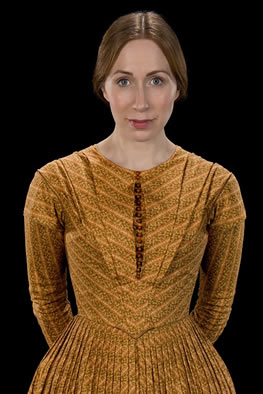
+3 Review: Jane Eyre: An Autobiography (Assembly Roxy: 4 – 29 Aug. 1115. 1h30m)

Image. Dyad Productions.

Image. Dyad Productions.

“Rebecca Vaughn’s solo work is outstanding.”

Editorial Rating: 3 Stars Outstanding

” ‘… and when I draw up the curtain this time, reader, you must fancy you see …’  me, plain and plain-spoken Jane Eyre, on stage for ninety minutes as I tell you the story of my life.”

We have an autobiographical telling, dramatic and full of character, with nothing of substance left out and everything of significance retained. From the window seat in the breakfast room, aged 10, to the parlour of Ferndean Manor, some nine years later where the blind Mr Rochester – he of the ‘brow of rock’ – reclaims his darling Jane. Writer Elton Townend Jones calls his work ‘an impressionistic adaptation’ of Charlotte Bronte’s book. Well, fair enough, along with the charged immediacy of the scene(s) comes the solid narrative, fused and monumental.

Performer Rebecca Vaughan is definitely impressive. She is Jane, of course, but she is also everyone else – except the source of crazed laughter from the attic. There is, inevitably, a cartoon Mr Brocklehurst, who might as well be the grim progenitor of today’s (English) free schools. Mr Rivers, impossible for the irreligious to figure, is left pallid and decent. Mr Rochester is gruff and always amused by Jane’s frank determinations. As Jane, Vaughan is upright and indomitable, which makes her excitement and frailty when it comes to the love story just a bit tricky. However, if romance is your thing, then Jane’s virtuous path to happiness is surely realised.

What makes the novel probably undoes its efficient telling. Jane ‘hadn’t intended to love [Rochester]’ but does and she certainly never expected riches but she gets them. That, to use Bronte’s unlikely word, is a ‘stunner’. The stage-succinct explanation of her 20K inheritance does advance a parallel narrative that gives Jane an easy living that is more assured than the trials and anxieties of any self-respecting literary heroine should be. I wondered, listening hard, whether her assessment of Position, Fortune, & Age in the marriage stakes – our century’s life-style choices – was beginning to count for more than love, which (I concede) is rather uncharitable.

Dyad Productions have worked the text of Jane Eyre to lucid and creditable effect and Rebecca Vaughn’s solo work is outstanding. I just found the whole piece satisfying and accomplished rather than remarkable or radical, which the novel is.

outstanding

StarStarStar

Reviewer: Alan Brown (Seen 7 August)

Go to Dyad Productions

Visit Edinburgh49’s Assembly Roxy archive.

+3 Review: Wilde Without the Boy (Assembly Hall: 4-29 Aug: 11.00: 1hr)

“Masterfully delivered by Gerard Logan”

Editorial Rating: 3 Stars

In this one-man adaptation of De Profundis by Oscar Wilde, we join the infamous writer in prison, shortly before his release. What unfolds over an hour is a real-time monologue, directed at his lover, reminiscing on their relationship and the events that led him to become incarcerated.

While masterfully delivered by Gerard Logan, the script is quite tricky to follow as it jumps about in referring to different events in the past, with precious little obvious through-line or connection from anecdote to anecdote. For a theatrical adaptation I would have preferred a more linear and logical approach to his musings to make it easier for Wilde novices to engage with, and give a sense of progression and journey that could be followed. The show also contains an excerpt from The Ballad of Reading Gaol which seems to come from nowhere, while various other dramatic moments (for example, a sudden mention of his mother’s death), seem to be thrown in for dramatic effect, without a clear link to the flow of the piece.

In saying that, the lyricism of the language is exquisite, and the whole piece retains everything we love about how Wilde writes. It includes plenty of pertinent detail including reference to several key turning points in Wilde’s later life and many gaps in my knowledge of the writer were more than adequately filled by the depth of biography covered.

While somewhat chaotic, the script does allow to demonstrate a full emotional range, so we get to see and know Wilde in every circumstance, from emotionally fragile, to proud, defiant, smitten and everything in between. Everything’s there, it’s just a little all over the place. Following last year’s triumph in The Rape of Lucrece, Logan has certainly lost none of his craft in delivering a very emotional and compelling performance and this is another very creditable showing.

Although perhaps a slightly unfair criticism, I can’t shake the feeling that this show is playing in the wrong venue – I think a dingier room somewhere in the caves or along the Cowgate would help more easily more establish the setting as a 19th century prison than the very obvious very studio feel of Assembly Hall’s Baillie Room. On this point I must make a special mention to the sound design, which was excellent in setting the scene to start with and giving background to the court case that landed Wilde in jail, and creating atmosphere at various other points throughout.

Overall, this is a production that doesn’t quite come together as well as it could have – the pieces don’t seem to fit. An exquisite performance and an interesting story, but a little unfulfilled.

Star (blue)Star (blue)Star (blue)

Reviewer: Steve Griffin (Seen 5 August)

THIS REVIEW HAS NOT BEEN SUBEDITED

+3 Review: A Lady’s Guide to the Art of Being a Wingman (Gilded Balloon: 4-28 Aug: 23.30: 1hr)

“Performed with great energy… the trio really can sing”

Editorial Rating: 3 Stars

This show sees three young Australian women in suits and huge pink beehive wigs attempt to adopt the traditionally male “wing man” mentality to get them laid on a night out. To assist them in their farcical mission they follow the steps of a recorded self-help manual, and a lot of pop songs.

Of course it’s all a bit ridiculous, but it’s a (fairly) light-hearted comedy show that doesn’t take itself too seriously. However, it took me 10 minutes or so to work out what was going on to start with, as the show opens quite frantically with a lot of attitude and numerous snippets of well-known pop songs, all sung by the girls live.

Once the piece settles down it becomes much more enjoyable, and I was able to appreciate more of the artistic merit behind it. Three interesting characters emerge, each representing women with different levels of sexual confidence and experience, and we follow their plight through every step of their night.

At every juncture the girls burst into song, each of these being a well-known pop-song with lyrics cleverly and subtly adapted to suit the message. They are performed with great energy, and the trio really can sing, making the whole experience infinitely more enjoyable than having to sit through seemingly endless karaoke car crashes. The accompanying choreography is slick and performed with pizzazz, so on the whole, the actual performance element ticks almost all the boxes.

The surprising a capella rendition of Imogen Heap’s Hide & Seek towards the end is the best showcase of just how talented the girls are as vocalists, even if this number seems a little out of place among the rampant and upbeat pop numbers throughout the rest of it.

I was a bit disappointed in the over-reliance on the recorded advice, and would have preferred a more creative technique to keep the action on track and flowing from one section to the next. A little more focus on control and less mayhem at the beginning of the piece would also make it seem more professional and easier to engage with from the off.

This show won’t be to everyone’s taste – it’s loud, unapologetic and very fast-paced. But it is funny, full of life and contains a surprising amount of depth, particularly towards the end.

Star (blue)Star (blue)Star (blue)

Reviewer: Steve Griffin (Seen 4 August)

Visit the Pleasance, Potterrow & Teviot archive.

+3 Review: Bonita & Billie Holiday (Assembly Roxy: 4-28 Aug: 21.50: 1hr 10mins)

“An alluring performance that I couldn’t take my eyes off”

Editorial Rating: 3 Stars

I wanted so much to be blown away by this performance – a tribute to one of my favourite singers, by an actor coming to Edinburgh with a very good reputation and bags of experience in the States. Unfortunately, this opening night was somewhat nervy, and while it was difficult to tell how much of that was the actor and how much was the character, either way it left me with a sense of unease that stayed with me throughout the performance.

Bonita Brisker clearly has bucketloads of talent, even though in this performance it took her a while to find her feet. She seemed to struggle with range a little bit in the opening couple of numbers, but by Good Morning Heartache she really hit her stride, with the high notes floating with all the ease of Billie in her heyday and an alluring performance that I couldn’t take my eyes off.

Bonita also beautifully captured the mood and personality of Lady Day in the spoken sections in between each number, and the script enabled her to show different sides of the singer from her career to her relationship with her family, her drug habit and time in prison. We also see her irreverent disregard for the FBI and a very touching portrayal of her relationship with drinking and her views on racial inequality, which was rife during the 1950s. Indeed, signature song Strange Fruit, which I didn’t realise had such personal and political meaning, is a standout moment of the performance, accompanied by horrifying projections of public hangings and mutilations. It is heartfelt and very powerful.

Structurally I found this show a bit peculiar, with a short opening section in Billie’s dressing room, before the bulk of the show is delivered cabaret style as Billie on stage, and then another section in the dressing room with a bizarre twist that almost subverts everything that went before. Suffering from a bit of an identity crisis, I don’t think it has quite worked out whether it is a cabaret or a theatre piece so I think there is still some work to be done to give it a real sense of completeness.

This does have the potential to be a really special show, but the performance I saw unfortunately didn’t quite live up to that potential. Look out for it over the next couple of weeks, I believe it could be a real grower.

Star (blue)Star (blue)Star (blue)

Reviewer: Steve Griffin (Seen 4 August)

Visit the Assembly Roxy archive.

THIS REVIEW HAS NOT BEEN SUBEDITED

+3 Review Moondogs (Edinburgh International Film Festival: 17 June ’16)

“Heartwarming and well written”

Editorial Rating: 3 Stars: Nae Bad

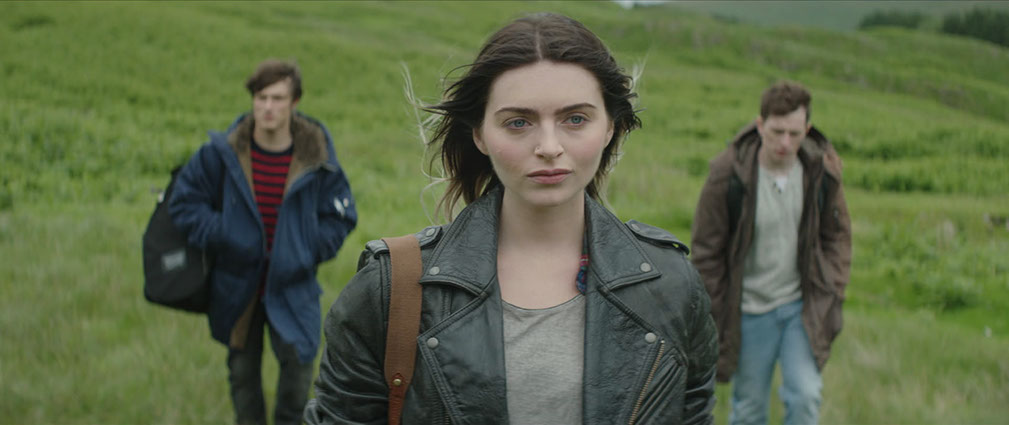
This year the 70th edition of the Edinburgh International Film Festival brought a wide range of films and documentaries home to Scotland. We took a look at the world premiere of Philip John’s Moon Dogs – a Scottish coming-of-age film – released on the 17th of June 2016.

Two step-brothers Michael (Jack Parry-Jones) and Thor (Christy O’Donnell) are thrown together through their parents’ marriage and the relationship between the two is far from perfect. Michael is a temperamental, slightly gullible young lad who having just finished high school is trying to figure out his future. Thor is the more quiet, reserved, artistic type who prefers to lock himself in his room to focus on his music and block out the rest of the world.

For their own individual reasons they decide to embark on a trip from their home on Shetland to Glasgow. With no money or any idea how they will get to there, they are lucky – or perhaps unlucky – to meet the wild, free-spirited yet slightly troubled young woman Caitlin (Tara Lee) who decides to accompany them on their journey.

The story focuses on the trio’s travels rather than their final destination. Throughout the film there are some beautiful shots of Scottish scenery and at times it almost feels like you are on a tour through Scotland’s landscapes and its society. With brutal honesty the film shows the best and the worst sides of Scotland. The three meet a variety of characters, from kind hearted locals to cruel criminals, whom anybody in their right mind would avoid.

The script, written by Derek Boyle and Raymond Friel, brings out a range of emotions with some charming and funny exchanges but also some darker, serious moments. Although this independent drama does at times appear a little awkward and staged this could be a reflection of how the characters themselves are feeling. At the beginning the boys, despite needing one another to make their journey to Glasgow possible, are both displeased at the idea of travelling together. As they begin to warm to each other the scenes and the interaction between the three appears to become more natural, resulting in some endearing moments for the audience and some sympathetic giggling.

The casting works. Michael and Thor are naive through their sheltered upbringing and young age and actors Parry-Jones and O’Donnell are very authentic in their roles. Tara Lee gives a captivating performance as Caitlin, although her questionable decision making and flirtatious nature make her a somewhat difficult character to comprehend. Personally I found this made her quite difficult to warm to, although perhaps the point of her role is more to provoke the boys and test their boundaries rather than to be a likeable character.

I would say Moon Dogs is a heartwarming, well written film that causes much amusement as the trio battle with the hardships of their journey and with growing up – as you do!


nae bad_blue

Star (blue)Star (blue)Star (blue)

Moondogs at the EIFF 2016 & at the British Films Directory

Reviewer: Iona Young (Seen 17 June)

Scottish Chamber Orchestra and Chorus (Queen’s Hall: 28 April ’16)

“A very appealing and appropriate choice of works”

Editorial Rating:  3 Stars:

Thursday’s SCO concert at The Queen’s Hall was to celebrate the 25th anniversary of the SCO Choir, and like at all the best gigs, the star attraction came on after the interval, following an impressive warm up by the band themselves.

Indeed, “warm up” is a particularly apposite description. The gallery was unusually crowded owing to the need for the ground floor to accommodate both the orchestra and 60 strong chorus, as half the centre stalls had been taken out. Heat rises, and for some reason the upper half of the house was uncomfortably warm, the lower a little too refreshingly cool.   Deliberate attempt to boost interval bar sales? Of course not; worried staff were toying with the radiators all evening.

Hot stuff? (Groan). Yes, it was an interesting programme, very much in the classical vein.

First up was Bach’s Overture from Suite No 3. Conductor Richard Eggar engaged with us immediately, explaining that this piece was “the one before Air on a G string” which I guess made us feel at home. My concerns about the Master’s orchestration including three trumpets playing very much in the high register, reminiscent of Handel and in truth slightly jarring (absolutely no reflection on the playing) was confirmed by the view taken by musicologist Joshua Rifkin that the piece may originally have been conceived for strings alone. Nonetheless it made for a lively opening to the evening’s entertainment.

Next came Mendelssohn’s Fifth Symphony. Yes, Fifth. Most people think he wrote only four, and in fact this work was composed probably somewhere between the first and second, much delayed in the performance. Nothing like the “Italian” or “Scottish” symphonies, it is a highly classical work, fitting in well with the Bach, and includes in the scoring a part for that intriguing instrument of yore, the Serpent, that I would imagine sounds rather like a cardboard tube made of brass.

A short while through the first movement I thought I was listening to Wagner. How could this be? Well, both Mendelssohn in this work, and Wagner in Parsifal, use the chorale-like orchestration of Martin Luther’s setting of Psalm 46, Ein’ feste Burg (“A safe stronghold’). Later on there were reminders of Haydn’s ‘London’ Symphony (no 104) with the use of the Dresden ‘Amen”. This ‘Reformation” symphony was an orchestral link between concert hall and church, a prelude of what was to come after the interval.

Mendelssohn featured again after the interval with the choir performing his hymn-like Verleih uns Frieden’, or “Peace in our time”, later to have such resonant connotations.   It was a pleasure to hear choral singing with such soothing melodic lines in this brief, dignified work.

Finally, the piece de resistance, Bach’s Magnificat in D. Confident choral singing with a strong, reassuring opening ably supported by brass and wind. The “Et exultavit…” that followed suffered from a slight lack of volume from the solo soprano, but the work as a whole provided a compleat combination of chorus, soloists and orchestra.

So Happy Birthday, SCO Chorus and Band, a very appealing and appropriate choice of works to celebrate this joyful occasion!


Star (blue)Star (blue)Star (blue)

Reviewer: Charles Stokes (Seen 28 April)

Go to the SCO and the Queen’s Hall

Visit Edinburgh49‘s Queen’s Hall archive.