Jekyll & Hyde (Church Hill Theatre: 22 – 25 Nov ’16)

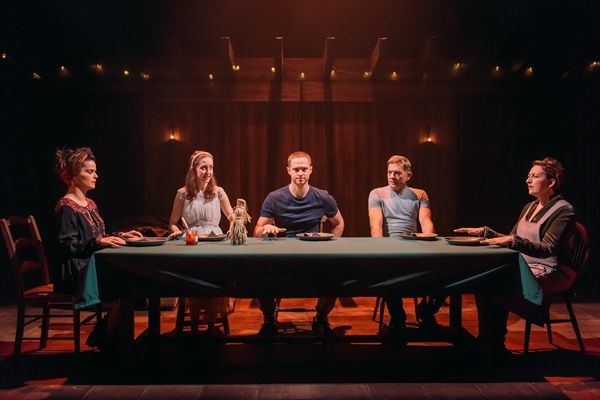
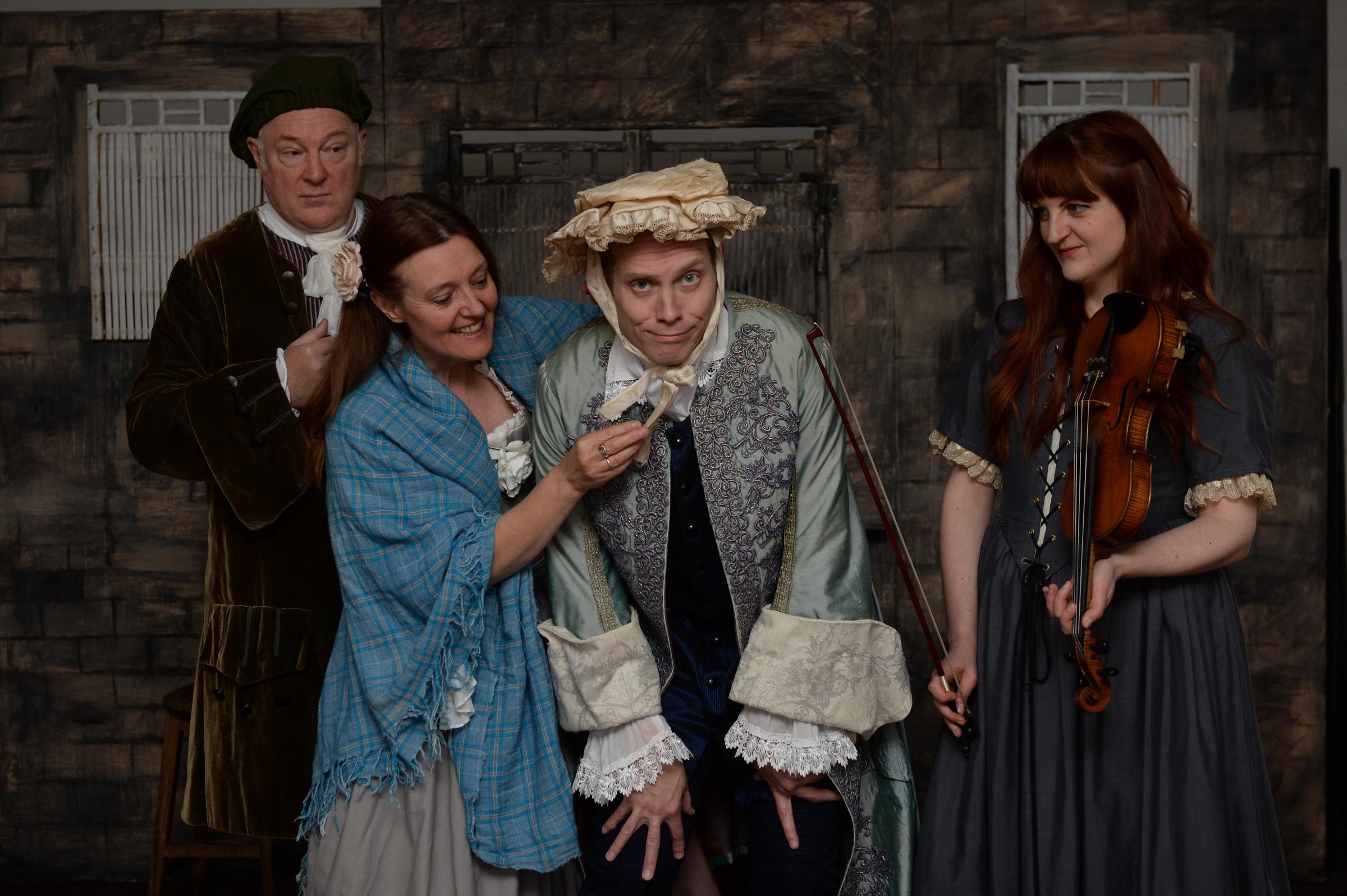
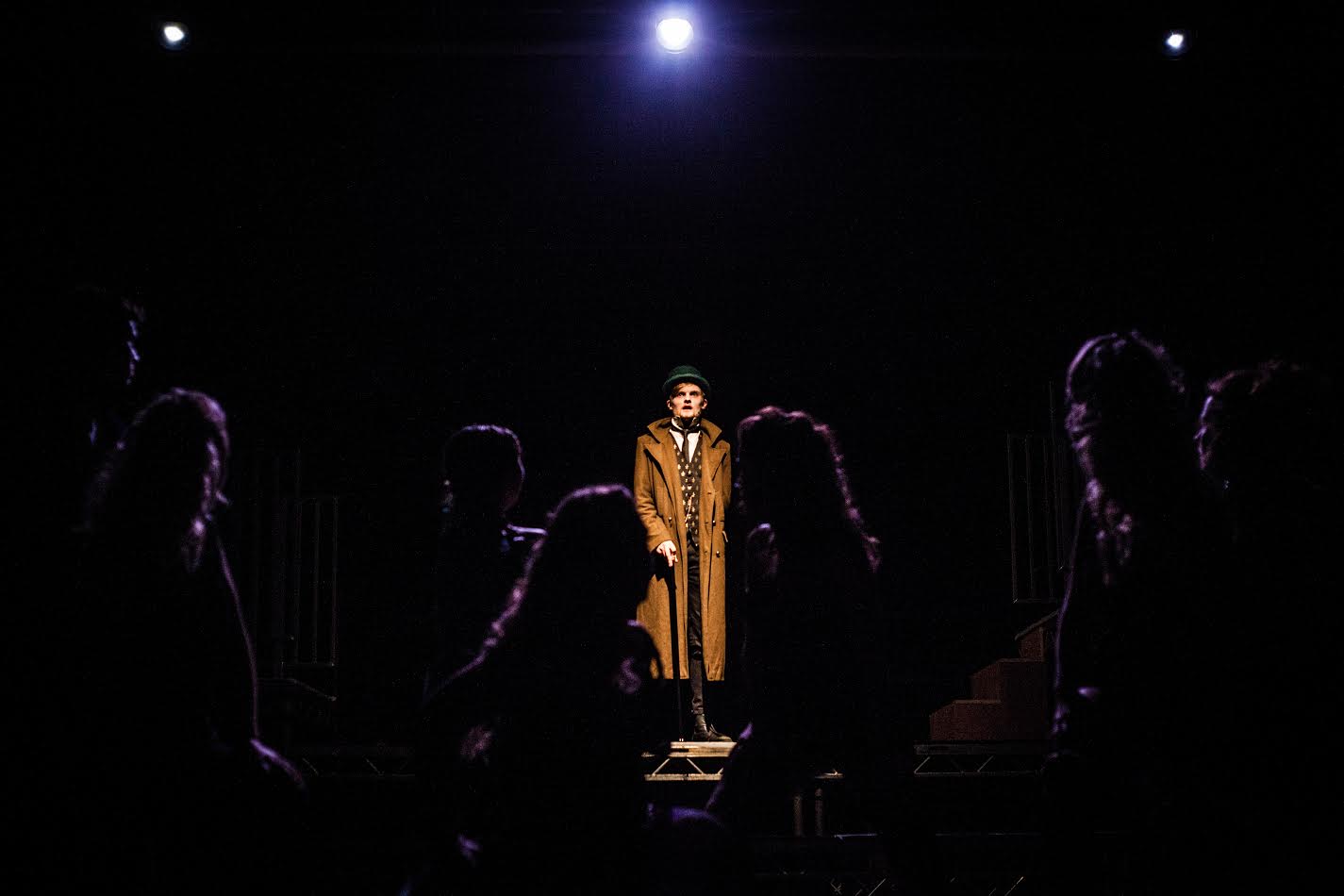
Stephen Quinn as Jekyll (& Hyde) Photos: Erica Belton

Stephen Quinn as Jekyll (& Hyde)
Photos: Erica Belton

“The talent neither stops at the singing, nor at the bounds of the principal cast.”

Editorial Rating: 3 Stars

I was part of an unfortunate, if very narrow, generation whose first encounter with Robert Louis Stephenson’s monstrous Mister Hyde was the opening of a terrible Hugh Jackman movie. As a result, questions of the duality of man, the nature of morality and the dangers of unrestrained passion didn’t really factor in for a while. It seems fitting therefore that EUSOG’s latest outing follows the pattern of contrast underscored by its source material: it’s a collection of both dizzying highs and curiously disappointing lows.

Jekyll & Hyde loosely follows Stephenson’s original work, with a few new emotional complications thrown in. It is a musical exploration of the ambition, suffering and fear associated not only with the fraught Henry Jekyll, but its effects on his friends, family and even the city of London itself. And to begin –  as usual – with the ability on display, it’s considerable. The singing talent in this show can’t be denied, ensemble included. Ellie Millar and Giselle Yonace in particular offer utterly breathtaking solos as Emma Carew and Lucy Harris, culminating in a duet that could shatter glass for precision.

And the talent neither stops at the singing, nor at the bounds of the principal cast. Special props go to Kirsten Millar as the world’s most entertainingly jovial prostitute; and to Jana Bernard, whose rare mix of graceful flexibility and natural showmanship lead to an array of angles that’d make an architect weep. Despite the occasional desync in a dance, the ensemble did their job with gusto and skill.

But any praise would be incomplete without hailing new face Stephen Quinn as the titular duo. Powerful voice aside, I found myself extremely taken with his portrayal of Henry Jekyll: he balances ambition, humanity and (perhaps most importantly) a genuine vulnerability during his two hour tenure as the good doctor, and it certainly stuck. Often, mild-mannered Jekyll is the more under-realised of the two, and it was refreshingly welcome to see such care put into his characterisation.

The question then, I suppose, is why this show only has three stars – and why have I personally left it unrated?

Despite the considerable strength of the cast, there are distinct elements of this show that detract from the overall fabric of the performance. Most glaringly, perhaps, is the way in which they handle Edward Hyde. At its core, there simply wasn’t enough contrast or intensity: often, the only difference between the two selves seemed to be his ragged choice of jacket, rather than any significant change in manner. The visceral glee, passionate brutality and utterly malevolent hedonism which typifies Hyde seems to get lost somewhere in the mix – and this is certainly not helped by fight choreography which is so floaty and strangely force-less that it occasionally comes off as comical rather than dramatic. Sitting next to the fantastic choreography of song numbers such as ‘Bring on the Men’, it seems worlds apart.

jekyllhyde3

And, most unfortunately, that fundamental element of violence and rage, which seems to be missing from much of the production, runs deeply through its other elements. Without that relish of cruelty, many scenes feel strangely bland for want of a contrast which just isn’t there. Combine that with mics which popped in and out more often than a first year halls cleaning lady and with variable volume levels, which would put Brexit indecision to shame, even when the show was at its strongest, then it was unsurprising that at times I could not hear a damned – or virtuous – thing.

That said, if you’re looking for a collection of entertaining and ear-pleasing song numbers, you’ll like what you get. However, if you’re wanting an exploration of human nature, brutality and debauchery, and a spot or two of vanquishing, then …. No. Upfront this is a strong production but it is let down by its emotional backdrop. For those who aren’t as pedantically focused on its content as I am, it’s certainly not going to sour your night – but walking home through the cold Edinburgh air I couldn’t help but think that Mister Hyde just didn’t show up.

Star (blue)Star (blue)Star (blue)

Reviewer: Jacob Close (Seen 22 November)

Go Edinburgh University Savoy Opera Group

Visit the Church Hill Theatre archive.

Blackbird (Bedlam: 16-17 Nov ’16)

“Powerful and moving”

Editorial Rating: 3 Stars: Nae Bad

I was quite apprehensive before taking my seat, as to how Edinburgh University Theatre Company would present the strong, emotive themes of trauma, abuse and love in David Harrower’s intense two-hander. With the entire play focusing on one conversation between the two central characters Ray and Una, how well would the actors sustain and communicate this challenging piece?

The plot sees Una (Sophia Dowson-Collins) seek out Ray (Benjamin Aluwihare) to confront him about the sexual relationship they had fifteen years prior – when she was only a 12 year old girl whilst he was a grown man of 40. She wants to face the past but he is at first unwilling to speak to her. As the play progresses they both go through a range of emotions, sometimes screaming at each other and at other times talking calmly about trivial things, creating a dramatic if at times, confusing dynamic.

The script is complex, taking a while to build and reel the audience in before taking a deeper and darker turn. We get to piece together more about the identities and personalities of both characters, and some surprising twists and turns reveal the truth of what happened fifteen years ago and how both characters have dealt with their experiences since. The silent captivation from my fellow audience members throughout told its own story: at times there was perceptible discomfort, and I personally found the whole thing quite awkward and difficult to watch, but only because the performance felt so real.

Although both performers did well I was particularly impressed by Dowson-Collins’s performance: at times there were long streaks where only she would speak – sometimes to Ray but often more like she was speaking to herself. She was captivating and consistent throughout, bringing a great sense or realness to her character. Aluwihare seemed nervous and awkward for the most part and although fitting with Ray’s character, it was difficult to tell how much “acting” came into play.

The set was perfectly suited to the action: it was very simple with just a couple of seats, a table and some office lockers, making the actors do the work to convey the story. In saying that, what didn’t work so well was the use of a plastic sheet hanging behind Una and Ray, from behind which a girl would appear to represent Una becoming a ghost of herself through everything she had experienced. Although I could see what the production was trying to do I felt like this distracted from the dialogue between Una and Ray, and a more creative way of expressing this idea could have been used to greater effect.

All in I was very impressed by the performance. The themes may not be to everyone’s taste, but it was still a fascinating watch.

nae bad_blue

Star (blue)Star (blue)Star (blue)

Reviewer: Iona Young (Seen 16 November)

Visit the Bedlam archive.

RSNO: SONDEGARD, SOLLIMA (Usher Hall: 18 Nov ‘16)

Image result for shostakovich

 “Was this the new Russia? Who cares? The music was amazing.”

Editorial Rating:  3 Stars

“Football is a game of two halves” as the crass saying goes. The intimation is, there is a good half, and a bad half. Friday’s RSNO concert can be explained in such terms. Relatively speaking, the first half disappointed, the second enthralled.

Cellist Giovanni Sollima was the soloist for the Dvorak Cello Concerto, and, to kick the evening off, in his own piece Violoncelles, vibrez! (in fact a duo for two cellos and orchestra) he shared the soloist platform with Aleksei Kiseliov, the RSNO’s principal cellist. Written to mark the tenth anniversary of the death of Sollima’s teacher, Antonio Janigro, and dedicated to Sollima’s fellow student Mario Brunello, one might have expected a deeply personal, even reflective work. It was, however, rather light, and reminded me in places of works by Max Richter, barely in the classical genre. The first movement did contain some long melodic lines but the work was neither unpleasant nor particularly demanding. The orchestra gave good support.

Then came the Dvorak. Dvorak as a concerto composer has never satisfied me as much as his fine symphonic or string quartet writing. Plainly, the orchestration is there, but the solo pieces (less so in the violin concerto) just do not seem to fit in so well, the exact opposite, for example, of Chopin. This facet of the work was exacerbated by some less than convincing playing by Sollima. The long orchestral opening of the opening Allegro was masterfully handled by the RSNO, who played their part with relish, sometimes, indeed often to the detriment of the overall balance with the soloist. Sollima did not seem particularly in command, Sondergard was standing in at short notice. The end of the first movement, much of the second and the majority of the third were a more comfortable experience. Sollima’s encore left one in no doubt as to his virtuosity.

I was looking forward to hearing Shostakovich’s Fifth Symphony again, and to see what the RSNO, in such good form this season, would make of it. They did not disappoint. Much has been said and written of the political background to the composition of this symphony under Stalin’s gaze, “A Soviet Artist’s reply to just criticism” but to me this is largely irrelevant: Shostakovich was a pragmatist, the symphony is an outstanding work and for many people its relative accessibility makes it a welcome introduction to the oeuvre of one of the twentieth century’s greatest composers.

Meticulous, sparse playing brought out all the fear and austerity suggested by the opening Moderato, quickly followed by woodwind and brass creating a marvellous, confident orchestral sound. This was just the beginning. Powerful basses and cellos introduced the subsequent Allegretto as the work grew increasingly manic. The third movement Largo was electrifying, and the Allegro non troppo finale bursting with optimism and confidence. Was this the new Russia? Who cares? The music was amazing.


Star (blue)Star (blue)Star (blue)

Reviewer: Charles Stokes (Seen 18th November)

THIS REVIEW HAS NOT BEEN SUBEDITED

Too Long the Heart (The Biscuit Factory: 10 -12 Nov.’16)

Ian Sexon as Brady from the 2013 Siege Perilous production. Photo: Nicola Garman

Ian Sexon as Brady from the 2013 Siege Perilous production.
Photo: Nicola Garman

“a low flame thriller, splintered with humour, affection, and a weighty sense of modern history”

Editorial Rating: 3 Stars Nae Bad

Inbetween the ArmaLite and the ballot box there’s some poetry, at least that’s how it is in writer David Hutchison’s reworking of Too Long the Heart (Edinburgh, 2013). In literary terms it’s Yeats with a telling fragment from Easter 1916; in a softer more lyrical vein there’s the Mountains of Mourne. We’re in Ireland, sure enough, in a freezing cold cottage in County Cork, armed with a tin of biscuits, tea, handcuffs, a heavy duty revolver and a semi-automatic pistol.

Get the picture? This is a low flame thriller, splintered with humour, affection, and a weighty sense of modern history. Split screen projection of news footage of ‘The Troubles’ – still an understatement to die for – makes the backstory all the more apparent. Bloody Sunday, the Loughgall ambush, Shoot to Kill, and ‘Historic Compromise’; they’re all here. And when it’s more introspective, there’s quiet, live music and song on cello, flute and guitar.

There are four characters gathered in this cottage. Caitlin (Cabrina Conaty) and her boyfriend Marty (Des O’Gorman) arrive first. She, for good reason, is eager and excited. Marty, a third year History under-graduate, is likeable but clueless. When it really would have been best to have their faces hidden, he doesn’t get his balaclava on in time. Nevertheless and as planned they manage to snatch an English tourist, who 30 years ago was an army captain in Belfast, and – eejit! – has come to the Republic for a spot of fishing. Neil Lawson (Steve Hay) denies it, of course, but he’s still got the haircut, the neat moustache, the tattersall shirt and real composure under fire. Maybe he was taught some Yeats at Sandhurst. Anyway, he certainly has to prove his mettle when he’s up against Brady (Ian Sexon), a Provisional IRA commander, who has some unfinished business with the British officer class.

Three years on, the script is tighter and sharper, reckons David Hutchison. The play is still being developed and the sightlines are not all they should be but it certainly cracks along under Andy Corelli’s direction and the more tense the moment, the better the action that is called for. The closing fifteen minutes in which Brady plays the police against the media is not so neat that the suspense cannot work. Up to that point it’s more a case of each character smacking against their past – or, with Yeats again, negotiating ‘the stone [that’s] in the midst of all’. The topicality of the projected imagery helps here and there’s some digital ‘doubling’ for each character to confront. Interestingly I was ‘with’ each one of them, so sympathetic is the characterisation. Brady ridding his unit of the out-and-out headcases (terrorists?) for instance. It’s Caitlin who makes the patriotic call for her beloved country of Ireland, which is ok until – unwittingly – she’s trumped by the line to ‘Take your country back’ and so I stay firmly with the Army’s riposte, if not belief, that national myths are ‘convenient evasions’. Poor Marty cannot find traditional Irish music on the radio, but then he’s more a ‘Snow Patrol’ kind of guy.

Too Long the Heart is ninety minutes of well calibrated drama. If for you ‘The Troubles’ are simply another dismal instance of ethno-nationalist conflict, then this should enliven and disturb the category.

nae bad_blue

Star (blue)Star (blue)Star (blue)

Reviewer: Alan Brown (Seen 10 November)

Visit Edinburgh49 at the Other  venue archive.

Lyceum Variety Nights (Lyceum, 6 Nov. ’16)

“Left me genuinely begging for more”

Editorial Rating: 5 Stars: Outstanding

One of the first things they teach you about writing reviews is not to gush: to keep your mass of uncontrolled instant reactions behind a dam and only let through those considered, pertinent and articulate comments that are most valuable to the reader. The Lyceum’s first variety night, however, attacked my stiff upper lip of a dam with such force as to make gushing almost inevitable, with an evening of real high quality and passionately delivered entertainment.

It feels very wrong to pass a simple two sentence judgement on each of the seven acts who graced the stage simply for the sake of wordcount – suffice to say every single one dazzled, entertained and left me, genuinely, begging for more. Author Christopher Brookmyre’s reading of a tale about a group of teenagers on an outing to see A Midsummer Night’s Dream transported us to that very place, creating wondrous magical moments; Luke Wright’s poetry had many audience members cheering before he’d even finished performing, with the gutsy IDS, a poem about Iain Duncan Smith, constructed using only words contain the vowel sound “i” being a real triumph of wordplay and wit. Jenna Watt’s excerpt from solo show Faslane beamed with all the relevance, energy and honesty of her five-star Fringe run earlier this year, and Glasgow band A New International brought the house down with some of their greatest theatrical gypsy folk pop songs, which was an uplifting and triumphant finale.

The acts themselves were all excellent – professional, well-prepared, and comfortable in the kind of setting where the audience is a bit more vocal than they might normally be. But the evening was hosted and compered by Sian Bevan and Jenny Lindsay who brought a wonderful human and sensitive likeability to their role. At times their witterings seemed a little underprepared, and it would have been nice to see them perform some of their own material, but it was easy to feel comfortable and inspired in their presence.

While pitched right in my personal sweet spot, it’s worth saying that at times the content was a little unashamedly left-leaning, and it’s a shame that there was quite a bit of similarity between some of the acts (for a real variety night I would have loved to have seen some more diverse art forms in there as well (for example: dance, art, circus, puppetry, maybe even a short film) but the relatively low-tech, one-night nature of the beast may well bring such limitations. One can only hope the format proves popular enough to make this event a more regular and extended feature within the Lyceum’s calendar.

Based on round one, I would urge anyone with any sort of passing interest in the arts to get themselves along to the next event on 26th February. I’ll be first in line.

outstanding

StarStarStarStarStar

Reviewer: Steve Griffin (Seen 6 November)

Visit the The Lyceum archive.

THIS REVIEW HAS NOT BEEN SUBEDITED

RSNO. Jensen. Lugansky: Usher Hall 4 Nov ’16.

nd

Image result for prokofiev

“The RSNO is maintaining an extraordinarily high standard of repertoire and performance”

Editorial Rating:  4 Stars

The RSNO’s 2016/17 season continues apace with intelligent programming and excellent playing. On Friday we also had significant added value inasmuch as we heard not one but two piano concertos, in a splendid celebration of Russian music from the first half of the 20th century.

The orchestra led off with The Enchanted Lake by Anatoli Liadov. Liadov was an enigma with a somewhat mystical approach to life as well as music, delighted to maintain that “Art is a figment, a fairy tale, a phantom. Give me a fairy tale, a dragon, a water sprite, a wood demon – give me something that is unreal, and I am happy.”  And sure enough, The Enchanted Lake follows no clear story and is an impressionistic portrait of a magical lake populated by all manner of water nymphs and wood sprites. It is a gentle piece that has evocations of Delius’s Walk to the Paradise Garden written some eight years earlier in 1901. The RSNO’s playing was suitably, lyrically, intoned as we settled comfortably in our seats.

We were rapidly shaken out of them by Nicolai Lugansky’s bravura rendition of Prokofiev’s Fifth Piano Concerto. “Nicolai has been coming to us for twenty years” one of the RSNO staffers enthusiastically told me, and it is commendable that this orchestra has such long-standing relationships with star players. Clearly this is reciprocated, because Lugansky learnt the work by heart in a week before the concert.

The work is of mixed quality and rather bitty. Five movements in twenty-five minutes, but only the last two are of any substance. There is far more “music” in the first concerto, a 15-minute work but less slender, which came after the interval. Nonetheless Lugansky took hold of it, easily disposing of its demanding notation, with the orchestra providing enthusiastic support. The fourth movement Larghetto was the most melodic, at least at the start until it built into a strong climax. The fifth, appropriately named Vivo, provided a lively conclusion.

After the interval the indomitable Lugansky appeared again for  Prokofiev’s First Piano Concerto, the more rounded one. This 15-minute tour de force is an object lesson in less means more, and much as I enjoy the other four concerti this one stirs me most. From its confident three chord brass opening in D flat major the piano and orchestra belted out the near frantic theme in unison until the orchestra took off on its own with the soloist following in a series of bravura passages, pausing only for a few minutes’ reflection in the second section of what is really a one-movement work. It was a joyride: taut, together, highly effective orchestral playing under the confident and relaxed baton of Eivind Gullberg Jensen, with soloist Lubansky clearly a master of his art. The theme sang out again when the pace returned in the third section and ended in a blaze of glory with the addition of glockenspiel.

The evening was brought to a close by Rachmaninov’s Third Symphony, premiered in 1936 by no less than Stokowski and the Philadelphia Orchestra, and by a short head the most recently composed piece of the evening. Rachmaninov was a master of the romantic genre and this work is close to film music, and none the worse for it. However, unlike the utterly romantic Second Symphony with its long melodic lines, this pleasing work is full of thematic variations that never really go anywhere, so you are subjected to a series of treats rather than an enveloping whole. The RSNO were completely at home with it, from the opening cello solo (the first movement is all down to the cellos), through the wistful horn and harp opening of the second, concluding with the zestful Allegro with the orchestra giving everything it had got. This is a more reflective, even introspective work than the second symphony, which nonetheless, and notwithstanding the stature of the second symphony, contains some of the most expressive and romantic classical music ever written.

The RSNO is maintaining an extraordinarily high standard of repertoire and performance, worthy of its pedigree and 125th Year Anniversary.

Star (blue)Star (blue)Star (blue)Star (blue)

Reviewer: Charles Stokes (Seen 4 November)

Go to the Royal Scottish National Orchestra

Visit Edinburgh49‘s Usher Hall archive.

SCO.Ticciati. Ortega Quero. (Usher Hall: 3 Nov.’16)

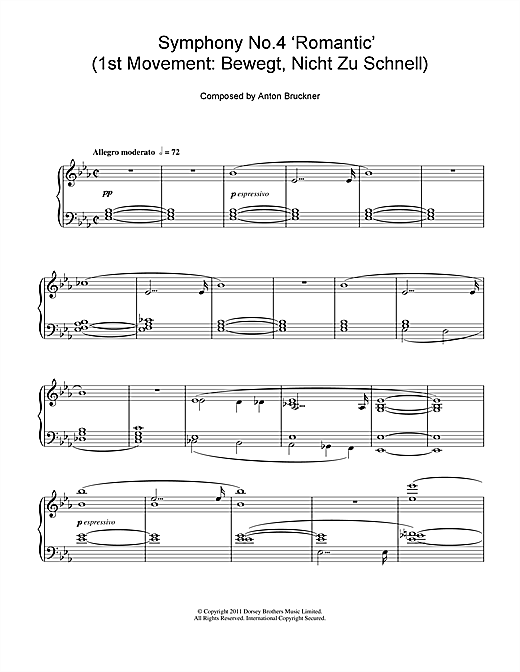
bruckner4

“This was a genuinely fresh approach to the Bruckner symphony”

Editorial Rating: 4 Stars: Nae Bad

The publicity for Thursday’s SCO gig at the Usher Hall intrigued me. I am a junkie for late Romantic music and for me the period 1850-1950 is the most exciting in classical music. Richard Strauss and Anton Bruckner are among my favourite composers and the SCO under conductor Robin Ticciati is approaching world class status. But a Chamber Orchestra playing a Bruckner symphony? This was something that had to be experienced.

I was pretty certain the SCO could bring off the Oboe Concerto by Richard Strauss. It is a beautiful work that sits comfortably within the Chamber genre, completely in contrast with his earlier works or subsequent dramatic Four Last Songs; so it is a bit of a one-off. The whole piece sat together well, the orchestra demonstrating real fluency of playing in support of the very demanding solo part. Ramon Ortega Quero handled the extraordinarily long passages (no less than 57 solo bars in the opening sequence) with sub aquatic breathing skill and faultless phrasing, and coaxed a beautiful tone out of his difficult instrument. Forgive me, but I could not help but remember my mother telling a story of a young oboist she went out with at university. His lips, as demonstrated in his kissing, were of a muscular versatility not since experienced. One of the benefits no doubt of a super competent embouchure.

We were treated to a thoroughly polished, relaxed performance of a rather intimate work that in particular demonstrated fine string playing and a conductor getting all that he wanted from his band with minimal apparent effort.

But the real test was to come.

What happens when a chamber orchestra tackles an orchestral behemoth? Ticciati has gone on record as saying “We need to scrape back the veneers” and “reveal the work in new colours”. This they did, although I do concede that the orchestra was beefed up to maximum strength. What they brought to Bruckner’s 4th Symphony was an astonishing clarity along with a seemingly relaxed approach that allowed the music to speak for itself, rather than  suffering the relentless drive of some other conductors. Ticciati’s body language and general demeanour suggested he could have been conducting Haydn or Mozart. So relaxed!

An eerie, breathtaking entry by the double basses in the Bewegt nicht zu schell followed by the winsome horn solo morphed into our first treat of full-on Bruckner brass. Ticciati, restrained, holding back, but not quite teasing, built the perfect climax. I have rarely heard such delicacy or clarity in orchestral Bruckner. Clever stuff!

The Andante, quasi allegretto gave us another very gentle pianissimo opening leading to the violas taking up the theme supported by pizzicato violins and cellos. We were being reminded of the SCO’s impeccable chamber orchestra credentials. There soon followed some of the best brass passages ever written and towards the end we were at last in “wild Bruckner” territory with the whole orchestra playing in apparent wilful abandon, but in fact right on the button, until we returned to a reflective pizzicato coda.

In the Sherzo; Bewegt haunting brass led us off with some very clean playing ending in a resounding conclusion.

Finally the Finale of the fourth movement: again, Bewegt, doch nicht zu schnell. After another plaintive horn call there was no shortage of brass and then the full orchestra gave us everything we wanted and took us home. I am delighted to report that the Usher Hall audience did not burst into applause immediately but waited until Ticciati had lowered his hand after some ten seconds, and gave him four curtain calls.

So the experiment worked. This was a genuinely fresh approach to the Bruckner symphony. I got clarity, freshness and an unstrained, natural and not too over intense approach that let the music speak for itself. Now, perhaps, for the same approach to the more difficult 6th or 8th.

nae bad_blue

Star (blue)Star (blue)Star (blue)Star (blue)

Reviewer: Charles Stokes (Seen 3 November)

Go the Scottish Chamber Orchestra

Visit Edinburgh49‘s Usher Hall archive.

Grain in the Blood (Traverse: 1 – 12 Nov.’16)

l to r: Frances Thorburn (Violet), Sarah Miele, Andrew Rothney, John Michie, Blythe Duff. Photos: Mihaela Bodlovic

l to r: Frances Thorburn (Violet), Sarah Miele, Andrew Rothney, John Michie, Blythe Duff.
Photos: Mihaela Bodlovic

“This hair-trigger of a play”

Editorial Rating: 5 Stars: Nae Bad

What is it about valleys? There’s the BBC’s Happy Valley and Edward Norton in Down in the Valley, also far from ‘happy’, and – seminally – there’s the Valley of the Shadow of Death, which is as good a place as any in which to locate Rob Drummond’s latest enthralling work. Once upon a time, ‘for hundreds of years in the valley everything was just so’, but then the thanksgiving poetry ran out, like blood. Time now, then, for a spell of compassionate release.

That’s the hope anyway, and it is hope that supports Sophia, whose grand-daughter Autumn, needs a kidney transplant if she is to live much beyond her twelfth birthday. Isaac, Sophia’s grown son, has it in him to help but naturally, dramatically, it is not as easy as that. In fact, after 85 minutes, it has all still to be decided, either by the words of a child terribly wise beyond her years or out of the barrels of a 12 bore shotgun. Orla O’Loughlin’s direction respects this hair-trigger of a play right to its showdown.

The action rises over 3½ days, counted as ‘three sleeps’ by Autumn, who is brat reporter and ancient Chorus combined. She knows the ‘Verses of the Harvest’ by heart and the rhythmic invocation of the Grain Mother as provider of health and happiness- sad joke –  sounds solemn and serious, ‘even though She doesn’t fucking exist’. That’s the thing about Autumn (Sarah Miele): she has that unnerving sacrilegious streak that adults can’t manage.

So, there is proper tension down on the farm. There’s even a game of ‘Truth or Dare?’ that contains the greatest reveal of them all, which is wickedly ironic as Isaac (Andrew Rothney) is described as ‘low risk’. Sophia (Blythe Duff) needs to believe that assessment whilst Burt (John Michie), is there as the phlegmatic companion to threatening circumstance. These two play out a nice challenge of ‘Would you kill scumbags to save your daughter?’, which just digs deeper into the disturbing, teasing, ethical dilemmas that Drummond delights in. Go to his Uncanny Valley for starters.

grain-in-the-blood-2

The remote rural location is part of the piece. Where better to unearth the unsettling and the rooted? The harvest moon can glint off Isaac’s blade and there’s the suffering of Auntie Violet’s horse to put alongside Sophia’s claim that ‘We’re all animals’, which might be what her veterinary practice has taught her. Her house is modern, of machined and polished wood, where you might expect low ceilings, wood smoke and warped timbers. The spare, snappy dialogue and careful movement suits the space, whose back wall slides away to show Autumn’s bed with its blood drip stand, or the barn, site of an earlier, bloodier horror. Introducing classical tragedy for our times, anyone?

Intrigued? You should be, because this is fascinating theatre, still and severe in its way, but emotionally resonant, well-focused and very well performed.

nae bad_blue

Star (blue)Star (blue)Star (blue)Star (blue)Star (blue)

Reviewer: Alan Brown  (Seen 1 November)

Go to Grain in the Blood at the Traverse

Visit Edinburgh49‘s Traverse archive

Dr Johnson Goes to Scotland (Traverse: 1 – 5 Nov. ’16)

l to r. Lewis Howden, Gerda Stevenson, Simon Donaldson, and Morna Young. Photo: Kirsty Anderson

l to r. Lewis Howden, Gerda Stevenson, Simon Donaldson, and Morna Young.
Photo: Kirsty Anderson

“Comic effect knocks against an open coffin on Iona”

Editorial Rating: 3 Stars

Would Samuel Johnson, heroic dictionary maker, essayist, critic, and celebrity wit ever have appeared on ‘Strictly’? Perhaps. He was, after all, prone to nervous shakes and tics and he would have been mercilessly brilliant at discombobulating the judges. Anyhow, in the last of the current season of a Play, a Pie, and a Pint, the big man is in polished boots and plaid and he steps up to a jig and seems to enjoy it.

And verily this is the same Dr Johnson, who noticed that ‘the whole [of Edinburgh] bears some resemblance to the old part of Birmingham’. Writer James Runcie continues his rehabilitation of the arch English nationalist by rowing him thoughtfully and fondly over the sea to Skye (and to Mull and Raasay). A Word with Dr Johnson – at the Traverse in October last year – was about the man, his wife, and his English dictionary; this time (1773) he’s in the boondocks and the heather and the Gaelic. For the proto London-centric it’s an ear-bending peregrination in a land where ‘you have more words than people’, which could well have been its chief attraction.

Lewis Howden plays Johnson sympathetically, of splendid girth and with orotund voice, and with a baffled interest in all things Scottish. An exploration of Fingal’s Cave, lantern in hand, leaves him only dimly enlightened but his enthusiasm for Thomas Braidwood’s school for the deaf and dumb is obviously sincere.  His companion throughout is, of course, the amiable James Boswell (admirable by Simon Donaldson), who treats us to evocative latin from Dunbar’s ‘Lament for the Makars’, whilst guarding his distinguished author friend from the sublime and local peril of being called a bampot.

So then, a pleasing trot through good old Scottish ways ? Runcie even brings on ‘Macbeth’ and the Bonnie Prince, which is fine until their comic effect knocks against an open coffin on Iona and a poem of freedom in earnest pursuit of the Scottish nation. Supporting roles by Gerda Stevenson and Morna Young are amusing and/or tuneful but my distinct impression was of looking in at the tartan themed windows of discount booksellers, The Works, on Princes Street. The learned Dr.’s eye would take in a remaindered copy of his  ‘A Journey to the Western Islands’; he would harrumph, say “I’m deeply obliged”, and move on.

Star (blue)Star (blue)Star (blue)

Reviewer: Alan Brown (Seen 1 November)

Go to Dr Johnson Goes to Scotland at the Traverse

Visit Edinburgh49‘s Traverse archive.

One Thinks of It All as a Dream (Traverse: 25-29 October ’16)

“Euan Cuthbertson as Syd shows great range and dexterity”

Editorial Rating: 3 Stars

Competent, solid, predictable: words probably rarely used to describe Pink Floyd’s music, but to me the most apt in summarising One Thinks of It All as a Dream – the latest instalment in the Traverse Theatre’s A Play, A Pie and A Pint season. The play, which follows the band’s early years, in particular Syd Barrett’s influence, is interesting for those that know little of the history, but in all other respects doesn’t give much to shout about.

For a theatre piece about such a genre-defining and experimental band, one might expect an edgy or original approach to form and structure to creatively fit the subject matter (drugs and mental illness are common themes), but instead this production follows a simple linear narrative and style typical of (and there have been so many) a musical star’s biopic.

It is structured well in giving nods to all the necessary turning points and dramatic moments to keep interest in the narrative, and the second half flows very naturally in terms of building up tension and allowing the actors to really sell the story. Early on the dialogue is quite forced to convey necessary information – in particular in one party scene the characters all sit around discussing what’s just happened, which comes across as very stilted.

The more engaging parts of this show are the longer and more developed scenes – the first television interview, Roger’s meeting with a psychiatrist and the final few minutes in particular enable the development of more emotional involvement with the action. As quite a pacy piece covering several years it’s quite hard to build a connection with each moment: before you know it you’re off somewhere else again, trying to keep up with who’s who and where and when we are.

The acting is good, Euan Cuthbertson as Syd shows great range and dexterity, particularly in scenes with his father, and the other actors give credible support to keep the action moving. Jonathan Scott’s design should also receive special mention, creating a flexible yet stylish space for the actors to move around in and facilitate a smooth performance.

It’s a perfectly passable show, but not a great show. For me, another brick in the wall.

Star (blue)Star (blue)Star (blue)

Reviewer: Steve Griffin (Seen 25 October)

Visit the Traverse archive.

THIS REVIEW HAS NOT BEEN SUBEDITED