SCO: Swensen, Lewis (Usher Hall: 14 Mar.’19)

“Elegiac, more like a tone poem, with the baton-less Swensen using his hands more like a magician than conductor”

Editorial Rating: 4 Stars: Nae Bad


Thursday’s Scottish Chamber Orchestra’s gig played to a larger and more diverse audience than at their normal Queen’s Hall venue, and the audience showed their appreciation with a near full house, enthusiastic applause, restraint with seasonal agues such as coughing (your beleaguered writer included!) and respectful post performance silences following the conductor’s upraised baton at the end of the quieter pieces.  It was a joy to be among the cognoscenti.


The programme was a contrast of early and late Romantic works, with composition dates ranging from 1787 to 1924. Curiously, three of the works comprised several years in their gestation, and the remaining Coriolan Overture was written for no apparent purpose at all other than composition for the sake of it (not that there is anything wrong with that, but it is more of a 20th rather than 19th century idea, in a past age of mostly commissioned music). Beethoven spent 11 years finalising his Concerto No 2 in B flat, Op 19 (which was in fact his first concerto), and Sibelius the best part of a decade on his last two symphonies.  That is, I have calculated, about 3 minutes music per year in the case of the latter, one minute in the case of the Beethoven.  I guess that they had one or two other things to attend to as well?  Even George R R Martin is doing better than that with the concluding ‘Game of Thrones’ book.


Was the deliberation in terms of timescale worth it? In the case of the Beethoven I would say yes, for Sibelius, I would be less sure.


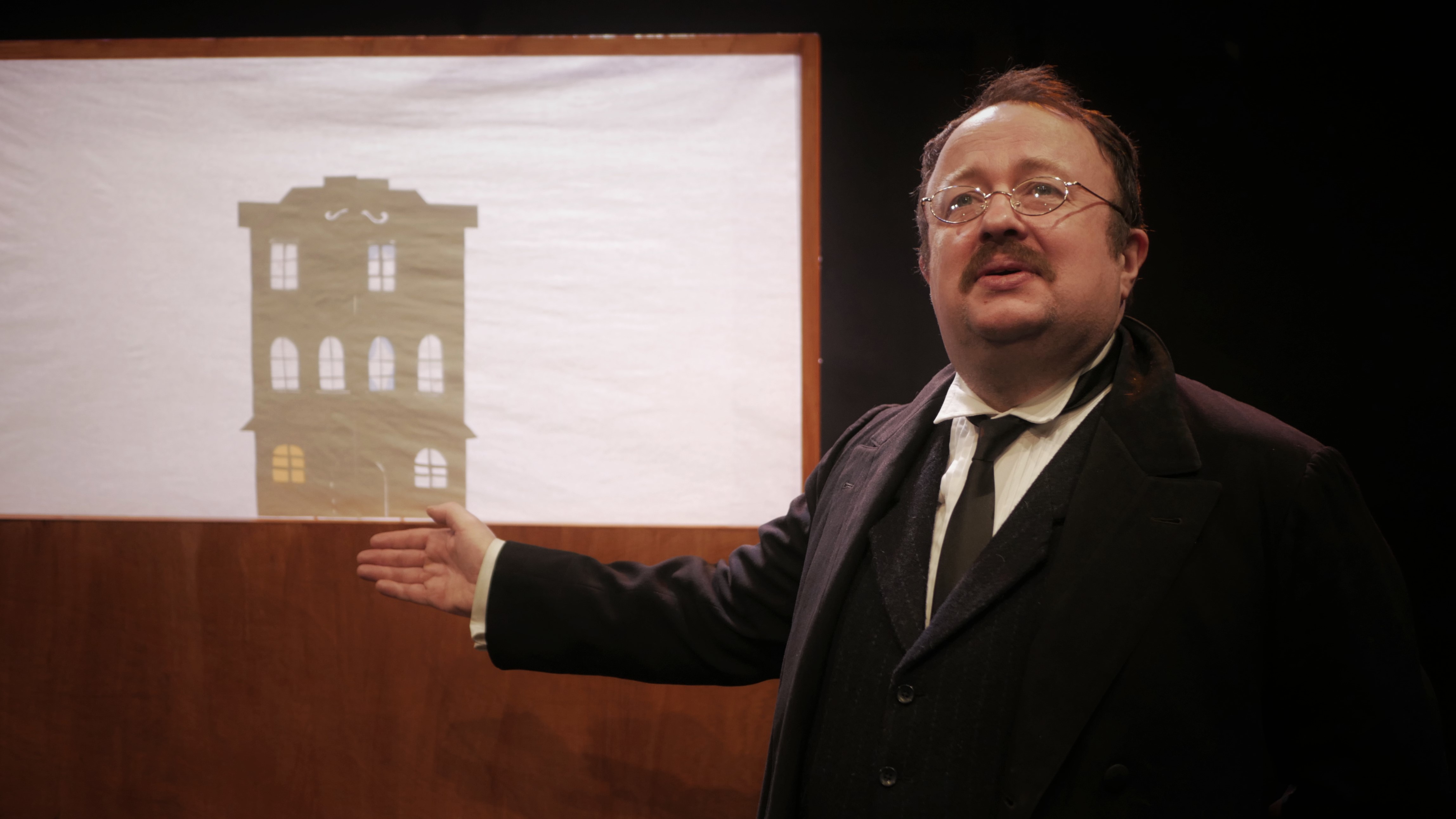
Conductor Joseph Swensen bounded on to the podium to start off the proceedings with Beethoven’s Coriolan Overture, Op 62.  An amiable great big bear of a man, heavily bearded, of mixed Japanese and Norwegian heritage, he kicked off the playing without ado and drove us through ten minutes of classical gothic music without reference to a score.  The orchestra responded well to his enthusiastic conducting (no baton) and we experienced a fluent, well played opener that lifted our spirits.


Next up the wonderfully adept Paul Lewis took us through the Beethoven Piano Concerto no 2.  Only last week Can Cakmur gave us a spellbinding interpretation of the third with the RSNO in the very same hall.  The second was a completely different work, of almost a different world, mature Mozart rather than Beethoven at the height of his powers, eleven years separating their composition. To compare them would be comparing chalk with cheese. Lewis played with consummate ease and brought everything out of the work that he should have.  After the long, tautly played orchestral opening Lewis entered with bright, clear tone, good intonation and phrasing.  The well known third movement Rondo: Molto Allegro was a delightful, reassuring romp.  Enthusiastic applause but alas no encore, the more surprising in view of the relatively short duration of the programme.  Never mind, mustn’t be greedy.


Two Sibelius symphonies filled the second half of the programme, No 6 in D minor, Op 104 (1923) and No 7 in C, Op 105 (1924).  This was the programme feature of the evening, and one wondered what our charming rather enigmatic conductor, with his Scandinavian roots, would make of these relatively unknown works compared to the over popular 2nd and 5th symphonies


The 6th is constructed in conventional four movement style and lasts approximately 25 minutes.  Too much, in my opinion, has been made of the fact that Sibelius was studying Palestrina when he wrote it.  More telling, I suspect, was that it was rather overshadowed by the fifth symphony being written at the time.  Sibelius himself said that it reminded him of snow falling.  A sublime, ethereal string orchestra opening followed by woodwind calling.  Elegiac, more like a tone poem, with the baton-less Swensen using his hands more like a magician than conductor.  The second movement built up the tension and the third was a return to the more plaintive; the final Allegro Molto a return to the brass we know so well.  I wanted to rush home and listen to it again and again.  A privilege to hear this “Cinderella” of Sibelius symphonies being done by so rightly by a deeply sensitive conductor and orchestra.


Finally to the final Sibelius symphony, No 7.  A single movement work of a little under 25 minutes, more of a tone poem and originally entitled Fantasia Symphonica No 1, Robert Layton has described it as “completely original in form, subtle in its handling of tempi, individual in its treatment of key and wholly organic in growth”.  Moreover ‘New Grove’ describes it as “Sibelius’s most remarkable symphonic achievement”.   Hmm.  It does grow and deliberately lacks the shape of a symphony. I suppose one should regard it as a musical development, even if one does not always know where it is going.  A string opening very much in the tragic genre, with the brass making its presence felt and gradually taking over.  Bruckner does brass with forcefulness and aggression, Wagner with foreboding, but Sibelius does brass with soul!  The work, much favoured by many, made for an intriguing essay in related sounds and passages conjuring up imaginings of mystical Finnish folklore.



nae bad_blue

Star (blue)Star (blue)Star (blue)Star (blue)

Reviewer: Charles Stokes(Seen 14 March)

Go to the Scottish Chamber Orchestra

Visit Edinburgh49 at its Usher Hall archive.
The Taming of the Shrew (Pleasance: 12-16 Mar.’19)

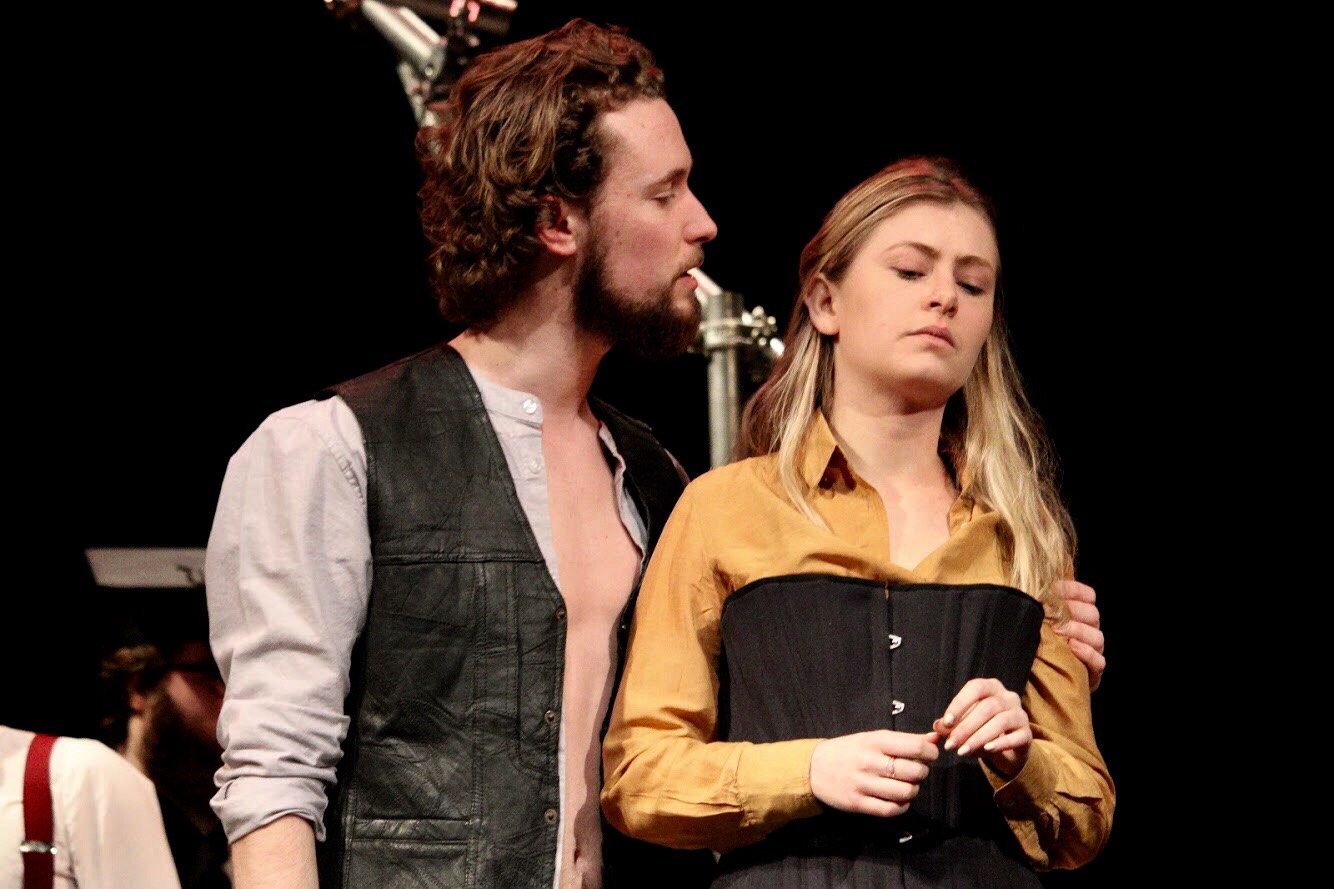
Michael Hajiantonis as Petruchio and Anna Swinton as Katherina.
Photo: Maia Walcott

“The command to ‘Kiss me, Kate,’ is no tender joke.”

Editorial Rating: 4 Stars

As title challenges go, here’s a biggie: the Edinburgh University Shakespeare Company presents The Taming of the Shrew. Rhymes with ‘Me Too’, helpfully, and for my money chimes with Rudimental and Ed Sheeran’s ‘Lay It All On Me’:


‘So if you’re hurting babe
Just let your heart be free’


Director, Tilly Botsford, would know her audience and on the night that audience was overwhelmingly female and young and had to be with Katherina (Kate) Minola all the way to Padua and back. Right at the start callow and earnest Lucentio is advised to ‘Study what you most affect’ and Botsford takes it from there. This is not the oddball ‘pleasant comedy’ that might ‘frame your mind to mirth and merriment’; no, it’s that other version, where bladdered Christopher Sly and the play-within-the play are cut and Petruchio lectures on misogyny.


The idea, of course, is that you walk out of the theatre with Katherina, a ‘foule and contending Rebel’ against Petruchio’s cruel dominion, and much is shaped to that end. An empty set consists of stepped black blocks and shiny scaffolding poles and costumes are kept plain and unremarkable: braces over white shirts and roomy trousers for gentlemen suitors and servants; with gowns for elegant swishing from Bianca (Jessica Butcher) and impudent flouncing from Katherina. The second half features harsher lighting. Nothing here of Italian colour, or period, despite the frequent mention of Pisa, Mantua, Venice. My favourite? Tranio’s sailmaker father is from Bergamo. It looked like a reaction to the vivid, beer stained, palette of last year’s ‘Romeo and Juliet’. Music, when it sounded, was a necessary relief and was, I think, under-played.


If it’s desolate at its close, this ‘Shrew’ still has its several entertaining scenes. Send for Biondello, bag carrier and fixer, and Callum Pope will have you smiling in a moment as he sorts out another fine mess. Thomas Noble’s beard and size give Hortensio unmissable stature and disguised (not!) as music teacher Licio he’s a nimble, comic treat. Will Peppercorn is the smitten Lucentio and also looks a prize chump as the elongated Cambio. Sally Macalister’s Grumio may give a knockabout performance but it’s well turned and always engaging. When Nathaniel Brimmer-Beller eventually turns up as Vincentio, humour gains a suave, ironic, dimension. Standout and habitual tailoring from Milan or DC? Tranio (Levi Mattey) is another more than capable servant-as-master and dear ‘old’ Gremio (Henry Coldstream) has the delightful, crestfallen, tribute to the ‘Great British Bake Off’, ‘My cake is dough’.


So, to risk the extended analogy, what does rise to the occasion?  There is no showstopper here; tonally, politically, the play is now a nightmare, and (therefore?) the technical challenge of how to sort its language is significant. ‘Coney catcher’, anyone? There is, notwithstanding, an appalling build to the fact that Katherine has had to marry a brute. Her father, Baptista (Michael Zwiauer), has no conscience. Petruchio is not, in this production, the roistering six-pack article. Michael Hajiantonis plays him straight, out for what he can get. He’s clever and vicious and unlovable, punto e basta! The command to ‘Kiss me, Kate,’ is no tender joke. Katherine is unnerved to destruction and Anna Swinton has that closing, stupefying, monologue to prove it.


For my part, I miss Christopher Sly, Madam wife at his side, and with him the opportunity to pretend that ‘The Shrew’ is a piece to enjoy and applaud while the sorry world slips by. All credit then to Tilly Botsford and an excellent cast for going at the real thing, at pace and with conviction.


Star (blue)Star (blue)Star (blue)Star (blue)

Reviewer: Alan Brown (Seen 13 March)

Go to the Edinburgh University Shakespeare Company

Visit Edinburgh49 at the Pleasance archive.

RSNO: Watanabe, Cakmur (Usher Hall: 8 Mar.’19)

“The Wheel of Fortune” from the original manuscript of the Carmina Burana , c.1230

“This is a wonderful time to be a concert goer in Edinburgh”

Editorial Rating: 4 Stars: Nae Bad

There are considerable advantages to living in a city with such an enlightened and broad church approach to the performing arts.  And being – in global terms – for music a second city compared to, say, Berlin, New York, London or San Francisco, we tend to see up and coming artists before they get the bookings on the true world stage.  We thus look into the future.  And the future is bright.


Can you recognise the names in the headline?  I doubt it.  Kensho Watanabe hit the big time two years ago when, just appointed Assistant Conductor of the Philadelphia Orchestra aged 29, he stood in at the last minute for his mentor Yannick Nezet-Seguin to make his critically acclaimed subscription concert debut with the Philadelphia and pianist Daniil Trifanov.  On his debut with the RSNO on Thursday he showed masterly control and grasp of the complexities involved in conducting a major full length piano concerto, and an hour long Choral and Orchestral work.  One had complete confidence in him.


And Can Cakmur?  A Turkish pianist who won the 2017 Scottish International Piano Competition, 22 years old, and about to debut with the Tokyo Symphony Orchestra.  We shall be seeing and hearing a great deal more from this highly educated, personable young man.


So I suspect the draw, with all due respect to the principals, was the programme: Beethoven’s Piano Concerto No 3 in C minor Op 37, and Carl Orff’s Carmina Burana. A mixture, perhaps, of the sacred and profane. A full house, bar the usual few leg-numbing seats in the gods.


It resonated with me personally that the Beethoven was being performed fifty years after Radu Lupu’s astonishing and winning performance in the final of the Leeds International Piano Competition. In particular, his rendering of the second movement Largo demonstrated thoughtful restraint and tenderness and left me mesmerised.  Then we had a successor, twenty years on, to the other legendary Romanian pianist , Dinu Lipatti.  And now a Turk interprets the grand man, and an exhilarating interpretation it was.  After the lengthy orchestral introduction, brass and wind a little out of balance with the strings to start with, but soon settling down, Cakmur almost threw the opening scales off the piano in a brave, individualistic but convincing interpretation that proves the international piano competition world is not just throwing out sterile, technically competent clones.  This young man showed a grasp of the work way beyond his years.  Rightly pausing so the unfortunate plethora of uncontrolled audience coughing and sputtering finished, Cakmur created a sense of calm before the opening solo chords of the second movement Largo.  The pianist’s sensitivity of playing and interpretation pleased this disciple of Radu Lupu, taking one to a level of transcendence that almost, but not quite, extinguished the insensitive uncontrolled coughing of the audience, who should not have attended in those circumstances, and should learn to cover their mouth with a handkerchief.  If only the management could advise this at the beginning of the programme when they talk about mobile phones.


Without a break we rushed into the final movement Rondo: Allegro.  Could have been Presto.  Uplifting, joyous, fun.


Cakmur introduced his encore that was a melange of Liszt and Schumann overlaid by Bach.  Ingenious.  What stamina these professionals have, to play like that after thirty minutes of intense keyboard bashing!


There was much to enjoy in the second set’s Carmina Burana, and I always get more out of listening to works that I have performed, such as this, with the mighty Beckenham Chorale.  I counted at least 100 voices in the RSNO chorus who gave a very good account of themselves, a full on O Fortuna to open the proceedings, clear diction of the Latin text, great rhythmical singing in the jazz like Veni, Veni, Venias, glorious unrestrained joy in the Blanziflor et Helena.  The children’s choir performed clearly without words or music, showed exemplary discipline, and have clearly been very well trained.  Soloists Fflur Wyn, Adrian Dwyer and Stephen Gadd contributed well, if sparsely, giving in particular amusing renditions of a swan not enjoying about to be eaten and a drunken abbot.


This is a wonderful time to be a concert goer in Edinburgh.


nae bad_blue

Star (blue)Star (blue)Star (blue)Star (blue)

Reviewer: Charles Stokes (Seen 8 March)

Go to the RSNO, Scotlnd’s National Orchestra

Visit Edinburgh49 at the Usher Hall archive.

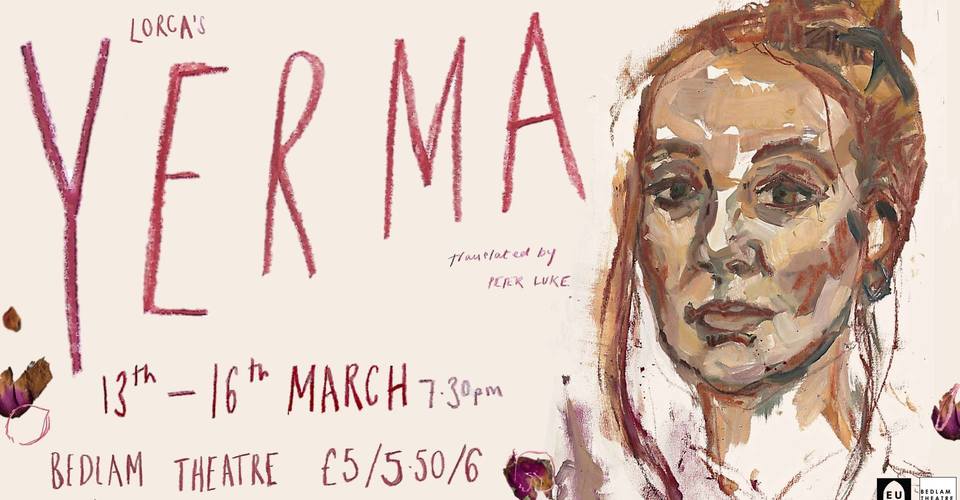
Interview: Yerma (13 – 16 March ’19)

“Lorca’s confidence in his plays is palpable in this beautiful subtly that we seldom see on stage today.”

WHO: Jane Prinsley and Laura Hounsell, co-Directors

WHAT: “A young woman is driven to the unthinkable by her desperate longing to conceive a child. Yerma, meaning barren in Spanish, is tortured by her inability to conceive and becomes increasingly consumed and disoriented by her pain.

Federico Garcia Lorca’s 1934 piece challenged the social order of the time and the claustrophobic expectations of a rural Spanish village. It is relevant in our world of pressure and expectation, where women can be just as crippled by the judgment around them.

In this bold new multi-sensory adaptation, Lorca’s age-old themes will be rendered contemporary.”

WHERE: Bedlam

DATES: 13 – 16 March

TIMES: 18:00

MORE: Click Here!


Why Yerma?

Lorca’s writing is timeless. He manages to articulate the pain of lost love, oppression and unfulfilled dreams in a totally contemporary way. The roles he has written for female actresses are second to none and the atmosphere of claustrophobia that he creates is beautifully painful. It was an exciting challenge to do justice to his talent.

How will such a young cast, most focused on their studies rather than settling down to parenthood, approach the play’s central themes?

Whilst our actors’ lives have taken different paths from their characters, they are predominantly the same age. It is fascinating for us to explore the lives of young people in a different setting. Furthermore, the play’s central themes of social pressure and expectation is ageless. Most people feel the pressure of their surroundings and so actors have been able to draw on their own insecurities and uncertainty about the world they live in. Also as ambitious female students, motherhood is something which we must seriously consider in our future plans. Whilst we are currently focusing on our studies, the pressures of having a family and a success carer is ever present and pressing. The themes of motherhood, loss and societal pressure on women are as familiar to us as they are to the play’s characters and we will approach them with the truth of our own concerns.

This play is set in a society more claustrophobic and traditionally-orientated than our own. Will contemporary audiences relate to this writing as anything more than a historical curiosity?

The pressures on Yerma and Juan to be parents and to have a successful relationship may have become more subtle in the years between today and Lorca’s rural Spain, but these pressures very much still shape our lives today. Lorca was a modern thinker and knew that most women were not best suited to being a housewife, but the stereotypes he was fighting against in his literature are still apparent. We have chosen to stage the play in an atemporal rural setting so that audiences from around the UK will be able to draw on their own experiences and backgrounds. Audiences can look forward to seeing a magnified version of our society today, where the New Zealand Prime Minister is asked on the BBC if she would propose to a man and where our own Prime Minister’s shoes receive more attention than her policies. Motherhood and femininity is so interwoven with being a modern woman that Yerma feels as relevant now as it did in the 1930s. In our adaptation of Yerma we have focussed more on these central themes as opposed to the historicism and hope to transcend the original 1930s setting.

The production is billed as a “multi-sensory adaptation”. What can we look forward to?

You can absolutely look forward to the music. Singer-songwriter Eve Simpson is joining our cast as an actor-musician and she has set Lorca’s poems to music. Oftentimes Lorca’s poems are cut or spoken, but we have tried to remain as true to his intentions as possible by having them sung. Furthermore, to create our atemporal aesthetic, Eve Simpson and Robin Gage have drawn on musical traditions from across the British Isles and some Flamenco styles.  We really are trying to create something multi-sensory, so also expect beautiful scents, visions and sounds in this production.

How does Yerma fit into the rest of the season at Bedlam?

The Bedlam season is varied and uncurated which is one of our many strengths. Yerma will bring innovation, music, joy, thought and opportunities for brilliant female actresses. It is exciting to overcome the challenge of staging a famous and loved play, which incorporates verse and prose and spoken and sung, but it is something that we as directors, our creative team and our talented cast have all relished. This week, Abi Morgon’s 2011 play Love Song is on at Bedlam and draws on similar themes of love and motherhood, so Yerma follows nicely. It is a coincidence that similar themes are being covered in both weeks, but perhaps the Spring weather has got us all thinking about fertility…

If you could ask the playwright a question, what would it be? What do you think he might answer?

How did you manage to write such convincing and tragic female parts? How were you able to articulate the female struggle in the Andalusian rural villages so perfectly and did you know at the time that you were creating something universal? Lorca was homosexual and a socialist and was seen as a threat to the far-right nationalist forces who murdered him. Perhaps his own struggle and isolation is written subtly into the women (and men) in his plays, who deal with repressed love, broken dreams and the feeling of being trapped.

What’s the one thing everyone should know about Lorca?

His fearless politics and how that manifested itself in his art, both as a writer and a painter. For Lorca, his art was a lifeline and one that cost him his life.

Is Yerma as good as Blood Wedding?

What a strange question! They are often printed together, along with The House of Bernarda Alba, and are sometimes billed as a rural tragedy trilogy, although that is to forget Dona Rosita the Spinster, another masterpiece. All of these plays have different plots and characters, but there is usually a woman fighting against expectation, oppressed love, an imposing older woman and men who seem lost. They are all reminiscent of Greek tragedy but feel distinctly modern. Yerma is our favourite because of the central theme of motherhood and the pressures around parenthood that do not seem to have changed since the 1930s. The play’s rapid energy and descent into madness was also something we were captivated by when we first encountered it. It is like a train that speeds towards its final crash.

Are there living artists who can hold a candle to Lorca and the Generation of ’27?

Lorca continues to inspire artists and creators but people should always read more of his work as it is rare to find words rendered as beautifully as his. We found a recent modern staging of Yerma to be contrary to the original aim of the piece as we love how the pain that Lorca portrays is elegantly told. His work is often simple and important action can happen offstage. Lorca’s confidence in his plays is palpable in this beautiful subtly that we seldom see on stage today.

What’s the one thing you know now, that you wish you had known at production’s start?

Collaboration is great. We’ve worked so much better together than we could have ever done individually. It is brilliant to bounce ideas around, disagree, agree and improve our work together. Going forward, we will always look to work in a collaborative style, both on the creative team and with actors.


LIKE WHAT YOU JUST READ? FOLLOW US ON TWITTER! FIND US ON FACEBOOK! OR SIGN UP TO OUR MAILING LIST!

Lost In Music (North Edinburgh Arts: 1-2 Mar.’19)

Emily Phillips, Claire Willoughby, Alex Neilson (obscured!) and Jill O’Sullivan.
Image from Neil Cooper’s review in the Glasgow Herald.

“Glorious, ‘Everything else just fades away ..’ “

Editorial Rating: 5 Stars: Outstanding

‘… and Orpheus raises his guitar’. As lines go that’s a cracker but not really a first as there’s Val, in his snakeskin jacket, in Tennessee Williams’ Orpheus Descending, ‘the tale – as Williams put it – of a wild-spirited boy who wanders into a conventional community of the South and creates the commotion of a fox in a chicken coop’. In the first scene Val picks up his guitar and starts to sing Williams’ Heavenly Grass but stops, ominously, in the middle of the song.


No clamour, no interruptions in Magnetic North’s Lost In Music and the snake coiled in the grass ain’t on no jacket. This is a one hour truly excellent self-styled ‘gig-theatre show’, with four musician / performers singing and talking of Orpheus and Eurydice, but in a totally different (youthful?) key, celebratory rather than savage or tragic. It is expressly about music and music-making and how that plays about our lives, particularly young lives, often to glorious effect.


Its theatre may be in the sound and the visuals – just admire the micro-cinema of clouding memory loss – but the narrative still compels attention, as you’d hope, given the pre-eminence of its story. Why does Orpheus look back? In this telling it’s because he is doubtful of the Gods’ word but also, unspoken, it has to be because he cannot bear the unaccompanied silence behind him.


And so back to the music and the soundscape to which the whole production is dedicated. Clustered instruments gleam under Simon Wilkinson’s lighting; microphone stands, rests, and props are festooned on Karen Tennent’s green, glowing, set. Costumes are colourful and free flowing. Jill O’Sullivan opens up on guitar and vocals and one by one the others play their parts: Emily Phillips (Clarinet / Orpheus); Claire Willoughby (Saxophone / Eurydice); and Alex Neilson (Percussion). Halfway, thereabouts, there is an important pause as each briefly explains what music means to them and at the close they are joined for a swelling finale by a further six players – from neighbouring Craigroyston Community High School.


Kim Moore and Nicholas Bone wrote and direct an inspiring show that has rightly attracted support from Creative Scotland, the City Council, the PRS Foundation and – for Orpheus was the hardy Argonaut who charmed the Sirens – the Royal Edinburgh Military Tattoo. If Lost In Music looks for a place in the Festival or on the Fringe, then it should be a shoo-in.


Find Lost In Music in Glasgow this week at

Platform
1000 Westerhouse Road, Glasgow G34 9JW
Wednesday 6 March, 7pm
Thursday 7 March, 1.30pm

outstanding

StarStarStarStarStar

Reviewer: Alan Brown (Seen 2 March)

Go to the Magnetic North

A Note of Explanation (Assembly Roxy: 1-3 Mar.’19)

Justin Skelton as Edwin
Photo: Grant Jamieson

“Lively and intelligent”

Editorial Rating: 3 Stars Nae Bad


It fits that A Note of Explanation, a work-in-progress preview, is part of the third Formation Festival at Assembly Roxy. This adaptation of a children’s story by Vita Sackville-West is coming together rather well.

Some Kind of Theatre could argue that their 45 minute production is in kit form: neatly engineered, quick to put up, and soon to be nicely habitable. It is, after all, based upon a very small book in the library of a doll’s house. Yes, a priceless doll’s house with imperial foundations, but director and script adaptor, Emily Ingram, has carefully and respectfully remodelled A Note of Explanation (1924) for our declining and more anxious, times. I believe Sackville-West would applaud, whilst Edwin Lutyens, architect, might question what on earth we mean by ‘modernizing’. However, Lutyens is tutored and charmed by a bright and perky fairy, so all is to the good.

Quercus, ageless sprite of the house, has ‘memoirs’ to enact from standing in the wings of story time. She is forever young and capable (and Scottish) and her tales of Cinderella, the Shellycoat, Bluebeard, and Jack and the Beanstalk, are cheery, cheeky, variants upon the originals. Nothing too scary here, only a silly goose. Cheery but helpful too, as each has an ecological edge; perhaps not as keen as the woodcutter’s axe but good and pronounced all the same. When Quercus accuses Lutyens of imprisoning her within the skeleton of her oak tree the royal architect is truly sorry. Fortunately there is one magic acorn left ….

Ably performed by a cast of three – Gillian Goupillot, as Quercus; Imogen Reiter; and Justin Skelton, as Edwin Lutyens – with support from puppets of tree(s), agile squirrels and a carriage, A Note of Explanation is a lively and intelligent children’s show in the making.  


(& by ‘n by, for grown-ups:

Lutyens: https://www.architectural-review.com/essays/the-rise-and-fall-and-rise-of-edwin-lutyens/10029787.article

Robert Graves’ poem, The Stake, in ‘Poems: abridged for Dolls and Princes’, 1922, in the library of Queen Mary’s Doll House.  Haunted, but has an honest oak tree at its centre.)


nae bad_blue

Star (blue)Star (blue)Star (blue)

Reviewer: Alan Brown (Seen 1 March)

Enjoy Some Kind of Theatre

Visit Edinburgh49 at the Assembly Roxy

Good Dog (Traverse: 14-16 Feb.’19)

Image: tiata fahodzi compnay

“Noble intentions.”

Editorial Rating: 2 Stars

Stories of life, growth and perseverance in dour and desperate neighbourhoods are undoubtedly worth telling. The nooks and crannies of experiences otherwise overlooked by mainstream culture are often rich with opportunities for pathos, expression, and diversity, and as citizens we all ought to champion stories of the oppressed and disregarded. Arinzé Kene’s Good Dog (2017) is certainly one of these stories. It is not, unfortunately, a compelling or engaging piece of theatre, and for all its noble intentions, the flaws in design and execution are too great to overlook. 

The play is a one-hander, with a runtime of two and a half hours. In the Traverse Theatre’s staging, directed by Natalie Ibu, actor Kwaku Mills portrays Boy, the sole character onstage, who narrates this sprawling, multi-year tale as he grows from a young, bullied child to an older, disillusioned and distraught teen. The story focuses on a dreary street in Tottenham, north London, on which despondent drunks and anxious shop owners face off against violent youths and, from time to time, the long arm of the law. Boy observes these disparate characters with intrigued attention and with the help of various voiceovers his narration layers the street with detail. The twists and turns of Kene’s script cover myriad subjects of life in this place and in his time, from South Asian immigrants trying to live up to their forebears’ expectations, to local infidelity, to racially problematic beauty standards, to concepts of nonviolence and protest, to undiagnosed dyslexia in impoverished youths, to 90s-centric toys and technology. The visuals are mostly dark, harsh shadows, enveloping Amelia Jane Hankin’s stark set: a blunt, grey cube in the center of the stage that resembles nothing so much as a kid’s (tower) block , but evokes the air of unpleasant, grungy decay that seems to envelop the whole place, at least in Boy’s eyes.

As Kene writes him, and Mills plays him, Boy is the center of all the world’s woes. He is mercilessly bullied in school. His mother both cannot afford to and seems uninterested in buying him the amenities he desperately craves. He seems to have no friends, no confidence, and in everyone’s eyes but his own, not much of a future. When the audience first meets Boy, he is an outspokenly optimistic kid, who believes that if he does good, ‘good’ will circle back to him later in life, and so he willingly undergoes derision and torment at the hands of local bullies, and others, because the more he forgives them, the better his life must eventually become. It does not take long, however, for the cruelties of life in this area to drag him so far into crippling misery and senseless pain that the fable of ‘good things coming to those who wait’ starts to ring completely hollow for Boy, and he realizes that letting the onslaught of life beat him down is never going to liberate him. It was only going to make things worse.

Midway through Good Dog, the audience may feel the same. Not only because the central metaphor of Kene’s script (a pair of dogs Boy observes clashing with each other over many years) is so obvious that its eventual payoff could have come 90 minutes earlier without any meaning lost, but mainly since this production is long, exhausting, and clunky. The sound design, by Helen Skiera, is cacophonous, grating, and more inane than affecting. The choreography of Boy’s solo performance, whose movement was directed by Annie-Lunnette Deakin-Foster, is disorienting (see Boy inexplicably leaping on and off the grey block while he walks around, which happens a lot). Mills’ accent, assisted by dialect coach Joel Trill, was noticeably strained and inconsistent, so that Boy sounded like he was warming-up in rehearsal, well way from the street and . Technical elements smack of artifice and there’s that uncanny smugness that much of contemporary British theatre seems to be slipping into.

It is remarkable that Mills was able to learn two and a half hours worth of lines and movement and perform them onstage on tour. One wishes, however, that the lines and movements were not as derivative and staid as these. The character seemed a strange fit for Mills’ talents and overall his performance was wasted. 

This is understandable, however, given Kene’s script, as that is the weakest element of the production. The tone and content of Good Dog are suffocatingly bleak, and lack both a sense of humour and an ounce of self-awareness. The phraseology Kene employs is labyrinthine and more irritating than anything else. A few thin jokes about naughties nostalgia got a snicker here and there, but the one genuinely hilarious and surprising moment came when a supporting character dies in such an improbable and horrifying manner that the show’s claims to authority or seriousness were dashed in full there and then. The death in itself is, of course, not intentionally funny, but brutally tragic, and yet as this piece is written, each scene seems hellbent on topping the last one with even more misery and suffering, and the showy depravity of this character’s final moments can do nothing but amuse.

Good Dog is coated in emotional squalor – a poor and baffling choice. Most of Kene’s narrative seems more interested in simply shocking an audience into stupefied submission with ‘Look how sad this can get’ antics than telling a story in a creative or engaging manner. It is telling, and rather depressing, that this script has been picked up and praised by critics. From my point of view – and, ok, I don’t know London’s meaner streets – it sounded very contrived and ends up with the most incompetent portrayal of a marginalized voice that I have seen. 

Which is a shame, because again, stories such as these frequently offer important perspectives, which others should listen to. But Good Dog ends up taking all the worst elements of ‘important’ dramas and shamelessly repeating their most self-serious moral mantras so that they come off as painfully obvious by the time Boy utters them. Of course, much of the subject matter the show deals with is hugely important but nearly all of it has been handled more intelligently and dynamically in narratives like Barry Jenkins’ Moonlight (2016), Strictly Arts Theatre’s outstanding Freeman (2018), and Spike Lee’s Do the Right Thing (1989). This last connection is especially relevant, as Kene chooses to include a riot sequence at the end of Good Dog so reminiscent of Lee’s Do the Right Thing climax that it seriously threatens to overstep the bounds of homage. 

Good Dog ends with an affirmation of accepting conflict and learning how best to fight back against the ‘bigger dogs’ of this world, even if it means being ‘put down’ in the process. The metaphor is overly wordy, unclear, and could do with some further consideration of just what it is trying to say. In that manner, it suits the larger production perfectly.


Star (blue)Star (blue)

Reviewer: Nathaniel Brimmer-Beller 

Go to tiata fahodzi

Visit Edinburgh49 at the Traverse archive.


RSNO, Sondergard, Benedetti. (Usher Hall: 8 Feb.’19)

Image: wyntonmarsalis.org

“…the RSNO, which since their return from China in January has been playing at world class standard. “

Editorial Rating: 5 Stars

I have commended the RSNO on the creativity and intelligence of their programme planning since I started writing about them some three years ago, and on Friday there was a fine example of this.  For sure, Nicola Benedetti, the forces sweetheart of the Central Belt, will always fill the hall, and Gershwin’s Porgy and Bess is ever popular, but Thomas Ades and Wynton Marsalis?  Now that was a risk, but, boy, did it pay off.


Effectively this was Jazz Night at the Usher Hall, and, strangely enough it was the Concerto in D minor for Violin and Orchestra by Wynton Marsalis that had the strongest classical nuances, not the Ades.


Powder Her Face by Thomas Ades was his first opera, based on a sex scandal involving the then Duchess of Argyll, and was a cut down work comprising just four singers and an ensemble of three clarinets, a brass trio and a string quintet with piano, harp, accordion and percussion.  Ades’ Dances, written later but for that same opera, is what we heard and was an eleven-minute full on full orchestra shebang which certainly expressed the Duchess’s hedonistic lifestyle.  To say it was played with wild abandon would be to criticise the orchestra.  It was played with controlled abandon.  But abandon there certainly was, a gorgeous, unrestrained, schmaltzy piece bordering on the burlesque.


More familiar was A Symphonic Picture of Porgy and Bess, a 23-minute composite of our favourite songs orchestrated by Fritz Reiner for the Pittsburgh Symphony Orchestra in 1943.  The work held together with remarkable integrity and was a joy to listen to.  Again, the RSNO didn’t hold back and we were treated to some rich, unrestrained playing in the jazz rather than classical orchestral tradition, showing the orchestra’s versatility under the guiding arm of Sondergard’s enlightened baton.


Without doubt the draw of the evening was the newly honoured Nicola Benedetti (is she the youngest CBE in the country?) playing the Scottish premiere of the Concerto in D minor for Violin and Orchestra by Wynton Marsalis, especially written for herIntroduced by Sondergard as a work as long as a symphony (50 minutes) it never palled.  I would describe the opening movement, Rhapsody, as a beautiful lyric piece yet in the jazz idiom, albeit classically constructed.  The second, Rondo Burlesque, was all over the place but a fun listen.  During the third movement, Blues, Benedetti showed us some beautiful solo playing with the support of the string section in some unusual and effective pizzicato.  Come the finale, Hootenanny, notwithstanding the Scottish title, I felt we were more likely in a barn dance, it was terrific, exciting, fun and to cap it all Benedetti concluded the piece by walking off the stage still playing the final refrain.


This is the third consecutive review that I have written in the past fortnight that has received our highest accolade, five stars, which shows the incredibly high standard of music available currently in Edinburgh. Two of these go to the RSNO, which since their return from China in January has been playing at world class standard.  Rather than give an encore Benedetti concluded the evening by thanking the generosity of the RSNO in giving free tickets to a number of Midlothian young musicians who had been taking a workshop that afternoon with the orchestra; obliquely referring to the current threat to axe instrumental tuition in Midlothian for schoolchildren below S4.  If the seniors in the audience want their children and grandchildren to continue to listen to home grown music of this quality, the answer lies in their pockets, though of course Nicola was too nice to say this.  But we knew what she meant.


StarStarStarStarStar

Reviewer: Charles Stokes (Seen 8 February)

Go to the RSNO, Scotland’s National Orchestra

Visit Edinburgh49 at its Usher Hall archive.

9 to 5 (Pleasance: 5-9 Feb.’19)

“A damn good show .. poetry in a big, shiny sequined dress”

Editorial Rating:  4 Stars Nae Bad 


l-r: Anna Sheen as Violet, Jemma Lowcock as Judy, & Alice Hoult as Doralee.
Images: Andrew Perry

Dolly, Dolly, Dolly. What is there to say about the undisputed Queen of Country that hasn’t already been said? Other than the fact it’s what I blast during weightlifting 80% of the time (so now if you see me, congrats, you know!), it’s hard to come up with praise that hasn’t been done to death. I thought I’d get lucky when I got to talk about something Parton-adjacent, but unfortunately for me and very fortunately for everyone else in the audience, the praise vocabulary has a lot of overlap.

9 to 5 tells the story of Violet (Anna Steen), Judy (Gemma Lowcock) and Doralee (Alice Hoult): three embattled women struggling to stay strong in a world designed to keep them down. That world is typified by their boss, Franklin Heart Jr, neatly summed up as a “sexist, egotistical, lying, hypocritical bigot”. After a chance encounter with the devil’s lettuce, the three heroines find themselves in far deeper than they intended, but with a chance to change both their lives, and the lives of their co-workers, for the better.

From the outset, I need to make it clear: this is a damn good show, with damn good performers. If the star rating wasn’t enough to tip you off, Footlights’ production of 9 to 5 is one to be proud of. The lynchpin of that success was the central trio of Hoult, Lowcock, and Steen. It’s not often that I get to see talent on the student stage that would fit seamlessly into a professional production, but then again, it’s also not often that you see not one but three vocalists who can not only sing to character, hit notes right in their centre zone and (as my opera teacher used to say) throw their voices out so hard you could hammer a nail with them. Even better is the obvious talent at play outside the soundtrack: Steen balanced great comedic sensibilities with an unexpectedly genuine reflection of the struggles faced by powerful women; Lowcock threw levels of vulnerability and hidden nerve into what could’ve easily been a cookie-cutter “beaten down protagonist in a musical” role; and Hoult could basically get a job as a Dolly Parton impersonator – sometimes it was genuinely difficult to tell the difference from sound alone.

‘Around Here’

And that’s even more satisfying when supported by a keenly talented secondary cast. Daniel Stansfield’s Franklin is a wonderfully grotesque, gurning gargoyle of a man, whose revelry in his own personal toxicity is almost a treat (almost); Mhairi Goodwin’s fawning office drone Roz was not only a brilliantly half-sympathetic secondary antagonist, but probably had my favourite performance in the entire production (you’ll know it when you see it); and special props go to Brett McCarthy Harropin a stunningly chameleonic performance as both a dancer, and the show’s sleeper comedy MVP, Josh. Honestly, most of this review could just be praise for the acting. Even if you are not mentioned here, please rest assured: I noticed you, and you were glorious.

Of course, what’s an actor without blocking? And although certain productions on the Pleasance Stage have erred towards A-Level Drama sensibilities in the past, this is certainly a welcome break. I was unable to find a fully-titled choreographer, but whoever in this production created the movement should be very proud of their work: the dancework has the precision of a watch movement. Every part of the stage had its own novel and interesting motions, fully cohesive to the overall pitch and wave of the beat. Darn good to watch, especially the opening number.

To round off the positives, many that there are: this is a musical. Not just a musical, but a Musical. If you’ve watched one or two, you’ll be very familiar with the emotional beats, levels and general plot. But parts of this show felt like I was seeing the familiar tropes for the very first time. When this production gets going and finds its stride, it’s poetry in a big, shiny sequined dress.

Doralee enjoys a Cowgirl’s Revenge

However, this gem is not without flaws. These seem most glaring behind the scenes: whoever was on sound needs to review their operations. The levels between the band and singers were usually abysmal for the first half of most songs, which makes it feel as if whoever was on script watch was distracted. In between the constant volume switching, and a feedback boom in the first half that could have blown fillings out, it ultimately came off as sloppy and far less than what a production like this should be capable of. Although fixed by due diligence, it was disappointing that such a big feature was handled so poorly.

That said, my one large criticism of what I was seeing directly onstage was that the opening number didn’t set my expectations high. I can’t tell if it’s a comparative lack of rehearsal or some mistake on the night, but the all-important 9 to 5 number sounded off key, off time and sluggish for maybe half of the time. Luckily the show recovered soon after, but I distinctly recall being viscerally afraid the rest would be much like it.

I wish I could’ve given the show an ‘Outstanding’, but these two issues  – mostly the former – marred it enough that the entire experience didn’t reach the heights I knew it could have, given the rest of its parts.

However, the above flaws should be fixable, and even if not, I would still recommend this show. The sheer spectacle of a good musical is really hard both to organise and act in, but the levels of talent at play here are exactly what Edinburgh’s come to expect from the university’s Footlights in recent years. Despite the factors holding it back, 9 to 5 is a credit to the cast and team that have brought it to Pleasance, and it deserves every seat sold. In a world that’s all takin’ and no giving, this production definitely bucks the trend.

nae bad_blue

Star (blue)Star (blue)Star (blue)Star (blue)

Reviewer: Jacob Close (Seen 6 February)

Go to 9 to 5 at the Edinburgh University Footlights

Visit Edinburgh49 at the Pleasance.


When The Rain Stops Falling (Bedlam: 6 – 9 Feb.’19)

Photo: Andrew Perry, EUTC

“Magnificient endeavour”

Editorial Rating: 4 Stars, Outstanding


The archangel Gabriel commands the gates of Paradise but his mortal namesakes are having a bad time, lots of bad times in fact. At the start of Andrew Bovell’s play, in the year of our Lord 2039, it’s raining dead fish upon Gabriel York in Alice Springs. In early sixties London Henry Law abandons his wife and seven year old son, Gabriel, and along the Coorong lagoon in south Australia in 1983 the same Gabriel (Law) totals himself and his pregnant girlfriend – Gabrielle, of course – in a car crash.

There’s annunciation and revelation all through this play of four generations. It is of mothers and sons, of the sins of fathers, and of their mortifying consequence. Call it Miltonic, which might explain why Edinburgh University’s English Literature department chose to sponsor it. In Davos last month David Attenborough warned that “The Garden of Eden is no more” and now we have the unprecedented rainfall of the past ten days in northern Queensland.  In Bovell’s play, written in 2008, it takes two hours for the rain to stop falling and it delivers pathos by the bucket load but in the end it delivers understanding and well-being, as if you’ve been well rinsed.

We’re talking a cold water shower here: a deluge of testimony and heartache within an enclosure of near on eighty years. When The Rain Stops Falling has an extraordinary structure, where periods and scenes elide. It has been variously described as a ‘cats cradle’, a ‘pretzel’, a ‘Rubik Cube’. Characters fold their umbrellas, hang their waterproofs, and momentarily take their place alongside each other around a large dining table. It is always fish soup for supper, whether it’s in London in 1959, Uluru (Ayres Rock) in 1968 or Adelaide in 2013. Conversation moves between relationships, sex, drink, age, and … Diderot’s dressing gown, Mary Shelley, and the Great Hurricane of 1780. You might think, as a Gabriel observes, ‘a mess’; but then it is also a ‘magnificent endeavour’.

Cast and crew combine with remarkable nerve and purpose. There is no interval, as the writer required, and a scene misplayed could wreck any sense of what is going on – of where and when. Director Lucy Davidson has done a terrific job keeping the stage action fluid and evident without the space to really big up the visuals beyond projected captions. Actors work hard within overlapping narratives that are as fragile as the eco-system of the Coorong. In particular, Kelechi Anna Hafstad’s diction as the older Elizabeth Law has the clarity of pain that has been hung out to dry. Charlie O’Brien as Gabriel Law, Elizabeth’s son, has a lightness to him that is almost uplifting. And, when his wretched father, Henry (Angus Gavan McHarg), gives despairing voice to his postcards home, you are grateful for that support. Similarly, Dominic Sorrell plays his heart out as Joe Ryan, a good man out of his depth. Barney Rule opens and closes the drama as the stoical Gabriel who helps the audience to shelter. I reckon he’s channelling Lear’s Fool, for ‘He that has a little tiny wit, – With hey, ho, the wind and the rain, Must make content with his fortunes fit, For the rain it raineth every day.’

I much enjoyed this production of an intriguing play. One for the canon of contemporary Australian drama.


outstanding

StarStarStarStar

Reviewer: Alan Brown (Seen 6 February)

See When The Rain Stops Falling at Bedlam Theatre

Go to Edinburgh49 at Bedlam .