RSNO, Sondergard. Mahler, Bruckner (Usher Hall: 1 Feb.’19)

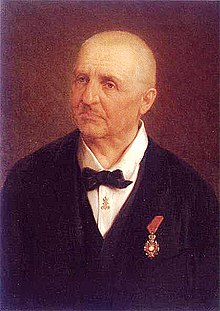
Anton Bruckner (1824-1896)

“… an object lesson in how to play Bruckner, and a testimony on a cold winter’s night to the glory that is music played live.”

Editorial Rating: 5 Stars: Outstanding

It was a wretchedly cold Friday night in Edinburgh, and the rugby was on the telly.  Moreover the programme was Bruckner and Mahler, absolutely my favourite, but not everyone’s cup of tea.  Yet if the members of the RSNO could bus or drive in from Glasgow on a night such as this, so could I shuffle across Bruntsfield Links to a near capacity house.  Testimony to the RSNO, for sure, and we were amply rewarded by some fine playing.


Putting Bruckner and Mahler together on a programme is not untypical, and of course only one work can be a full symphony or the concert would go on too long.  Nonetheless I was puzzled why relatively early Bruckner (around 1880) and late Mahler (written c1910) should be conjoined.  The answer was found in the playing of Mahler’s Adagio from the unfinished Tenth Symphony, typically valedictory; and of  Bruckner’s Symphony No 4 (The Romantic), triumphant and life affirming.


The key point I want to put across in this review is the sheer quality of the orchestra’s playing on the night, and the incredible discipline of the baton of Thomas Sondergard that stopped the tendency of Bruckner symphonies to ‘wander’ or lose their way. The Bruckner can sometimes sound muddy with the high proportion of brass, but we experienced none of that, but just utter clarity.


Occasionally Sondergard addresses the audience at the beginning of a concert and I wondered if he was going to tonight, especially as it was quite a short bill with just 1 hour 25 minutes of music.  He chose not to, and was right, as the Mahler is a sombre piece and a stand alone work in itself.  I was astonished at how the orchestra immediately got into the piece – a desperately exposed violin and horn introduction played assuredly that swept us away into a rewarding exposition with some of the most complex Mahlerian harmonies that I have heard.  This included moments of real poignancy that at one stage found your reviewer wiping his eyes!


We returned after the interval to hear the Bruckner.  This was a taut, disciplined and expertly played piece that kept us on the edge of our seats for the entire 62 minutes.  All sections excelled themselves but my personal gold medal would go to the cellos – who were not asked to take a bow, probably because of the difficulty of all eight of them getting up at the same time with their cumbersome instruments.  Time and time again Sondergard’s stern but helpful baton stopped us losing the tempo or phrasing, so that we felt, and the orchestra sounded, as fresh at the end as at the beginning.  This was an object lesson in how to play Bruckner, and a testimony on a cold winter’s night to the glory that is music played live.


A footnote to compliment the audience on this cold and coldy night.  Not a single cough or splutter during the music and a patient, eternal, wait after the Mahler for the conductor to drop his baton. After the Bruckner we could not contain ourselves and the applause immediately followed the concluding note, along with several shouts of “Bravo”.  Quite rightly so.


outstanding

StarStarStarStarStar

Reviewer: Charles Stokes (Seen 2 February)

Go to the RSNO, Scotland’s national orchestra

Visit Edinburgh49 at the Usher Hall
Touching the Void (The Lyceum: 25 Jan – 16 Feb. ’19)

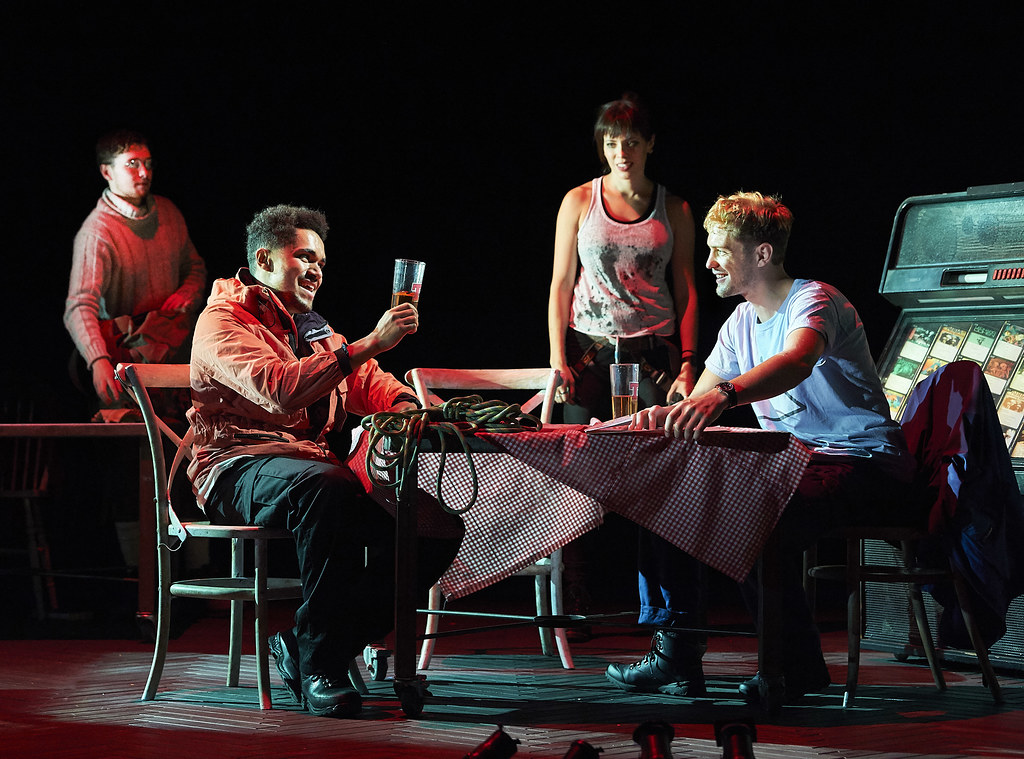
l to r. Patrick MacNamee, Josh Williams, Fiona Hampton, & Edward Hayter

A hell of a ride

Editorial Rating: 2 Stars Nae Bad 


I’m what you’d call a “small-time climber”. I used to get drunk on Arthur’s Seat a lot, and am occasionally known to change lightbulbs and hang things using a cheeky ladder or two. But despite my solid credentials, I haven’t got the first inkling as to why someone might upgrade from ‘Ladder’ to ‘Pile of rocks .. and death’, and although Touching the Void certainly gave me an insight into those who do, I can’t say I left as a Gore-Tex convert.

Touching the Void, from director Tom Morris and based on the book by Joe Simpson, follows climbers Joe (Josh Williams)  and Simon (Edward Hayter), who face true calamity on their descent of the Siula Grande mountain in the Peruvian Andes. The plot is fairly complex from a “Who’s doing what, when?” perspective, but the most basic synopsis without spoilers is:  things don’t go amazingly well. What follows is an excruciating story of sweat and almost supernatural human will – and even if the details tell you how it ends, it’s still a hell of a ride.

What works in this show is incredibly clear from the get-go: it’s a spectacle. The Carroll-esque flock of chairs floating above a neon jukebox, the unnerving dark abyss created only by light and sheets, the climbable, rotating metal strut cliff face. As just something to watch, this show is an utter delight. Actors, obviously trained to the point of safety, almost seem a dynamic part of the scenery as they scrambled, hung and climbed over places I’d never even seen lit on a Lyceum stage before. Forget the plot – the performances told an unspoken story of sweat and suffering before the play even began.

The theme of spectacle returns once again if we concentrate on the acting. Each of the four characters had at least one moment where it was abundantly clear why they had been chosen for the role. Fiona Hampton (as Sarah, Joe’s sister)  even got some tears from my theatre partner that night, using nothing but an empty stage and a letter. My personal MVP goes to Josh Williams, however, if only for the sheer grit it must’ve taken to drag himself around the stage and still emote realistically for a solid forty minutes. All good news for the theatre-going public.

However, as this show quite emphatically demonstrates, for every climb there is a fall. And unfortunately, there were a few trenches that this production did not seem to have the will to climb out of.

I wanted to like this show. I liked the ideas at play, I loved the staging – but I have never seen a show so willing to undercut its own potential excellence for seemingly no reason. The source material is jaw dropping and the actors are clearly talented, and the play is full of moments which if left to stand on their own, within their moment, are powerful. But for some reason it seems like it doesn’t have enough confidence that they will stand, and so things are extended, or repeated or just simply cluttered up and sabotaged by so many different elements that the simplicity and effectiveness of the particular is lost. This happens consistently: one of the most frustrating examples includes a tense and exciting scene of Joe and Simon battling a storm on a cliff face, which was then overlaid with Patrick McNamee’s soothing, folksy twang, quipping merrily around like he’d spent his time offstage pounding hash and Ordnance Maps.

Or, even worse, a legitimately good scene just simply goes on too long. A painful scene of a man dragging his broken body across a rock ridge is harrowing for ten minutes of sobbing and inching, but after twenty with little more than a weird song (we will get to those), it feels a lot more like filler than chiller.

But most frustrating of all were the dances and choral spoken word. In amongst what is clearly a physically capable and dedicated cast with choreographers who can achieve so much in other areas, it baffles me why numbers like an unexpected spoken word rap about Ice Axe technique could not only mismatch tonally but also feel as if they’d barely been choreographed at all. The use of repetition and spoken word material has the potential to be well done, but at best it breaks the play’s natural flow, and at worst is actually a little boring after the third chorus of “Because it’s [F -ing] there”.

More than anything else, this was a disappointing show. All the more so because those glittering moments of excellence weren’t just in my privileged reviewer dreams but are there on stage – for just a second. It feels as if this production could have been much more than it was, and didn’t trust the talent it had and the story it adapted. Looking at other reviews it seems I’m quite lonely here on my Portaledge. Maybe I just don’t get it, but knowing that less is definitely more for Alpine Climbers, I found myself longing for it to be the same of theatre adaptations as well.

nae bad_blue

Star (blue)Star (blue)

Reviewer: Jacob Close (Seen 25 January)

Go to Touching the Void at the Lyceum

Visit Edinburgh49 at The Lyceum archive.


St Petersburg Philharmonic, Sinaisky; Kempf, Devin. (Usher Hall: 27 Jan.’19)

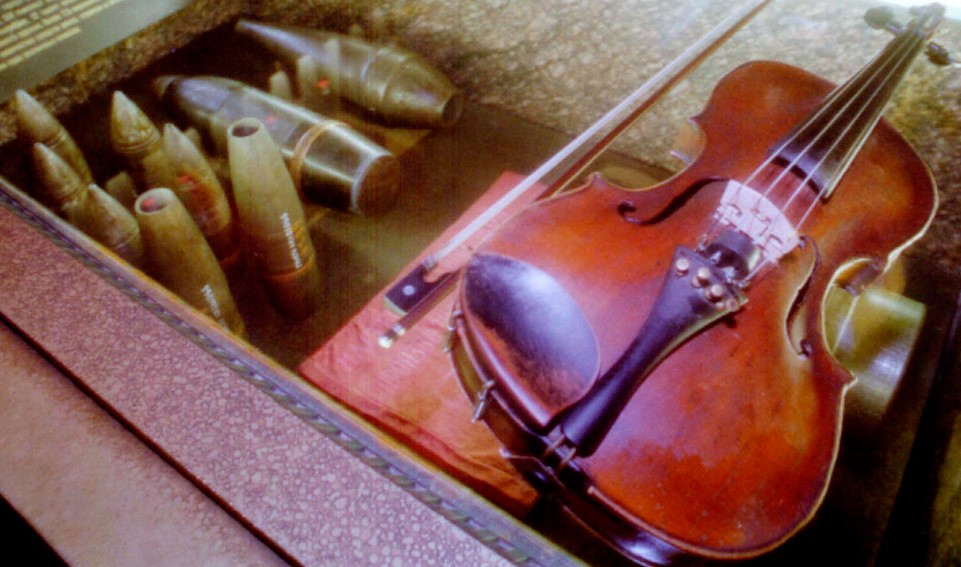
At the Museum of the Defense and Siege of Leningrad.
Photo credit: TASS/Yury Belinsky

“This orchestra has soul”

Editorial Rating: 5 Stars Outstanding

It became very clear to me on a visit to St Petersburg in February last year ( … temperature minus 20C) that the St Petersburg Philharmonic (which begat the Petrograd Philharmonic, which begat the Leningrad Philharmonic, which begat the St Petersburg Philharmonic for the second time), Russia’s oldest orchestra, is not just an orchestra or a magnificent symbol of Russian culture, but an entity that goes to the very soul of the St Petersburgers themselves.  For in the Great Patriotic War (World War Two to you and me) the citizens of this great city were under siege for 872 days and reduced at one stage to eating cardboard and glue – after the rats ran out.  Tannoys were fixed around the city to relay the playing of the orchestra to maintain morale, usually Shostakovich’s 7th Symphony (‘The Leningrad’).  The orchestra were given extra rations to give them the strength to play.  Some died at their desks.  The siege ended on 27th January 1944, 75 years to the day of this concert.

I doubt if any playing in the orchestra on Sunday were alive then, but of course their parents would have been, and they would have known.  This orchestra has soul.

There is also a poignant connection between Eastern Scotland and Western Russia, as anyone who has read Eugenie Fraser’s The House by the Dvina knows, although this was principally trade between Dundee and Archangel.  However, there was terrific snob value in nineteenth century aristocratic St Petersburg houses in having an Edinburgh Nanny, just read Harvey Pitcher’s When Miss Emmie was in Russia.

So it was touching that the St Petersburg Philharmonic chose to start their UK tour in Edinburgh, and we got a full on performance.  This was no warm up venue.

The Usher Hall’s programme of Sunday Classics featuring international orchestras is an unashamed and thoroughly enjoyable crowd pleaser. The programmes are highly accessible if not populist.  Why not? The place was packed.  Nobody plays like a Russian orchestra, and nobody plays Russian music like a Russian orchestra, and our first item was the biggest lollipop of them all, Rachmaninov’s Piano Concerto No 2 in C minor, Op. 18It was played superbly, with not the slightest hint of schmaltz or vulgarity.  Freddy Kempf set the tone from the beginning by making every one of the eight bell like introductory chords sound different.  His was a very intelligent, totally clear interpretation that let the music speak for itself.  The orchestra’s tone was rich and warm, conductor Vassily Sinaisky kept soloist and band in balance, keeping the magnificent brass in check and letting the strings soar, with ample support from woodwind and percussion.  This was a thoroughly rehearsed yet utterly fresh and committed rendition of a well known work that did not tire through familiarity, a lesson to orchestras everywhere.

The ultra cool Freddy Kempf treated us to a substantive jazz encore.  The music writer always wants to know what the encore is, but even when announced can rarely hear.  Anyway, Freddy said that “It was written by a Russian Ukrainian whom you won’t have heard of”.

To my surprise the second part of the programmes was not a Russian composer but Mahler, albeit the very accessible 4th Symphony.  The orchestra went into the opening without catching its breath, beautiful light flute and string phrasing, a fast rhythm quickly developed with a definite sense of swing.  Immediately we had the confidence that we would be in for a fine performance, and we were.  The horns came in strong but beautifully measured, the four flutes, no less, pleasingly fluent and inducing a sense almost of easy listening.  Knowing of Mahler’s love of scoring for banks of the same instrument (he has been known to write for eight horns) I was impressed to see and hear no less than ten double basses playing pizzicato in the third movement Ruhevoll (Restful). An extraordinary experience.

Come the final movement Sehr behaglich (at ease) soprano Anna Devin emerged from where she had been patiently sitting in the midst of the orchestra to take front stage.  I am always slightly disappointed when soloists have to have their music with them, and Anna’s relative lack of projection at first may have had something to do with this.  Nonetheless her voice was pure, pleasing and if not drowned by the huge orchestra would have soared a little more, and Sinaisky’s baton could have helped her a little more in bringing the necessary balance about.

The audience was totally engaged even if not as sophisticated as those of the evening kind – too many whoops in the applause.  So I was absolutely delighted that they not only restricted their coughing at this difficult time of the year but held their applause for what seemed like a lifetime as the conductor’s baton held the silence for a satisfyingly and deservedly long interval before the house came crashing down with enthusiastic clapping and cheering.

After several returns to the rostrum, we were treated to an engaging encore of close harmonied late nineteenth century orchestral music, or so I guess.  I wish I knew, but, hey, who cares about names, it was a beautiful way to end this gorgeous Sunday afternoon occasion.

outstanding

StarStarStarStarStar

Reviewer: Charles Stokes (Seen 27 January)

Visit the St Petersburg Philharmonic Orchestra

Go to Edinburgh49 at the Usher Hall .

Mouthpiece (Traverse: 5 – 22 Dec.’18)

“Knockout performance: quick, fierce, and smart but always on the edge.”

Editorial Rating:  5 Stars: Outstanding

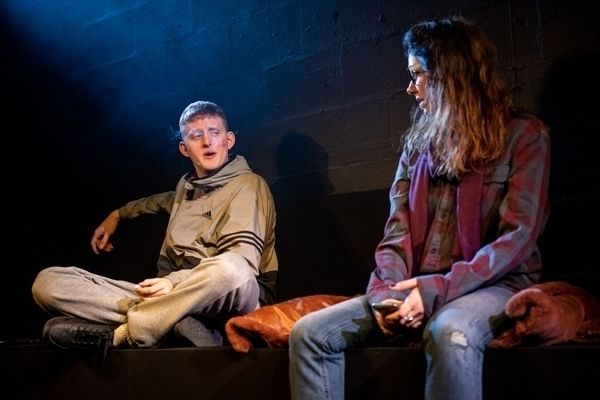
As Edinburgh plays go, this one is outspoken. Its audience is there to be stuffed and startled. Do you ‘live’ or do you ‘stay’ in Edinburgh? Whatever, wherever, you are unlikely to say – as you look out over the city – “See they flats?”. For a start the grammar’s wrong: amusing, sure, but plain wrong unless you’re local and out of school. Second, those flats are way over there “in the bit nobody looks at”. Not Muirhouse, as it happens, but more likely on the Southside, in Gracemount or Craigmillar. That’s where Declan (17) lives with his mother, her boyfriend, and his little sister, Sian. Declan’s father killed himself when Declan was seven. He was an alcoholic and everyone says Declan will end up just like him.

Libby (46) is not from Morningside, but possibly close to; the Grange maybe, or even Fairmilehead which always sounds nice. For Libby is nice and her mother listens to BBC Radio 4. Mouthpiece tells the story of Declan and Libby; posh woman who used-to-be-a-writer meets radge schemie. In the end it is perfectly possible to consider it a love story but it’s Declan’s love for Sian that really touches you.

This play’s energy pours out of Declan. It’s pure, vehement fun one minute – a verbal battering of Libby’s proper speech (and attitudes mebbe?) – but then it’s full of despair and longing the next. Lorn Macdonald delivers a knockout performance: quick, fierce, and smart but always on the edge: “I ken what precarious means, I’m no daft”.

Neve McIntosh as Libby can fall back on herself and land safely, even comfortably, by the end. She has the background and the education that is not available to Declan. She uses ‘Professional’ status as a defensive excuse that will make you queasy. McIntosh’s performance is finely judged; never provocative or clever but – if anything – rather shy and vulnerable. But she has two parts to play: one, with Declan, and the other with us, an audience of posh cunts. (Sorry, but that’s how it is and you’d better get used to the word if you’re going to see Mouthpiece). Libby talks to us about her story, ‘her’ play. Was it ever Declan’s?

Designer Kai Fischer and writer Kieran Hurley frame the work within a stark rectangular set that Libby steps easily in and out of. The shock quotient when Declan does the same goes off the scale. Projected text is used to identify place and time and to underwrite the action (as if penned by Libby). When that fractures and Declan disputes what is happening is both unsettling and dramatic. It also arrests a formal, ‘meta’ narrative before it gets too precious.

Mouthpiece is artistic director Orla O’Loughlin’s last show at the Traverse before she goes to London’s Guildhall. It displays the same drive and attack that distinguished her Devil Masters from 2014. There may be no expensive New Town interior to trash – Hurley’s script does that all by itself – but her hold on what matters is just as tight and uncompromising. The play will not bring much comfort and cheer for Advent but it does send you out with an important sense that the hurt and the dispossessed are never far way. Little Sian’s name might mean ‘God’s precious gift’ but no-one is giving Declan any presents this Christmas.

The applause came in fast and loud at the final blackout. Too fast. The performances are outstanding and deserve it but Mouthpiece is one of those plays that is yelling at yous to shut up and think.

outstanding

StarStarStarStarStar

Reviewer: Alan Brown  (Seen 14 November)

Visit Edinburgh49 at its Traverse archive.

Wendy and Peter Pan (The Lyceum: 29 Nov.’18 – 5 Jan. ’19)

Isobel McArthur (Wendy) and Dorian Simpson (Smee/Doc Giles)
Photos: Mihaela Bodlovic

“It’s a visual treat”

Editorial Rating: 3 Stars Outstanding

It is not often that I review children’s shows. Luckily, as a twenty-something I’m basically a child in an adult body, pretending I know how to do taxes or what grenadine is. Less luckily, it’s much harder to review a children’s show honestly than it is to convince people at parties you can make a drink other than “rum in a Tom & Jerry mug”. With that in mind, consider this a review in two parts: one for the adults in the audience, and the other for the kids you’ll most likely have alongside you.

If you’re a parent, or just someone who’s interested in the general state of children’s theatre, the outlook is actually pretty good. Ella Hickson’s interpretation of the J.M Barrie classic plays its adaptational cards fairly straight: despite new framing devices and subplots the bones of the original do shine through. Though whilst that may be nothing new, it’s definitely nothing unwelcome.

The production paves its own way in design terms. It’s a visual treat: the vertically focused sets are detailed and interesting enough alone, but when coupled with costume and staging the whole production goes from “act” to “spectacle” on visual merit alone. Particular praise to Ziggy Heath as Peter Pan, for extended service to physical clownery, exhausting even just to watch. Co-lead Isobel McArthur performs an admirable Wendy, managing to keep up almost effortlessly against her more physically dynamic ensemble.

This is also a show, however, that could be accused of over ambition in its writing. Whilst the quality of the dialogue is high, Hickson’s adaptation suffers from trying to do too much at once. By the second half, the story is about accepting the death of a child, and also about becoming an adult, but also a swashbuckling adventure, but also about Wendy wanting to lead, and on and on as such. Just when it seems to be coming to grips with one theme, it switches. And whilst there is something to be said about writing for the often less-than-infinite attention spans of younger kids, as an adult you might be left feeling a little dazed. Despite a very talented cast and that excellent overall design, the story changes momentum so often that it struggles to carry a single cohesive theme.

But it’s all well and good to sit on my high horse and judge: perhaps more important than what I think is what the kids thought. And despite any criticisms levelled previously, there is one overriding factor that makes the difference here: they were enthralled. For nearly the show’s entire run time, silence pervaded over a crowd of people whose average age barely went above double digits. On the way out, it was a sea of smile and fake sword fights, and it’s honestly very easy to see why.

Gyuri Sarossy as Captain Hook

Sally Reid as Tink

Despite being a little clumsy in its execution story-wise, Peter Pan and Wendy succeeds in capturing something essentially child like. Call it something I can’t put my finger on, or hook onto it (geddit?), but it’s obvious that this production understands the motivations, feelings and fears of young children. At the end of the day, it’s going to do its job for its intended audience, and not only do it well, but with sincerity. The performances are big and expressive, but thoughtful too. Funny, even – Dorian Simpson as Smee delivered laughs that had every age bracket rolling, alongside Sally Reid’s wonderfully crunchy portrayal of Tinkerbell.

PeterPan3

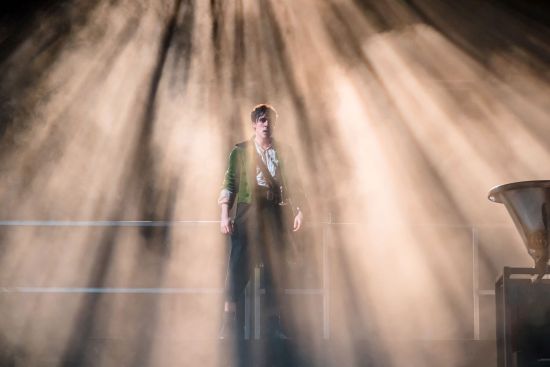
… and with Ziggy Heath as Peter

Is it worth going to see if you don’t have kids? Maybe, if you want something interesting to look at for a couple of hours, but aren’t expecting grand narrative. But if you’re looking for something that the younger people in your life might be able to connect with in a really meaningful, fun way? Absolutely.


outstanding

StarStarStar

Reviewer: Jacob Close (Seen 30 December)

Go to Wendy and Peter Pan at the Lyceum

Visit Edinburgh49 at The Lyceum 


RSNO: Sondergard, Mutter (Usher Hall: 30 Nov. ’18)

Anne-Sophie Mutter

“… a rarely experienced, incredibly high, standard of musicianship.”

Editorial Rating: 5 Stars :Outstanding


“Anne-Sophie Mutter is coming to Edinburgh’”.  “Great.”   “She’s playing the Penderecki Metamorphosen.”  “Ah”.


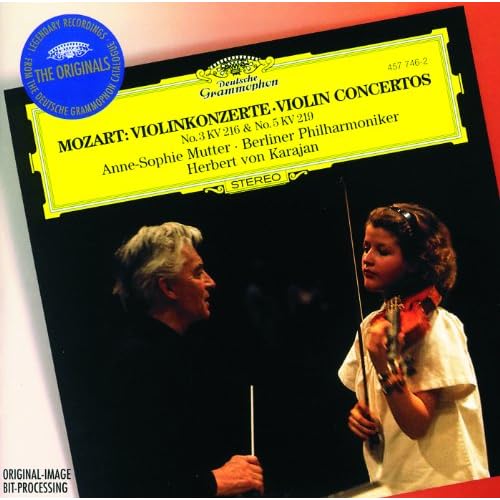
Actually, I would turn up to hear Anne-Sophie Mutter (ASM) play a sailor’s jig as she would make something of it, but the Penderecki, although dedicated to her by “Poland’s greatest living composer” is a bit of a programming wild card.  My fault, I suppose. There are certain artists one associates with one’s past and I still have in my head the picture of a rather serious child next to her protégé, Herbert Von Karajan, on the cover of the Deutsche Grammophon 1978 début recording of Mozart Violin Concertos 3 and 5.


Mozart: Violin Concerto Nos.3 K.216 & 5 K.219


But of course, that is just memory.  Mutter has pioneered modern composers as her career has developed and is a thoroughly accomplished portrayer of classical music spanning 250 years.  Many modern composers have written for her and she is the dedicatee of the Metamorphosen.  Moreover, Penderecki himself was down to conduct tonight’s concert, but had to withdraw for personal reasons.  Given that he is 85 years old this is totally allowable.  RSNO music Director Thomas Sondergard took over the reins and did very well as I doubt he had the work in his repertoire.


 Krzysztof Penderecki is an interesting contemporary composer on a level with –  although a tad less accessible – his much more commercial compatriot Gorecki; but behind, say, Lutoslawski.  His music is certainly worth a listen, and his second violin concerto Metamorphosen is overall a worthwhile work although structurally weak in parts.  But of course ASM made it sound like a masterpiece, a true négociant-éleveur but of music rather than wine.  Ten years ago she corrected a mistaken report of her retirement in the French press in saying that she would continue to play as long as she felt she could “bring anything new, anything important, anything different to music”, which is precisely what she did tonight.  So often a hyped-up artist can let you down, under rehearsed, on the night.  Not ASM, she always delivers, a lesson to artists everywhere.


Let me try and unpack what was so special about her playing.  First, she found the hidden melodies in this rather spiky piece and made the most of them.  Second, the work flowed rather than jerked, as much modern music tends to.  Third, I never lost my concentration or involvement in a work that was almost three quarters of an hour long without a break.  Last week I wrote how, unfortunately, indifferent interpretation had got in the way of good music (SCO/Mendelssohn, Beethoven,Schumann 22/11/18) but for this concert the reverse was true, a rarely experienced, incredibly high, standard of musicianship.


“How do you follow a work of such tragedy and sadness”?  ASM said as she introduced her encore.  “Bach is always the answer” and rattled off a perfect Partita at breakneck speed that left us gasping.  As a writer who is given to enthusiasm but not hyperbole, I have to say that in that 50 minutes I experienced the most intensely satisfying playing of live music this year, if not this decade.


Tchaikovsky’s 5th symphony was an extraordinary pairing to complete the concert but at least gave the punters a tune to take home for their money.  The commitment of the RSNO to the music was such that we soon forgot the ‘Wow’ factor of the first half and were firmly rooting for the band.  It was as if the music had been written for them.  Wonderful, sonorous strings, enthusiastic brass; the whole orchestral gamut in fact.  Inspirational, seamless, joyous playing.


outstanding

StarStarStarStarStar

Reviewer: Charles Stokes (Seen 30 November)

Visit the RSNO , Scotland’s National Orchestra

Go to Edinburgh49‘s Usher Hall archive.

SCO: Krivine, Chamayou (Usher Hall: 23 Nov.‘18)

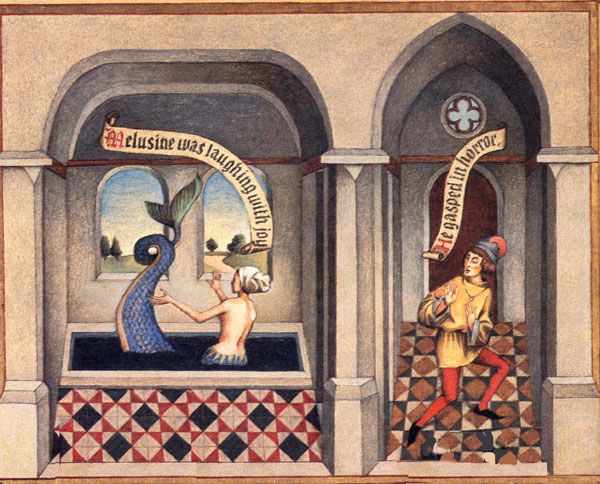
Melusine, mermaid to the Plantagenets. A modern “illumination” by Troy Howell.

“Not a question of playing, but interpretation

Editorial Rating: 3 Stars

I was very much looking forward to this concert with its collation of beautiful, early Romantic works all written within 35 years of each other and during the afternoon I listened to recorded interpretations to refresh my memory of them: Maria Joao Pires with Daniel Harding and the Swedish RSO for the Beethoven (a 1994 recording), Yannick Nezet-Seguin and the Chamber Orchestra of Europe (2014) for the Schumann, and Claudio Abbado and the LSO for the Mendelssohn (1988); a good cross section of interpretational styles over the last 30 years.


One should not, generally, compare recorded music with live.  One is essentially a photograph whilst the other  is a painting: technical perfection against the raw result of human artistic endeavour.  Yet I wasn’t comparing the playing, but the interpretation, and for this I point the baton at guest conductor Emmanuel Krivine, a musician whose pedigree is considerable, and whose style, at least on the night, was deeply conservative and –  too often – too slow.  I was reminded of Klemperer or Sir Reginald Goodall, but without their depth.  I was not inspired.  Neither was I convinced by the necessity of putting the double basses on the left and separating the horns from the trumpets and trombones either side of the woodwind.  For a very classical conductor, this was a somewhat enigmatic move.


I was wryly amused at the passing of time and customs that have led to these three works, Mendelssohn’s Overture The Fair Melusina, Beethoven’s Piano Concerto no 4 in G, and Schumann’s Symphony No 4 in D Minor (1851 revision) being put on the same programme , as they were all very badly received at their premieres, but perhaps this has, with the passing of time, become a badge of honour.


The legend of Melusina is almost too ridiculous to recount but involves a maiden turning into either a sea monster, mermaid or serpent one day a week as punishment for favouring a knight; make of it what you will.  The piece is meant at times to convey the rippling of the sea and the manliness of the knight, but I don’t go with these interpretations.  Given the storyline it is an eleven minute work of considerable meatiness, if not in the Ruy Blas or Fingal’s Cave class.


The SCO’s playing was sound with some notable results from the wind section, but overall the impression was an almost ponderous interpretation lacking spontaneity or attack.  This from the people who gave you a simply amazing rendition of Brahms’s four symphonies but four months ago.  Not a question of playing, but interpretation.


Everyone knows Beethoven’s Fourth Piano Concerto in G, but I wonder if they realise how revolutionary it was at the time, and remains today.  A brief solo piano introduction followed by a long orchestral interlude; the orchestra attacking aggressively followed by plaintive murmurings from the piano, almost as if piano and orchestra are in separate rooms and we can hear them both.  It is a glorious work and the second movement Andante con moto divine.


Bertrand Chamayou’s playing lacked perfect clarity and precision in the solo entrance.  There was a loss of definition in some of the immensely challenging demi-semi-quaver passages and the orchestral accompaniment was a tad muddy.  I was surprised to see music on top of the piano, if only for occasional reference, rather than reading.  Settling down or lack of rehearsal? Perhaps settling down, because the cadenza was brilliantly executed and as orchestra and soloist got used to each other there were some better dynamics.  In the second movement Andante con moto we heard confident, attacking strings pitted against a soulful, responsive piano.  We concluded with a splendid, fresh lively Rondo (justifiably marked Vivace.)


Chamayou obliged us with an encore of the second movement of a Haydn sonata, restful, beautifully played, clear and well phrased.


The final work, Schumann’s Symphony No 4 in D minor bears the opening remark in my notebook of “Too slow!”. It was a rather pedestrian performance lacking in verve.  It was as if, as for much of the evening, notwithstanding some very good orchestral playing, the music was somehow struggling to get out. The second movement contained some wonderfully rich string playing.  In the Scherzo the horns brought some liveliness to an otherwise rigid interpretation.  The spirited, energised finale Langsam-Lebhaft at last gave one a real lift and the final 20 second coda an insight into what this great little orchestra is capable of.


Star (blue)Star (blue)Star (blue)

Reviewer: Charles Stokes (Seen 22 November)

Go to the Scottish Chamber Orchestra

Visit Edinburgh49 at the Usher Hall archive.
Education, Education, Education (Bedlam: 14 – 17 Nov.’18)

” It’s funny and fast, dances to a 90s soundtrack, and skewers English education.”

Editorial Rating:  4 Stars:  Nae Bad

“Willkommen, Tobias. Boys and girls, please welcome Tobias from Berlin who will be helping out in the Modern Languages department”. And Tobias has the lunatic misfortune of arriving at Wordsworth comprehensive school on ‘Muck Up Day’ when the Year 11 (S5) pupils go off into the fabled ‘mists of Study Leave’. Run-up activities include include pinging shag bands, playing basketball in the corridors and placing a live chicken in the library. The finale will be an Achievement Assembly with a suicidal child on the roof.

Welcome, also, by happy coincidence to May 2, 1997 when Labour wins a record-breaking 419 seats to form its first government since 1979. The manifesto promise of ‘Education, Education, Education’ is all over the staff room. The teachers are excited, jumpy, and the febrile atmosphere is only fanned by the breakout of Cool Britannia. Noel Gallagher of ‘Oasis’ will be at a Downing Street reception on the 10th, but Tobias (Max Prentice) is friendly and unassuming, a ‘Take That’ kind of guy. You’ll like him immediately and come to trust him, which is handy because where there’s perspective and order, there’s Tobias. Elsewhere, on this important day, the school is a frenzied, entertaining mess.

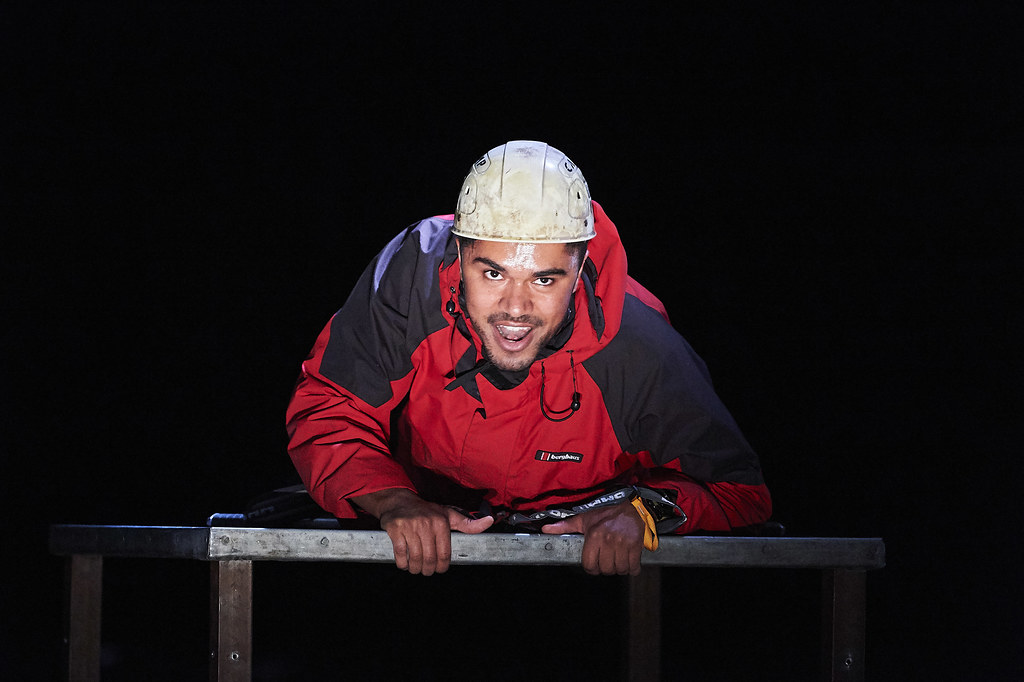
Education, Education, Education won a ‘Fringe First’ in 2017 for the Wardrobe Ensemble. It seems, to my mind, a perfect choice for student performance. It’s funny and fast, dances to a 90s soundtrack, and skewers English education. Headteacher Hugh (Fergus Head) has all the moves – watch him go in D:ream’s Things Can Only Get Better – wants the best for all his pupils but all his enthusiasm cannot remedy the fact that his school is falling apart and has porta-cabins for classrooms. His Deputy, Louise (Kelechi Hafstad), is trying to hold it all together with discipline and an imaginary semi-automatic, which is dodgy, surely. History teacher Paul (most convincing by Lewis Foreman) has seen too many awkward kids to bother with them anymore. Tim (Giorgio Bounous) is the gormless PE jock and Sue (Becca Chadder) is the dedicated English teacher who inhabits that lovely world where she would share Malory’s Morte d’Arthur with 14 year olds but without the resources of Games of Thrones. No wonder then that Tobias marvels at it all whilst quietly enjoying a confiscated cheestring.

A serious narrative is provided by Lauren’s story. Lauren Robinson is spot on as the difficult, challenging, pupil who shouldn’t be expelled but who probably will be. It’s good to learn, within Tobias’ retrospective account, that it’s Lauren who comes out to Berlin to visit him and to see a grown-up European country. Director Tom Whiston ensures that your sympathies go where they should.

It’s those twenty years, 1997 to 2017, that give the play its bite. Its frenetic pace and half daft characters are contained within a frame that exposes the optimism of that Labour promise. Jack Whitehall’s Bad Education (BBC 3 2012 -14) was brilliant and ridiculous. As a 60 minute stage show this production of Education, Education, Education cannot be telly but it’s a riot of understanding and good sense, which ain’t easy.

nae bad_blue

Star (blue)Star (blue)Star (blue)Star (blue)

Reviewer: Alan Brown  (Seen 14 November)

Go to Education, Education, Education at Bedlam theatre

Visit Edinburgh49 at its Bedlam archive.

The Unreturning (Traverse: 24-27 October ’18)

“The third storyline takes place in a (presumably Brexit-induced) war-torn futureworld, where everyone’s information is publicly displayed by the government, people are wanted for ‘Dissent,’ and everything has completely gone to hell.”

Editorial Rating: 3 Stars: Nae Bad

The effect of armed conflict on the already fragile male psyche is a deeply fascinating subject. Anna Jordan’s The Unreturning takes a timelessly important issue — the return of the soldier from war — and creatively explores touching and interesting variations on what these returns mean and have meant through time. Told through three constantly overlapping and intersecting storylines, the play paints a gripping and tragic picture of the collision of memory, trauma, and men who will never exist the same way again — for whom a true ‘return’ is impossible. Performers Jared Garfield, Joe Layton, Jonnie Riordan, and Kieton Saunders-Browne take on the production with intense spirit, and compellingly elevate Jordan’s impactful choice of subject matter. One will truly feel moved by the real-life implications of the play’s content, such as meditations on the legacy of war crimes, the role of friends, family, and average people in the return of discharged members of the military, and how truly detached so many of us are from the experience of war. 

This play is produced by Frantic Assembly, a group both admired and infamous for the wall-to-wall physicality of their shows. The Unreturning plays to their strengths in many respects; the extensive and balletic movement all four performers put themselves through over the course of the three stories are a marvel to watch, and embed the stories with clever visual connections. The structure of the show is at its best when the three stories overlap in direct parallel to each other, such as a sequence near the beginning when all three board or initiate their respective transports ‘home’ — home in each case being Scarborough. George (Garfield), boards a train; Frankie (Layton) sits in a cramped plane next to sunburnt tourists; Nat (Riordan) barters with Norwegian boatmen to smuggle him into a war-torn United Kingdom. The parallel is revisited in a breathtaking setpiece following the three men as they wander around the area, each distraught for their own reasons, and deliriously visit Scarborough monuments and landmarks; they stand next to each other onstage, separated by time but alike in their disconnection from what is meant to be their home. George, you see, is returning home after armistice in 1918; Frankie has been discharged for committing a hate crime in Afghanistan in 2013; Nat is searching a bombed-out Scarborough for his brother in 2026. 

Yes, 2026. The third storyline takes place in a (presumably Brexit-induced) war-torn futureworld, where everyone’s information is publicly displayed by the government, people are wanted for ‘Dissent,’ and everything has completely gone to hell. For all the immense emotional intelligence at work in The Unreturning, this aspect of Jordan’s script, along with director Neil Bettles’ over-reliance on the overcomplicated revolving set, render a great deal of the actual stage time irritatingly silly. For although the subject matter is compelling, the tone and pace of the Frantic Assembly approach are a poor match. The breakneck energy, high-bravado set-changes and head-spinning multi-roling repeatedly jar against the profundities of the story, producing deeply unfortunate moments like a floating hat and dress cartoonishly symbolizing George’s lovestruck wife, or the discordant wiggling the company members return to over and over when George experiences haunting flashbacks or Frankie succumbs to substance abuse. 

The show has a lot of wiggling. This is not always a bad thing, of course, though it seems to be Frantic Assembly’s bread and butter. To evoke a shaky memory, the actors wiggle. To show the passage of time or space, the actors wiggle. To recreate a pub or a discotheque, the actors wiggle drunkenly. All this wiggling is finely choreographed and expertly executed, but the main result of it all is a simple: why? Why take so much focus away from the intriguing narrative elements to just move around like spaced out dancers? It is pleasant, impressive movement, but mostly has very little to do with the gravity of the situation — like if a bunch of mourners started breakdancing at a wake. Sure, it’s impressive, but is now the time?

When the wiggles pause, and moments of achingly tender performance are allowed to play out, the talent is notable. Garfield, in particular, imbues George with a brilliantly measured depth, wherein he visibly wrestles with both his wartime experience and anxiously rethinks every aspect of the rest of his life. Jordan’s script detracts from itself, especially early on, by piling far too many profound statements on top of each other in nearly every line, yet Garfield turns most of them into affecting ruminations rather than fortune-cookie-esque dictums — his parable about the Christmas day truce near the middle of the show is the performative high point of the piece, without a doubt. Layton is also an electric performer, who displays expert timing and delivery every time he is onstage; while Frankie has much less multi-dimensionality than George (the supposed ambiguity of his character’s racial crimes are a weaker element of the script), Layton nevertheless leaves a lasting impression as a versatile actor. This is not as true for Riordan, who is outmatched by his fellow actors; the 2026 storyline he leads is, again, incongruously silly, and Riordan deserves credit for the desperation and consistency of his take on Nat’s miserable trajectory, but overall he does not bring enough verve to a storyline already lacking justification. Saunders-Browne, playing various supporting parts, does a solid job bouncing around so many characters and time periods, and in his case, the future-set monologue he delivers late in the show is thankfully not so opaque as the rest of that storyline to overshadow his well-measured delivery. 

Overall, The Unreturning is a curious example of a potentially mismatched writer and company. Yet, aside from the more incongruous choices onstage, the performances are memorable and affecting, the treatment of the subject matter is mostly excellent, and one can easily overlook the weaker elements in favor of a truly noble intention.


nae bad_blue

Star (blue)Star (blue)Star (blue)

Reviewer: Nathaniel Brimmer-Beller (Seen 24 October)

Visit the Traverse archive.


Interview: All About My Mother (21 – 24 Nov ’18)

“I still find it breath-taking that Almodovar was talking about gender, identity and sexuality in the totally commonplace way he did nearly 20 years ago.”

WHO: Ross Hope, Director

WHAT: “Spain, 1999.

In Barcelona, Manuela makes a new life for herself after the death of her son, working on a stage production of A Streetcar Named Desire. She is reunited with an old transgender friend, Agrado, who she finds working as a prostitute, and makes new friends in the shape of Rosa, a terminally ill young nun, and Huma Rojo, the famous and formidable grand dame stage actress whom her late son idolised.As Manuela rebuilds her life in a new city with a new job and new friends, her son’s estranged father returns to her life with tragic and life-changing consequences for them all.”

WHERE: Assembly Roxy 

DATES: 21 – 24 November

TIMES: 19:30

MORE: Click Here!


Why All About My Mother?

Honestly, it’s quite a simple reason. I read the script after seeing the film and enjoyed it so much I knew wanted to direct it. I buy and read a lot (and I mean a lot) of play scripts and I bought this one only because as I was curious about how they would adapt the film into a play. I read it cover to cover in one sitting. The last time I reacted to a script like this was when I read ‘Jerusalem’ by Jez Butterworth, which I was also lucky enough to direct, I knew if I felt the same way as I did about Jerusalem I wanted to direct this too.

You first saw the movie version at the Filmhouse in 2000. Has the story aged well?

I think it has, although you would expect me to say that wouldn’t you? At its heart, this is a story about family, not necessarily the family you are born into but the family you create for yourself; friendship and acceptance. These themes are still important, interesting and relevant nearly 20 years later. So this story of these characters creating families, forming friendships and gaining acceptance has aged perfectly well as far as I am concerned.

The film on which the play is based was a critical success (an Oscar, a Golden Globe, a BAFTA) can audiences expect to see anything new in this adaptation?

The play is actually slightly different to the film. It is longer for one thing and the tale is told in a different, as you’d expect more theatrical and not cinematic way, and not all the characters in the film are present in this production. If you are an Almodovar aficionado and are wanting to compare the two you’ll just have to come to the Assembly Roxy in November and see where the differences are for yourself!

Art tends to imitate life, but do you think All About My Mother has played a part in developing and progressing our attitudes over the last couple of decades?

I still find it breath-taking that Almodovar was talking about gender, identity and sexuality in the totally commonplace way he did nearly 20 years ago. I am not sure I realised myself then how progressive it was for the late 1990’s as I was a lot younger then because it truly was and still is. Maybe art does imitate life, as you say, but I also think art gives life the kick starts it needs to get to where we are. A lot of the attitudes that are being challenged in the play still need to be challenged today and as much as we have come so far as a progressive society, we still have a long way to go.

What’s the one thing you know now that you wish you’d known at the start of rehearsals?

I wish I had remembered what an undertaking rehearsing in a small rehearsal space was like. It might have stopped me telling the cast, night after night, “you’ll have more room in the venue!”


LIKE WHAT YOU JUST READ? FOLLOW US ON TWITTER! FIND US ON FACEBOOK! OR SIGN UP TO OUR MAILING LIST!

INTERESTED IN BEING INTERVIEWED TOO? CLICK HERE!