“My aim is to write history like Bill Bryson writes travel books.” – Author Colin Brown discusses The Scum of the Earth

“We came closer to revolution post 1815 than at any time since the civil war of 1542.”

In 1938 the Scots Greys buried one of their own on Edinburgh’s Castle Esplanade. The hero they honoured, Ensign Charles Ewart, had distinguished himself at the Battle of Waterloo by capturing a regimental eagle from Napoleon’s 45e Régiment de Ligne.

Despite his fame and renown in the heady aftermath of victory, Ewart’s original grave in Greater Manchester was abandoned, all but forgotten, for the better part of a century. The neglect Ewart experience in death, was reflected in that of many of his comrades when they returned home to a regency Britain at war with itself.

Colin Brown was a lobby journalist for 30 years, first for The Guardian and then for The Independent, with a couple of years as the political editor of The Sunday Telegraph. Taking Wellington’s description of his own men – The Scum of the Earth – as his title, Brown tells the story of what happened to ordinary soldiers like Ewart after the initial flush of victory wore off.

The Scum of the Earth: What Happened to the Real British Heroes of Waterloo? (published by The History Press, May 2015) To find out more click here.


Was Britain on 19 June 1815 a land fit for heroes?

It was a country in turmoil – hundreds of thousands out of work from farms and factories, wages cut, the price of bread was increased by Act of Parliament, cottagers relying on subsistence farming were forced to leave the land by the Enclosure Acts, national debt increased to 230 per cent of GDP, and there was an economic slump. The Government reacted to the decisive defeat of Napoleon with austerity – the army was cut over five years from 233,000 in 1815 to 92,000, adding to the jobless seeking work. Eventually, the huge changes brought about the industrial revolution brought an economic boom to Britain, but that took another twenty years.

It’s the 200th anniversary of Waterloo. You’ve warned of the dangers of “an anniversary of misty-eyed backslapping”. Is that what has happened / is happening?

My book was criticised as “a left-wing whinge” on Amazon, which underlines the extent to which people want to read about the glory and the blood of the battle, not the uncomfortable truth.


Brits like to think of themselves as great at pomp and pageantry. Are they as good at commemoration vs. celebration?

The organisers of the national service of commemoration at St Paul’s warned guests it was “not triumphalist”. I think they got the balance right.

Which better defines the character and career of the Iron Duke, Waterloo or Peterloo?

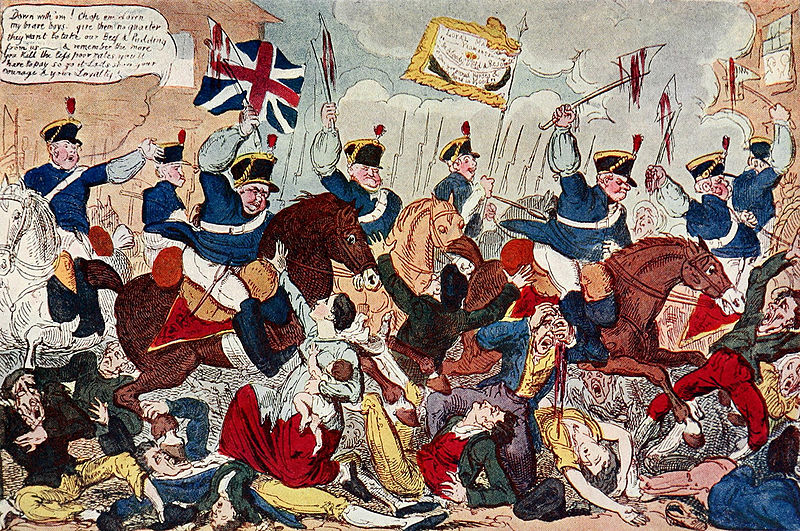
Waterloo; he was undoubtedly a great commander at the peak of his ability at Waterloo. Wellington’s political stand was certainly a contributory factor to Peterloo – his fear of revolution; and his failure to respond to reasonable demands for political reform led to his own political defeat by forces which were unstoppable. But there were others to blame for the massacre, including a lack of a proper civil authority that knew how to handle peaceful demonstrations.

Why didn’t Britain experience the political upheavals that beset continental Europe in the decades after 1815?

We came closer to revolution post 1815 than at any time since the civil war of 1542. But repression worked. The Six Acts, including the ban on the press, the ban on meetings, and the suspension of Habeas Corpus, with the gallows or deportation to Australia for minor offences was enough to keep the lid on the seething discontent for nearly twenty years. In the end, the Government had to concede reform with the vote, however limited.

But I also believe the repression worked because it was coupled with a lack of revolutionary zeal among the British public. As I say in the chapter on the Cato Street conspiracy, any would-be revolutionary should study the Cato Street files in the National Archives: they include many anonymous tip-offs from the general public warning the authorities that revolutionaries are plotting an attack on the Cabinet.

Of all the individual stories you’ve uncovered researching The Scum of the Earth, which most shaped your thinking and conclusions?

Francis Stiles and the battle with his commanding officer, Alexander Kennedy Clark, over who captured the Eagle of the 105th Regiment (now in the National Army Museum, Chelsea). The Eagle itself is a moving symbol of war: men shed blood and died for possession of that gilded bird, on top of a black wooden pole. It symbolises the gore and the ‘glory’ of war – it represented regimental pride; it was a reason why the ordinary men stayed and fought, and did not run away. It also represented the grandiose ambitions of the Emperor Napoleon, who wanted his soldiers to be like the Roman legions that ruled the world. The struggle by Alexander Kennedy Clark to gain the credit for capturing it represented a very real battle of class – the ordinary trooper against the landed gentry.

What happened to Stiles was an object lesson in how the army brushed an awkward problem under the regimental carpet: Stiles was paid for his silence, then dumped: he was promoted to sergeant; then in 1816 – the same year that he wrote to an officer asking him to confirm that he, Stiles, not Alexander Kennedy Clark, had captured the Eagle – he was made an Ensign, almost doubling his pay from 2s 11d a day to 5s 3d a day but it was in the West India Regiment which was unpopular because it could mean serving in the West Indies with the risk of malaria and other diseases. On 28th December 1817, he was put on half pay 2s 71/2d a day and effectively discharged from the army. This seems to me to be a plan to silence Stiles. By 1817, nobody was interested in who captured the Eagle. Stiles died in poverty; Alexander Kennedy Clark became Queen Victoria’s ADC.

This story still rankles with some of the NCOs of the Household Cavalry. After reading my book, some members of the Blues and Royals – his regiment – arranged to have a plaque put up to Stiles at St John’s church, Clerkenwell, where he was buried. I am glad I found the painting The Captive Eagle to use for the front cover of my book. But why was the painting in Great Yarmouth Town Hall, and not the National Army Museum? Could it be that the Army still won’t give Stiles the credit?

What sort of places have you visited for the sake of your research, or was it all dusty libraries and the Public Records Office?

I make a point of travelling to key sites to get a sense of place. My aim is to write history like Bill Bryson writes travel books. I therefore went twice to the battlefield at Waterloo, particularly Hougoumont; Salford central rail station to see the car park where Ewart was buried; the back of the Radisson hotel, Manchester, to walk the place where John Lees was battered in the Peterloo Massacre; to Oldham to pace out the route Lees would have taken when he started the march to Manchester; Oldham parish church, where he was buried; Edinburgh to see the Ewart memorial and the Castle where the Ewart Eagle and painting are kept; Walmer Castle, Kent, to see the dining room, where Wellington regaled his guests with stories of the battle and its political aftermath (noted by Earl Stanhope for Notes of Conversations with the Duke of Wellington).

The dusty places were also fascinating – the Hartley Library containing the archive of Wellington’s papers at Southampton University allowed me to hold the letter he wrote in 1813 attacking the ‘scum of the earth’; Apsley House, London, the Duke’s home; and Chethams library in Manchester, for its unrivaled collection about Peterloo.

I also visited the National Army Museum, the Guards Museum and the Woolwich artillery museum. I was surprised to discover that regimental museums are not publicly funded, and heavily rely on amateur volunteers, which accounts for their patchy performance. For example, the Coldstream Guards had none of the archive material I uncovered on James Graham, the “hero” of Hougoumont. I think the big new discoveries in history could come with ordinary people researching the lives of their ancestors.

Do you think of Regency England as an enlightened or a primitive society? Are there social policy lessons we can learn from the period? For example, could there be a place for the “King’s Hard Bargain” as a response to modern social problems?

Wellington favoured conscription. It is hard to see how it would work in peacetime. There are superficial attractions to national service, including discipline and self-awareness, but there are disadvantages – I have seen both in countries where it is still in use, Greece and Cyprus. Wellington is right in one respect – it has to apply to everyone, low or high; it could not be seen as a national service for the ‘working classes’. Middle class kids would have to serve too, and would complain if their careers were put on hold.

A national service for the unemployed, or those facing prison would bring as many problems as it seeks to solve. I think the most important policy lesson from Waterloo is to know our past. Were the defeats of Napoleon, the Kaiser and Hitler allied victories or the triumph of an island warrior race that has been called upon three times to rescue Europe from tyranny? (See my earlier book, Glory and Bollocks). With the EU in-out referendum approaching, it could become more important.

200 years on, do we treat our veterans any better?

The public do – the armed forces chiefs don’t seem to have changed in their attitude to the expendability of since Waterloo. They are imbued with the “can do” attitude, which can be lethal for their men and women. Two examples: before the Iraq war I asked Geoff Hoon, Defence Secretary, whether a) the troops had radios that worked (there was doubt) and b) the equipment they needed. He said he had been assured by the chiefs they had on both counts.

Five red caps died in an ambush because they did not have radios that worked. Men were sent on patrol in ‘snatch squad’ Land Rovers designed for Northern Ireland. As a result, men needlessly died from IEDs or were maimed and are now limbless ex-servicemen having to cope with life on charity and a pension. The chiefs are too inclined to say they “can do”, without saying, ‘actually, what you are asking the men to do is ridiculous. We could save lives by adopting a different strategy.’

For example, what was the point in defending Helmand Province in a hostile environment in the Taliban stronghold in Afghanistan? I sat through debates in the Commons when it was argued that going into Helmand was futile and likely to lead to more casualties. Bush and Blair disagreed, and the army chiefs said: ‘can do’. Now we have surrendered that land to the Taliban… for what?

What should be playing on the stereo when we’re reading The Scum of the Earth?

Never Mind the Bollocks, Sex Pistols (Anarchy in the UK).


LIKE WHAT YOU JUST READ? FOLLOW US ON TWITTER! FIND US ON FACEBOOK! OR SIGN UP TO OUR MAILING LIST!

Feature: John Lennon’s ‘In His Own Write’ at the Edinburgh Festival Fringe

In His Own Write-89

John Lennon’s short stories adapted for the stage for the first time since 1968

When actor Jonathan Glew was a humble and hungry student at the Liverpool Institute for Performing Arts, he stumbled across a bizarre book of short stories in a second hand bookshop. That book was the start of a wild love affair that would see him perform the work in its entirety at the Edinburgh Festival Fringe 18 years later.

The collection of stories in question is the little known In His Own Write, by none other than John Lennon. And the show of the same name made its world premiere at the Fringe this summer, presented by Baldynoggin Productions, directed by Jonathan Glew.

While 2015 marks no special anniversary of the work, Glew decided to make it this year for purely personal reasons. He says: “I found the book when I was 20 and knew it would be great for a stage adaptation, but I was in no position then to do anything about it. It was only towards the end of last year that I decided it was make or break: I either did the show or I threw the book away”.

The journey begins

It all started with a letter to the lawyers representing John Lennon’s estate – a worthy work of literature in its own right by the time Glew had finished tinkering it. He admits that it took him three weeks to craft, as he was keen to convey how he didn’t want to impersonate, make any statements, or use Lennon’s name for his personal gain, but simply to present the work faithfully and in full. Easier said than done. “I knew that they must receive countless requests everyday, so it was really important for me to let them know I was in it for the right reasons and to do the book justice”.

After a couple of weeks he got his first response from Attorney Jonas Herbsman, and the dialogue began. Glew continues: “I reiterated my position, and how my approach to present the work as part of the Free Fringe was testament to my not wanting to make a profit from it. I answered their questions, and tried to focus on the artistic aspect – how I just wanted to represent the work in full to see if it would resonate with an audience”.

After that, more waiting, until just after Christmas he got the news he had been hoping for: “I was completely elated – but then when I looked at the book again and it was like I had never read it, as I was looking at it in a completely new light. There are references to old news headlines and outdated language, and I started to worry about how I could make the book ‘live’ for a 21st century audience”.

In His Own Write-80

Creative Development

Glew got straight to work, enlisting actor friends to assist him with reading and staging the piece. He even tried to get in touch with various people that had influenced or shaped the book: its original illustrator, Robert Freeman, and publisher Tom Maschler from Jonathan Cape. And despite what could be seen as huge pressure to present the work by someone so famous, last seen at the National Theatre in 1968, Glew took it all in his stride: “I got my team together and we worked through it slowly, making sure to be as faithful to the book as possible. The amount of serendipity within the creative process was just beautiful”.

Glew admits that yes, he did watch a first edition recording of the original National Theatre production, but in no way did he try to copy it: “Theirs was hugely different to what I wanted to do with it. They presented two pieces (In His Own Write and its sequel A Spaniard in the Works) as a bit of a mash up, and used the performance to make a broader comment about childhood and growing up at the time. But I didn’t want to say anything, rather let the work speak for itself”.

Making the dream a reality

However, aside from developing a theatrical adaptation that Yoko Ono would be proud of (an idea that terrified Glew 18 years earlier), his biggest challenges lay in the production side – just how do you get a show to the Fringe?

He started by launching a Kickstarter campaign to fund the basics like travel and accommodation for the company. He revealed, though, that crowdfunding was “one of the most stressful things in my life” as he felt like he asked everyone he had ever known to contribute. He was perhaps helped in his mission by a tweet about his project from Yoko Ono herself to her 4.7 million followers – certainly not something that happens every day! Thankfully, he raised enough money to develop the show and bring it to Edinburgh without any more worries. Or so he thought.

If all the world’s a stage…

Finding a venue proved to be the biggest challenge of them all. After an application to one of the free venue groups with what he thought would be a sure-fire hit, and a tantalising six week wait for a response, Glew was told in no uncertain terms that he couldn’t be guaranteed a slot, and he started to panic. With time ticking away, he then used his personal network of contacts to come up with a Plan B and get in touch directly with Peter Buckley Hill, who manages the PBH Free Fringe. After pitching his show and his predicament, Buckley Hill responded in less than 20 minutes with an offer of one of the largest performance spaces on the free circuit. He even signed off his email as “Arnold” as a tip of the hat to John Lennon and his work. “I owe PBH a lot, they really saved me”, says Glew.

In His Own Write-105

Now Glew and his production are here, performing to very healthy crowds, and garnering a fair amount of press attention, is it mission accomplished? “It’s been a fantastic experience and I’d love to take this even further. As soon as we finish the run in Edinburgh, I’ll be putting a report together for the John Lennon estate, including some ideas of where I’d like to see the piece go next. I can’t make any detailed plans though, as they may say the project has come to the end of the road, but fingers crossed.” Luckily Glew already has his next acting project lined up though, at the National Theatre no less, but he’ll be back at the Fringe before long, in one guise or another.


In His Own Write is showing at The Voodoo Rooms daily (17.10, 1hr) until 30th August.

“The Devils in Skirts still scare the bejesus out of the natives.” – Author Adrian Greenwood discusses Victoria’s Scottish Lion

“Beware the London establishment trying to bring you to heel with honours, flattery and peerages; that’s what they tried with Campbell.”

In May 1808 the son of a Glaswegian cabinet-maker was commissioned an ensign in the 9th Foot (without purchase). That August he saw his first action at the Battle of Vimeiro. The military career of Colin Campbell, later 1st Baron Clyde, would include The Peninsular War, The War of 1812, The First Opium War, The Second Anglo-Sikh War, and The Crimean War. His “Thin Red Line” won immortality at the Battle of Balaclava.

Campbell, in contradiction of many assumptions about class and the British Army in the 19th Century, ended his career as a Field Marshall. When he received an honorary degree from Oxford University, it was in the company of Isambard Kingdom Brunel and Dr. David Livingstone. He is buried in Westminster Abbey. A statue of Campbell (by John Foley) stands in Glasgow’s George Square. A complex, mercurial man, loved by his troops and admired by Queen Victoria, he’s been called Britain’s first ‘working-class’ field marshal.

Adrian Greenwood, Campbell’s most recent biographer, read Philosophy, Politics and Economics at Christ Church, Oxford before taking an MBA at Imperial College. After university he started buying British Rail lost property at auction and selling it at car boot sales around London. From there he moved on to antiques, and eventually specialised in antiquarian books. Having supplied items to a broad range of clients – including the British Library and the Getty Museum – Adrian retired to concentrate on his writing.

Victoria’s Scottish Lion: The Life of Colin Campbell, Lord Clyde (published by the History Press, July 28th). To find out more visit: www.adriangreenwoodbooks.co.uk


Why Campbell?

I first came across him 25 years ago when I was doing History ‘A’ Level – I couldn’t understand why he wasn’t more famous. Over the years I kept seeing his name in books on the Victorian army, by historians like Trevor Royle and Saul David, and he seemed by far the most brilliant general of his age, yet no one had looked at his career thoroughly for a century or more. Then, as I found out more about him, the idea of writing the story of this working class maverick, riling the Victorian establishment, became irresistible. As one reader said to me, ‘You wonder why you haven’t heard of this man before.’

What accounts for Campbell’s rise through the ranks?

Well, back in the Peninsular War it wasn’t quite as hard to get promotion as Sharpe would have you believe. Campbell got his first commission for free because there was such a demand for new officers. He was promoted lieutenant because the officers above him got shot or died of disease, then he was made captain for leading a ‘forlorn hope’ at San Sebastian – that’s when a young officer leads a detachment to storm a town’s defenses. In that assault he was hit twice by musket balls but won his captaincy.

In peacetime it was much harder to rise up the ranks but Campbell managed to borrow the money to become major and then lieutenant-colonel. After that, even in the 19th century, promotion was by seniority and merit – you couldn’t buy a rank higher than lieutenant-colonel, you had to wait until the old buffers further up died off. After a long pause stuck as a colonel, he raced through the general ranks during the Crimean War (1854-56) and the Indian Mutiny (1857-1858).

Was there a particular battle, or other event, which shaped Campbell more than any other?

Difficult to pin down one, but his very first battle, Vimeiro in 1808, had a big effect. Campbell described how a captain led him by the hand up to the front while the French shot and shell thundered overhead. He was only fifteen. After that he was fearless – Queen Victoria used to tick him off for rushing into action, sword in hand, in his sixties, when he was supposed to be supervising the battle.

His other formative experience, what made him a ‘soldiers general’ (one who always looked after the men) was seeing the losses on the terrible retreat to Corunna through the Galician mountains in 1809.

What did Disraeli mean when he said that Campbell had, “only one fault – a courage too reckless for his country”?

Purple prose on Dizzy’s part, to play up to the mob, I think. He definitely wasn’t referring to rashness in strategic terms – if anything Campbell was criticized for being too cautious. Either he was referring to Campbell’s personal courage, his tendency to rush in where the fighting was thickest, or his habit of speaking his mind and rubbing people up the wrong way.

Campbell served in a time when Scotland was largely imperialist and unionist. What lessons, if any, can modern Scots draw from such ancient history?

What a disproportionately large contribution Scots made to the British army, in terms of officers and men, and to world history. Second, beware the London establishment trying to bring you to heel with honours, flattery and peerages; that’s what they tried with Campbell. Third, the Devils in Skirts still scare the bejesus out of the natives.

What has been the reaction so far from other scholars of the period?

Very positive, although at the time of writing it’s not out yet, nor are the reviews. There has been a distinct air of expectancy from a lot of academics in this field.

What’s the single best fact you’ve learned from your research into Campbell’s life and times?

From a historical perspective, whole chunks of his career – like his time in the Caribbean – were previously unreported and unstudied, but if you want a single anecdote, it was Campbell’s reaction when the 1,200 civilians he was evacuating from Lucknow, in the face of 50,000 rebels, tried to take their furniture with them. A vicar’s wife strapped a harmonium to a camel to get it out of town. When one man tried to take a ‘large, circular drawing room table’, Campbell lost his temper and ordered it left by the roadside.

Why did Campbell change his name (he was born Colin Macliver)?

That’s still opaque. It wasn’t, as usually claimed, because when his uncle, Colonel Campbell, presented him at Horse Guards, the Commander-in-Chief (the Duke of York) assumed he had the same name and no-one dared correct him. Actually, Colin started using the name Campbell before that, when his uncle took over his education and sent him to school in Gosport in his early teens. One newspaper suggested Colin was really his uncle’s son, but that seems far-fetched – he would not only have been illegitimate but the result of an incestuous affair between a brother and sister.

His mother and uncle’s family, though poor, was descended from the Dukes of Argyll, so for them the Campbell name was extremely important. Maybe his uncle, in virtually adopting him, insisted he use the name. It’s still a puzzle.

As a book dealer you sold some ultra-rare J.K. Rowling 1st and special editions. Will these really hold their value as well as a signed 1st edition by P.G. Wodehouse or a 1st French edition of Verne’s Around the World in 80 Days?

Excellent question. I remember when someone told me a Harry Potter had sold for £1,000 at auction (this was in the late 1990s), I couldn’t believe a modern children’s book could make that much, yet this June Sotheby’s sold one for £25,000. The first hardback edition of the first Harry Potter is genuinely scarce – there are probably no more than 50 really good copies.

Rowling’s place in children’s literature is well and truly cemented so they should hold their price, but they haven’t gone up as much in the last seven or eight years as other modern first editions. That’s partly because the films have come to a close and that’s a big factor.

If my customers asked whether a specific book would be a good investment I used to tell them to try the stock market instead, but if you want a ‘blue chip’ book to buy, go for Bond. They have been performing well for forty years, and they get a fillip every time a new film appears.

What should be playing on the stereo when we’re reading Victoria’s Scottish Lion?

For the action bits ‘The Campbells are Coming!’ or the ‘Thin Red Line March’. Half the book’s about India and I played quite a lot of Ravi Shankar while writing it.


LIKE WHAT YOU JUST READ? FOLLOW US ON TWITTER! FIND US ON FACEBOOK! OR SIGN UP TO OUR MAILING LIST!

“No matter how well you write, you will get bad reviews.” – Author Christopher G. Nuttall discusses The Decline & Fall of the Galactic Empire novels

“There has been something of a gulf between readable SF books and award-winning SF books in the last 20-odd years. The SF books that are genuinely popular aren’t always the ones that win awards.”

10 years ago Christopher G. Nuttall set out on a writing career which to date has seen him produce over 30 titles including fantasy, science fiction and historical novels.

Born in Edinburgh, Nuttall trained as a librarian and now lives partly in Malaysia. He says that to succeed as a writer you need ego and a thick skin. While some of his books have found a route to market via traditional publishers, others have been published directly online.

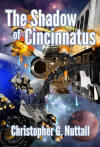
In his The Decline and Fall of the Galactic Empire series Nuttall imagines humanity dispersed among the stars, held together by a crumbling political union transitioning from a senatorial republic into a tyrannical empire. In both Barbarians At The Gates and its sequel The Shadow of Cincinnatus narrative threads from classical antiquity are interwoven with pop sci-fi references. The result is a good old fashioned yarn spun by a master storyteller.

You can find our more about Christopher at his homepage: www.chrishanger.net


What are your first memories of Edinburgh?

That’s a hard question – I was born in Edinburgh. I have strong early memories of going to the Tattoo as a child, so that’s probably the best ‘first’ impression.

Has Edinburgh shaped why and how you write?

I think it has, in many ways. Edinburgh is a mix of old and new; Edinburgh Castle was the inspiration for Castle Alexis in Lessons in Etiquette, for example.

There’s a story about you trying to borrow a Tom Clancy book aged 9 which the Morningside librarian thought too old for you. In hindsight were they right?

No, I don’t think they were right; I understood the book at the time and …well, it wasn’t erotic fiction. I don’t think that librarians (I trained as one, so this is dear to my heart) should be trying to dictate reading tastes, even to children. That’s the job of their parents.

Why are many (otherwise intelligent) readers put off by fantasy and science fiction?

I don’t think that’s actually true – my readers are very intelligent. That said, there has been something of a gulf between readable SF books and award-winning SF books in the last 20-odd years. The SF books that are genuinely popular aren’t always the ones that win awards. I know, that sounds odd, but SF has always been about the big ideas and not every book that features a big idea is readable.

If you could jump back a decade, what would be the first thing 2015 you would tell 2005 you (other than to buy George R. R. Martin 1st editions)?

Jump on the Indie bandwagon as soon as it started, I think. Although that might be a mistake – writing requires development and the stuff I was producing in 2005 wasn’t really worth either publishing or self-publishing.

You’ve published via the traditional route and you’ve published online. What’s the difference?

There are actually several different answers to that question. The basic one, in my opinion, is that the former offers considerable cachet, while the latter offers considerably more control. Being picked up by a traditional publisher says ‘this guy impressed an editor’ – it also means that the publisher handles everything from editing to cover design. You have to do all that for yourself if you’re going the self-publishing route. On the other hand, you generally get paid more if your self-published book breaks through..

You’ve talked elsewhere about learning the difference between useful criticism and people trying to pretend to be critics while enjoying their superiority. What’s the first thing a reader of arts criticism should remember and what’s the last thing a critic should forget?

Well, the author should remember that you can’t please everyone – and you can’t. No matter how well you write, you will get bad reviews (this is why I advise authors to grow a thick skin). The reader should remember that the critic may be being paid to be critical – that he or she will search for things he can criticize because he thinks that’s his job. There’s also the risk that the critic may not be very familiar with the field – if the critic is primarily a SF-reader, I wouldn’t expect him or her to be very kind to a romance novel.

The critic should remember to consider the work as a whole, rather than merely nitpick one tiny detail – that’s annoying at best and turns into trolling at worst. I once read a review of Harry Potter and the Goblet of Fire that consumed two pages complaining about Harry being forced to complete in the competition even though he hadn’t entered. It’s a valid point, but it doesn’t overshadow the rest of the book.

If I’d done that and one of my beta readers caught it, I could have justified it – that’s where the critic comes in handy. On the other hand, someone questioning an aspect of a society that makes no sense out of context is merely annoying. Trial by combat, for example, was quite popular around the time of Magna Carta, but seems stupid to us today.

How important is the convention circuit for authors as authors, rather than as sales reps?

It’s quite fun to meet other authors and compare notes with them, so I enjoy the handful I attend,. However, sales are almost always minimal – I always buy more books than I actually sell.

Will there be a third installment of The Decline and Fall of the Galactic Empire series?

Yes, The Barbarian Bride should be coming out later in the year.

If readers liked Barbarians At The Gates, what else of yours should they read?

I’ve produced quite a few books, mainly science-fiction and fantasy. The Empire’s Corps series is set in a decaying empire, while Ark Royal follows the adventures of HMS Ark Royal and her crew as they face a mysterious alien threat. Or, if you like fantasy, check out Schooled In Magic, Bookworm or The Royal Sorceress. Or, if you like alternate history, check out The Invasion of 1950. Or, if you like thrillers, check out The Coward’s Way of War.

What should be playing on the stereo when we’re reading Barbarians At The Gates & The Shadow of Cincinnatus?

I’m very fond of In The Hall of the Mountain King.


KNOW OF AN ARTS PROJECT WE SHOULD SPOTLIGHT? GET IN TOUCH!

“His obsession with happiness first hooked me” – Author Tim Leach discusses The Last King of Lydia Novels

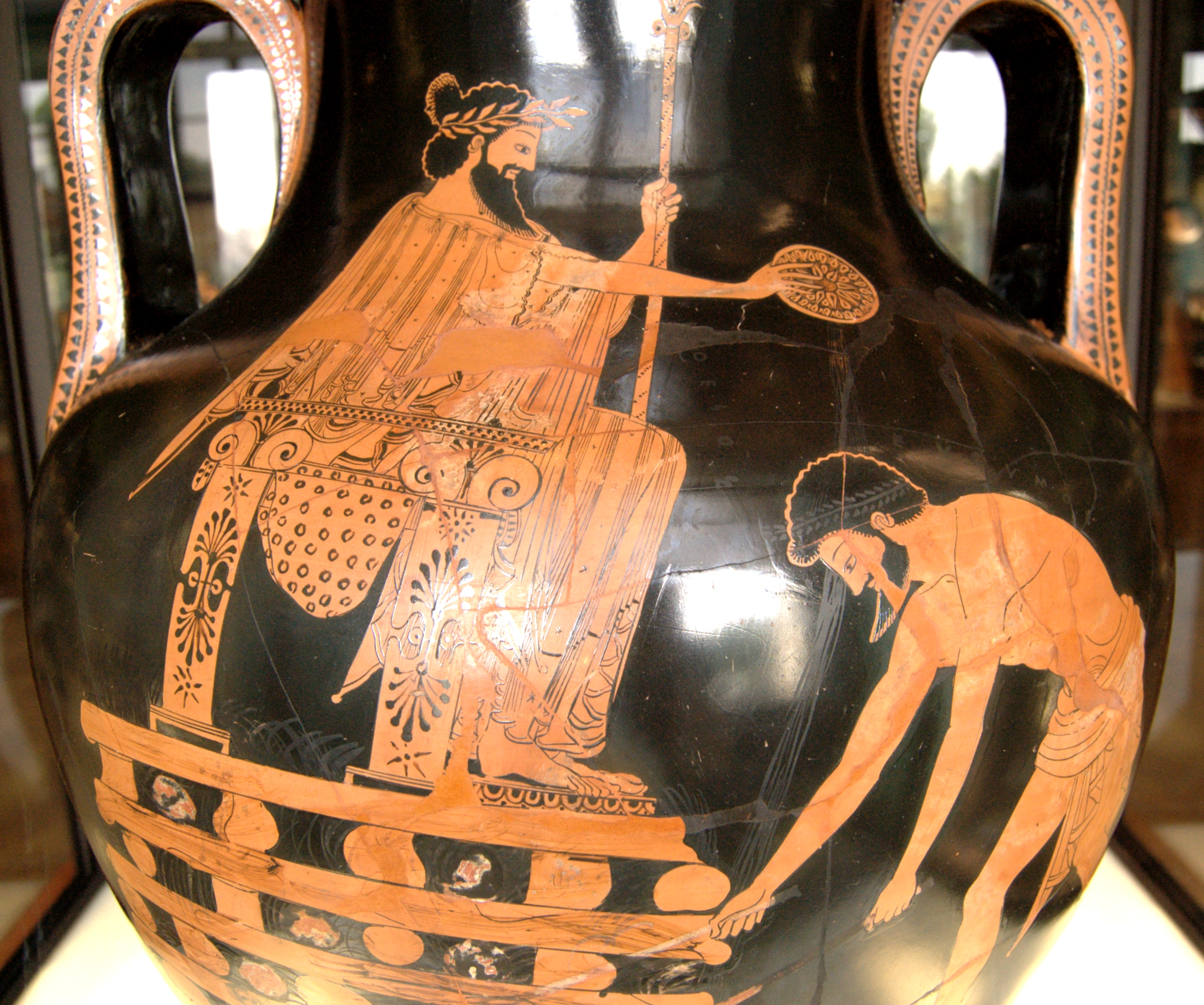
Croesus on the pyre, Attic red-figure amphora, Louvre

“I keep waiting for the authoritative condemnation from Mary Beard for my amateur’s exploration of the classics, but it hasn’t come yet!”

“As rich as Croesus” – the expression derives from a king who reigned on the frontier between myth and history. According to Herodotus, Croesus (r.560 to 547 BC) was the first Mediterranean monarch to mint gold and silver coins. His empire, located in modern-day Turkey, rested on the mineral wealth of Sardis, the capital of the Kingdom of Lydia.

In Tim Leach’s The Last King of Lydia – which like all good Classical tales starts in the middle – we encounter a defeated Croesus about to be put to death by his Persian conquerors. Inspired by the writings of Herodotus, Leach sets out on a fictionalised retelling of Croesus’ story, the half historic, half mythic king whose rise and incredible fall from power shook the ancient world.

The Last King of Lydia was shortlisted for the 2013 Dylan Thomas Prize. In 2014 a second installment – The King and the Slave – bookeneded the narrative, recounting Croesus’ later adventures as an object of curiosity in the court of a demented tyrant. Together, both novels explore the nature of identity in crisis, set in a richly detailed vision of distant antiquity.

The Last King of Lydia & The King and the Slave are published by Atlantic Books.


Why Croesus?

It’s his obsession with happiness that first hooked me in – I’d always thought of it as being a very modern concern. So when I read about his encounters with the philosopher Solon where they debated happiness at great length, it got me very intrigued – I’d never thought I would write historical fiction, but I just became fascinated by this character. Even better, in the source material, the story of Croesus ends just when to me it was starting to get good – if I wanted an ending, I was going to have to write one myself!

Both The Last King of Lydia & The King and the Slave include portraits of historical figures such as Cyrus The Great, his son Cambyses II, and the Athenian law-maker Solon. How did you flesh out the bare bones of biography we have for them?

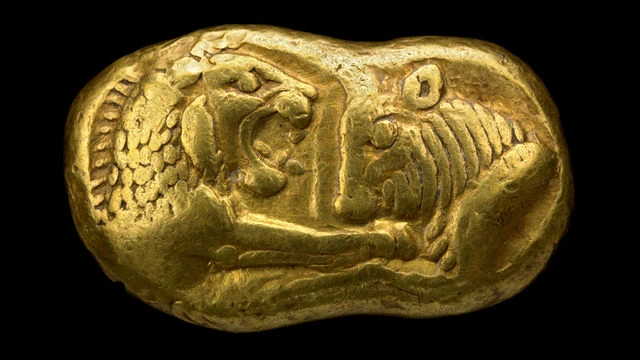
Gold coin of Croesus that was made around 550 BC in the Lydian Empire.There are teasing hints about their characters in the source material that were useful as starting points – Solon’s blunt honesty, Cyrus’s thoughtful charisma, Cambyses’s insecurity. Mostly, it was just trying to find an emotional connection with them, and going from there – trying to imagine my way on what it might have been like to be in that place at that time. And dialogue scenes are an absolute boon for character creation and development. I learned so much about my characters just from putting them in a room together and trying to figure out what they might say to each other.

How did you manage the parallels with other portraits in historic fiction (such as those between Cambyses & Caligula), did you ignore, embrace or shy away from them?

Cambyses was a tricky one – in the source material, he is such a relentlessly terrifying villain (incest, torture, sadism, murder) that my worry was not just that he would parallel with Caligula, but that no one would believe him (and when we don’t believe in a villain, they cease to be scary). The solution for both problems was to put a lot of myself into the character – to take my own fears and neuroses, turn them up to 11, and make him a monstrous, warped version of myself. That way, not only was I confident that I could make him unique from other historical villains, but that he would still retain some kind of humanity that would keep him relatable.

As well as the portraiture, the novels contain lively landscapes of the teeming cities and sprawling palaces against which Croesus’ story plays out – my personal favourite is the opening of The King and the Slave, somehow akin to the opening lines of Gilgamesh. Have you drawn any direct inspiration from your own extensive travels?

Yes, there are certain cities and landscapes that really stay with you, that seem to be in some way unanchored to time and place. The chaotic medinas of Fez and Marrakesh, the sun drenched Greek islands, the wide open plains of Argentina – these are places that I seem to keep using elements of when I’m creating places in my writing.

Has there been any feedback from scholars of the period?

I keep waiting for the authoritative condemnation from Mary Beard for my amateur’s exploration of the classics, but it hasn’t come yet! The feedback from those classicists who have read it has been extremely positive – I think the fact that my source material, Herodotus’s Histories, is so notoriously unreliable means that no one expects a historically perfect reconstruction. There’s plenty of room for a writer to play when there’s such an intoxicating blend of myth and history in Herodotus’s work.

NB. Listen to Edinburgh49‘s interview with Prof. Mary Beard here.

Gerard van Honthorst

How did the response to The Last King of Lydia influence the writing of The King and the Slave?

The King and the Slave was mostly written before Last King was published, but the good reviews from the first book were just starting to roll in when I was editing the second. It was a real confidence boost at that stage, and I was able to relax just a little as I was putting the finishing touches to it.

You’re a graduate of Warwick University’s Writing MA where you now teach. What’s the first thing you tell your students?

Be patient, be persistent and lower your overheads! A lot of students come onto writing programs hoping for some quick fix or miracle cure, but there’s no way around it – it’s a long, slow, lonely grind to get anywhere. You can’t shave much time off that process on a writing course, but you can try and make sure people are well equipped to stick out long journey ahead.

Claude Vignon

Are there possibilities of radio, TV or cinema adaptations on the horizon? Is there an actor you could imagine playing your Croesus?

I would love there to be! It would be tricky to adapt, though. TV would be better than film, as I don’t think the story would compress well into a couple of hours, but you’d need a serious budget to do it well. Radio is a possibility I’d not considered, and could actually work very well, especially given how dialogue focused the books are.

If money were no object? I really admire the people who have some managed to combine being leading men with being interesting character actors in Hollywood – Cillian Murphy and Christian Bale would both have a good stab at it I think, bringing that combination of charisma and vulnerability that is critical to the character. And definitely Russel Crowe for Isocrates [Croesus’ fmr. slave & later mentor] – no one does a better thuggish intellectual!

Obvious question, but what are you currently working on? How about the story of Solon?

I was very fond of Solon, and tried to squeeze as many scenes with him as I could in the story! I’m coy about being too specific about what I’m working on right now, but it’s somewhere not quite so far back in history, and quite a lot colder…

What should be playing on the stereo when we’re reading The Last King of LydiaThe King and the Slave?

Well, I mostly write to instrumental or minimalist stuff – if you want to read it to the music it was written to, then I recommend sticking on some Explosions in the Sky, The xx, Esmerine, M83, or anything similar. Though right at the end of writing the second book, I got weirdly obsessed by The Funeral by Band of Horses, playing it over and over again as I was writing the last few chapters. So better stick that on the playlist too…


KNOW OF AN ARTS PROJECT WE SHOULD SPOTLIGHT? GET IN TOUCH!

Kind of a BIG Deal – S02E04 – David & Hilary Crystal

“I don’t know how to put this…but I’m kind of a big deal.” – Ron Burgundy

In each episode of Kind of a Big Deal you can listen to an exclusive and intimate conversation between our Features Editor and the kind of big deal folk our world-class arts scene attracts – writers, performers, movers and shakers.

Listen again to Kind of a BIG Deal S02E03 ft. Neil Mackinnon, Head of External Affairs at the Edinburgh Festival Fringe Society HERE.


This week’s conversation is between Dan Lentell and the authors of Wordsmiths and Warriors

DAVID & HILARY CRYSTAL

IMG_0528

“The irony is only four percent of the English speakers of the world ever spoke that so-called correct kind of English.”

David Crystal is perhaps best known for his two encyclopedias for Cambridge University Press, The Cambridge Encyclopedia of Language and The Cambridge Encyclopedia of the English Language. His recent books include Words in Time and Place: Exploring Language through the Historical Thesaurus of the Oxford English Dictionary (2014), You Say Potato: a book about accents (2014, with actor son Ben Crystal), and The Oxford Illustrated Shakespeare Dictionary (April 2015, also with Ben).

Hilary Crystal is a former speech therapist and one time quality-control editor for the Cambridge and Penguin families of encyclopedias. In 2013 husband and wife published Wordsmiths and Warriors: the English-Language Tourist’s Guide to Britain.

In this conversation David & Hilary talk about their shared passion for language, accents and Shakespeare in original pronunciation (OP).

S02E04 David & Hillary Crystal


The jingle is used with the gracious permission of Moving On Theatre’s Laurene Hope Omedal (star of Piaf: Love Conquers All) and is voiced by Edinburgh Nights host Ewan Spence.

This season of Kind of BIG Deal interviews is supported by the good people at the superb Cult Espresso – the coffee lover’s Southside choice.


PLEASE NOTE! If you are subscribed to Edinburgh49‘s emailing list, you may not see embedded audio links in your email alert, but they are on the website. (Promise!)

“We look for great contributors who tell us what we don’t already know.” – Cheryl Robson discusses Subversive Scene

“Once it reaches a tipping point where a lot of people join in or support it, then it has the power to be truly counter-cultural and lead to change.”

Cheryl Robson is a writer, editor, producer and publisher. Born in Sydney Australia, Cheryl has lived in the UK, France and Singapore, always liking to change things wherever she goes. During the late 80s and 90s she was one of the main players behind The Women’s Theatre Workshop. WTW staged several full-length plays, dozens of performances and delivered hundreds of workshops on writing and directing. In 1995 – in association with The New Playwrights’ Trust and the Directors’ Guild – Cheryl helped establish the first mentoring program for women writers and directors in the UK.

As well as having founded Aurora Metro – which publishers authors ranging from Rudyard Kipling to Benjamin Zephaniah – Cheryl established the Virginia Prize in 2009. Named in honour of Virginia Woolf, the prize encourages and promotes new writing by women.

Cheryl’s latest project is as co-editor of Subversive Scene: Counter-Culture UK – a celebration. Currently undergoing a Kickstarter campaign, this one-stop guide promises a unique look at the diversity of sub-cultures which have emerged in the UK since the war. an integrated movement. Participants will include DJs, graffiti artists, musicians, writers, poets, fans, and protesters. Contributors will examine the arts, isms, access, representation, as well as the world-shaping impact of counter-cultures.

You can track Cheryl’s progress at supernovabooks.co.uk


What’s your definition of counter-culture?

I think it means any group of people, of any age, who get together because they share common attitudes which are different in some way to the beliefs and values of the mainstream.

Does the value of counter-culture exist solely in its capacity to counter something else, more established?

Often it can simply be innovative or fun like ‘The Twist’ became a dance craze, or have its roots in a particular community seeking expression in its own way, such as hiphop. Once it reaches a tipping point where a lot of people join in or support it, then it has the power to be truly counter-cultural and lead to change.

How do counter-cultures emerge and die?

They emerge when individuals feel drawn to each other to do something together eg. skateboarding or graffiti art or protesting such as the Occupy movement. When the group or its  followers reach a critical mass, they become a new community which can be identified by the  media in some way. Sometimes they demand social change such as Gay Lib, Feminism or most recently the Anti-Fracking groups.

Sometimes they voice their criticism of the status quo without any real agenda for change and so without leadership or real goals, the energy burns out. Sometimes the followers of a new group create a new market of some kind such as the market for R & B records, or the market for punk-styled clothing or the market for computer games. Once the group achieves mainstream popularity or success, its adherents may eventually lose interest. If the trend is absorbed by the mainstream, its power to change society may slowly dissipate unless it is revitalised by a new generation or new leadership.

Subversive Scene is scheduled to feature chapters by activists, a spiritual healer, academics, producers and a stand-up. As an editor, how do you even begin to weave such potentially disparate threads into a comprehensible narrative?

The time span of the book means that each chapter covers the changes in society since the post-war years, with each writer describing the main changes which have occurred in a particular genre, movement or field. This is the unifying concept of the book and it provides insight into how the impetus for change can come from different sources simultaneously.

How did you go about selecting your authors?

We advertised on a number of websites and in newsletters and Facebook. It quickly became apparent which writers aligned with our aims for the book.

You’ve a list of publications as long as Mr. Tickle’s arms, what makes the Subversive Scene project special?

It’s inspirational to read about all the artists who found new ways to express what people were feeling about their lives, or the activists who marched or protested or lobbied governments for years to get things changed. And we see changes happening all the time. One recent example is that the Irish people have just voted in favour of same-sex marriage.


Why aren’t you writing the ninth chapter (on publishing)?

We look for great contributors who tell us what we don’t already know. The chapter on Underground publishing has been written by Ben Graham who is far more knowledgeable than I am about the history and range of incredible ventures in the publishing world.

Would it be unfair to say there is a political current running through much of your work? What’s its source? Is it unvarying, or have there been events, personalities and moments which have altered its course and force?

We like writers with something original or provocative to say and sometimes this goes against the mainstream political view such as Carole Hayman’s satire of Tony Blair’s government Hard Choices. It was deemed almost sacrilegious to be critical of New Labour in the early days. With projects like The Arab-Israeli Cookbook we took a fresh perspective on those troubled events, which has since been much copied. The book was awarded Best Innovative Foodbook UK and a Special Jury Prize for Peace from Gourmand World Cookbooks, and as far as we know, gave cultural equity to both Arabs and Jews in one book, for the first time.

Subversive Scene is billed as a celebration. Can a celebration also be critical?

The aim of the book is to bring all the disparate elements together to remind people that counter-cultures have many forms and often very humble beginnings such as Gay Liberation starting in a basement at LSE with 17 people present. From those tiny acorns mighty oaks can grow…

What should be playing on the stereo when we’re reading Subversive Scene?

What would be your choice? There are so many great tracks to choose from. Check out the video on our Kickstarter campaign here to hear one of our faves: http://kck.st/1LDjf92


KNOW OF AN ARTS PROJECT WE SHOULD SPOTLIGHT? GET IN TOUCH!

“A tapestry of viking myths” – Author Andrew Valkauskas discusses The Illuminated Edda

“All mythology is incredibly fascinating. It’s a lens on what makes humanity inherently human.”

If the scheduling for this article runs to plan, it’ll be published first thing on Monday. The name for the first day of the working week is derived from Moon Day in old English. If the scheduling doesn’t work out, the savage reader may have had to wait until Tuesday or Wednesday – days named for the deities Týr and Woden respectively.

The continuing influence of Norse mythology is all around us, but what is it, or rather where is it? The stories (allegorical and categorical) which make up the Abrahamic faiths are contained in their respective volumes of the Sacred Law. The inexact equivalent in Norse, or more specifically Icelandic, mythology are the Prose and Poetic Eddas. These legendary manuscripts are akin to the Viking bible. Written roughly 1000 years ago, they immortalize the culture and society of the Northmen.

Andrew Valkauskas has been studying Viking history and mythology for over 20 years. In 1993 Andrew published the first edition of Fate of the Norns – a line of viking fantasy role-playing games, the mechanics of which are deeply rooted in Viking mythology.

The Eddas have been constant his muse and inspiration. Now Andrew’s honouring them with a “pull-out-all-the-stops” new edition to sit alongside the print editions of (and supplements to) the Fate of the Norns series. The narrative will tell tales of the gods, the giants and many other wondrous beings who inhabit the world tree Yggdrasil – from the creation myths all the way to Ragnarok, the twilight of the gods.

You can track Andrew’s progress at https://www.kickstarter.com/projects/avalkauskas/the-illuminated-edda.


How would the original readership have encountered the material spun through the Eddas?

Well when these myths were fresh (c. 300-900 AD), they were passed down via oral tradition. Lineage was very important to the northmen, as the leaders of the major dynastic families claimed to have gods are the progenitors of their lineage. As a result, those in power wished to keep this lore alive and prevalent. The relationships between humans and gods were immortalized via songs and poems.

The poetic meter and structure is different between the Poetic Edda, and the poetry described in Snorri’s Prose Edda. The Poetic Edda uses simple structure, more akin to what a song would use. The Prose Edda has a much more elaborate style that uses kennings – using a figurative phrase instead of a simple word. It’s clear that both the oral and written traditions were shaped by the current social trends.

Although the tales were written down as the Eddas in 13th Century Iceland, they are much older. Just how far have their roots been traced back?

The oldest written versions come from the Codex Regius, a batch of manuscripts dated c. 13th century. More were discovered in subsequent centuries, and those have helped build up the body of work with unique works like the Rigsthula. It’s hard to say when an oral tradition may have started, one of the yardsticks that can be used is to trace back one of the dynastic families to their progenitor. The Yngling dynasty claims to have come from the god Frey. You have a vague succession of heirs which could be counted and then an estimate can be made. I have that number written down somewhere, but right now I cannot recall.

Were the stories intended as simple entertainments, or do they carry deeper lessons about what it is to be human?

Most mythologies are a reflection of human understanding, and our approach to viewing and managing the world around us. Through the use of allegory, these stories are meant to impart wisdom. One of the more in-your-face poems is the Havamal – which are the teachings of Odin. It covers social behaviour, friendship, folly and common sense.

What got you so interested in what a bunch of dead Vikings had to say?

I think all mythology is incredibly fascinating. It’s a lens on what makes humanity inherently human. For me, right after Viking myths come the Mesoamerican myths. But Viking myths are very special, because on top of the Eddas, you get a bunch of companion sagas written by Icelanders and Norwegians which are incredibly entertaining.

And these dead Vikings were quite an amazing peoples… sailing past the far reaches of any map… raiding and trading… creating amazing poetry… they were master negotiators and eventually settlers who birthed the next age. Unfortunately, contemporary media likes to simplify their accomplishments and pigeonhole them as barbarians with horned helmets.

Is the text already written?

Some of it is written, and I’m splitting my time between The Illimiated Edda and the next book called Lords of the Ash. They are meant to be companion books.

The project artwork looks sensational, will the text be equally grand? How can the competing needs of scholarly insight and dramatic tension be balanced?

That’s the million dollar question and the hardest part of the entire project. Going back 6 months when this project was in its concept stage, I cycled through the merits of several different approaches. One of the high impact decisions was to omit any Ragnarok game rules, mechanics and content from The Illuminated Edda. That decision allowed me to keep The Illuminated Edda a pure and authentic narrative piece, with all game content relating to the gods relegated to Lords of the Ash.

Another key impact decision was that the text would not take on a stuffy academic writing style, but rather I would opt for something more entertaining and accessible to a wider audience. The writing style I am trying to mimic is the prose created by Snorri Stuluson. It has a more modern flow, but I think it captures the essence of antiquity.

The last major decision was how to add evolved content. As many know, the Eddas contain ambiguities, contradictions, omissions and some really intriguing moments, places and events are glossed over leaving the reader longing for more. For 20 years I have been thinking about how the unspoken elements turn out; what the motivations may be behind the various actions of the gods and jotuns.

All of these thoughts needed to hit parchment, and after a long wait, 2015 is the year. I didn’t want to mix my sagas in with the original Edda content because I’d like this Illuminated Edda to be my go to Edda when I want to look up something authentic and specific. So the last major decision was to segregate the original content and the new content by compartmentalizing the respective narrative into chapters. This way readers who wish to get historical accuracy can read only the original content, and for those interested in a complete tapestry of viking myths can go through all of the chapters in order.

You’re already $11K passed your original Kickstarter target, and there are still a few days to go. How do you account for your success funding The Illuminated Edda project?

The Fate of the Norns brand and I are very fortunate to have many loyal and voracious fans. We’ve also worked very hard with our project teams to create books that we can be incredibly proud of. Every project is an attempt at making something better than the last one. Our artists, editors and layout designers are not only extremely talented, but are also very enthusiastic about the project and final outcome.

One of the project rewards offers one generous backer a hand-made Mjolnir (Thor’s hammer). How did you get your hands on that, and is there a thunder god who wants it back?

A good friend of mine made it and it follows us on our convention circuit. It’s the second one ever made, the first sold at a show rather unexpectedly. So this is hammer #2 and carries a history with our franchise.

Role-playing gamers will recognize the artwork style of The Illuminated Edda from your own massively popular The Fate of the Norns, now in it’s 4th edition. Who and what are your visual influences?

Back in 1993 we fell in love with the works of Arthur Rackham, and we included his artwork in the 1st edition of Fate of the Norns. Ever since, we’ve been very careful in selecting the artists we work with because we wish to keep a very traditionally antique feel in our books. You’ll notice that the text layout tries to mimic a story book and the paper we use is matte rather than the more popular gloss.

This is all by design so that the reader gets fully immersed in the experience. Anime, comic and hyper-realism are nice, but don’t fit The Fate of the Norns style. We look for highly unique styles that can transpose the viewer back a millennium or more. So far we’ve had some real talented superstars onboard.

The Fate of the Norns was first published in 1993, giving plenty of time for criticism and critiquing by others. How have you reacted to good (and negative) feedback over the years? How do you wish you should of / could have reacted, and what advice do you have for other artists putting themselves out there?

I very much love to hear back from the fans. I have a thick skin, and I know I can’t please everyone, so I really don’t mind negative criticism- so long as it’s constructive. If you look on our forums, when we were in BETA for the last book, Denizens of the North, we had received a lot of feedback.

As the manuscript matured, our fans recognized that their suggestions were making it into the book, making them feel like it was a truly collaborative effort and that voicing their good ideas help shape the future of the game. For Lords of the Ash, our BETA membership numbers are at the highest point ever, and I look forward to hearing from everyone.

What should be playing on the stereo when we’re reading The Illuminated Edda?

Wardruna 😉


KNOW OF AN ARTS PROJECT WE SHOULD SPOTLIGHT? GET IN TOUCH!

“An African Success Story” – Author David Hartness discusses Amani’s River

“I wanted the book to tell the story of Mozambique’s struggle for democracy, but more importantly, I wanted to capture a global event that headlines current news, which is child soldiering.”

Samuel Johnson once remarked that biographies are “rarely well executed. They only who live with a man can write his life with any genuine exactness and discrimination.” In his first novel, Amani’s River, David Hartness brings exactly the kind of Boswellian insight required to fathom the dark-hearted depths of Mozambique’s protracted civil war (1977-92).

As a Peace Corps volunteer – serving the community of Namaacha, a border town neighboring Swaziland – Hartness found that it was impossible not to hear locals speak of the conflict. He saw firsthand how the pride Mozambicans feel at being free and democratic is mixed with a sense of indebtedness to those who fought to make it so.

Yet alongside the glorification of martial virtues, Hartness encountered many struggling through daily life with severed limbs, scars on their faces, and aches in their body – injuries directly related to the brutal war that tore families apart, and left a country to rebuild. Amani’s River details the true ramifications of violence, and especially the brutal act of recruiting, capturing and brainwashing children to become valuable weapons.

You can track David’s progress at https://amanisriver.davidhartness.com.


Did you or the Peace Corps choose the Mozambique posting? What did you know about the country before you arrived? What were your expectations, and how did they match your first experiences?

The US Peace Corps asked which continent I would like serve. I chose Africa, but then the Peace Corps chose Mozambique, which ended up being the best country to serve. I knew very little about Mozambique, other than it was a coastal country. However, Mozambique wasn’t the first African country I had visited. When I was at University, I took a semester off and traveled to Kenya to volunteer in a small village school. I lived there for three months, working as an English teacher.

I lived in a small mud hut, with no running water or electricity. I had to walk a mile down a long hill and haul my water in a five gallon bucket. That water had to be my drinking water, bathing water and water to hand wash my clothes. Although most people would look at that as unlivable conditions, I loved it, and learned a lot from that experience. Of course, it wasn’t easy, but what made it fun, was the people I met, and the simplicity of life. That experience gave me reasonable expectations for the Peace Corps. I understood that my life would change, and that I would have to work harder at tasks, such as, washing my clothes, or boiling water to take a bath.

Mozambique was a Portuguese colony, which opted to join the Commonwealth of Nations after independence, the first member nation that had never been part of the British Empire. How does anyone, especially an American from an island in Puget Sound, begin to make sense of where Mozambique has been in the past couple of generations?

It’s hard to make sense of this. Mozambique has been through so much. They had fought the strong arms of the Portuguese, and won, only to start a long 16 year civil war that ended in the early 90’s. It is hard to come to grips with these realities. It is also amazing to see how far Mozambique has come; it is truly an African success story.

Can you briefly map out the scale of child soldiery in the conflict? What are the implications today for civil society and how well is Mozambique responding to the needs of ex-child soldiers?

There were many child soldiers during the conflict. In fact, the civil war in Mozambique had one of the highest rates of child soldiers. This of course had a knock on effect in today’s society. Not enough was done after the war to help rehabilitate these children, and many simply went back into their communities broken and emotionally depressed from the experience. There were some local churches and other NGOs that helped shelter and rehabilitate the victims, but the efforts weren’t enough. You will still meet people that are emotionally depressed from the experience.

What was the creative process required to scale such massive national trauma into the individuals’ narrative featured in Amani’s River?

This was a long two year process. First, I needed to gather the information, so that I shared it as accurately as I could. This meant talking with victims, researching books and online articles that have been archived. Then there was the writing. I needed to capture the emotions of the events and child soldiering. I wanted the book to tell the story of Mozambique’s struggle for democracy, but more importantly, I wanted to capture a global event that headlines current news, which is child soldiering. I needed to ensure every word would tell this story. Therefore, a long editing process took a year to complete. The hard work turned into a novel that I am proud of.

How much use did you make of the scholarly works available on the subject, as opposed to the access you had to those with personal stories to tell?

60%-40%. I would say that 60% of the information came from local sources and people that I met, who were able to explain their personal story. These stories are compiled in Amani’s River. 40% came from online newspapers and books published on the topic.

How are Mozambicans themselves responding to Amani’s River so far?

The novel currently isn’t translated into Portuguese, so very few Mozambicans have read the book. However, a few connections who speak English have read the book and are responding well to the novel.

The duality of good and evil in one being is a constant of great literature, Jekyll and Hyde etc, but governments as well as nationalist histories tend to shy from such nuance. How can good, culturally-aware citizens – especially those of us who know far too little about Africa – take ownership of nuance and avoid becoming entrapped in a particular worldview or set of dogmas?

That is a good question. I think it all starts with our awareness of the world around us. It’s the education we have, and the willingness to read powerful messages and act upon them. In terms of taking ownership, it can be something as small as sending out a tweet or opening up a conversation around the dinner table. It could be donating money to worthy cause. I think people that have traveled outside the states and may have a worldlier view on different societies have an obligation to share the message and bring the ideas back to those that may not be fortunate enough to experience these cultures or customs.

I think the US has a unique opportunity to shatter cultural boundaries, because every country and language is represented in our country. Yet, too often, we fail to journey outside our own cultural boundaries. People tend to gravitate towards others that are the same, but as a result, our way of thinking becomes narrow, and the ability to see, respect and embrace a culture becomes harder. People don’t need to be perfect, and know everything about Africa. In fact, it would be hard to know the culture and the problems that plague a society without seeing it first hand, but people need to make an effort. Our society can’t continue to live together, divided by our skin and beliefs.

How have you found the experience of publishing Amani’s River and getting this story in front of the reading public?

Hard and time consuming. It was a long process, and one that I wasn’t fully prepared for. However, I learned a lot throughout this journey. I never understood how many little details needed to be considered. I took a hand on approach to every aspect from the cover design, to editing and finally the novels layout. However, I loved the challenge and am looking forward to my next book.

Forgive and obvious question, but Amani’s River is your first novel, will there be a second?

Yes, I am hoping to start a new novel soon.

Is Mozambique safe to travel to now? What are the reasons for going?

Mozambique is very safe. I would strongly encourage everyone to travel to Mozambique. Most citizens remember the violence of the civil war, and don’t want to go back to those days. Therefore, they are safe. Of course, like traveling to any foreign country, you need to be vigilant, keep your eyes open and don’t travel at night without a car. Most people who get hurt or injured, usually are in a place they shouldn’t be and are not taking the appropriate precautions.


WATCH THIS SPACE for our upcoming review of Amani’s River by David Hartness!

Kind of a BIG Deal – Season 2 – Preview

DSC02206xx562  IMG_0528  10603451_573898012722281_7711284816209990335_n

“I don’t know how to put this…but I’m kind of a big deal.” – Ron Burgundy

Sunshine glides across classical facades. Spring has sprung in Edinburgh. The first stirrings of Fringe ’15 are already in the air. Like bees amid the seas of daffodils on the Meadows, enthusiastic backers buzz around early Kickstarter campaigns hoping to bring shows up in August. By the Water of Leith an advertising agent for one of the big review sites rechecks his box of lures, hoping to land producers big and small. Our own Richard Stamp, the Fringe Guru, is even now getting ready to slip this year’s festival guides lovingly under his pillow.

As the Fringe’s first stirrings turn from a rumble into a roar, Edinburgh49 will continue to cover the other 49 weeks of arts in our town, showcasing all that this most capital of capitals has to offer the hungry punter. Next week you’ll be able to hear the first episode of the second season of our Kind of a Big Deal Interviews. These feature the kind of big deal folks our world-class arts scene attracts – writers, performers, movers and shakers.

S02E00 – Measure For Measure OP Reading

Here’s a preview of Dan Lentell’s conversation with David & Hilary Crystal authors of Wordsmiths and Warriors: The English-Language Tourist’s Guide to Britain (including a rather important spot on Leith Walk with which you may or may not be familiar). Here you can hear David, the world expert on the Original Pronunciation of Shakespeare, giving us a taste of how Measure for Measure would have sounded to its first audiences.


Season 2 of Kind of a BIG Deal will also feature Phil Whitchurch & Sally Edwards (Shakespeare, His Wife and The Dog); & Angela Bartie (The Edinburgh Festivals; Culture and Society in Post-war Britain).